
Regan Vest: Danish Cold War Museum by AART Architects: Preserving Denmark’s Cold War History
Regan Vest, Denmark’s Cold War Museum by AART Architects, reveals a secret underground bunker, blending immersive exhibits with forest-integrated, minimalist architecture.


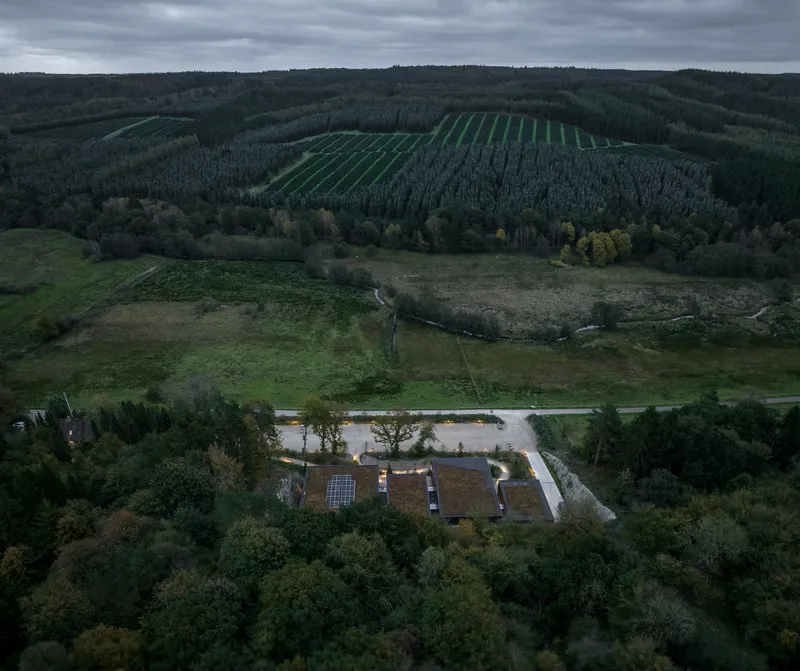
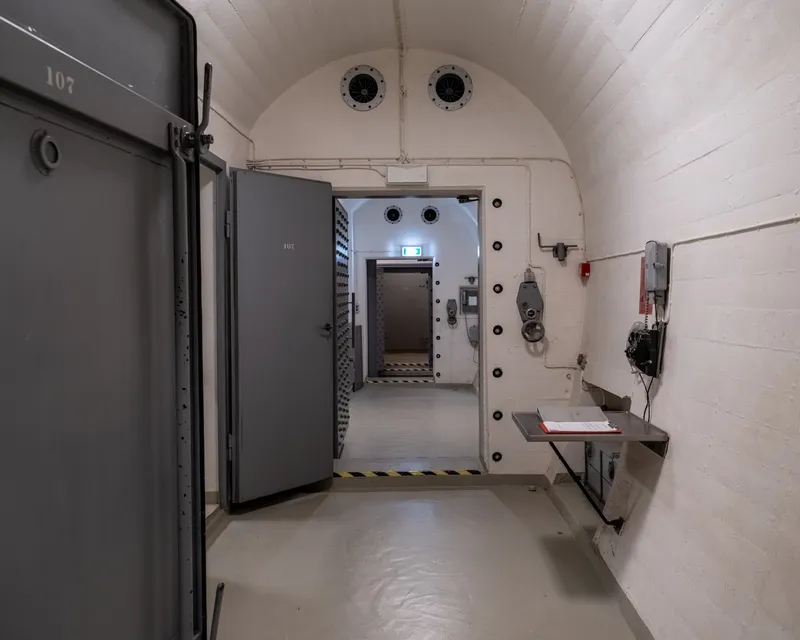
Located deep within the dense forests of Rold Skov in Northern Jutland, Denmark, the Regan Vest, Danish Cold War Museum, designed by AART Architects, opens a window into one of Denmark’s most secretive historical sites. Originally a top-secret bunker built during the 1960s, REGAN Vest served as the ultimate safeguard of Danish democracy, designed to house the government, civil service, and the Royal House in the event of a global conflict. This 1,200 m² museum, completed in 2023, transforms this clandestine Cold War installation into an immersive cultural and educational experience.
A Secret Bunker Transformed into a Cultural Landmark
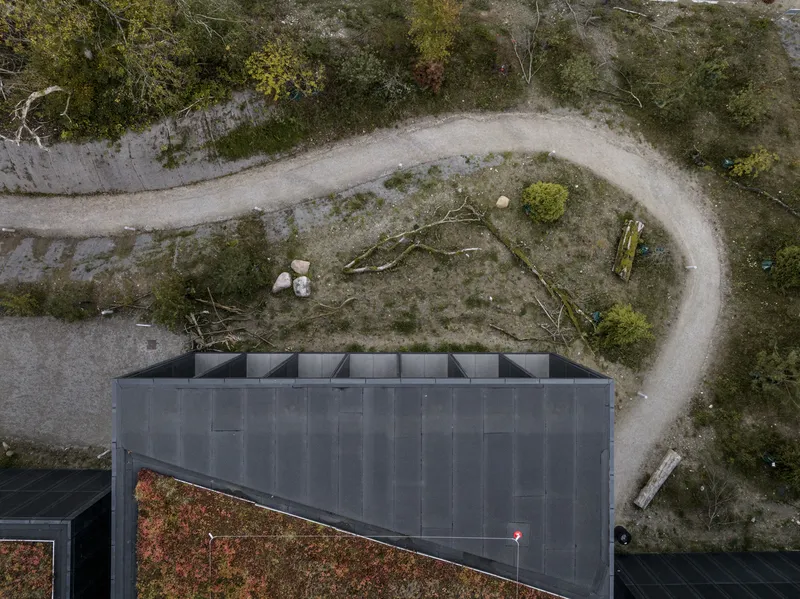
For decades, REGAN Vest remained hidden 60 meters underground, inaccessible to the public. It was a well-kept state secret, Denmark’s “last bastion of democracy,” constructed to ensure governance continuity if the country faced nuclear or conventional warfare. Today, thanks to AART Architects, the site has been thoughtfully opened to visitors, combining the original lighthouse keeper’s residence, a new exhibition building, and the historic bunker itself into a cohesive narrative of Cold War Denmark.
As Anders Tyrrestrup, founding partner at AART Architects, notes: "The Cold War Museum REGAN Vest is an utterly unique place, which creates a framework for a central story in Danish history, a story that remains relevant and important today."
Architectural Concept: Black Boxes in the Forest
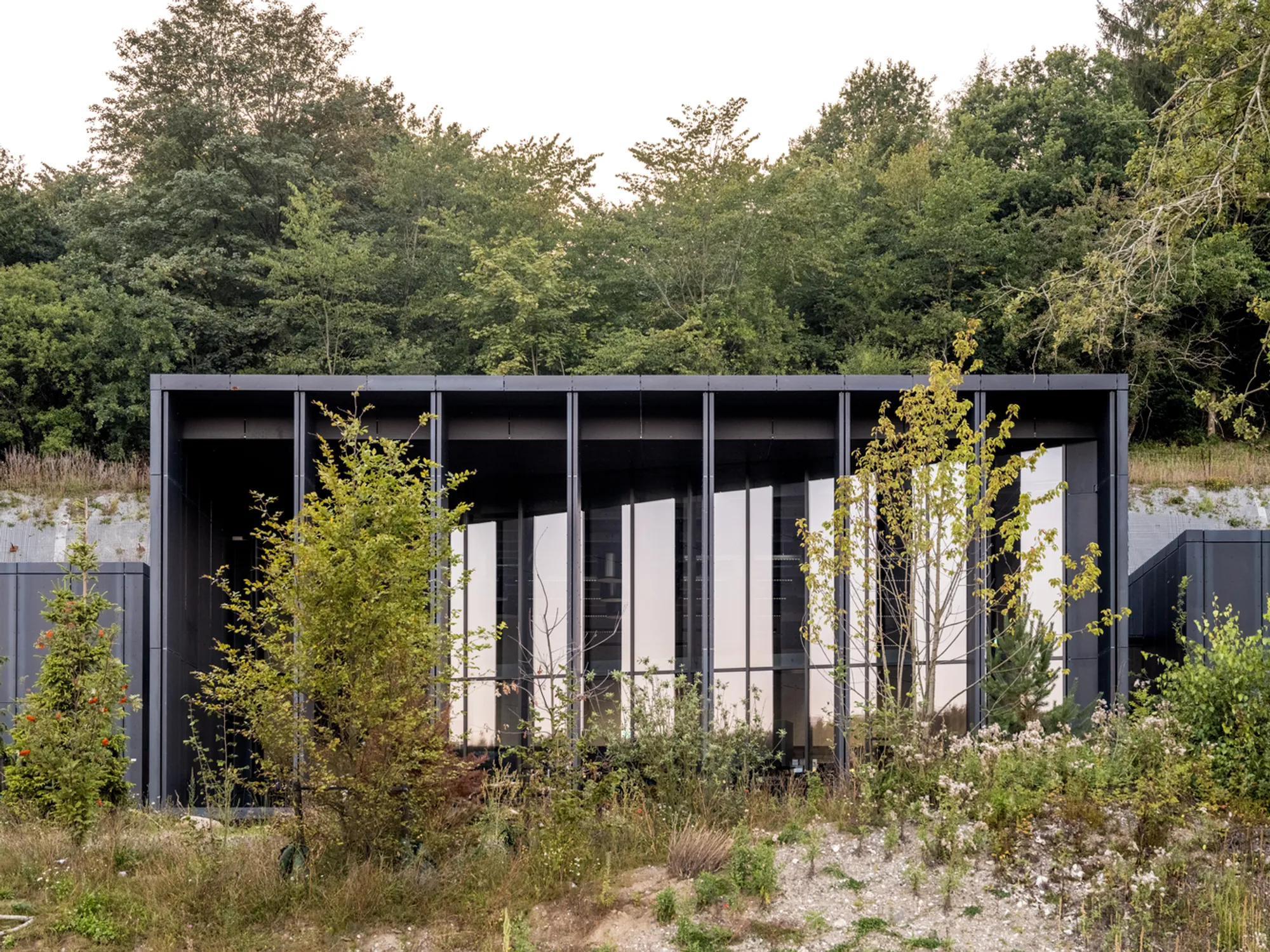
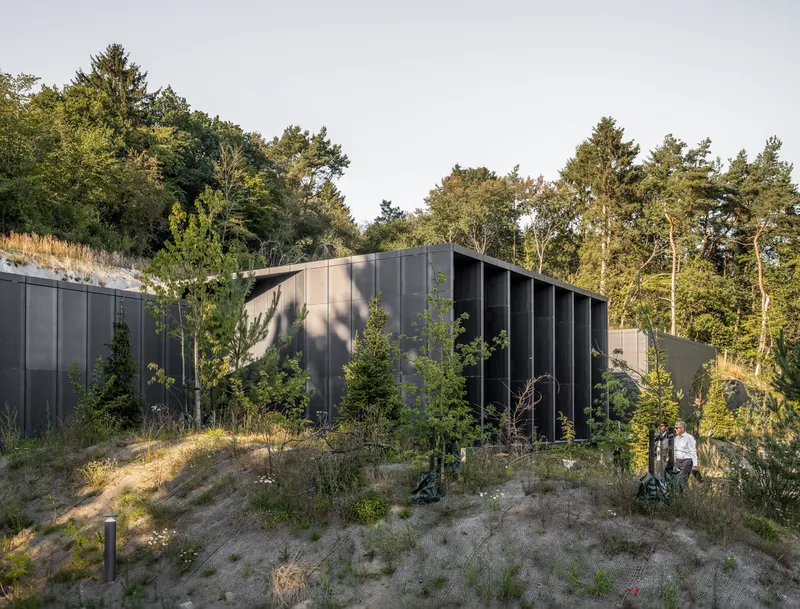
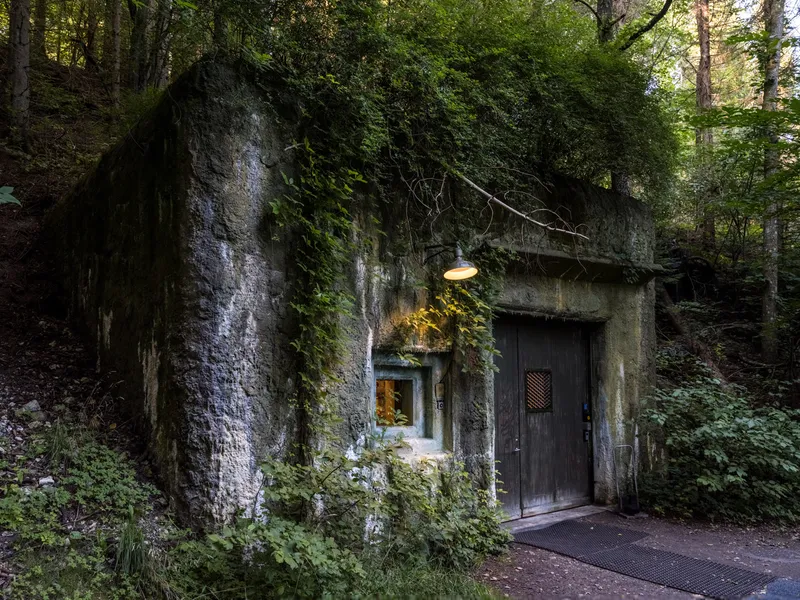
The museum’s reception and exhibition building manifests above ground as four discreet black boxes, seamlessly blending into the forest landscape. These anodized aluminum-clad structures are intentionally hermetic, reflecting the secrecy and resilience of the Cold War bunker beneath. Their minimalist design piques visitor curiosity, with subtle retractions in the facade marking entrances, preserving a sense of mystique.
Inside, the flow of visitors centers on a scale model of the underground bunker, highlighting the 5,500 m² nuclear-proof facility designed to protect Denmark’s leadership. This central model connects the reception area to multiple exhibition sections, offering both guided and self-directed exploration of the museum’s features.
Exhibition Experience: Perspectives on the Cold War
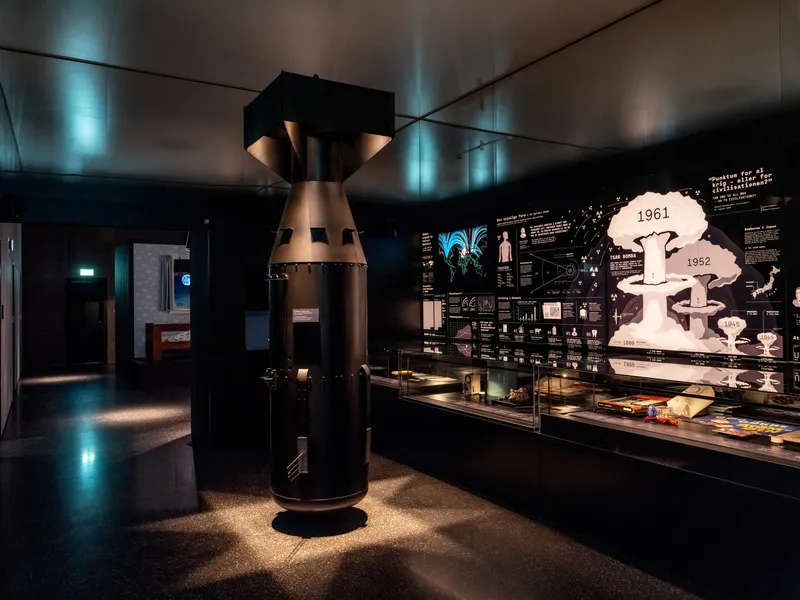
The museum’s seven exhibition sections offer an in-depth exploration of Cold War history, from the fear of nuclear attacks to the geopolitical tensions between East and West. Visitors can engage with historical narratives, interactive installations, and staged scenarios that illustrate the tense political climate of the time. The design ensures continuity between sections while allowing guests the freedom to create a personalized experience.
According to Tyrrestrup: "The black boxes do not reveal their content immediately, inviting curiosity and engagement. They become part of the visitor experience, highlighting the historical secrecy and mystique of REGAN Vest."
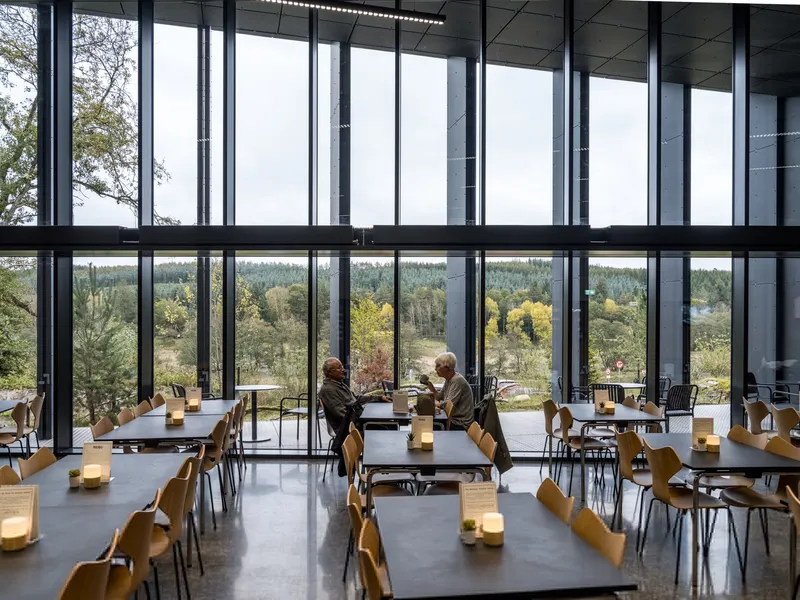
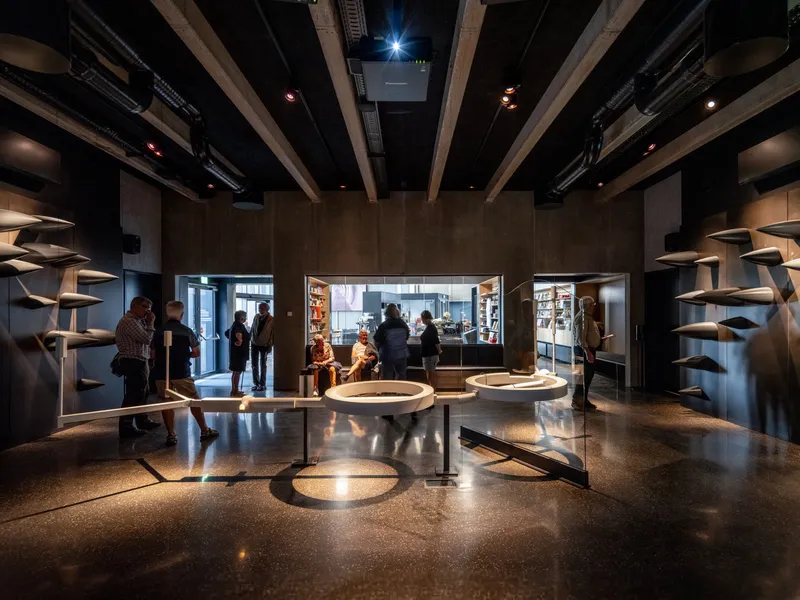
Sustainability and Landscape Integration
The museum harmonizes with its natural surroundings, preserving the integrity of the Rold Skov forest while providing a secure, climate-resilient space. The architecture prioritizes both durability and visitor experience, balancing contemporary design with historical preservation.
The Regan Vest, Danish Cold War Museum is not just an architectural achievement but a cultural beacon, educating visitors about Denmark’s Cold War history and the enduring importance of democratic resilience. With its thoughtful design, immersive exhibitions, and integration into the landscape, REGAN Vest transforms a secret military installation into an unforgettable historical journey.
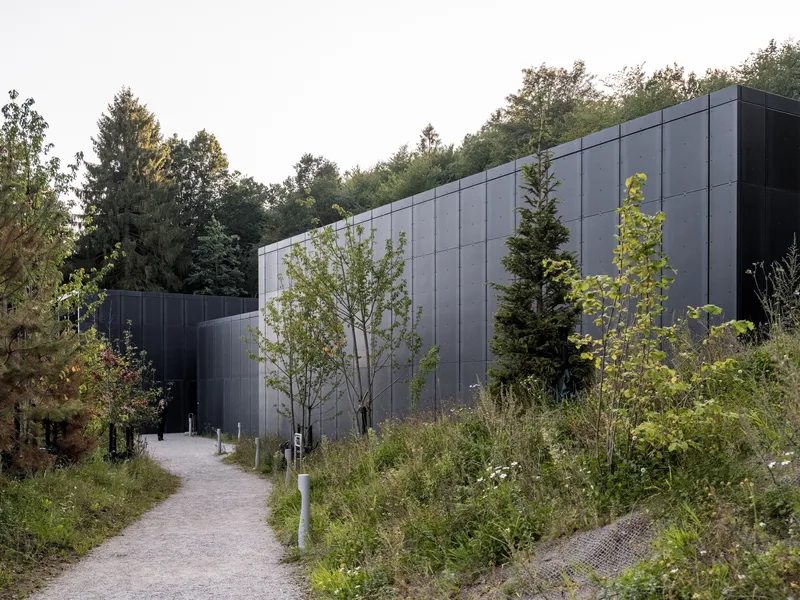
All photographs are works of Rasmus Hjortshøj, COAST Studio




Popular Articles
Popular articles from the community


Lunar Spiral: Space Architecture Shaped by the Mathematics of the Universe
Lunar Spiral reimagines space architecture through Fibonacci geometry, lunar regolith, levitating habitats, and self-sustaining Moon living.

The Ocean Hive: Sustainable Architecture for a Self-Sufficient Civilization at Sea
The Ocean Hive imagines sustainable architecture at sea, where modular habitats, algae, wave power and ocean waste sustain a growing colony.

Co-Life: Senior Housing Design That Reconnects Older Adults With the City
Co-Life reimagines senior housing design through healing gardens, shared streets, workshops, and a sustainable community across generations.

The Earth Pod: 3D Printed Homes for Resilient Refugee Communities
The Earth Pod reimagines refugee housing through 3D printed homes made from clay, combining resilience, self-sufficiency, and rapid shelter.

Similar Reads
You might also enjoy these articles


Hodi-Mandai Geram
Project Function: Preservation and revitalization of the Intangible heritage and socio-spatial identity of the Hodi by Housing, Cultural Memory Center, Sacred Grove, landscape, local tourism economy


Olio Towers: A Mid-Rise for Performers That Fuses Housing, Rehearsal, and Stage
Located blocks from Houston's Theater District, this modular tower stacks living units around a central performance atrium.

Oasis: Modular Green Housing Carved into Dhaka's Urban Fabric
A shortlisted Plugin Housing entry reclaims unauthorized settlements in Dhaka with stepped concrete volumes, green roofs, and ventilation-driven design.

Black Hole: A Floating Megastructure for the Post-Physical Era
Emiliano Mazzarotto envisions a spherical, self-scaling arena where e-sports, digital hotels, and holographic stadiums replace traditional public space.


Explore Cultural Architecture Competitions
Discover active competitions in this discipline



Challenge to reimagine the Iron Throne


Photograph architecture without architects


Illustrate the lost glory of Angkor Wat - Render Challenge


Bring back Drive In's
Comments (0)
Please login or sign up to add comments
No comments yet. Be the first to comment!