
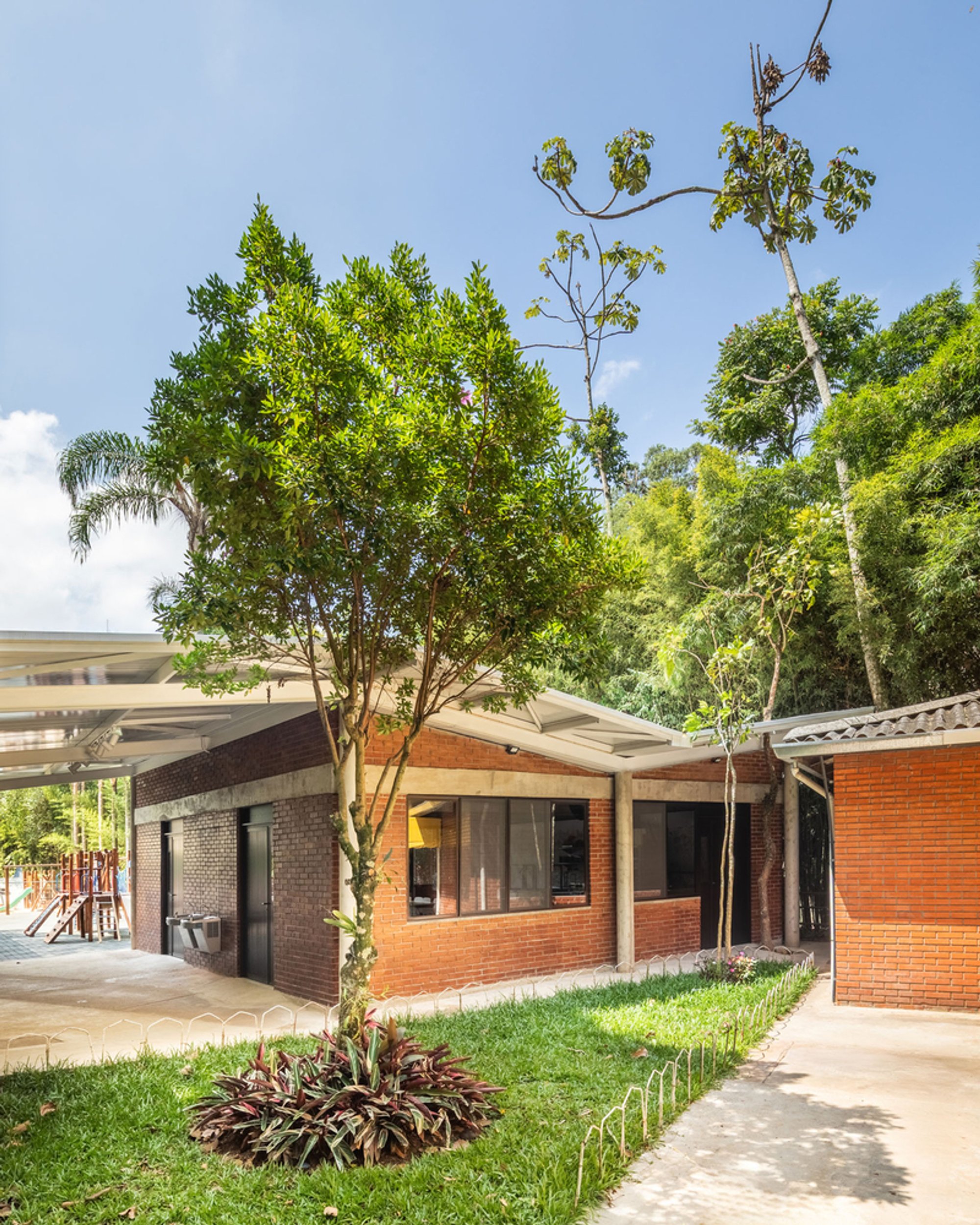
Retrofit of Santa Maria School by Carvalho Terra Arquitetos
Carvalho Terra Arquitetos modernizes Santa Maria School with a sensitive retrofit, integrating new learning spaces while preserving its architectural identity.

A Sensitive Modernization of Learning Spaces in São Paulo
Located in São Paulo, Brazil, the Retrofit of Santa Maria School by Carvalho Terra Arquitetos breathes new life into a mid-20th-century educational complex. Originally built in the late 1960s and expanded in the 2000s, the campus had long served the Early Childhood Education division of the school. The new retrofit seeks to modernize the infrastructure and learning environments while preserving the architectural character that defines the institution’s identity.
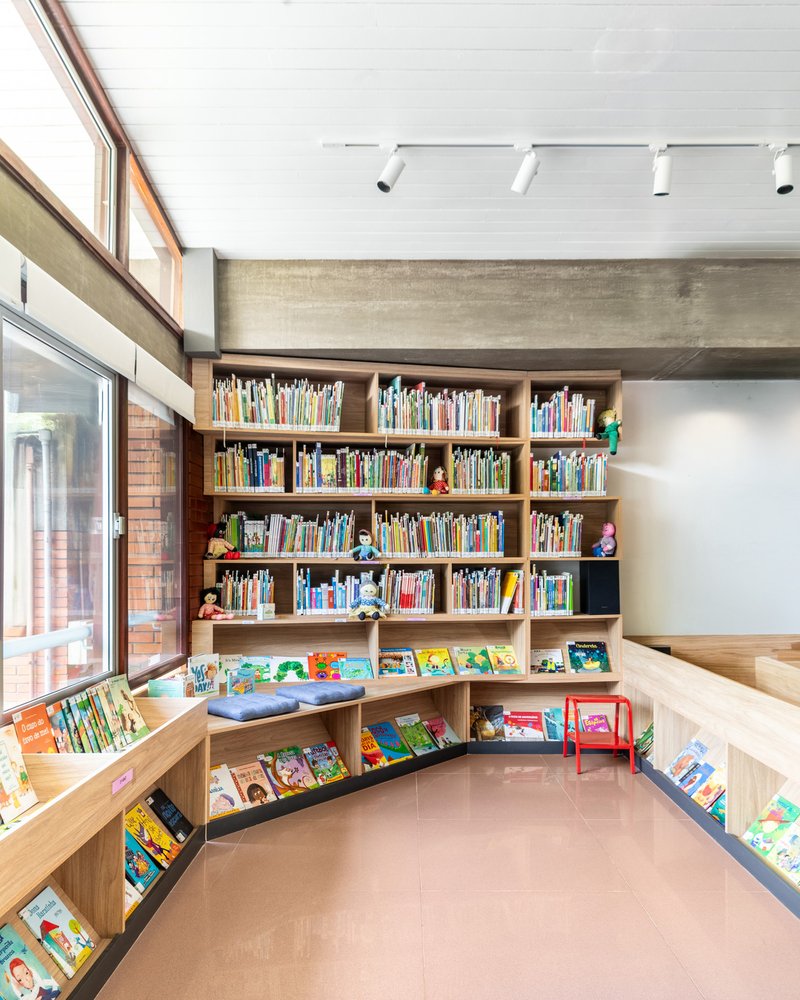
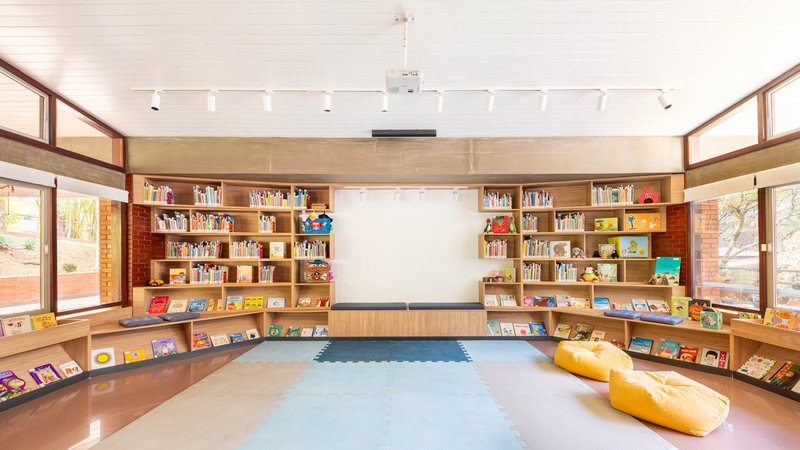
Covering 550 square meters, the renovation transforms key spaces such as the reception area, administrative offices, cafeteria, experimental kitchen, restrooms, and library. Led by architects Bruno Carvalho and Carina Terra, the project reflects a careful balance between technological modernization and respect for architectural heritage — a hallmark of contemporary educational design in Brazil.
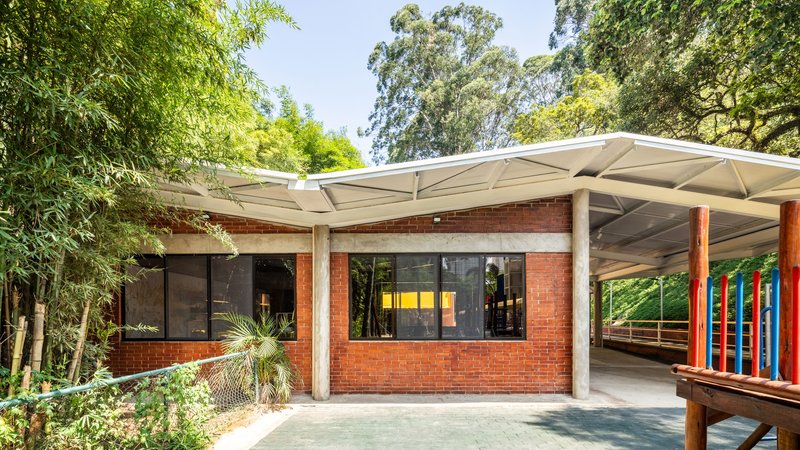
Preserving Identity While Adapting to New Pedagogies
Carvalho Terra Arquitetos approached the project with a focus on adaptability, functionality, and continuity. Recognizing the importance of maintaining daily school operations, the construction was strategically divided into phases, executed during summer and winter breaks to avoid disrupting academic activities.
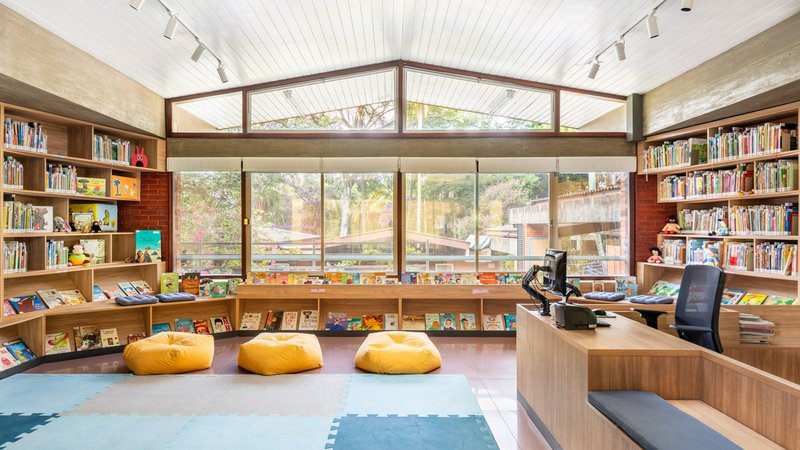
This strategy guided not only the project’s construction logistics but also the selection of materials and building processes, emphasizing efficiency, sustainability, and minimal environmental impact. The result is a retrofit that upgrades the school’s infrastructure to contemporary standards while reinforcing the warm and familiar atmosphere cherished by students and teachers alike.
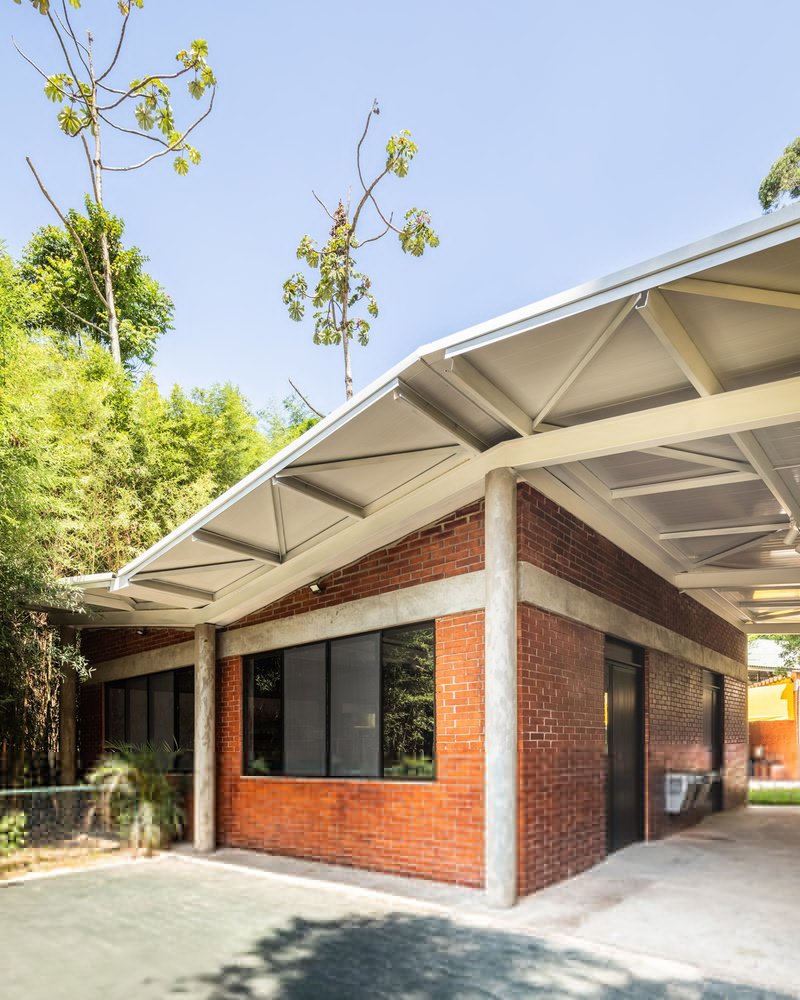
Reimagining the Cafeteria as a Social Hub
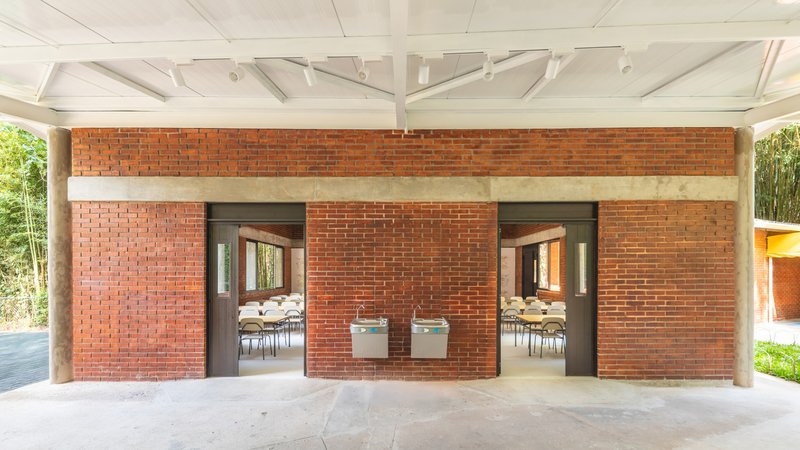
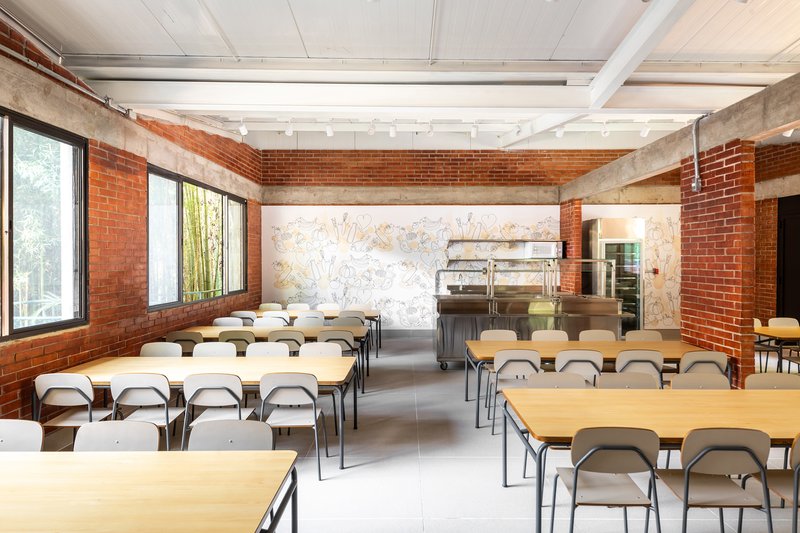
The original cafeteria operated in a repurposed classroom, which no longer met the needs of an expanding student body. The architects proposed returning this classroom to its original educational use and creating a new cafeteria in a smaller room near the school’s main entrance.
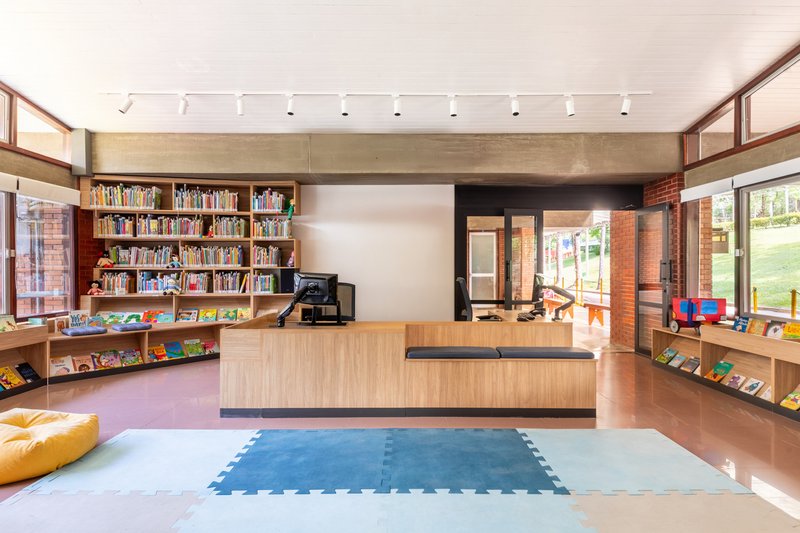
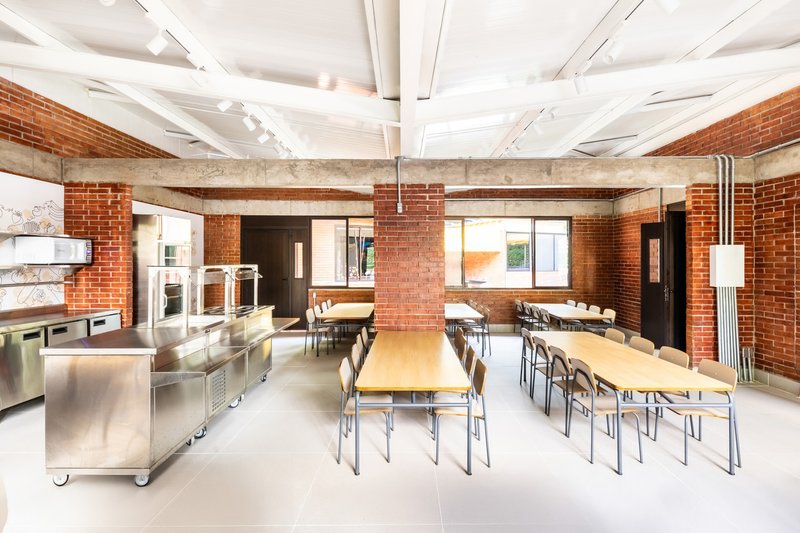
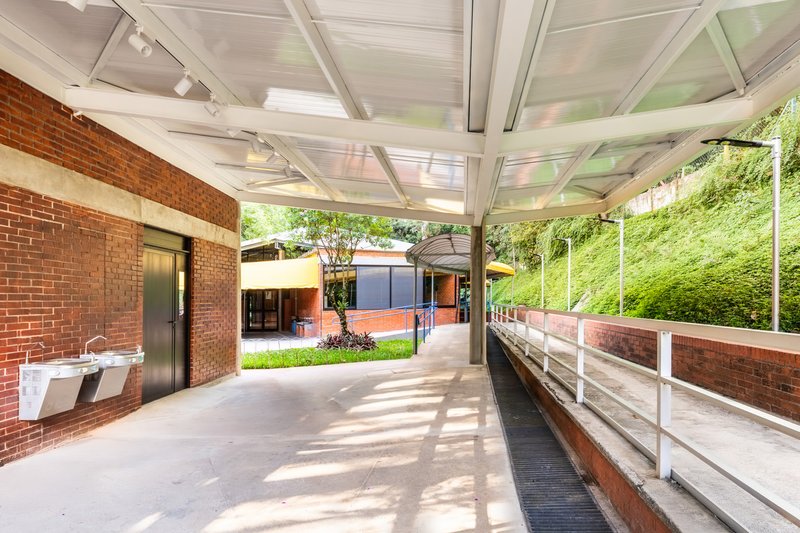
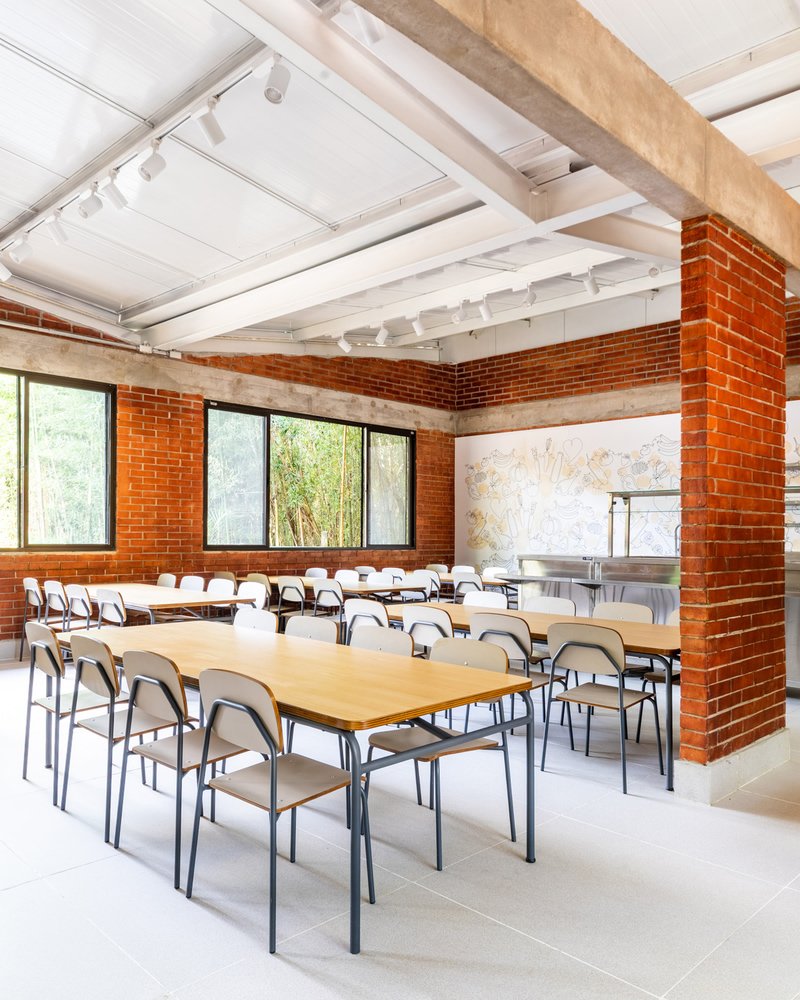
A new roof structure composed of concrete pillars, metal beams, and thermal-acoustic panels was introduced to provide shelter and continuity, expanding the cafeteria while renewing the building’s entrance. This architectural gesture not only accommodates more students but also strengthens the school’s sense of community — transforming the cafeteria into a vibrant social hub where learning continues beyond the classroom.
Three access points organize the flow of people and logistics: two dedicated to students and one technical entrance for supplies and maintenance. Exposed brick and concrete from the existing structure were preserved, harmoniously blending with new furnishings and a mural-sized line drawing illustrating the process of food transformation — a poetic nod to the educational value of nourishment.
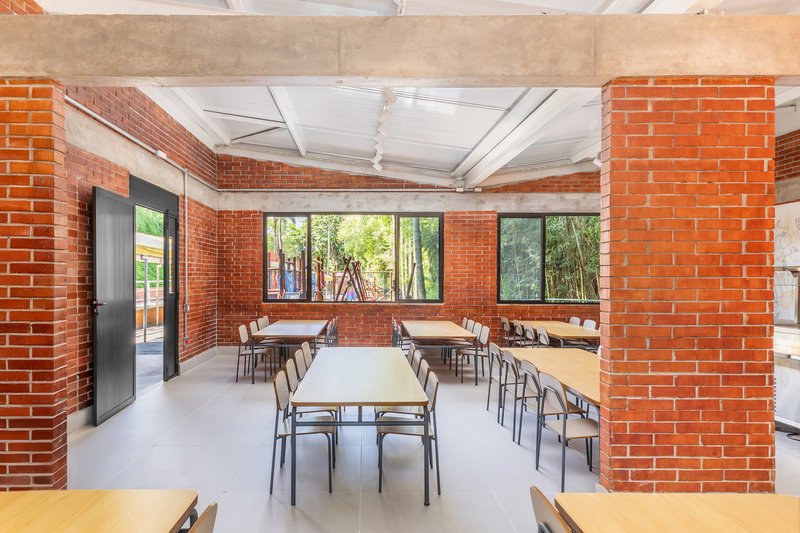
Experimental Kitchen: Learning Through Making
Beneath the cafeteria, the basement was completely restructured to include an experimental kitchen, restrooms, storage rooms, and staff facilities. The kitchen is designed as a dual-space environment promoting both educational guidance and hands-on experimentation.
The inner zone, equipped with counters at two different heights, supports activities mediated by educators, while the outer area allows larger groups of children to participate collectively in cooking exercises. This layered design supports the school’s commitment to interactive and sensory-based learning, turning food preparation into a pedagogical tool.
Color plays a key role in the children’s restrooms — guiding users through intuitive wayfinding and encouraging autonomy through playful design.
A Library that Inspires Curiosity and Comfort
Previously divided into two disconnected areas, the library has been reimagined as a unified, open, and interactive environment located along the main student circulation path. The new layout invites spontaneous engagement with books and provides diverse spatial configurations to accommodate various learning activities.
Custom-designed wooden shelving systems line the walls, displaying books both vertically and horizontally to make them visually accessible to children. The shelving units are conceived as stacked “book towers,” symbolizing layers of discovery.
In the center, a flexible reading zone furnished with bean bags and mats adapts to storytelling sessions, group discussions, or individual reading. A projection screen and storage trunks double as seating for storytelling and drama activities, reinforcing the library’s multifunctional character. Staff support points are subtly integrated into the design, ensuring guidance without interrupting the natural flow of exploration.
Architecture as a Tool for Contemporary Education
Through a sensitive interplay of preservation and innovation, Carvalho Terra Arquitetos have transformed Santa Maria School into a modern educational landscape that respects its mid-century origins while anticipating future pedagogical trends.
Every intervention — from the cafeteria’s structural renewal to the library’s flexible interior — embodies a broader vision of education as a spatial experience, where architecture actively contributes to learning, social interaction, and sensory engagement.
All photographs are works of Guilherme Pucci




Popular Articles
Popular articles from the community

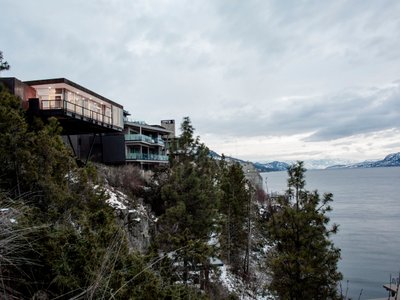
Alton Cliff House: A Harmonious Retreat by f2a Architecture in Lake Country, Canada
Alton Cliff House blends corten steel, prefabrication, and sustainable design, creating a luxurious, energy-efficient retreat perched on Canadian cliffs.

Solar Steam: A Climate-Responsive Architecture That Redefines the Monument
A climate-responsive memorial architecture that transforms heat, decay, and time into a living system reflecting humanity’s ecological impact.


The Ken Roberts Memorial Delineation Competition (Krob)
As the most senior architectural drawing competition currently in operation anywhere in the world, it draws hundreds of entries each year, awarding the very best submissions in a series of medium-based categories.


Similar Reads
You might also enjoy these articles
The Ken Roberts Memorial Delineation Competition (Krob)
As the most senior architectural drawing competition currently in operation anywhere in the world, it draws hundreds of entries each year, awarding the very best submissions in a series of medium-based categories.


Waterfront Redevelopment and Urban Revitalization in Mumbai: Forging a New Dawn for Darukhana
A transformative waterfront redevelopment project reimagining Darukhana’s shipbreaking heritage into an inclusive urban future.

OUT-OF-MAP: A Call for Postcards on Feminist Narratives of Public Space
Rhizoma Design and Research Lab invites artists, designers, architects, researchers, and students to reflect on how feminist perspectives can reshape public space. Selected works will be exhibited in Barcelona, October 2026. Submissions open until 15 April 2026.


Documentation Work on Buddhist Wooden Temple
Architectural syncretism and cultural hybridity: A comparative study of the Buddhist temples in Chattogram Hill tracks


Explore Architecture Competitions
Discover active competitions in this discipline




The International Standard for Design Portfolios


The Global Benchmark for Architecture Dissertation Awards


The Global Benchmark for Graduation Excellence


Challenge to design public laboratory
Comments (0)
Please login or sign up to add comments
No comments yet. Be the first to comment!