
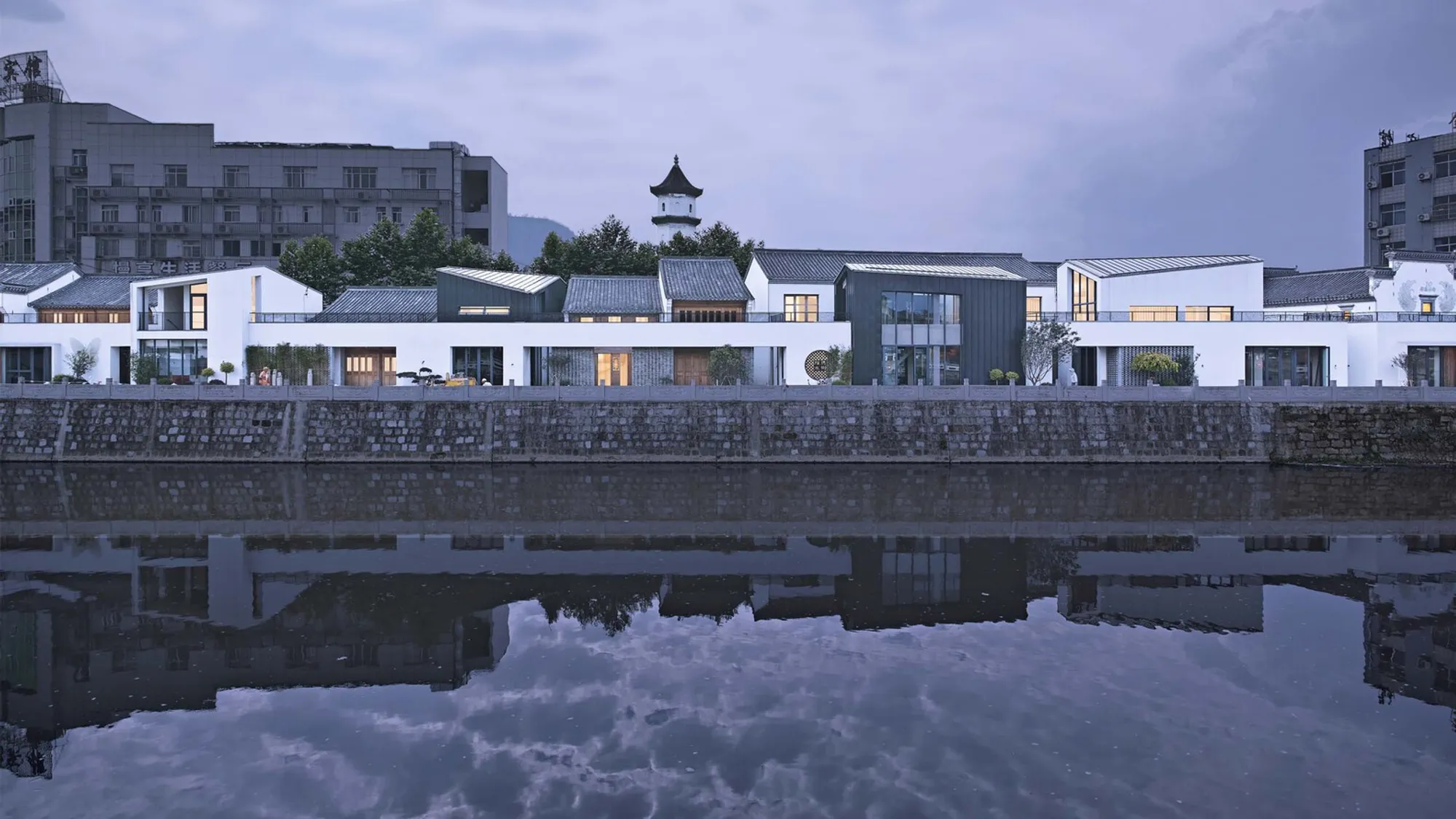
Revitalization of Jingde Shuijie Street by RAW Architecture Studio
Revitalization of Jingde Shuijie Street blends heritage preservation with modern design, reactivating public spaces through adaptive reuse and cultural integration.


Located in Jingde County, Xuancheng City, Anhui Province—an area renowned as China’s first International Cittaslow City and a National Ecological County—the Revitalization of Jingde Shuijie Street by RAW Architecture Studio offers a thoughtful renewal of one of the town's last surviving historic neighborhoods. Set against the tranquil backdrop of the Huishui River, the project occupies a vital cultural and urban position at the entrance to the commercial pedestrian street in the county’s central district.
A Historic Fabric in Decline
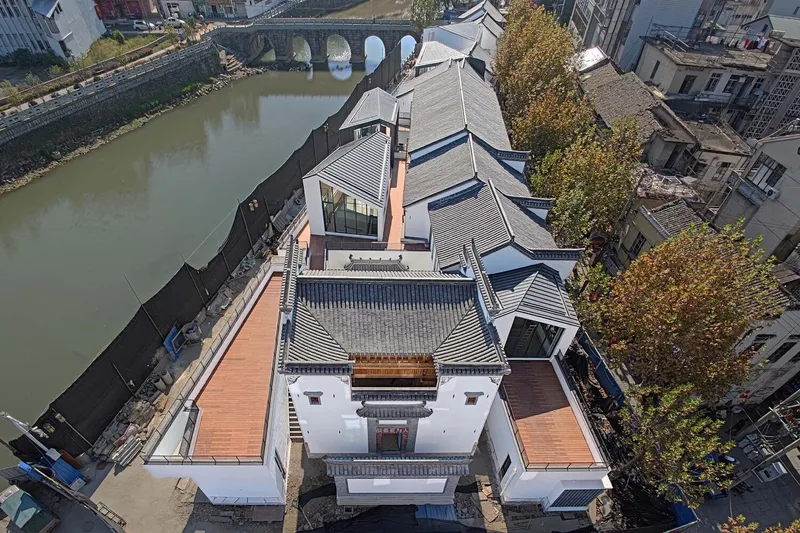
The project site is home to a cluster of mostly dilapidated wooden buildings, many of which date back to the Ming and Qing dynasties, interspersed with post-1949 masonry additions. Despite their lack of protected heritage status, these structures collectively embody the architectural vernacular and social fabric of Jingde. Recognizing this, the design team’s central objective was not only to preserve and restore the neighborhood’s original spatial layout but to infuse it with new life, allowing the district to re-emerge as a space for public gathering, commerce, and cultural tourism.
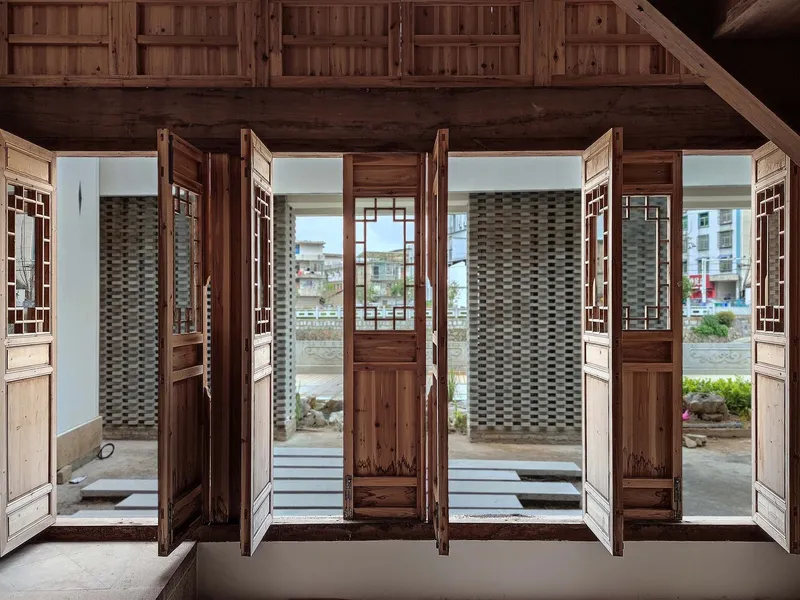
Adaptive Strategy: Preservation Meets Contemporary Use
The planning process began with an extensive building condition assessment and structural safety analysis, leading to a classification of structures for demolition, restoration, or adaptive reuse. The architectural strategy revolves around maintaining site memory while introducing new commercial and cultural functions.
Two new architectural forms are introduced:
- A two-story, sloped-roof block echoing the scale and rhythm of traditional buildings
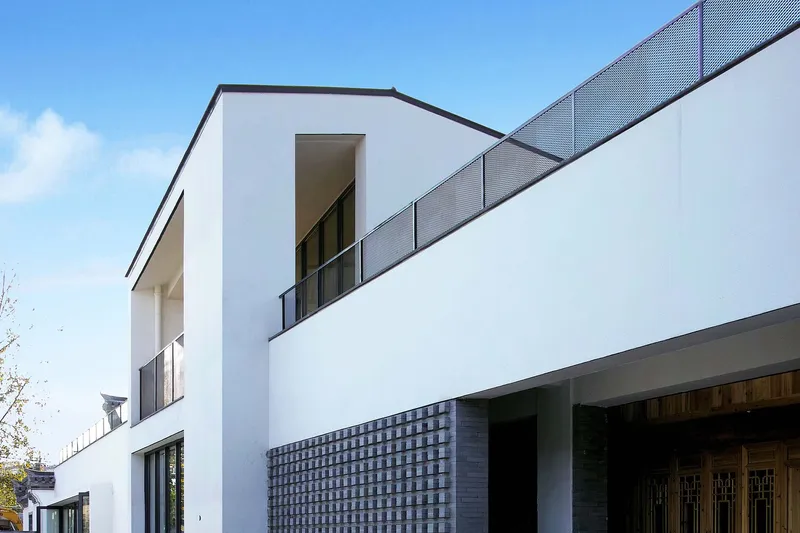
- A low horizontal volume that visually links new and old, acting as a unifying "enclosing wall"
This hybrid layout respects the historic site texture while enabling flexible use.
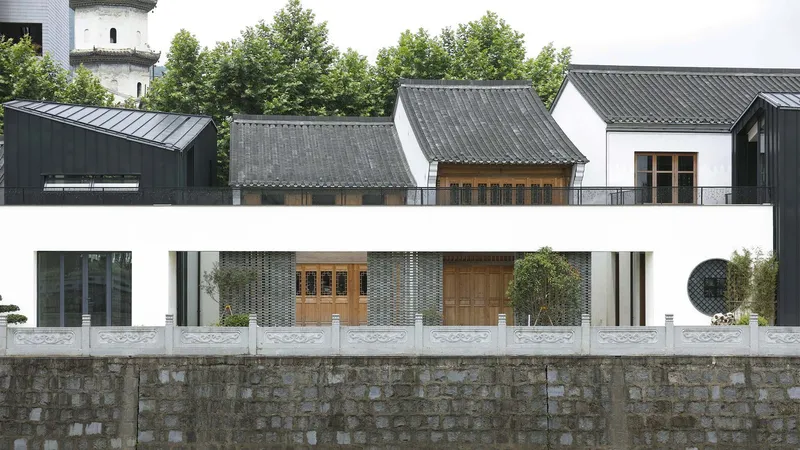
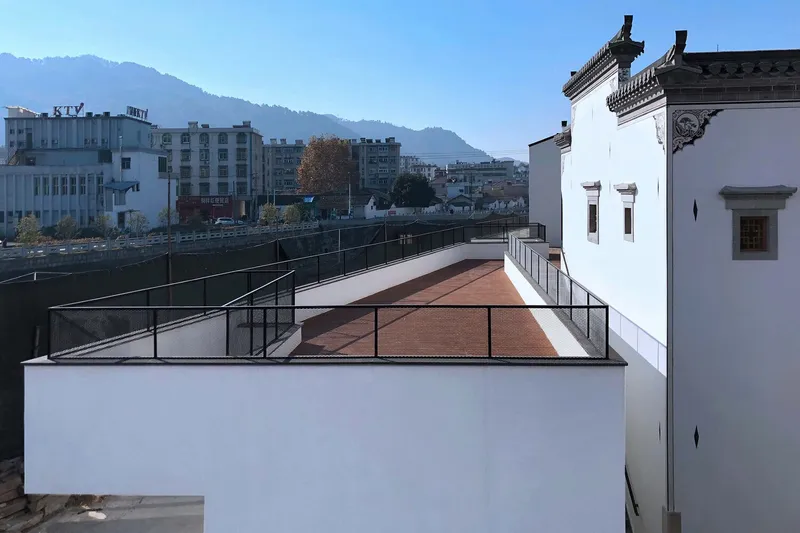
Spatial Concepts: Sponge Interface, Narrow Gardens, Multi-Dimensional Street
The revitalization introduces three spatial concepts to enrich the pedestrian and commercial experience:
- Sponge Interface: Alternating between shops and courtyards at the ground level, this layered design enhances visual and experiential depth. Two narrow alleys connect the commercial street to the riverside walkway, creating an inviting pedestrian scale and diversified urban rhythm.
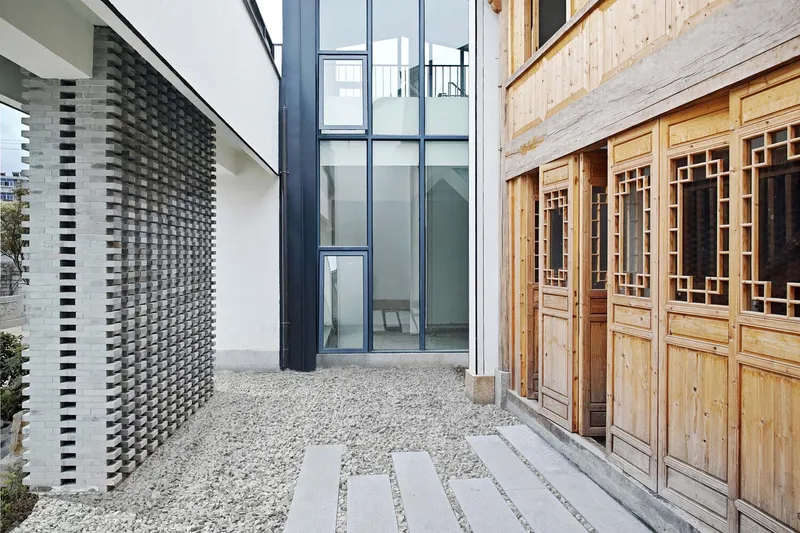
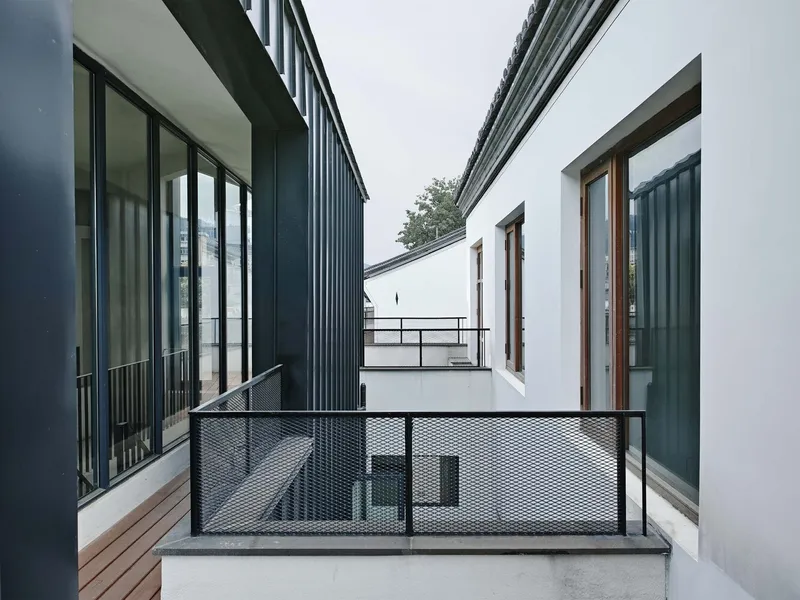
- Narrow Space Gardens: Micro-gardens are inserted between buildings, softening transitions between old and new structures. These small green spaces transform leftover voids into calm urban retreats.
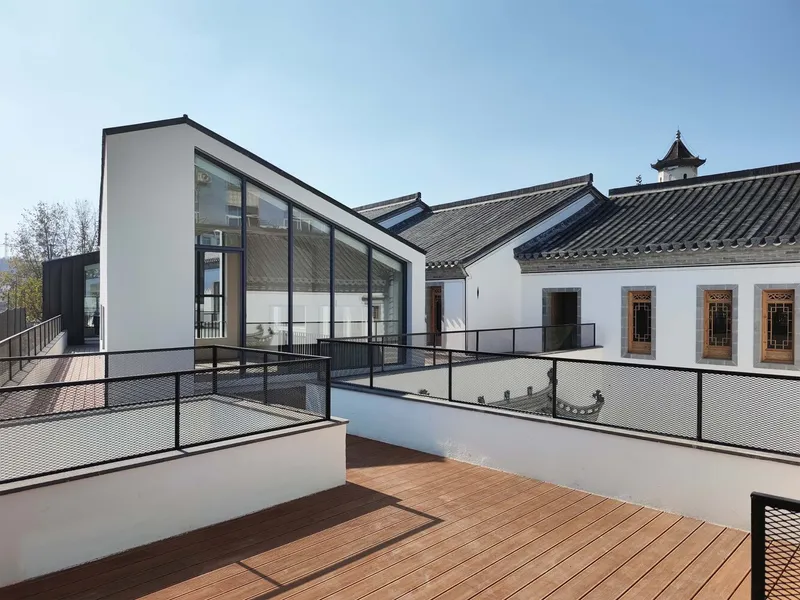
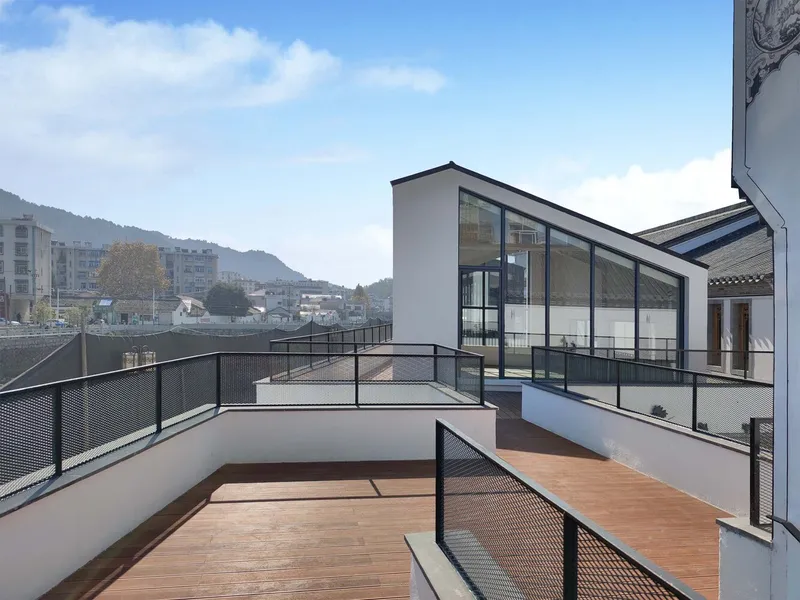
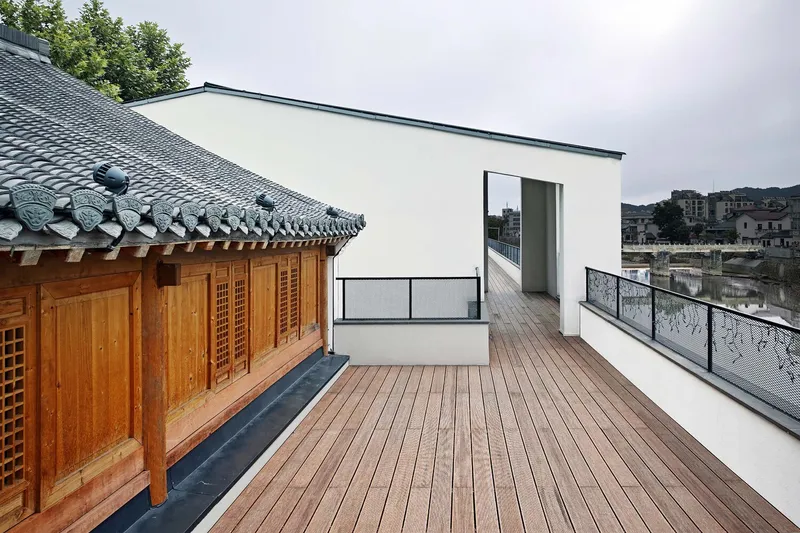
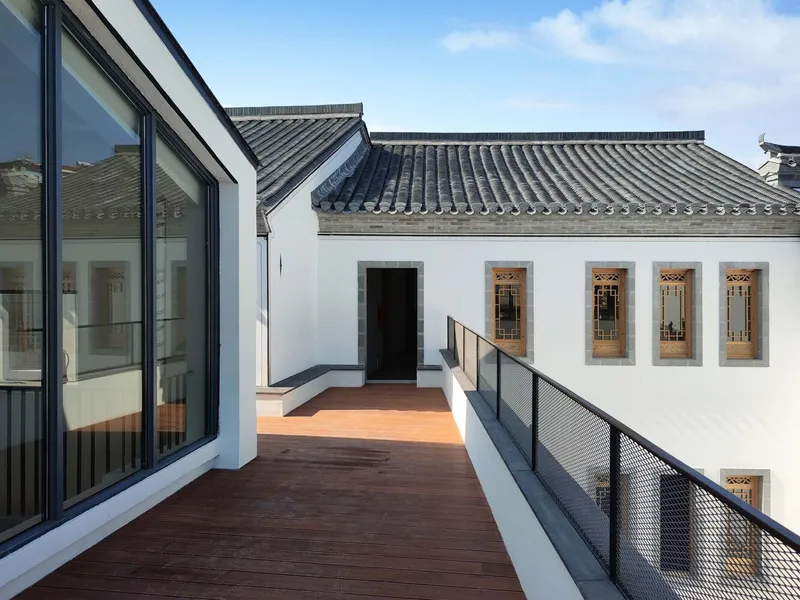
- Multi-Dimensional Street: A rooftop platform bridges old and new, producing a double-layered circulation network. It enables varied views of the Huishui River and the historic streetscape while extending the commercial flow vertically.
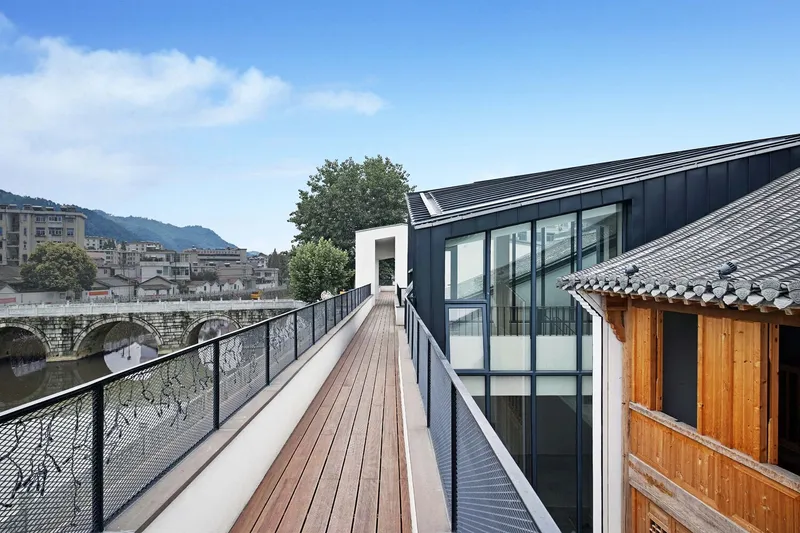
Program and Public Functions
The revitalized neighborhood features a mix of retail shops, snack stalls, museums, and public courtyards, centered around two major cultural anchors:
- A Wooden Movable Type Museum
- The Jingde Folk Museum
Between these are a series of courtyards, shaded walkways, rooftop platforms, and gathering nodes that replicate the leisurely spatial rhythms of Huizhou-style gardens.
This three-dimensional public space system offers more than restored architecture—it weaves cultural memory with contemporary urban life, allowing residents and tourists alike to reconnect with local history in dynamic, participatory ways.
Materials and Architectural Language
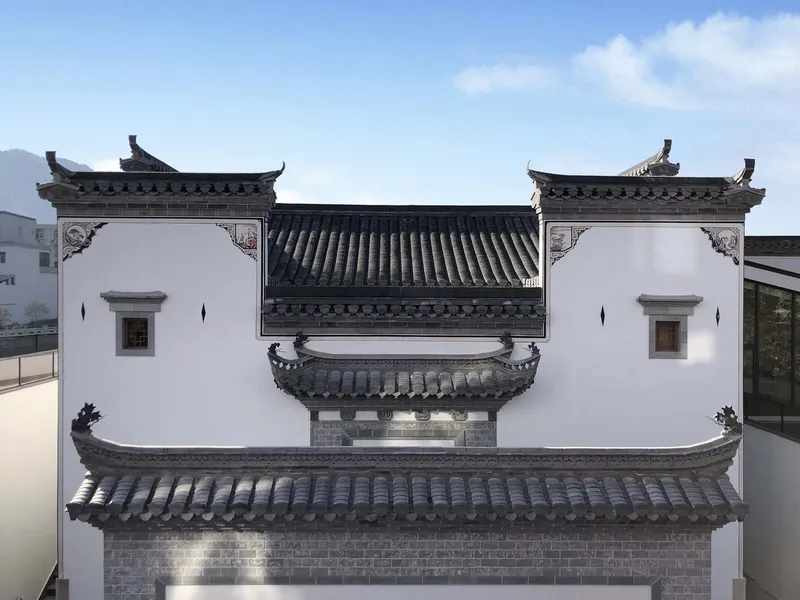
RAW Architecture Studio prioritized material authenticity and traditional construction techniques while introducing modern spatial clarity. Existing timber elements were preserved or replaced using historically accurate methods. Facades were repaired with Huizhou-style craftsmanship, maintaining consistency in scale, color, and materiality.
New buildings reference the old with whitewashed walls, grey tiled roofs, and minimalist detailing that reinterprets tradition through a contemporary lens.
Key Architectural Interventions
Building No. 7
Originally built post-1949, this masonry structure features a rare large-span timber truss roof. The structure was preserved and enhanced with new convex and concave balconies, introducing visual variation through semi-transparent brickwork.
Building No. 10
A well-preserved “si shui gui tang” courtyard, typical of southern Anhui, underwent comprehensive restoration. Two screen walls were added to reinforce its axial layout. Modern, single-story buildings on either side frame the courtyard and include an elevated staircase that allows visitors to view the old structures from above—a symbolic and spatial bridging of past and present.
By merging heritage preservation with new public infrastructure and commercial vitality, RAW Architecture Studio has successfully transformed Jingde Shuijie Street into a model for context-sensitive urban revitalization. The design honors the rhythm of traditional Huizhou urbanism while reimagining its future in an increasingly modern, participatory society.



Popular Articles
Popular articles from the community


Hill & Cross Opera: Sculptural Opera House Architecture Shaped by Tallinn’s Landscape and Identity
Hill & Cross Opera reimagines opera house architecture in Tallinn through its sculptural hill, civic plaza, glass wave and a luminous cross.

Riyadh For All: Intergenerational Urban Design for Active Aging in Rabat
Riyadh For All reimagines urban design in Rabat with intergenerational co-living, adaptive courtyards, and Moroccan cultural exchange today.

Lunar Spiral: Space Architecture Shaped by the Mathematics of the Universe
Lunar Spiral reimagines space architecture through Fibonacci geometry, lunar regolith, levitating habitats, and self-sustaining Moon living.

Co-life: Sustainable Architecture for Age-Friendly Community Living
Co-life reimagines sustainable architecture for seniors through courtyards, rammed earth, shared gardens, and spaces designed for belonging.

Similar Reads
You might also enjoy these articles


Hodi-Mandai Geram
Project Function: Preservation and revitalization of the Intangible heritage and socio-spatial identity of the Hodi by Housing, Cultural Memory Center, Sacred Grove, landscape, local tourism economy


Olio Towers: A Mid-Rise for Performers That Fuses Housing, Rehearsal, and Stage
Located blocks from Houston's Theater District, this modular tower stacks living units around a central performance atrium.

Oasis: Modular Green Housing Carved into Dhaka's Urban Fabric
A shortlisted Plugin Housing entry reclaims unauthorized settlements in Dhaka with stepped concrete volumes, green roofs, and ventilation-driven design.

Black Hole: A Floating Megastructure for the Post-Physical Era
Emiliano Mazzarotto envisions a spherical, self-scaling arena where e-sports, digital hotels, and holographic stadiums replace traditional public space.


Explore Urban Design Competitions
Discover active competitions in this discipline



Challenge to reimagine the Iron Throne


Photograph architecture without architects


Illustrate the lost glory of Angkor Wat - Render Challenge


Design challenge to reuse E-waste
Comments (0)
Please login or sign up to add comments
No comments yet. Be the first to comment!