
Round Pavilion by Atelier Guo: Redefining Contemporary Pavilion Architecture in a Garden Setting
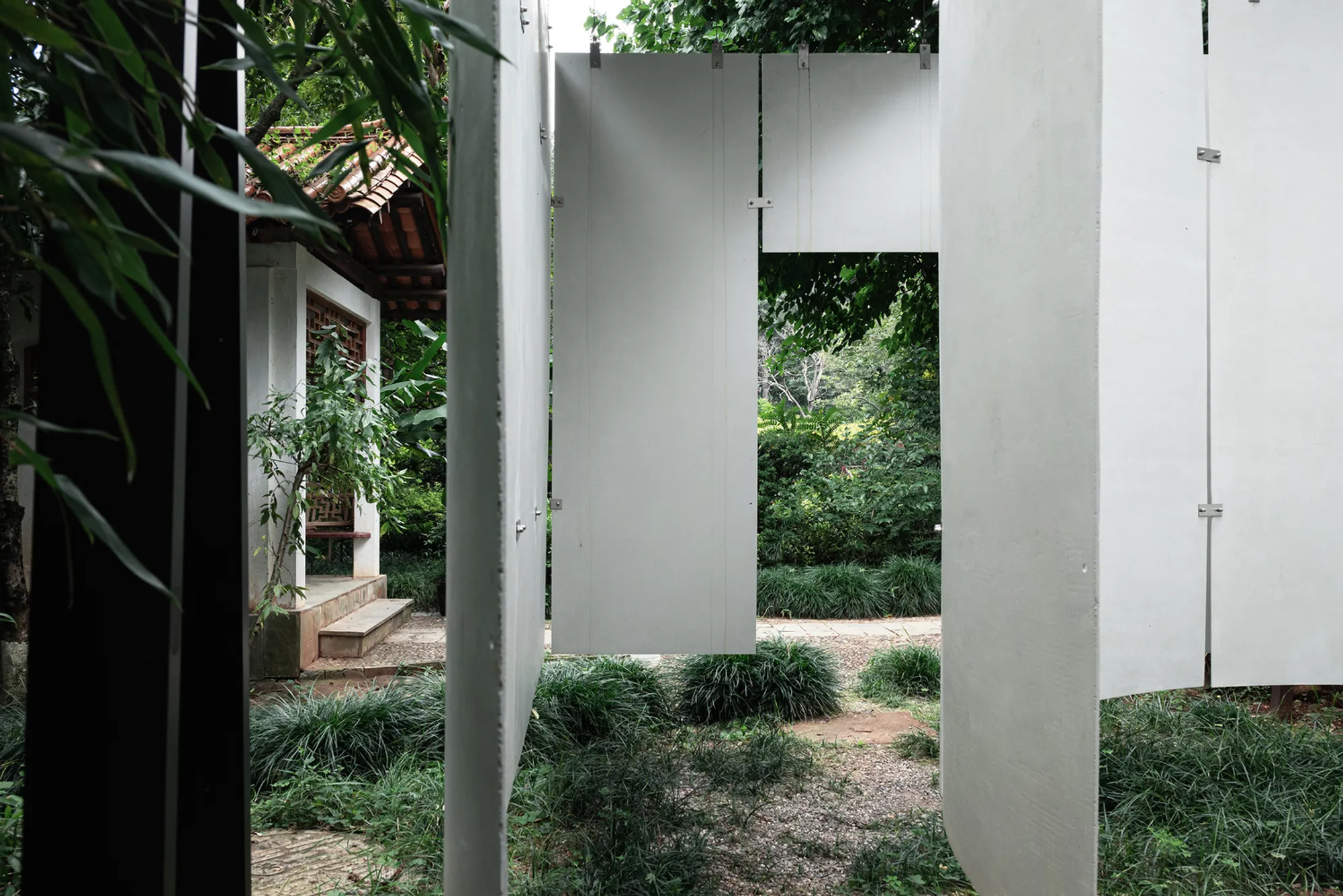
Round Pavilion by Atelier Guo is a contemporary pavilion architecture project blending structure, landscape, and perception within Kunming’s Herbal Garden.


Introduction to Pavilion Architecture in Contemporary Design
Pavilions have long served as spaces of cultural dialogue, leisure, and reflection within landscapes. In contemporary architecture, they have evolved into structures that explore spatial experience, material innovation, and the blending of installation with permanent form. The Round Pavilion by Atelier Guo in Kunming, China, designed in 2024, represents this evolution. Situated within the Herbal Garden of Expo Park, the project redefines how a pavilion can function as both an architectural landmark and a contemplative public space.
Context: A Garden Pavilion with Public Vitality
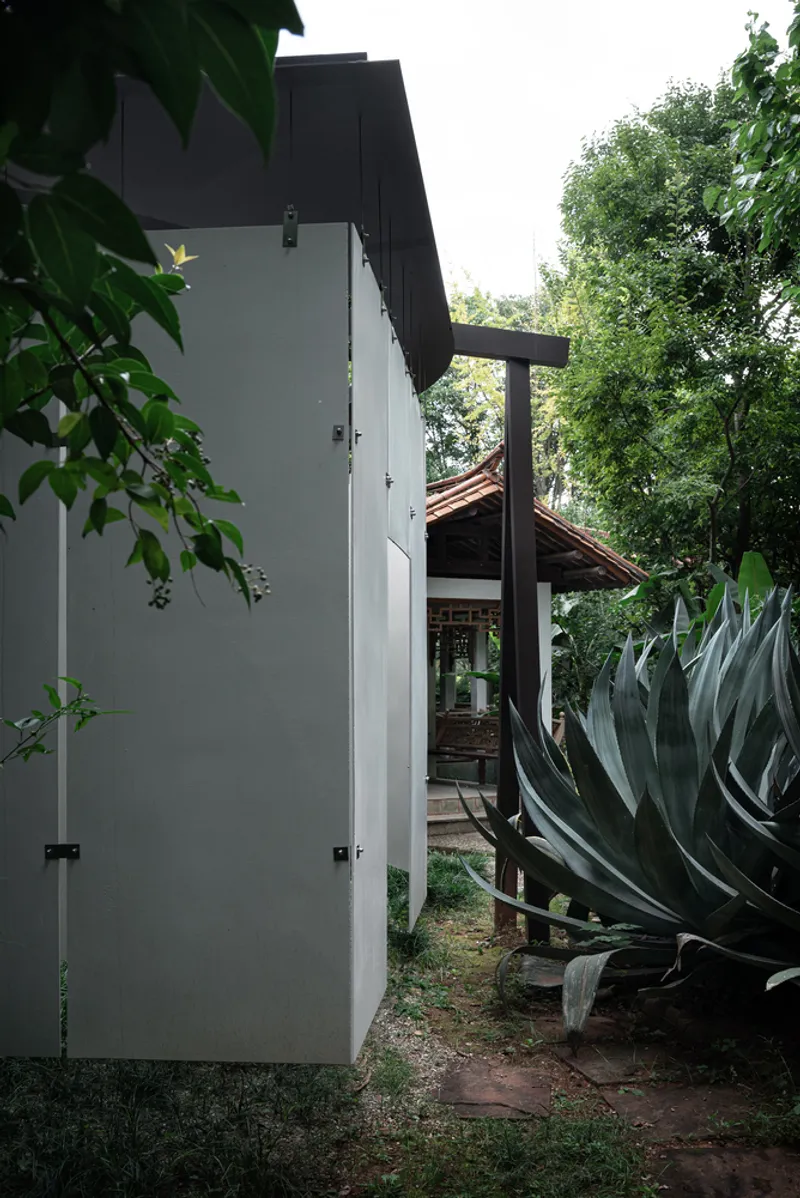
Located away from the main Expo pavilions, the Round Pavilion inhabits a tranquil corner of the park. Enveloped by lush, exotic vegetation, it creates an atmosphere of intimacy and retreat. Unlike the grand narratives and dominant landscapes of Expo grounds, this small garden pavilion becomes a place of everyday vitality—where laughter, conversations, and community presence shape its identity. Its understated design allows it to merge seamlessly with its natural context, yet it quietly asserts itself as a point of spatial focus.
Design Intent: Extending and Converging Space
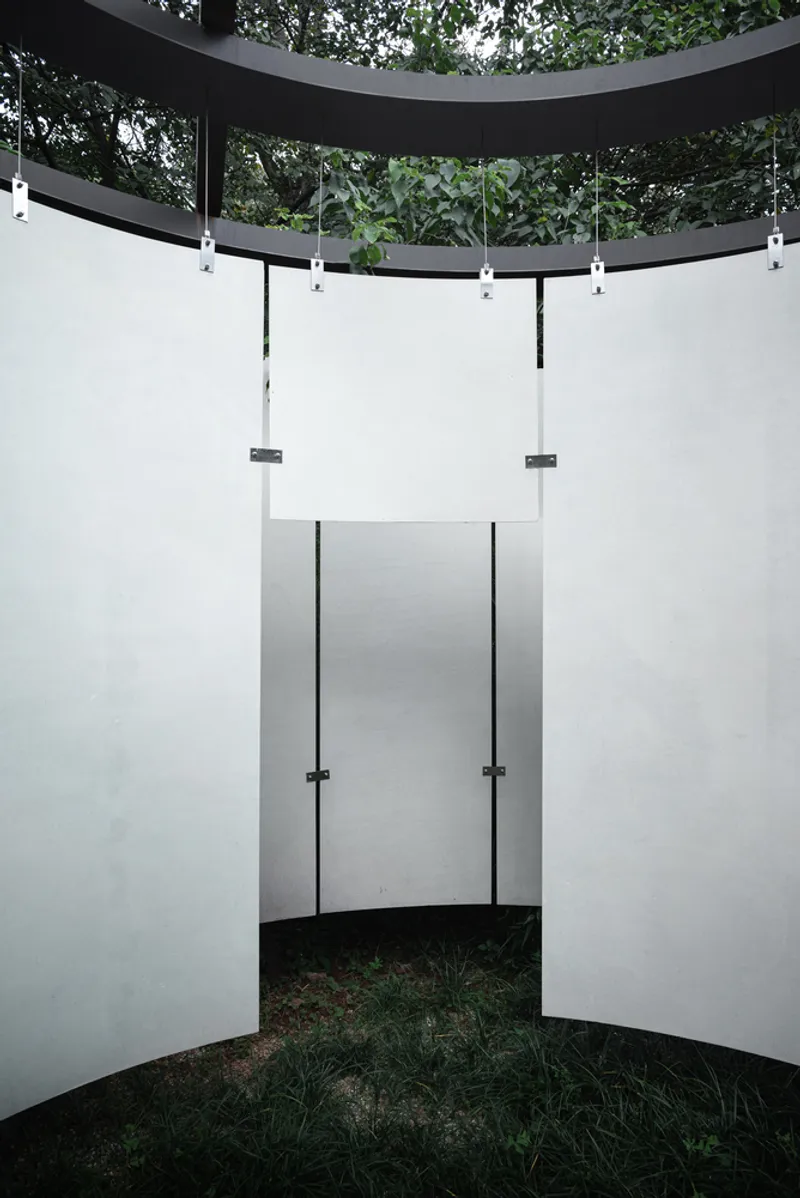
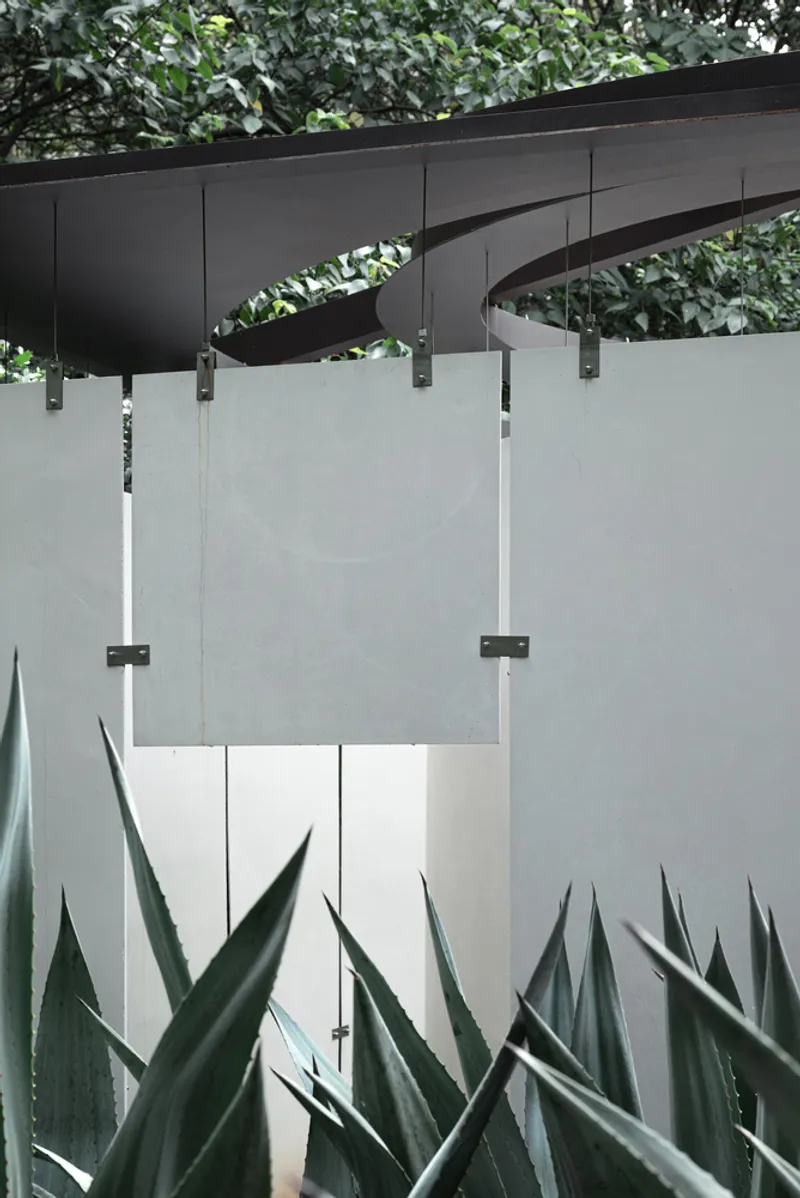
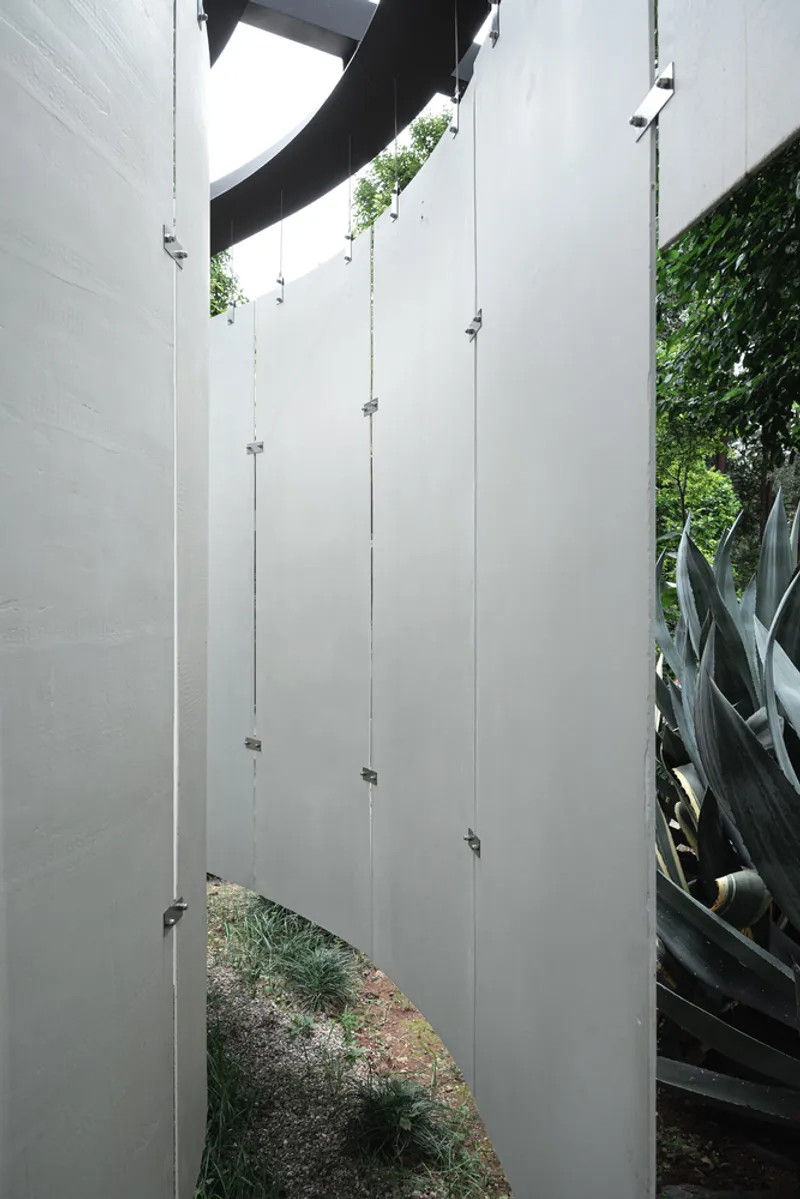
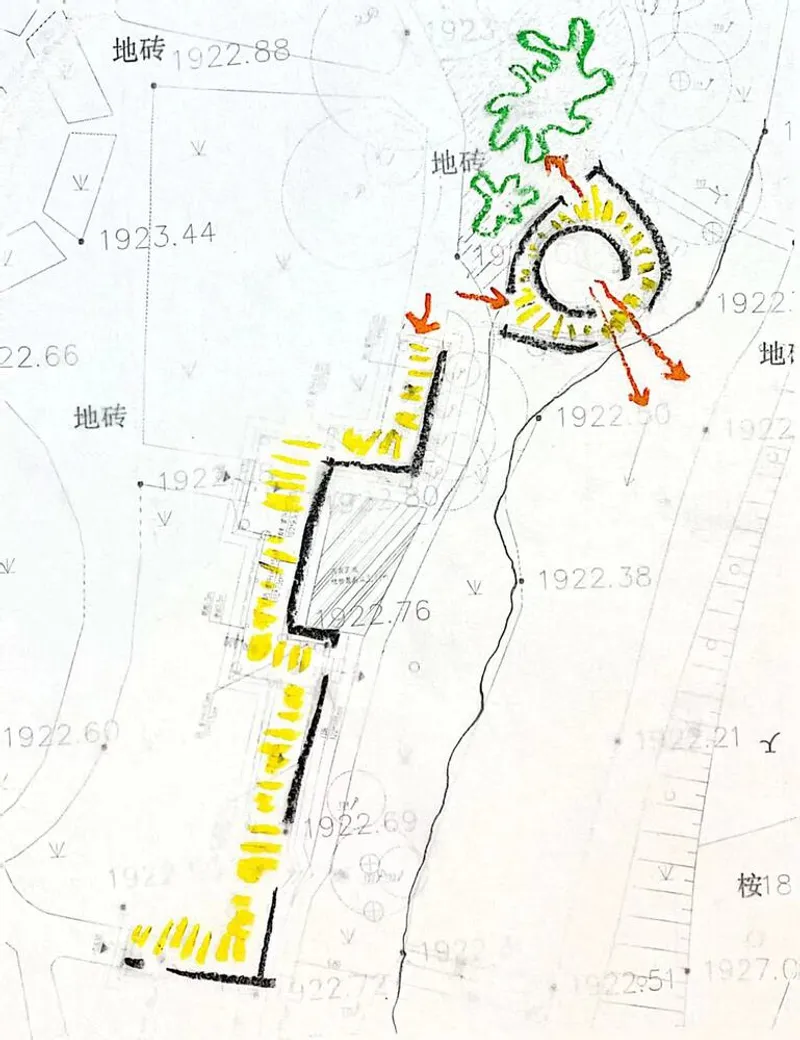
Atelier Guo approached the design as both continuation and resolution. The pavilion extends the linear geometry of the existing garden corridor, culminating in a space of convergence and spatial reconciliation. Using white walls as a guiding language, the design directs scale, sightlines, and orientation. The curving pathway creates a continuous unfolding experience, blurring directional clarity and geometric certainty. Here, pavilion architecture is less about rigid form and more about intuitive discovery, where fragmented impressions gradually merge into a holistic spatial experience.
Structure: Between Installation and Architecture
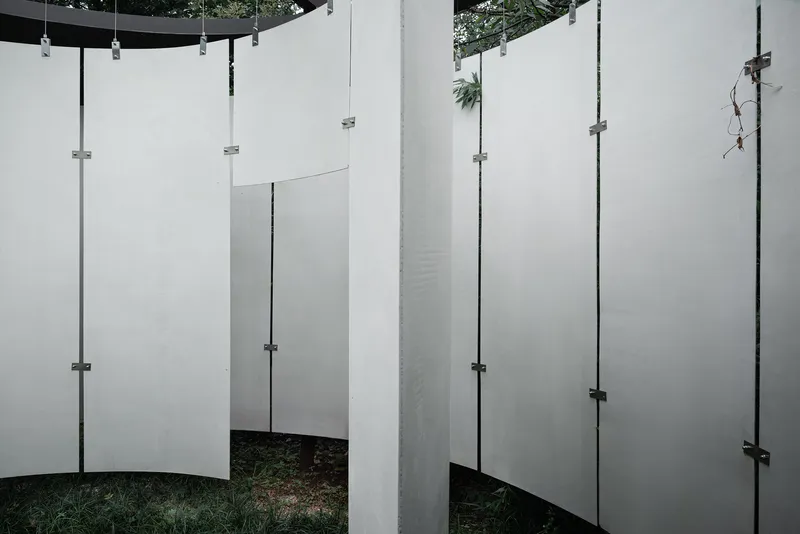
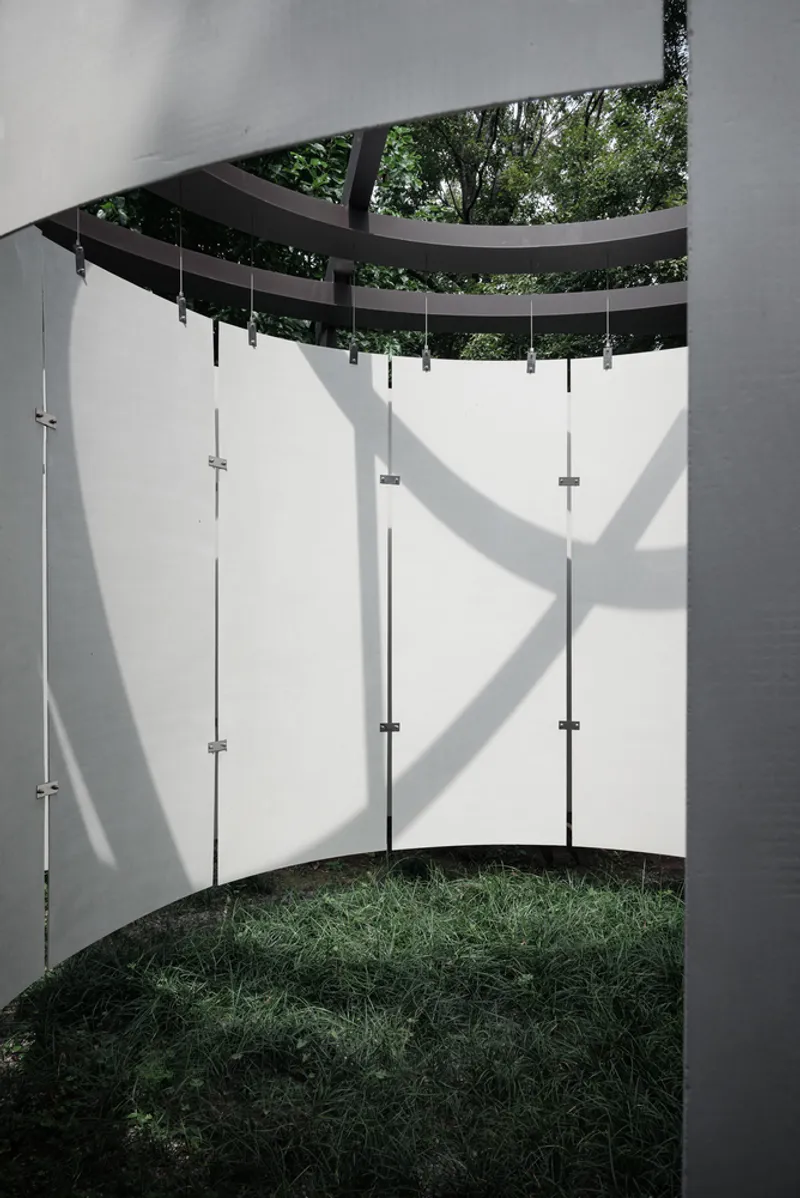
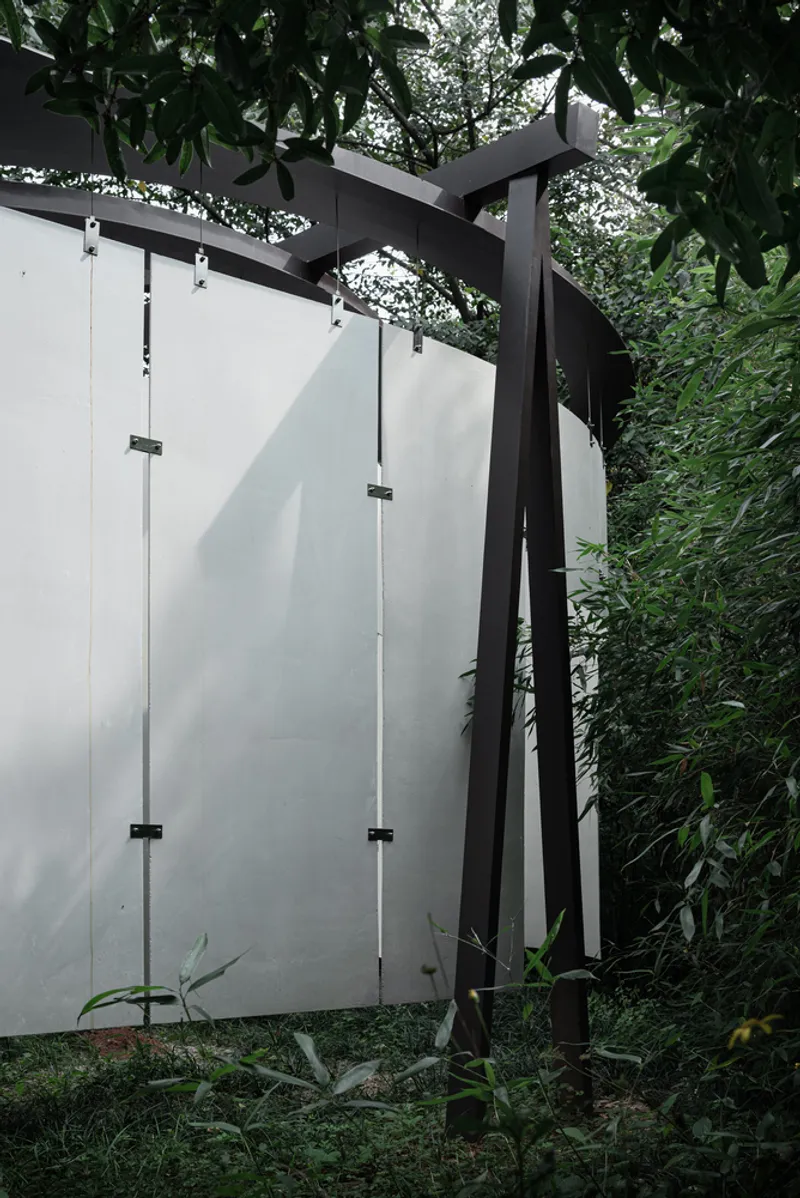
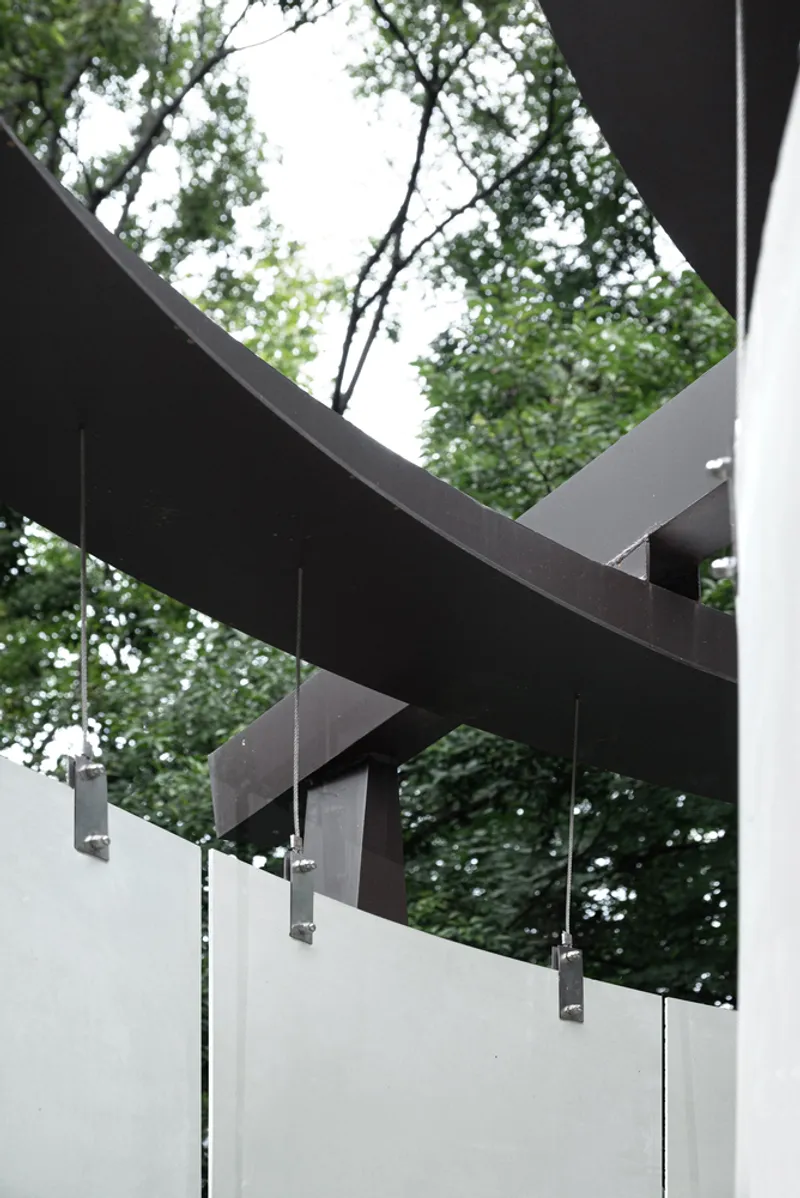
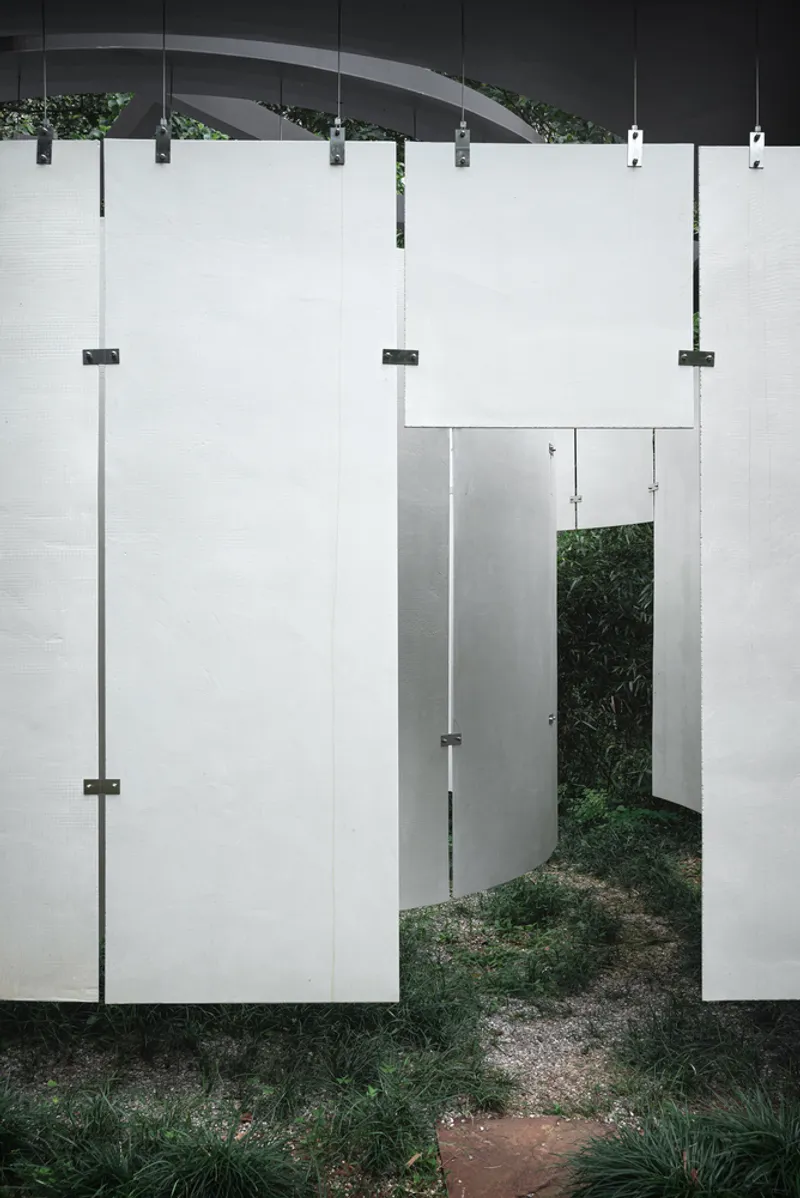
The Round Pavilion embodies ambiguity: Is it a wall, a roofed structure, or an installation? The project follows a top-down logic with minimal foundations, ensuring light intervention on the site. Instead of creating a solid roof, Atelier Guo introduced a structural framework with shallow eaves that soften the intersections. This layering of wall, roof, and ground defines the pavilion’s presence as something both architectural and ephemeral, oscillating between a permanent structure and a temporary installation.
Material Exploration: Lightness Through White Concrete
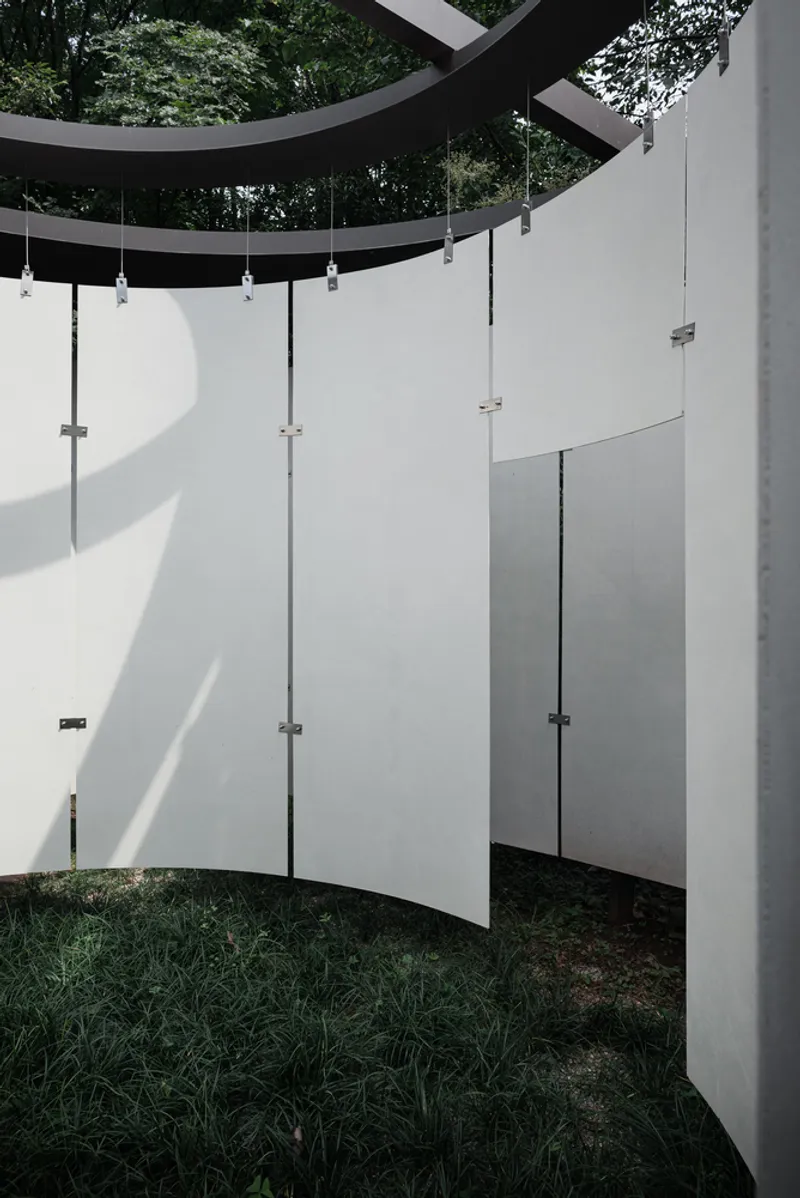
A pivotal moment in the design occurs when entering the central space, where heavy mass transitions into weightless thinness. Ultra-thin precast white concrete panels were employed to balance structural stability with visual delicacy. These panels, slightly reflective and softly curved, create shifting plays of light and shadow. The result is a gentle resilience—surfaces that serve as projection screens for the surrounding vegetation, reminiscent of ink-washed silk scrolls. This poetic use of material elevates the Round Pavilion beyond mere shelter, transforming it into a contemporary pavilion architecture experiment in perception and tactility.
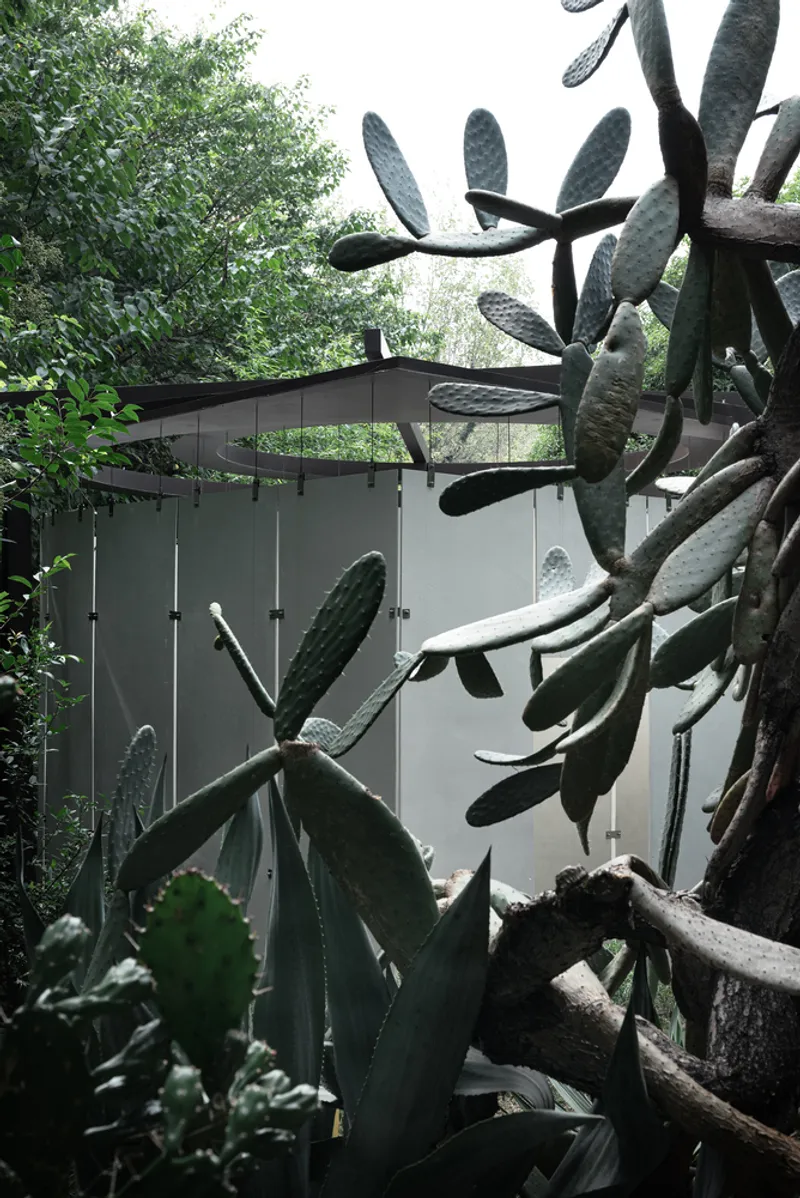
Spatial Experience: Fragmented Views and Continuous Motion
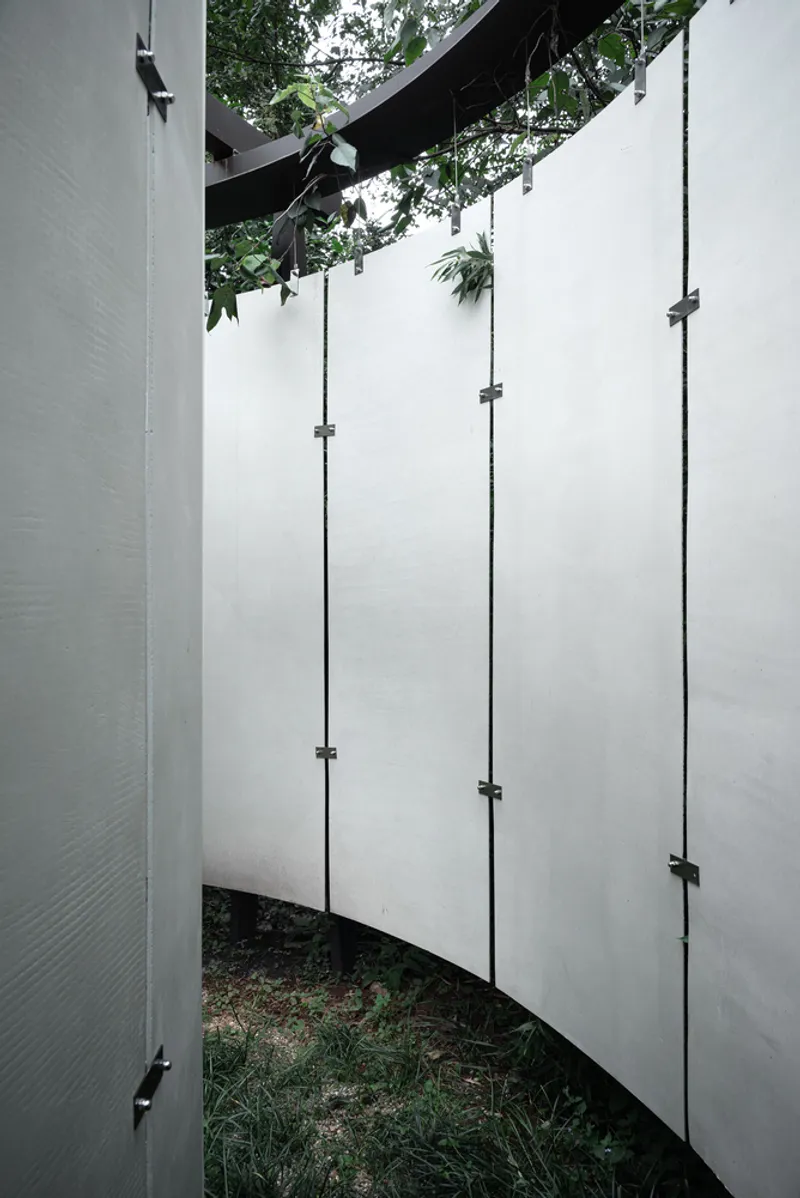
Moving through the pavilion reveals a choreography of fragmented glimpses—scenes partially framed, layered, and reassembled as one walks along the curved path. This fragmented perception becomes seamless in motion, merging structure, landscape, and light into a unified experience. The design suggests that the unrealized “golden roof” of the Expo might have instead taken form in these continuous white walls, extending the narrative of the garden through architectural subtlety rather than spectacle.
A Contemporary Interpretation of Pavilion Architecture
The Round Pavilion by Atelier Guo demonstrates how pavilion architecture can transcend function to become a spatial meditation. By merging lightness and solidity, installation and permanence, intimacy and openness, the pavilion embodies the poetic potential of contemporary architecture in public gardens. It is both a resting place and a cultural reflection, offering a fresh interpretation of how architecture can amplify the rhythms of nature while shaping shared experiences.

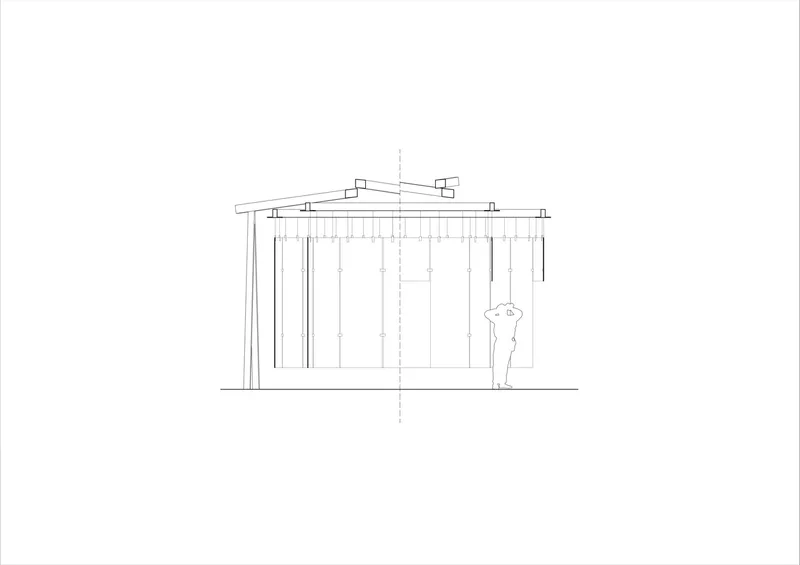
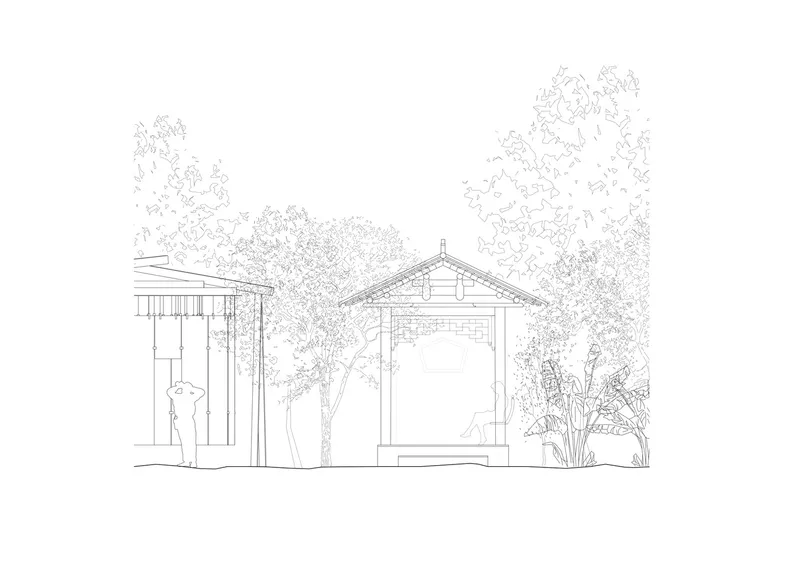
All Photographs are works of Ziqian Wang, Qingshan Wu




Popular Articles
Popular articles from the community


The Musturak Paradise: Senior Living Architecture for a Connected Future in Temara, Morocco
The Musturak Paradise reimagines senior living architecture in Temara via private homes, social spaces, culture, community, and shared care.

Lunar Spiral: Space Architecture Shaped by the Mathematics of the Universe
Lunar Spiral reimagines space architecture through Fibonacci geometry, lunar regolith, levitating habitats, and self-sustaining Moon living.

Conexión: Biophilic Design Reimagines High-Rise Living in Hong Kong
Conexión reimagines high-rise living in Hong Kong through biophilic design, green facades, shared spaces, daylight, water and nature within.

The Ocean Hive: Sustainable Architecture for a Self-Sufficient Civilization at Sea
The Ocean Hive imagines sustainable architecture at sea, where modular habitats, algae, wave power and ocean waste sustain a growing colony.


Similar Reads
You might also enjoy these articles

Bamboo Housing Challenge 2026: Design Affordable, Sustainable Homes Using Bamboo
An international design competition by Bamboo U and IBUKU inviting architects and designers to reimagine affordable housing using bamboo — with the winning design built full-scale in Bali.

Computational Design & Education: Beegraphy Design Awards Introduces 7th Category (Featuring Jiyun's Innovative Approach)
Dive into Beegraphy’s 7th Design Awards category, where computational design meets education to create immersive, interactive learning tools, inspired by Jiyun’s work.

From Parametric Lighting to Urban Furniture: Join the 2nd Workshop in Beegraphy’s Computational Design Series
Dive into Cutting-Edge Design Techniques and Practical Applications with Industry Experts

Last Call: Unleash Your Architectural Genius in SHAK's Kindergarten Design Competition
Urgent call for architects to join SHAK's kindergarten design competition before the looming deadline


Explore Pavilion Competitions
Discover active competitions in this discipline



Challenge to reimagine the Iron Throne


Photograph architecture without architects


Illustrate the lost glory of Angkor Wat - Render Challenge


Design challenge to reuse E-waste
Comments (0)
Please login or sign up to add comments
No comments yet. Be the first to comment!