

Sámi Primary and Secondary School in Kautokeino by Ola Roald Arkitektur/Holar
Circular Sámi school in Kautokeino blending Indigenous culture, Arctic landscape, and community-centered educational architecture through symbolic design and timber interiors.


Located in Kautokeino, the cultural heart of the North Sámi region, the Sámi Primary and Secondary School stands as a powerful example of culturally responsive educational architecture. Designed by Ola Roald Arkitektur/Holar and completed in 2023, the 6,000 m² campus redefines contemporary Nordic school design through a deeply rooted connection to Sámi identity, language, and landscape.
Situated in Finnmark County, Norway’s largest Sámi municipality, Kautokeino is home to a community where nearly 90% of students speak North Sámi as their mother tongue. The architectural competition, announced in 2020, called for more than a functional school building. It demanded a structure that would embody Sámi culture, strengthen linguistic heritage, and serve as a vibrant civic space for the wider community.

Architecture Inspired by Sámi Vernacular and Landscape
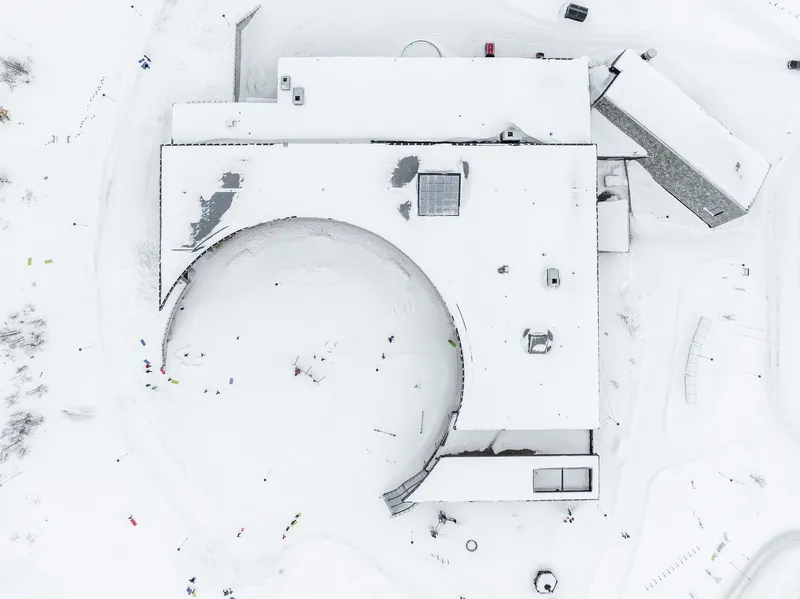
The design concept draws from traditional Sámi building culture, particularly the lavvu, the iconic tent structure that defines communal and domestic life in Sápmi. Characterized by simplicity, adaptability, and harmony with nature, Sámi vernacular architecture places the vast landscape at the center of experience. The open horizon and expansive Arctic sky form the primary “room,” while the lavvu provides shelter, warmth, and intimacy.
Translating these spatial principles into contemporary school architecture, the architects adopted the circle as the project’s central formal and symbolic motif. The circular geometry references:
- The base of the lavvu where it meets the earth
- The circular roof opening that frames the sky
- Reindeer enclosures and herd movement patterns
- The Sámi flag and cyclical concept of eight seasons
- Traditional joik rhythms and ceremonial dress in motion
By embedding circular spatial organization into the plan, the building expresses continuity, inclusivity, and cultural resilience.
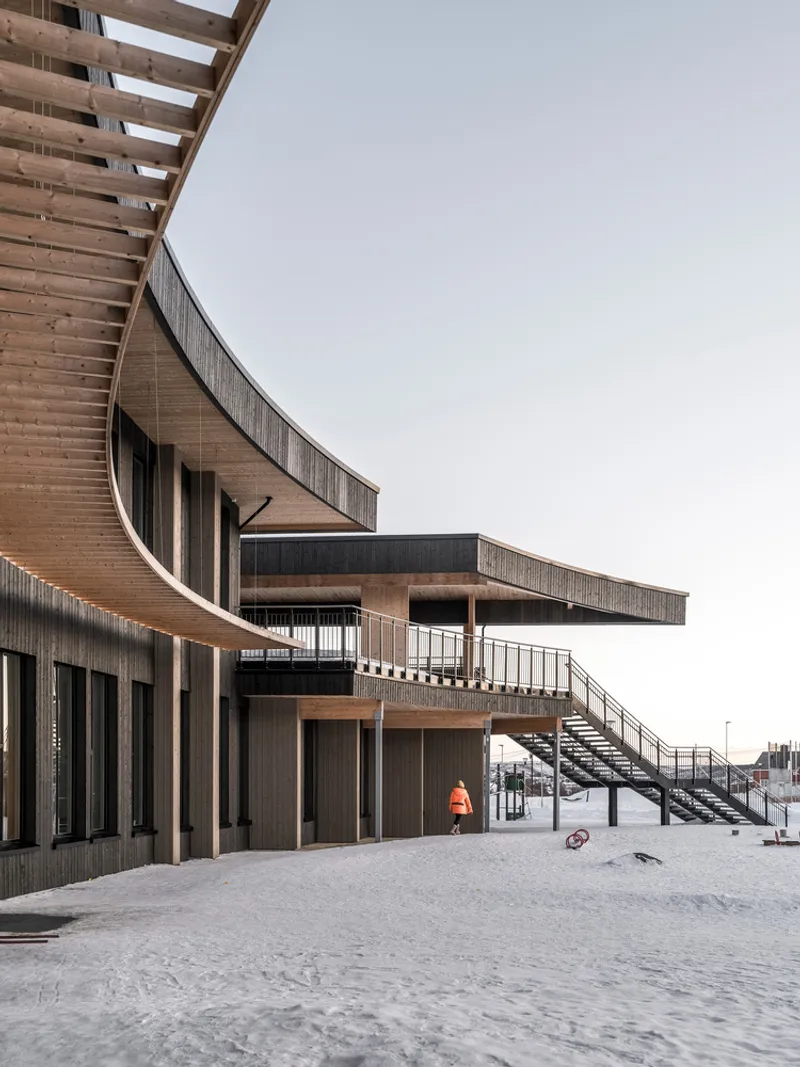
Circular Form as Spatial and Social Connector
4
The circular configuration organizes diverse educational functions: classrooms, communal areas, administrative spaces, and gathering halls, into a cohesive spatial system. Contemporary schools demand flexibility, acoustic control, daylight optimization, and multifunctional adaptability. This project successfully balances these technical requirements with cultural symbolism.
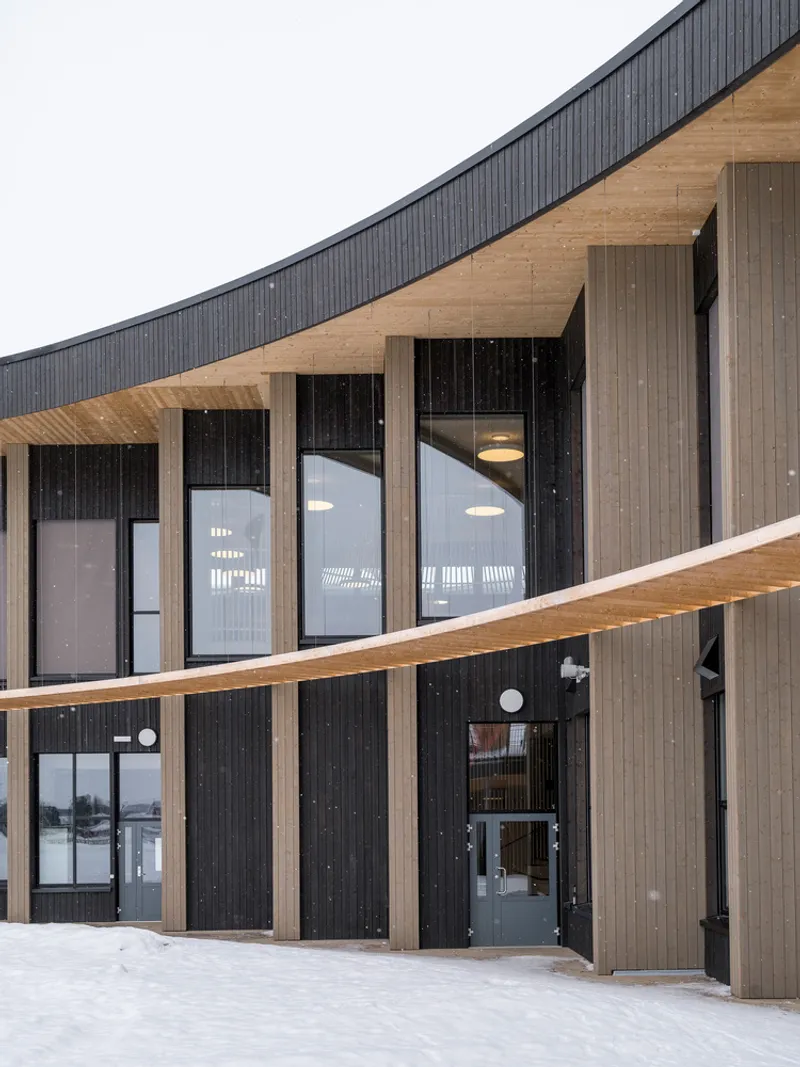
At the heart of the building lies a central gathering space reminiscent of the communal interior of a lavvu. Like the traditional tent structure, the architecture offers protection from harsh Arctic weather while fostering social interaction, storytelling, and shared learning. The circular form visually and physically connects interior and exterior, reinforcing a sense of unity between built form and tundra landscape.
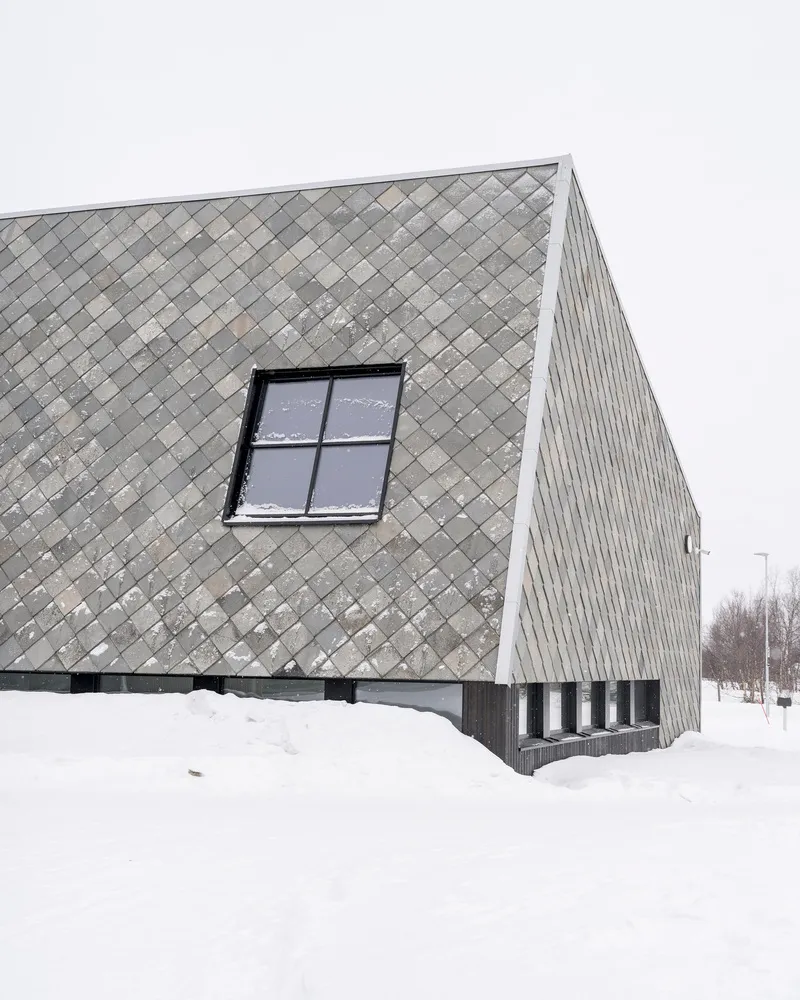

Cultural Identity Through Materials and Atmosphere
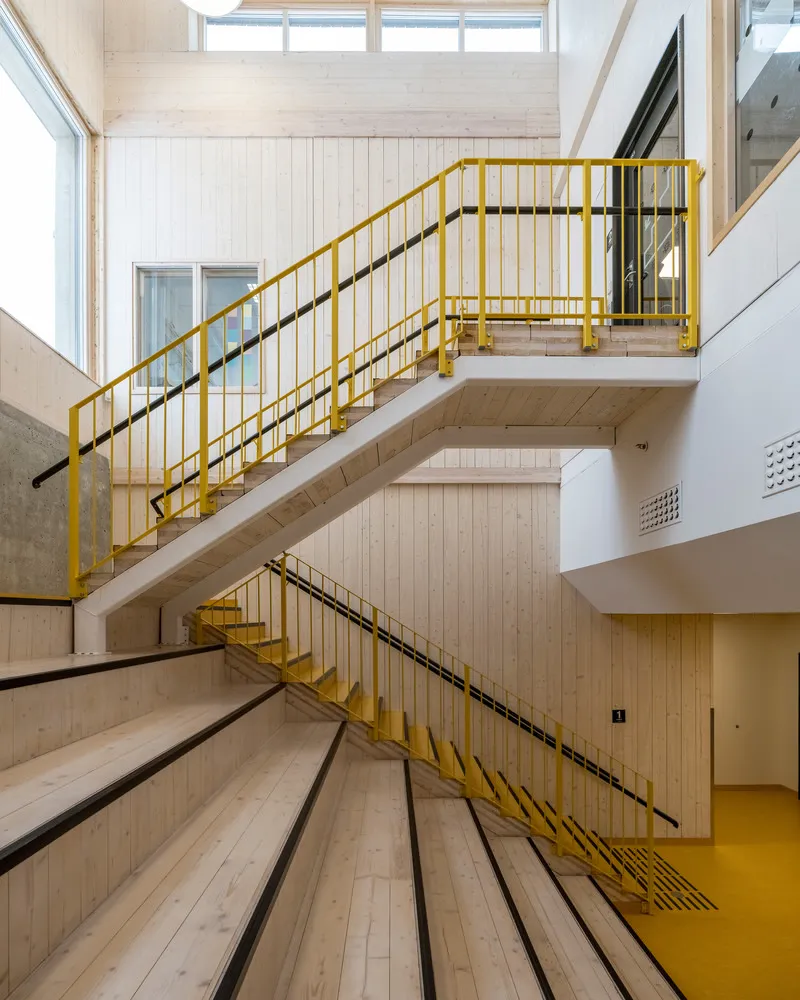
Material selection and detailing were guided by the competition’s requirement that visitors should immediately recognize the building as a Sámi school in Sápmi. The use of natural materials, warm timber interiors, and tactile surfaces establishes a sensory link to local craftsmanship and environmental context. The architecture avoids superficial symbolism; instead, identity is expressed through proportion, geometry, light, and spatial sequencing.
Daylight filters into the building in a manner reminiscent of the lavvu’s roof opening, framing the sky and reinforcing the relationship between students and the Arctic environment. The spatial rhythm encourages gathering, dialogue, and collective participation, strengthening the educational mission of cultural preservation.
A School as Community Infrastructure
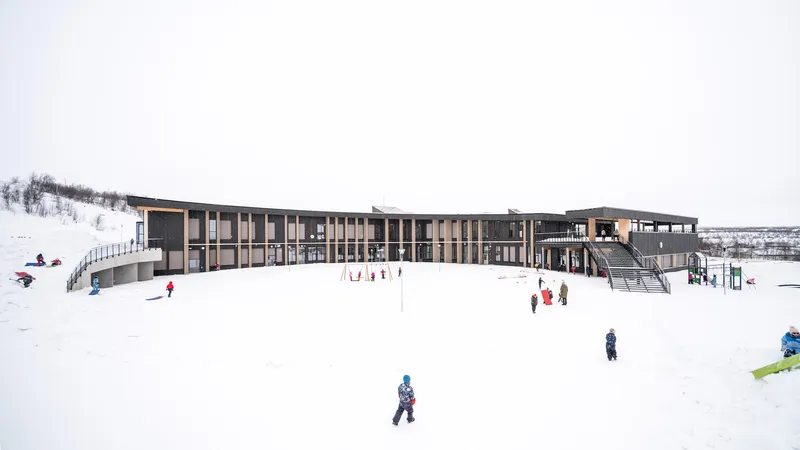
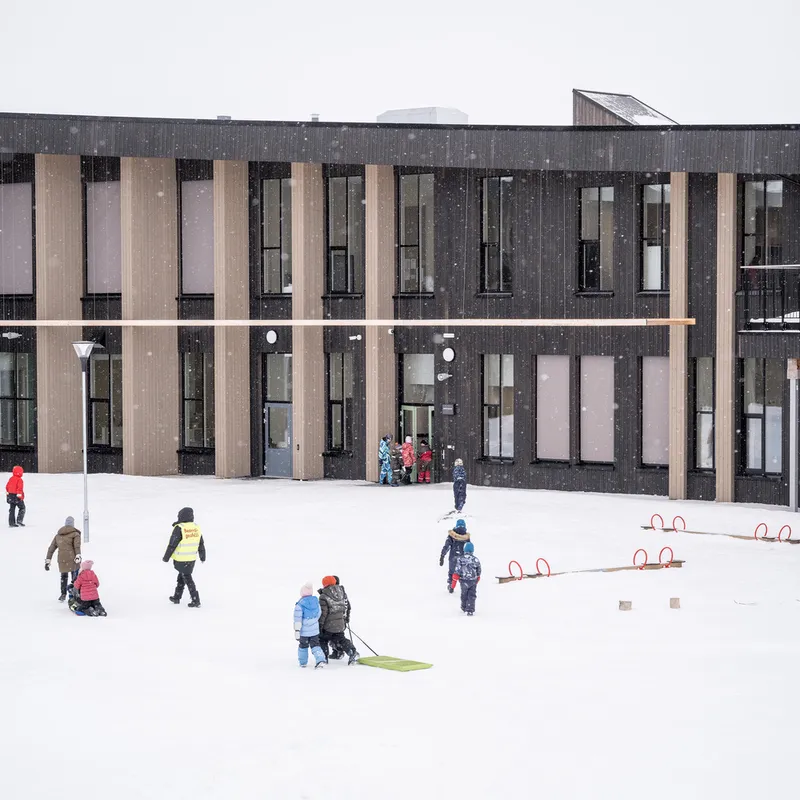
Beyond its educational function, the Sámi Primary and Secondary School operates as a civic anchor for Kautokeino. Designed to accommodate events after school hours, the building includes a grand hall and flexible spaces for community gatherings, celebrations, and cultural performances. This multifunctional strategy transforms the project into a sustainable public architecture model, one that supports both learning and social cohesion.

The school exemplifies how contemporary educational architecture in Norway can merge pedagogical innovation with Indigenous cultural expression. Through careful dialogue with local traditions and community expectations, the architects have created a building that does not merely house education, it actively cultivates identity.

Contemporary Nordic Educational Architecture Rooted in Heritage
The Sámi Primary and Secondary School in Kautokeino represents a milestone in culturally grounded school design. By synthesizing circular geometry, vernacular inspiration, and modern programmatic efficiency, Ola Roald Arkitektur/Holar demonstrates how architecture can act as a medium of language preservation and cultural continuity.
This project stands as a benchmark for sustainable educational architecture, Indigenous design integration, and Arctic-responsive construction. It reinforces the idea that schools are not neutral containers, but powerful spatial narratives capable of shaping identity and community for generations.

All photographs are works of
Rasmus Hjortshøj



Popular Articles
Popular articles from the community


Conexión: Biophilic Design Reimagines High-Rise Living in Hong Kong
Conexión reimagines high-rise living in Hong Kong through biophilic design, green facades, shared spaces, daylight, water and nature within.

The Musturak Paradise: Senior Living Architecture for a Connected Future in Temara, Morocco
The Musturak Paradise reimagines senior living architecture in Temara via private homes, social spaces, culture, community, and shared care.

Hill & Cross Opera: Sculptural Opera House Architecture Shaped by Tallinn’s Landscape and Identity
Hill & Cross Opera reimagines opera house architecture in Tallinn through its sculptural hill, civic plaza, glass wave and a luminous cross.

The Earth Pod: 3D Printed Homes for Resilient Refugee Communities
The Earth Pod reimagines refugee housing through 3D printed homes made from clay, combining resilience, self-sufficiency, and rapid shelter.

Similar Reads
You might also enjoy these articles


FAMM Arquitectura Organizes Ten Villas Around Courtyards and Jungle in Nosara, Costa Rica
El Molino pairs two elongated volumes with deep overhangs and timber louvers to build a compact coastal community five minutes from the beach.
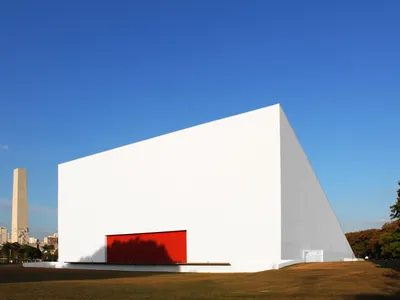
Oscar Niemeyer's Ibirapuera Park Pavilions Define São Paulo's Cultural Identity in Concrete and Curve
A constellation of modernist volumes set within São Paulo's most important urban park, conceived for the city's 400th anniversary in 1954.
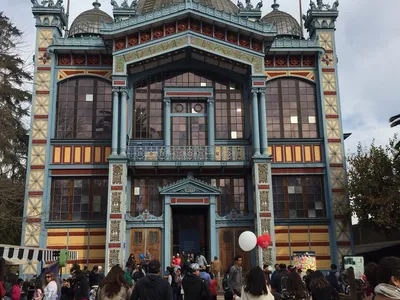
How Henri Picq's 1889 Paris Pavilion Traveled 11,000 Kilometers to Become Santiago's Artequín Museum
A prefabricated iron and glass pavilion built for the Paris Universal Exposition found a second life as a children's art museum in Chile.
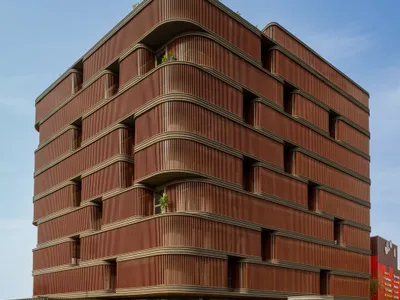
Sanjay Puri Architects Wraps a Jaipur Office Tower in Capsule-Shaped Green Buffers
A nine-level climate-responsive workplace near Jaipur Airport uses stacked planter terraces and aluminium screens to fight 40°C heat.

Explore Architecture Competitions
Discover active competitions in this discipline



Challenge to design public laboratory


Challenge to reimagine the Iron Throne


Photograph architecture without architects


Illustrate the lost glory of Angkor Wat - Render Challenge
Comments (0)
Please login or sign up to add comments
No comments yet. Be the first to comment!