
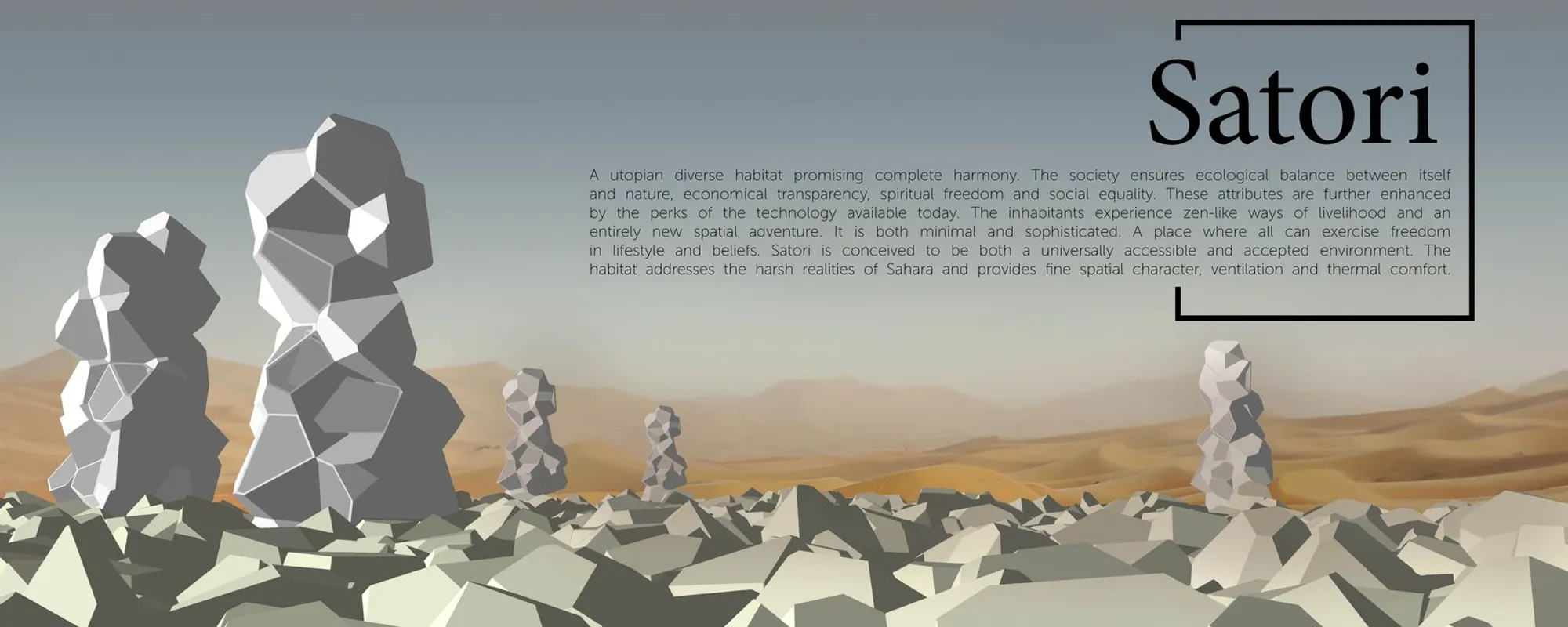
Satori: A Futuristic Sustainable Habitat in the Heart of the Desert
A modular, sustainable architecture prototype reimagining inclusive living, resilient design, and futuristic desert urbanism.


Satori: A Sustainable Architecture Prototype for the Future
Designed in response to rising climatic extremities, escalating urban densities, and unprecedented migratory trends, Satori stands as a groundbreaking sustainable architecture prototype. It redefines not just the form and function of urban habitats, but also the very foundation of how we live, work, and coexist within the built environment. Envisioned by architect Phani Ram Pingali and recognized as a shortlisted entry in the prestigious EHC - Sahara competition, Satori is a bold proposition toward ecological urbanism that blends cutting-edge technology with holistic human values.
Prototype Urban Planning
Occupying a 2.5-mile-square desert expanse, the master plan of Satori employs a refined Voronoi-based layout, which facilitates organic urban growth and modular expansion. Each cell—representing a residential or mixed-use zone—is uniquely designed yet spatially interconnected, allowing for ease of access, resource distribution, and adaptive zoning. This decentralized framework eliminates congestion, promotes social integration, and ensures seamless infrastructural scalability. The system evolves intelligently based on the needs and demographics of its inhabitants, accommodating long-term community development while conserving the surrounding environment.
Diverse Inhabitants and Global Harmony
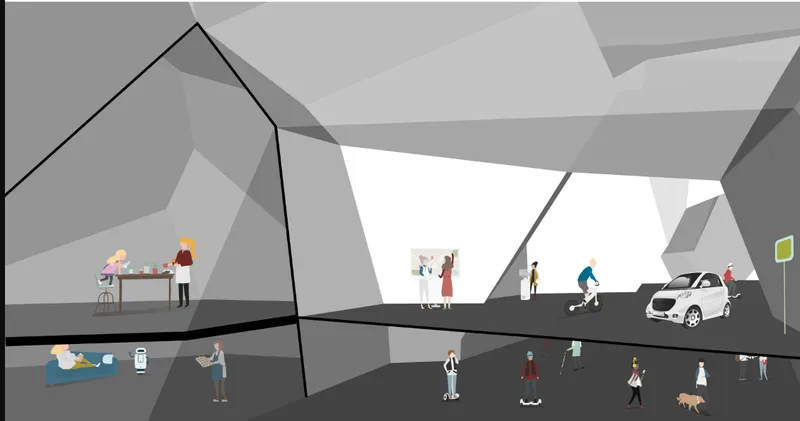
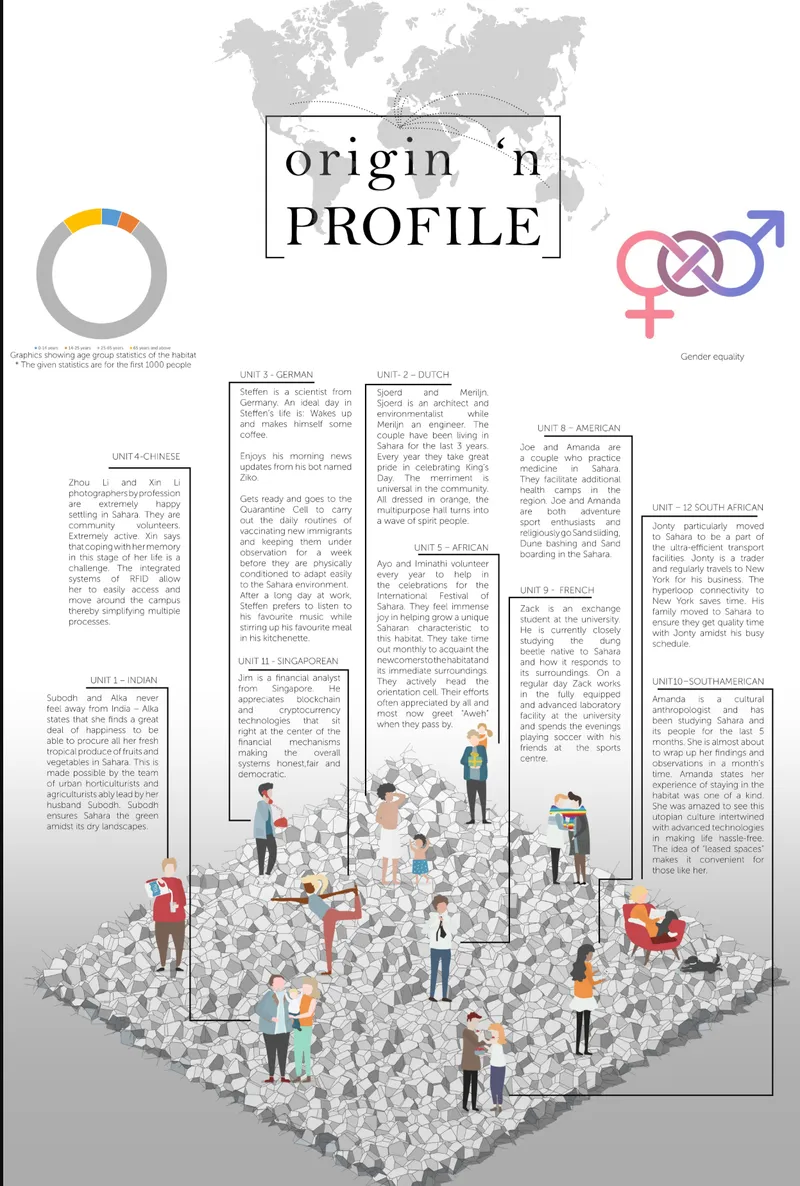
A hallmark of Satori is its intentional multiculturalism. The habitat is home to families and professionals from diverse nationalities—ranging from Indian horticulturists and German scientists to Singaporean technologists, Dutch environmentalists, and African cultural volunteers. This diversity is not incidental but central to Satori’s design ethos, which sees social plurality as a strength that fuels collaboration, empathy, and innovation. Each resident contributes unique skill sets and cultural perspectives, enriching the ecosystem and fostering a globally attuned urban model.
Community life in Satori is designed to celebrate this diversity. Residents observe and participate in each other's festivals, traditions, and civic initiatives. Orientation cells and adaptation programs ease new arrivals into the rhythm of the settlement, allowing for meaningful exchange across backgrounds and disciplines.
Towers and Advanced Transport Systems
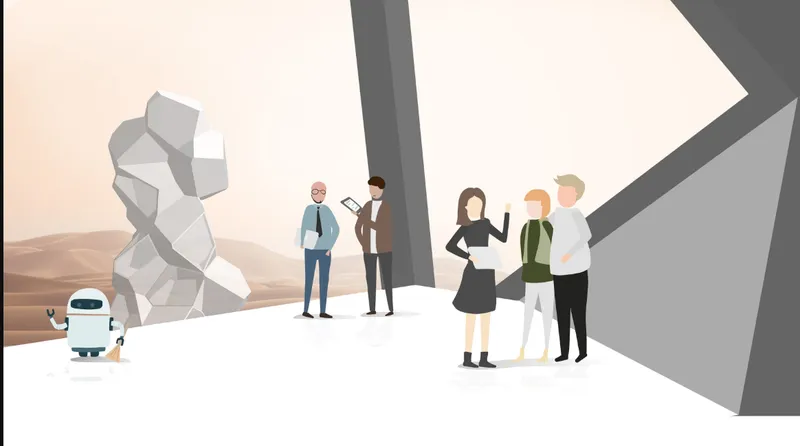
Strategically located towers serve as the commercial and administrative heart of the settlement. Rising ten stories, these structures are constructed using steel skeletons and precast modular panels, integrating glass facades for natural illumination. Designed with a self-supporting Voronoi geometry, the towers are scalable and resilient. They host a wide array of urban functions, from medical and administrative facilities to coworking hubs, educational halls, research labs, and wellness centers.
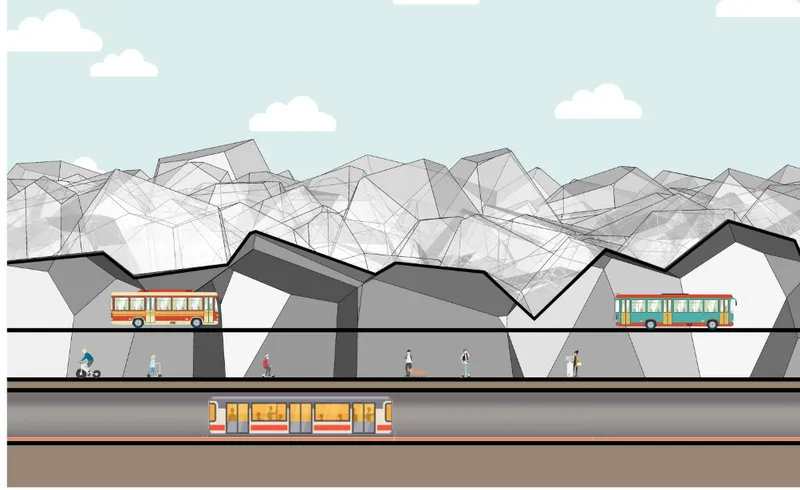
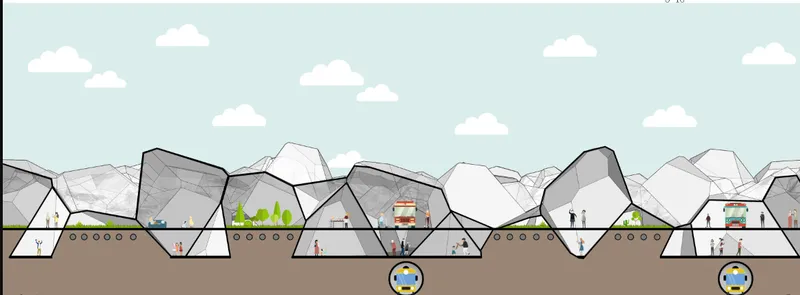
The transit network, too, is emblematic of futuristic mobility planning. A triple-level system ensures layered connectivity: underground capsule trains facilitate regional links via Hyperloop; ground-level lanes support pedestrians and cyclists; and the upper-level network accommodates intra-habitat electric transport. This structure dramatically reduces carbon emissions and enhances walkability, making Satori a blueprint for smart, green mobility.
Environmental Integration and Resource Efficiency
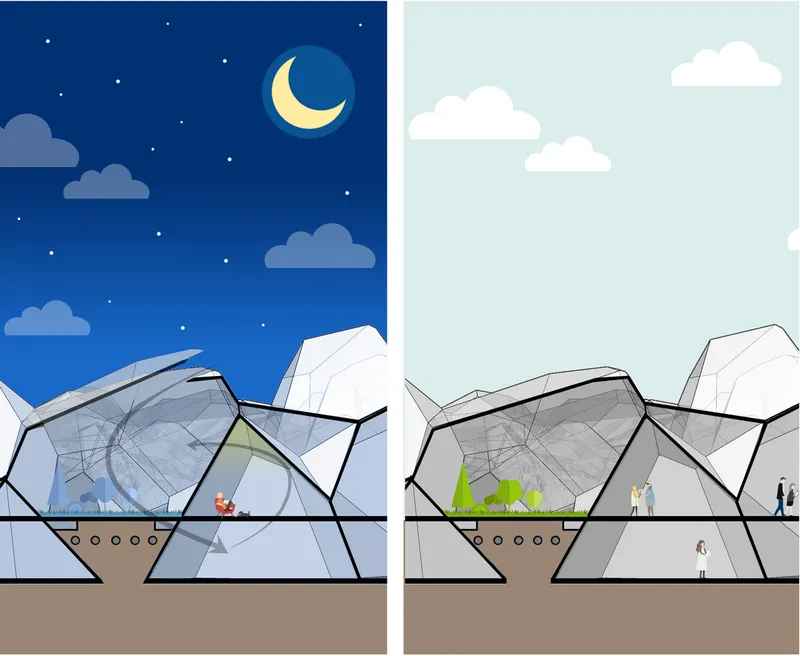
At the core of Satori’s planning is environmental responsiveness. The settlement integrates Roji-en—green belts that traverse residential and communal zones, functioning as ecological buffers and aesthetic corridors. These gardens enhance biodiversity, reduce heat island effects, and act as communal agriculture zones where residents grow climate-resilient crops.
Power is generated by compact, next-gen Small Modular Reactors (SMRs), optimized for safety and minimal environmental disruption. Meanwhile, domestic utilities rely on hybrid systems for desalination, humidity control, and smart ventilation—ensuring energy-efficient indoor comfort. Light distribution is optimized using reflected daylight tubes, which channel natural light into subterranean structures, reducing the need for artificial illumination.
Community-Driven Social Infrastructure
Cultural cohesion and collective agency form the backbone of Satori’s social design. Community Activity Pods (CAPs), strategically placed across the habitat, act as the social nucleus. These multifunctional nodes serve as theaters, discussion venues, educational arenas, and leisure hubs. Through CAPs, residents can initiate dialogues, organize events, and co-create the social narrative of Satori.
Events like King’s Day, scientific fairs, music festivals, and civic training programs transform these pods into dynamic, ever-evolving cultural stages. They nurture participatory citizenship and intellectual synergy—essential ingredients for an inclusive, equitable society.
A Blueprint for Human-Centered Urban Futures
Satori’s ambition transcends physical architecture. It challenges the conventional idea of the city and replaces it with a more conscious, flexible, and resilient urban organism. Rooted in the principles of sustainability, circular economies, and decentralized governance, Satori proposes a lifestyle where technology serves humanity—not the other way around.
In an age where cities grapple with climate breakdown, social fragmentation, and resource scarcity, Satori offers an architectural framework grounded in optimism, collaboration, and adaptability. As a sustainable architecture prototype, it holds the promise of shaping livable, inclusive cities—designed not only for survival, but for meaningful living in the decades to come.




Popular Articles
Popular articles from the community


Riyadh For All: Intergenerational Urban Design for Active Aging in Rabat
Riyadh For All reimagines urban design in Rabat with intergenerational co-living, adaptive courtyards, and Moroccan cultural exchange today.

Play: Fragments of Their World
Familiar architecture becomes modular playground design, creating safe spaces where displaced children can learn, connect, imagine and play.

Conexión: Biophilic Design Reimagines High-Rise Living in Hong Kong
Conexión reimagines high-rise living in Hong Kong through biophilic design, green facades, shared spaces, daylight, water and nature within.

The Earth Pod: 3D Printed Homes for Resilient Refugee Communities
The Earth Pod reimagines refugee housing through 3D printed homes made from clay, combining resilience, self-sufficiency, and rapid shelter.

Similar Reads
You might also enjoy these articles


Hodi-Mandai Geram
Project Function: Preservation and revitalization of the Intangible heritage and socio-spatial identity of the Hodi by Housing, Cultural Memory Center, Sacred Grove, landscape, local tourism economy


Olio Towers: A Mid-Rise for Performers That Fuses Housing, Rehearsal, and Stage
Located blocks from Houston's Theater District, this modular tower stacks living units around a central performance atrium.

Oasis: Modular Green Housing Carved into Dhaka's Urban Fabric
A shortlisted Plugin Housing entry reclaims unauthorized settlements in Dhaka with stepped concrete volumes, green roofs, and ventilation-driven design.

Black Hole: A Floating Megastructure for the Post-Physical Era
Emiliano Mazzarotto envisions a spherical, self-scaling arena where e-sports, digital hotels, and holographic stadiums replace traditional public space.


Comments (0)
Please login or sign up to add comments
No comments yet. Be the first to comment!