
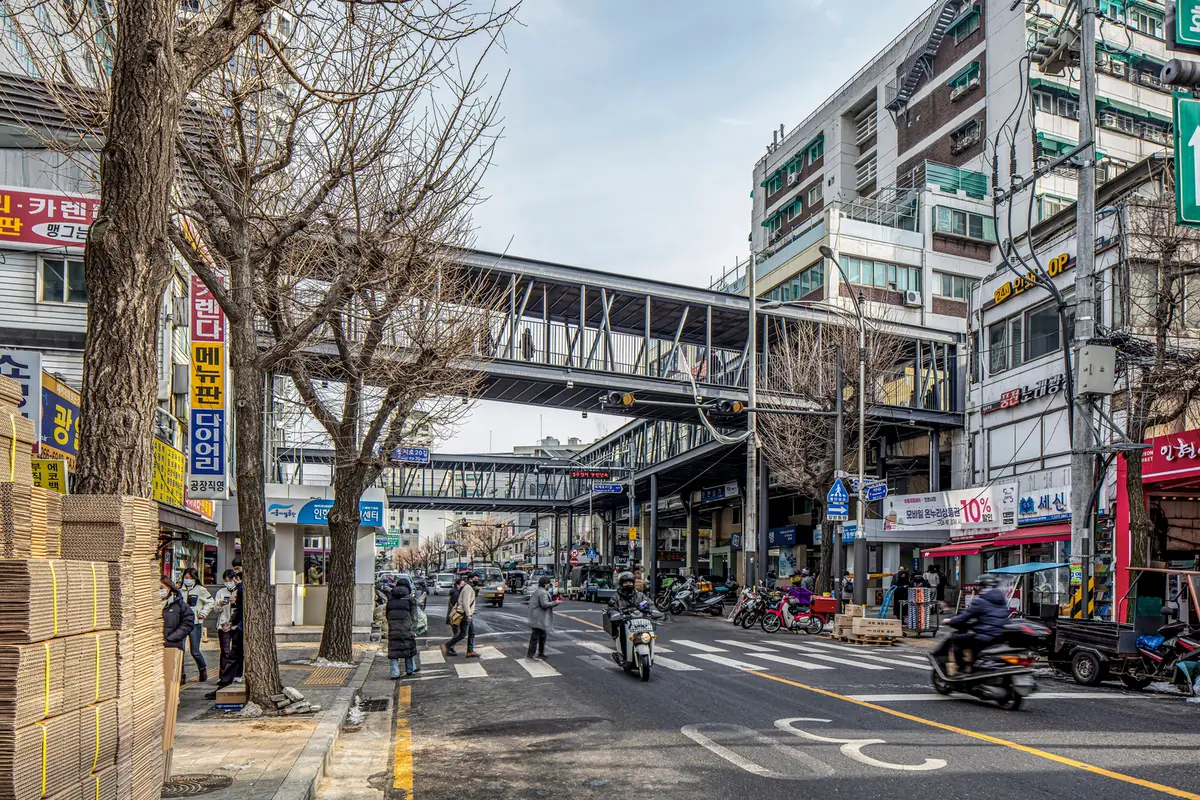
Sewoonsangga Re-Structuring Citywalk by modostudio
Sewoonsangga Citywalk by modostudio revitalizes Seoul’s historic district with elevated pedestrian paths, green spaces, and flexible urban connectivity for community regeneration.


The Sewoonsangga Re-Structuring Citywalk, designed by modostudio, represents a transformative urban intervention in the heart of Seoul. Originating from the winning entry of an international design competition in 2017, this project focuses on revitalizing the historic Sewoonsangga complex and its elevated public walkways while reconnecting adjacent urban districts. Covering a 1.2 km stretch, the project blends pedestrian infrastructure, green spaces, rest areas, and commercial zones, creating a dynamic, multifunctional urban platform.

Concept and Vision
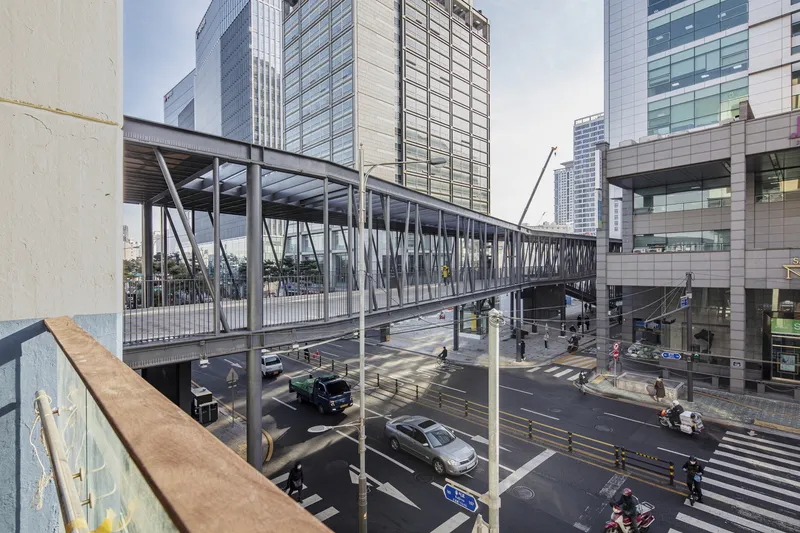
For decades, the Seoul City Planning Department has prioritized enhancing public pedestrian spaces through a comprehensive infrastructural network connecting multiple city levels—ground, underground, and aboveground. The Sewoonsangga Citywalk embodies this vision, introducing an “open city platform” that encourages continuous urban transformation without triggering gentrification. The platform supports community engagement, industrial revitalization, and improved mobility, activating the social and economic potential of the Sewoon district, which hosts thousands of craft and artisan businesses.

Design Approach
The project employs a macro- and micro-scale design strategy:
- Macro Scale: The Citywalk acts as a continuous pedestrian spine, linking districts from Jongmyo to Namsan and facilitating seamless citywide connectivity.
- Micro Scale: It adapts to the unique social, cultural, and spatial characteristics of the neighborhoods it intersects, promoting localized regeneration and community participation.
The platform’s design ensures flexibility, accommodating diverse temporal needs while supporting ongoing urban and social transformation. Through pedestrian-focused infrastructure, the project enhances safety, accessibility, and outdoor communal spaces, ultimately improving the quality of life in the Sewoon district.

Features and Impact
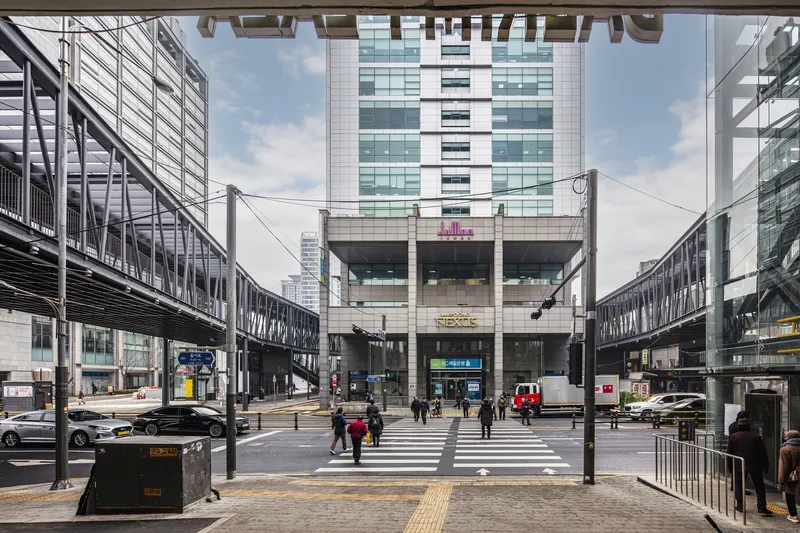
- Continuous Open Platform: Bridges gaps in the existing Citywalk and integrates ground-level and elevated pathways.
- Urban Regeneration: Supports community-driven transformation, industrial restoration, and public space enhancement.
- Pedestrian and Bike Priority: Expands pedestrian routes and cycling lanes to promote sustainable mobility.
- Green and Recreational Spaces: Introduces greenery, rest areas, and outdoor meeting points for urban well-being.
- Flexible Infrastructure: Designed for future urban expansions and adaptive reuse, fostering continuous city evolution.

The Sewoonsangga Citywalk stands as a model for sustainable urban redevelopment, blending historical urban fabric with modern pedestrian infrastructure to create a vibrant, participatory, and resilient cityscape.
All Photographs are works of JongOh Kim


Popular Articles
Popular articles from the community


Conexión: Biophilic Design Reimagines High-Rise Living in Hong Kong
Conexión reimagines high-rise living in Hong Kong through biophilic design, green facades, shared spaces, daylight, water and nature within.

Lunar Spiral: Space Architecture Shaped by the Mathematics of the Universe
Lunar Spiral reimagines space architecture through Fibonacci geometry, lunar regolith, levitating habitats, and self-sustaining Moon living.

Co-life: Sustainable Architecture for Age-Friendly Community Living
Co-life reimagines sustainable architecture for seniors through courtyards, rammed earth, shared gardens, and spaces designed for belonging.

The Ocean Hive: Sustainable Architecture for a Self-Sufficient Civilization at Sea
The Ocean Hive imagines sustainable architecture at sea, where modular habitats, algae, wave power and ocean waste sustain a growing colony.

Similar Reads
You might also enjoy these articles


Hodi-Mandai Geram
Project Function: Preservation and revitalization of the Intangible heritage and socio-spatial identity of the Hodi by Housing, Cultural Memory Center, Sacred Grove, landscape, local tourism economy


Olio Towers: A Mid-Rise for Performers That Fuses Housing, Rehearsal, and Stage
Located blocks from Houston's Theater District, this modular tower stacks living units around a central performance atrium.

Oasis: Modular Green Housing Carved into Dhaka's Urban Fabric
A shortlisted Plugin Housing entry reclaims unauthorized settlements in Dhaka with stepped concrete volumes, green roofs, and ventilation-driven design.

Black Hole: A Floating Megastructure for the Post-Physical Era
Emiliano Mazzarotto envisions a spherical, self-scaling arena where e-sports, digital hotels, and holographic stadiums replace traditional public space.

Explore Walkable City Competitions
Discover active competitions in this discipline

Challenge to reimagine the Iron Throne

Photograph architecture without architects

Illustrate the lost glory of Angkor Wat - Render Challenge

Design challenge to reuse E-waste
Comments (0)
Please login or sign up to add comments
No comments yet. Be the first to comment!