

Singapore Residence by Neri&Hu: Modern Courtyard Living Meets Heritage Memory
Modern Singapore home by Neri&Hu blends heritage pitched-roof forms, courtyard living, memorial garden, and communal spaces for a family-focused sanctuary.


Neri&Hu Design and Research Office reimagines the traditional Chinese courtyard house, or siheyuan, blending communal living, heritage memory, and contemporary design for a Singaporean family residence. Inspired by Confucian ideals of extended-family cohabitation, the architects were tasked with creating a home for three adult siblings on the footprint of their childhood bungalow. Central to the project is a memorial garden honoring their late mother, while preserving the pitched-roof silhouette that marked their early home.
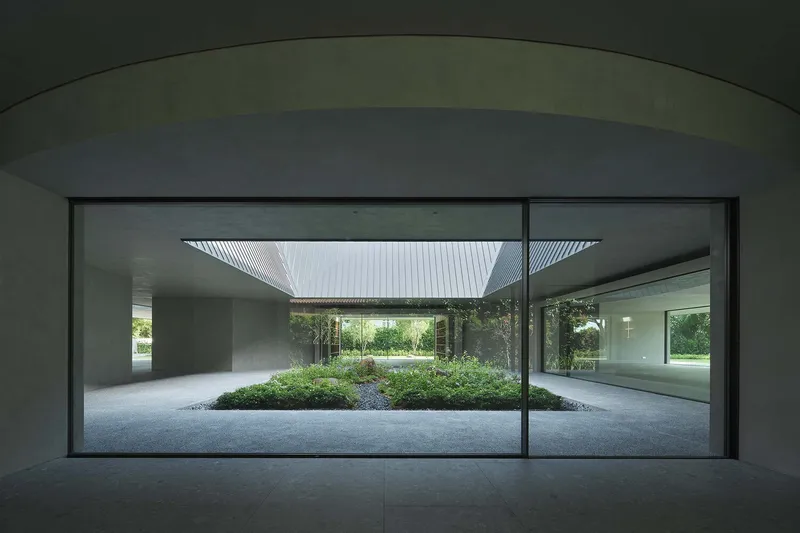
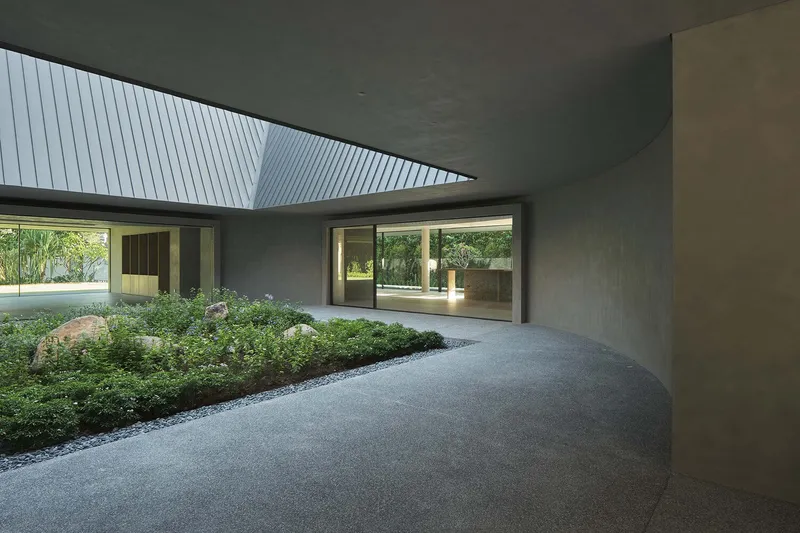
The original site featured a British colonial bungalow infused with Malay architectural elements, deep roof eaves for tropical shelter and Victorian details, creating a hybrid vernacular. Neri&Hu honor this history by retaining the pitched-roof form, translating it into a modern courtyard layout where spatial and emotional continuity coexist.

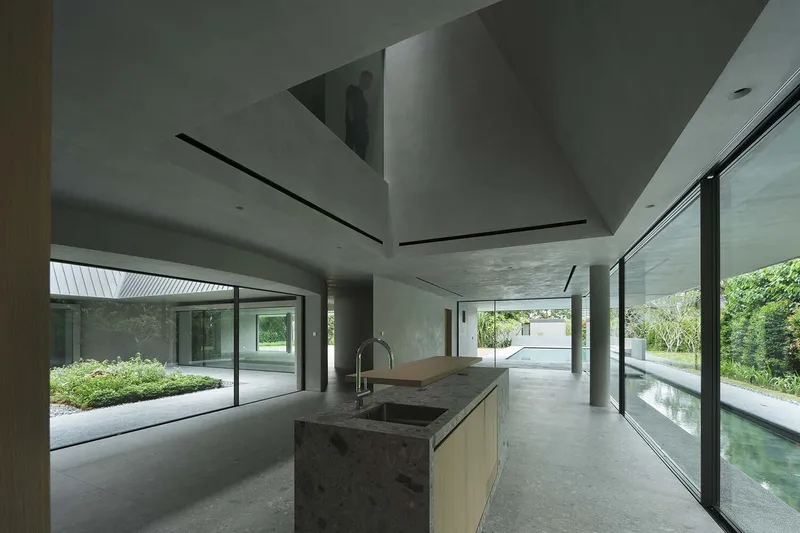
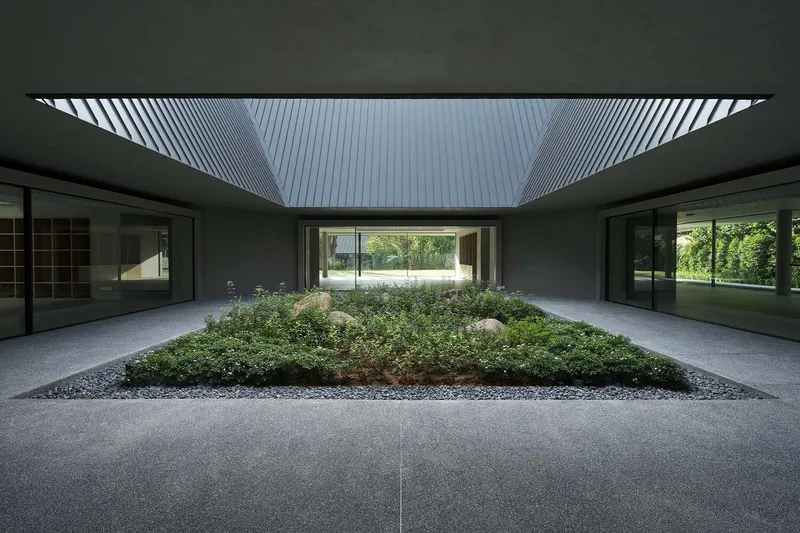
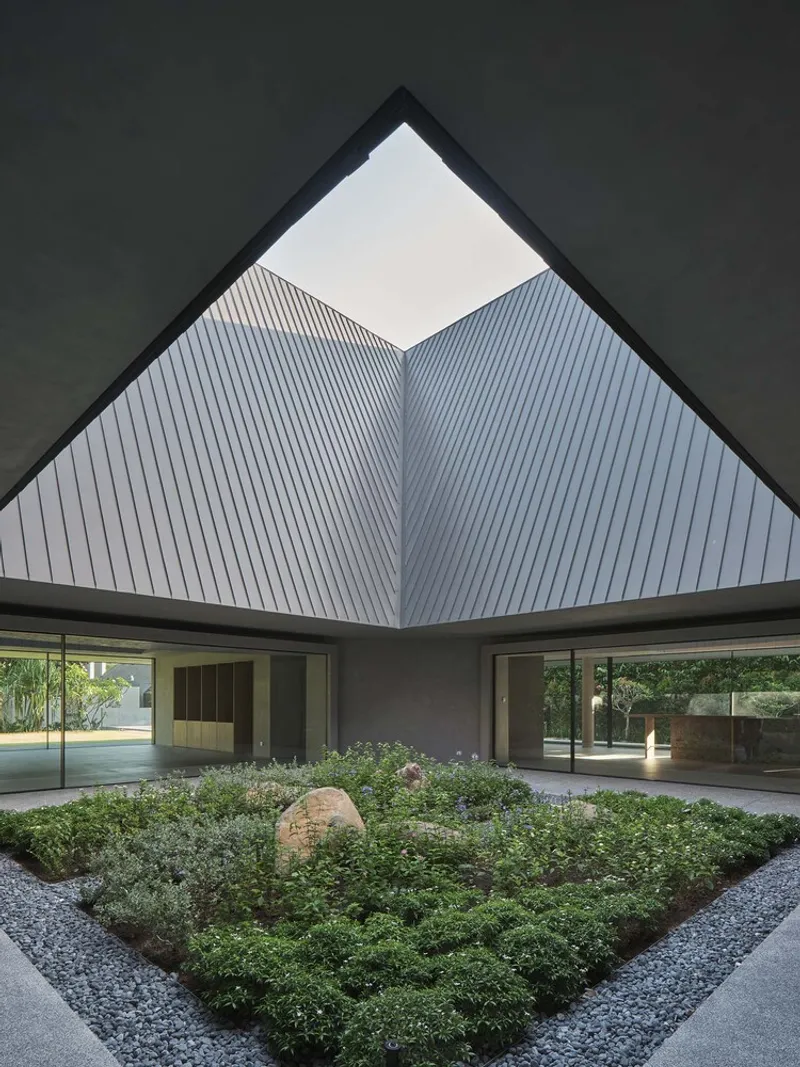
The two-story design organizes communal spaces: living room, dining, open kitchen, and study, around a central courtyard memorial garden. Expansive glass walls maximize visual transparency and indoor-outdoor connectivity, offering serene views of perimeter gardens while fostering privacy within the dense vegetation. Sliding doors enable cross ventilation and seamless garden access, integrating climate-responsive strategies with human-centered design.
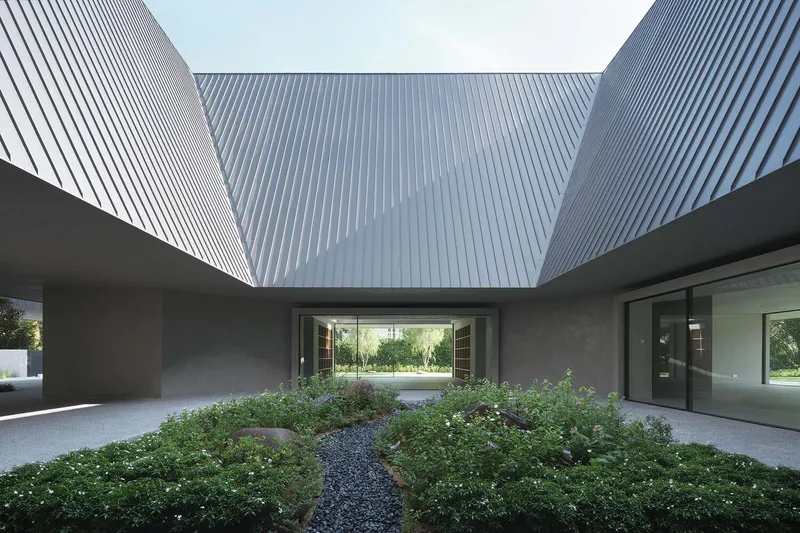

On the upper level, private bedrooms are housed beneath steep gables, preserving the appearance of a single-story pitched-roof bungalow externally. Skylights and glazed balconies frame views of the surrounding greenery, while three double-height spaces create vertical visual connections, linking private and public realms through subtle interpenetration.
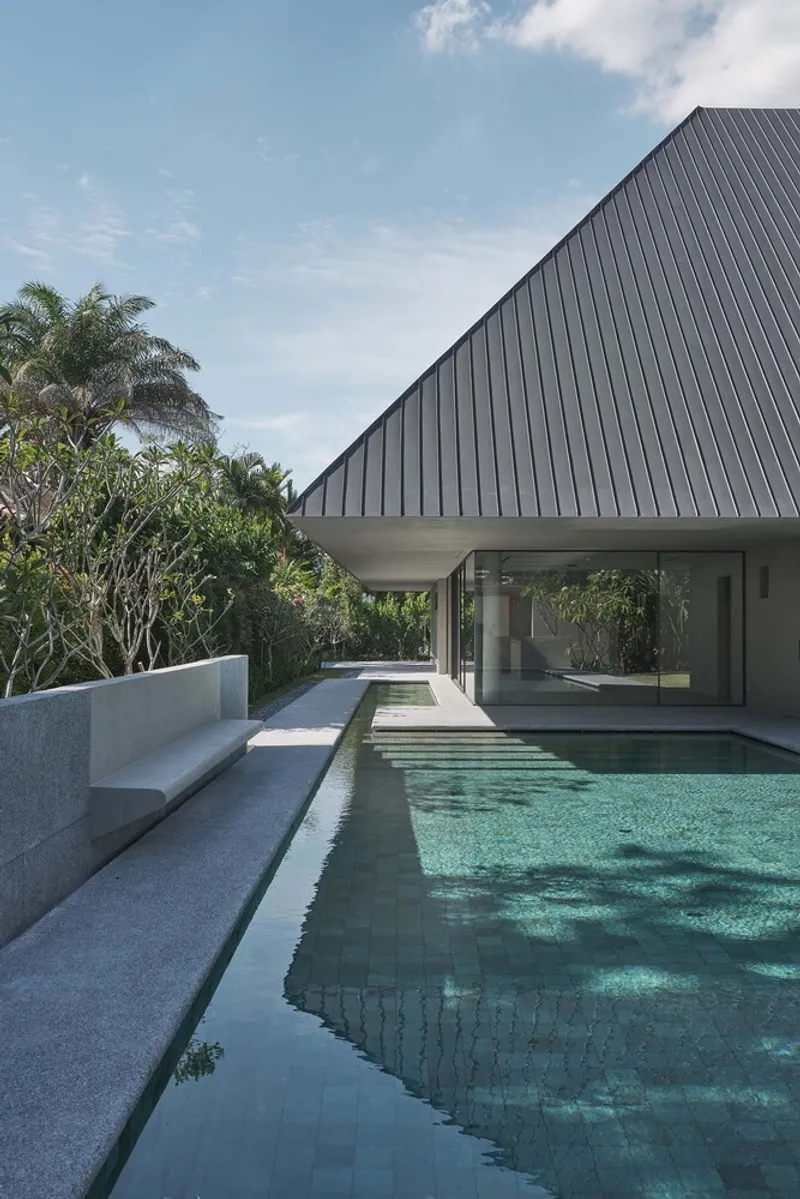
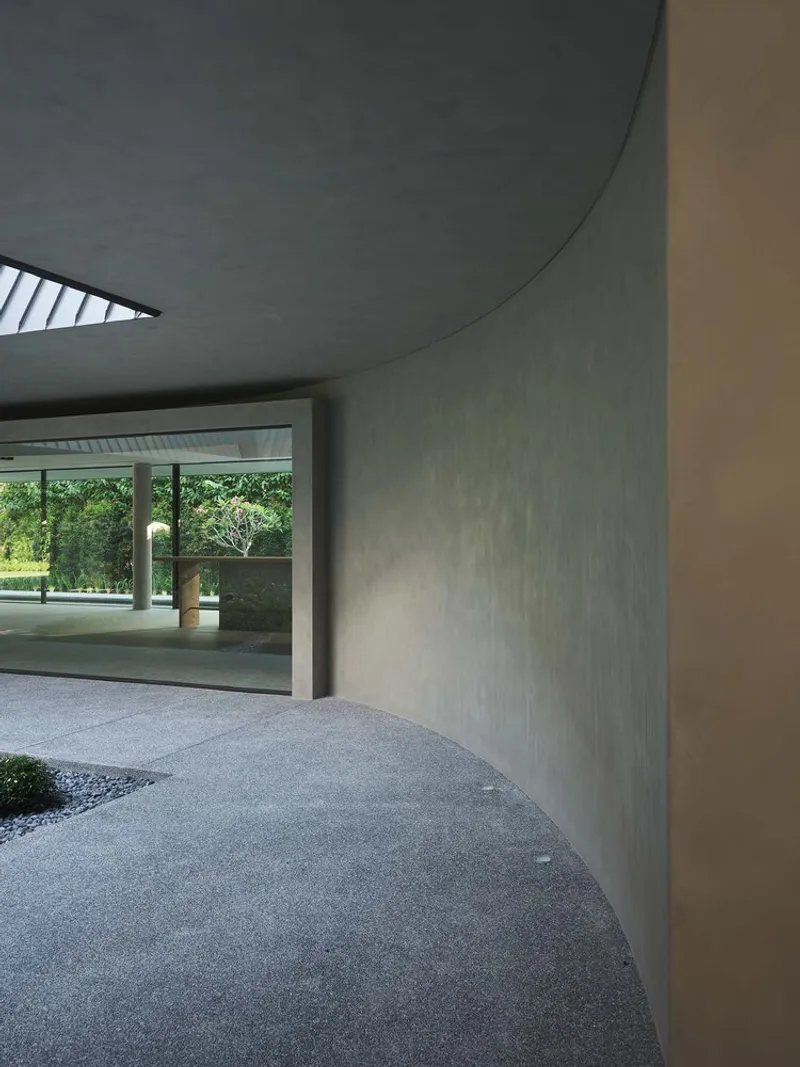
Architecturally, Neri&Hu introduce a carved roof void framing a small tree leading to the central memorial garden, while exterior walls transition from smooth to board-formed concrete, echoing wooden textures. Circular circulation paths define the ambulatory experience, symbolically reinforcing the home’s central garden as the spiritual and social heart. This design balances heritage, family memory, and modern living in a seamless, tranquil environment.
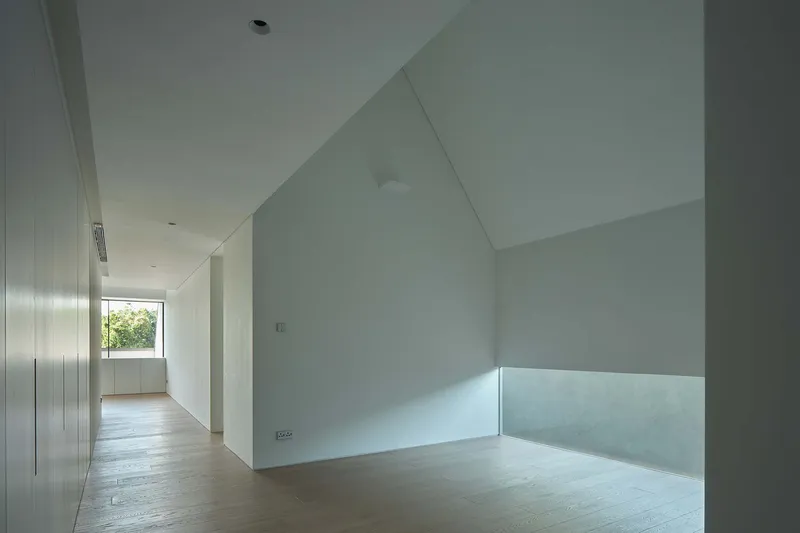
All photographs are works of
Fabian Ong




Popular Articles
Popular articles from the community


The Ocean Hive: Sustainable Architecture for a Self-Sufficient Civilization at Sea
The Ocean Hive imagines sustainable architecture at sea, where modular habitats, algae, wave power and ocean waste sustain a growing colony.

AL-JANNAH: Sustainable Architecture and Permaculture for Afghan Widows
AL-JANNAH uses sustainable architecture and permaculture to create resilient oasis of housing, learning, work and renewal for Afghan widows.

The Musturak Paradise: Senior Living Architecture for a Connected Future in Temara, Morocco
The Musturak Paradise reimagines senior living architecture in Temara via private homes, social spaces, culture, community, and shared care.

Riyadh For All: Intergenerational Urban Design for Active Aging in Rabat
Riyadh For All reimagines urban design in Rabat with intergenerational co-living, adaptive courtyards, and Moroccan cultural exchange today.


Similar Reads
You might also enjoy these articles

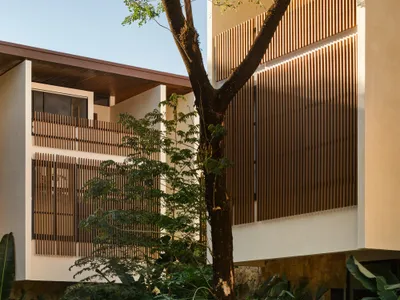
FAMM Arquitectura Organizes Ten Villas Around Courtyards and Jungle in Nosara, Costa Rica
El Molino pairs two elongated volumes with deep overhangs and timber louvers to build a compact coastal community five minutes from the beach.
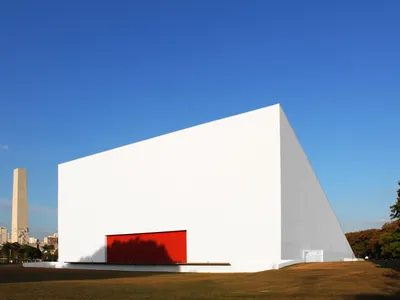
Oscar Niemeyer's Ibirapuera Park Pavilions Define São Paulo's Cultural Identity in Concrete and Curve
A constellation of modernist volumes set within São Paulo's most important urban park, conceived for the city's 400th anniversary in 1954.
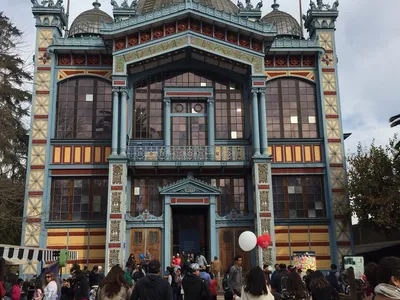
How Henri Picq's 1889 Paris Pavilion Traveled 11,000 Kilometers to Become Santiago's Artequín Museum
A prefabricated iron and glass pavilion built for the Paris Universal Exposition found a second life as a children's art museum in Chile.
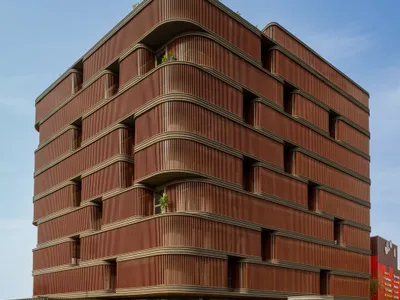
Sanjay Puri Architects Wraps a Jaipur Office Tower in Capsule-Shaped Green Buffers
A nine-level climate-responsive workplace near Jaipur Airport uses stacked planter terraces and aluminium screens to fight 40°C heat.


Explore Housing Competitions
Discover active competitions in this discipline



Challenge to reimagine the Iron Throne


Photograph architecture without architects


Illustrate the lost glory of Angkor Wat - Render Challenge


Design challenge to reuse E-waste
Comments (0)
Please login or sign up to add comments
No comments yet. Be the first to comment!