
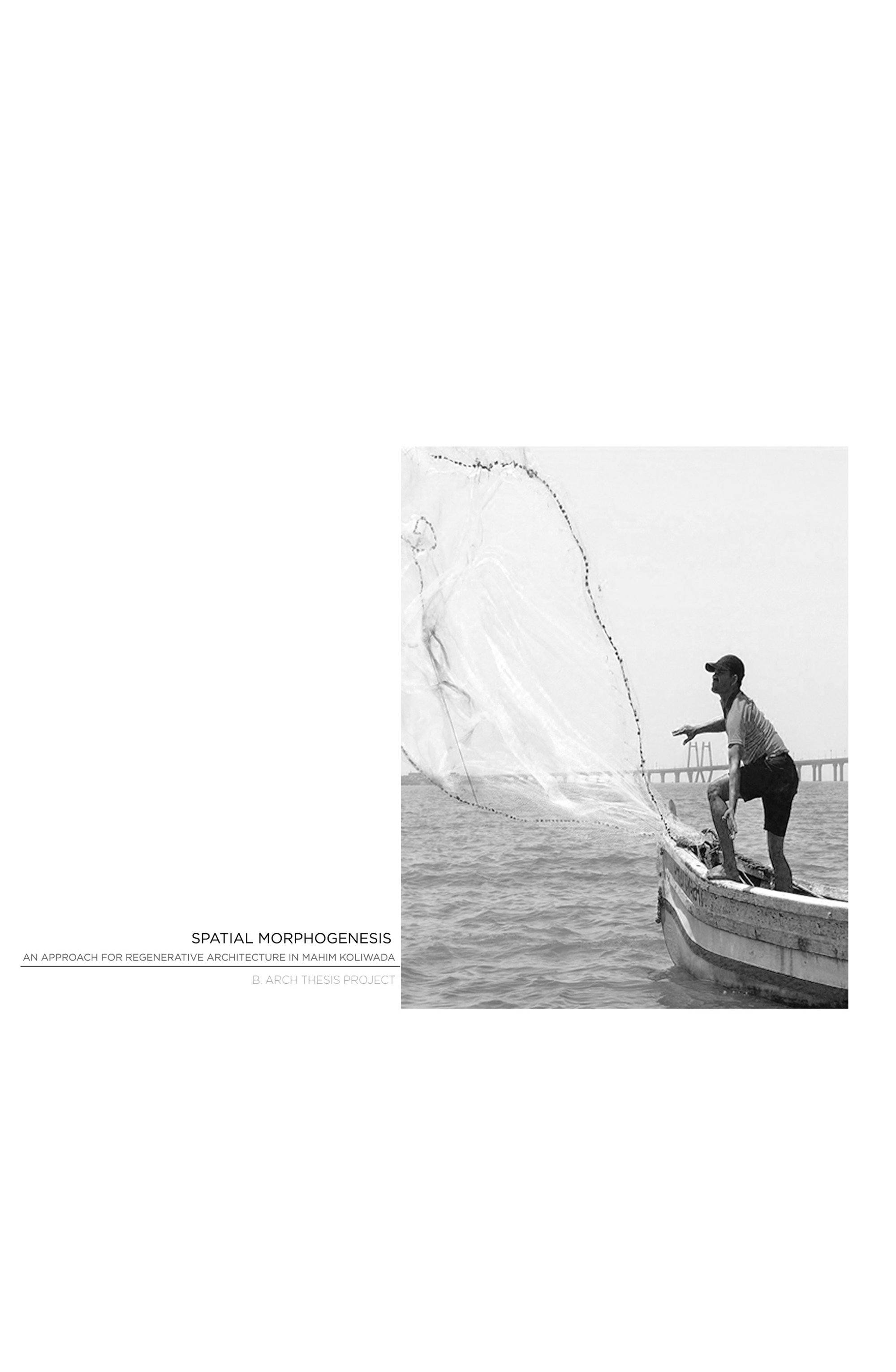
Spatial Metamorphosis: Regenerative Architecture in Mahim Koliwada
Regenerative architecture reimagines Mahim Koliwada, restoring identity, ecology, and livelihoods within Mumbai’s rapidly transforming urban edge.

Mumbai’s urban expansion has historically evolved through layered reclamation, infrastructural growth, and socio-economic transitions. At the core of this transformation lie the original fishing settlements known as Koliwadas. These settlements are not only spatial fragments of the city’s past but also active cultural ecosystems that continue to sustain livelihoods, traditions, and social networks.
The project Spatial Metamorphosis by Aathira Pil positions itself within this context, proposing a regenerative architecture strategy in Mahim Koliwada. It addresses the urgent need to preserve identity while adapting to increasing urban pressures, infrastructural demands, and environmental vulnerabilities.
Understanding the Urban Fabric of Koliwadas
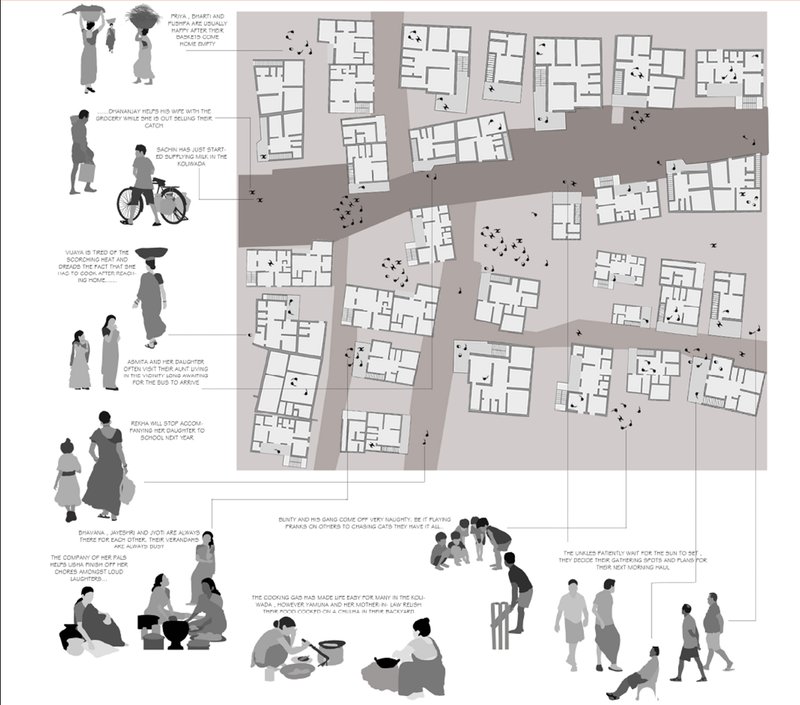
The study begins with a detailed mapping of Mumbai’s historical evolution, tracing its transformation from seven islands into a dense metropolitan region. Within this narrative, Koliwadas emerge as resilient yet vulnerable enclaves that have been progressively marginalized.
Mahim Koliwada, along with other settlements such as Worli, Versova, and Khar Danda, reveals a consistent pattern:
- Dense, incremental growth driven by familial expansion
- Strong dependency on fishing-based economies
- Informal yet highly efficient spatial organization
- Limited access to infrastructure and open spaces
Despite their cultural richness, these settlements face increasing threats from real estate pressure, policy shifts, and environmental degradation.
Need for Regenerative Architecture in Mumbai
The existing development frameworks in Mumbai often overlook the socio-cultural and ecological complexity of informal settlements. Conventional redevelopment models tend to impose standardized housing solutions that disrupt community networks and erase local identities.
This project argues for a shift toward regenerative architecture in Mumbai, where design is not merely about replacement but about renewal. The goal is to:
- Reinforce existing social and economic systems
- Improve living conditions without displacement
- Integrate ecological resilience into urban design
- Enable incremental and adaptable growth
Site Study and Mapping Strategies
A multi-layered site analysis forms the backbone of the proposal. The mapping process includes:
Spatial and Morphological Analysis
- Building footprints and density patterns
- Circulation networks and connectivity gaps
- Edge conditions between land and water
Activity Mapping
- Fishing cycles and associated economic activities
- Gender-based spatial usage patterns
- Temporal variations in public and private space usage
Environmental and Climate Analysis
- Sun path and wind flow studies
- Coastal vulnerabilities and tidal impacts
- Heat and ventilation conditions within dense clusters
Socio-Cultural Mapping
- Community interactions and shared spaces
- Religious and cultural nodes
- Informal economies and market structures
This layered understanding ensures that the design intervention remains grounded in the lived realities of the users.
Design Approach: Spatial Metamorphosis
The design strategy is rooted in incremental transformation rather than complete redevelopment. It introduces a framework that allows the settlement to evolve while retaining its core identity.
1. Retaining Existing Urban Grain
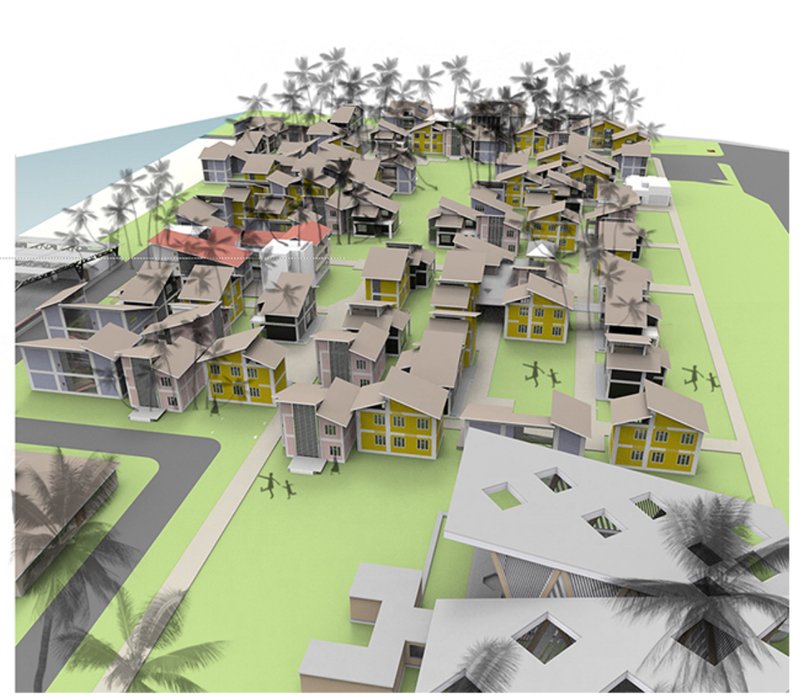
Instead of erasing the dense fabric, the proposal preserves existing clusters and strengthens them through improved infrastructure and spatial organization.
2. Creating Open Space Hierarchies
Strategically introduced open spaces act as social condensers. These include:
- Community courtyards
- Fish drying areas
- Market plazas
- Shared gathering spaces
3. Reorganizing Circulation Networks
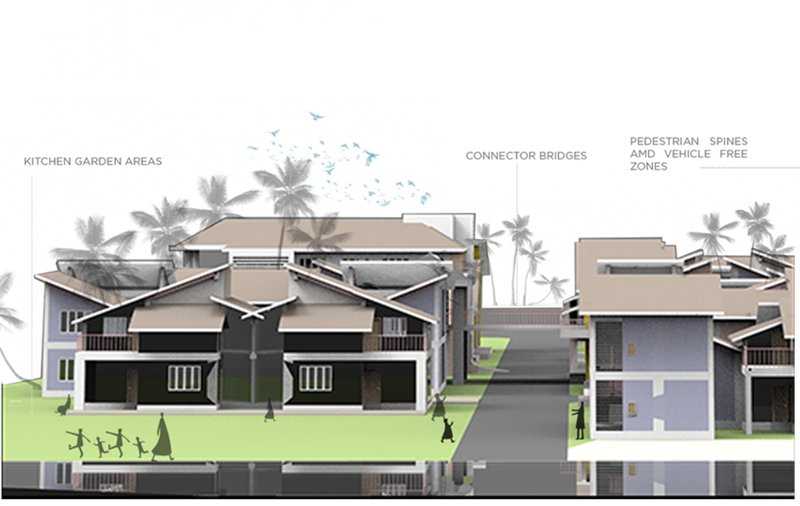
Improved pedestrian pathways and connectivity enhance accessibility while maintaining the organic character of the settlement.
4. Edge Activation
The coastal edge is reimagined as a productive and social interface, supporting fishing activities while introducing recreational and ecological buffers.
Housing Strategy: Incremental and Adaptive
A key component of regenerative architecture in Mumbai is the ability to accommodate growth. The project proposes modular housing typologies that support incremental expansion.
Typology-Based Design
- Multiple unit types responding to family size and occupation
- Flexible layouts allowing horizontal and vertical expansion
- Integration of workspaces within residential units
Structural Framework
- A core structural grid enables phased development
- Residents can expand their homes over time
- Ensures affordability and adaptability
Climatic Responsiveness
- Sloped roofs for ventilation and rainwater management
- Shaded verandahs as transitional spaces
- Cross-ventilation strategies for thermal comfort
Livelihood Integration
Fishing remains the primary economic activity in Mahim Koliwada. The design reinforces this by:
- Providing dedicated zones for fish sorting and drying
- Improving access to docks and waterfront infrastructure
- Creating market interfaces for direct selling
This ensures that economic systems are strengthened rather than displaced.
Regenerative Systems and Sustainability
The project adopts a regenerative approach that goes beyond sustainability by actively restoring ecological balance.
Key Strategies
- Water-sensitive urban design for flood resilience
- Integration of green buffers along the coastline
- Waste management systems tailored to fishing activities
- Use of locally available materials and construction techniques
These interventions collectively enhance environmental performance while supporting community resilience.
Master Plan Vision
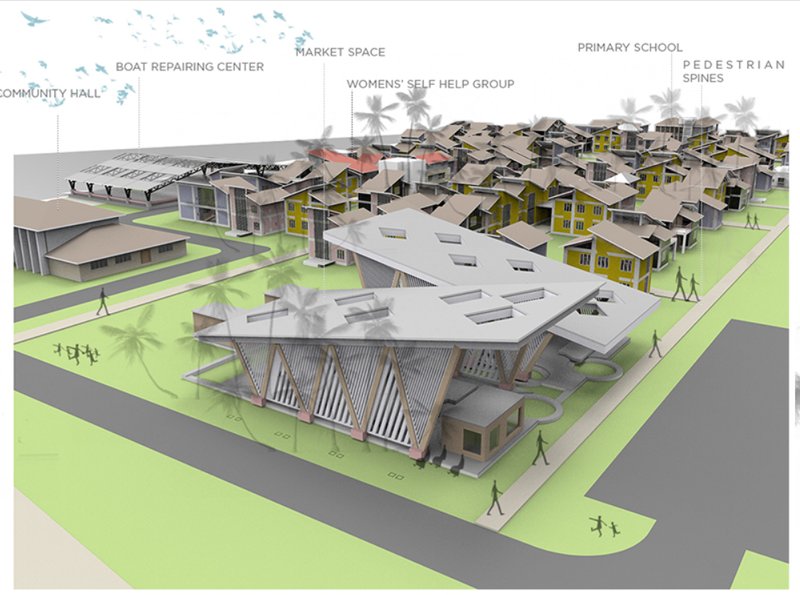
The master plan synthesizes all layers of analysis into a cohesive spatial framework. It balances built density with open spaces, integrates infrastructure with community life, and creates a scalable model for other Koliwadas in Mumbai.
Key components include:
- Organized housing clusters
- Central community spine
- Coastal activity zone
- Public amenities and social infrastructure
Spatial Metamorphosis redefines how informal settlements can be approached within contemporary urban discourse. By positioning regenerative architecture in Mumbai as a tool for inclusion rather than replacement, the project offers a viable alternative to conventional redevelopment models.
It demonstrates that preserving identity, enhancing livelihoods, and improving living conditions are not mutually exclusive goals. Instead, they can coexist through a thoughtful, context-driven design approach.
This project sets a precedent for future interventions in similar urban contexts, where architecture becomes a catalyst for cultural continuity and ecological regeneration.




Popular Articles
Popular articles from the community

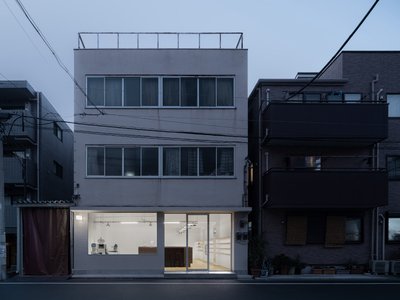
Atelier Macri Concept Store Interior Design by CASE-REAL
Atelier Macri store features a "ko" counter, walnut wood details, cork displays, blending retail, gallery, and seamless customer experiences.
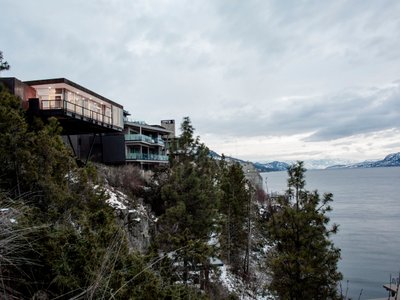
Alton Cliff House: A Harmonious Retreat by f2a Architecture in Lake Country, Canada
Alton Cliff House blends corten steel, prefabrication, and sustainable design, creating a luxurious, energy-efficient retreat perched on Canadian cliffs.

Free Architecture Competitions You Can Enter Right Now
No entry fees, real prizes. Here are the best free architecture competitions open for submissions in 2026.
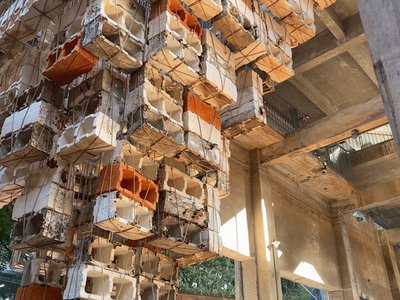
Inverted Architecture Installation by Studio Link-Arc: Exploring the Intersection of Architecture and Living Organisms
Inverted Architecture Installation by Studio Link-Arc blends mycelium, sustainability, inverted design, ecological cycles, and urban adaptive architecture in Shenzhen.


Similar Reads
You might also enjoy these articles
Digital Façade Design for our cities’ urban fronts
Prima Facie - Result Story
Protecting avian biodiversity: Bird observatories to help spread awareness & save rare bird species.
Results for ‘Fly’ - Landscape design competition out now
Connecting with nature: Forest interpretation center in Australia's Wollemi National Park
‘Asatti’ - Landscape design competition - Result story





Comments (0)
Please login or sign up to add comments
No comments yet. Be the first to comment!