

Story Architecture Wraps a Multigenerational Villa Around a Pool in Vietnam
An L-shaped house near Ho Chi Minh City balances privacy and togetherness through voids, skylights, and planted terraces.


A house for three generations poses one of architecture's oldest tensions: how do you give everyone room to breathe without letting the family drift apart? Story Architecture, led by Nguyễn Kava, answers with Villa Connect, a 525 m² residence in Binh Duong Province near Ho Chi Minh City. The house wraps its two main wings into an L-shape that hugs a swimming pool, turning water and landscape into a shared middle ground that every room can see but no room is forced to face.
What makes the project genuinely compelling is its insistence on calibrated separation. Bedrooms share no walls. Skylights above the stairwell let daylight pass between floors without sacrificing visual privacy. Rooms open in multiple directions, so cross-ventilation and outlook are never hostage to a single orientation. The result is a house that reads as a stack of white volumes from the street yet functions, once you step inside, as a loose constellation of private retreats orbiting a common landscape.
Street Presence: White Volumes and Vertical Screens
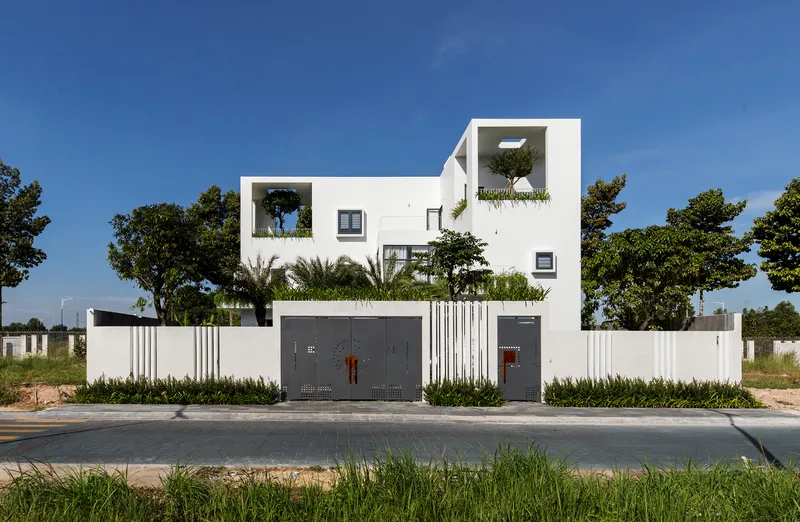
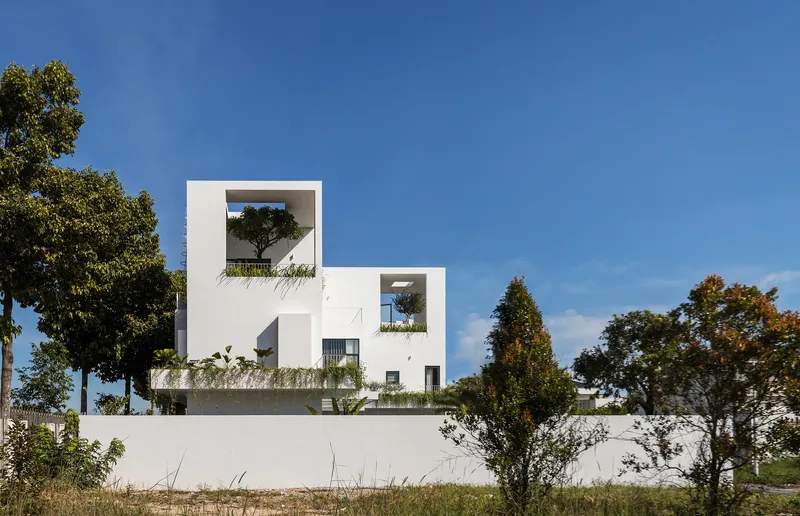
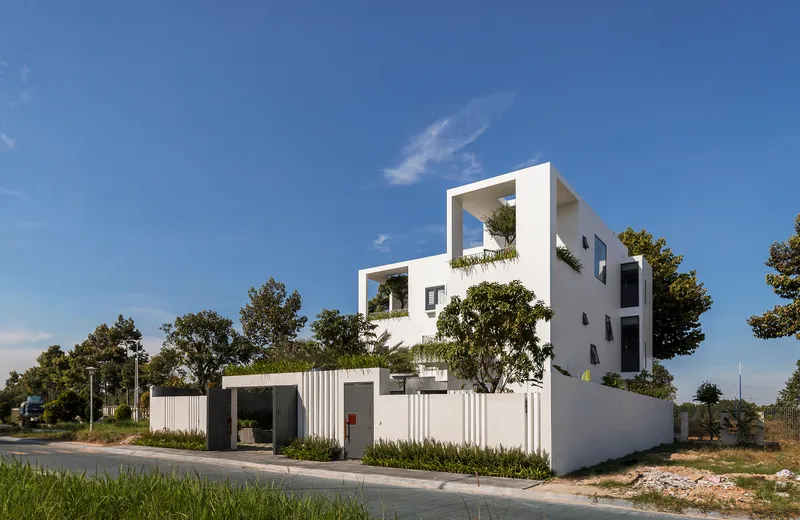
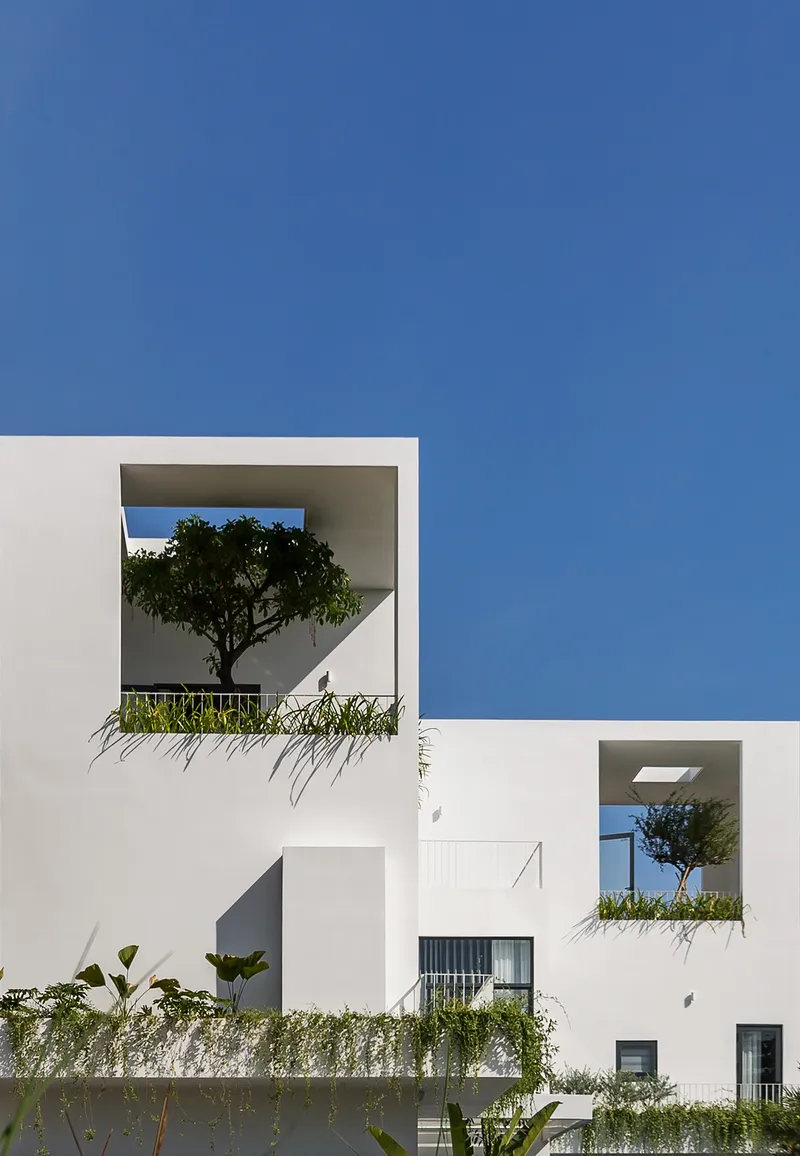
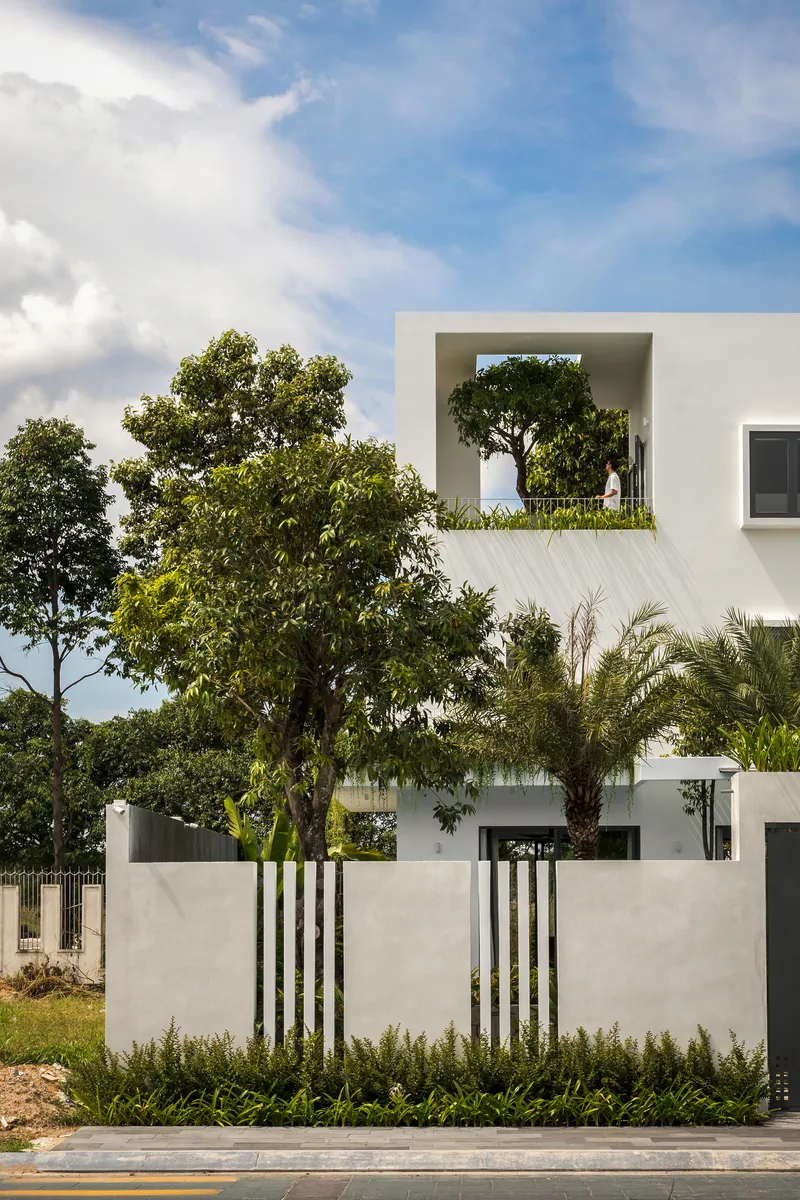
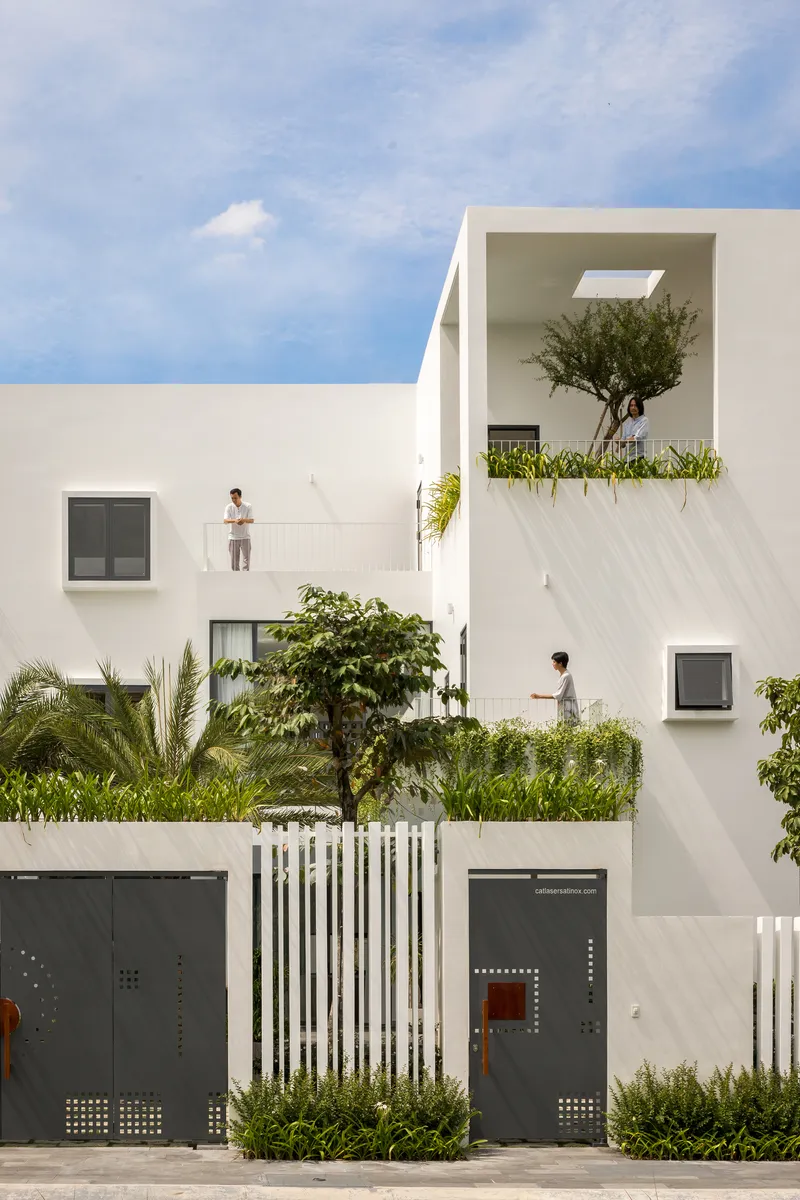
From the street, Villa Connect presents itself as a cluster of stacked white boxes. Each volume is slightly offset from the next, and deep recesses carve out space for planter boxes and mature trees. A vertical slatted fence runs along the perimeter, filtering views in and out rather than blocking them entirely. The composition is deliberate: dense masonry alternating with planted voids, so the facade reads less like a wall and more like a sectioned garden turned on its side.
The planting is not decorative afterthought. Trees at multiple levels soften the mass and give the elevation a living texture that shifts with the seasons. It is a practical move as much as an aesthetic one, shading west-facing surfaces and reducing heat gain in Vietnam's tropical climate.
The Pool as Organizing Spine
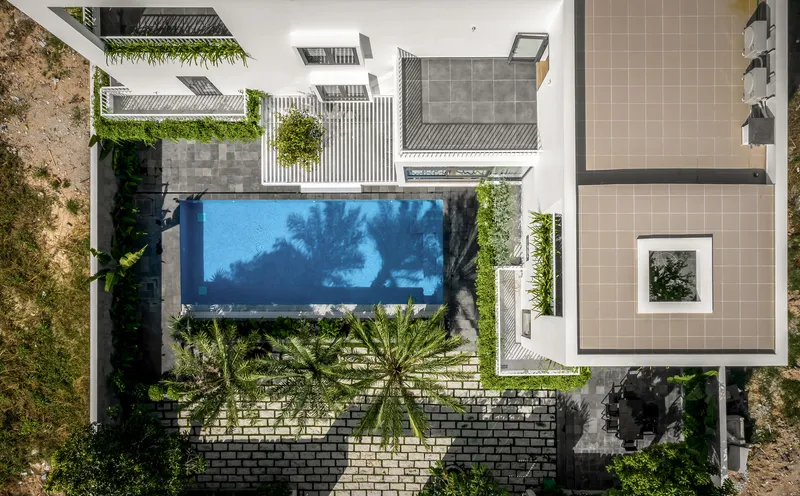
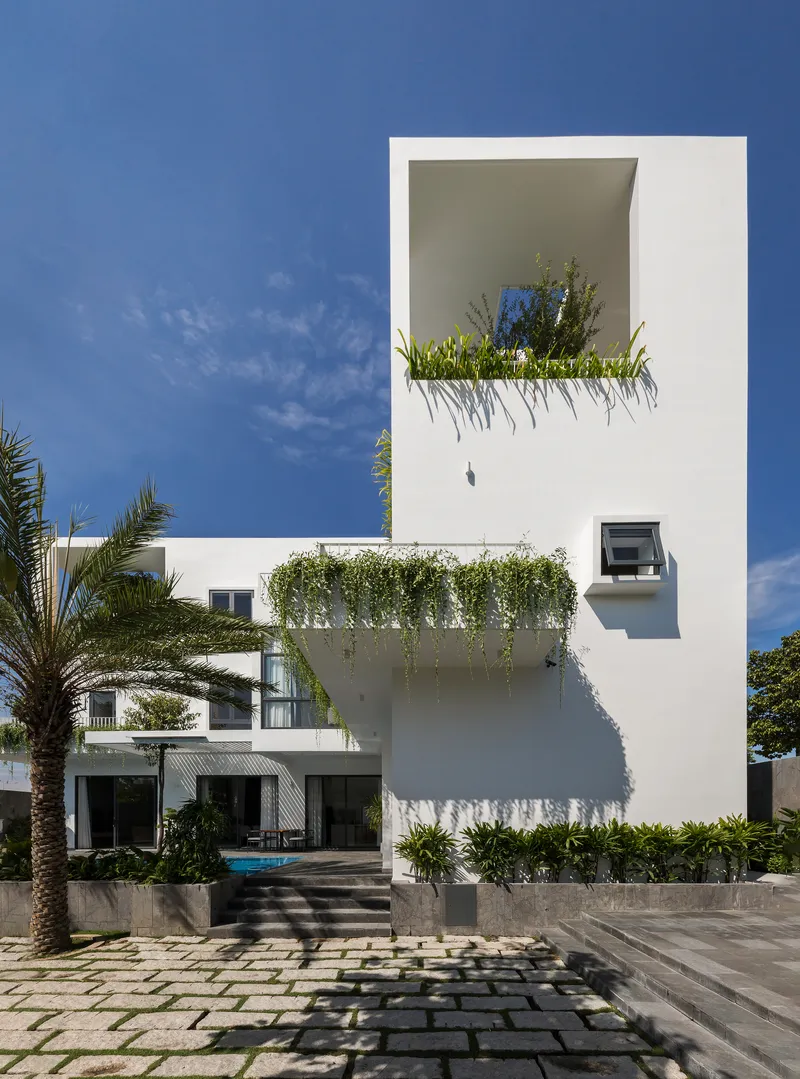
Set back from the road, the building mass wraps around a swimming pool that occupies the inner crook of the L. The aerial view makes the logic plain: living spaces on the ground floor open directly onto a paved courtyard and pool deck, while upper-level bedrooms look down onto the water from planted terraces. Every wing of the house has a stake in this central landscape, which means the pool works less as a luxury amenity and more as the family's communal living room, albeit one without a roof.
By pulling the block far from the street edge, Story Architecture gains a generous buffer zone that doubles as garden. The spatial payoff is significant: rooms face inward toward controlled greenery rather than outward toward neighbors, giving each opening a considered view.
Ground Floor: Kitchen, Dining, and the Threshold to Outdoors
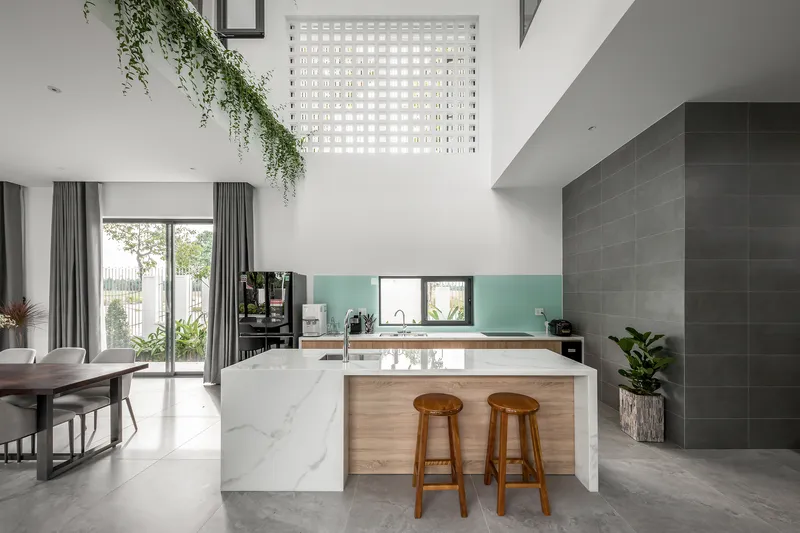
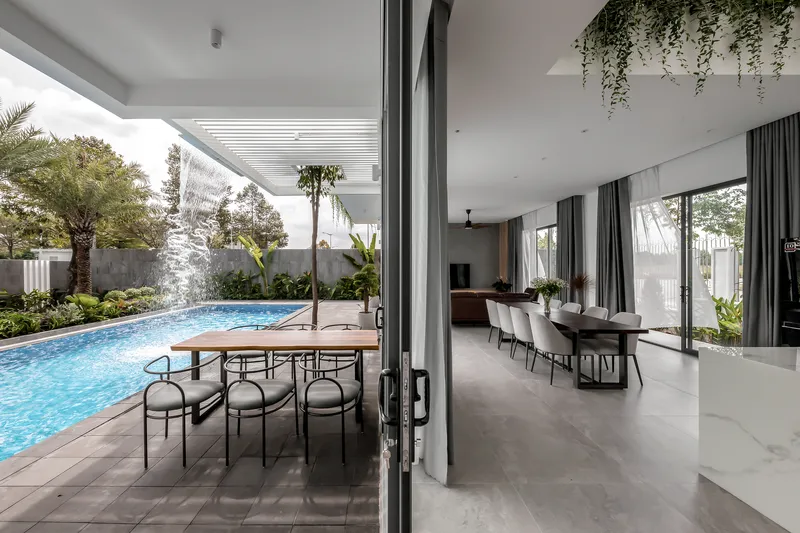
The ground level is where public life happens. A marble-topped kitchen island sits beneath a perforated screen that pulls daylight down from above, turning meal preparation into an event lit by a soft overhead glow. The dining area runs parallel, framed by floor-to-ceiling glass doors that slide open onto a covered poolside terrace fitted with a slatted timber pergola.
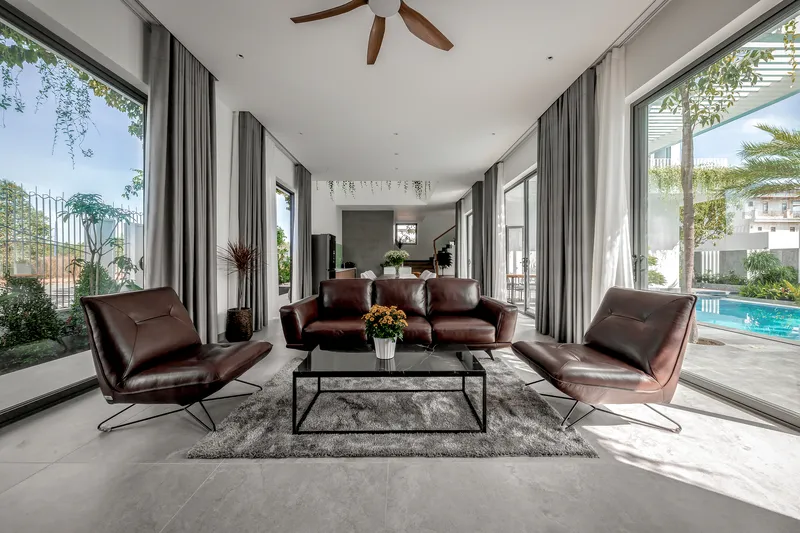
The living room pushes this threshold logic further. Brown leather seating faces a wall of glass that collapses the boundary between interior and garden. When the doors are open, the room effectively becomes an extension of the courtyard. It is a familiar tropical strategy, but executed here with enough restraint that the interior retains its own character rather than feeling like a covered patio.
Voids and Skylights: Connecting Without Compromising
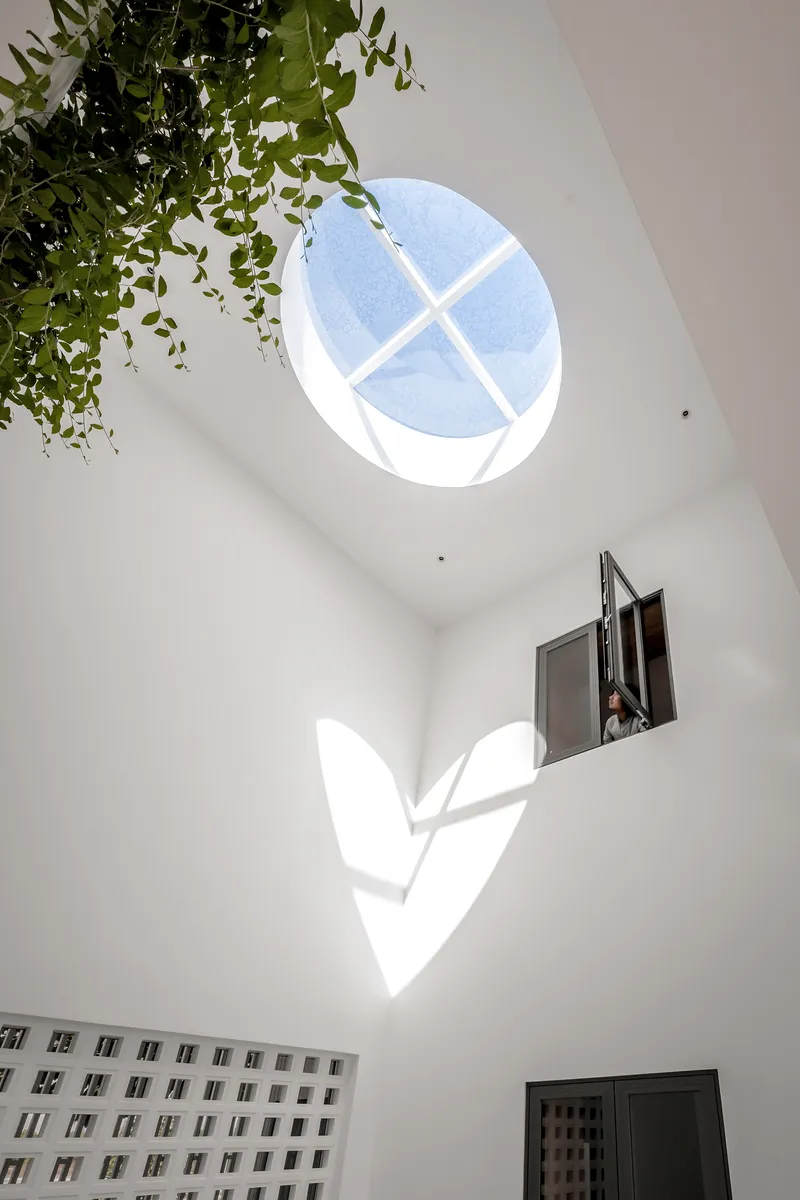
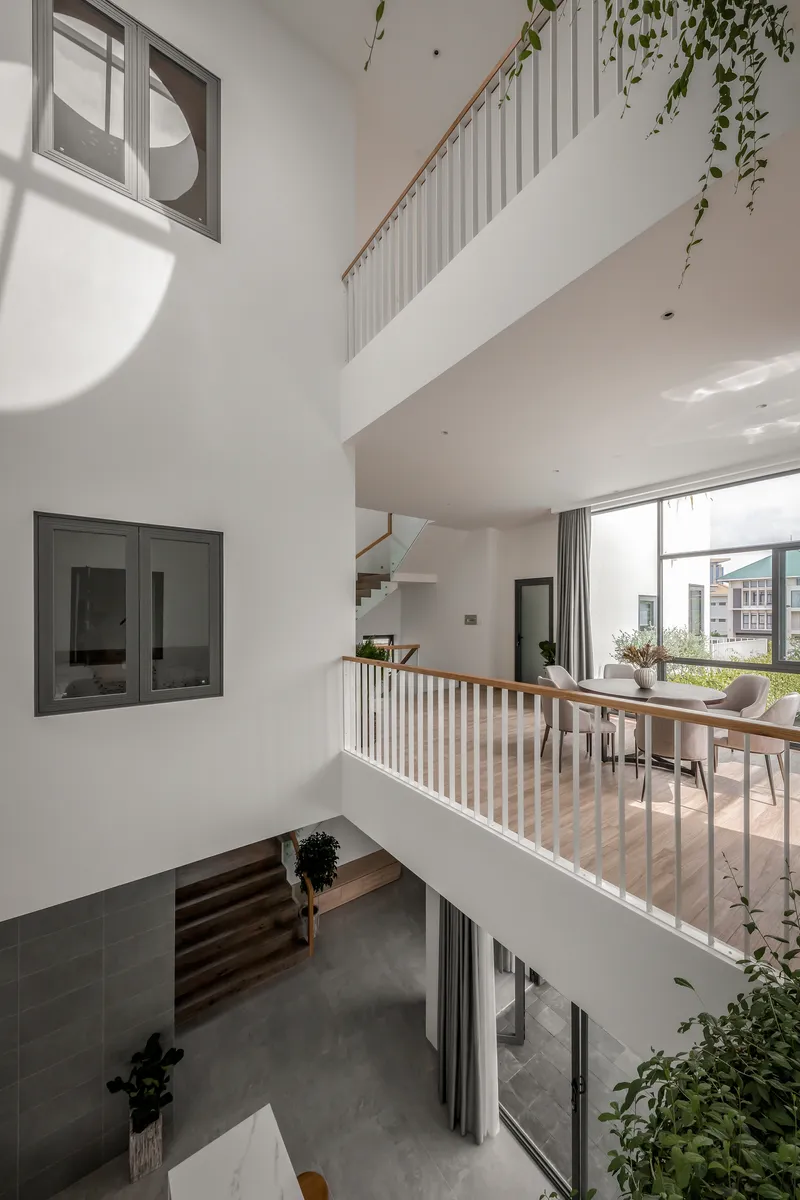
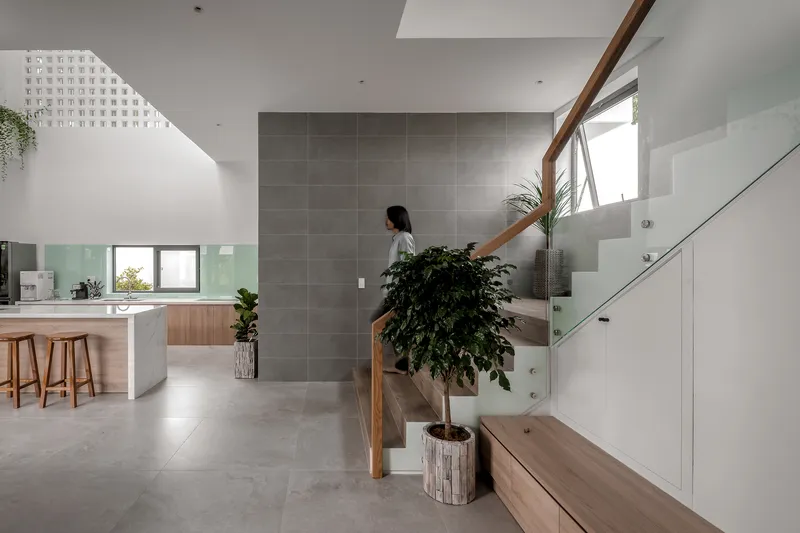
The most architecturally interesting moves happen in section. A triple-height void punches through the center of the house, linked by timber-railed bridges that connect the upper levels. Natural light enters through a circular skylight at the top, casting geometric shadows that migrate across the white walls throughout the day. The stairwell features a grey tiled feature wall lit by a perforated ceiling panel, turning vertical circulation into a moment of visual drama rather than a utilitarian corridor.
These voids serve the project's core ambition. They allow light, air, and a sense of shared inhabitation to travel between floors without requiring open-plan proximity. You can hear your family; you can sense their presence through shifts in light and shadow. But your bedroom walls belong only to you. Story Architecture calls this an exploration of "density and hollowness," and it works because the voids are sized and positioned with real discipline, never so large that they sacrifice usable floor area.
Private Rooms: Separation by Design
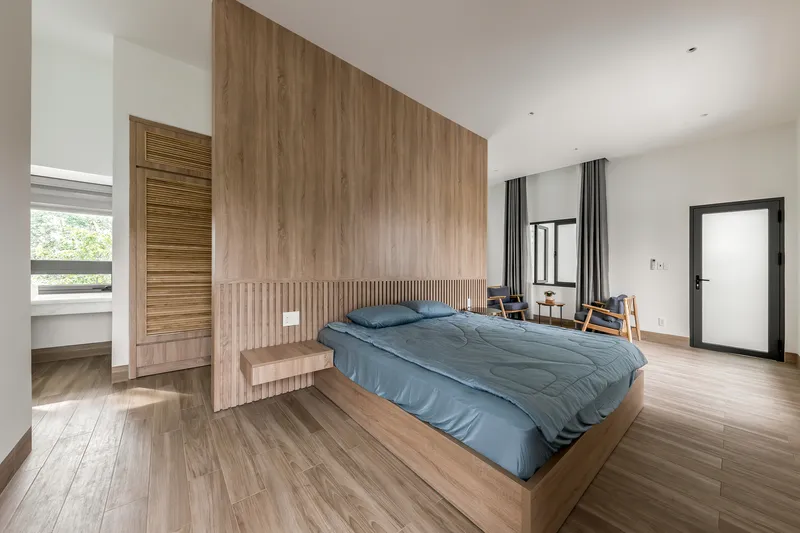
Bedrooms occupy the upper wings, each opening in multiple directions to allow cross-ventilation and varied outlooks. No bedroom shares a wall with another, a deliberate choice for a household that spans grandparents, parents, and children. The material palette shifts here: vertical timber wall panels replace white stucco, and integrated bedside ledges eliminate the need for freestanding furniture, keeping the rooms calm and uncluttered.
Privacy in a multigenerational house is often treated as a planning afterthought, something achieved with longer corridors or thicker partitions. Here it is a structural premise. The L-shape itself creates separation, placing different generations on different arms of the plan while the pool courtyard below maintains the possibility of encounter.
Day to Night: How the House Transforms
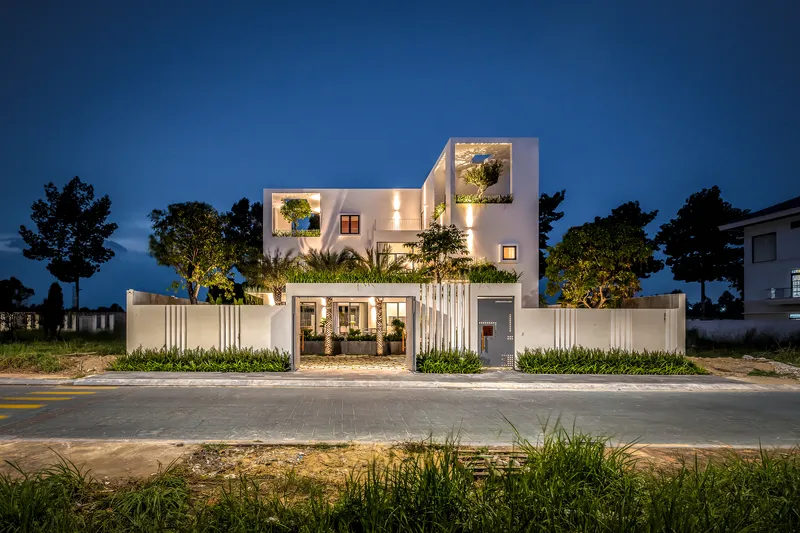
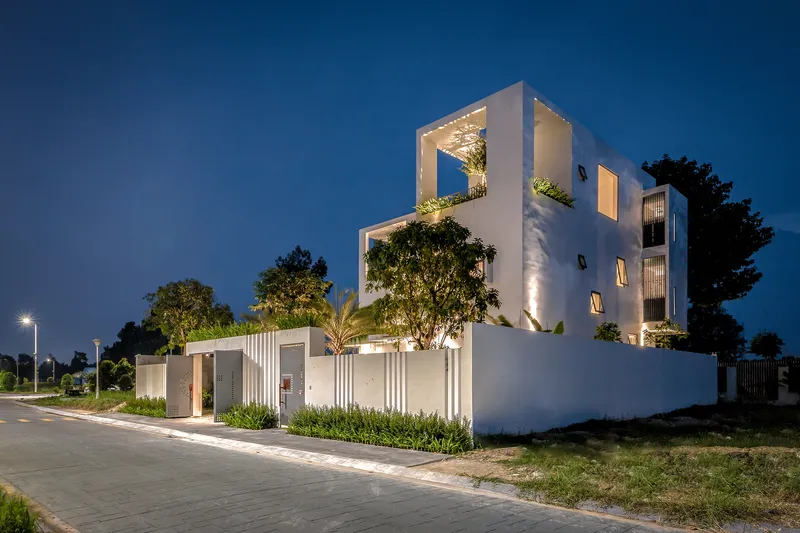
At dusk the house reveals a second character. Uplighting washes the planted terraces, and the recessed balconies glow against the darkening sky. The vertical slatted fence, opaque by day, becomes a lantern screen at night, broadcasting warm light through its gaps. The transformation is not theatrical. It reads as a natural consequence of the house's deep openings and layered surfaces catching artificial light the way they catch sun during the day.
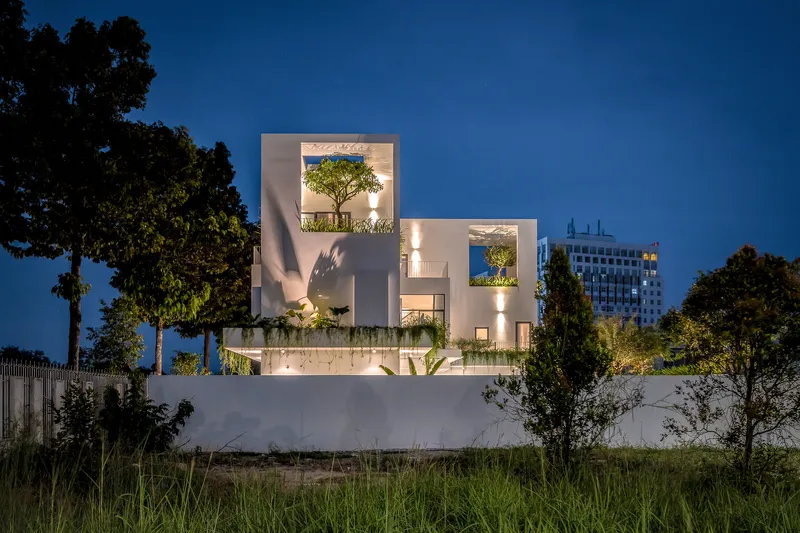
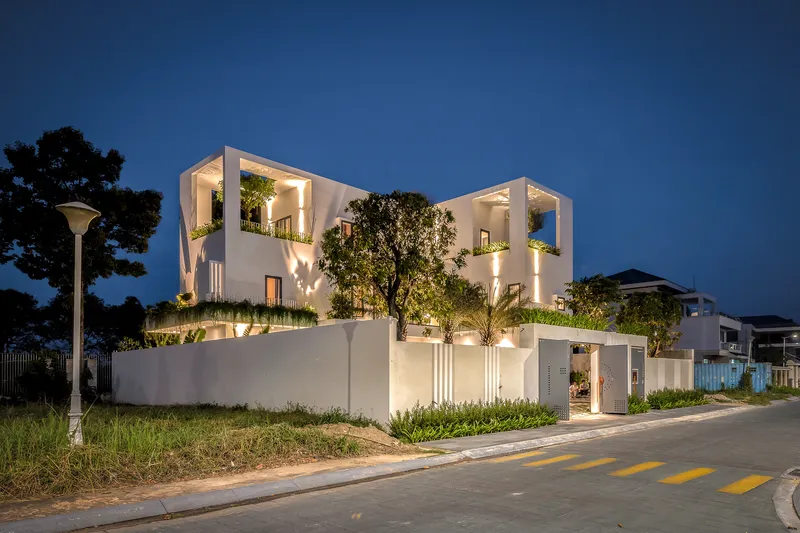
From the rear, the illuminated terraces frame their resident trees like individual vitrines, each planter box a small stage. It is the kind of nighttime presence that earns a building a second look from the street without resorting to accent lighting or facade projections.
Plans and Drawings
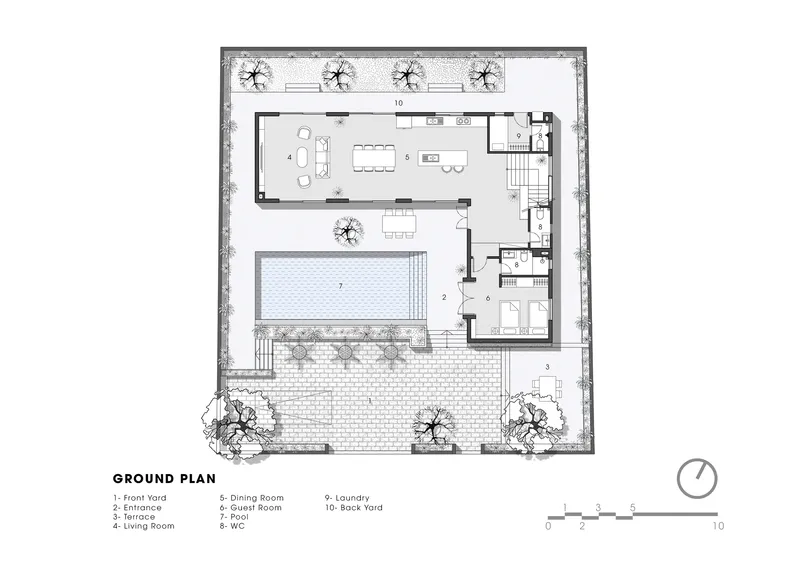
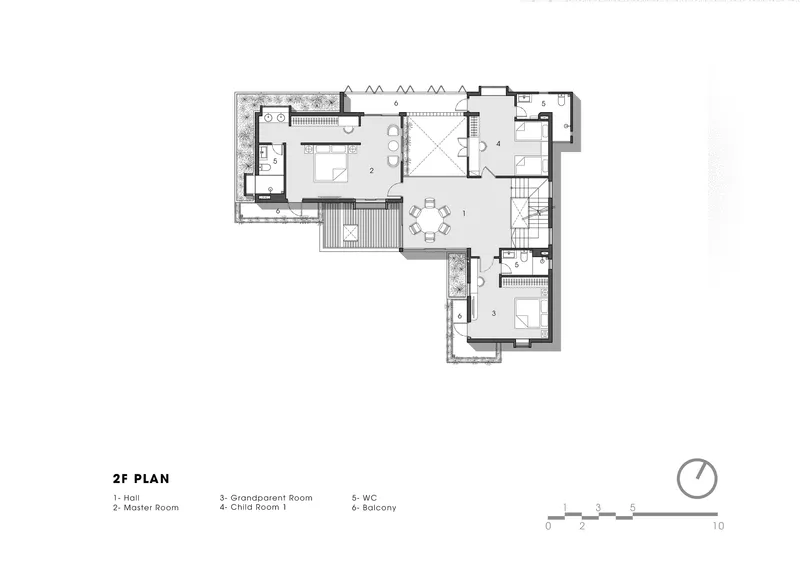
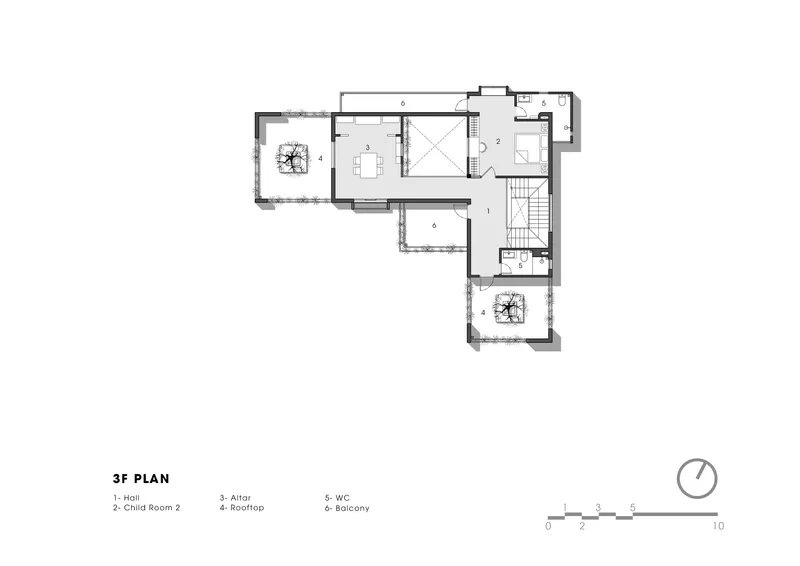
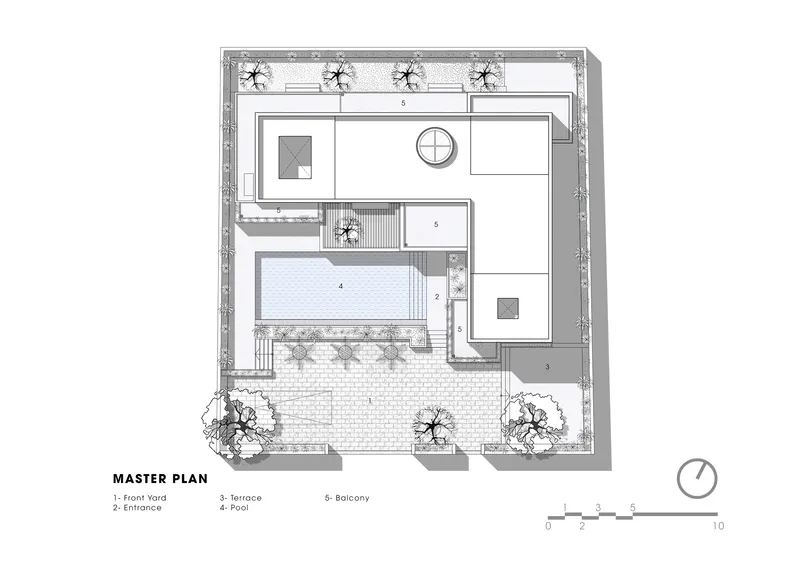
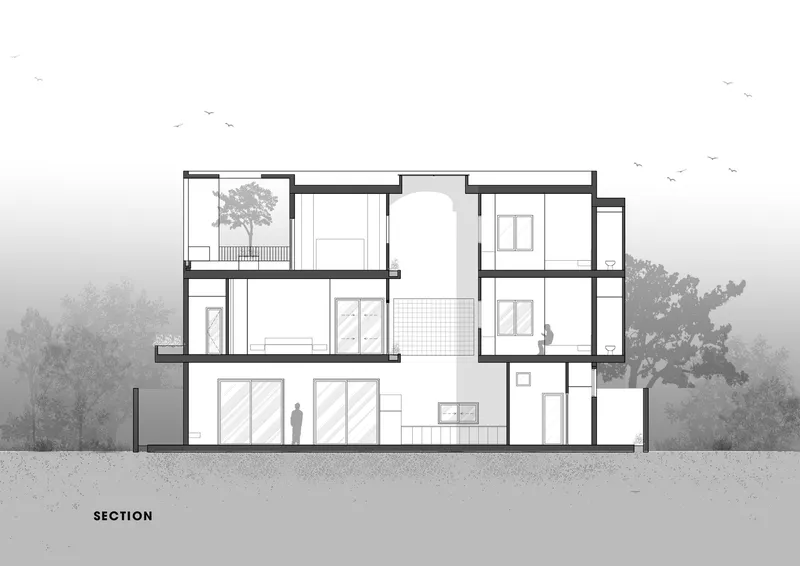
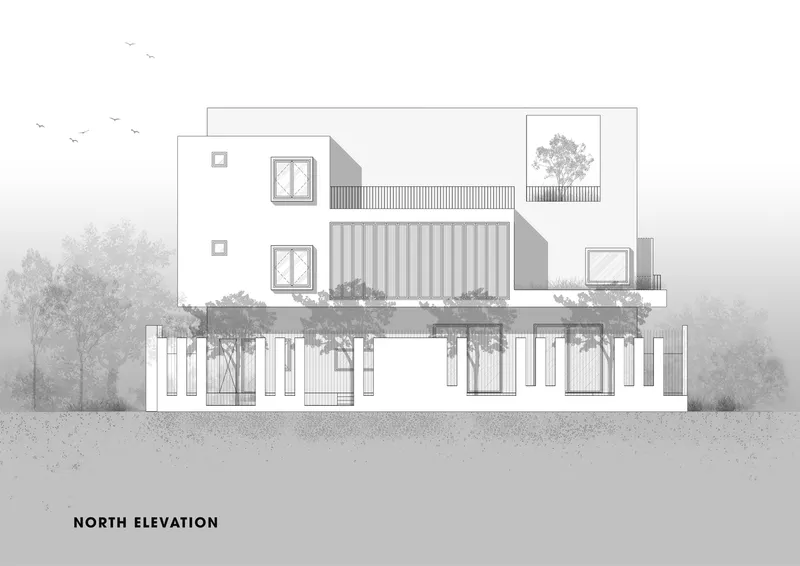
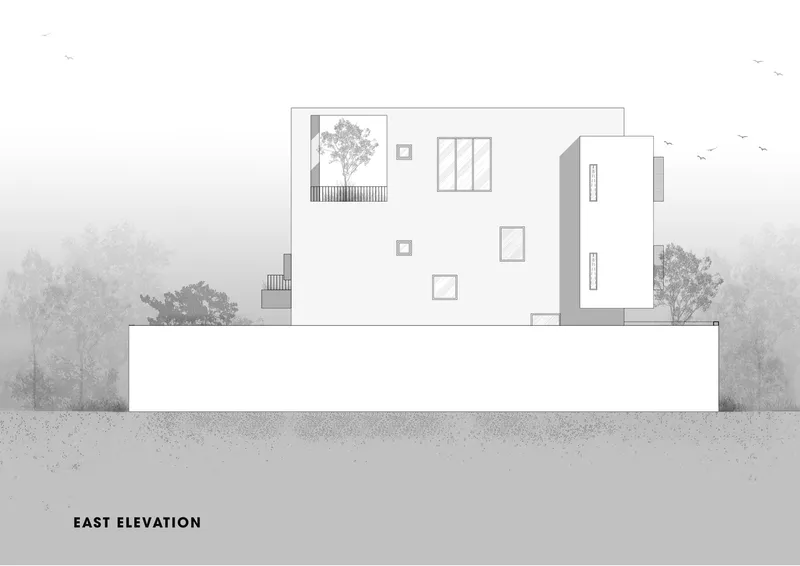
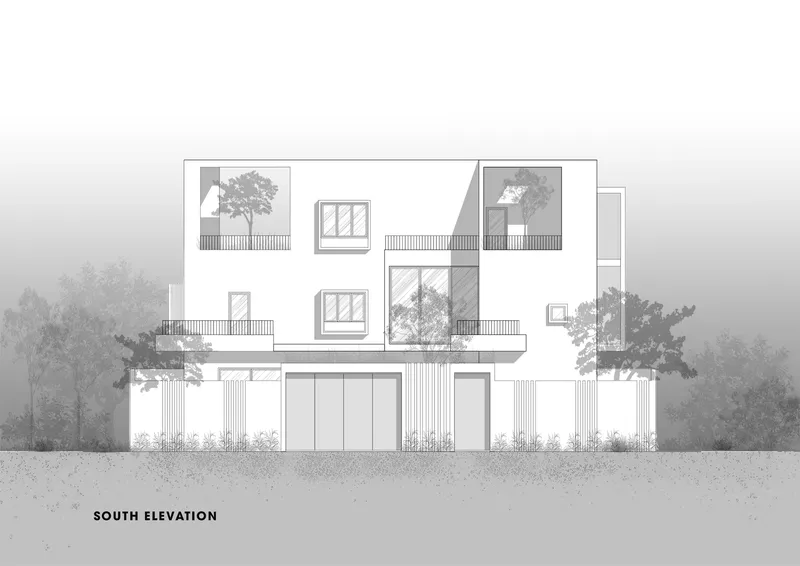
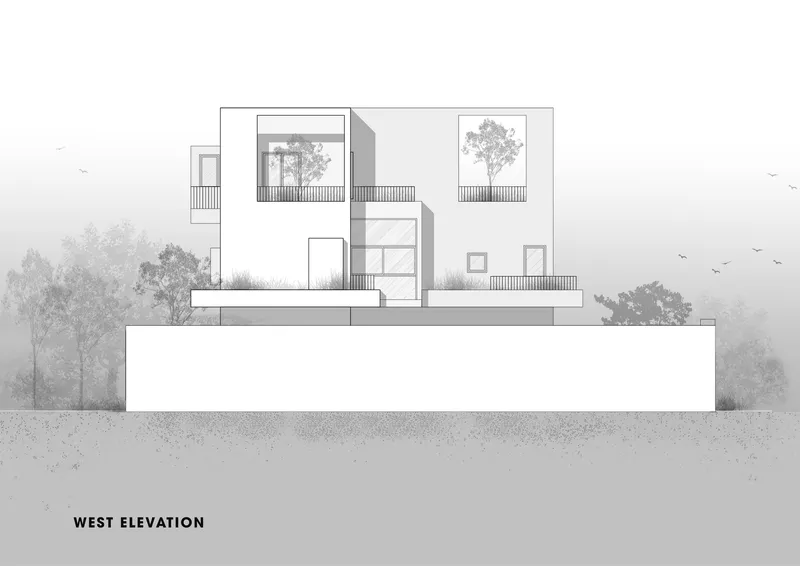
The floor plans confirm the L-shaped arrangement: living, dining, and kitchen cluster on the ground floor around the pool, while bedrooms distribute across the second and third levels with generous terraces. The section drawing is the most revealing document, showing how the central void threads light through three stories and how rooftop planters cap the composition with greenery. Elevations illustrate the calculated misalignment of volumes, each white box cantilevered or recessed just enough to create shadow lines and planting pockets.
Why This Project Matters
Villa Connect is not a radical house. It does not propose a new structural system or an experimental material palette. What it does, with considerable skill, is solve a social problem through architectural section. The multigenerational household requires coexistence without collision, shared ritual without forced intimacy. Story Architecture achieves this by making the void, not the room, the protagonist. Light wells, bridged atriums, and a central pool create the connective tissue that a corridor never could.
In a region where rapid urbanization often compresses family living into tight, stacked plans, this project argues for generosity of a specific kind: not more square meters, but better-calibrated ones. Every opening, every planted recess, every skylight serves a double purpose, climate and kinship simultaneously. That pragmatic layering is what makes the house worth studying, not its white surfaces or its pool, but the careful choreography of togetherness and solitude underneath.
Villa Connect by Story Architecture (Lead Architect: Nguyễn Kava). Binh Duong Province, Vietnam. 525 m². Completed 2022. Photography by Minq Bui.
About the Studio
Share Your Own Work on uni.xyz
If projects like this are the kind of work you want to make, uni.xyz is a place to publish your own, find collaborators, and enter design competitions.


Popular Articles
Popular articles from the community


The Amber Palace Opera: A Geological Fiction Surfaces on Tallinn's Baltic Waterfront
Pierre Brillard reimagines a Baltic legend as a public landscape, opera house, and waterfront promenade rooted in Tallinn's coastal identity.

Singing Woman: Contemporary Architecture Inspired by Estonia’s Voice and the Sea
Singing Woman turns Estonia’s song culture into flowing opera house architecture, blending public life, landscape, sea, and national memory.
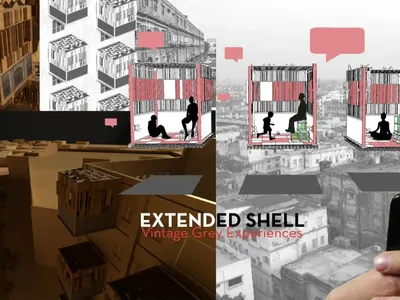
Extended Shell: Retrofitting Kolkata's Balconies as Living Urban Thresholds
A modular retrofit system recovers the social and environmental intelligence of Kolkata's historic verandas for contemporary Park Street residents.

Cloaked Colonization: A Mobile Underwater Habitat That Moves Like a Fish
Micah Abaya's shortlisted EHC Pacific entry reimagines ocean settlement as a dispersed network of self-sustaining architectural organisms.

Similar Reads
You might also enjoy these articles

Bao Huynh Watercolor Atelier: A Serene Art Retreat in Hội An
Bao Huynh Watercolor Atelier in Hội An blends multifunctional art spaces, sustainable design, local materials, and family-friendly living in a serene environment.

Atelier Macri Concept Store Interior Design by CASE-REAL
Atelier Macri store features a "ko" counter, walnut wood details, cork displays, blending retail, gallery, and seamless customer experiences.

Manuel Vargas Izquierdo Stadium and High-Performance Sports Center: Architectural Excellence in Jalpa de Méndez
The Manuel Vargas Izquierdo Stadium blends sustainable design, inclusive sports facilities, and cultural-inspired architecture, revitalizing Jalpa de Méndez’s public spaces.

KAKR Buluh Awar Hall: Revitalizing Community and Ecology Through Bamboo Architecture
Community built bamboo hall revitalizes Buluh Awar village, empowering youth, restoring ecology, celebrating vernacular craftsmanship through sustainable architecture and culture.

Explore Villa Competitions
Discover active competitions in this discipline

Challenge to design mud housing for contemporary communities

Challenge to reimagine the Iron Throne

Photograph architecture without architects

Illustrate the lost glory of Angkor Wat - Render Challenge
Comments (0)
Please login or sign up to add comments
No comments yet. Be the first to comment!