

AKINTECTS Carves a 39-Square-Meter Cliffside Studio from a Chongqing Promenade Pavilion
A subtractive renovation on the Houbao Promenade turns a riverside pavilion into a compact office and public observation deck.


Chongqing's topography is famously vertical, a city of stacked terraces and cliff-hung infrastructure where the line between public promenade and private interior is never quite stable. On the second floor of a pavilion along the Houbao Promenade, AKINTECTS found 39 square meters of underused space and turned it into something genuinely rare: an architecture office that gives more to its surroundings than it takes. The strategy is subtractive. Two corners of the original building were cut away, one to restore a circular public walkway, the other to open an observation deck toward the river. What remains is a tight, raised workspace threaded through a central staircase passage that doubles as a framed view corridor toward the Yangtze.
The interesting move here is not the compactness itself, though fitting six workstations, a reception area, a lounge, and an exhibition wall into 39 square meters is no small feat. It is the insistence that a private office renovation on a public promenade must actively improve public access. AKINTECTS, led by Lew Joeson, Li Xinyu, and Wei Jie, chose to solve a circulation problem that predated their commission: the original pavilion's glass box extension blocked the flow of pedestrian traffic. By removing building mass rather than adding it, the studio earned its footprint.
A Pavilion Among Towers
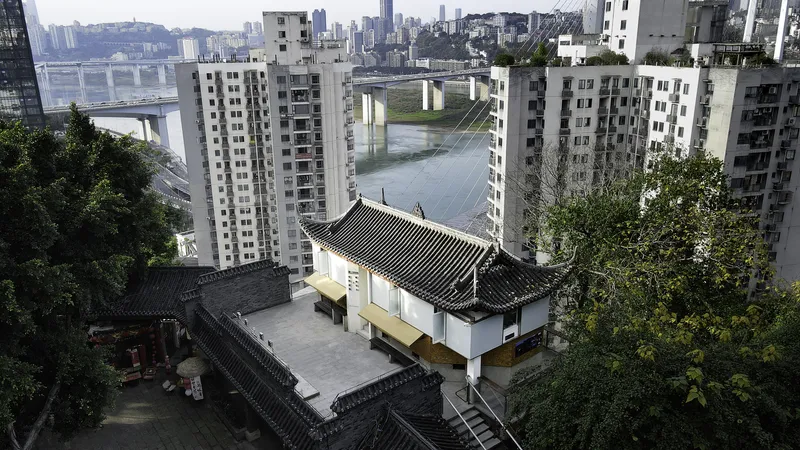
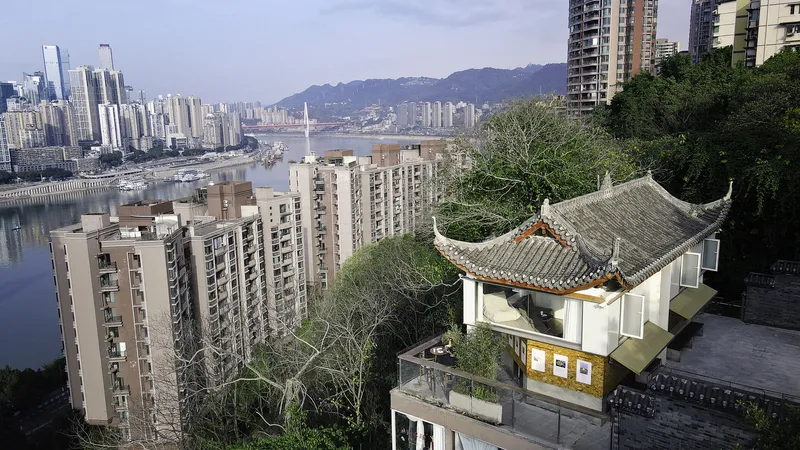
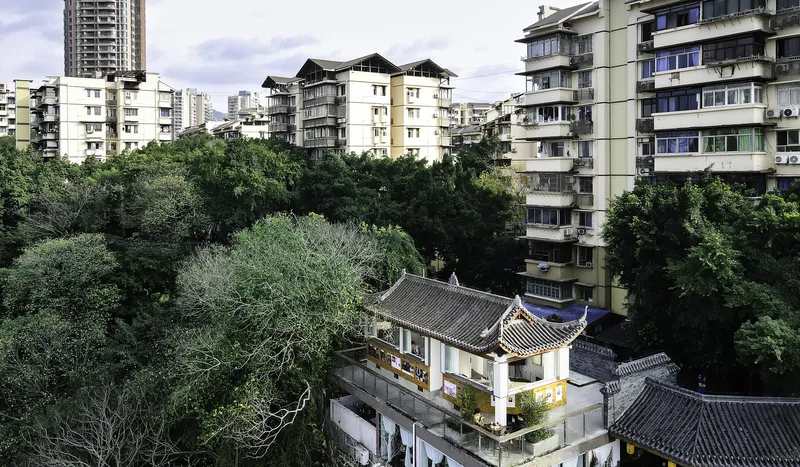
From above, the pavilion reads as a survivor. Its traditional tiled roof sits among dense tree canopy and residential towers along the riverbank, a relic of an older scale surrounded by relentless vertical development. The aerial views make clear why the promenade location matters so much: this is one of the few moments along the cliff edge where a pedestrian-scaled, publicly accessible structure mediates between the water and the city above. AKINTECTS treated that role with seriousness, understanding that the pavilion's value lies in its position, not its size.
Subtracting to Circulate
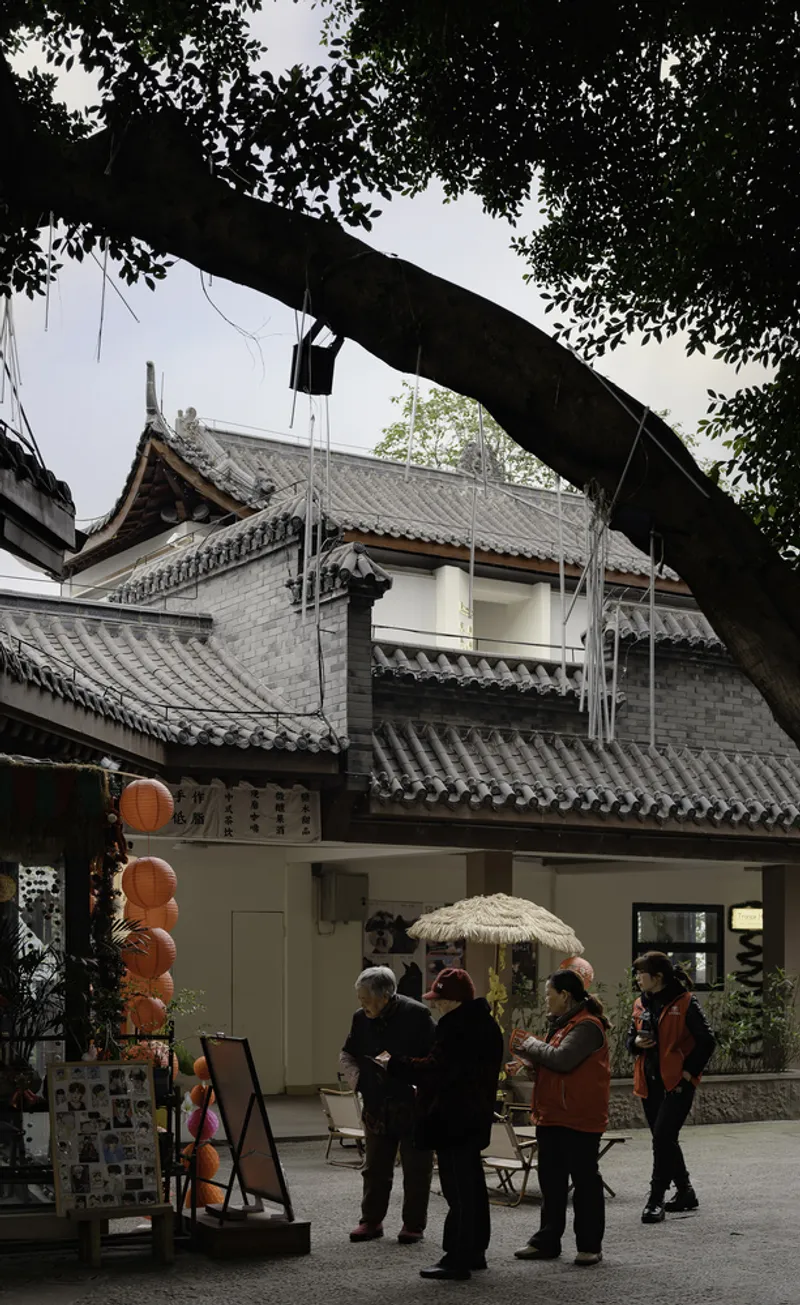
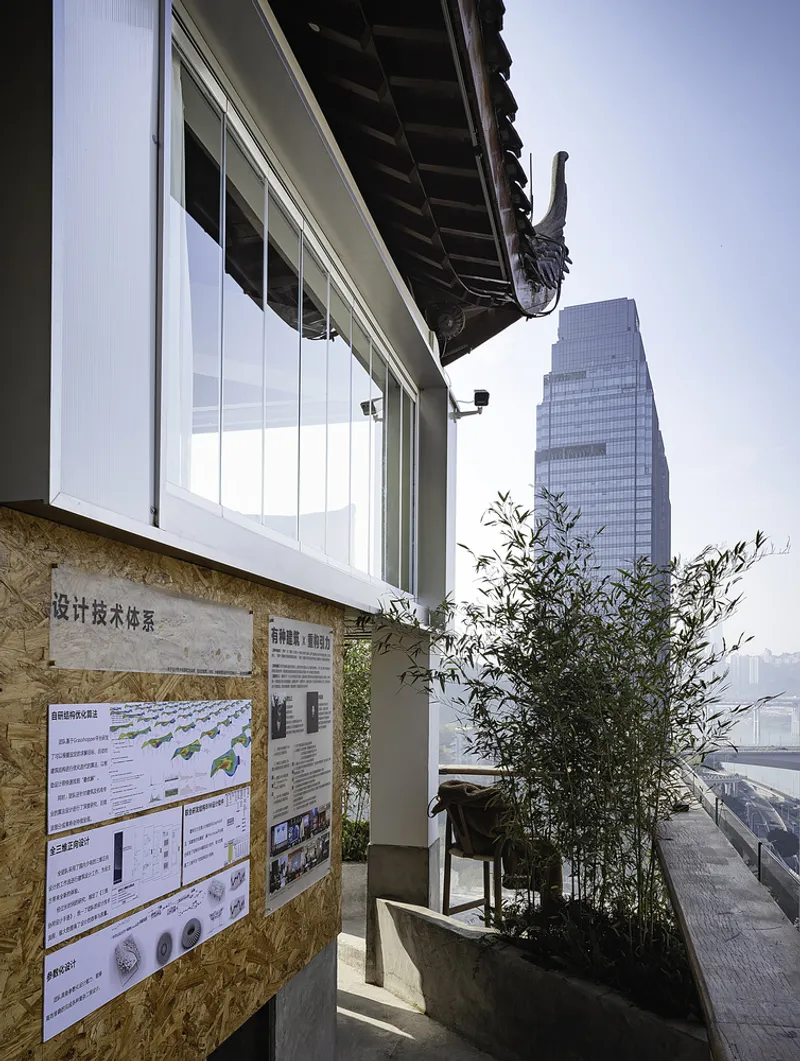
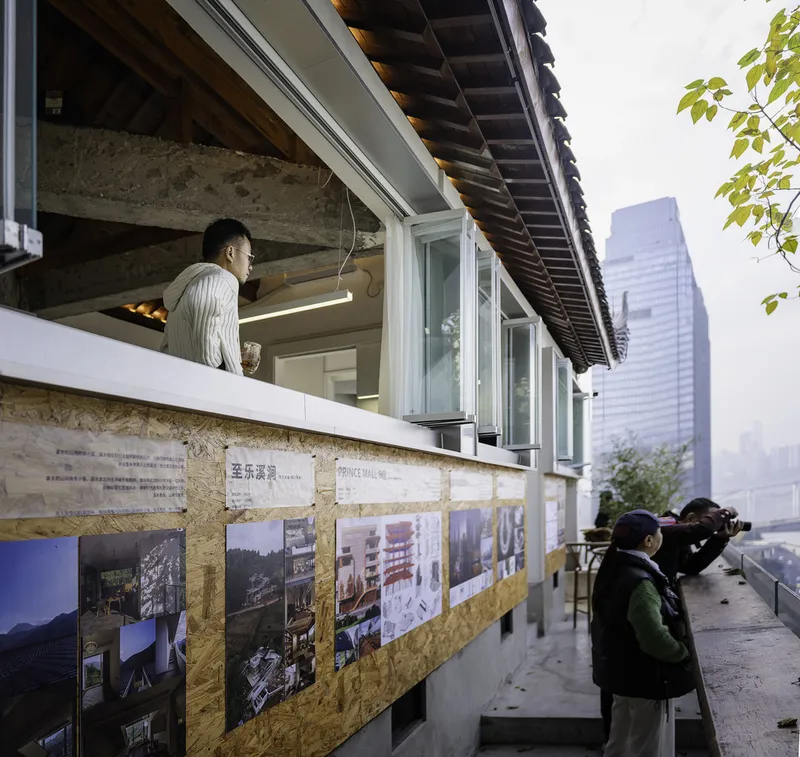
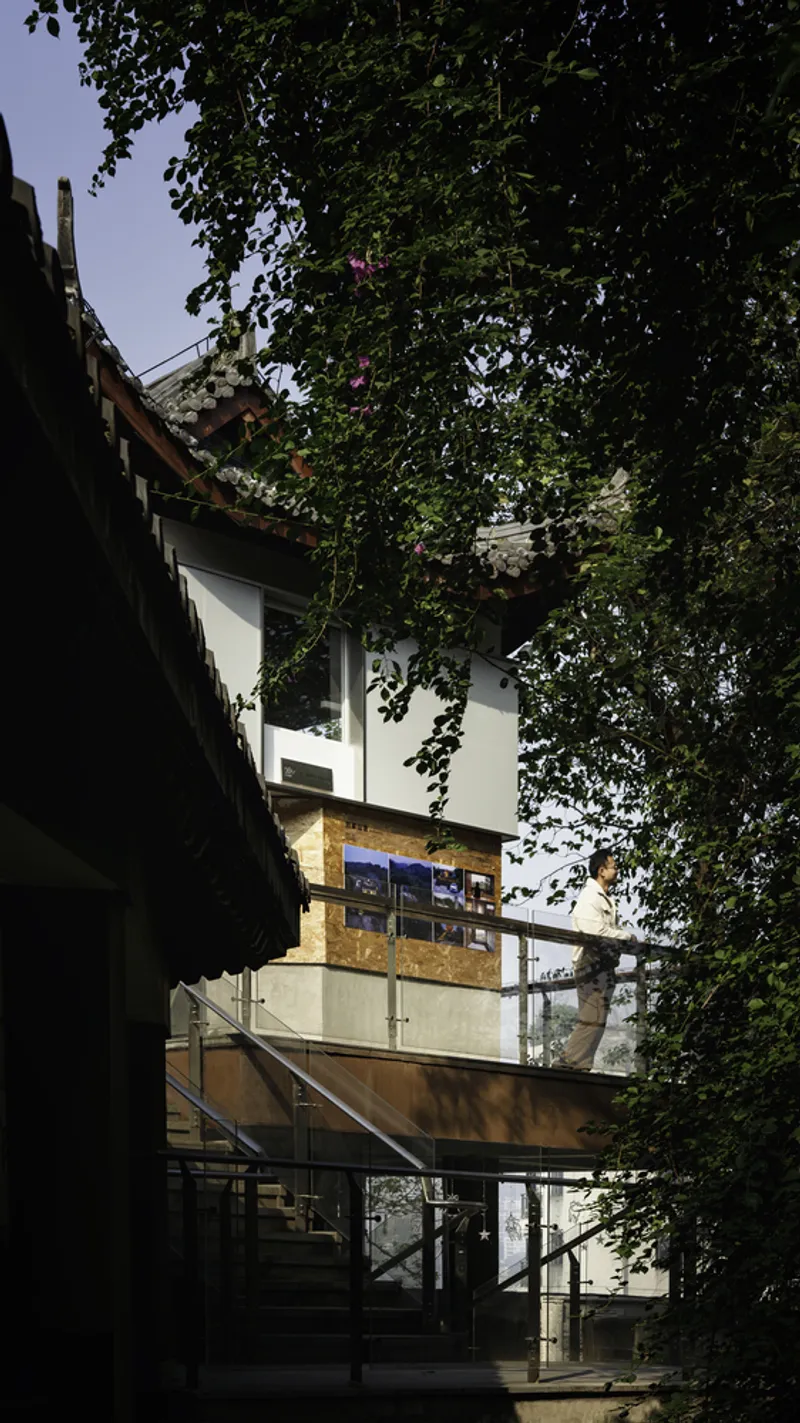
The two corner cuts are the project's defining gestures. One removal restores a continuous walking loop along the promenade, solving a blockage that the original glass extension created. The other carves out a public observation terrace where visitors gather to photograph the cityscape. Exhibition panels on plywood backing line the terrace beneath the traditional eave, turning the exterior into a kind of informal gallery. The bamboo planters in concrete frames soften the threshold between studio and walkway without closing it off.
What you see from the courtyard level is a pavilion that breathes. The tree-framed approach, the gathered visitors, the layered rooflines all suggest a building that has been opened up rather than sealed. For a project of this scale, that openness carries real civic weight.
Roof as Identity

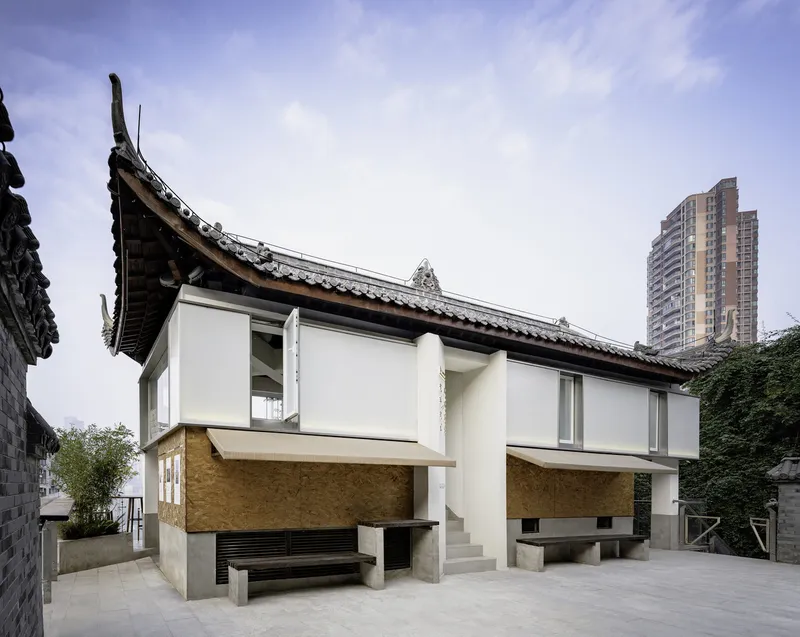

The upturned tile roof is doing a lot of work here, both structurally and symbolically. Its curved eaves and traditional profile anchor the pavilion in Chongqing's vernacular language, while the white plaster walls and concrete benches beneath the overhangs keep the material palette restrained and modern. The detail at the eave corner, where the upturned tile meets a glass wall and a planted bamboo grove, is handled with precision. There is no nostalgia in the gesture, just a clear decision that this roof form, visible from the river and from the towers above, should remain legible.
Against the backdrop of high-rise towers, the low, curved profile reads as deliberately modest. AKINTECTS did not try to compete with the surrounding scale. Instead, they let the roof assert a different kind of presence: horizontal, sheltering, and public.
The Raised Interior
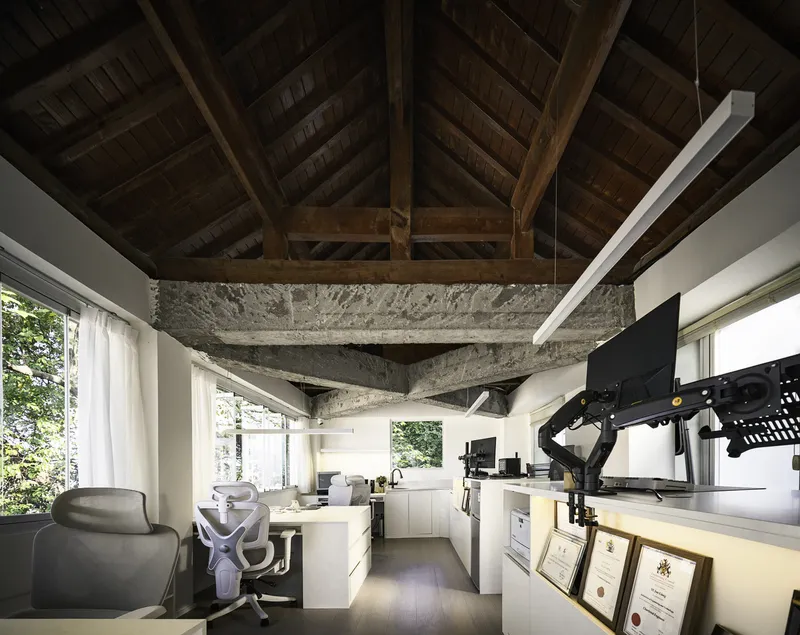

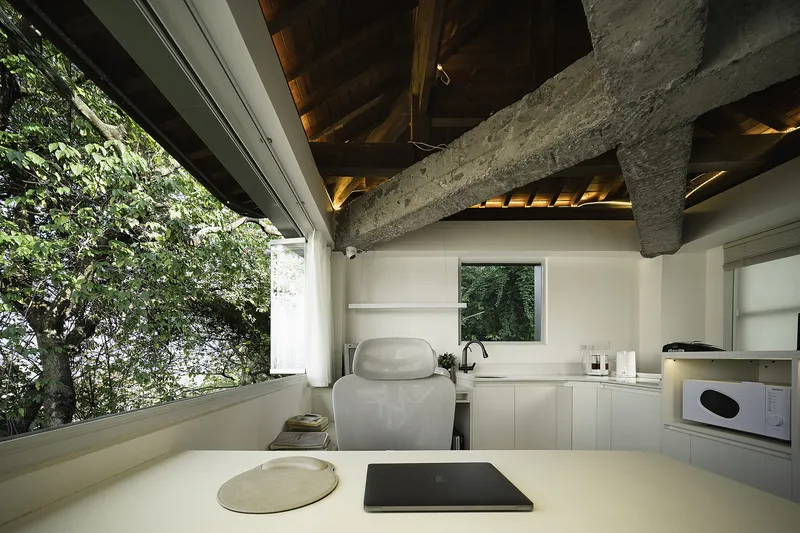
Raising the interior floor by one meter is the key spatial move that makes the dual program possible. From inside, the workstations sit above the promenade level, offering views over the treetops and toward the river without exposing the office to the foot traffic below. The resulting 2-meter-high wall beneath the windows serves double duty as exhibition surface and privacy screen. It is a simple section trick, but in a space this small, it transforms the experience completely.
The exposed timber roof trusses and rough concrete beams overhead give the interior a workshop character that suits a design studio. White desks and cabinetry under linear lighting keep the lower zone clean and functional, while the timber structure above provides visual warmth and vertical proportion. The sliding windows are generous, pulling the canopy and cityscape directly into the workspace.
Threshold and Frame
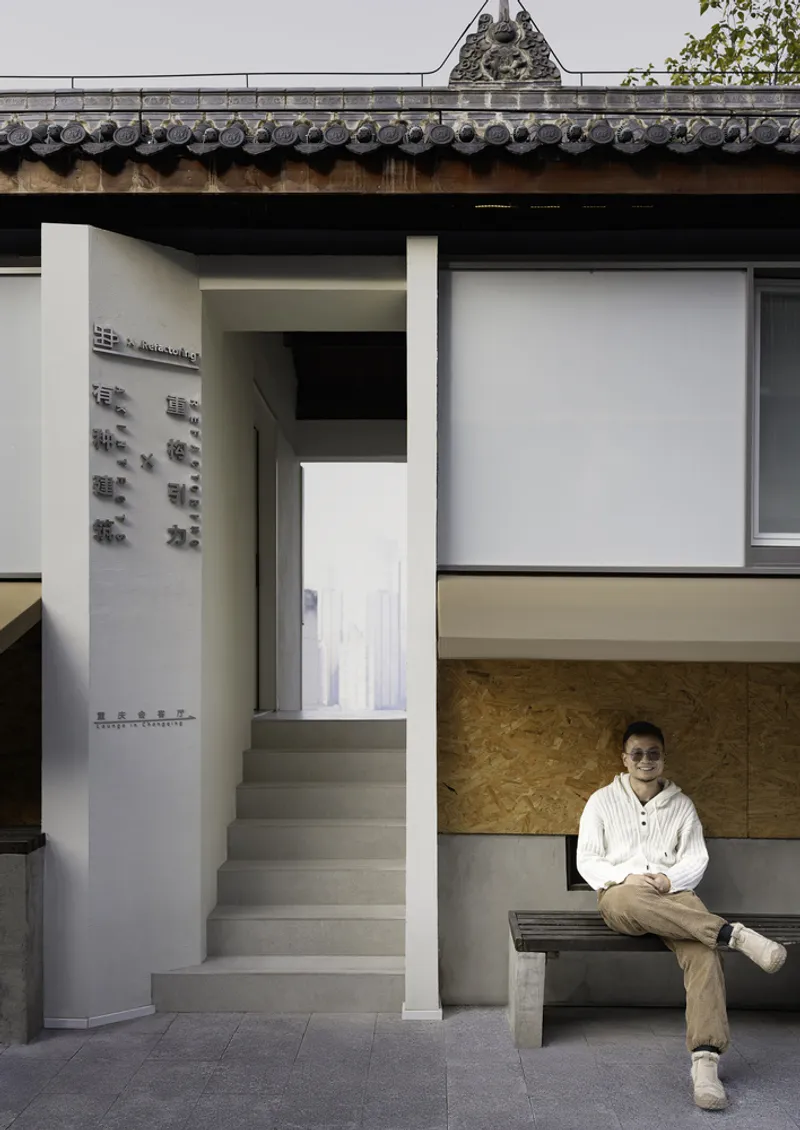

The central passage that cuts through the building functions simultaneously as entrance staircase, framed view corridor, and threshold between the courtyard and the river. The narrow doorway beneath the tiled eave compresses the approach before releasing it into the elevated interior. At dusk, the view through the passage toward the distant cityscape and water is cinematic: a carefully aligned slot that rewards the climb.
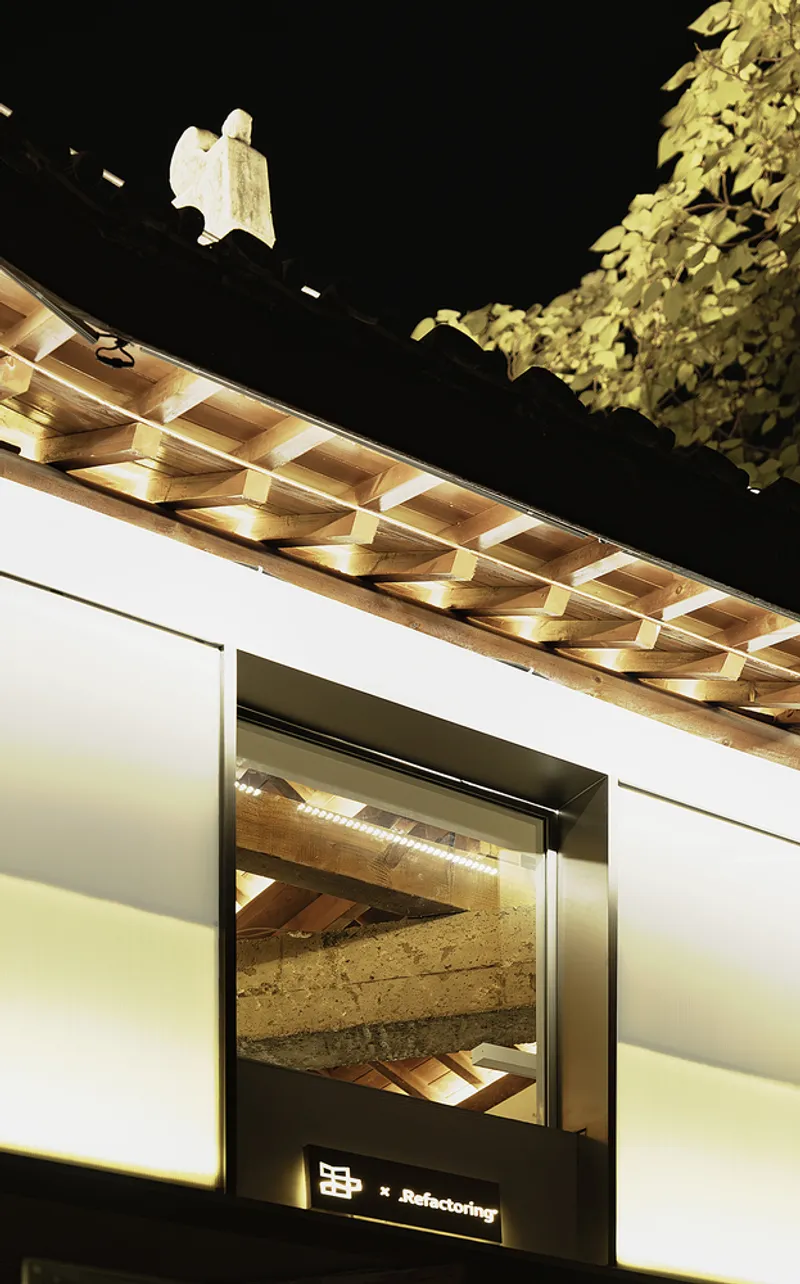
Night shots reveal the underlit timber eave with its geometric bracket pattern, transforming the entrance into a lantern. The building becomes a marker along the promenade, visible but not aggressive, inviting without demanding entry.
Living with the View
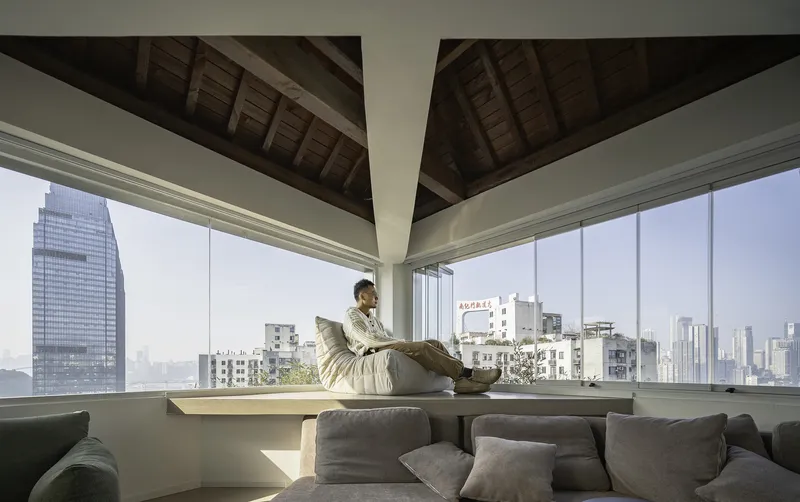

The window seat beneath crossed timber roof planes is perhaps the most telling image of the project's ambitions. A single figure reads against the hazy urban skyline, seated in a space that is simultaneously office, lookout, and refuge. The recessed window alcove on the opposite side offers a similar moment of solitary contemplation over the city. These are not just amenities. They are arguments for what a 39-square-meter workspace can feel like when the section is right and the orientation is generous.
At ground level, the glazed entrance beneath the curved eaves and leafy branches presents the building as approachable, its transparency an invitation rather than a display. The relationship between inside and outside is always negotiated, never fully open and never fully closed.
Plans and Drawings
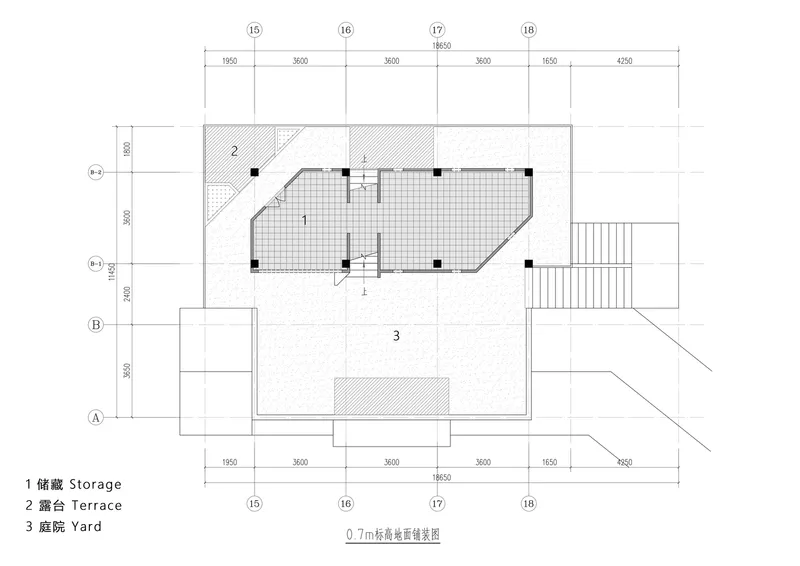
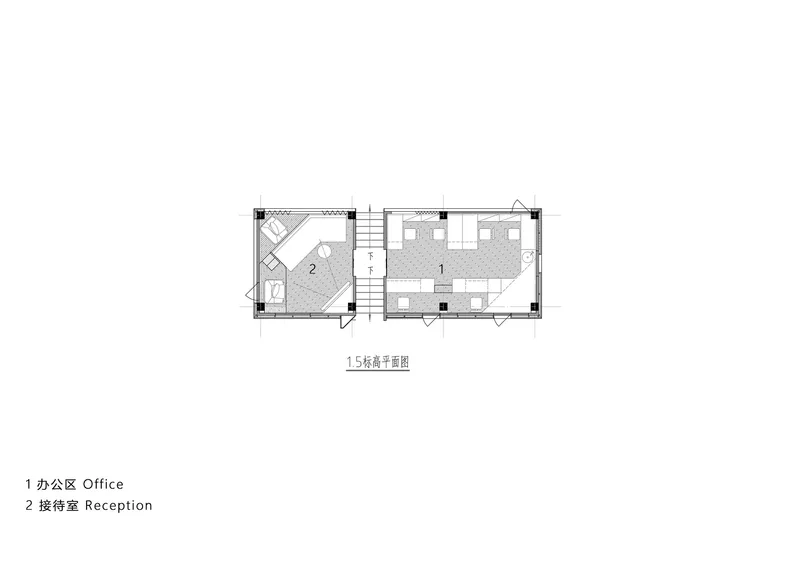

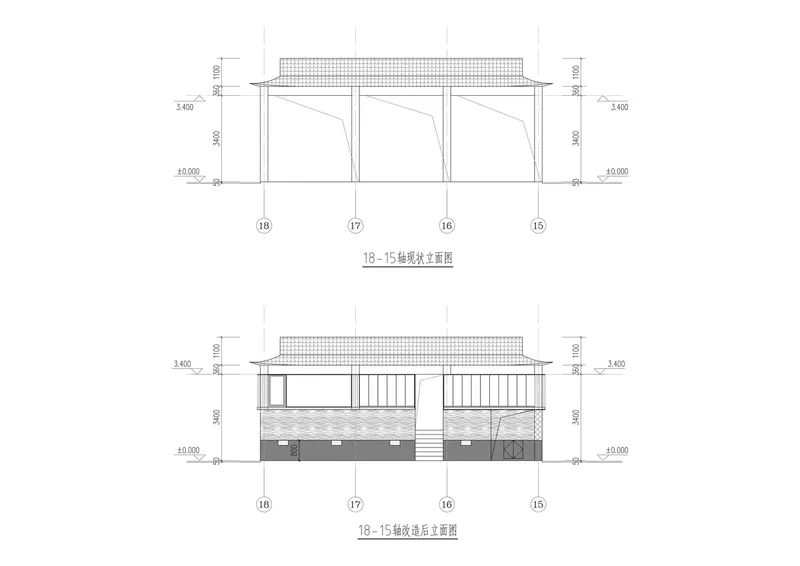
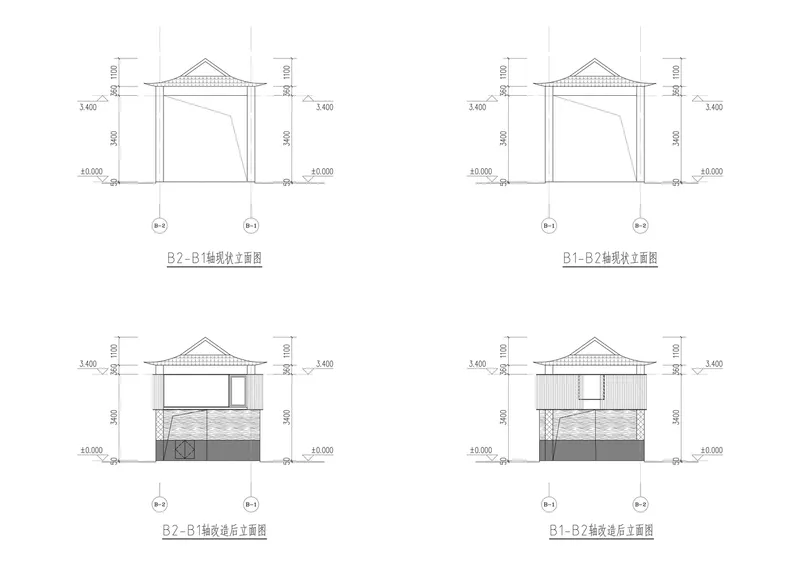
The floor plans confirm the clarity of the organizational logic. Storage, terrace, and yard zones occupy the perimeter, while the central stair divides the office from the reception. The angled corner room, created by the subtractive cut, accommodates the lounge seating. What the plans cannot fully convey, the sections do: the raised floor, the relationship between the peaked timber roof and the interior volumes, the way the traditional tile profile conceals a surprisingly tall workspace. The elevation drawings show a building whose fenestration pattern is rhythmic and restrained, with the base podium grounding the lighter structure above.
Why This Project Matters
Studio on the Cliff is a useful corrective to the idea that small projects lack ambition. At 39 square meters, AKINTECTS had almost no room for error, and the decisions they made, raising the floor, cutting two corners, threading a passage through the center, are all legible and purposeful. Nothing is decorative. Every move solves at least two problems at once. The result is a workspace that performs well for six people and simultaneously improves the public infrastructure it sits within.
In a city like Chongqing, where development pressure constantly threatens the few remaining pedestrian-scaled moments along the cliffs, this project offers a model for renovation that prioritizes public generosity. The studio did not need to give back a walkway or open an observation deck. It chose to. That choice, embedded in the building's form rather than applied as a gesture, is what makes the project worth studying.
Studio on the Cliff by AKINTECTS. Chongqing, China. 39 m². Completed 2024. Design team: Lew Joeson, Li Xinyu, Wei Jie. Consulting: Refactoring.
About the Studio
AKINTECTS
Share Your Own Work on uni.xyz
If projects like this are the kind of work you want to make, uni.xyz is a place to publish your own, find collaborators, and enter design competitions.




Popular Articles
Popular articles from the community


The Earth Pod: 3D Printed Homes for Resilient Refugee Communities
The Earth Pod reimagines refugee housing through 3D printed homes made from clay, combining resilience, self-sufficiency, and rapid shelter.

Play: Fragments of Their World
Familiar architecture becomes modular playground design, creating safe spaces where displaced children can learn, connect, imagine and play.

Co-life: Sustainable Architecture for Age-Friendly Community Living
Co-life reimagines sustainable architecture for seniors through courtyards, rammed earth, shared gardens, and spaces designed for belonging.

The Musturak Paradise: Senior Living Architecture for a Connected Future in Temara, Morocco
The Musturak Paradise reimagines senior living architecture in Temara via private homes, social spaces, culture, community, and shared care.


Similar Reads
You might also enjoy these articles

Bamboo Housing Challenge 2026: Design Affordable, Sustainable Homes Using Bamboo
An international design competition by Bamboo U and IBUKU inviting architects and designers to reimagine affordable housing using bamboo — with the winning design built full-scale in Bali.

Computational Design & Education: Beegraphy Design Awards Introduces 7th Category (Featuring Jiyun's Innovative Approach)
Dive into Beegraphy’s 7th Design Awards category, where computational design meets education to create immersive, interactive learning tools, inspired by Jiyun’s work.

From Parametric Lighting to Urban Furniture: Join the 2nd Workshop in Beegraphy’s Computational Design Series
Dive into Cutting-Edge Design Techniques and Practical Applications with Industry Experts

Last Call: Unleash Your Architectural Genius in SHAK's Kindergarten Design Competition
Urgent call for architects to join SHAK's kindergarten design competition before the looming deadline
Explore Architecture Competitions
Discover active competitions in this discipline



Challenge to reimagine the Iron Throne


Photograph architecture without architects


Illustrate the lost glory of Angkor Wat - Render Challenge


Design challenge to reuse E-waste
Comments (0)
Please login or sign up to add comments
No comments yet. Be the first to comment!