

Sunday Café–Playroom by CUDO: A Harmonious Space for Children and Adults in Poznań
Sunday Café–Playroom by CUDO blends Montessori-inspired design with natural materials, creating a harmonious, family-friendly café merging play and relaxation.


A New Concept in Family-Friendly Café Design
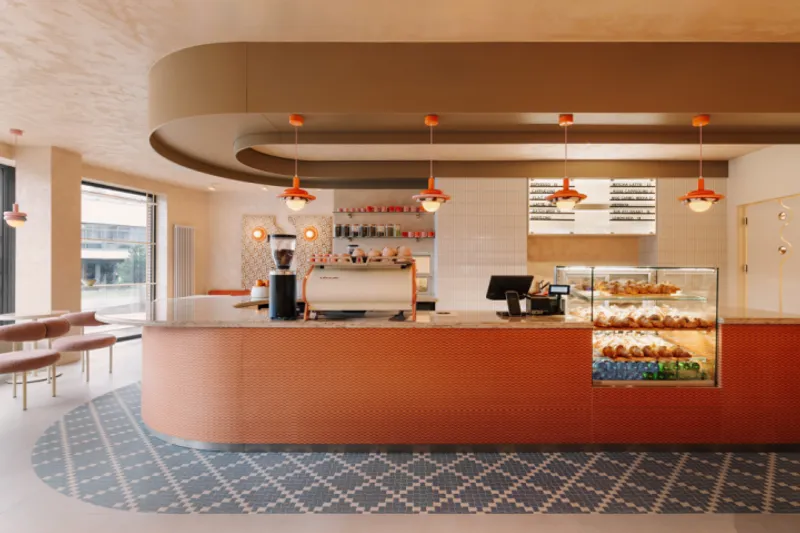
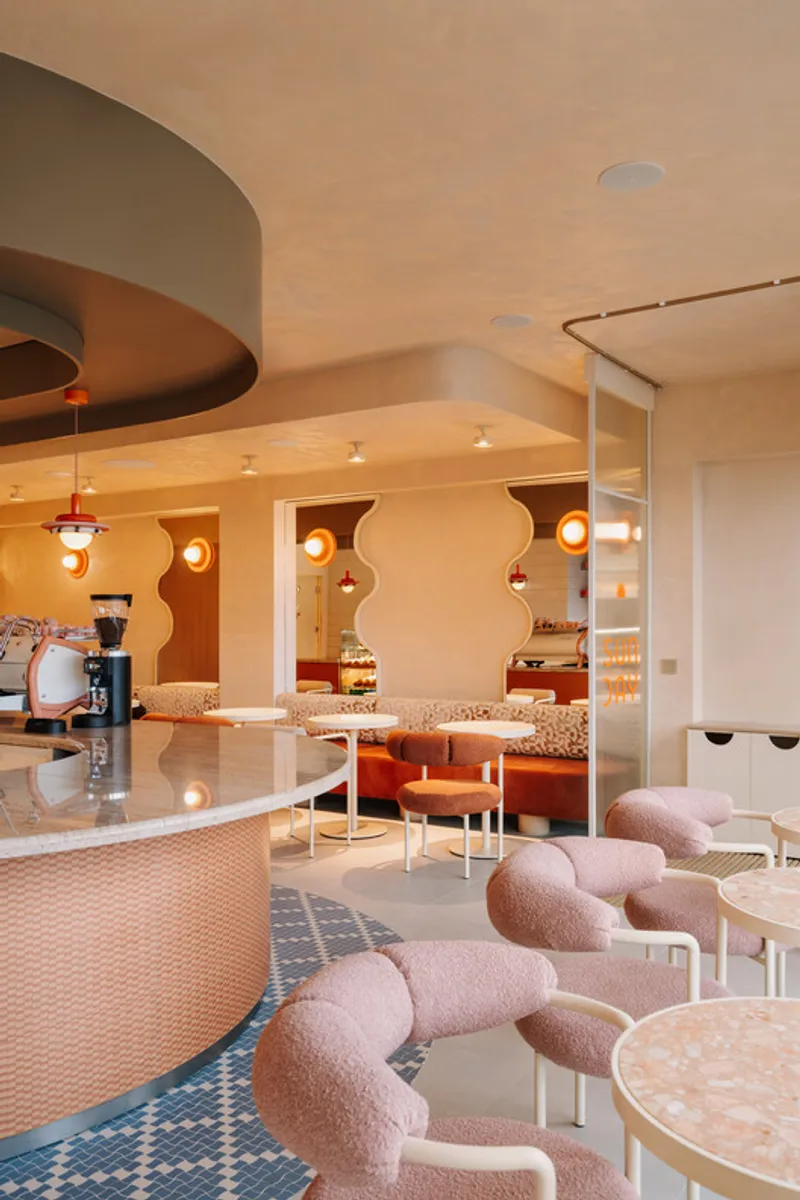
Designed by CUDO:, Sunday Café–Playroom in Poznań, Poland, redefines what it means to combine hospitality and play. The 160 m² café is a warm, thoughtfully crafted space where adults and children coexist seamlessly, without the typical visual or functional separation. Inspired by the Montessori philosophy, the project celebrates freedom, growth, and harmony, offering a refreshing alternative to the rigid “adults-only” or “kids-only” zones commonly found in urban settings.
The Concept: Integration Over Separation
The idea behind Sunday Café–Playroom was to design a coherent, inclusive environment where both adults and children feel equally welcome. Rather than dividing the space into distinct zones, CUDO: envisioned a unified interior that naturally supports relaxation, creativity, and connection.
A key goal was to create an inviting, sensory-rich atmosphere. The architects achieved this by incorporating natural materials, soft colors, and tactile textures that appeal to all age groups. This balance ensures that while children enjoy their play, adults can unwind in an aesthetically refined yet casual environment.

Material Palette: Nature and Durability
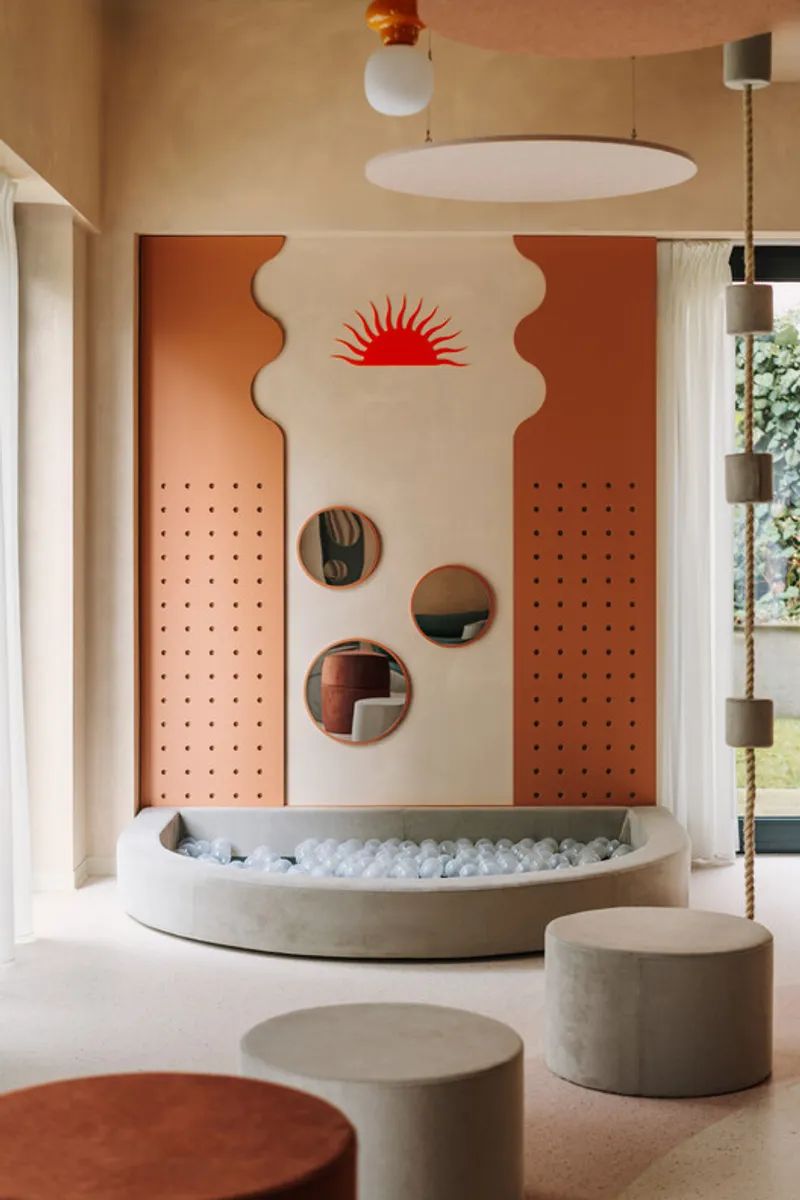
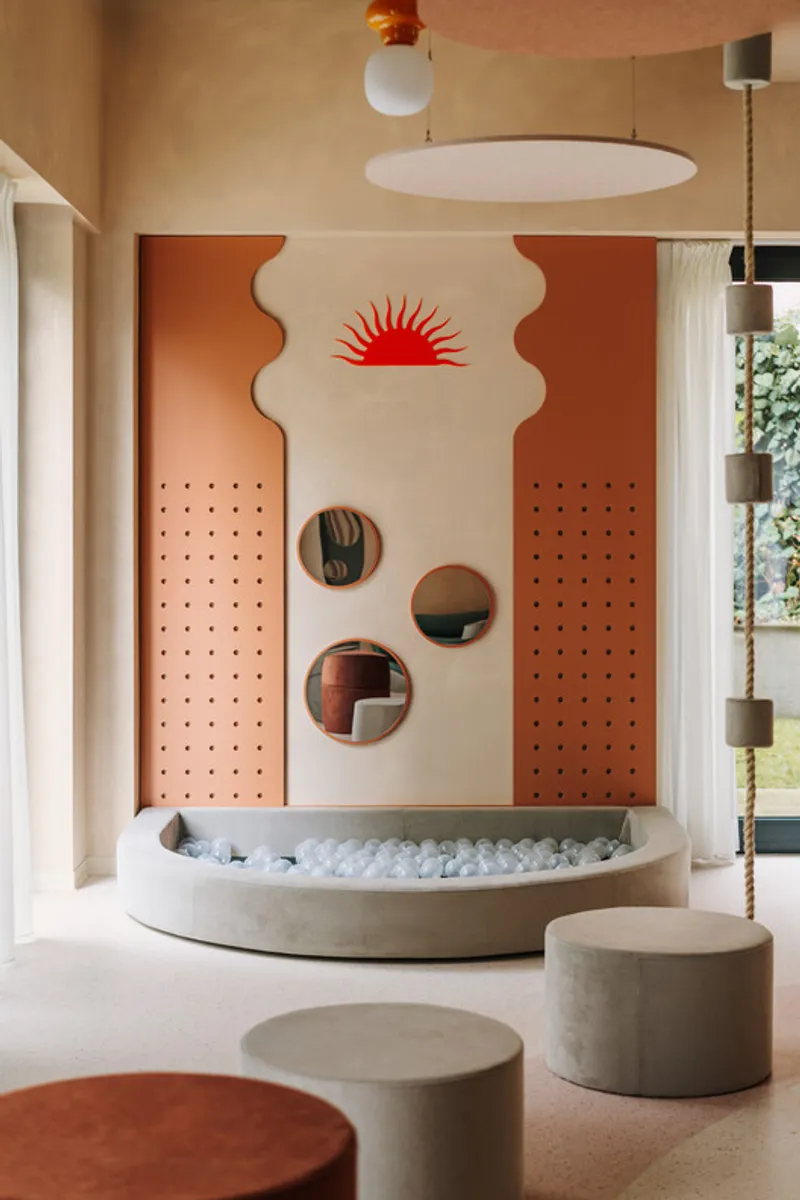
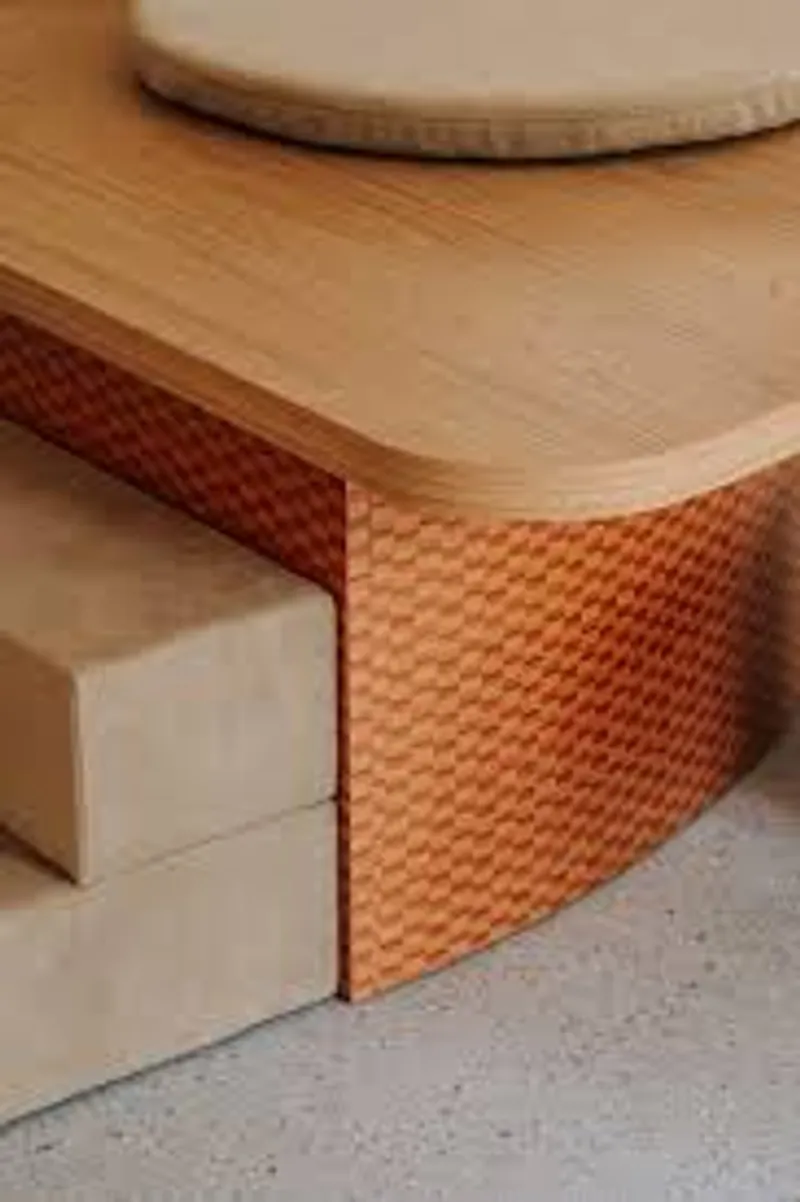
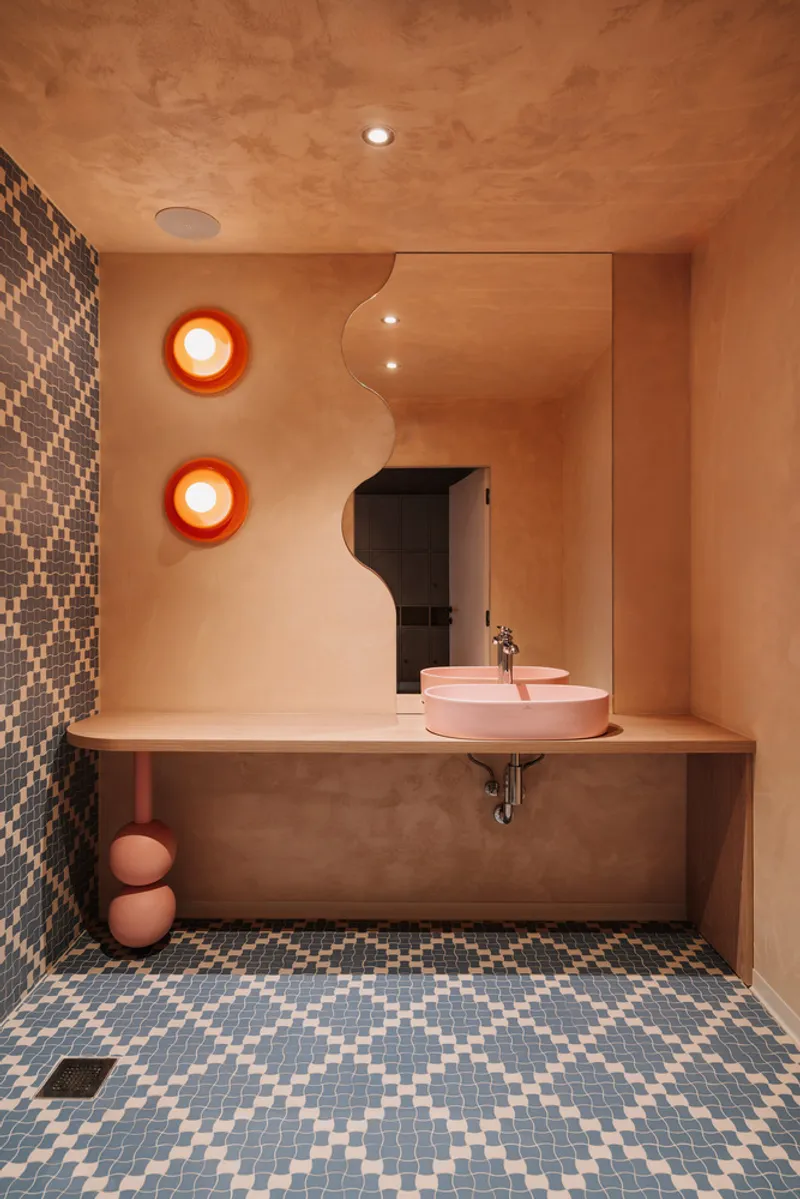
The interiors are built around a warm, organic material palette. Wood, natural veneers (including Alpi), stone, and felt (by Filzbee) are combined with natural plasters to establish a timeless and durable character. Mosaics by Paradyż and Camengo upholstery fabrics add refinement and texture, while maintaining a calm and grounded tone.
Each design decision reflects a commitment to sustainability and tactile comfort—materials that age gracefully and foster a sense of well-being.

Locally Crafted Details and Furniture
CUDO: collaborated with several Polish designers and brands to complete the interior. Highlights include:
- Chairs from The Good Living
- Barstools by NG Design
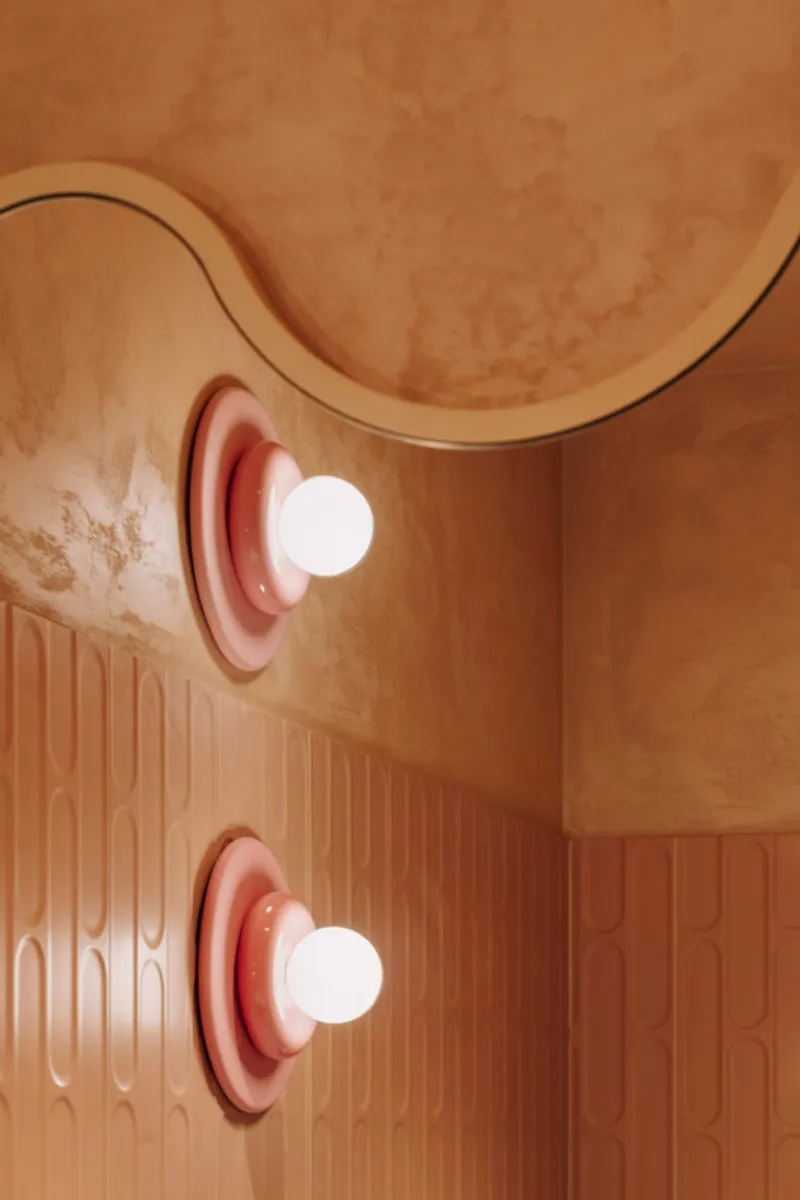
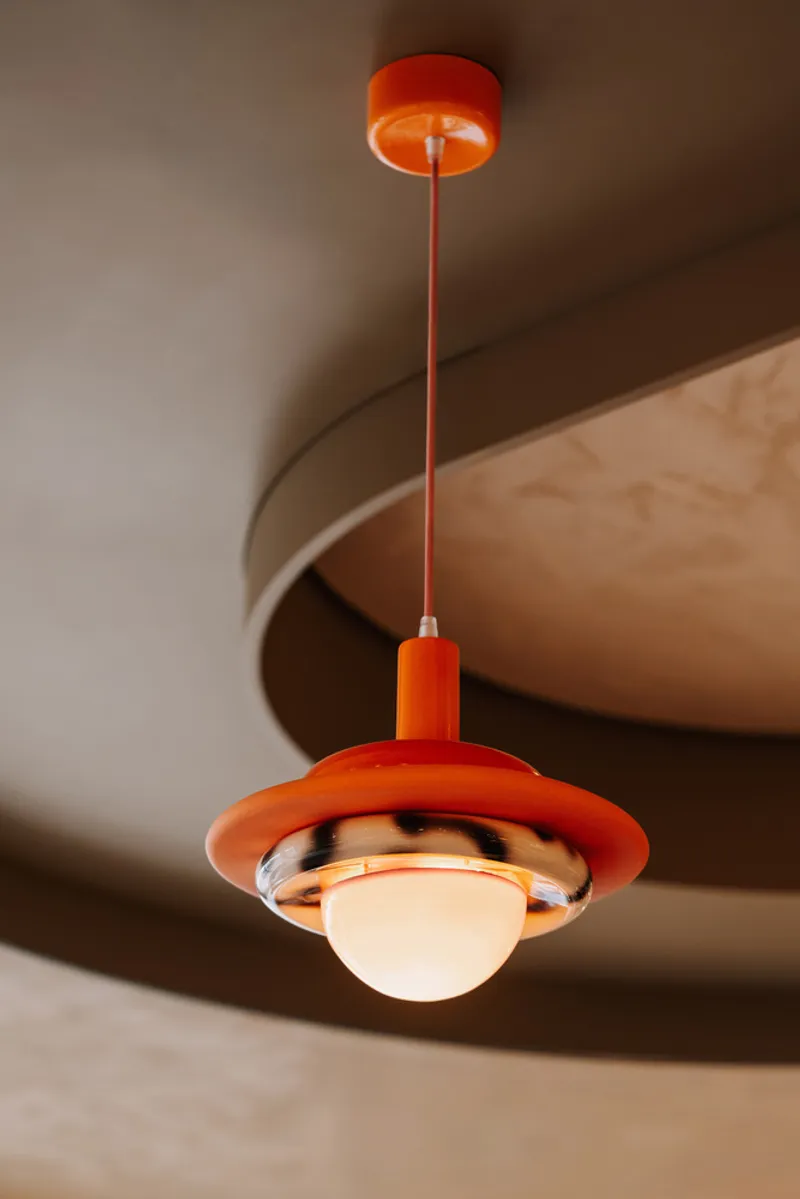
- Lighting by Anna Marciniszyn (NODI) and CHORS
This local approach not only supports regional craftsmanship but also ensures aesthetic and technical consistency. Every piece of furniture was chosen to balance beauty and functionality, designed to endure frequent use while maintaining elegance.
Spatial Layout: Logical, Intuitive, and Harmonious
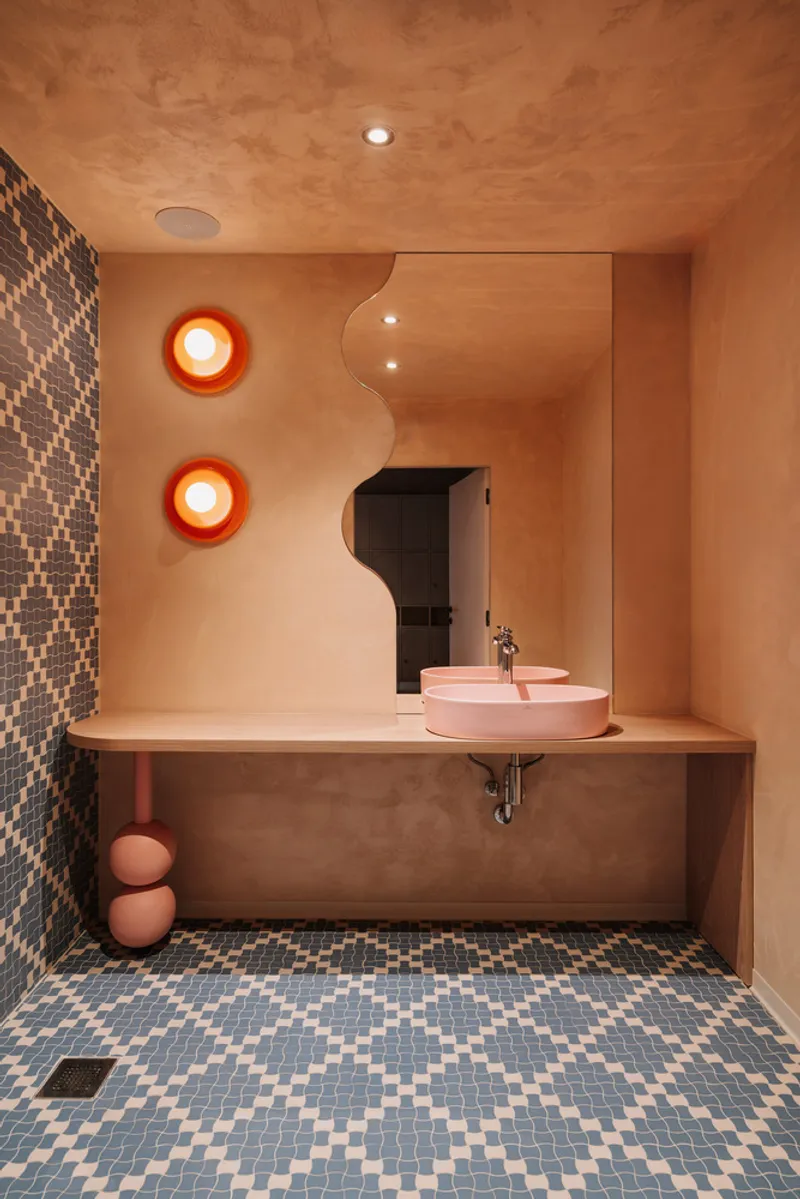
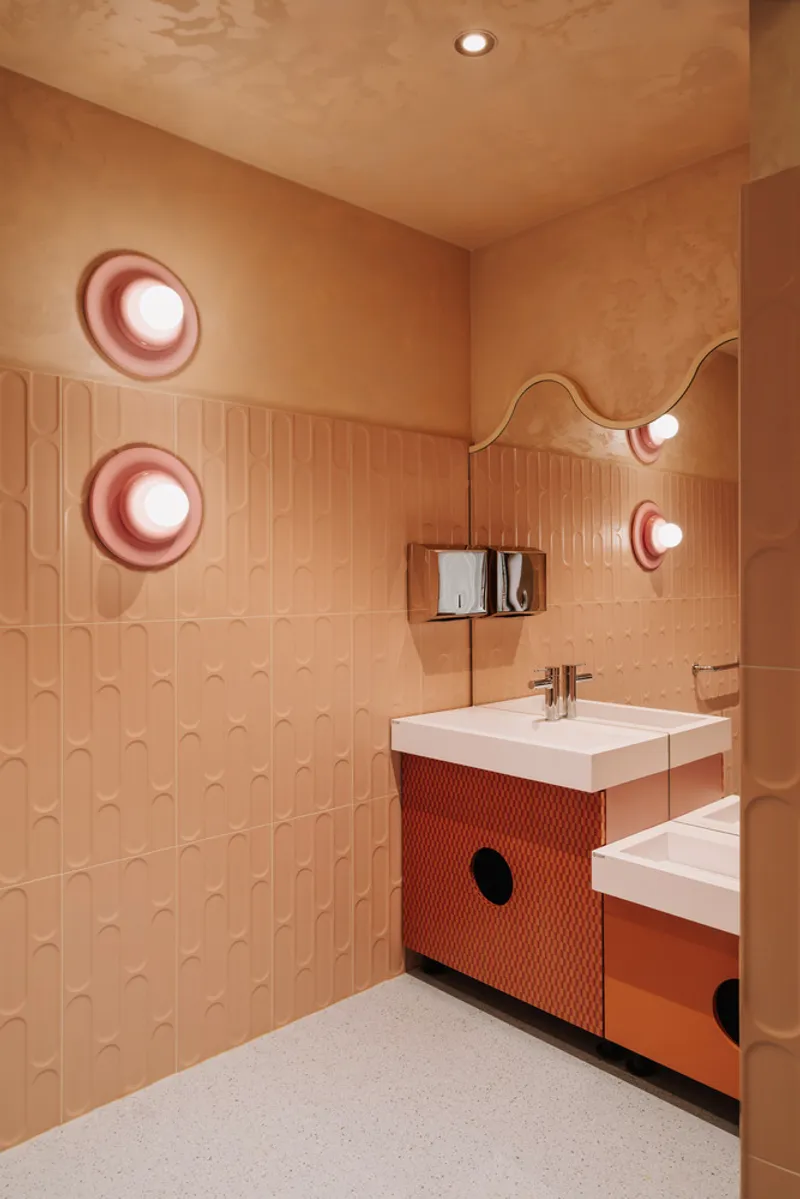
The spatial organization of Sunday Café–Playroom is both practical and poetic. The front area functions as the main café—an open, bright space that welcomes visitors. Toward the rear, adjacent to a lush garden, lies the playroom. Though visually consistent with the café, it offers a slightly more dynamic environment suited for children’s activities.
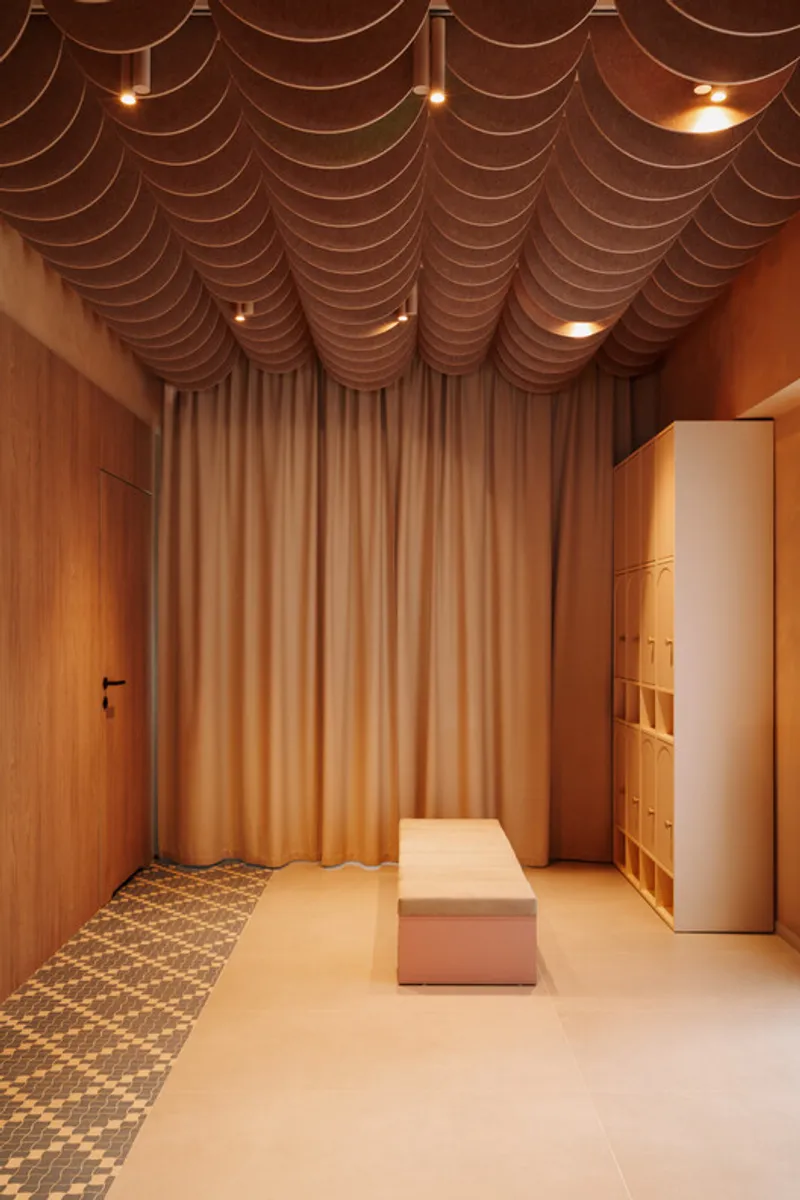
A central cloakroom and restroom zone maintains order and flow, while the organic bar counter acts as a unifying element, visually connecting the entire interior. This thoughtful layout ensures a natural rhythm that encourages interaction without chaos.
The result is a harmonious coexistence of two worlds—adults savor coffee and calm conversation, while children explore, learn, and play freely within sight and comfort.

A New Standard for Family-Centric Design
With Sunday Café–Playroom, CUDO: demonstrates that architecture can be inclusive without compromise. The project harmonizes hospitality, play, and design excellence in one cohesive environment, setting a new benchmark for family-oriented cafés and social spaces.
All the photographs are works of Migdal Studio




Popular Articles
Popular articles from the community


Riyadh For All: Intergenerational Urban Design for Active Aging in Rabat
Riyadh For All reimagines urban design in Rabat with intergenerational co-living, adaptive courtyards, and Moroccan cultural exchange today.
EW PARK: Sustainable Architecture Reimagines the Future of Urban Parking
EW PARK reimagines city parking as a modular wooden tower combining automation, solar energy, electric mobility, and adaptable urban design.

Co-life: Sustainable Architecture for Age-Friendly Community Living
Co-life reimagines sustainable architecture for seniors through courtyards, rammed earth, shared gardens, and spaces designed for belonging.

The Earth Pod: 3D Printed Homes for Resilient Refugee Communities
The Earth Pod reimagines refugee housing through 3D printed homes made from clay, combining resilience, self-sufficiency, and rapid shelter.


Similar Reads
You might also enjoy these articles


Hodi-Mandai Geram
Project Function: Preservation and revitalization of the Intangible heritage and socio-spatial identity of the Hodi by Housing, Cultural Memory Center, Sacred Grove, landscape, local tourism economy


Olio Towers: A Mid-Rise for Performers That Fuses Housing, Rehearsal, and Stage
Located blocks from Houston's Theater District, this modular tower stacks living units around a central performance atrium.

Oasis: Modular Green Housing Carved into Dhaka's Urban Fabric
A shortlisted Plugin Housing entry reclaims unauthorized settlements in Dhaka with stepped concrete volumes, green roofs, and ventilation-driven design.

Black Hole: A Floating Megastructure for the Post-Physical Era
Emiliano Mazzarotto envisions a spherical, self-scaling arena where e-sports, digital hotels, and holographic stadiums replace traditional public space.

Explore Hospitality Building Competitions
Discover active competitions in this discipline



Challenge to reimagine the Iron Throne


Photograph architecture without architects


Illustrate the lost glory of Angkor Wat - Render Challenge


Design challenge to reuse E-waste
Comments (0)
Please login or sign up to add comments
No comments yet. Be the first to comment!