
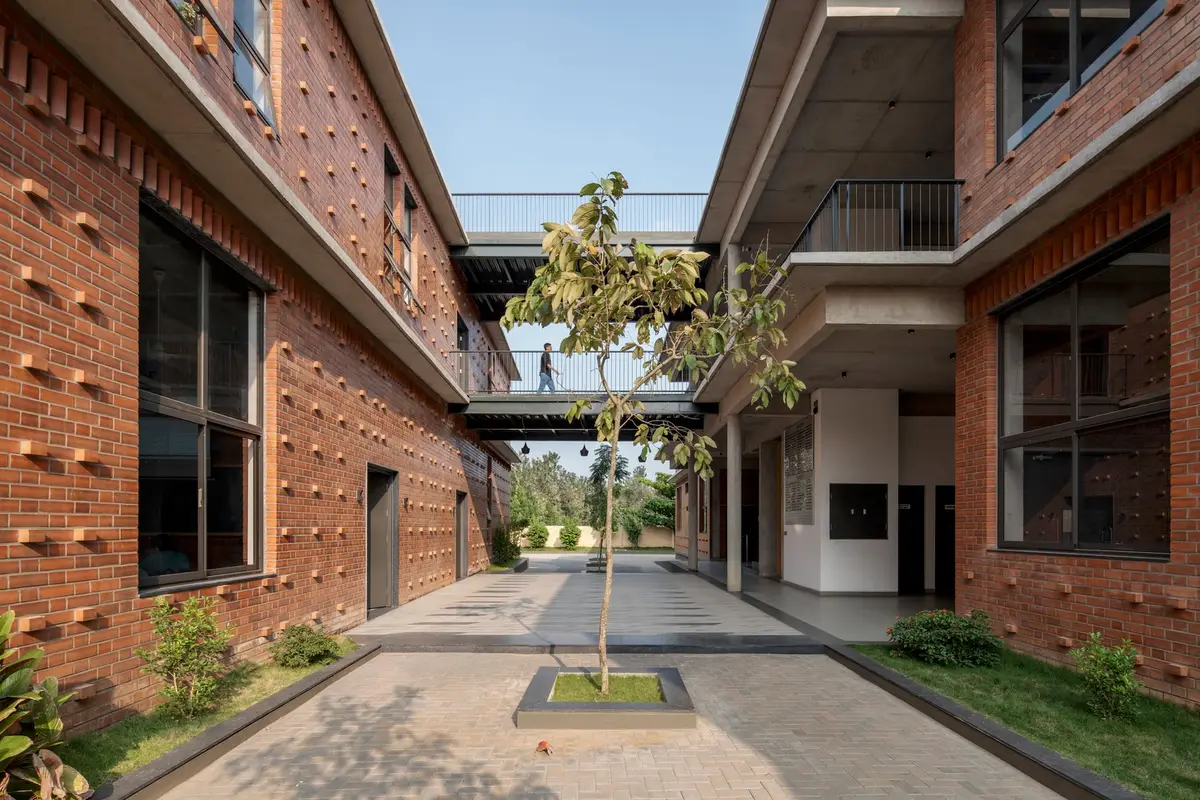
Sustainable Brick Architecture in Education: National School of Business Bangalore
An exploration of sustainable brick architecture in education, highlighting the National School of Business Bangalore's eco-conscious and innovative design.


A Blend of Sustainability and Functionality
The National School of Business (NSB) in Bangalore is a shining example of sustainable brick architecture in education. Designed by HabitArt Architecture Studio, this project combines environmental consciousness with innovative design to create a functional and inspiring academic space.
Completed in 2023, this 25,000 ft² facility responds to the institution's growth while adhering to eco-friendly principles and addressing complex site challenges.
Redefining Educational Architecture
Creating a Landmark Identity
The design of the NSB’s new block aimed to refresh the institution’s identity while enhancing functionality. The layout reflects the values of holistic education, emphasizing collaboration, adaptability, and sustainability.
Addressing Design Challenges
- Tight Deadlines:With only one academic year for completion, HabitArt developed a simple yet adaptable design that allowed for phased enhancements.
- Site Constraints:Located near a railway line, the project faced buildable area restrictions, including a mandated 30-meter setback. Clever space planning overcame these hurdles, optimizing the 33,500 ft² site.
- Limited FAR Allowance:A split layout maximized usable space while adhering to local bylaws.
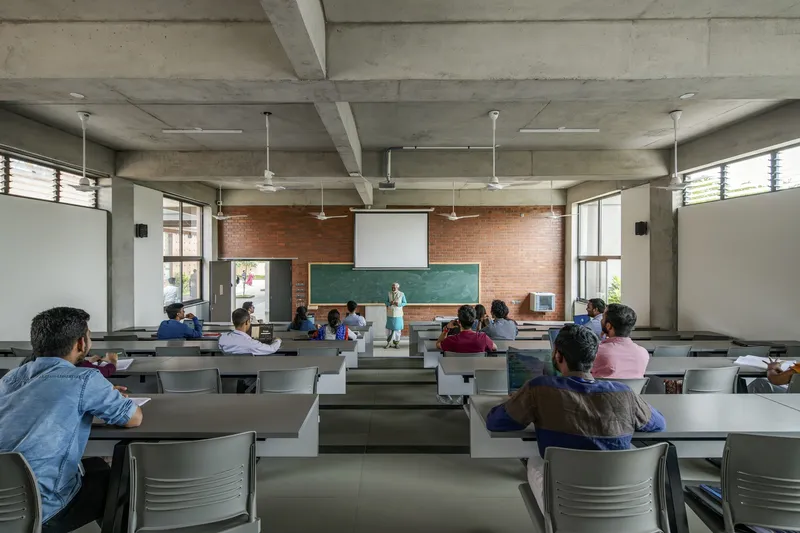
Innovative Layout: Functionality Meets Sustainability
Two-Wing Structure
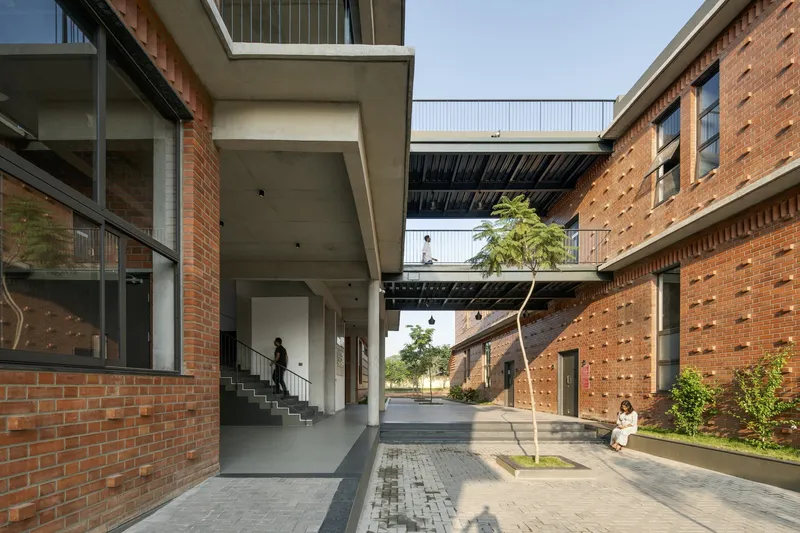
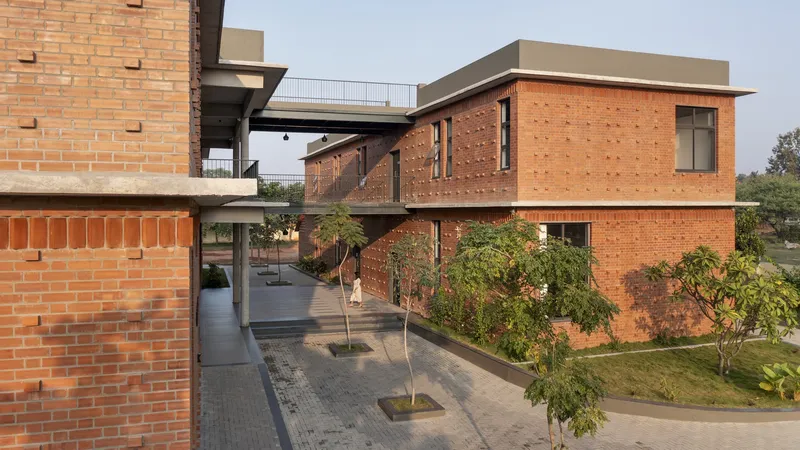
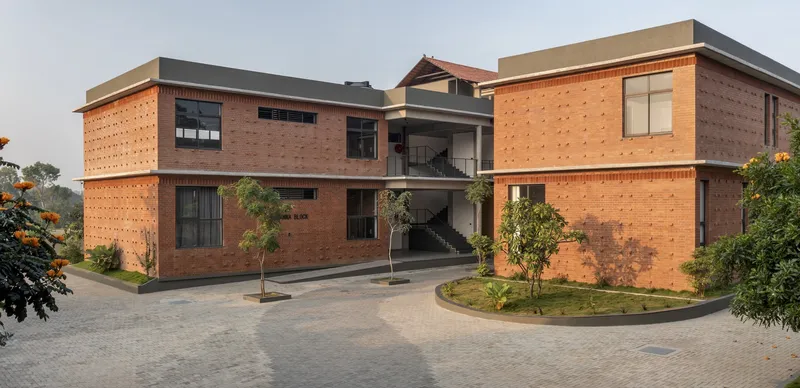
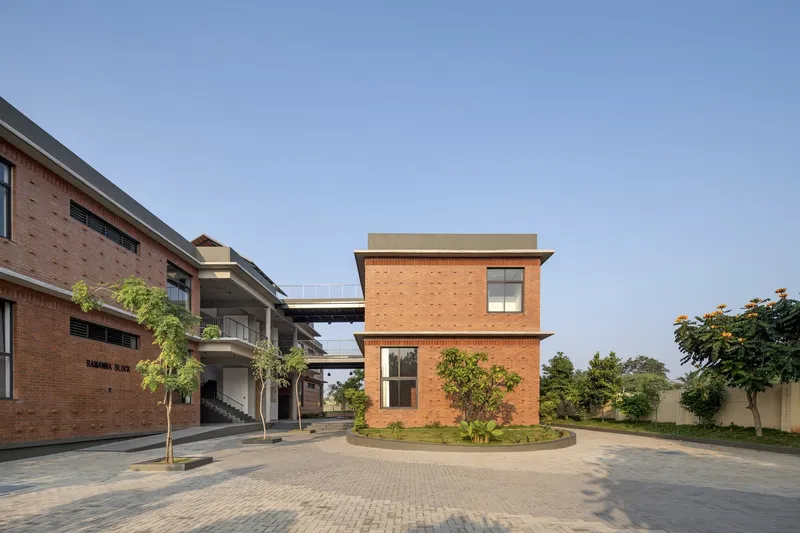
The building is split into academic and faculty wings, connected by a central outdoor spine. This design reduces indoor circulation needs and creates vibrant spaces for interaction and community building.
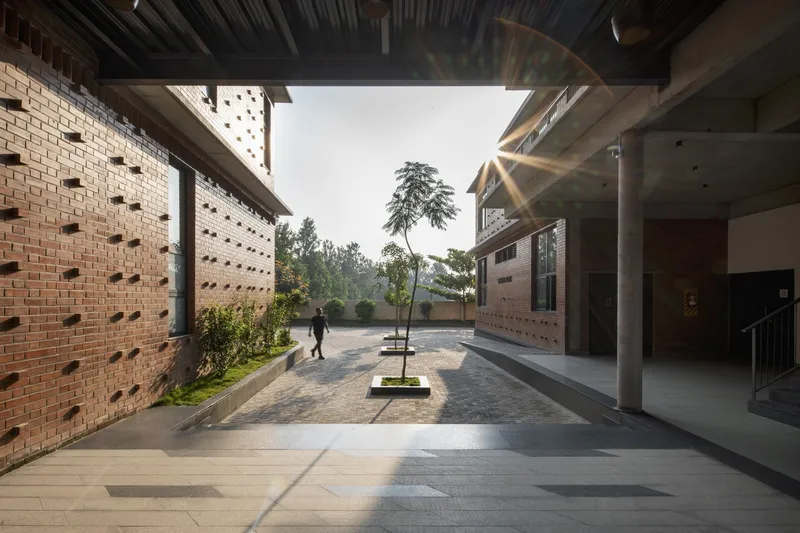
Outdoor Spine and Interaction Spaces
- The spine serves as a pedestrian-friendly area that connects the new block to the existing campus.
- A Sadarahalli stone plinth welcomes visitors, providing a formal entry point.
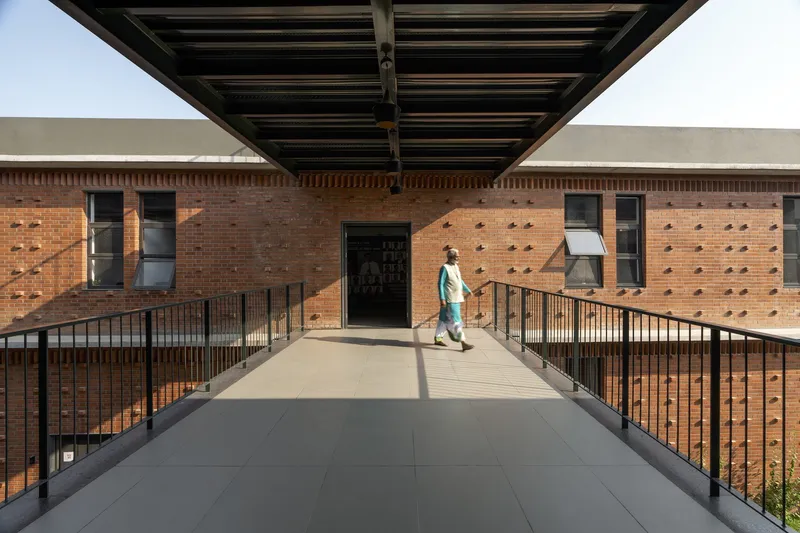
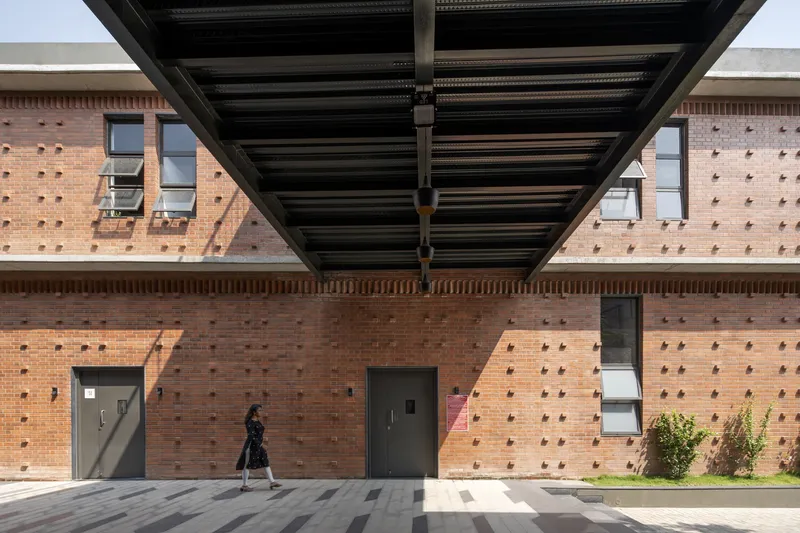
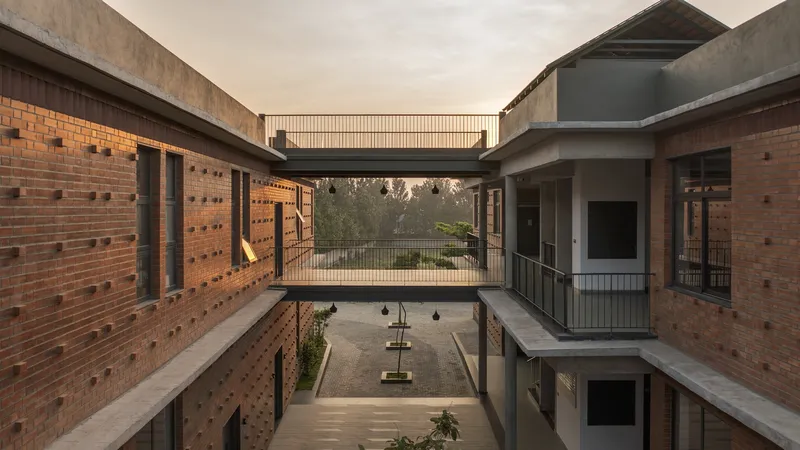
- A metal bridge connects the upper floors, doubling as an outdoor interaction space.
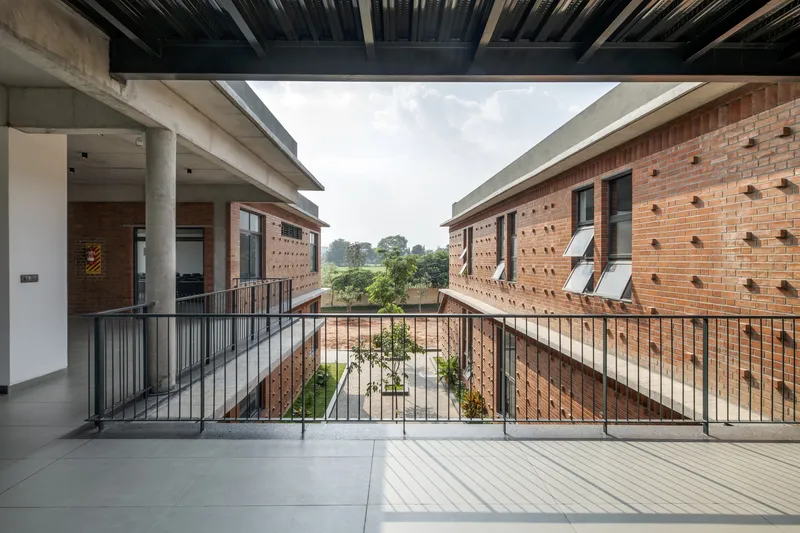
Green Design
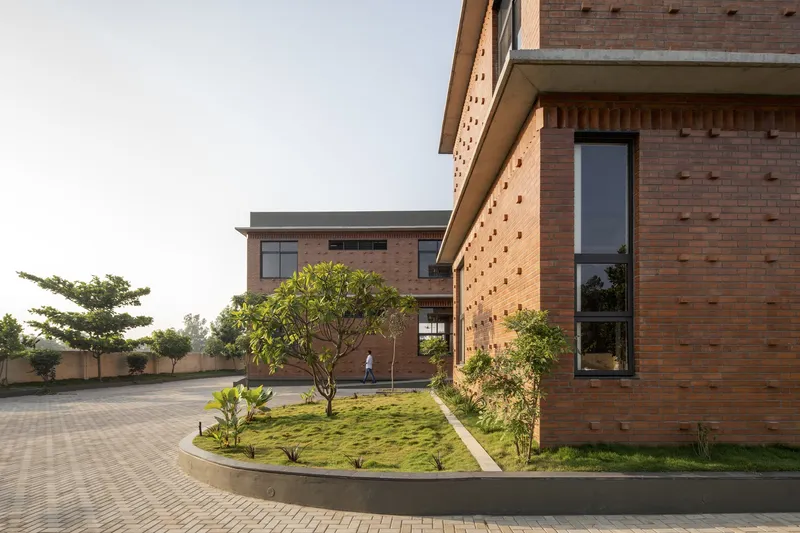
The western side of the spine opens to a green buffer zone, with trees acting as a barrier against railway noise. This enhances the campus’s sustainability and visual appeal.
Passive Design: Sustainable Brick Architecture
Optimizing Energy Efficiency
- Brick Façade:Locally sourced wire-cut bricks from Malur form the building’s second skin, offering natural insulation and reducing reliance on air conditioning.
- Strategic Fenestration:Windows are positioned to maximize indirect daylight, minimizing the need for artificial lighting during the day.
Play of Shadows
The brick façade features projected bricks that create dynamic shadow patterns throughout the day, adding visual interest and reducing thermal gain.


Popular Articles
Popular articles from the community


David Ortega Stacks a Two-Story Mexico City Penthouse Around a Steel Stair and a Pergola-Shaded Roof Terrace
In Colonia Roma, a 300 m² penthouse uses oak joinery, a planted steel stair and a slatted roof pergola to make a new-build apartment feel like a house.

LT2A and OPEN Architectes Thread a Brick and Glass High School Through a Wooded Belgian Campus
In Braine-l'Alleud, a 3,000 m² wing for Collège Cardinal Mercier pairs pale brick with a glazed colonnade, deferring to a small chapel and a dense wood.


Singing Woman: An Opera House That Performs Before the Curtain Rises
Ovidiu Cristian Pavel's conceptual opera house translates Estonia's choral identity into a sculpted waterfront landmark facing the Baltic Sea.

FCC Arquitectura Expands a Portuguese Granite House with a Board-Marked Concrete Wing
In Portugal, JV House pairs a cleaned-up whitewashed and granite dwelling with a timber-shuttered concrete extension, courtyards and a garden pool.

Similar Reads
You might also enjoy these articles


Hodi-Mandai Geram
Project Function: Preservation and revitalization of the Intangible heritage and socio-spatial identity of the Hodi by Housing, Cultural Memory Center, Sacred Grove, landscape, local tourism economy


Olio Towers: A Mid-Rise for Performers That Fuses Housing, Rehearsal, and Stage
Located blocks from Houston's Theater District, this modular tower stacks living units around a central performance atrium.

Oasis: Modular Green Housing Carved into Dhaka's Urban Fabric
A shortlisted Plugin Housing entry reclaims unauthorized settlements in Dhaka with stepped concrete volumes, green roofs, and ventilation-driven design.

Black Hole: A Floating Megastructure for the Post-Physical Era
Emiliano Mazzarotto envisions a spherical, self-scaling arena where e-sports, digital hotels, and holographic stadiums replace traditional public space.

Explore Eco Friendly Brick Competitions
Discover active competitions in this discipline

Challenge to design public laboratory

Challenge to reimagine the Iron Throne

Photograph architecture without architects

Illustrate the lost glory of Angkor Wat - Render Challenge
Comments (0)
Please login or sign up to add comments
No comments yet. Be the first to comment!