
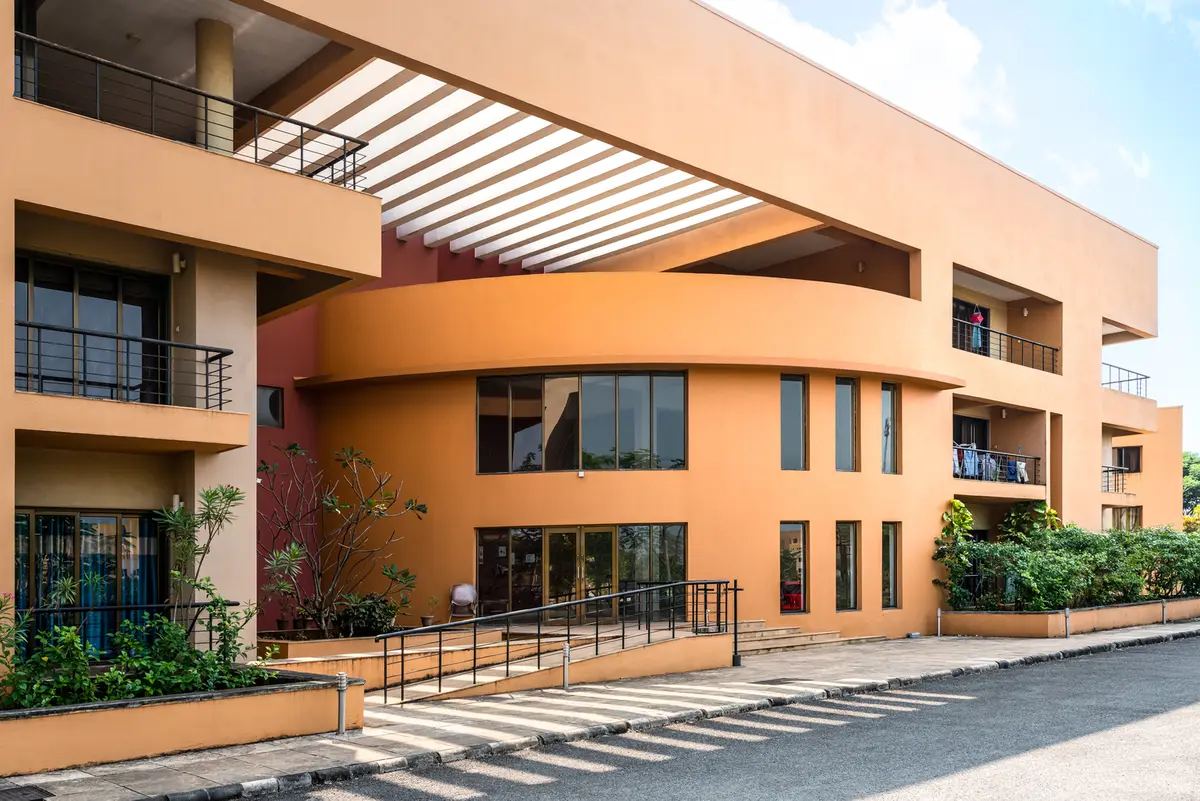
Sustainable Educational Campus Design: Goa Institute of Management by Somaya Sampat
A sustainable educational campus in Goa integrates terrain, ecology, and community to redefine future-forward academic architecture in India.


Designing for Place, Pedagogy, and Planet in the Foothills of the Western Ghats
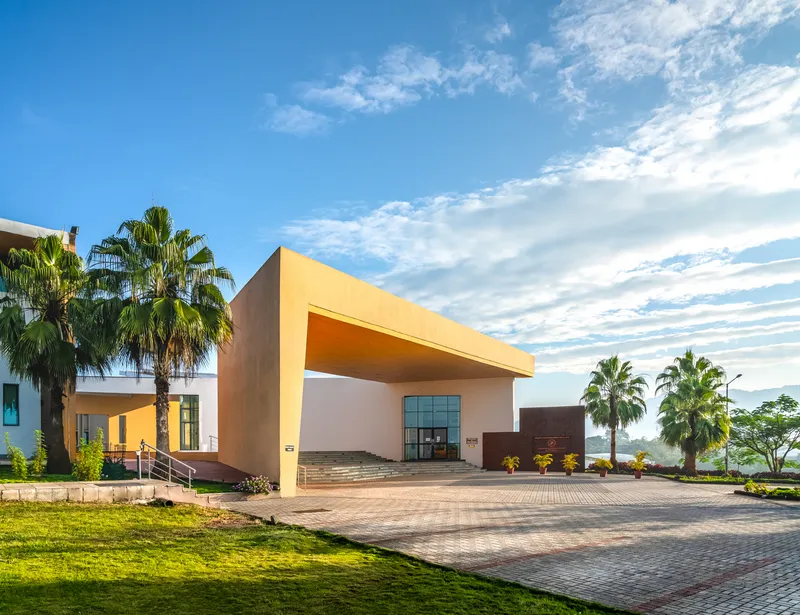
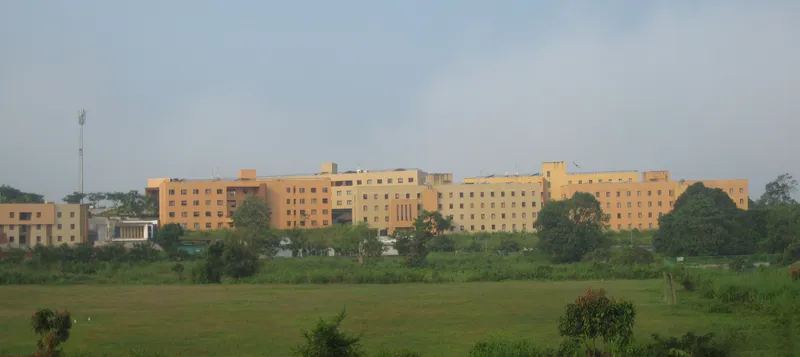
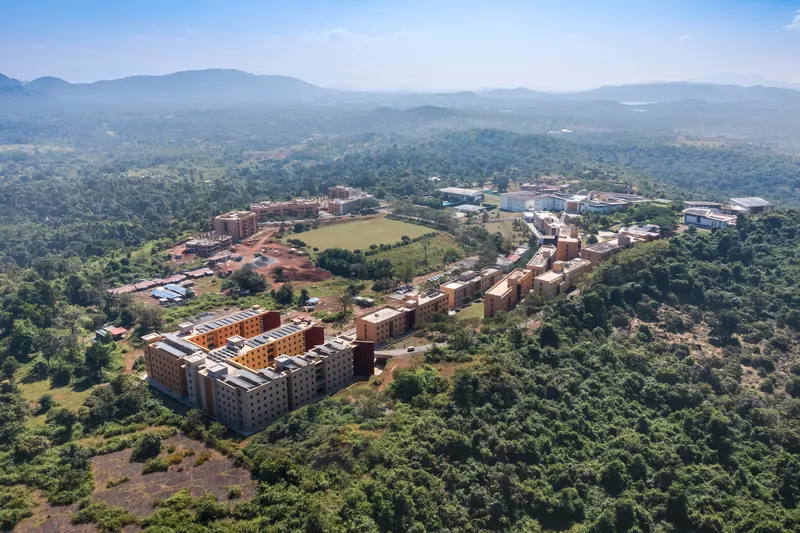
The Goa Institute of Management (GIM), designed by Somaya Sampat and completed in 2024, is a landmark in sustainable educational campus design. Located between the rolling hills of the Western Ghats, the campus is envisioned as an environmentally responsive, community-driven learning environment that aligns academic purpose with natural context. With a site previously untouched by development, the project exemplifies how architecture can thoughtfully integrate terrain, climate, and sustainability while enriching the educational experience.
A Master Plan Rooted in Climate and Community
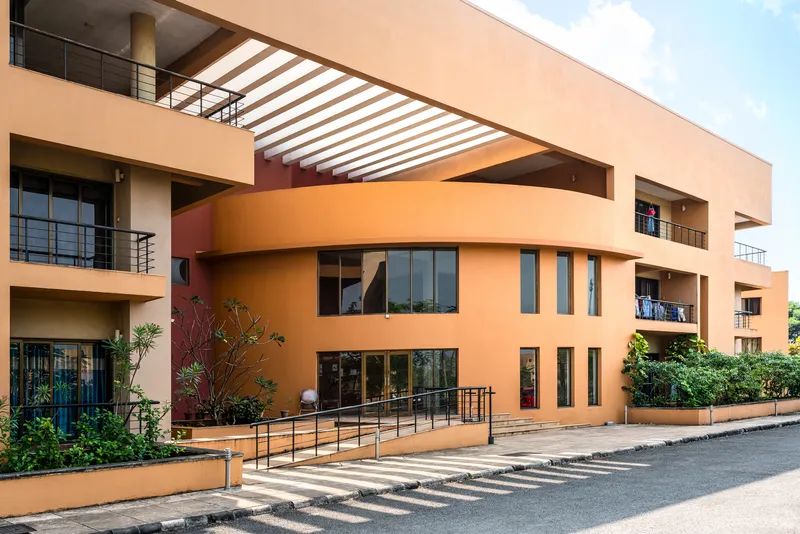
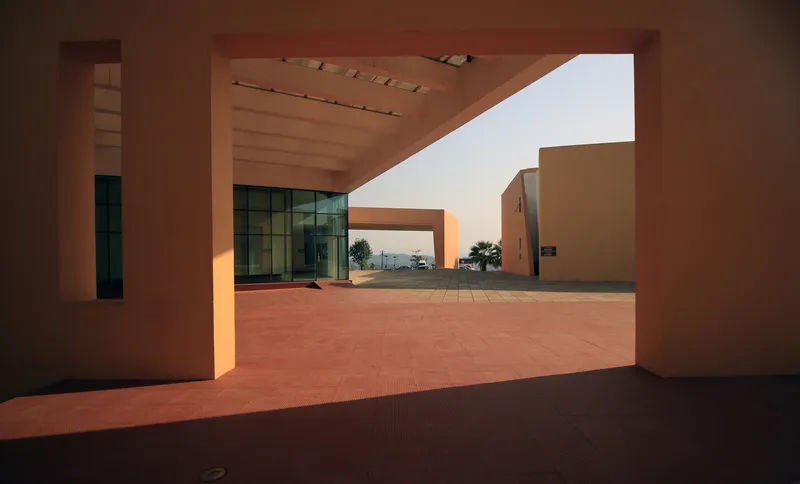
The campus master plan is defined by two main axes, organizing the site into four distinct clusters: academic, administrative, residential, and recreational. At the intersection of these axes lies the academic block, the symbolic and functional heart of the institution. This central block is anchored by an expansive open plaza that hosts graduation processions, student gatherings, and other community events. Surrounded by classrooms, faculty offices, breakout areas, and the Director’s wing, this space exemplifies the integration of formal and informal academic life.
Building with the Landscape, Not Against It
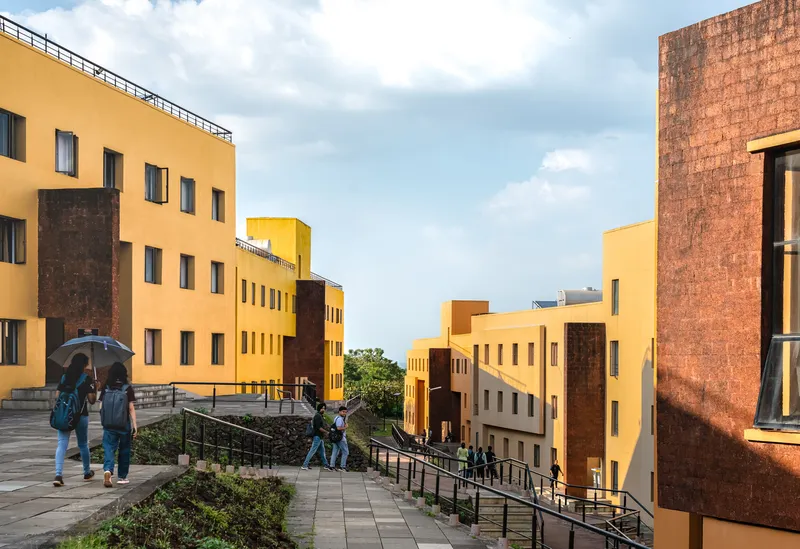
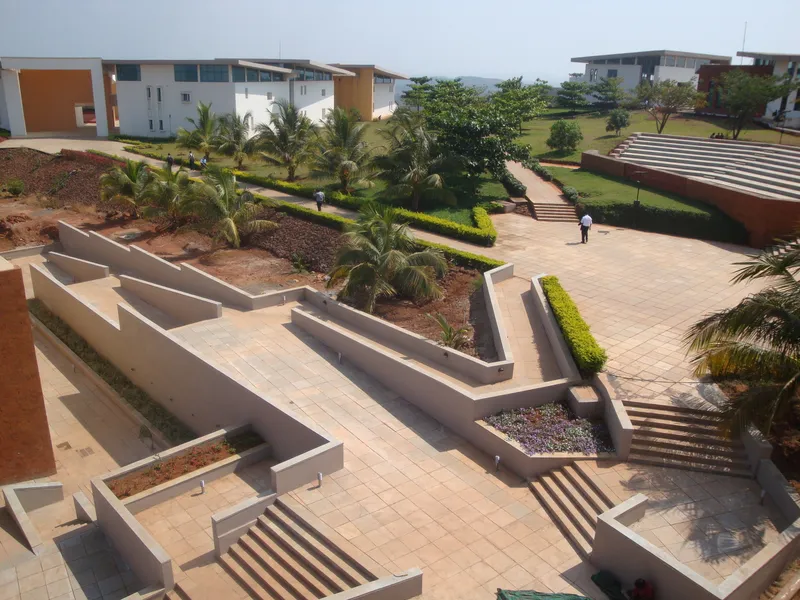
Set on rugged terrain with limited groundwater and significant topographic variation, the design emphasizes minimal environmental disruption. Buildings are aligned with natural slopes, reducing the need for cut-and-fill operations and maintaining ecological integrity. Circulation paths follow the site’s contours, fostering organic connectivity and encouraging walkability. Rainwater harvesting plays a critical role in water management, supported by a filtration plant with 800-cubic-metre capacity, recharge pits, and swales to make the site more self-reliant in water usage.
Regional Materials and Passive Cooling Strategies
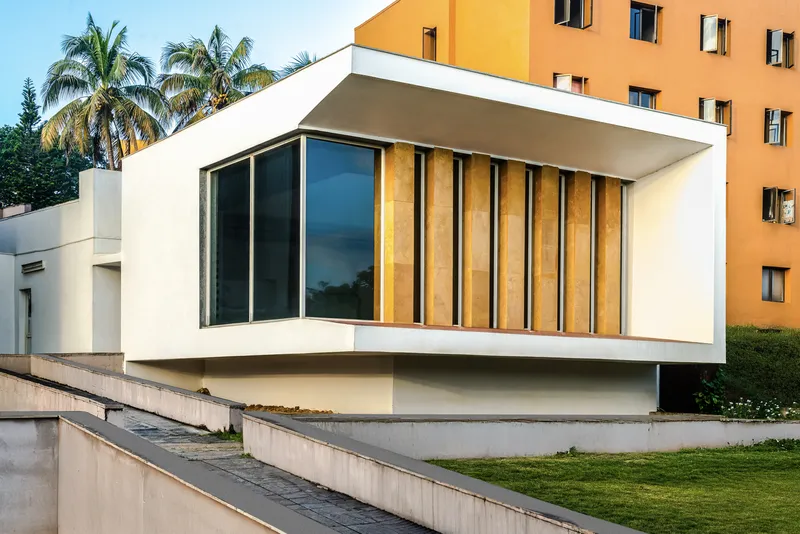
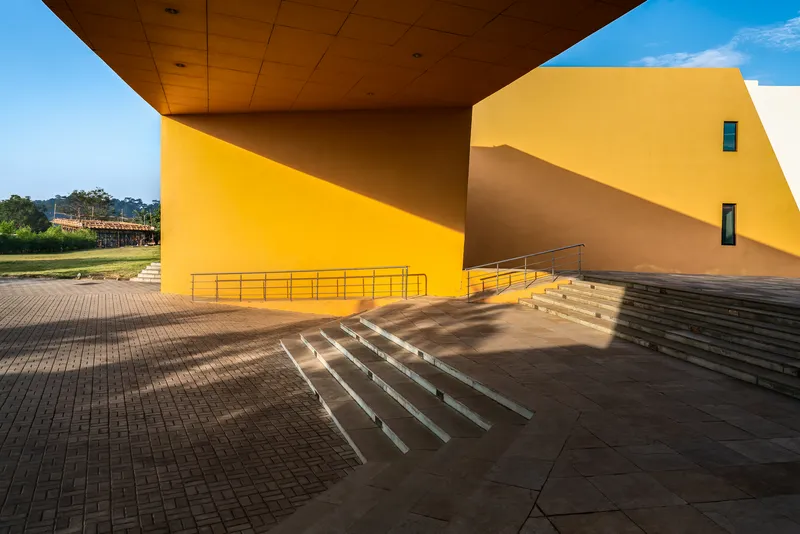
Material and construction choices reflect a strong regional character while prioritizing thermal performance. Locally quarried laterite stone is used extensively for walls, taking advantage of its high thermal mass and reducing the project's embodied energy. Passive design strategies include cavity walls, deep roof overhangs, and sloped roofs that optimize solar orientation while withstanding monsoon rainfall. These sloped surfaces also host GIM’s photovoltaic arrays, which generate 745 kWp and make the campus energy independent.
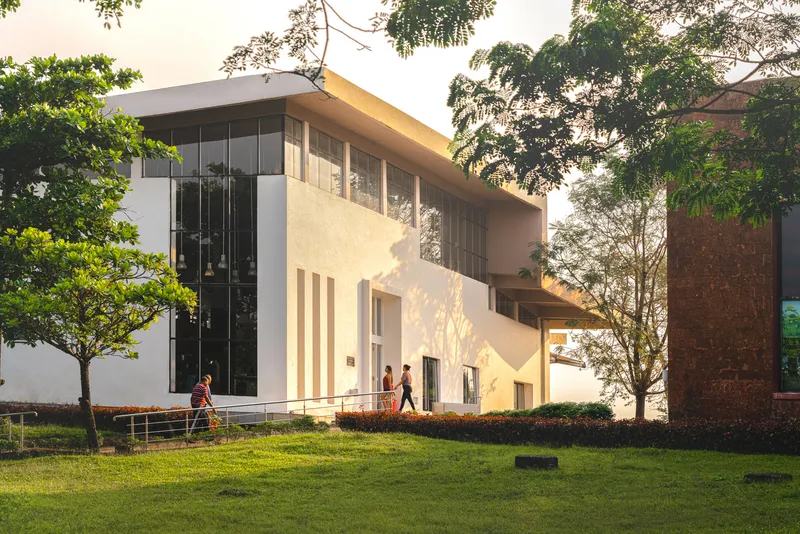
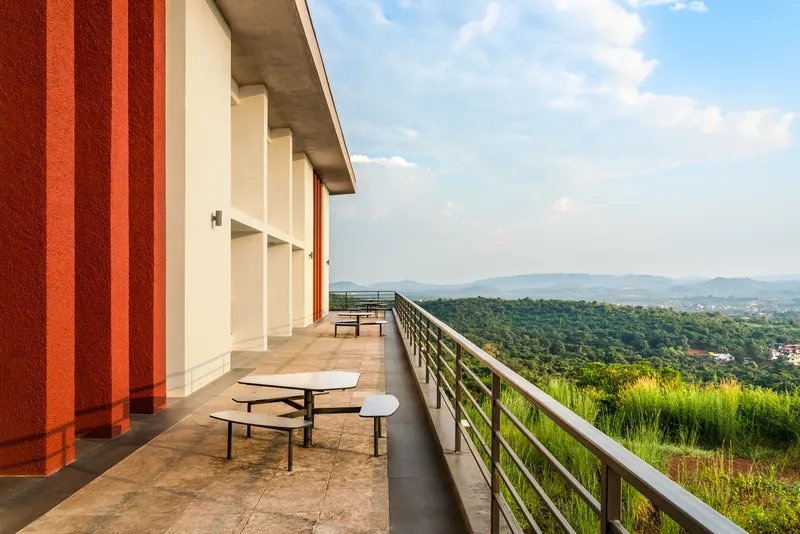
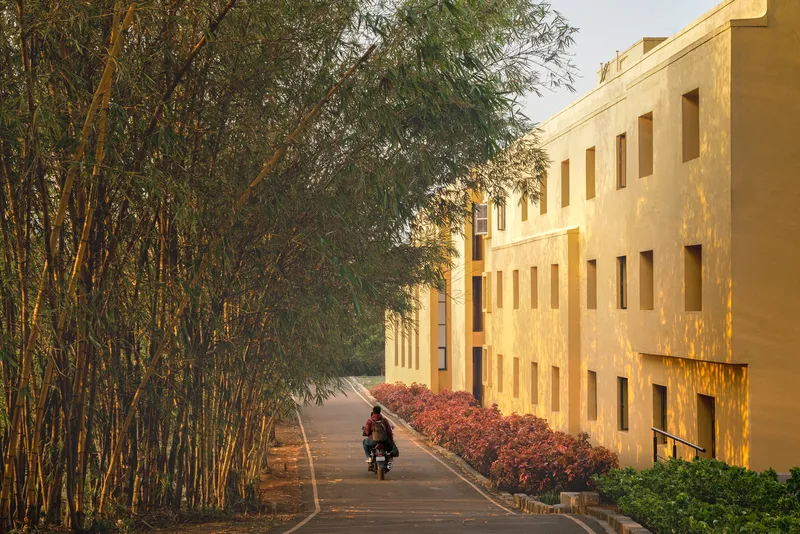
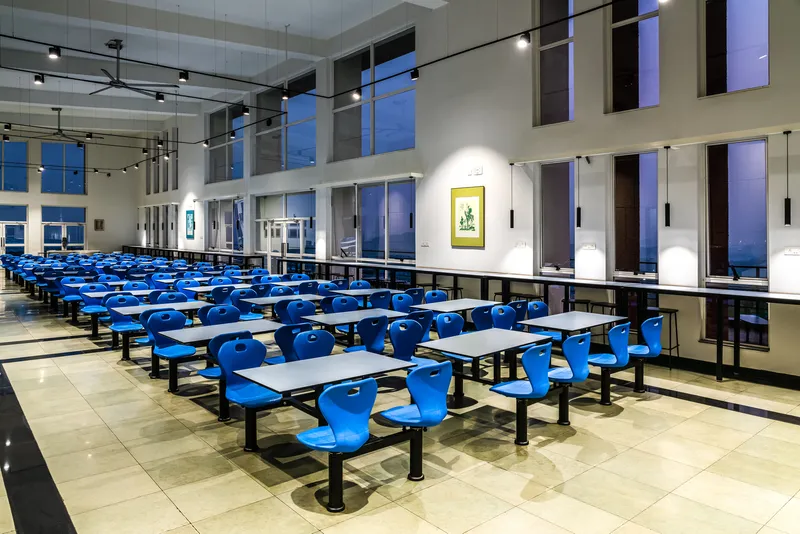
Energy conservation is further enhanced by solar water heating systems, LED lighting, occupancy sensors, and solar-powered streetlights. Inside, generous volumes, double-height spaces, and open staircases ensure natural ventilation and daylighting throughout the year. Flooring materials, including native stone, reinforce the project’s ecological ethos while adding textural warmth to the interiors.
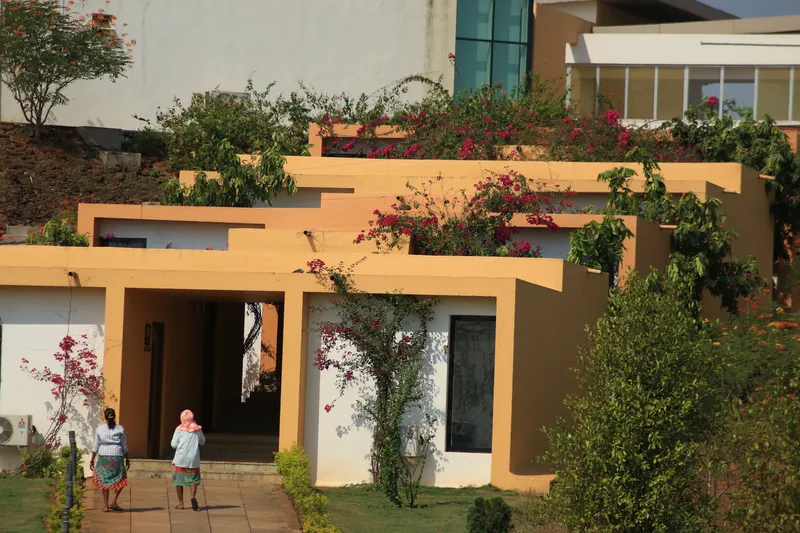
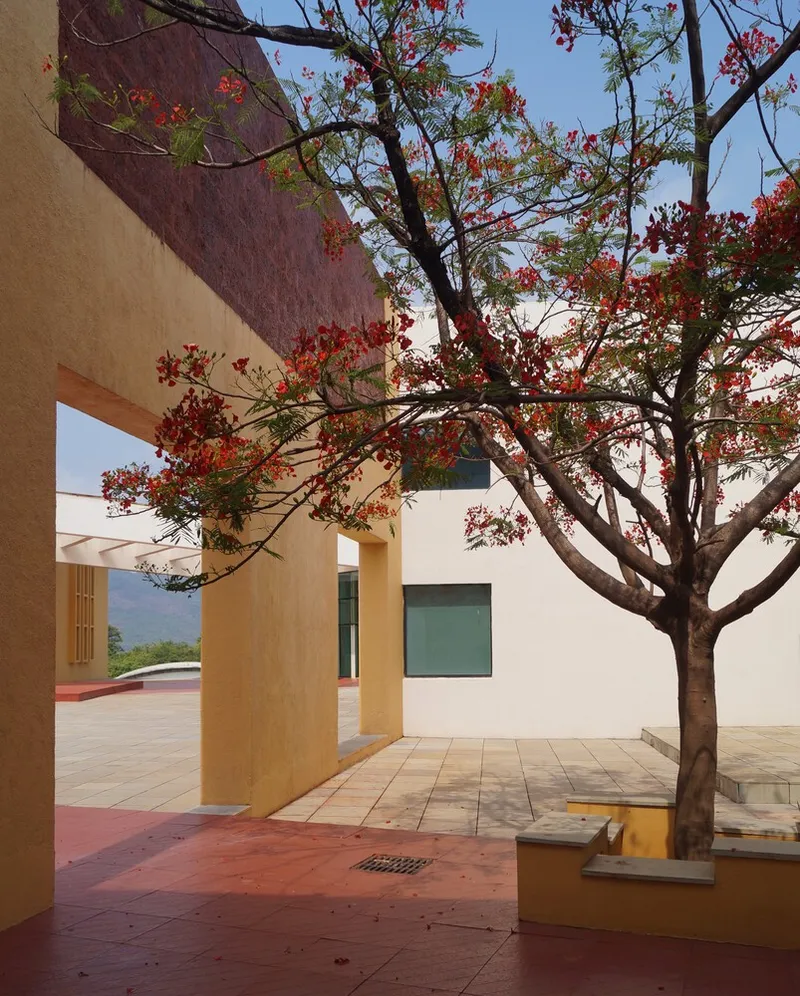
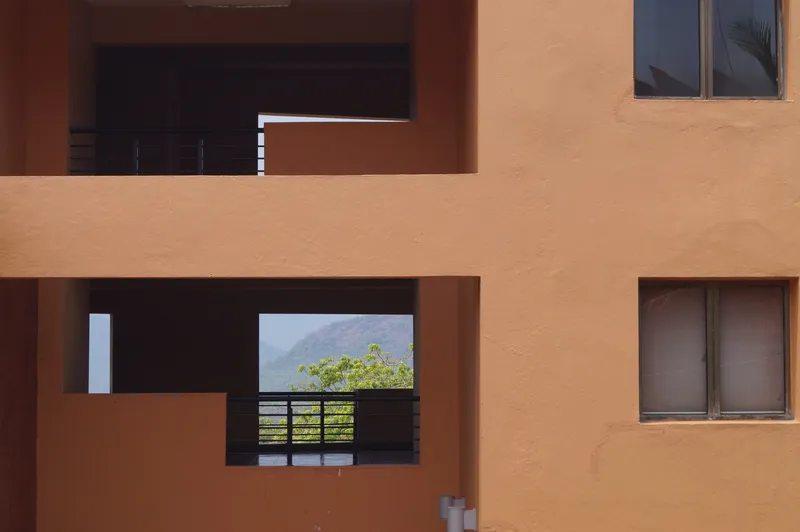
A Seamless Blend of Built and Natural Environments
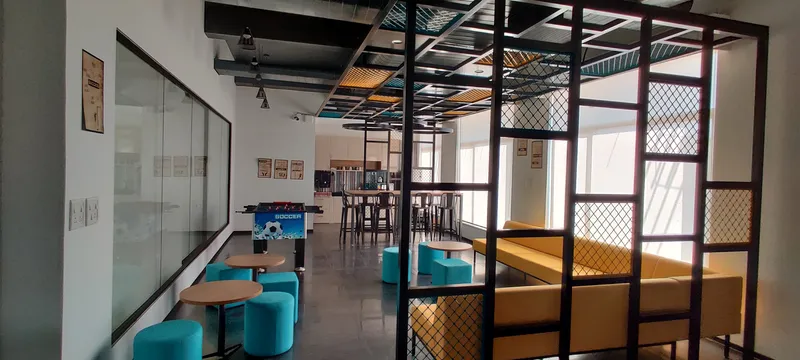
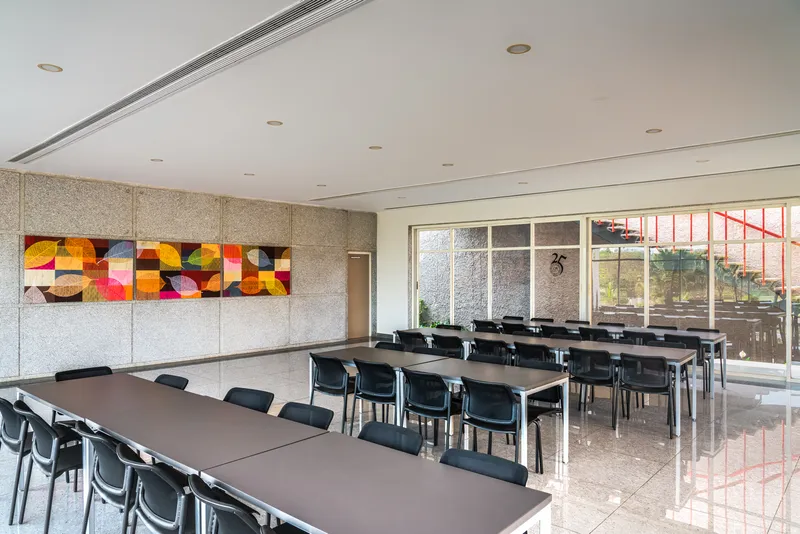
The campus layout fosters a fluid interaction between architecture and nature. The Library and Cafeteria, placed on the highest elevation, create a peaceful, panoramic plaza that serves as both a contemplative and social space. Student housing is positioned to the north, integrated with coworking lounges and multi-level plazas that promote community and informal learning. Walkways, shaded terraces, and stepped gardens provide numerous opportunities for interaction, reflection, and movement—ensuring the campus is alive with activity beyond academic hours.
Sustainability Beyond Buildings
Sustainability at GIM is not limited to energy or water. The campus promotes a comprehensive ecological ethic through biogas plants, four-bin waste segregation, vermicomposting, and kitchen waste recycling. These systems are supported by the work of the Centre for Excellence in Sustainable Development, which oversees biodiversity initiatives that have led to the documentation of over 130 bird species and 150 native plant species on site.
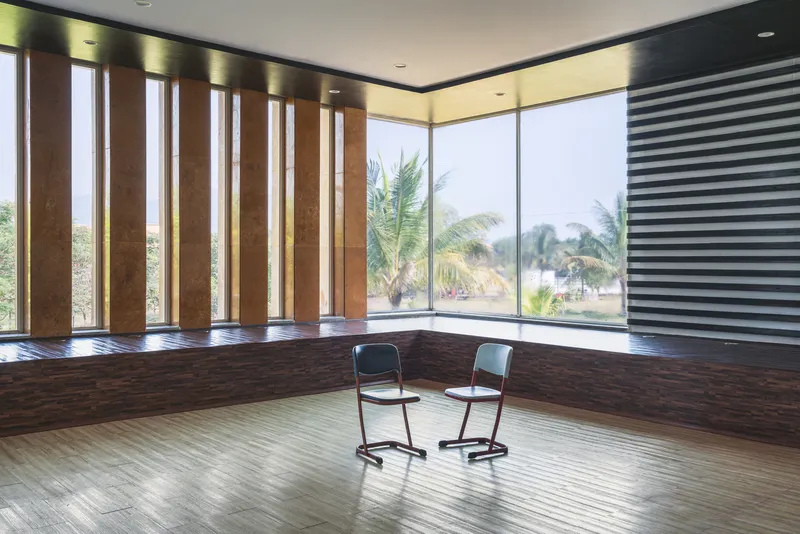
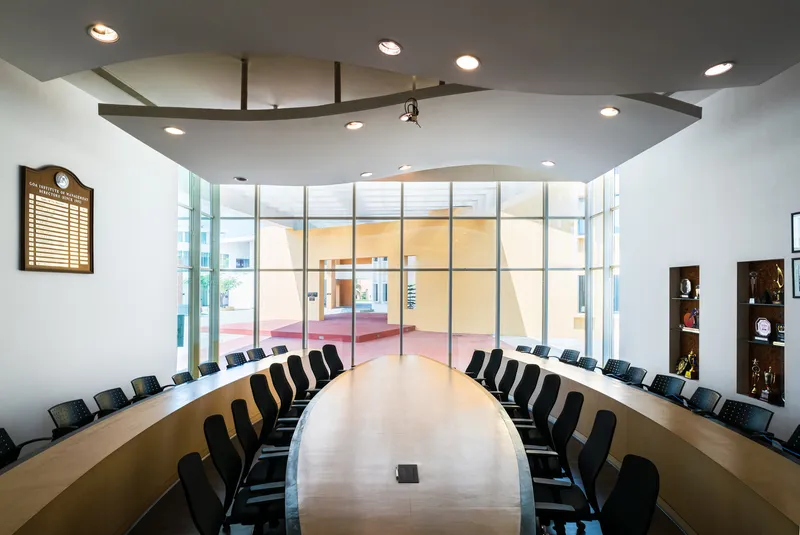
By integrating sustainability into both infrastructure and education, the campus becomes a living laboratory for environmental stewardship. Its architectural language and planning promote a deeper understanding of how human settlements can coexist with natural ecosystems, offering a model for future institutions.
A New Benchmark for Educational Architecture in India
The Goa Institute of Management is more than just a collection of buildings; it is a reflection of how architecture can support a broader vision of learning—one that nurtures ecological consciousness, community values, and academic excellence. With its strategic use of local materials, passive cooling systems, energy-positive infrastructure, and biodiversity-sensitive planning, it sets a new benchmark for sustainable educational campus design in India.
All Photographs are works of Fabien Charuau, Noshir Gobai


Popular Articles
Popular articles from the community


Co-life: Sustainable Architecture for Age-Friendly Community Living
Co-life reimagines sustainable architecture for seniors through courtyards, rammed earth, shared gardens, and spaces designed for belonging.

Co-Life: Senior Housing Design That Reconnects Older Adults With the City
Co-Life reimagines senior housing design through healing gardens, shared streets, workshops, and a sustainable community across generations.

Play: Fragments of Their World
Familiar architecture becomes modular playground design, creating safe spaces where displaced children can learn, connect, imagine and play.

Conexión: Biophilic Design Reimagines High-Rise Living in Hong Kong
Conexión reimagines high-rise living in Hong Kong through biophilic design, green facades, shared spaces, daylight, water and nature within.

Similar Reads
You might also enjoy these articles

Bamboo Housing Challenge 2026: Design Affordable, Sustainable Homes Using Bamboo
An international design competition by Bamboo U and IBUKU inviting architects and designers to reimagine affordable housing using bamboo — with the winning design built full-scale in Bali.

Computational Design & Education: Beegraphy Design Awards Introduces 7th Category (Featuring Jiyun's Innovative Approach)
Dive into Beegraphy’s 7th Design Awards category, where computational design meets education to create immersive, interactive learning tools, inspired by Jiyun’s work.
From Parametric Lighting to Urban Furniture: Join the 2nd Workshop in Beegraphy’s Computational Design Series
Dive into Cutting-Edge Design Techniques and Practical Applications with Industry Experts

Last Call: Unleash Your Architectural Genius in SHAK's Kindergarten Design Competition
Urgent call for architects to join SHAK's kindergarten design competition before the looming deadline

Explore Architecture Competitions
Discover active competitions in this discipline

Challenge to reimagine the Iron Throne

Photograph architecture without architects

Illustrate the lost glory of Angkor Wat - Render Challenge

Design challenge to reuse E-waste
Comments (0)
Please login or sign up to add comments
No comments yet. Be the first to comment!