
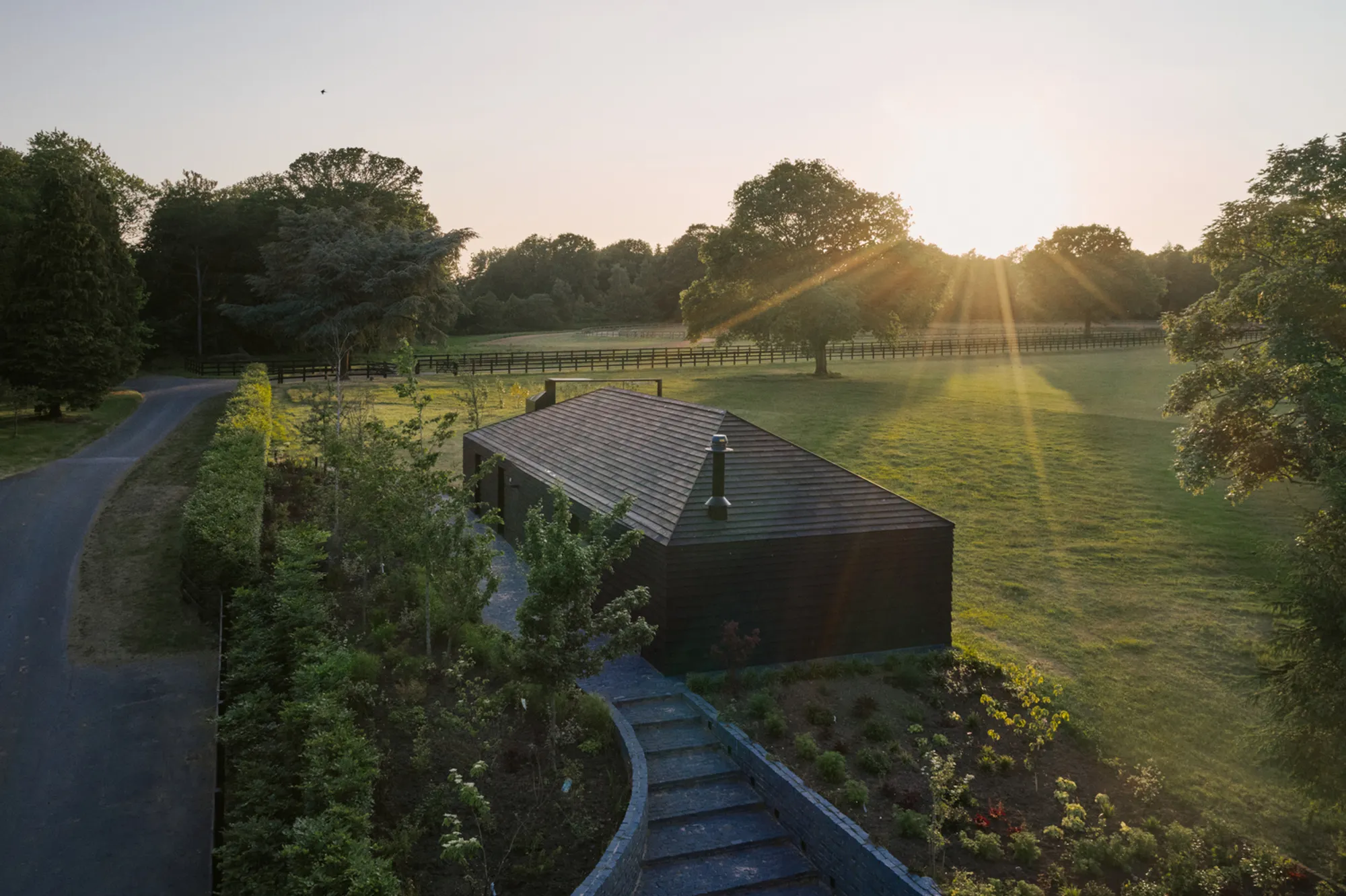
Sustainable Equestrian Architecture: The Arc by DROO
An in-depth exploration of The Arc, showcasing how sustainable equestrian architecture merges functionality, aesthetics, and environmental stewardship.


Inspiring a New Standard in Equestrian DesignSustainable equestrian architecture is revolutionizing how equestrian facilities are designed and built. At the forefront of this movement is The Arc, a remarkable project by DROO Architects. Located in Surrey, UK, The Arc redefines the interplay between function, sustainability, and aesthetic beauty for equestrian environments.
What is Sustainable Equestrian Architecture?
Sustainable equestrian architecture focuses on creating eco-friendly, functional spaces tailored to the unique needs of equestrian sports. By prioritizing water conservation, biodiversity, and durable materials, this architectural style promotes a balance between the built environment and the natural landscape.
The Arc: A Masterpiece of Sustainable Equestrian Architecture
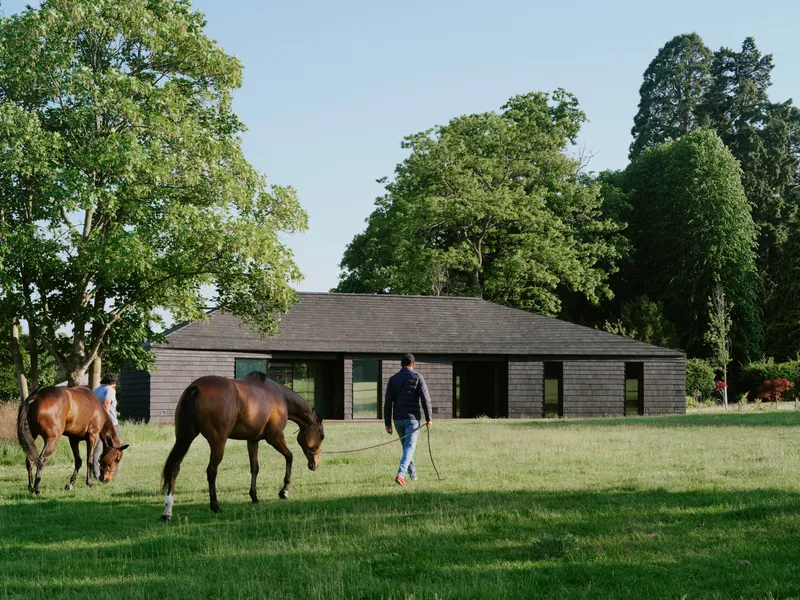
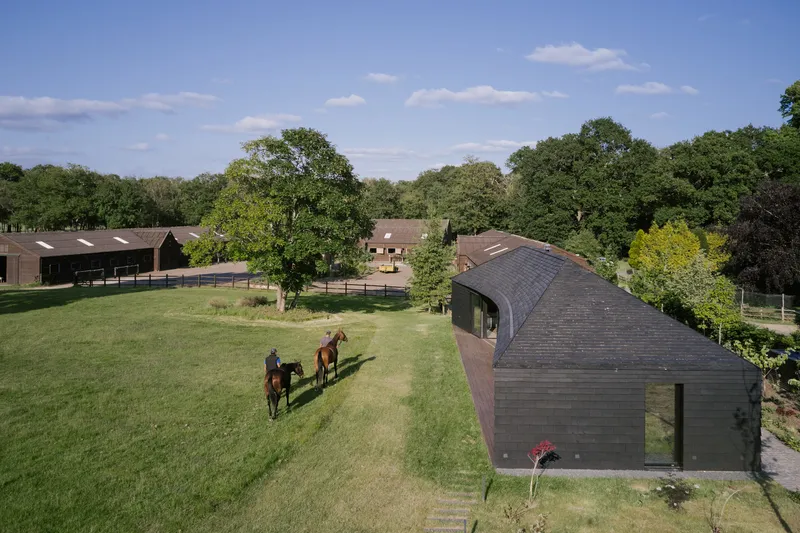
Completed in 2022, The Arc is a 150 m² clubhouse and farm development that seamlessly blends modern design with the pastoral charm of Surrey. Designed by DROO Architects, the project serves as a hub for polo matches, social events, and farm operations.
Key Features of The Arc's Design
1. Water Harvesting and Circular Sustainability
Water management is central to The Arc’s design.
- The building's curved roof and rainwater collection system funnel water into filtration pits.
- Collected water irrigates a nearby lake, which in turn sustains the polo fields and landscaping.
- This closed-loop system reflects the principles of sustainable equestrian architecture, addressing water scarcity while maintaining lush, functional fields.
2. Thoughtful Material Choices
The Arc’s material palette combines tradition and modernity:
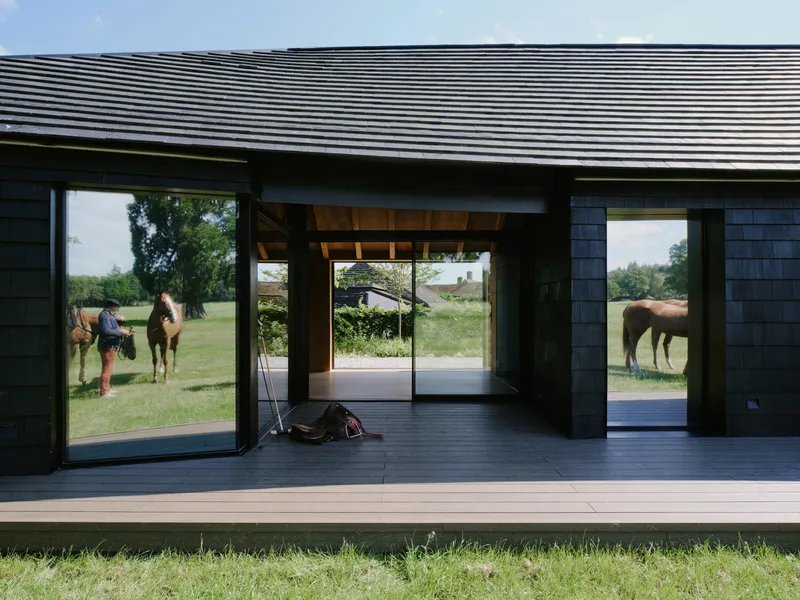
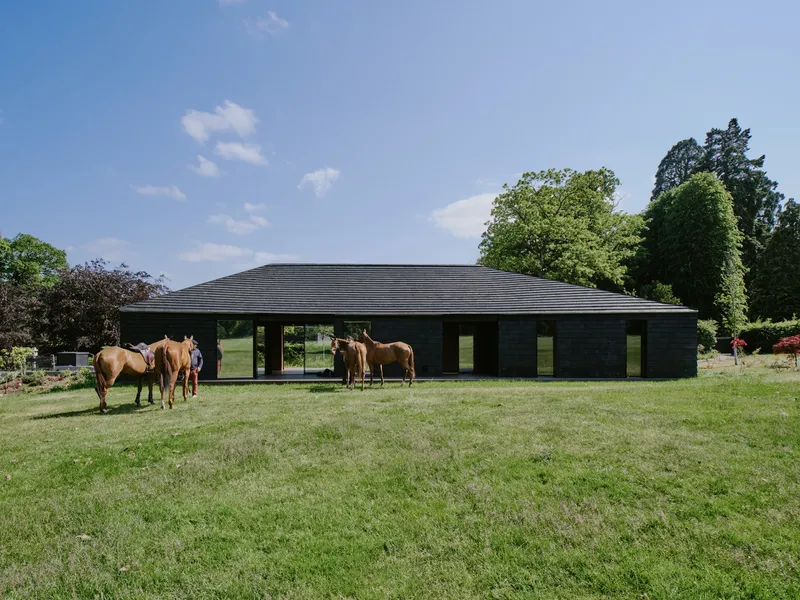
- Shou Sugi Ban: Charred wood shingles offer durability and natural resistance to fungi.
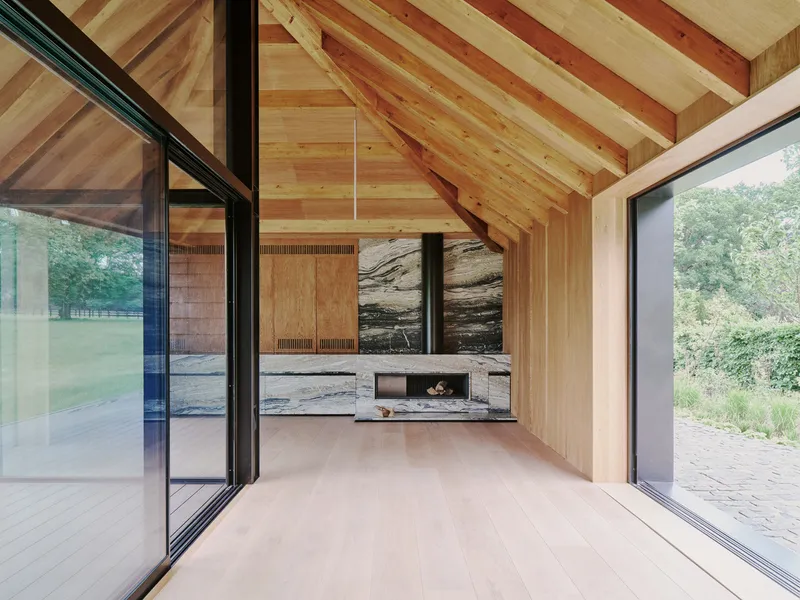
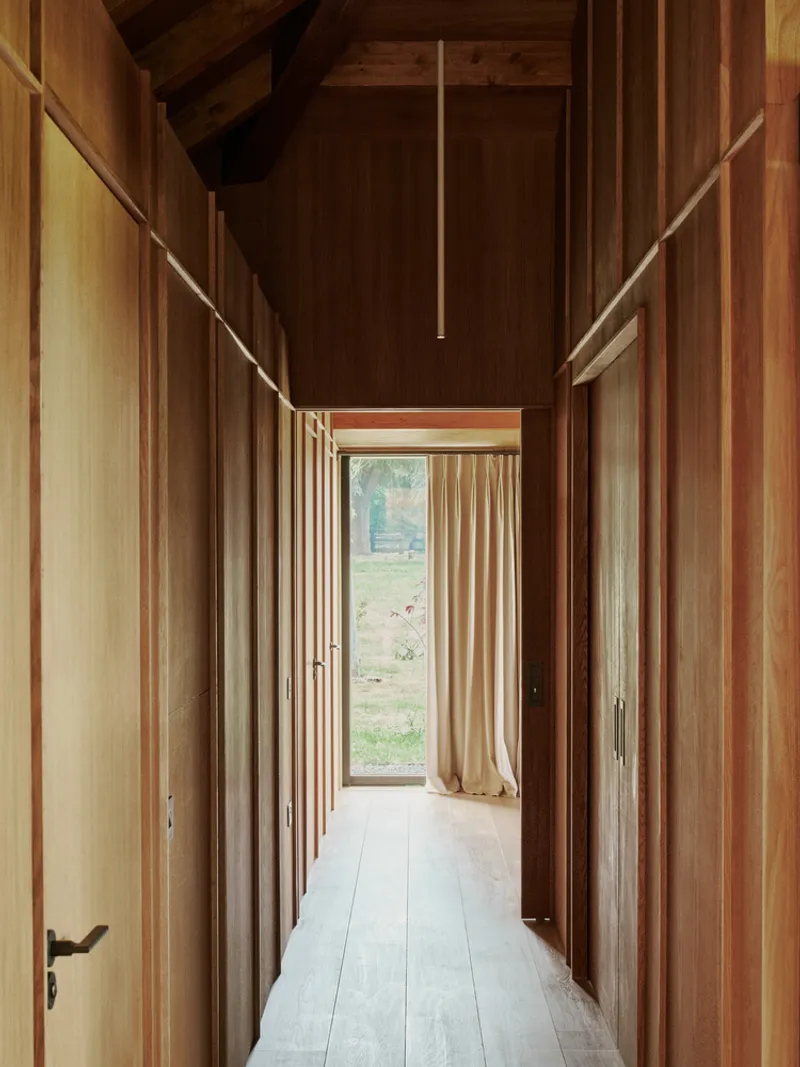
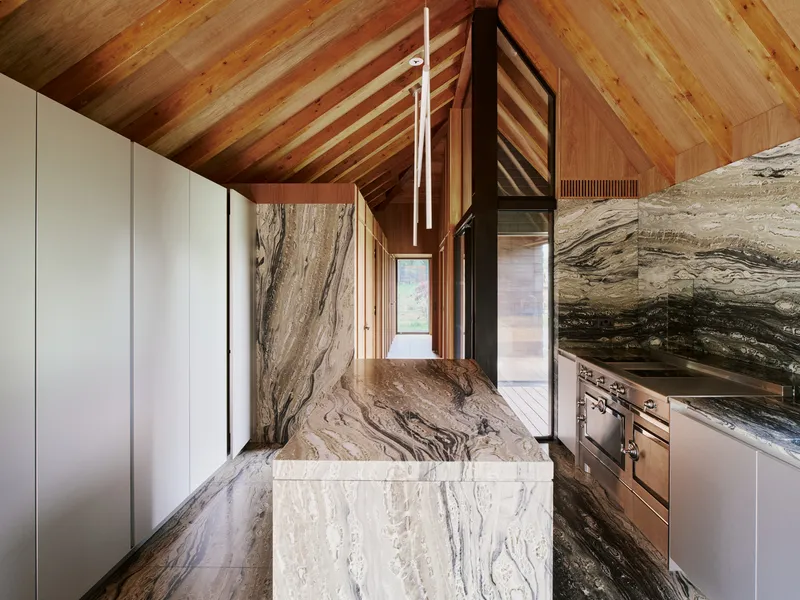
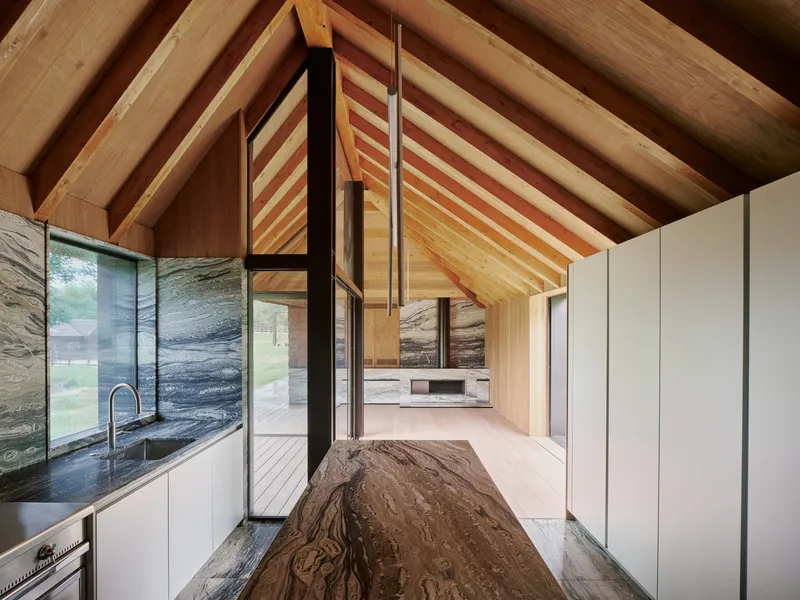
- Spruce Glulam Frames: These parametrically designed timber structures showcase the versatility of renewable materials.
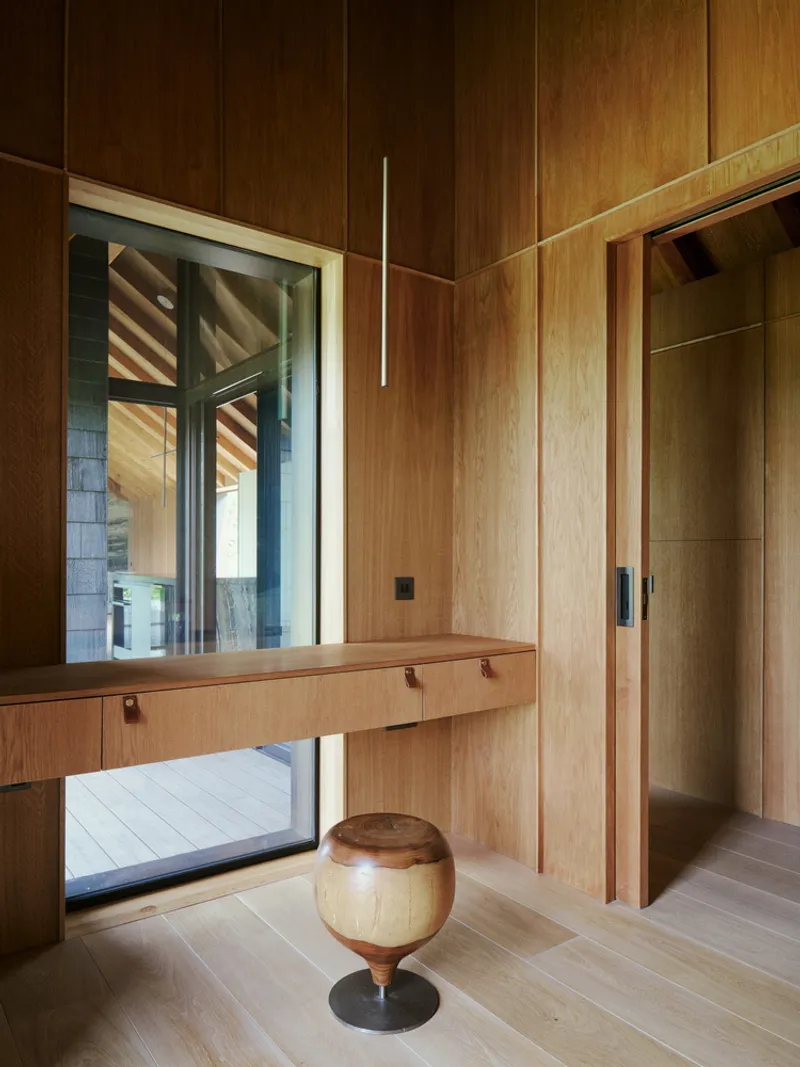
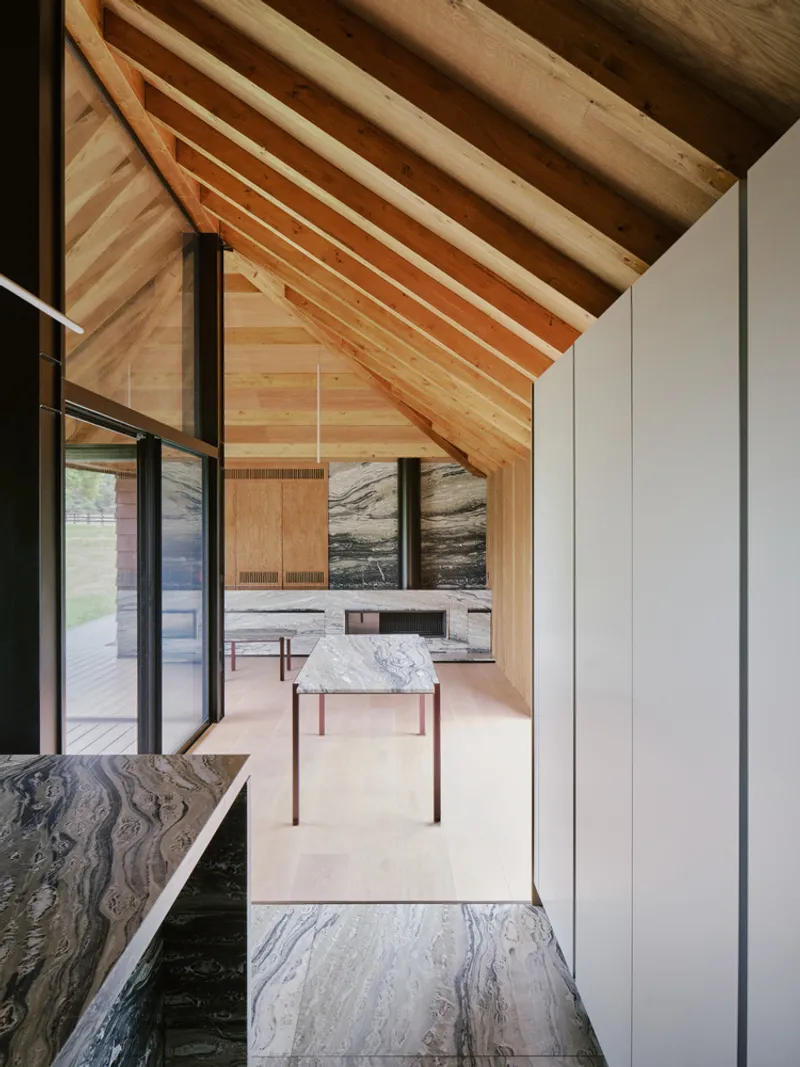
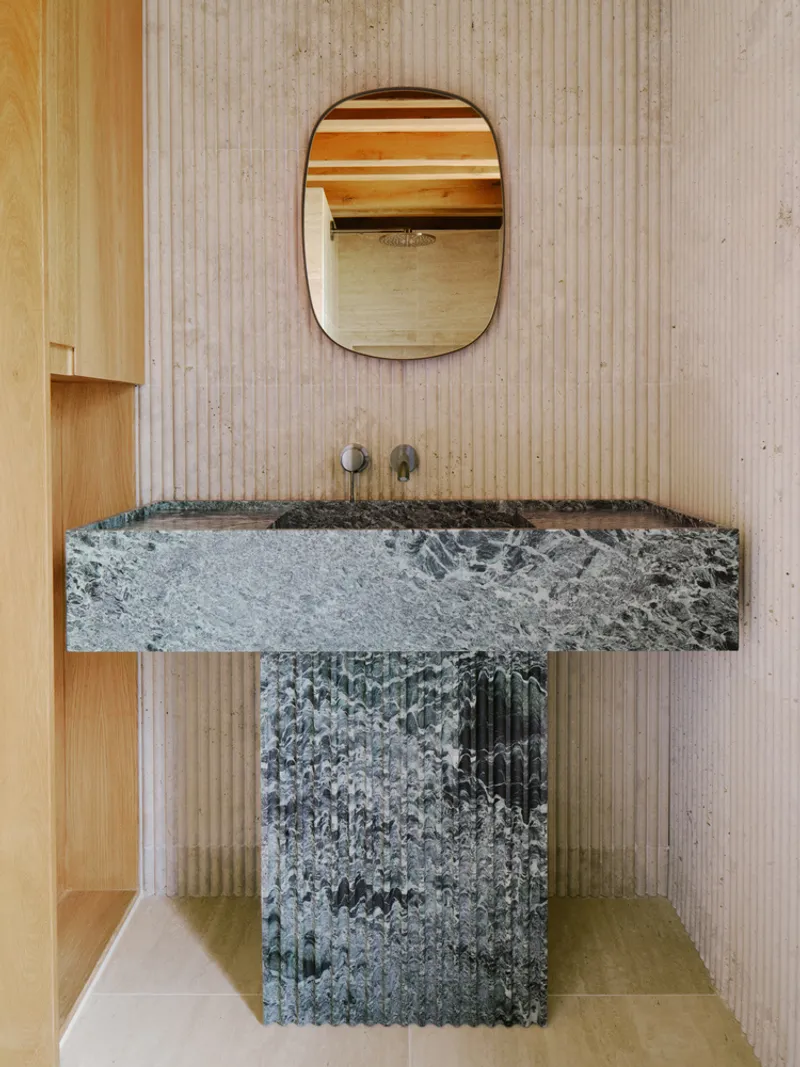
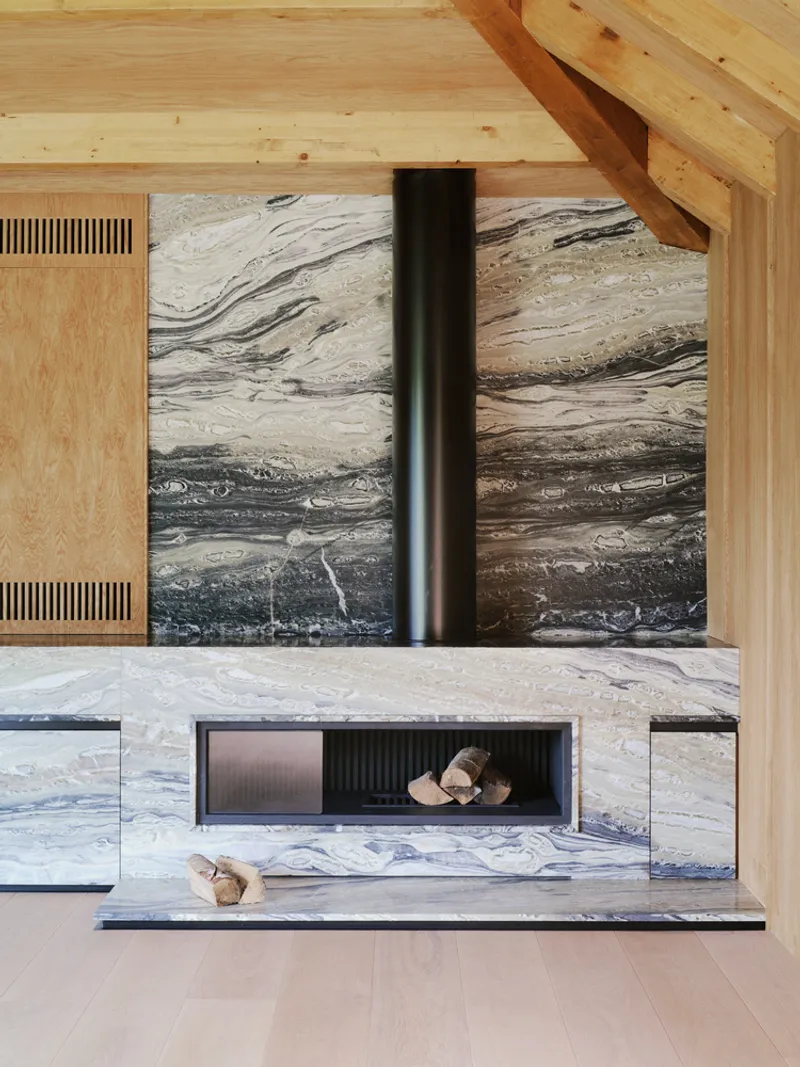
- Interior Detailing: Natural stone, steel, and oak create an inviting, tactile ambiance.
3. Masterplanning for Harmony
DROO's "string of pearls" concept connects multiple farm structures:
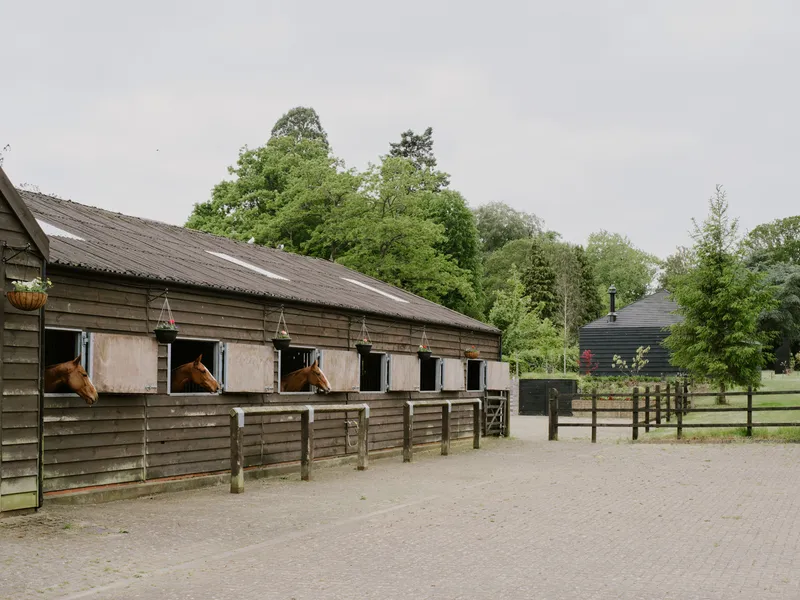
- The clubhouse anchors the design, linking stables, a courtyard, and an outdoor barbecue area.
- Two prominent oak trees frame the space, grounding the design in nature.
- Verandah-inspired elements blur the boundaries between indoor and outdoor spaces, enhancing the experience of viewing polo matches.
Integrating Landscape and Biodiversity
The Arc’s design extends beyond architecture into the surrounding landscape:
- Preservation of Native Flora and Fauna: DROO carefully maintained the local ecosystem, enhancing biodiversity.
- Seasonal Usability: Refurbishment of a grooms’ barn ensures year-round functionality for staff and trainers.
- Drainage and Irrigation: Redesigned systems support sustainable water use across the property.
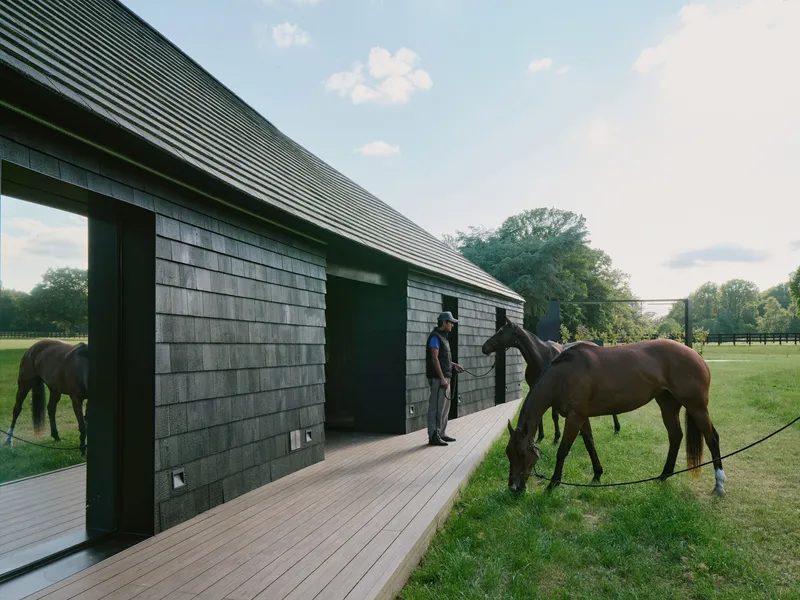
The Importance of Timber in Equestrian Design
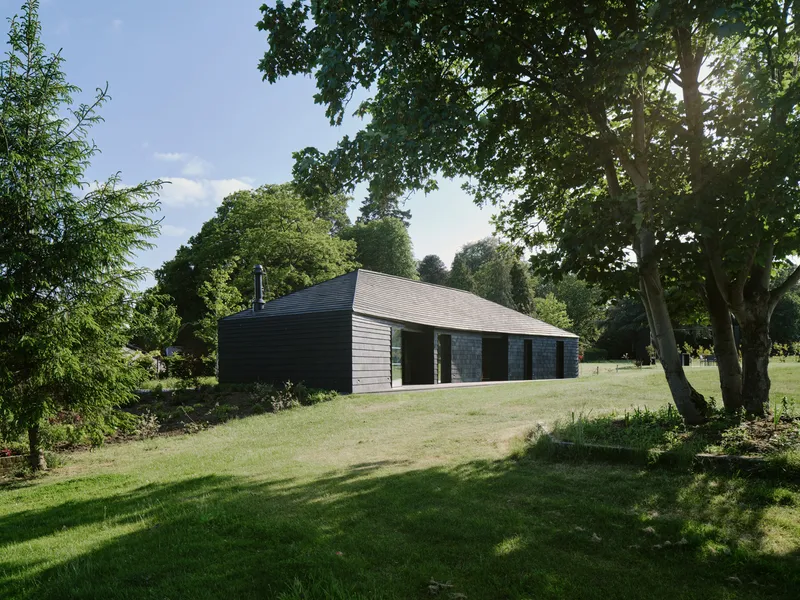
The use of timber in The Arc illustrates its adaptability for sustainable equestrian architecture:
- Timber is a renewable resource that reduces the project’s carbon footprint.
- Parametric design in timber allows for unique structural expressions, as seen in The Arc’s sweeping glulam frame.
- Its natural aesthetics blend seamlessly with rural landscapes, creating a warm and cohesive design.
Why Choose Sustainable Equestrian Architecture?
Sustainability in equestrian design benefits not only the environment but also the functionality and longevity of facilities:
- Resource Efficiency: Systems like rainwater harvesting reduce operational costs.
- Improved Aesthetics: Thoughtful integration of natural materials creates harmonious and inspiring environments.
- Eco-Friendly Practices: Encouraging biodiversity and reducing environmental impact aligns with the growing demand for sustainable development.
The Arc: A Case Study in Modern Equestrian Design
DROO Architects’ work on The Arc is a shining example of sustainable equestrian architecture. From its water-harvesting roof to its expertly crafted timber frame, the project highlights how thoughtful design can elevate the experience of both human and equine inhabitants.
Key Takeaways from The Arc’s Success:
- Prioritize sustainability from the outset, integrating resource-efficient systems.
- Use materials that are durable, renewable, and contextually appropriate.
- Plan for biodiversity, ensuring your design complements the surrounding environment.
Shaping the Future of Equestrian Facilities
As the demand for eco-friendly spaces grows, sustainable equestrian architecture like The Arc will play a vital role in shaping the future of equestrian design. By balancing functional excellence with environmental stewardship, architects can create facilities that stand the test of time while protecting our planet.
Explore more about innovative projects like The Arc and see how sustainable equestrian architecture can redefine your vision.
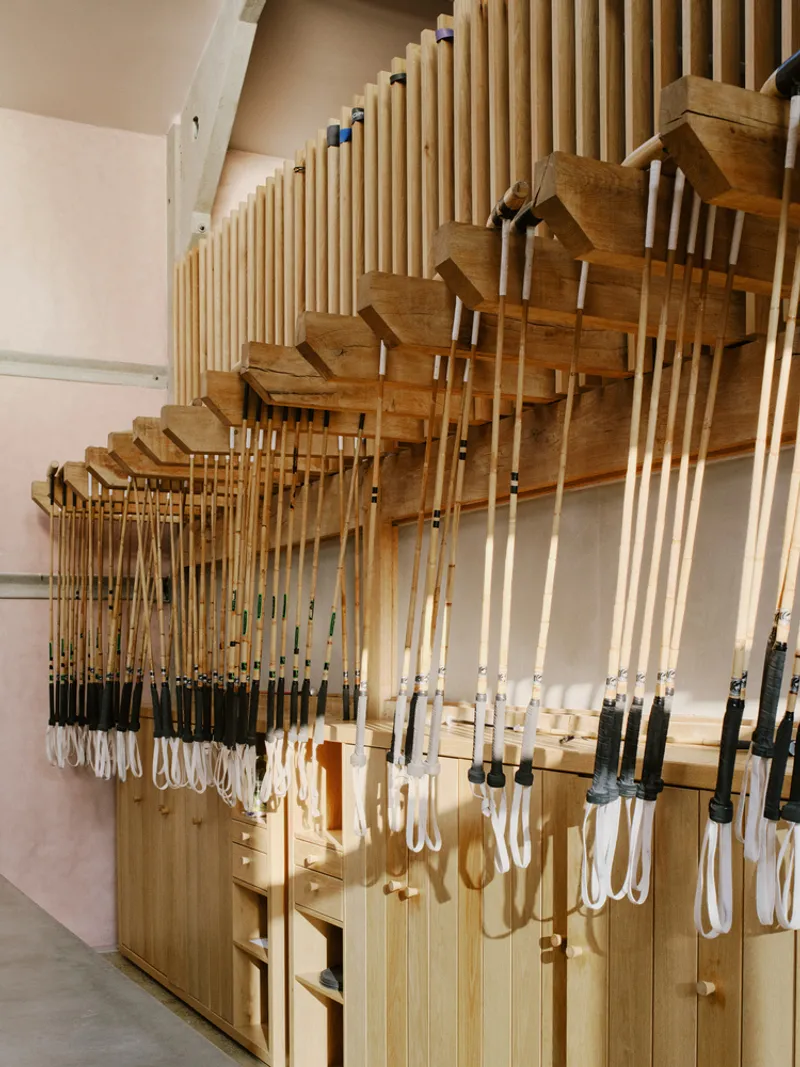
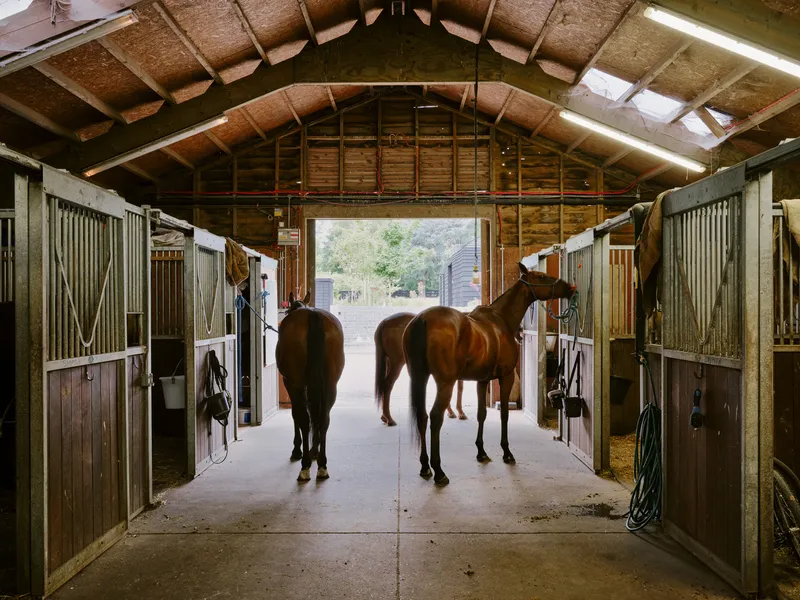
All Photographs are work of Henry Woide



Popular Articles
Popular articles from the community


The Ocean Hive: Sustainable Architecture for a Self-Sufficient Civilization at Sea
The Ocean Hive imagines sustainable architecture at sea, where modular habitats, algae, wave power and ocean waste sustain a growing colony.

Co-life: Sustainable Architecture for Age-Friendly Community Living
Co-life reimagines sustainable architecture for seniors through courtyards, rammed earth, shared gardens, and spaces designed for belonging.

The Earth Pod: 3D Printed Homes for Resilient Refugee Communities
The Earth Pod reimagines refugee housing through 3D printed homes made from clay, combining resilience, self-sufficiency, and rapid shelter.

Play: Fragments of Their World
Familiar architecture becomes modular playground design, creating safe spaces where displaced children can learn, connect, imagine and play.

Similar Reads
You might also enjoy these articles


Hodi-Mandai Geram
Project Function: Preservation and revitalization of the Intangible heritage and socio-spatial identity of the Hodi by Housing, Cultural Memory Center, Sacred Grove, landscape, local tourism economy


Olio Towers: A Mid-Rise for Performers That Fuses Housing, Rehearsal, and Stage
Located blocks from Houston's Theater District, this modular tower stacks living units around a central performance atrium.

Oasis: Modular Green Housing Carved into Dhaka's Urban Fabric
A shortlisted Plugin Housing entry reclaims unauthorized settlements in Dhaka with stepped concrete volumes, green roofs, and ventilation-driven design.

Black Hole: A Floating Megastructure for the Post-Physical Era
Emiliano Mazzarotto envisions a spherical, self-scaling arena where e-sports, digital hotels, and holographic stadiums replace traditional public space.

Explore Architecture Competitions
Discover active competitions in this discipline



Challenge to reimagine the Iron Throne


Photograph architecture without architects


Illustrate the lost glory of Angkor Wat - Render Challenge


Design challenge to reuse E-waste
Comments (0)
Please login or sign up to add comments
No comments yet. Be the first to comment!