
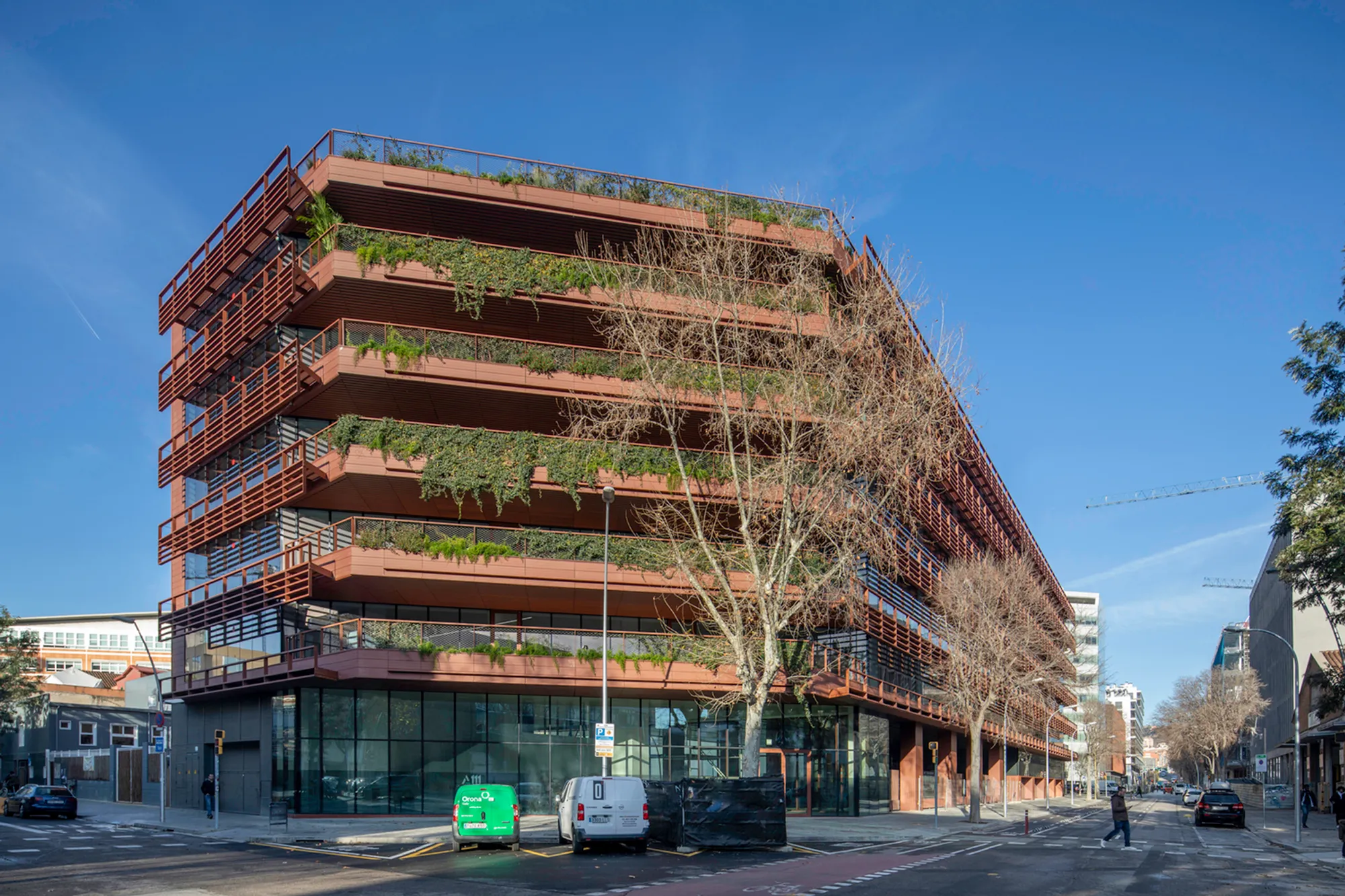
Sustainable Office Architecture in Barcelona: A111 Offices by Batlleiroig
The article explores A111 Offices by Batlleiroig, a sustainable Barcelona workspace blending eco-friendly design, history, and urban greenery.


The A111 Offices in Barcelona, designed by Batlleiroig, exemplify a modern approach to sustainable architecture. Located in the vibrant 22@ district, this project embraces green urban development while paying homage to the area’s industrial history. With its LEED Platinum and WiredScore certifications, the building sets a new standard for eco-friendly office spaces in Barcelona.
A Legacy Rooted in History
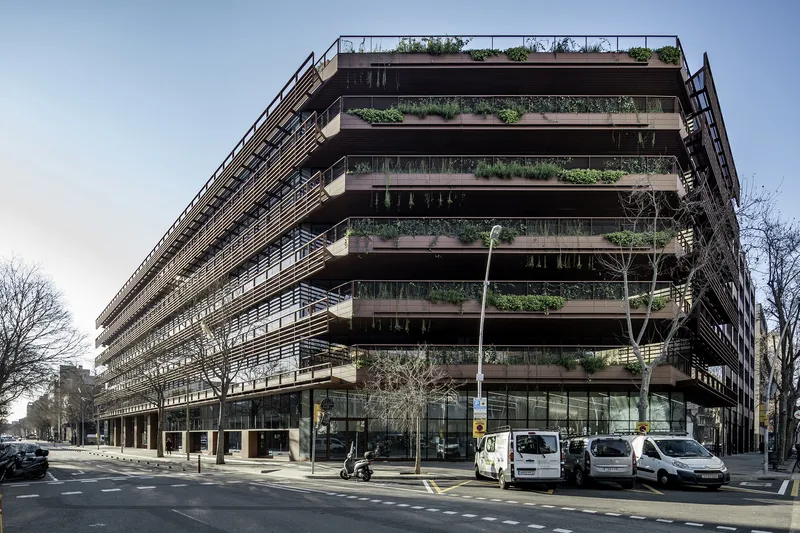
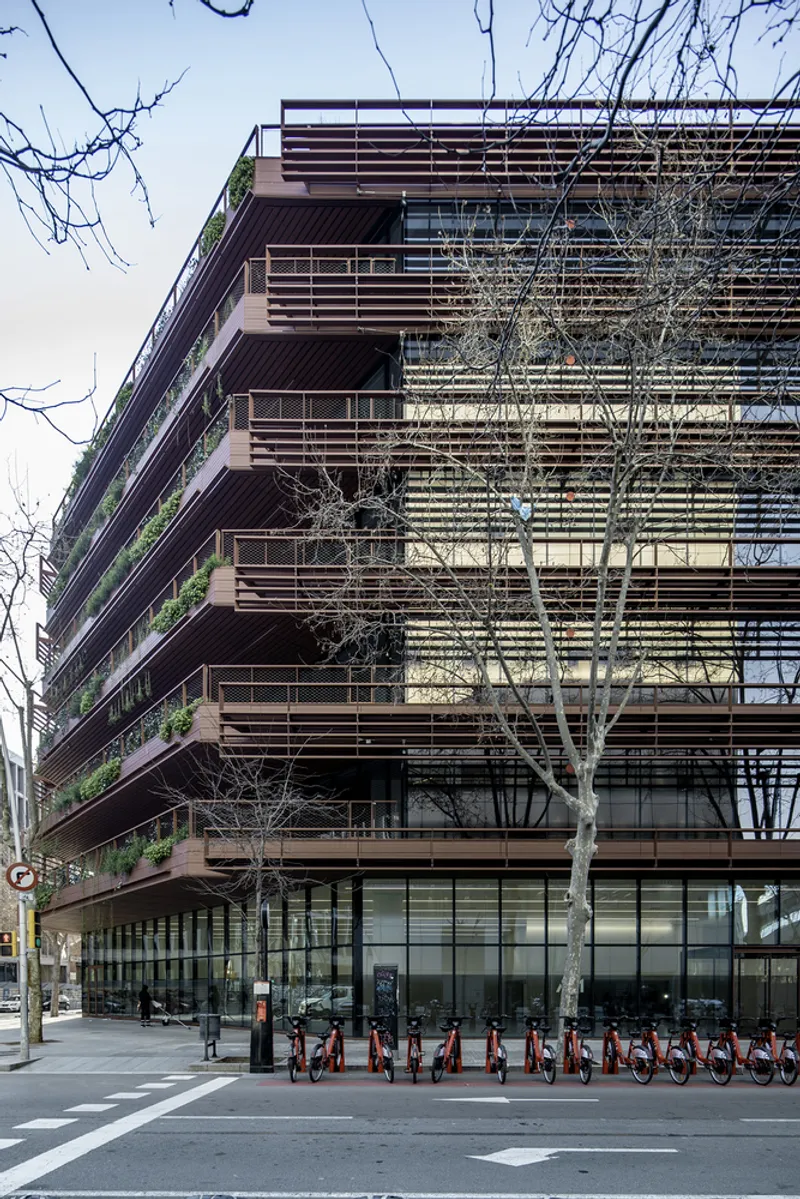
Built on the former site of the "Galletas Viñas" factory, the A111 Offices merge seamlessly with the adjacent historic structures. The design respects the industrial heritage of the Poblenou neighborhood by incorporating oxidized facades reminiscent of brick constructions and embracing the traditional chamfered corners of Barcelona’s Eixample district.
A Vision for the Future City
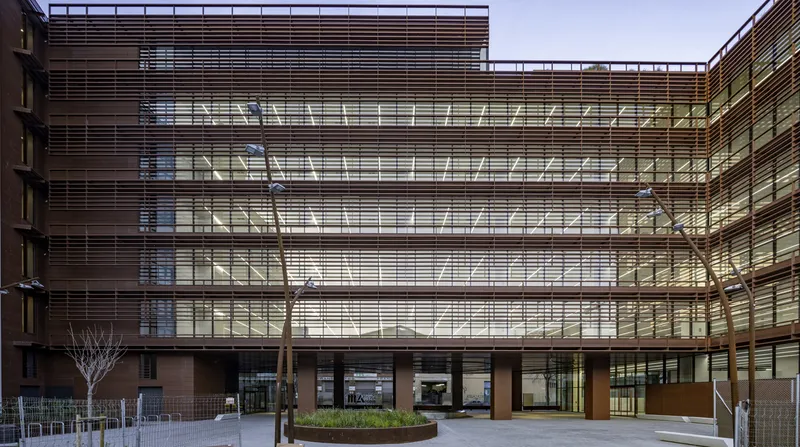
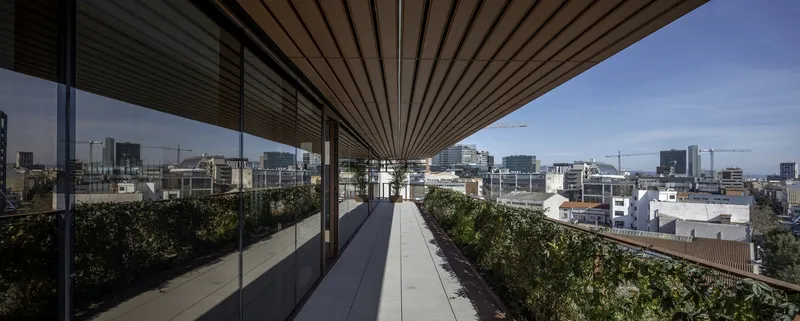
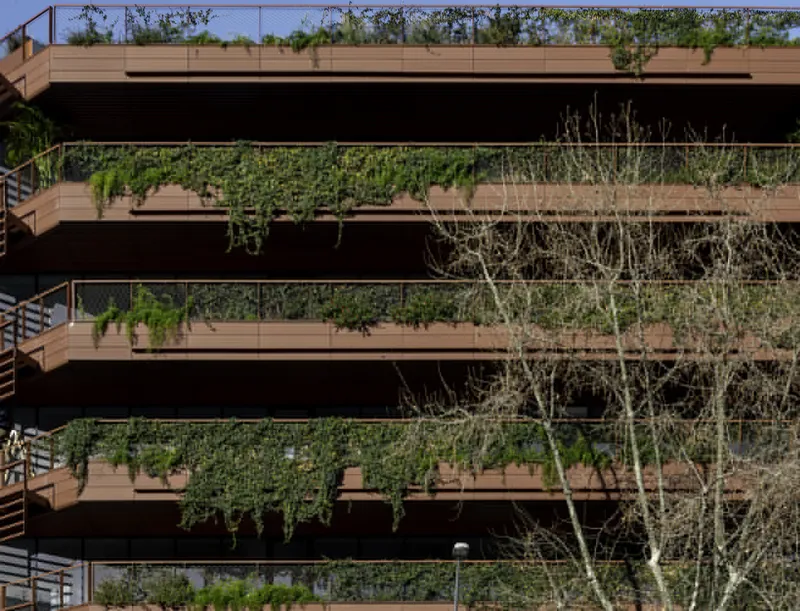
Batlleiroig’s design philosophy prioritizes human-centric spaces and urban greenery. With cascading vegetation on terraces and the façade, the building integrates harmoniously into the surrounding green axes, aligning with Barcelona’s pedestrian-friendly initiatives like the Almogàvers axis.
Green Features Promoting Biodiversity
A standout feature of the A111 Offices is the emphasis on biodiversity. The project includes:
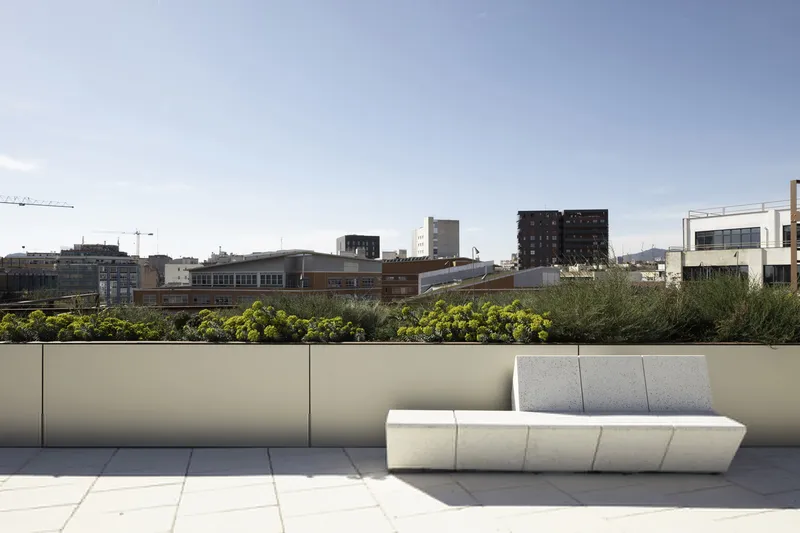
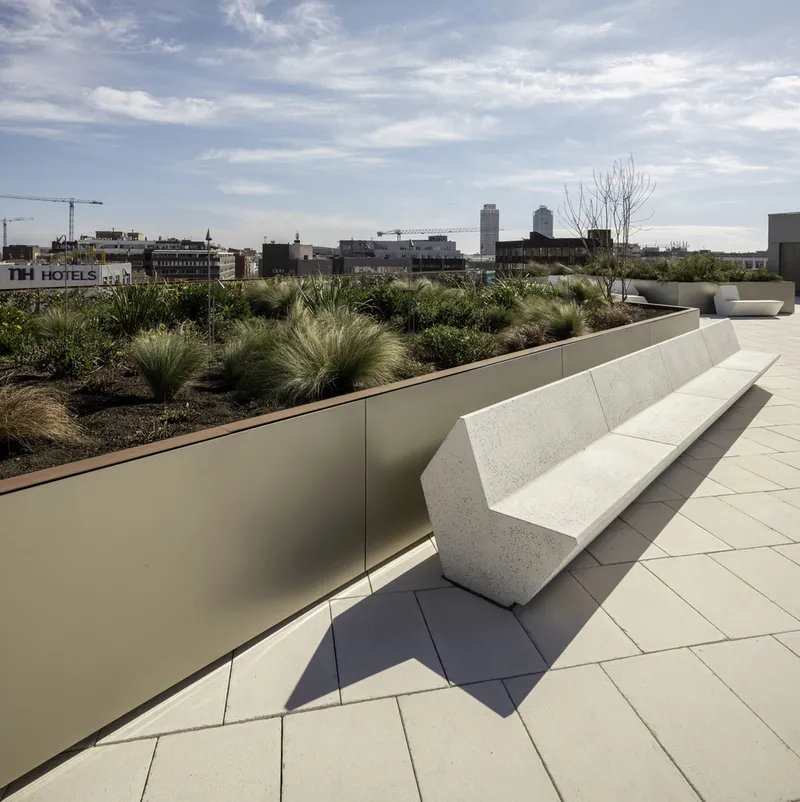
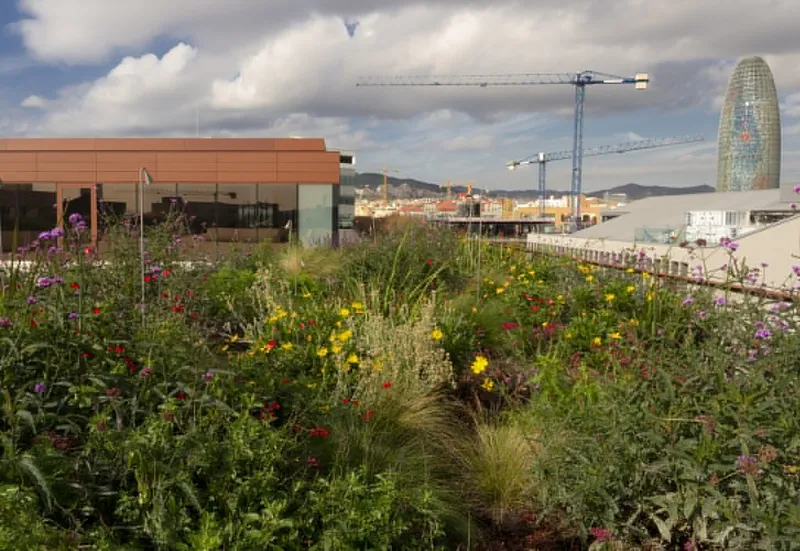
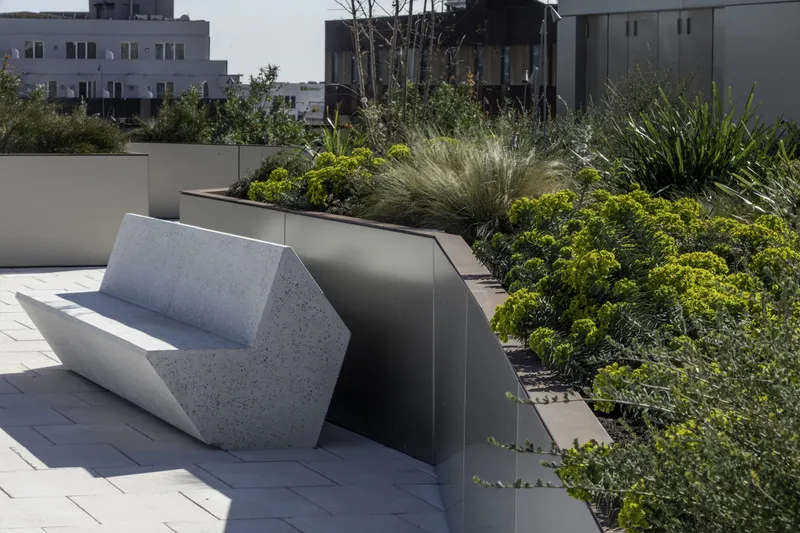
- 1,380 m² of lush terraces with native plants.
- A rooftop garden fostering ecological balance.
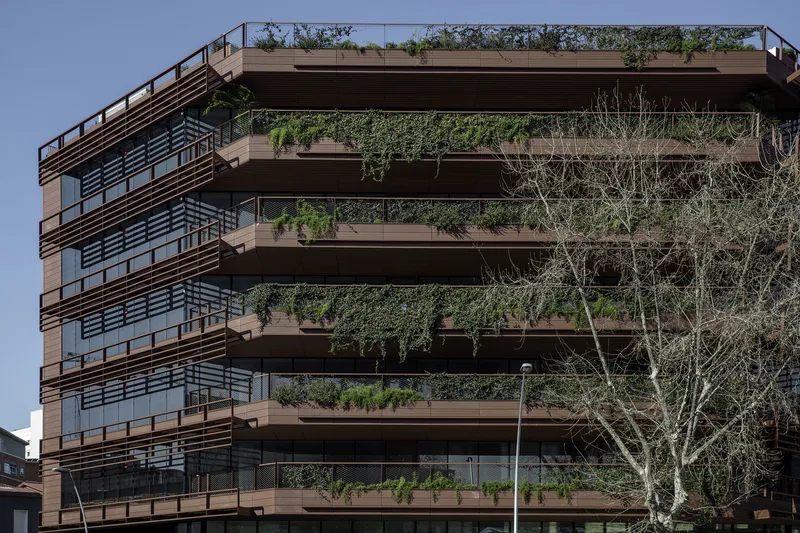
- Vegetation cascading down the facade, blending the building with urban greenery.
These design elements do more than beautify; they actively enhance air quality, regulate temperature, and promote biodiversity in the urban landscape.
Innovative Design and Energy Efficiency
Facade and Solar Protection
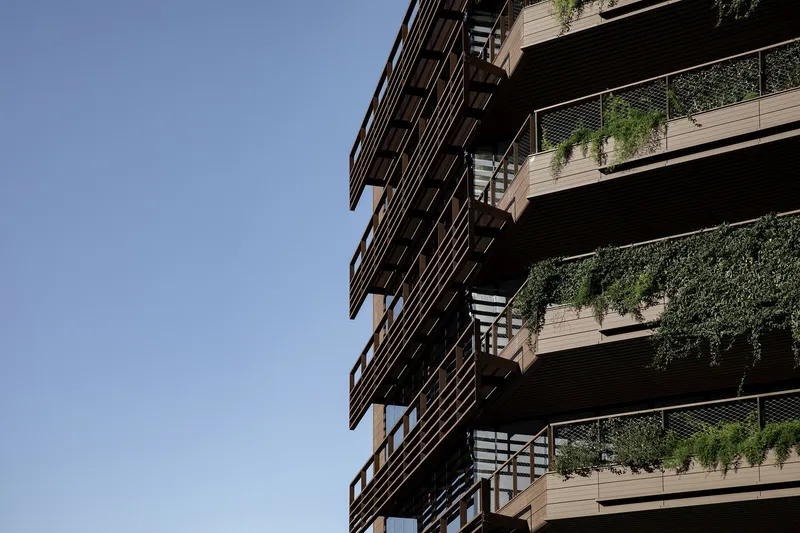
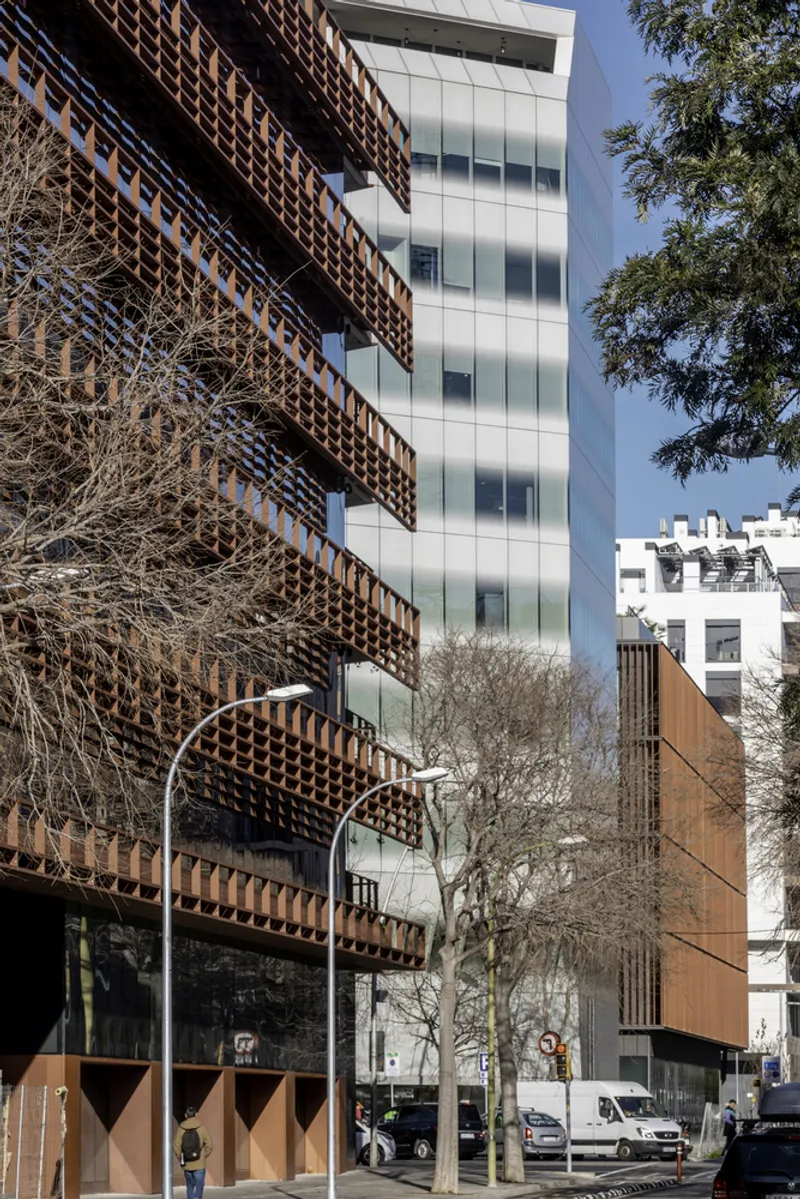
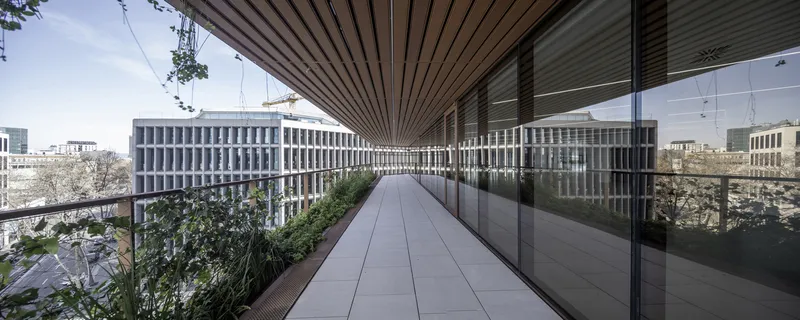
The building's facade incorporates adjustable slats that vary in density based on orientation. This dynamic system achieves:
- Reduced solar heat gain.
- Energy efficiency by minimizing artificial cooling and lighting needs.
- A visually striking interplay of light and shadow throughout the day.
Open Floor Plans
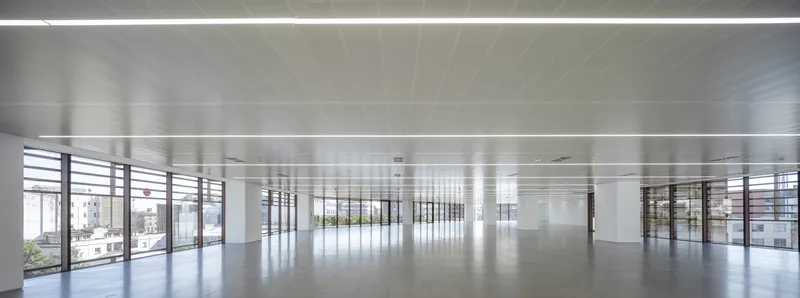
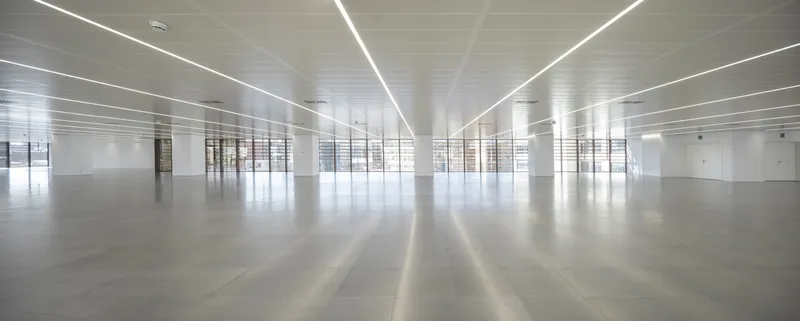
The interior layout features wide spans of 17.55 meters between columns, offering exceptional flexibility for workspace configurations. Columns placed along the facade optimize usable office space while balancing glazed and opaque surfaces for enhanced energy performance.
Connecting People and Nature
At the heart of the A111 Offices is the idea of biophilic design, fostering connections between occupants and nature:
- Expansive terraces on chamfer corners provide outdoor interaction spaces.
- A large water feature at the entrance creates a cooling island effect and enhances user experience.
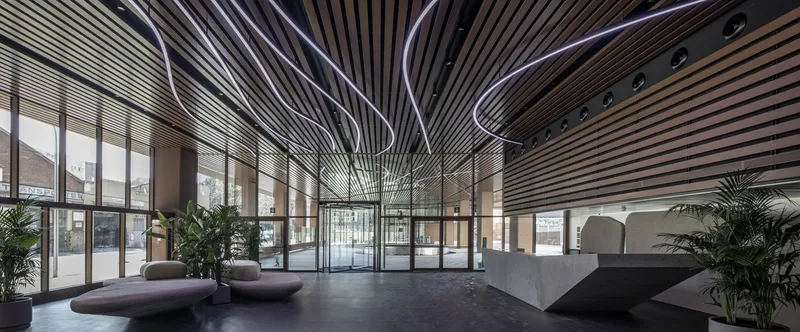
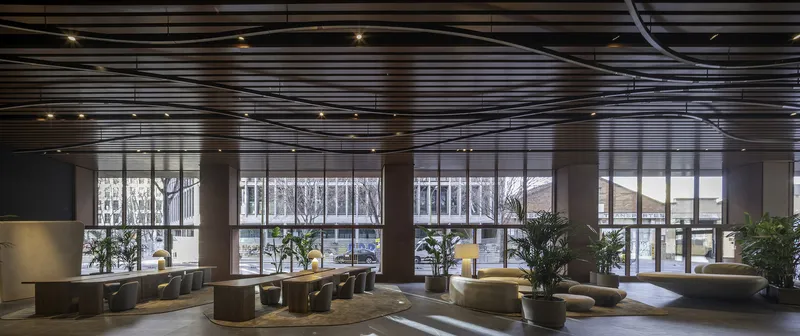
- Communal areas are designed with natural materials like wood, ensuring comfort and sustainability.
Transparency and Community Integration
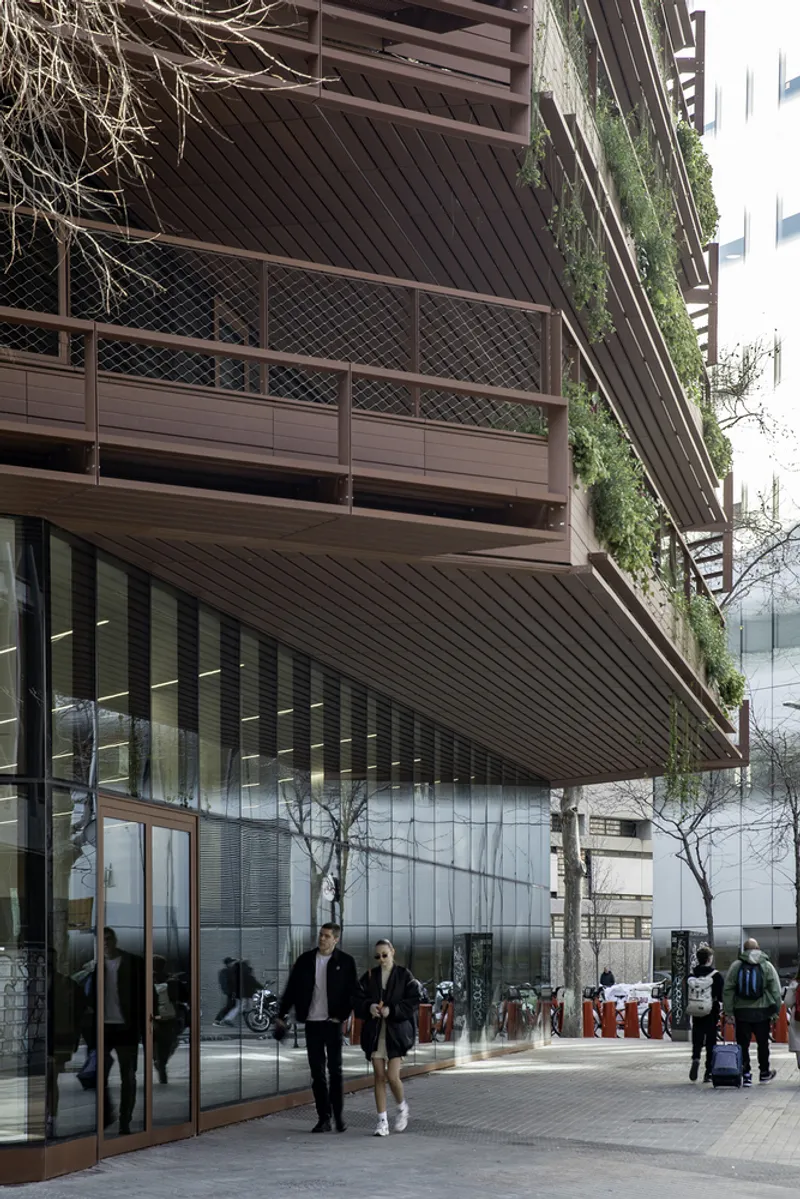
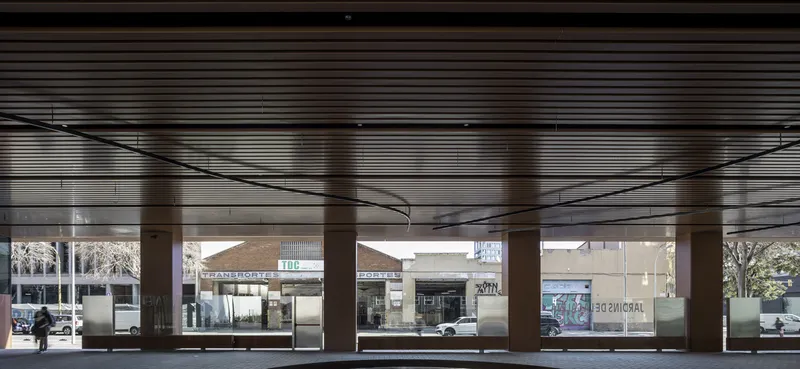
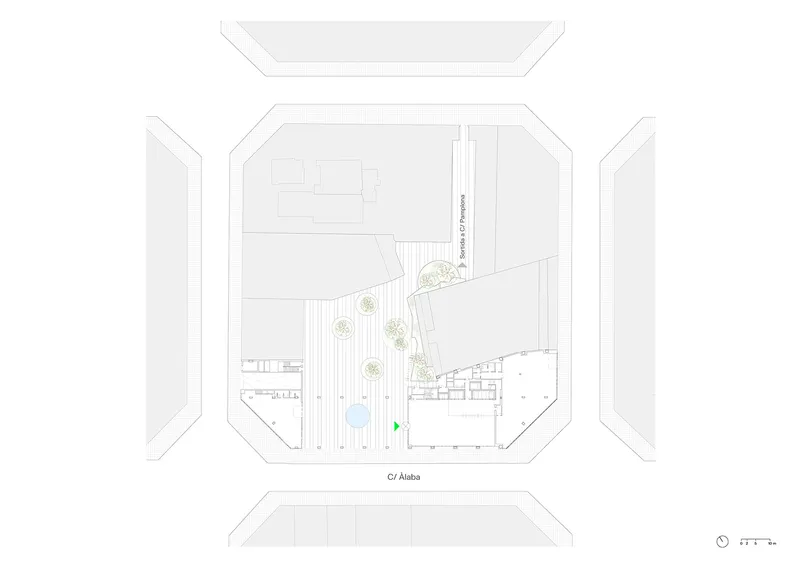
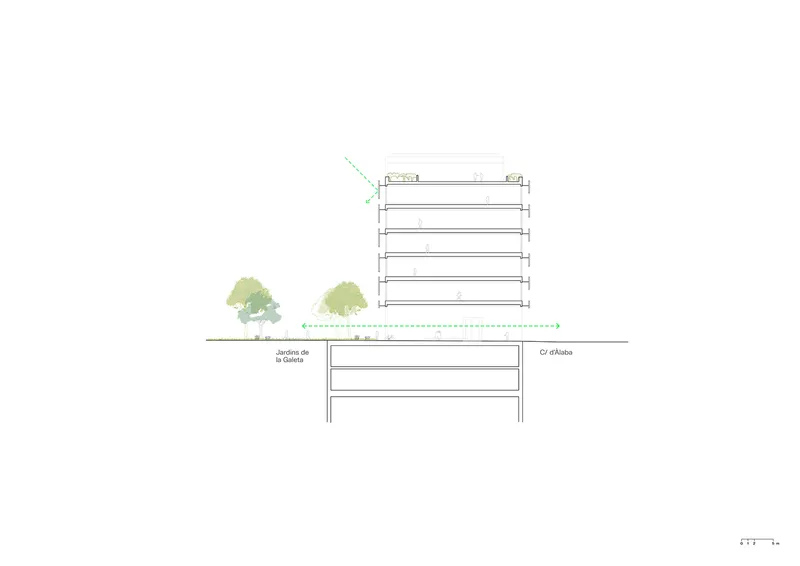
The ground floor exemplifies permeability and transparency, blending private and public spaces through a 30-meter-wide central porch. This passage encourages pedestrian interaction and acts as a sheltered multi-functional area, making the building more inclusive and accessible.
Enhanced Security Through Design
The large glass facade on the ground floor provides direct visual connections between the street and the interior, creating a safer and more inviting environment for both pedestrians and occupants.
Health and Well-Being at the Core
Circadian Lighting
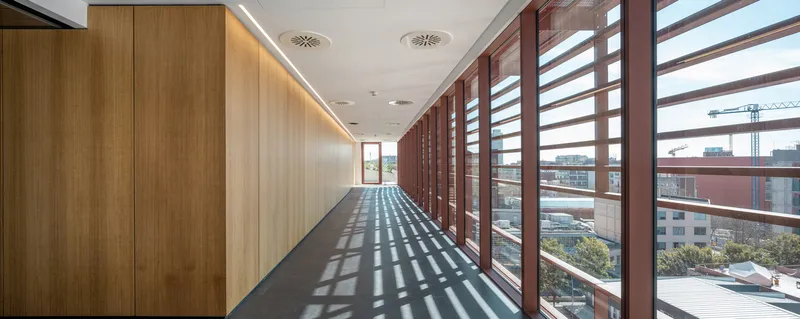
Dynamic slats on the facade cast moving shadows throughout the day, offering occupants a tangible sense of time and natural rhythm. This design supports circadian health by fostering awareness of natural light cycles.
Air Quality and Natural Materials
The interiors prioritize indoor air quality and the use of environmentally friendly materials, such as recyclable wood, ensuring a healthier workspace.
A Beacon of Sustainable Office Architecture
The A111 Offices by Batlleiroig redefine sustainable office architecture in Barcelona. By seamlessly integrating historical elements, biodiversity, energy-efficient features, and biophilic design principles, this project serves as a blueprint for future urban developments.
As the 22@ district evolves, the A111 Offices stand as a symbol of innovation and respect for the past, paving the way for a greener, more connected urban landscape.
All the photographs are work of Antonio Navarro Wijkmark




Popular Articles
Popular articles from the community


Conexión: Biophilic Design Reimagines High-Rise Living in Hong Kong
Conexión reimagines high-rise living in Hong Kong through biophilic design, green facades, shared spaces, daylight, water and nature within.

Lunar Spiral: Space Architecture Shaped by the Mathematics of the Universe
Lunar Spiral reimagines space architecture through Fibonacci geometry, lunar regolith, levitating habitats, and self-sustaining Moon living.

Co-life: Sustainable Architecture for Age-Friendly Community Living
Co-life reimagines sustainable architecture for seniors through courtyards, rammed earth, shared gardens, and spaces designed for belonging.

The Earth Pod: 3D Printed Homes for Resilient Refugee Communities
The Earth Pod reimagines refugee housing through 3D printed homes made from clay, combining resilience, self-sufficiency, and rapid shelter.


Similar Reads
You might also enjoy these articles


Hodi-Mandai Geram
Project Function: Preservation and revitalization of the Intangible heritage and socio-spatial identity of the Hodi by Housing, Cultural Memory Center, Sacred Grove, landscape, local tourism economy


Olio Towers: A Mid-Rise for Performers That Fuses Housing, Rehearsal, and Stage
Located blocks from Houston's Theater District, this modular tower stacks living units around a central performance atrium.

Oasis: Modular Green Housing Carved into Dhaka's Urban Fabric
A shortlisted Plugin Housing entry reclaims unauthorized settlements in Dhaka with stepped concrete volumes, green roofs, and ventilation-driven design.

Black Hole: A Floating Megastructure for the Post-Physical Era
Emiliano Mazzarotto envisions a spherical, self-scaling arena where e-sports, digital hotels, and holographic stadiums replace traditional public space.

Explore Office Building Competitions
Discover active competitions in this discipline



Challenge to reimagine the Iron Throne


Photograph architecture without architects


Illustrate the lost glory of Angkor Wat - Render Challenge


Design challenge to reuse E-waste
Comments (0)
Please login or sign up to add comments
No comments yet. Be the first to comment!