

0.7 Arquitectura Builds a Concrete Neighborhood in Patagonia That Balances Privacy with Community
In San Carlos de Bariloche, board-formed concrete and timber cladding define a residential enclave rooted in its forested setting.


Designing a single house is one kind of challenge. Designing a neighborhood of houses that read as a coherent ensemble while giving each unit genuine privacy and identity is something harder. In the Coihues neighborhood of San Carlos de Bariloche, 0.7 Arquitectura has done exactly that: a cluster of residential units arranged along a shared street, where board-formed concrete and vertical timber screening create a language rigorous enough to unify the group but flexible enough to let each home breathe on its own.
What makes the project genuinely interesting is the negotiation between collective and individual space. The communal street is narrow and intentionally framed, almost urban in feel despite the Patagonian forest just beyond the rooflines. Behind those street walls, though, each unit opens into private courtyards with pools, lawns, and direct garden views. The architecture does double duty: a single concrete wall can be both a shared boundary and the backdrop for a family barbecue. That economy of means, where every element works on at least two scales, is the real achievement here.
A Street That Feels Like a Room

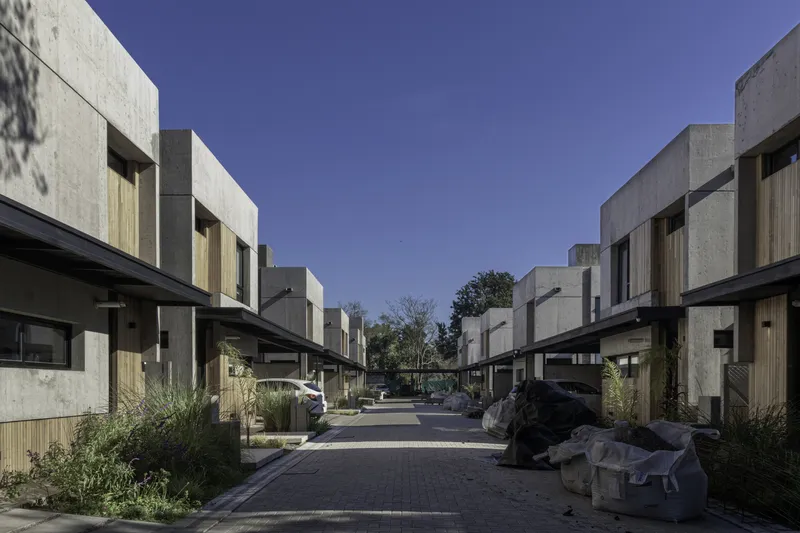
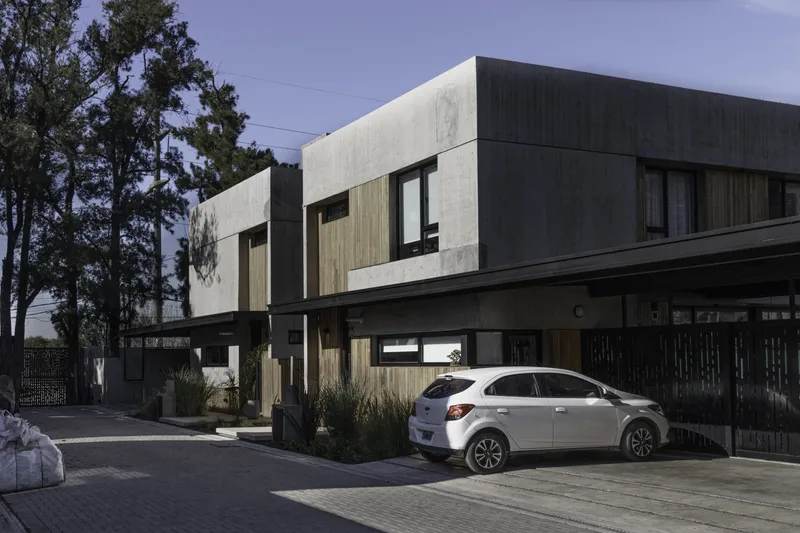
The central communal street is the organizing spine. Concrete volumes step back on either side, creating a rhythm of solid and void that keeps the corridor from feeling like a canyon. At dusk, the timber screening glows warmly against the raw concrete, and the proportions tighten enough to give the space a sense of enclosure rare in low-density residential projects.
There is a deliberate avoidance of the suburban cul-de-sac mentality. Cars are tucked into covered carports at the edges, not paraded down the center. The paving is shared and level, blurring the line between pedestrian path and threshold. It reads more like a European mews lane than an Argentine gated community, and that is a compliment.
Concrete as Character
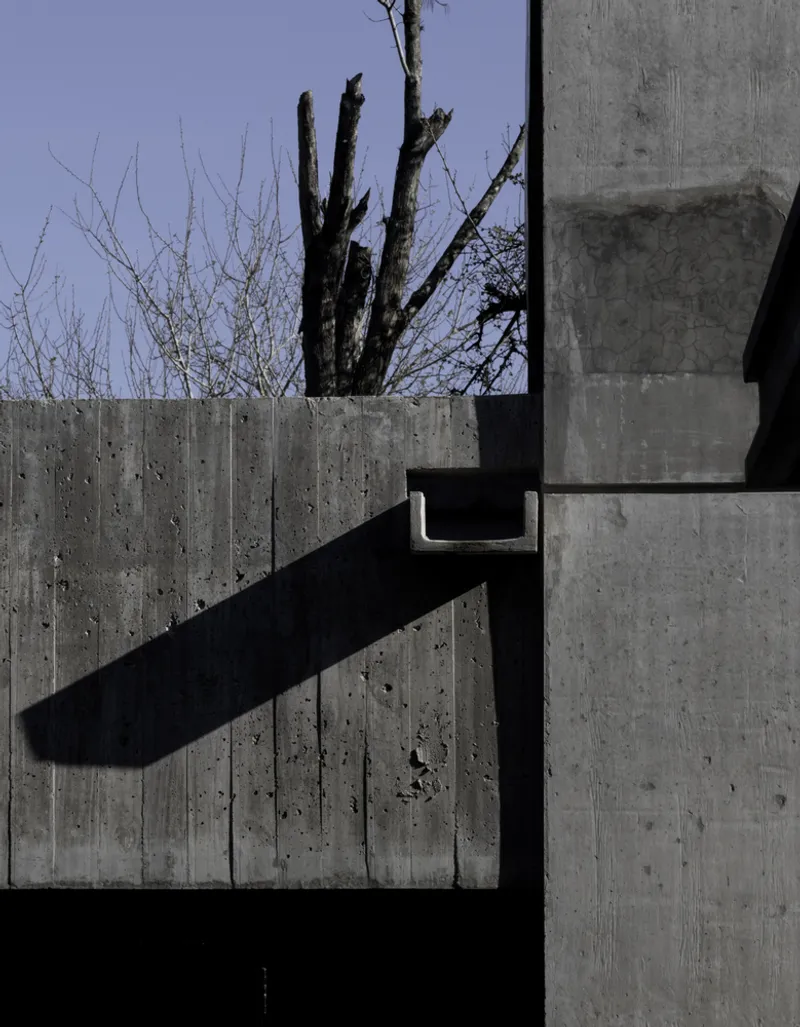

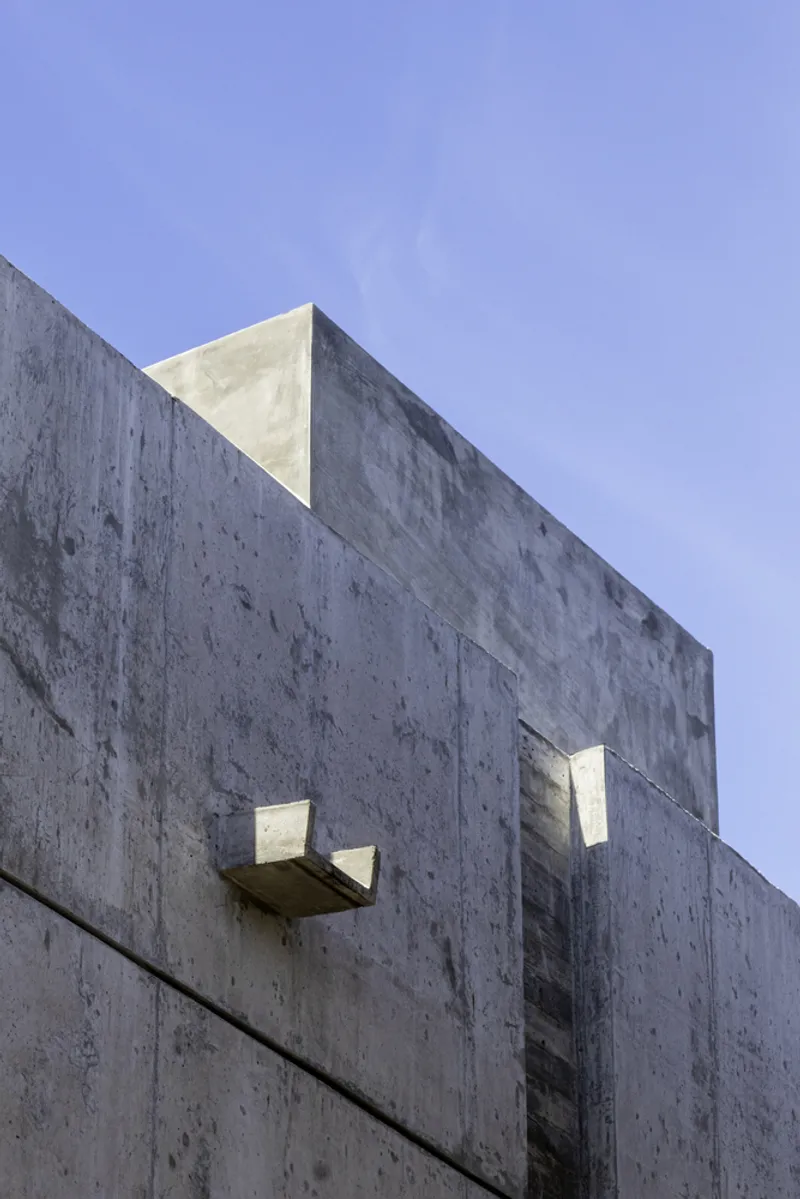
Board-formed concrete is the project's dominant material, and 0.7 Arquitectura leans into it hard. The grain of the formwork is visible everywhere, turning each wall into a register of its own making. Steel downspouts and rainwater channels are treated as sculptural incidents, projecting from the walls and casting sharp diagonal shadows that shift through the day.
Triangular cutouts punctuate one facade, a detail that reads as both compositional play and functional ventilation. These small moves keep the concrete from becoming monotonous. The material is heavy and permanent, but the detailing is precise and almost playful, giving each surface its own micro-narrative.
Private Courtyards, Open Sky
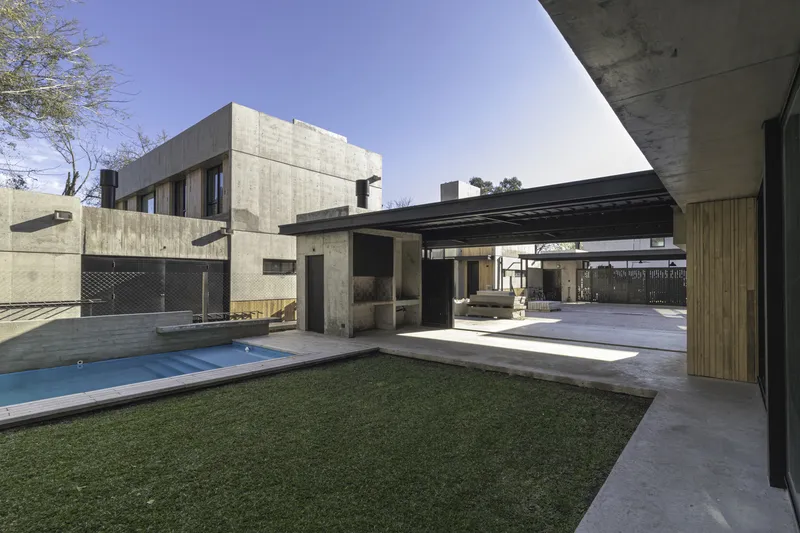

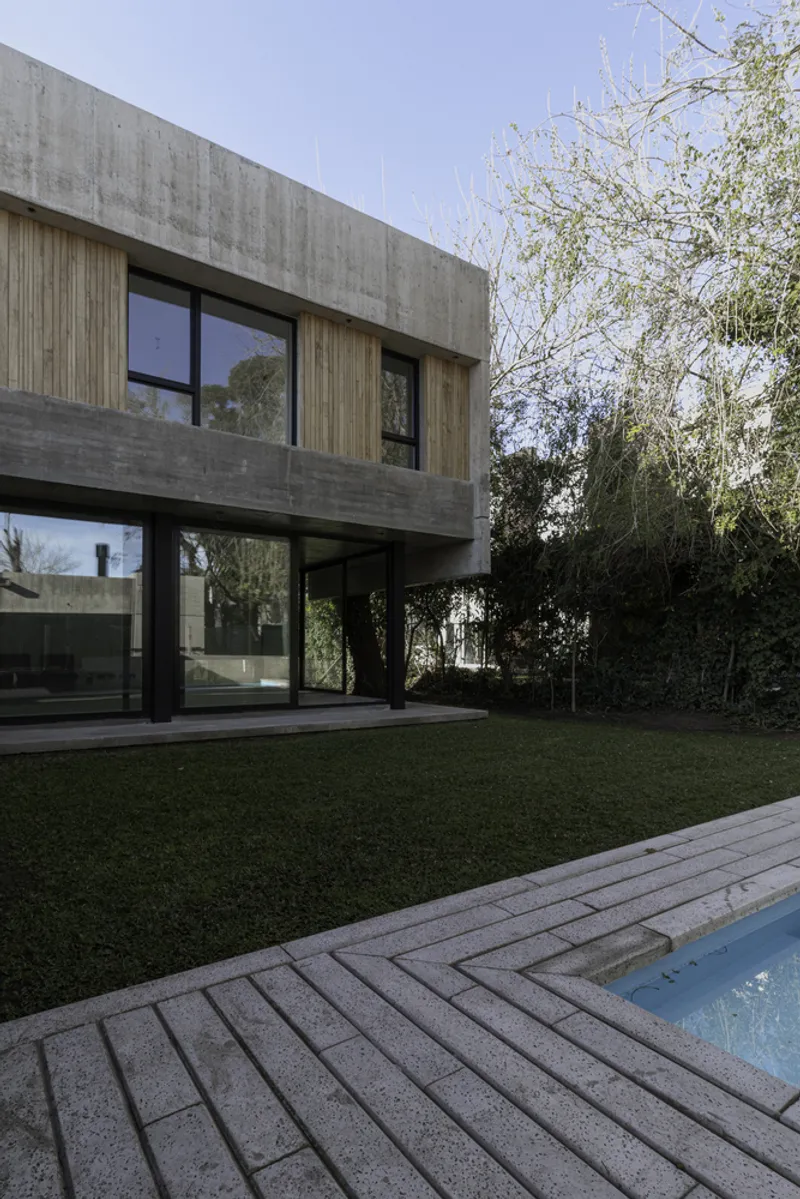
Step through a gate and the mood shifts. Each unit's private courtyard is a controlled landscape: swimming pool, lawn, mature trees, and views of the sky framed by flat concrete rooflines. The pools are positioned to catch sunlight reflected off the light-colored walls, an orientation that matters in a climate where warmth is precious.
One unit is elevated on black steel columns, freeing the ground plane and allowing the garden to flow beneath the living volume. A perforated screen mediates the boundary between courtyard and neighbor without closing it off entirely. The result is layered privacy: you can see the sky and the trees, sense the presence of the neighborhood, but still feel entirely at home in your own enclosure.
Thresholds and Circulation
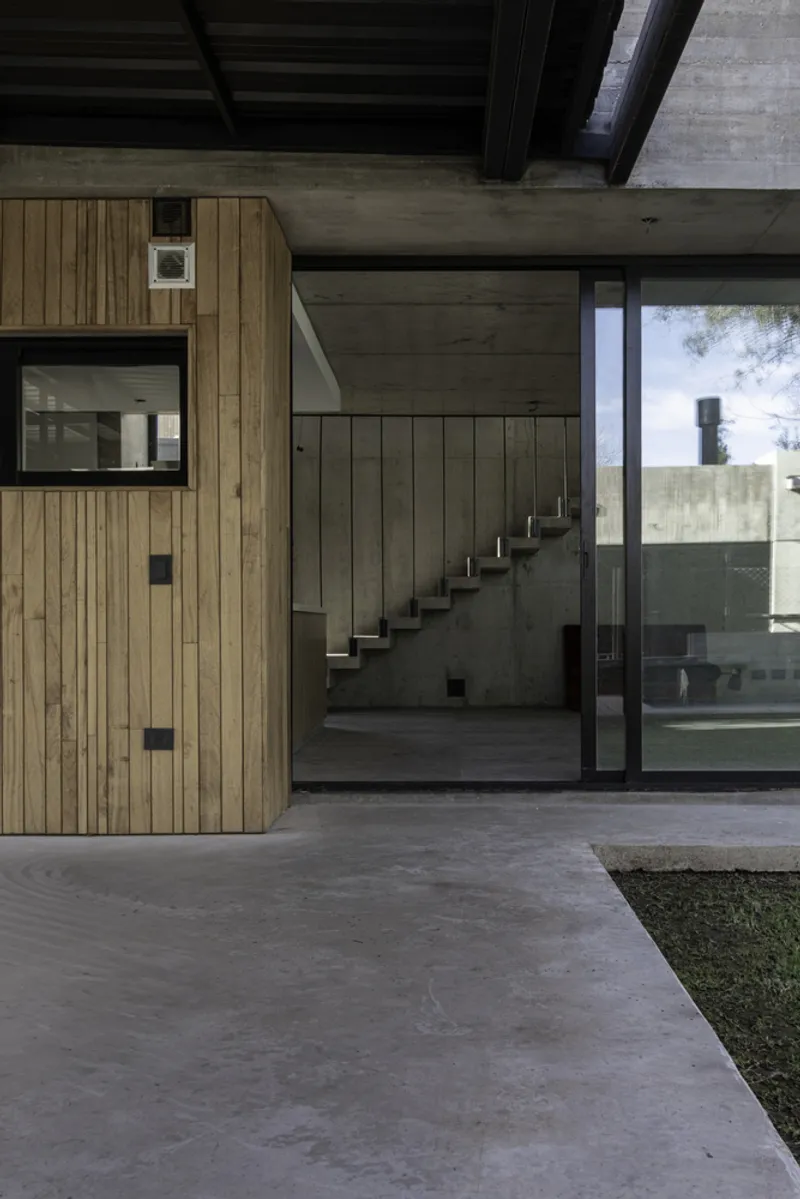

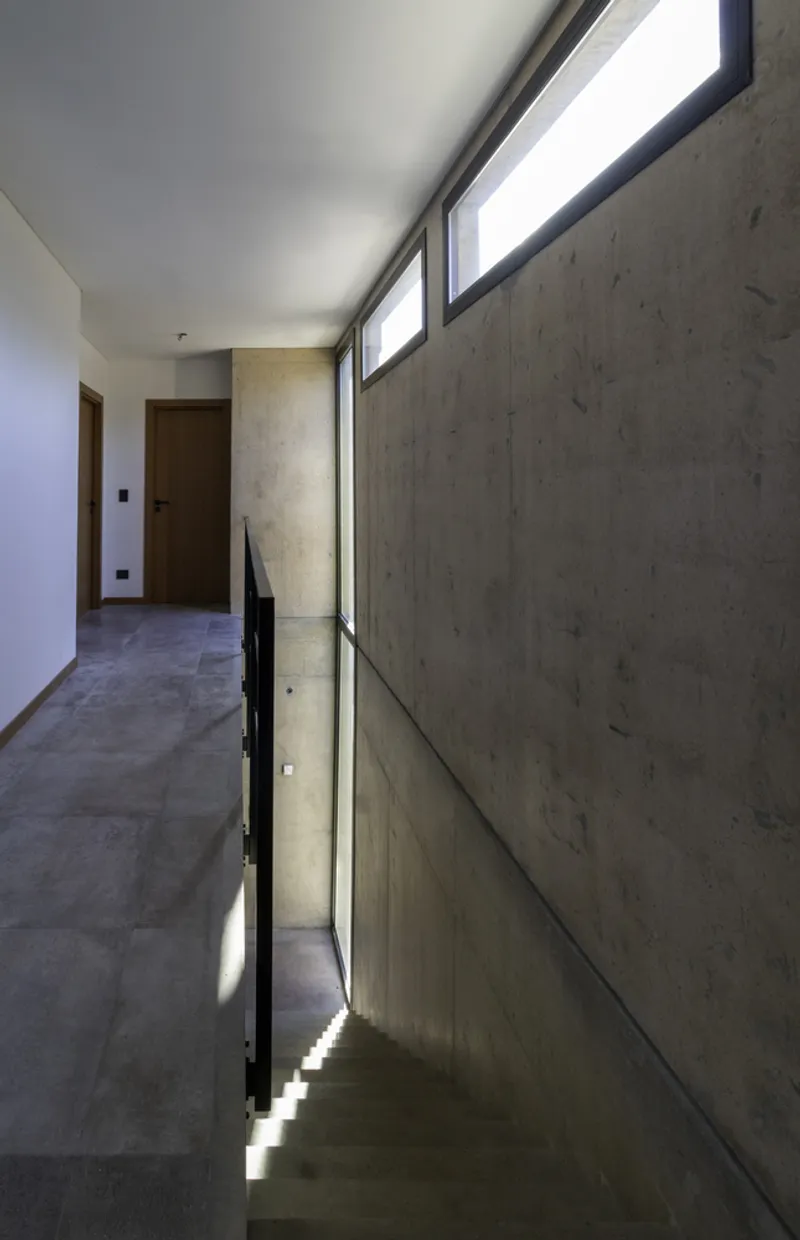
The entry sequences deserve attention. A glass-walled corridor in one unit reveals an internal concrete staircase wrapped in timber cladding, turning what could have been a utilitarian passage into a moment of transparency. You see the structure of the house before you even enter it. The staircase itself, with vertical steel rod balustrades and poured concrete treads, is detailed with the kind of care usually reserved for public buildings.
Upstairs, clerestory windows wash the hallway with light from above, and a glass balustrade lets you look back down into the stairwell. Circulation is never hidden here; it is celebrated as the connective tissue between private rooms and shared landscape.
Interiors: Timber Warmth Under Concrete Ceilings
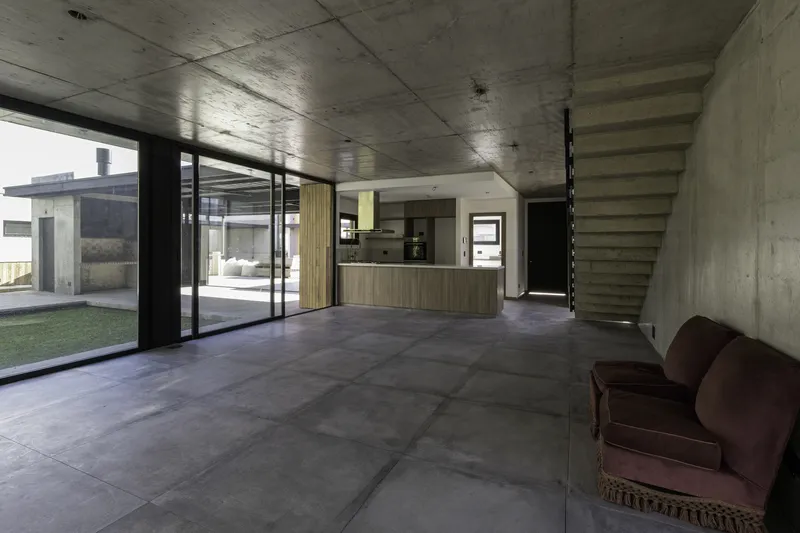

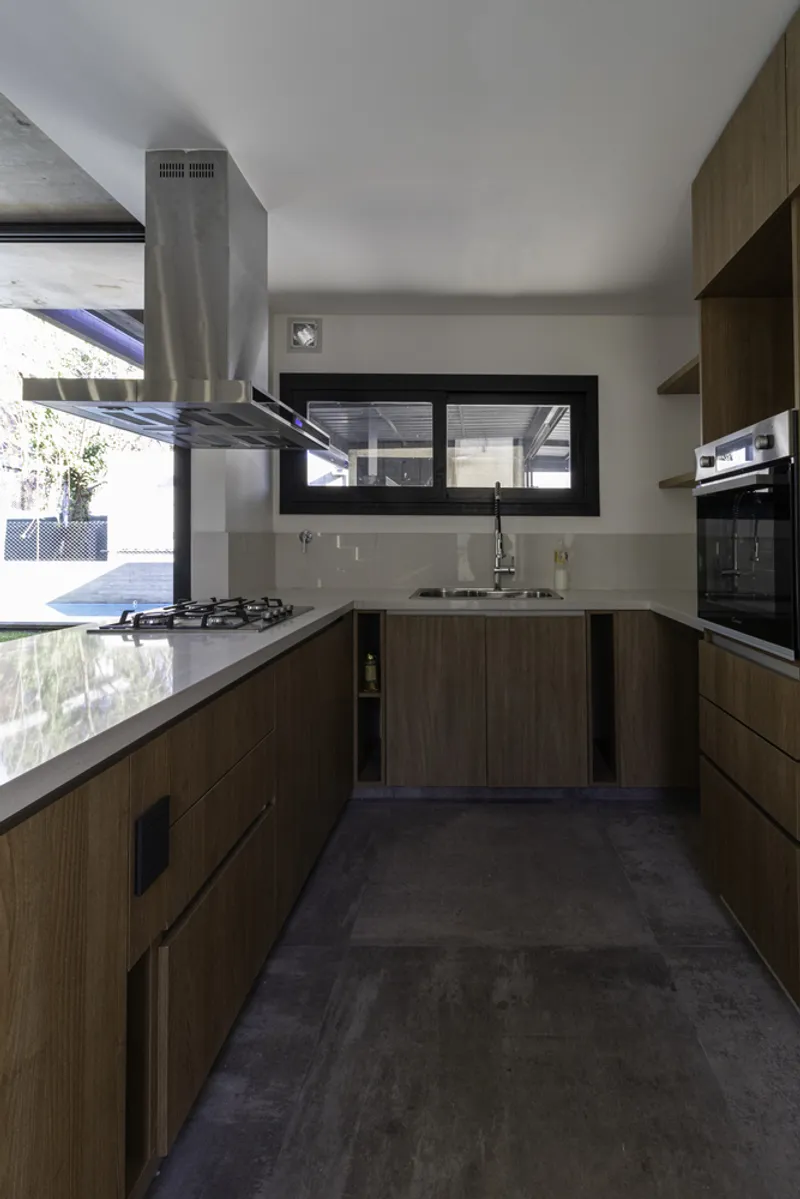
Inside, the palette inverts. Exposed concrete ceilings remain overhead, but kitchen islands and cabinetry are wrapped in timber veneer, introducing a warmth that offsets the rawness above. The open-plan living and kitchen areas are generous without being wasteful, their proportions tuned to the scale of family life rather than spectacle.
A galley kitchen in one unit pairs a stainless steel range hood with a horizontal window that turns cooking into a landscape experience. In another, glazed doors open directly from the kitchen island toward the courtyard, collapsing the distinction between indoor preparation and outdoor living. The detailing is restrained throughout: no ornament, just material honesty and good joints.
Bedrooms, Bathrooms, and the Details That Matter

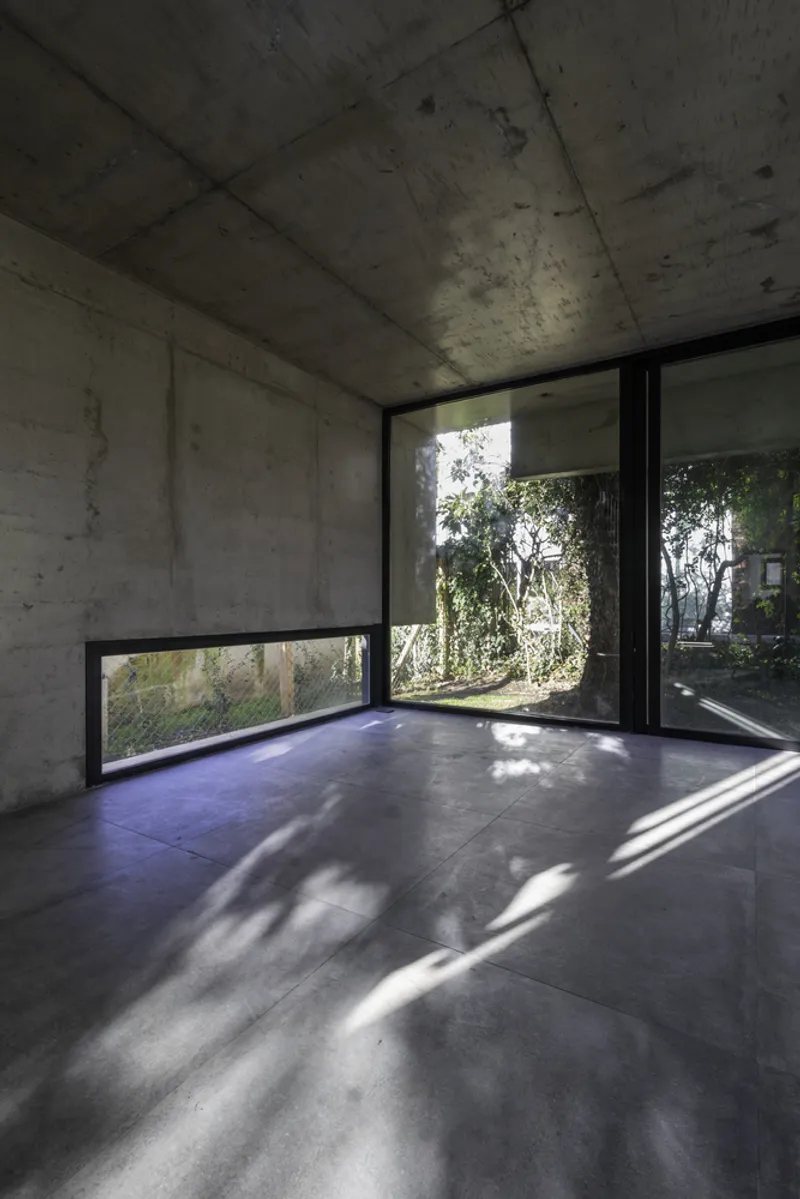
The bedrooms are compact and considered. A corner window in one room frames a single bare winter tree against the neighboring volume, a view that is deliberately composed rather than incidentally scenic. Sliding wardrobe doors sit flush with the walls, keeping the visual noise to a minimum.
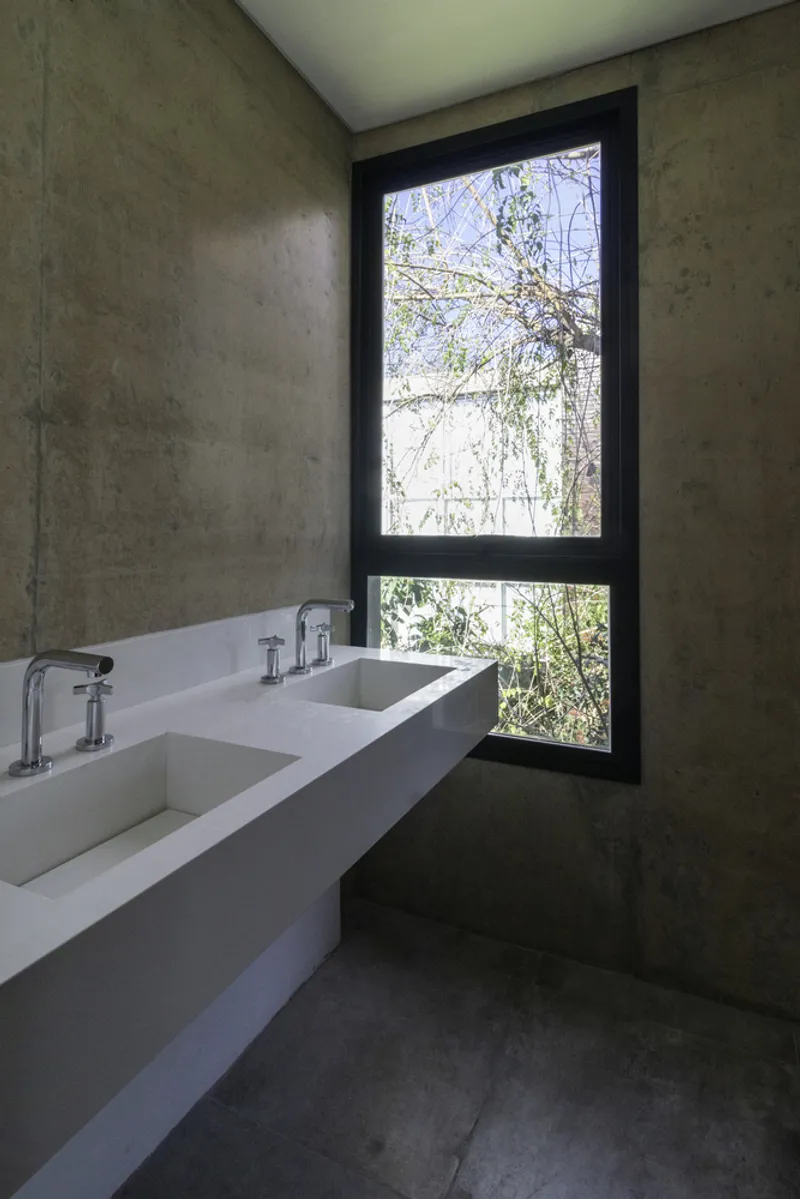
A concrete double vanity in the bathroom is paired with a narrow vertical window that captures tree branches as if in a scroll painting. These are not luxury gestures. They are evidence that the architects thought about every room with equal seriousness, not just the ones guests will see. Dappled sunlight in a secondary room, casting patterns through horizontal window slots, confirms the point.
Street Presence and Edge Conditions
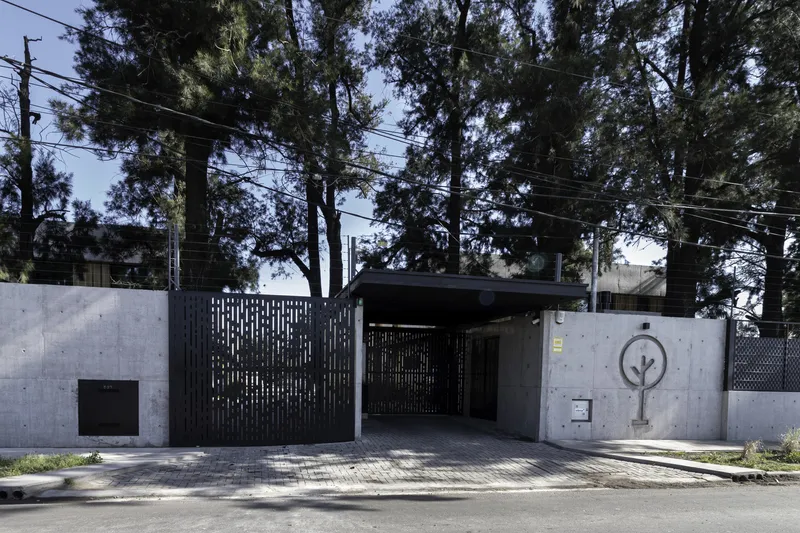


From the street, the neighborhood presents itself with quiet authority. Perforated black metal gates and concrete walls sit among tall evergreen trees, grounding the project in its Patagonian context without mimicking vernacular forms. The covered carport, a simple black steel roof between concrete walls, is honest about its purpose and well-proportioned in its execution.
At twilight, pine tree shadows fall across the concrete and timber facades, and the interplay of artificial light through the screening gives the whole ensemble a cinematic quality. The edge condition between neighborhood and forest is handled with restraint: no fences, no hedges, just a tonal shift from built to natural.
Plans and Drawings
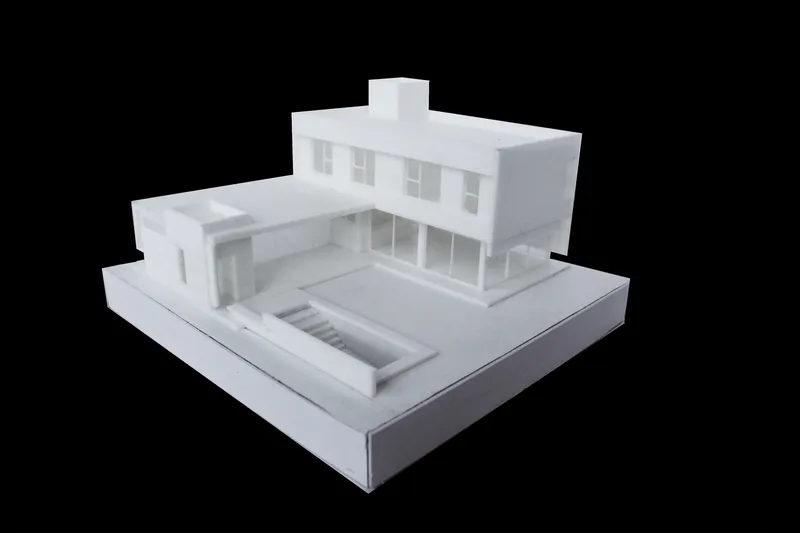
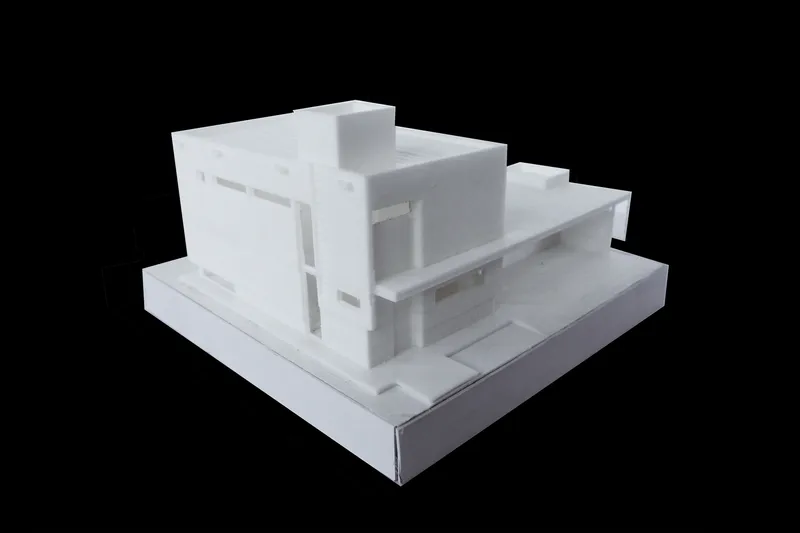
The physical models reveal the massing strategy with clarity. A two-story residence cantileveres a volume over the courtyard pool, establishing a dialogue between weight and lightness that the photographs confirm. From the opposite corner, the stepped massing becomes legible: each unit occupies a slightly different footprint, preventing the repetition that plagues most grouped housing. Glazed facades on the courtyard side contrast with the heavier, more opaque street elevations, confirming the dual personality at the heart of the design.
Why This Project Matters
Collective housing projects in Latin America too often default to either the gated compound model, all walls and security, or the open plan model that sacrifices privacy for density. The Coihues neighborhood avoids both traps. By investing in a shared street as a genuine communal space and then giving each unit its own generous, sheltered outdoor room, 0.7 Arquitectura demonstrates that density and intimacy are not opposites.
The material discipline is equally important. Board-formed concrete and timber cladding are neither cheap nor exotic in Patagonia, but using them this consistently across a multi-unit project, with this level of detailing, elevates the whole ensemble above the sum of its parts. The Coihues neighborhood is proof that thoughtful architecture at the scale of a few houses can produce something as coherent and compelling as any large public building.
Coihues Neighborhood by 0.7 Arquitectura, San Carlos de Bariloche, Argentina.
About the Studio
Share Your Own Work on uni.xyz
If projects like this are the kind of work you want to make, uni.xyz is a place to publish your own, find collaborators, and enter design competitions.


Popular Articles
Popular articles from the community


ETEH Reworks the Shared Spaces of São Domingos School in Brazil Around Timber, Color and Hanging Plants
At São Domingos School in Brazil, 436 m² of hall, refectory and library are recast with timber joinery, a yellow and blue code and trailing greenery.

David Ortega Stacks a Two-Story Mexico City Penthouse Around a Steel Stair and a Pergola-Shaded Roof Terrace
In Colonia Roma, a 300 m² penthouse uses oak joinery, a planted steel stair and a slatted roof pergola to make a new-build apartment feel like a house.

graciastudio Turns a Viewless Tijuana Lot Inward Around a Courtyard of Concrete, Timber and Trees
In Tijuana, Jorge Gracia's GA2 House stacks a timber-clad private floor over exposed concrete and replaces a missing view with a planted interior patio.


The Amber Palace Opera: A Geological Fiction Surfaces on Tallinn's Baltic Waterfront
Pierre Brillard reimagines a Baltic legend as a public landscape, opera house, and waterfront promenade rooted in Tallinn's coastal identity.

Similar Reads
You might also enjoy these articles

Cube Design Draws an Ecological Corridor Between Two Shenzhen Hills with the Nankai Building
Beside Shenzhen's container docks, the Nankai Building pairs stacked balconies with a climbing green screen to connect two hillsides across its height.

Praksis A and Studio Sted Bend a Red Timber Cabin Across the Granite of Norway's Southern Coast
On the southern Norwegian coast, a 105 m² cabin follows the rock on slender posts, pairing red cladding outside with pine, brick and plywood within.
David Ortega Stacks a Two-Story Mexico City Penthouse Around a Steel Stair and a Pergola-Shaded Roof Terrace
In Colonia Roma, a 300 m² penthouse uses oak joinery, a planted steel stair and a slatted roof pergola to make a new-build apartment feel like a house.

PARALELA and LB2 Thread a Public Walkway Through the Base of a Las Condes Residential Tower
In Las Condes, Santiago, the Hamlet Building gives its fenceless ground floor to a 70-metre wooded passage linking two streets and the metro.

Explore Architecture Competitions
Discover active competitions in this discipline

Challenge to reimagine the Iron Throne

Photograph architecture without architects

Illustrate the lost glory of Angkor Wat - Render Challenge

Design challenge to reuse E-waste
Comments (0)
Please login or sign up to add comments
No comments yet. Be the first to comment!