
Terrarium House by Unknown Surface Studio, Bangkok, Thailand
An inward-focused urban home with a central garden, blending glass, wood, and light to create a tranquil terrarium-like living environment.

Located in the dense urban fabric of Bangkok’s Ladprao district, the Terrarium House by Unknown Surface Studio redefines inward-looking residential architecture by transforming spatial constraints into opportunities for introspection, light, and nature. Built on a challenging ladle-shaped plot accessed through a narrow three-meter-wide entry, the house turns away from the surrounding city to create a serene, self-contained sanctuary.
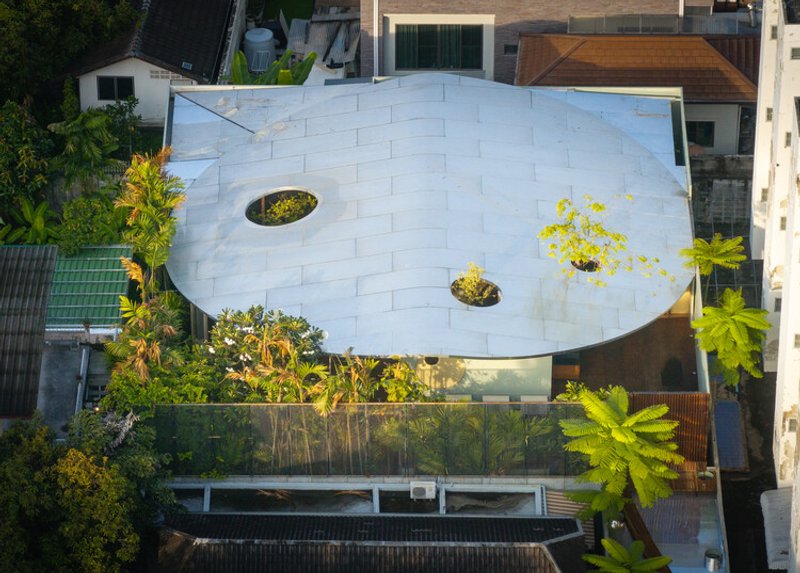
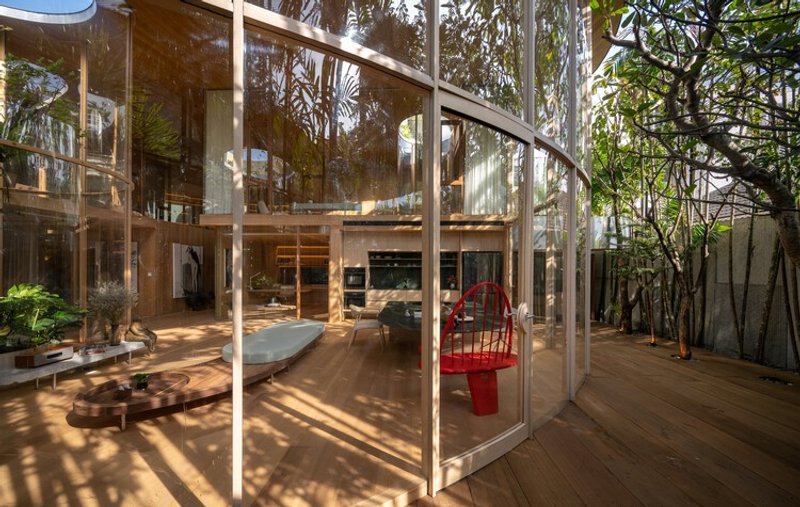
Rather than competing with the urban chaos, the design embraces isolation as a strategy. The house is conceived as a private world—an architectural retreat that shields its inhabitants while maintaining a deep connection to nature. This approach reflects a growing shift in contemporary urban housing, where inward orientation becomes a tool for achieving calm and privacy.
The journey into the house begins with a carefully choreographed “sequence of arrival.” A long, narrow entrance passage—lined with natural stone walls and covered by a continuous wooden ceiling—acts as a sensory buffer. This transitional tunnel gradually detaches visitors from the city’s noise and activity, preparing them for the tranquil environment within.
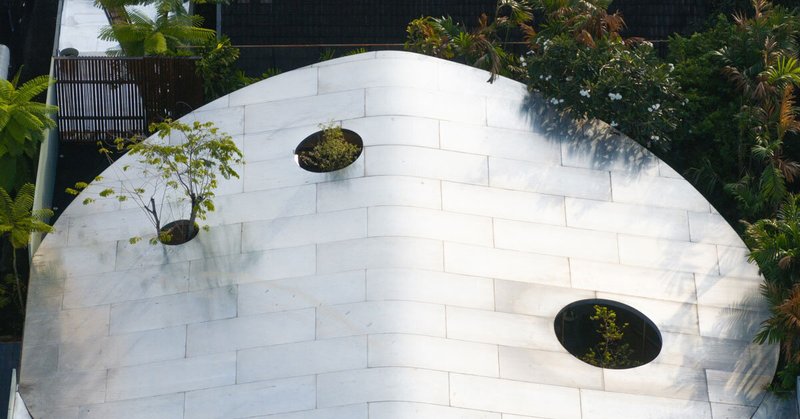
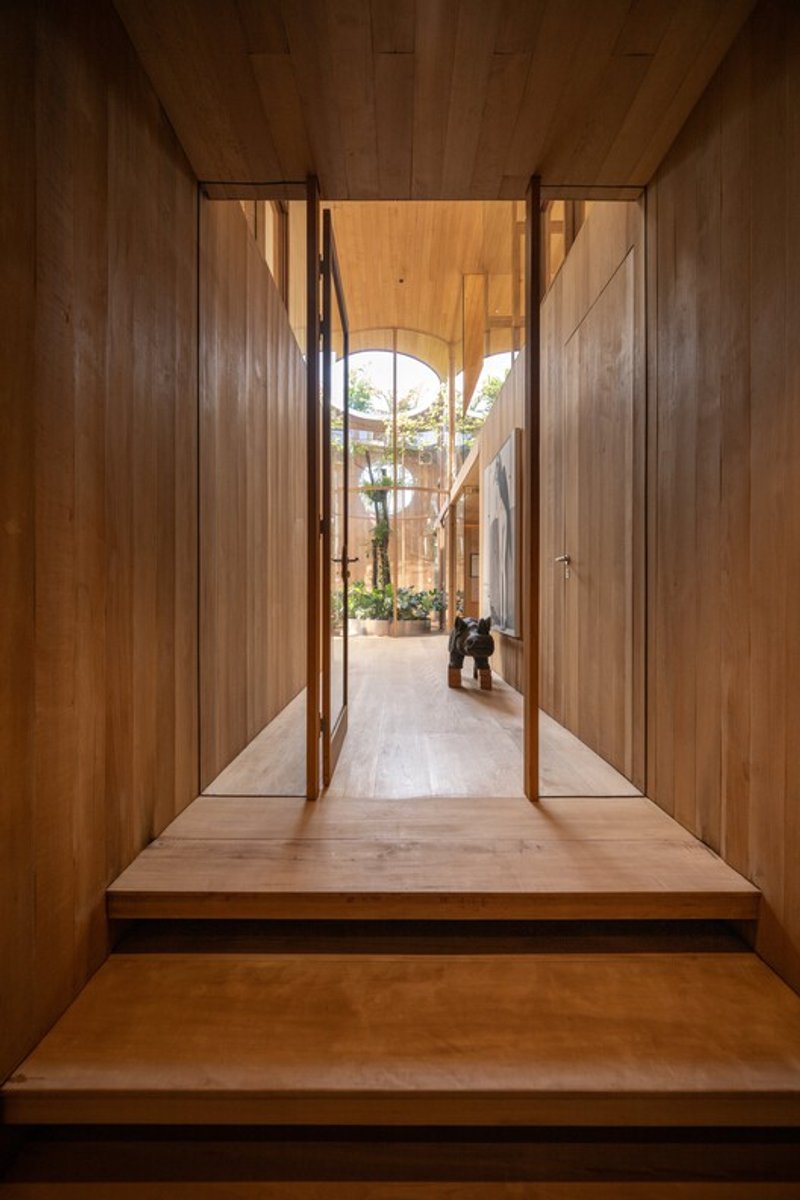
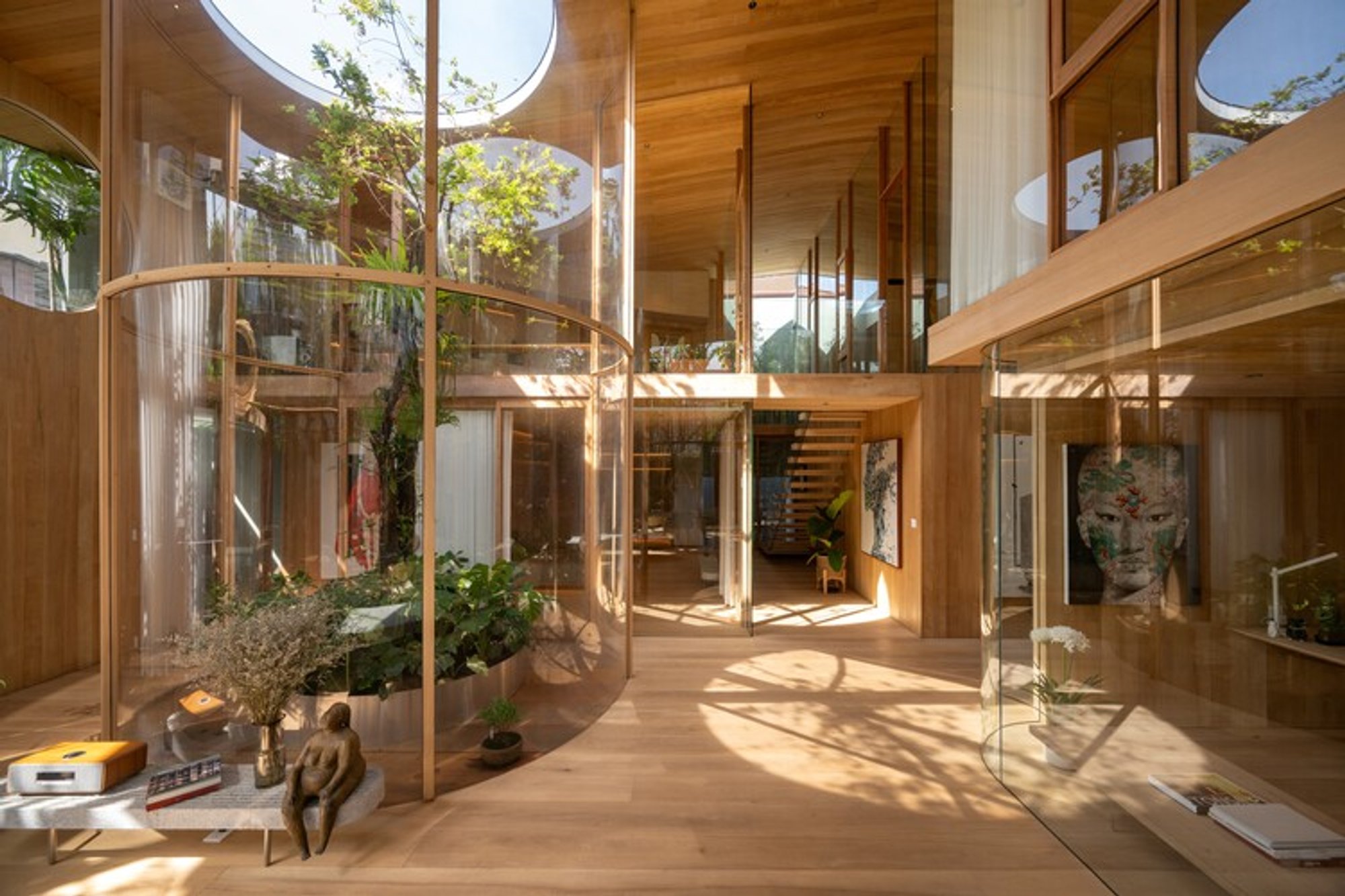
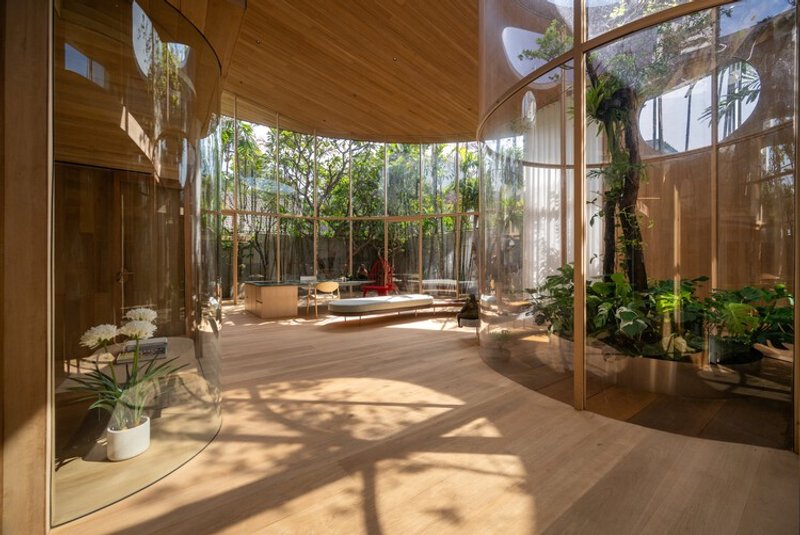
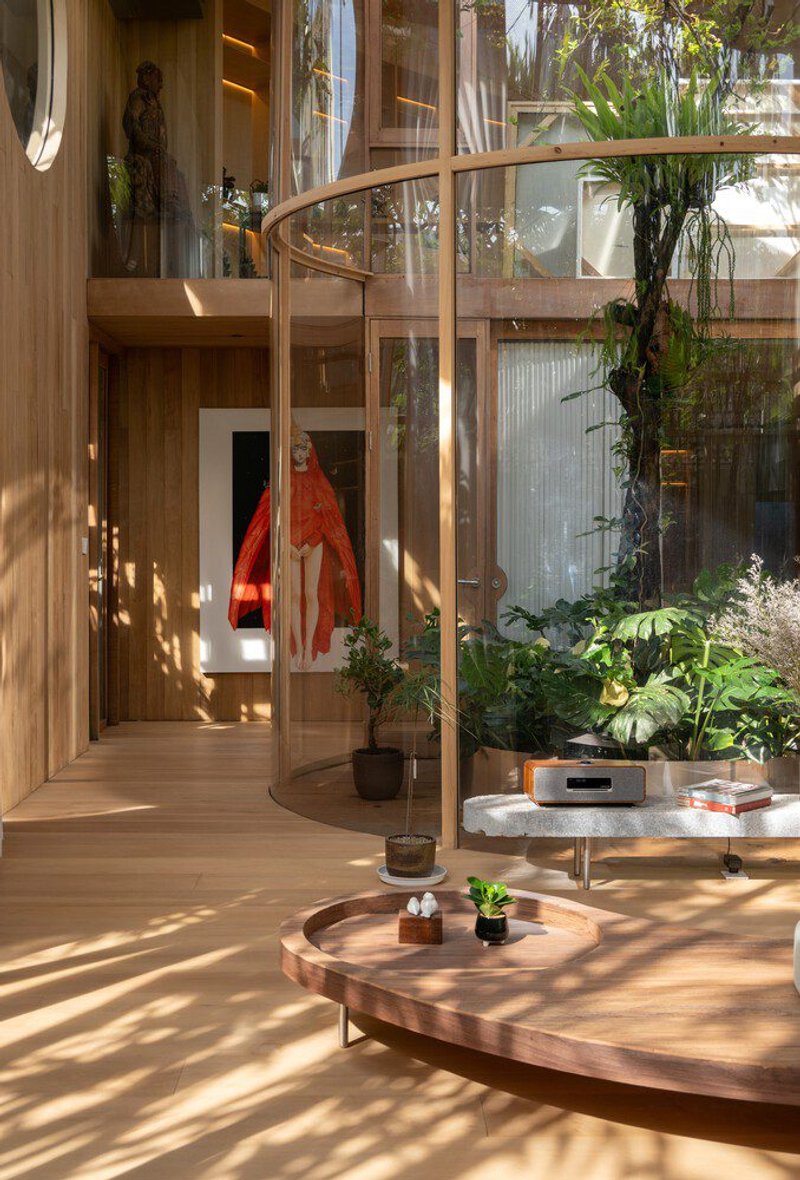
At the core of the house lies its defining feature: a central courtyard conceived as a living terrarium. Existing trees on the site are preserved and integrated into the design, around which the architecture wraps itself like a glass enclosure. This internal garden becomes the heart of the home, serving as a natural light well and a dynamic environmental system. Sunlight filters through layers of foliage, casting ever-changing shadows across the interiors and creating a poetic interplay of light and time.
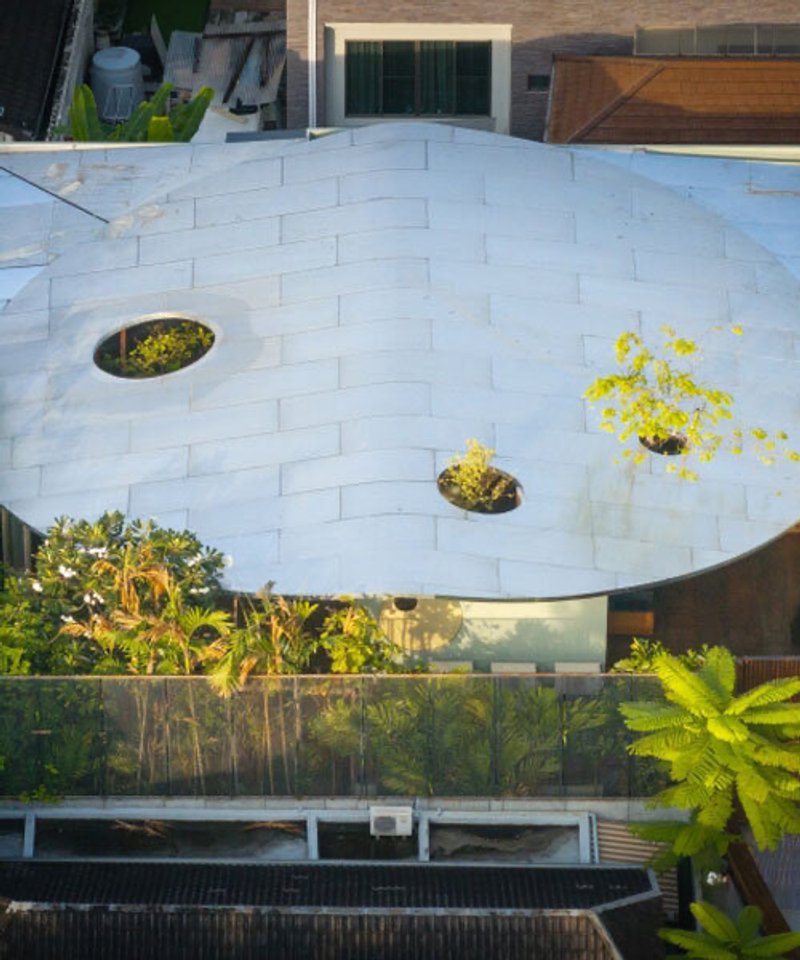
Despite being surrounded by neighboring buildings on all sides, the house achieves a remarkable sense of openness. A double-height living space and curved glass walls dissolve rigid boundaries, allowing visual continuity between levels and reinforcing the connection to the central garden. The absence of sharp corners enhances spatial fluidity, making the interior feel expansive and organic.
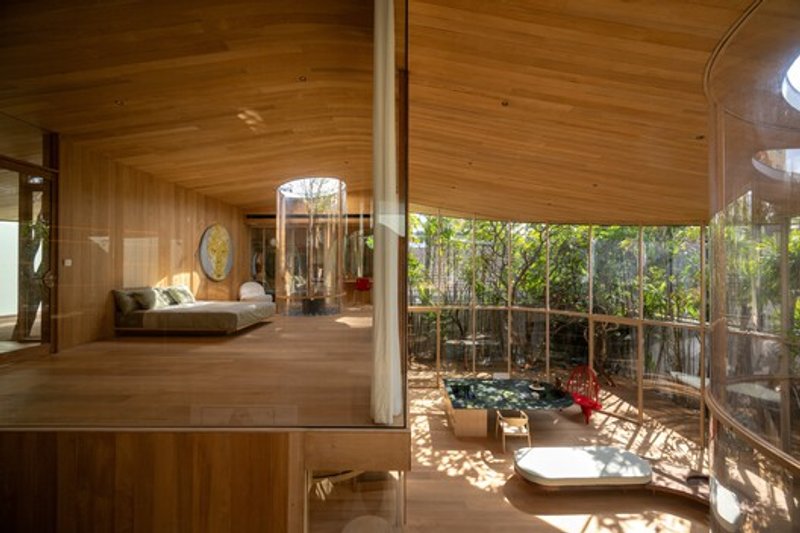
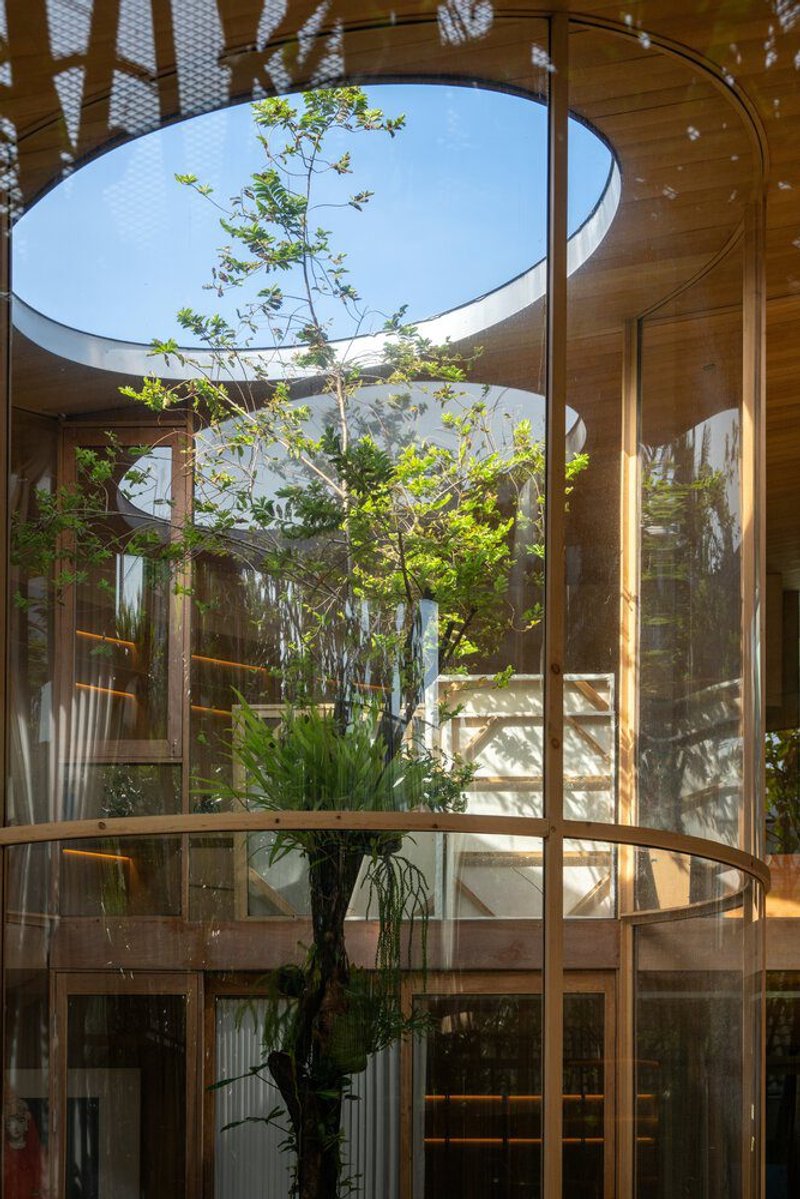
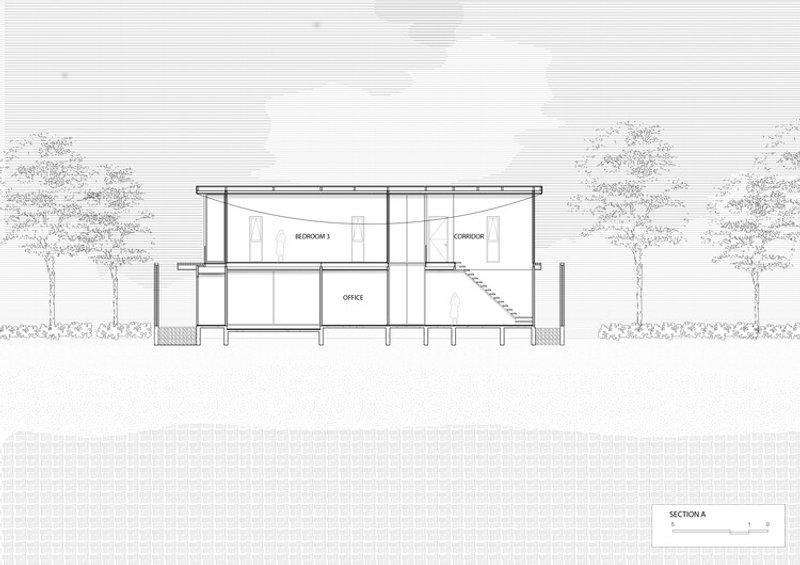
The upper floor is conceived as a private penthouse-like retreat, accommodating the master bedroom and an art collection. This level maintains a constant visual dialogue with the courtyard below, ensuring that nature remains present throughout the house. The layering of spaces creates a vertical continuity that strengthens the overall spatial experience.
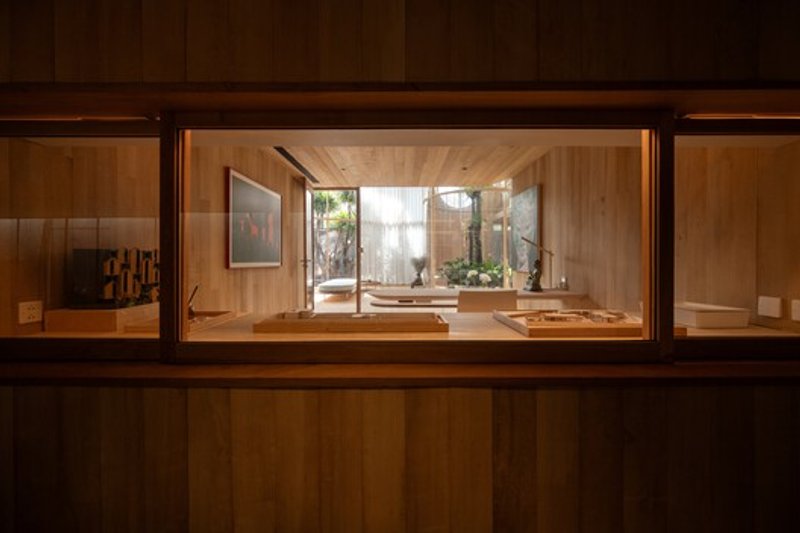
Materiality is central to the project’s identity. As the home of a master contractor, the house showcases exceptional craftsmanship through the use of seven different wood species. These were carefully treated and bleached to achieve a unified tone reminiscent of Hinoki cypress, resulting in a warm, cohesive interior palette. The tactile quality of wood is complemented by glass and steel, creating a balance between natural softness and structural precision.
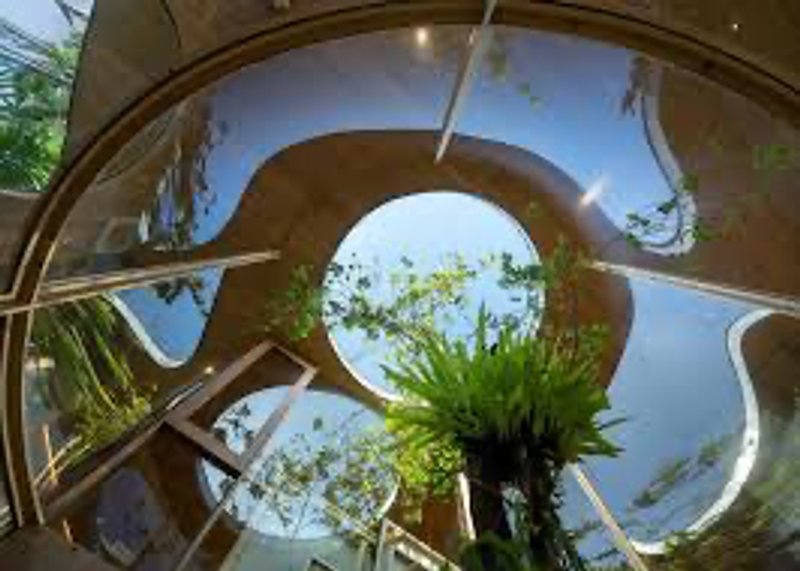
Structurally, the house adopts an innovative column-free system, relying on steel and Takian wood frames to support the roof. This approach not only enhances spatial openness but also expresses the honesty of construction, allowing materials to be appreciated in their raw form.
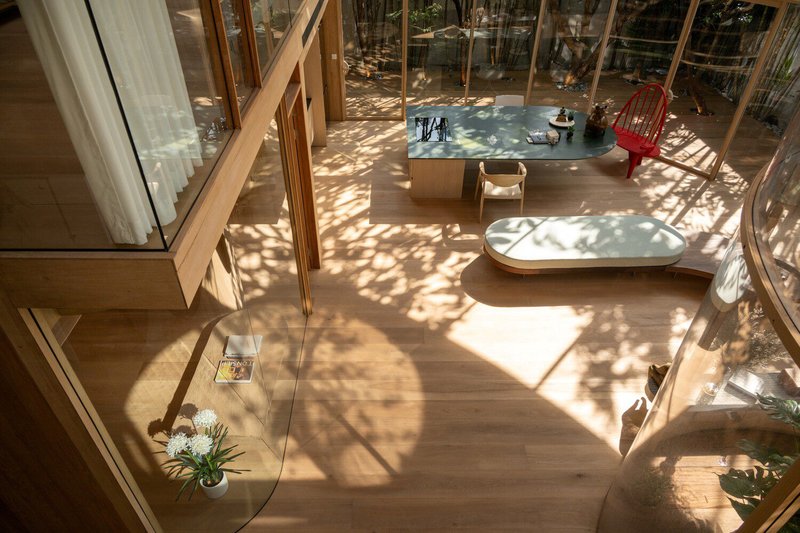
Ultimately, the Terrarium House is an exploration of architecture as an immersive environment—where nature is not an external feature but an integral part of daily life. By turning inward and embracing the concept of a living terrarium, the project creates a timeless oasis within the city. It demonstrates how thoughtful design can transform even the most constrained urban sites into spaces of calm, beauty, and sensory richness.
All the Photographs are works of Rungkit Charoenwat




Popular Articles
Popular articles from the community

Louis Malle Cinema: A Limestone Cultural Landmark Revitalizing Community Life in Prayssac
Limestone cinema extension with public forecourt, blending heritage and modern design to create flexible cultural spaces and strengthen community interaction.
An Miên Lumière Cafe by xưởng xép, Ho Chi Minh City, Vietnam
An industrial-inspired café where layered steel and warm light create a dynamic, immersive environment shaped by reflection, depth, and perception.
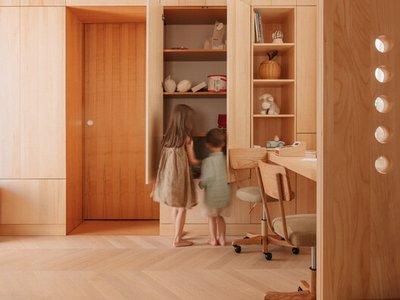
Treehouse Apartment: A Warm Timber Interior Blending Craft, Play, and Contemporary Living
Warm timber apartment with integrated treehouse, combining natural materials, craftsmanship, and playful design to create a flexible, family-oriented living environment.
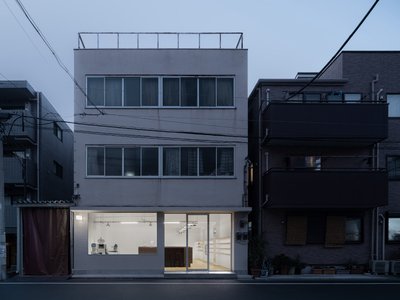
Atelier Macri Concept Store Interior Design by CASE-REAL
Atelier Macri store features a "ko" counter, walnut wood details, cork displays, blending retail, gallery, and seamless customer experiences.
Similar Reads
You might also enjoy these articles

Top 15 Architecture Competitions to Enter in 2026
From student-friendly idea competitions to prestigious international awards, here are the best architecture competitions open for entries in 2026. Updated regularly.

DIY & Engineering in Computational Design : Enter the BeeGraphy Design Awards
Showcase Your Creativity with Computational Design and Open Source Projects
Innovative Design Solutions: Award-Winning Projects from Recent Architecture Competitions
Exploring award-winning architectural projects shaping the future of design, sustainability, and community.


Explore Architecture Competitions
Discover active competitions in this discipline




The International Standard for Design Portfolios


The Global Benchmark for Architecture Dissertation Awards


The Global Benchmark for Graduation Excellence


Challenge to reimagine the Iron Throne
Comments (0)
Please login or sign up to add comments
No comments yet. Be the first to comment!