

Teshima Factory by Schemata Architects + Jo Nagasaka
Former ironworks transformed into brewery and cafeteria, blending industrial heritage, recycled materials, agritourism vision, and sustainable community revitalization.


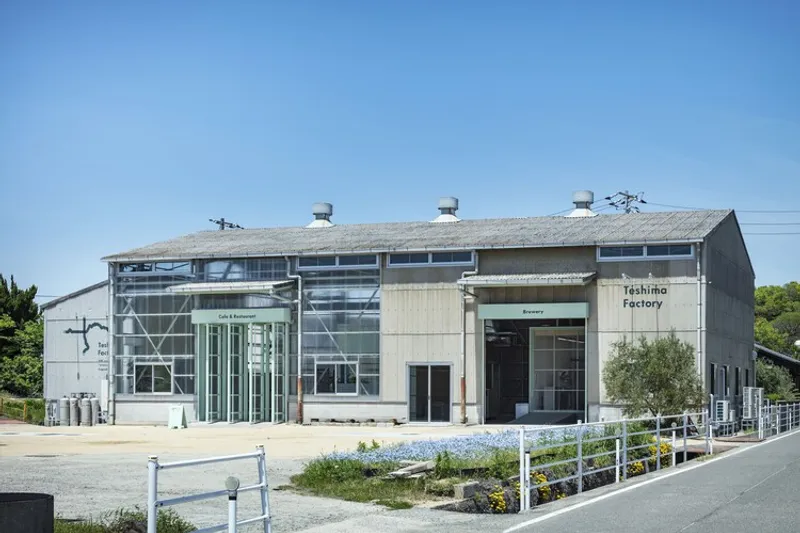
Teshima Factory is a powerful example of adaptive reuse architecture in Japan, transforming a former ironworks building near Ieura Port into a hybrid cafeteria and food production facility. Designed by Schemata Architects and Jo Nagasaka, the 365 m² project reimagines industrial heritage as a catalyst for ecological regeneration and community revitalization.
Located on Teshima Island in the Seto Inland Sea, the site carries a complex history. Once stigmatized as “Garbage Island” due to illegal industrial dumping, Teshima has gradually reclaimed its identity through environmental restoration, art initiatives, and sustainable agriculture. The factory’s rebirth aligns with this broader cultural and ecological transformation.
Architecture as a Tool for Rural Regeneration
Teshima’s remote geography once contributed to environmental neglect. Today, that same isolation supports a renewed focus on local self-sufficiency. Traditional terraced rice farming, practiced without pesticides, channels fresh mountain water into the sea, nourishing seaweed ecosystems and strengthening local fisheries. This integrated cycle of agriculture and fishing represents a model of circular sustainability.
However, an aging population has threatened the continuity of these practices. The project operator aims to revive agricultural production, promote island-grown specialties, and establish a new model of agritourism in Japan. Teshima Factory serves as the first architectural step in this long-term revitalization strategy.
Programmatic Division: Factory and Cafeteria
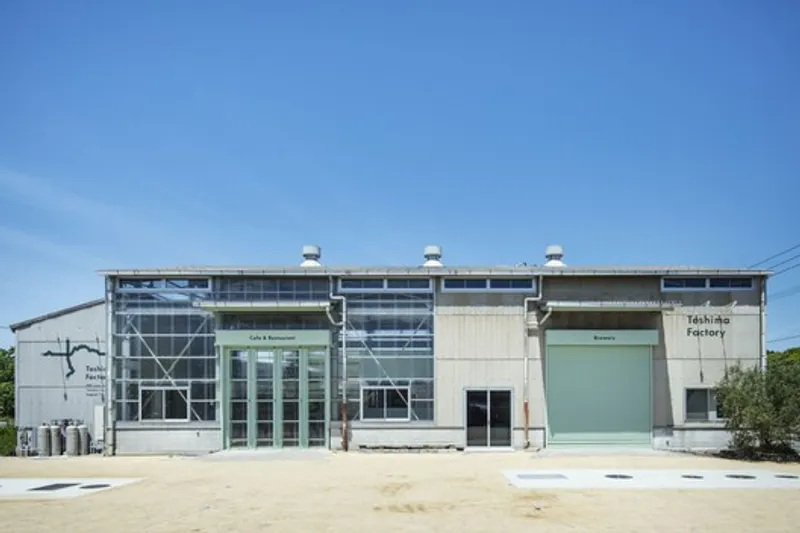
The original ironworks structure was carefully divided into two distinct but symmetrical halves:
- Factory/Brewery Zone: Retains the original slate roof to provide shade and preserve industrial character.
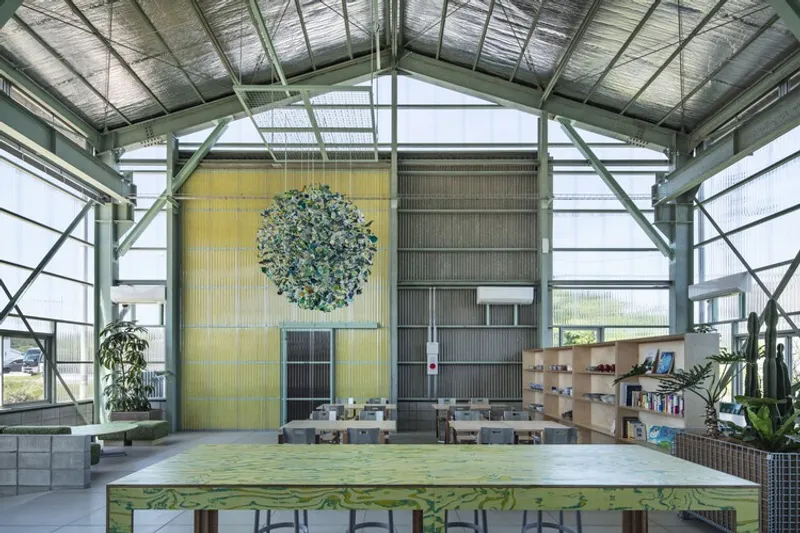
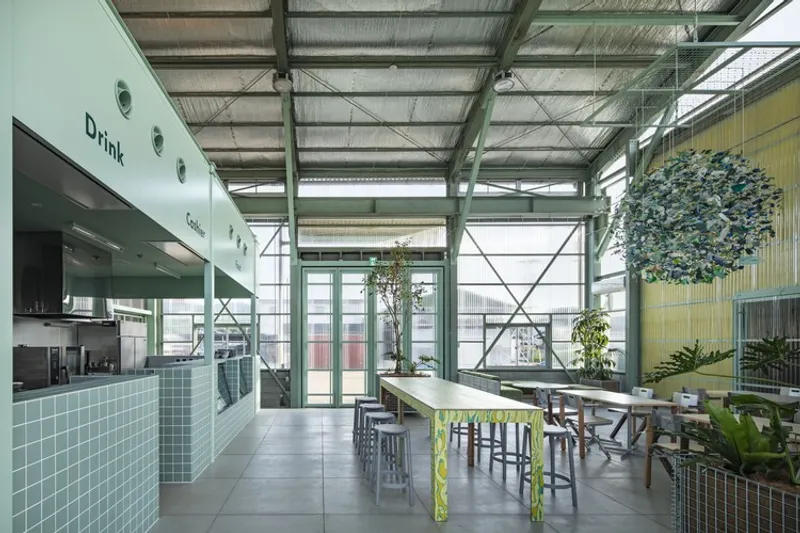
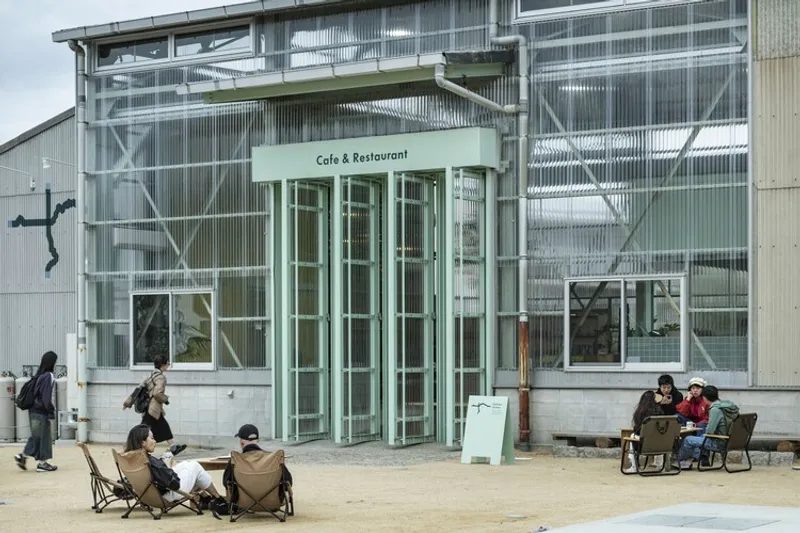
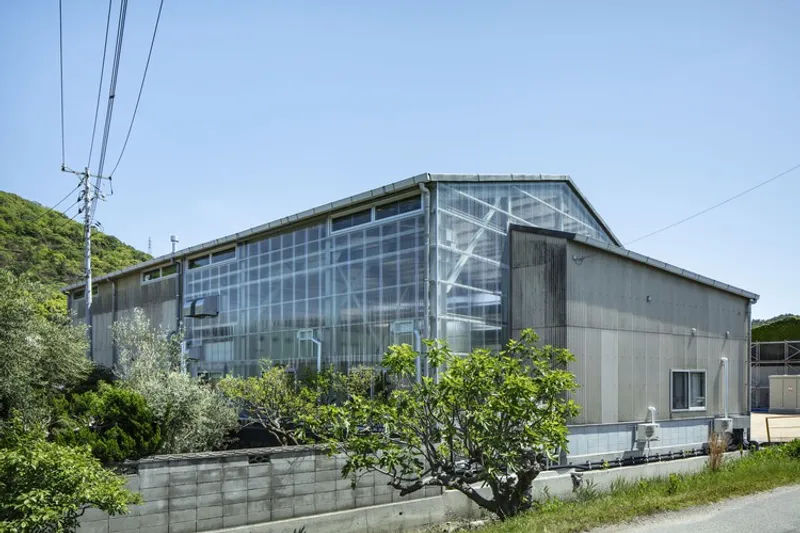
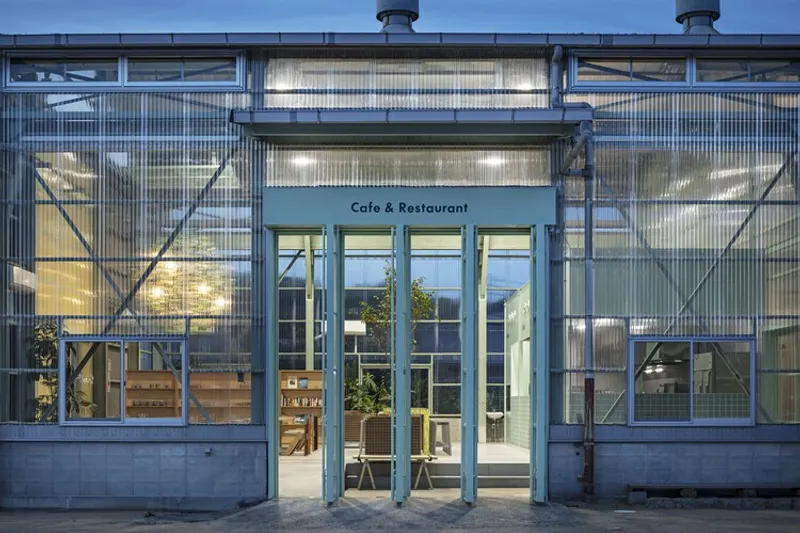
- Cafeteria Zone: Introduces translucent corrugated polycarbonate panels, allowing abundant natural light into the dining space.
Organized around the building’s central axis and original symmetrical entrance, the twin volumes create a balanced architectural composition, reflecting both production and hospitality.
This dual program demonstrates how industrial conversion projects can support both economic sustainability and community engagement.

Material Reuse and Environmental Consciousness
The interior design draws inspiration from the exposed steel frame of the original structure, maintaining raw authenticity while introducing refined contemporary details.
Notable sustainable elements include:
- Spherical pendant lights crafted from recycled marine plastic waste collected from the ocean
- Custom chairs developed collaboratively between Dutch artist Sander Wassink and local islanders
- Strategic daylighting to reduce artificial lighting needs
These gestures reinforce the project’s commitment to environmental awareness and circular design principles.
A New Social Hub for Teshima Island
Beyond its architectural qualities, Teshima Factory functions as a social and cultural gathering space. Islanders and visitors come together to enjoy locally sourced cuisine, strengthening connections between agriculture, tourism, and community life.
By merging restaurant design, food production, and heritage preservation, the project demonstrates how architecture can actively participate in regional recovery.


A Model for Sustainable Adaptive Reuse in Japan
Teshima Factory stands as a benchmark for sustainable industrial renovation, rural revitalization architecture, and community-centered design in Japan. Through thoughtful reuse, material innovation, and climate-responsive strategies, Schemata Architects and Jo Nagasaka have created a space that honors the island’s past while shaping a resilient future.


All the photographs are works of
Kenta Hasegawa (OFP)


Popular Articles
Popular articles from the community


U.GA Architects Wraps an Oval Rooftop Pool in Curved Board-Formed Concrete on Busan's Jeollidan-gil
In Busan's Jeonpo-dong, a 454 m² mixed-use block stacks a neighborhood facility, guest rooms and an oval rooftop pool inside spiraling concrete walls.

Jaramillo Van Sluys Arquitectura and Urbanismo Turn a Demolished Registry Lot in Quito into an Orchard Plaza
In Quito's Centro Histórico, a 2,800 m² plaza exposes the San Agustín convent wall and redraws its lost Augustinian orchard in volcanic stone.

longwave studio Reorganizes a 112 m² Tainan Apartment Around the Daily Routines of a Family and Two Cats
In Tainan, Taiwan, birch plywood, rust-red furniture and a freestanding plaster wall link arrival, storage, work and family life in one apartment.

Cube Design Draws an Ecological Corridor Between Two Shenzhen Hills with the Nankai Building
Beside Shenzhen's container docks, the Nankai Building pairs stacked balconies with a climbing green screen to connect two hillsides across its height.

Similar Reads
You might also enjoy these articles

Gil Mello Arquitetura Tilts a Single Roof Toward the Waterfalls on a Plateau Above Aiuruoca, Brazil
In Aiuruoca, Minas Gerais, a 200 m² house of local labor and reclaimed poles pairs a low valley veranda with a tall mountain one.
U.GA Architects Wraps an Oval Rooftop Pool in Curved Board-Formed Concrete on Busan's Jeollidan-gil
In Busan's Jeonpo-dong, a 454 m² mixed-use block stacks a neighborhood facility, guest rooms and an oval rooftop pool inside spiraling concrete walls.

Felipe Hess Arquitetos Turns a Blind Stone Wall to the Street and Opens a Brazilian House onto a Courtyard and Canal
A canal-front house in Brazil hides behind painted stone and planting, then opens to an olive-tree courtyard, a reed-ceilinged porch and a curving pool.

David Macias Steps a Doorless Stone and Plaster House Down a Tropical Colombian Hillside
In the humid hills of Colombia, Threshold House replaces the front door with an open void and terraces its 850 m² down the slope instead of fighting it.

Explore Architecture Competitions
Discover active competitions in this discipline

Challenge to reimagine the Iron Throne

Photograph architecture without architects

Illustrate the lost glory of Angkor Wat - Render Challenge

Design challenge to reuse E-waste
Comments (0)
Please login or sign up to add comments
No comments yet. Be the first to comment!