
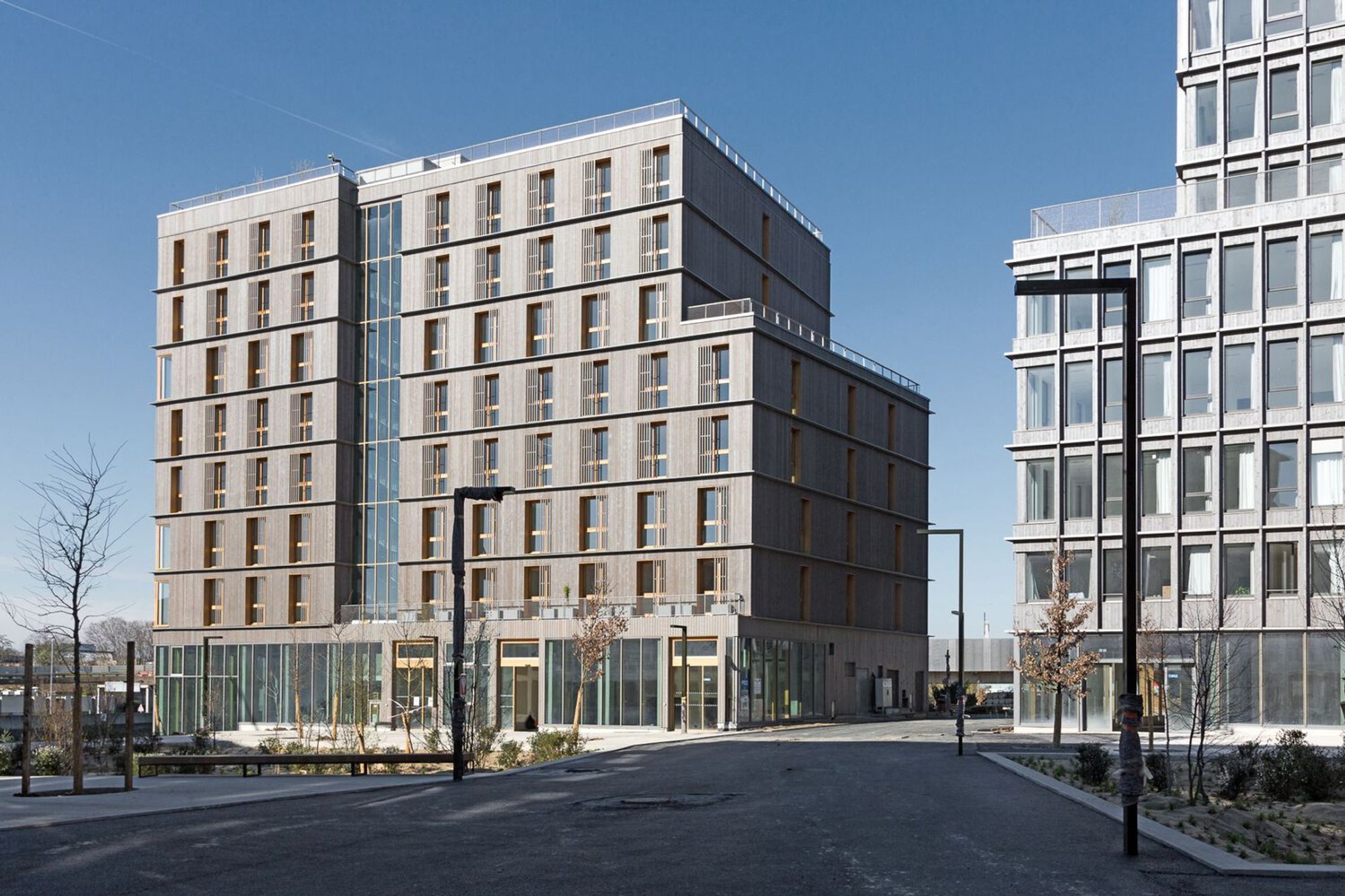
The Athletes' Village – PE2 Student Housing by EGA Erik Giudice Architects: Modular, Sustainable, and Future-Ready Living in L'Île-Saint-Denis
The Athletes’ Village PE2 features modular wooden construction, flexible post-Olympic student housing, sustainable design, and adaptive spaces supporting community, comfort, and low-carbon living.

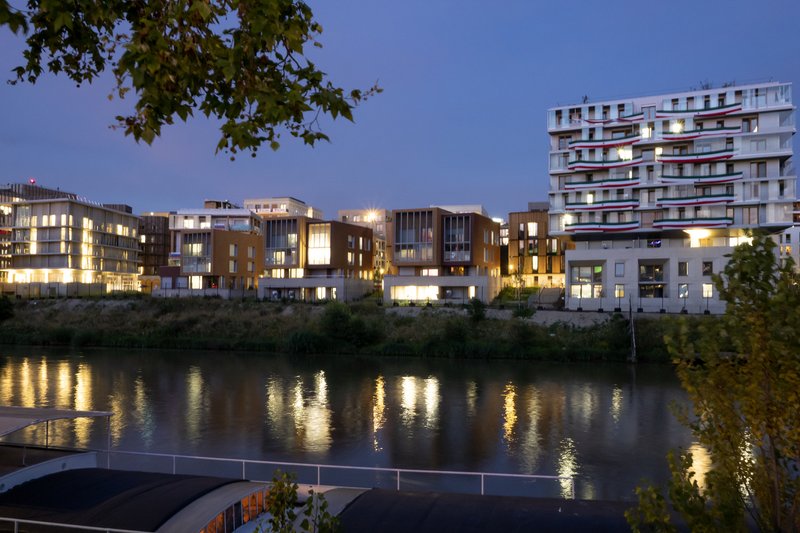
The Athletes’ Village – PE2 Student Housing, designed by EGA Erik Giudice Architects, stands as a pioneering example of modular architecture, circular construction, and adaptive urban transformation in L’Île-Saint-Denis, France. Completed in 2024, the 3,941 m² building is part of the Olympic Village development, where EGA not only designed the PE2 building but also led the coordination of the surrounding PE district. This dual role demonstrates the firm’s commitment to delivering a cohesive architectural and urban vision rooted in sustainability and long-term community value.
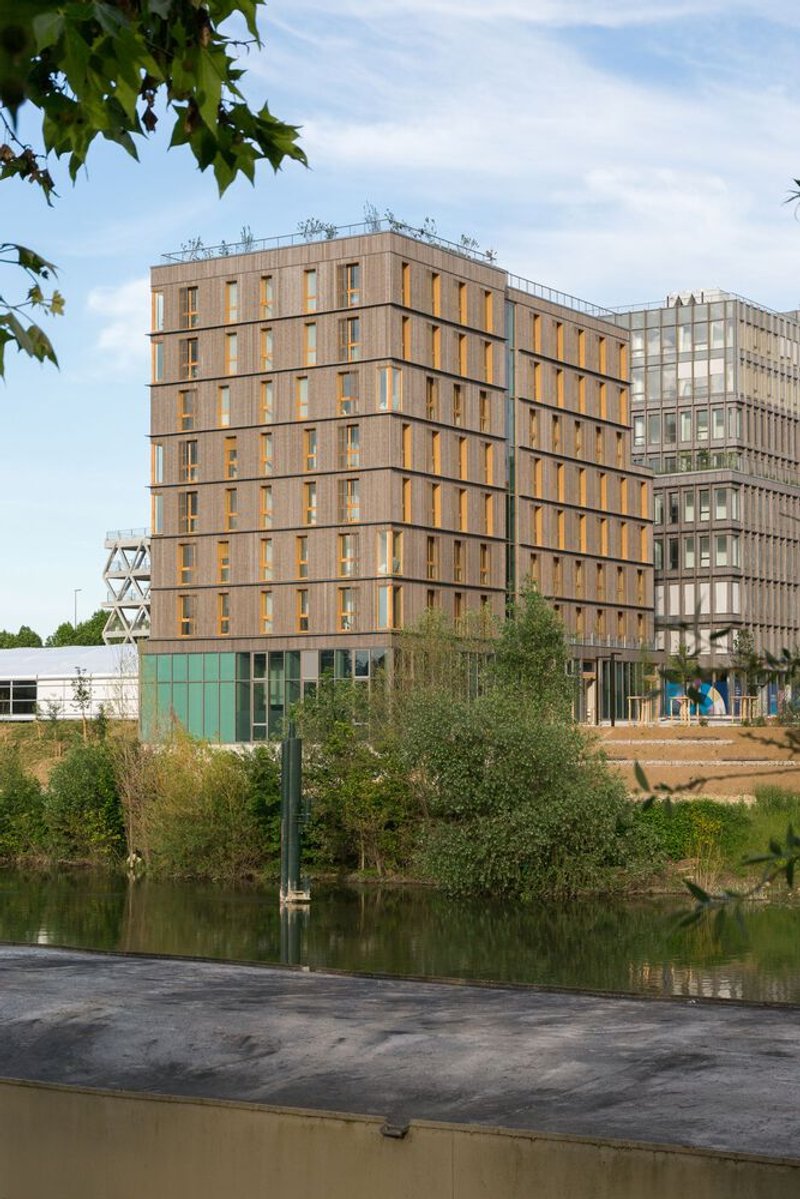
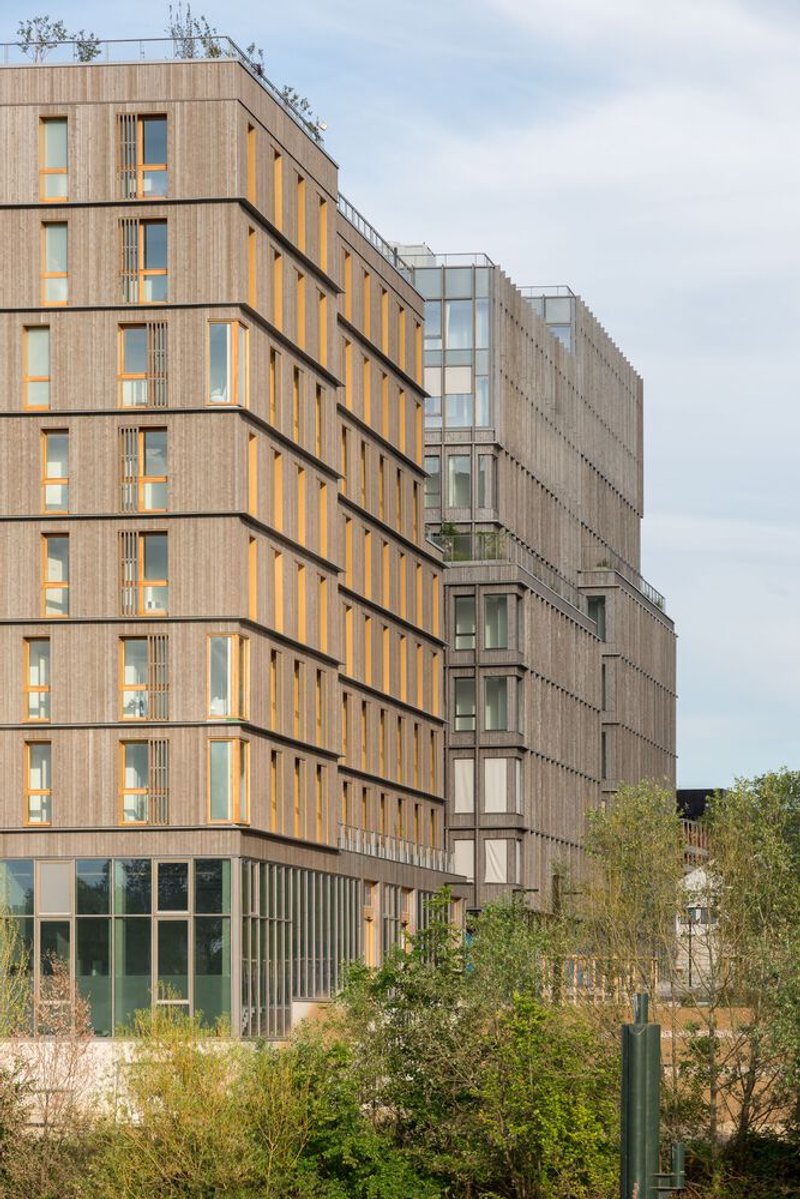
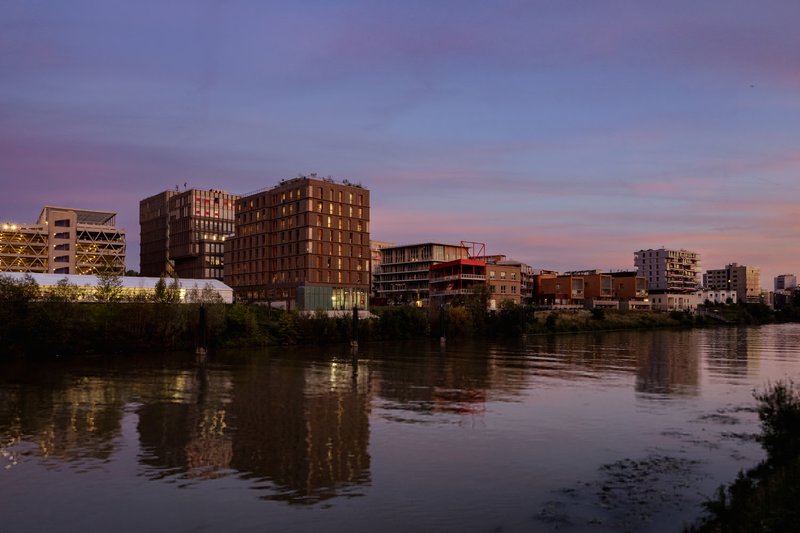
A Dual-Purpose Architectural Model for the Paris 2024 Olympics and Beyond
During the 2024 Olympic Games, the PE2 building accommodates 266 beds and houses essential operations of the Olympic Committee on the ground floor. Its design reflects a forward-looking strategy: spaces serving athletes during the Olympics are seamlessly transitionable to student housing and commercial functions after the event.
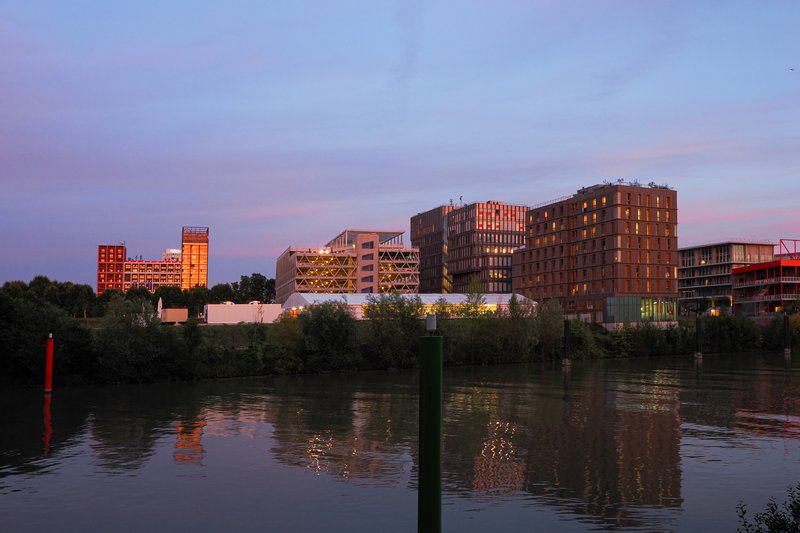
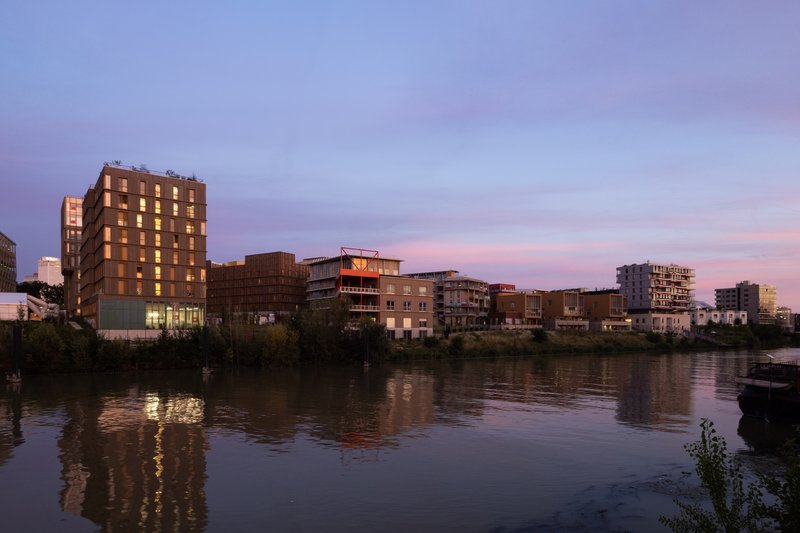
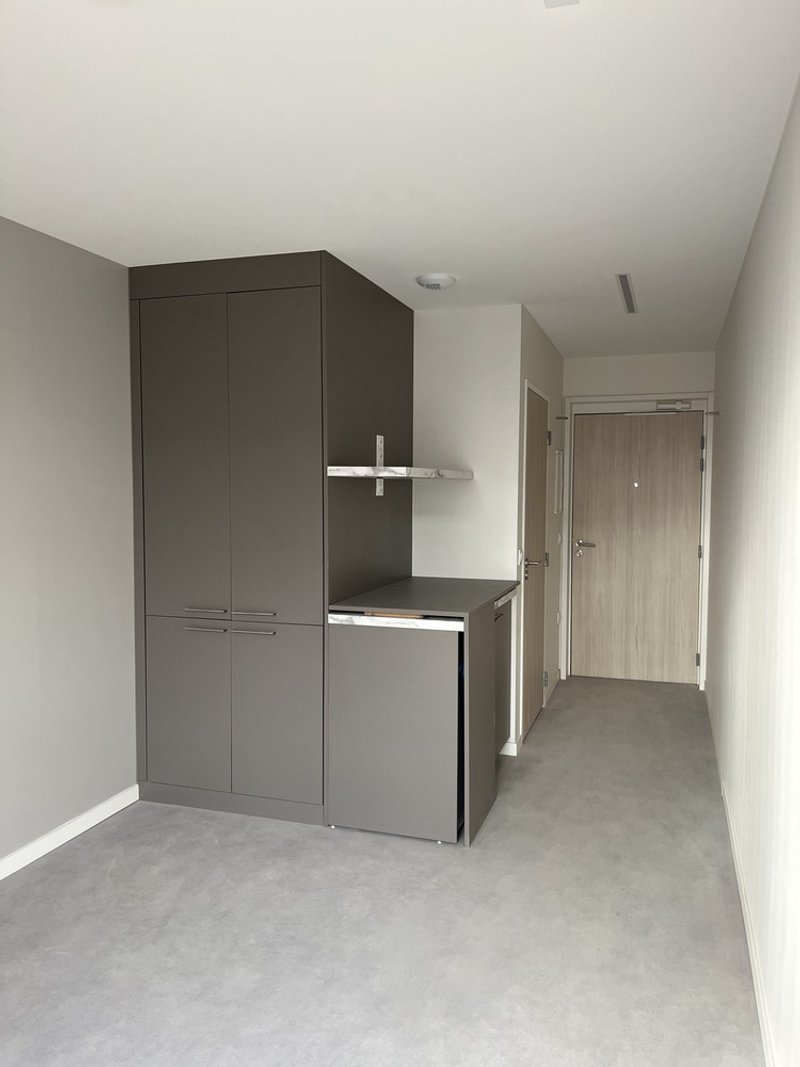
Post-games, the ground floor evolves into generous communal spaces, fostering social interaction and student well-being while also hosting commercial activities that contribute to a vibrant, mixed-use environment. Across its seven floors, the building offers 134 compact studios and eight two-room apartments, each designed to maximize comfort, efficiency, and natural light. These residences emphasize functionality and inclusivity, supporting a strong sense of community among students.
Sustainable Modular Construction with a Circular Vision
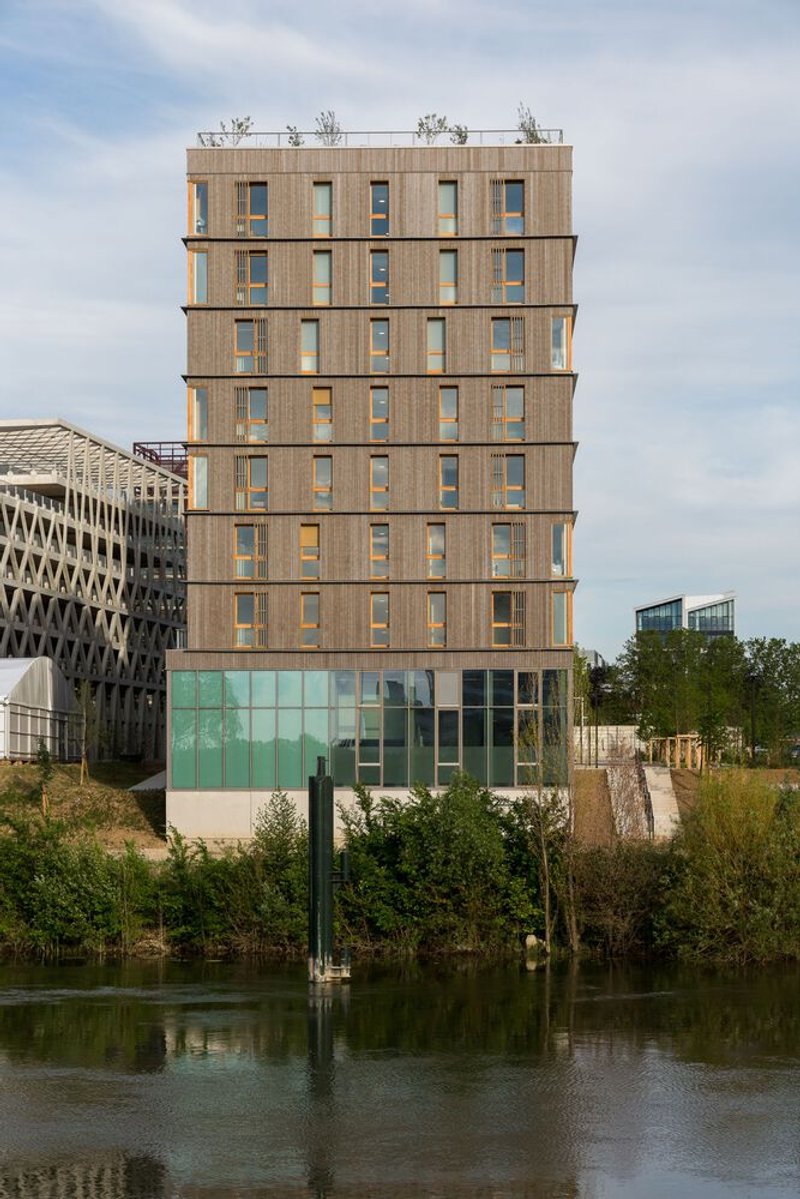
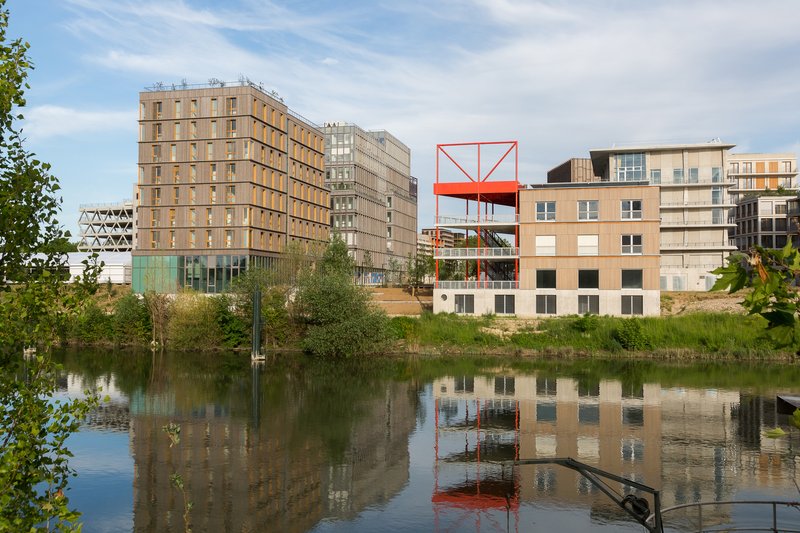
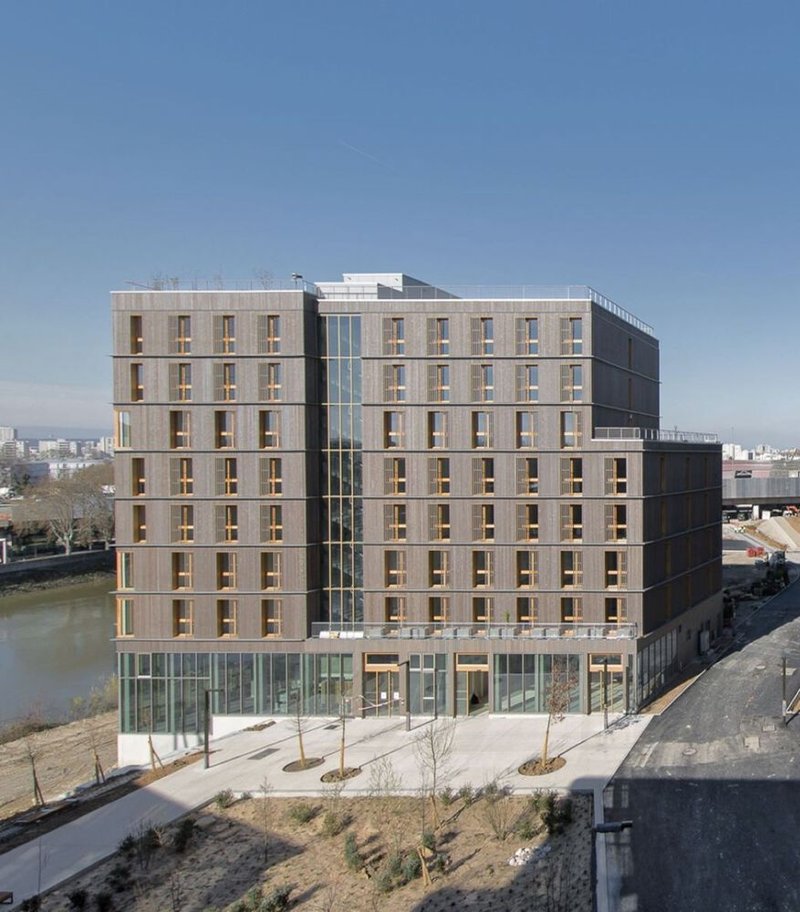
PE2 exemplifies EGA’s dedication to circular and low-carbon architecture through its fully modular wooden construction. Each module is prefabricated and transported via the Seine River—an innovative logistical solution that reduces carbon emissions, streamlines transportation, and minimizes disruption to the urban environment.
The wooden modules are not only sustainable but also fully disassemblable and reusable, offering a high degree of flexibility for future repurposing or relocation. This design philosophy aligns with the broader goals of the Olympic Village: buildings should remain adaptable, extend their lifespan, and serve evolving community needs long after the games conclude.
By leveraging a “double planning permit,” the architecture enables a dynamic shift from Olympic housing to long-term residential use. This approach highlights how planning frameworks can strategically support sustainable urban evolution, demonstrating that architectural solutions extend beyond material choices—they also involve policy innovation and long-term stewardship.
A Model for Future Urban Development
The Athletes’ Village – PE2 Student Housing stands as a compelling architectural model for cities seeking resilient, climate-conscious, and multifunctional development strategies. Through modular design, renewable materials, and an adaptable layout, the project illustrates how temporary event infrastructure can become a lasting asset for local communities.
The building not only addresses the immediate needs of large-scale international events but also contributes to lasting social infrastructure by providing high-quality student housing. Its integration of communal spaces, sustainable construction methods, and policy-backed flexibility positions PE2 as a blueprint for future urban districts aiming to balance density, livability, and environmental responsibility.
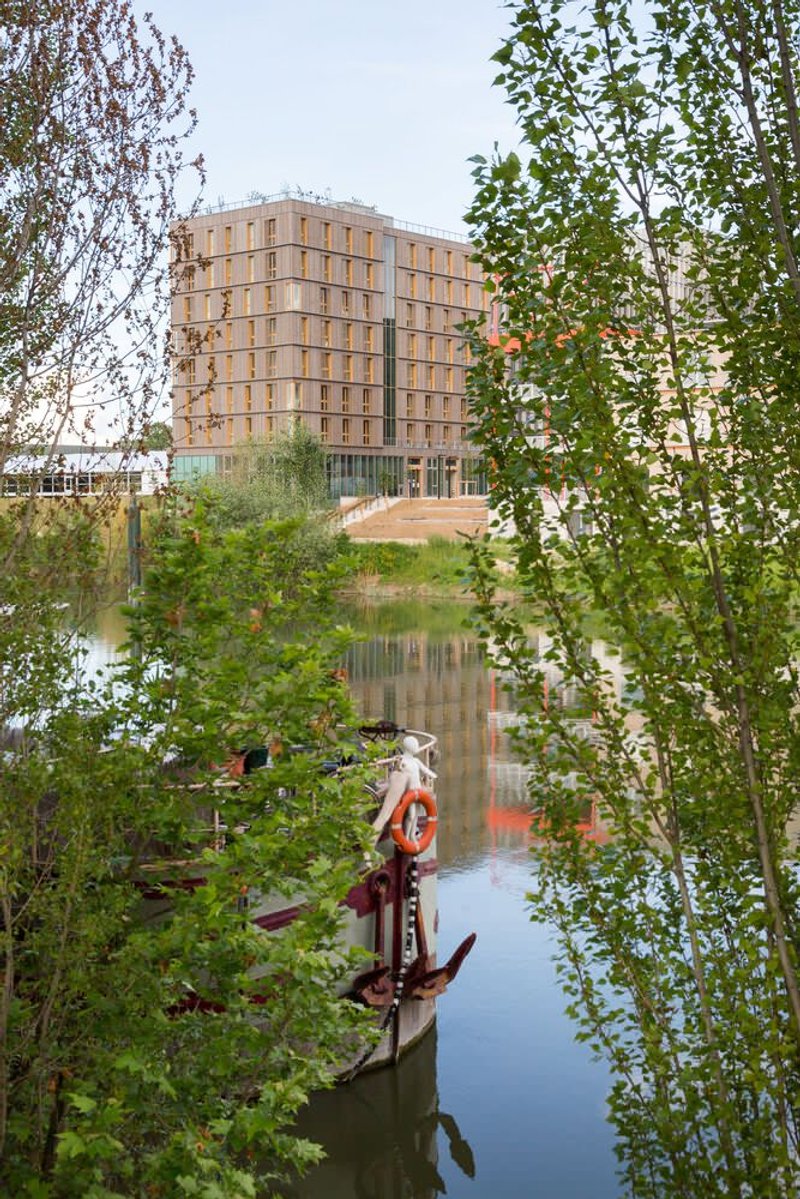
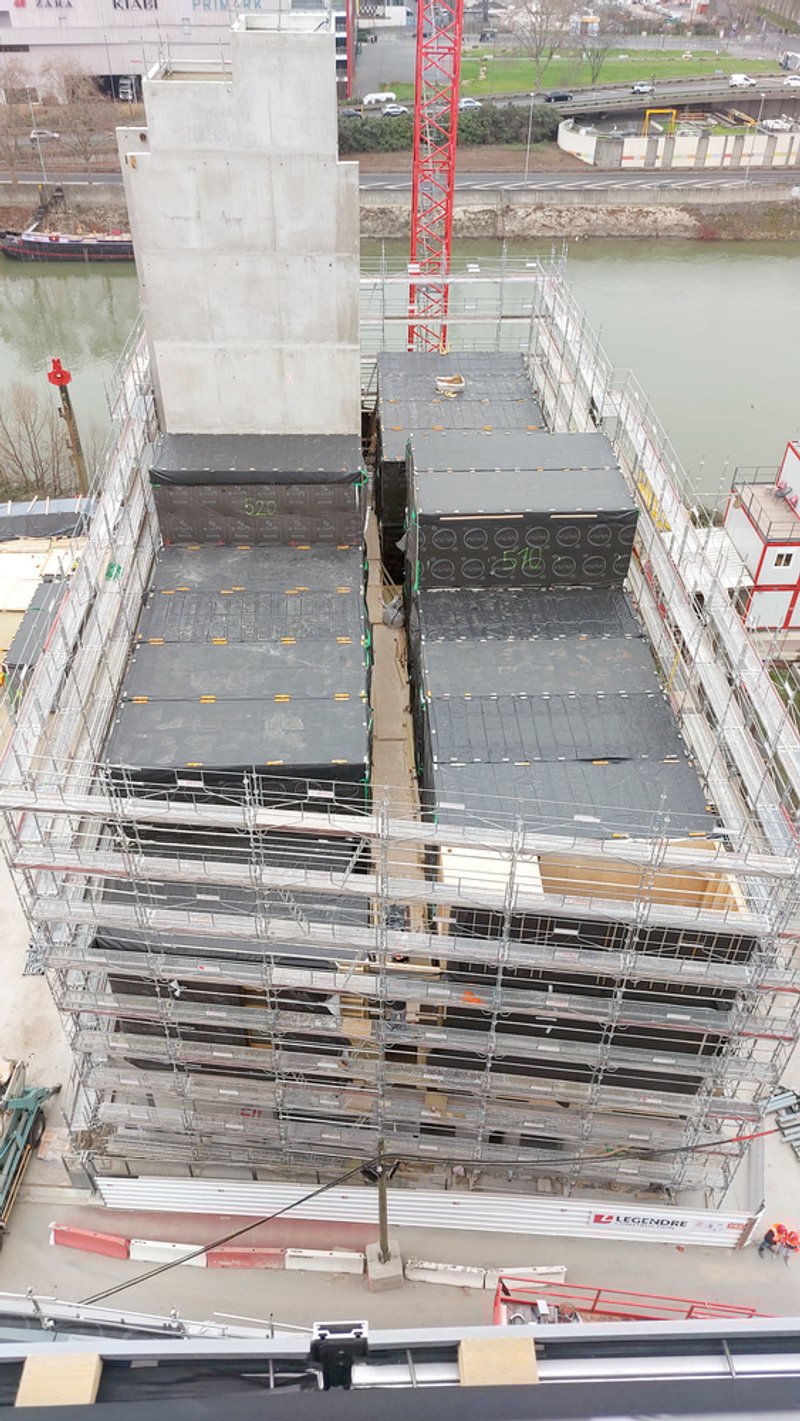
All photographs are works of Archi-Drone, EGA Erik Giudice Architects, Fabrice Commercon



Popular Articles
Popular articles from the community


Solar Steam: A Climate-Responsive Architecture That Redefines the Monument
A climate-responsive memorial architecture that transforms heat, decay, and time into a living system reflecting humanity’s ecological impact.


The Ken Roberts Memorial Delineation Competition (Krob)
As the most senior architectural drawing competition currently in operation anywhere in the world, it draws hundreds of entries each year, awarding the very best submissions in a series of medium-based categories.


Free Architecture Competitions You Can Enter Right Now
No entry fees, real prizes. Here are the best free architecture competitions open for submissions in 2026.


Similar Reads
You might also enjoy these articles
The Ken Roberts Memorial Delineation Competition (Krob)
As the most senior architectural drawing competition currently in operation anywhere in the world, it draws hundreds of entries each year, awarding the very best submissions in a series of medium-based categories.

Waterfront Redevelopment and Urban Revitalization in Mumbai: Forging a New Dawn for Darukhana
A transformative waterfront redevelopment project reimagining Darukhana’s shipbreaking heritage into an inclusive urban future.

OUT-OF-MAP: A Call for Postcards on Feminist Narratives of Public Space
Rhizoma Design and Research Lab invites artists, designers, architects, researchers, and students to reflect on how feminist perspectives can reshape public space. Selected works will be exhibited in Barcelona, October 2026. Submissions open until 15 April 2026.


Documentation Work on Buddhist Wooden Temple
Architectural syncretism and cultural hybridity: A comparative study of the Buddhist temples in Chattogram Hill tracks


Explore Architecture Competitions
Discover active competitions in this discipline




The International Standard for Design Portfolios


The Global Benchmark for Architecture Dissertation Awards


The Global Benchmark for Graduation Excellence


Challenge to design mud housing for contemporary communities
Comments (0)
Please login or sign up to add comments
No comments yet. Be the first to comment!