
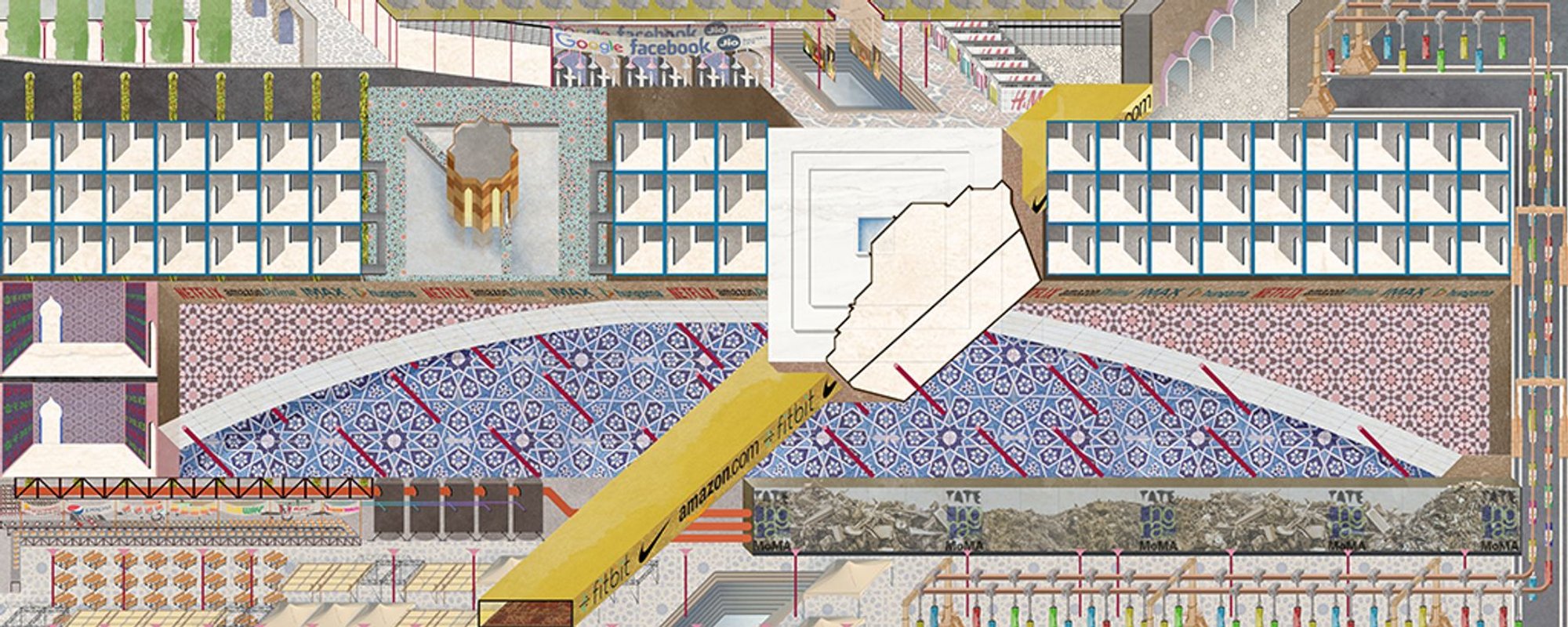
The Black Taj – Dark City Showcase
A poetic exploration of memory and modernity — where conceptual architecture design reimagines the Taj through contemporary reflection.

Reinterpreting Legacy Through Conceptual Architecture Design
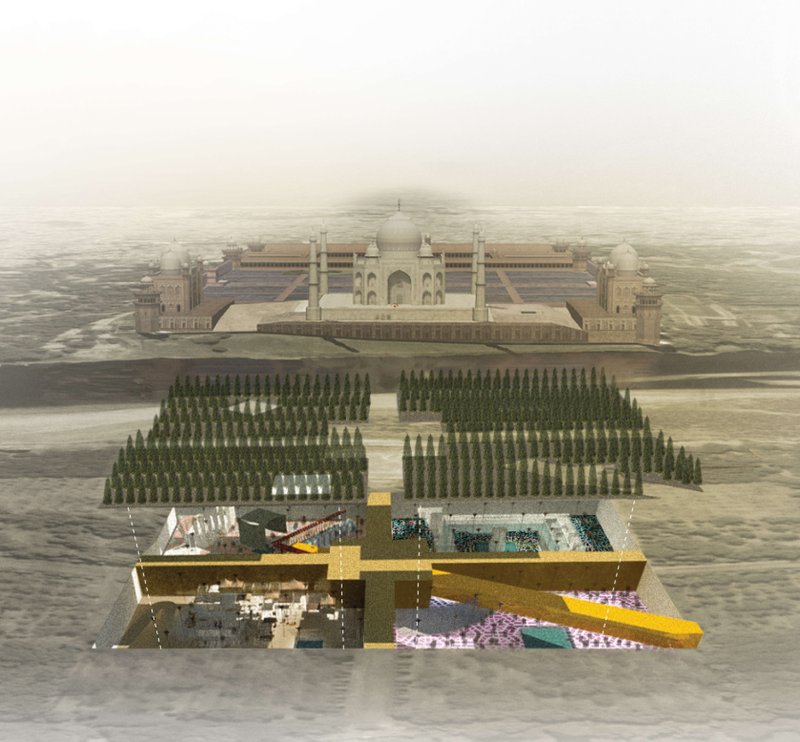
The Black Taj -UMFQ83 project redefines how we perceive cultural identity through the lens of conceptual architecture design. Set against the timeless grandeur of Agra, this intervention goes beyond the ornamental and historical beauty of the Taj Mahal and Agra Fort. It introduces a contemporary counterpart — a dark mirror that reflects the layered narratives of time, society, and memory.
Where the Taj Mahal embodies eternal love and symmetry, the Black Taj becomes its conceptual inversion — a subterranean city that critiques modern capitalism, consumerism, and identity in a hyper-connected world. Through this juxtaposition, the designers re-imagine Agra not just as a heritage site but as a living stage for evolving urban consciousness.
Shortlisted entry by Aditya and Harsh for The Black Taj Competition.
The Philosophy Behind the Black Taj
At its core, the Black Taj questions how architecture can embody the political and social manifestations of its time. The design envisions an underground “museum of illusions” where spaces, materials, and circulation patterns serve as metaphors for contemporary life — from digital dependency to commercial obsession.
“Black” in this narrative is not a color, but a condition. It represents introspection, resistance, and the unseen layers of urban life. The architecture deliberately embraces darkness — both literally and metaphorically — as a medium for truth-telling. The intervention merges Mughal geometry with postmodern urbanism, constructing a bridge between legacy and critique.
Spatial Narrative and Urban Fabric
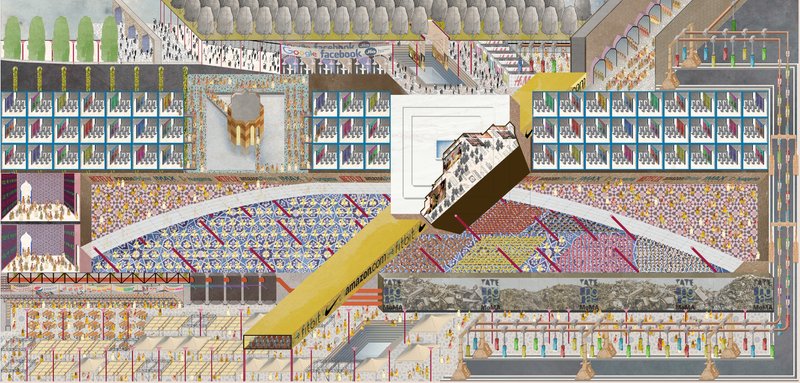
The project unfolds through a series of interconnected zones that reinterpret traditional Mughal planning principles:
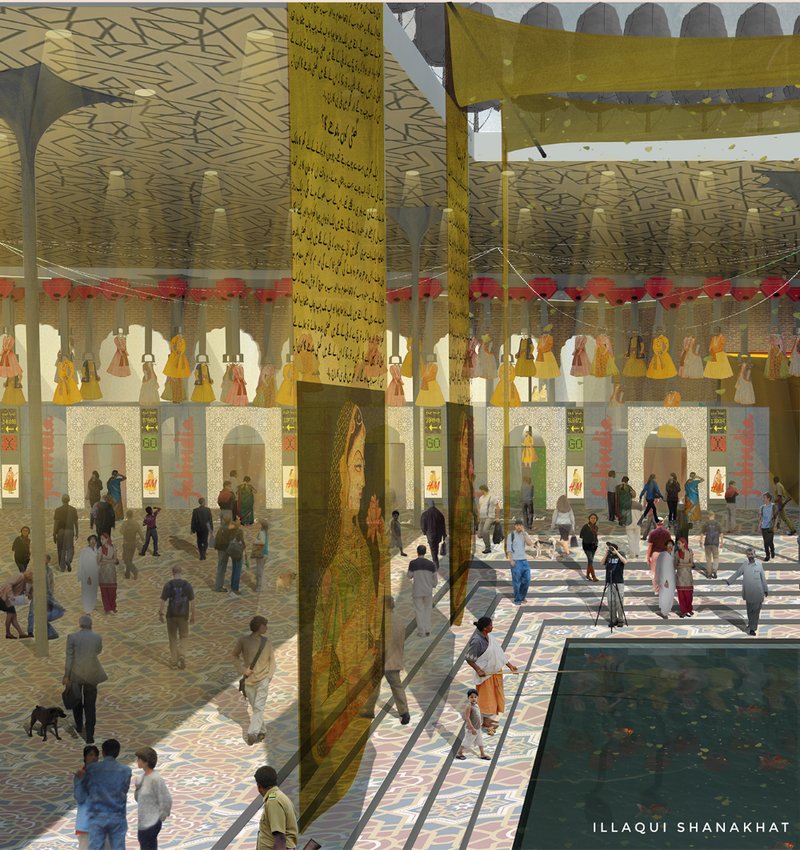
- Illaqi Shanakhat (Identity Zone): A social courtyard celebrating diverse urban identities.
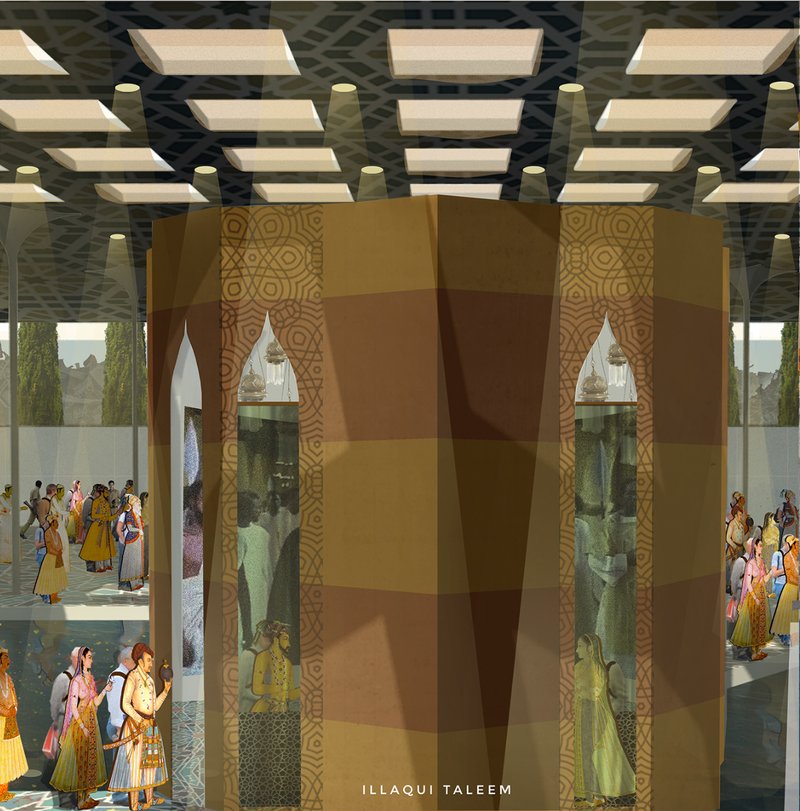
- Illaqi Taleem (Learning Zone): A reinterpretation of knowledge spaces where information and illusion merge.
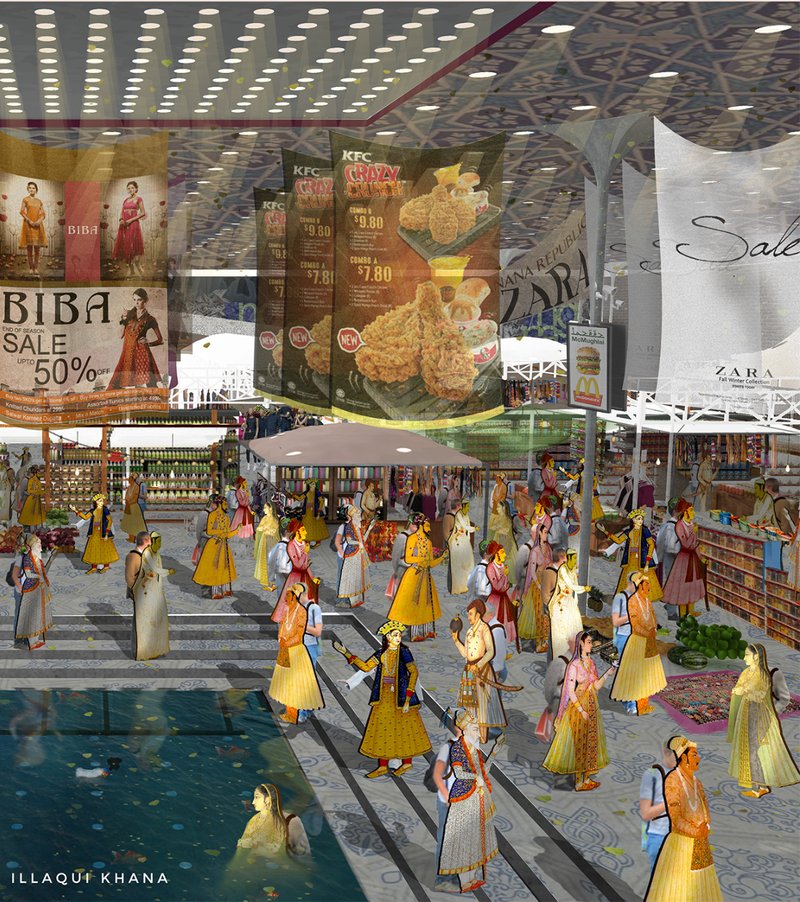
- Illaqi Khana (Market Zone): A commentary on consumer culture, lined with familiar global brands that blur history and modernity.
- Illaqi Kartab (Performance Zone): A space of political and cultural dialogue, layered with architectural ornament and symbolism.
Each zone contributes to a larger spatial choreography, balancing historical motifs with digital-age realities. Visitors descend from the reflective surface above into a subterranean maze, moving through spaces where light, reflection, and commerce coexist.
Architectural Expression and Materiality
The conceptual architecture design of the Black Taj integrates traditional Mughal craftsmanship with new-age materials and technologies. Textured stone, patterned ceilings, and reflective pools evoke nostalgia, while projections, advertisements, and digital façades create a dialogue with the present.
From aerial perspectives, the plan aligns with the geometrical rigor of the original Taj Mahal gardens, symbolizing continuity. Yet below, the space is fragmented and dynamic — echoing the fractured nature of contemporary identity. This tension between order and chaos becomes the project’s architectural language.
Socio-Cultural Commentary
Black Taj is as much a cultural statement as it is an architectural one. It visualizes how cities today are shaped not only by monuments but also by markets, algorithms, and social hierarchies. Through visual metaphors of brands, corridors of learning, and forums of debate, it captures the essence of a city constantly rewriting itself.
The design thus becomes a living critique — a mirror to how architecture and society intersect in the digital age. It turns Agra’s timeless skyline into a commentary on transformation, bridging Mughal grandeur with the commodified realities of modern urban life.
In its poetic inversion, the Black Taj doesn’t merely mirror the Taj Mahal — it refracts it through the prism of time, politics, and perception. Aditya and Harsh’s vision transforms heritage into conversation, turning architecture into a cultural lens that both questions and celebrates what defines us today.
The Black Taj stands as a reminder that architecture is never static — it evolves as our collective consciousness does, forever balancing memory, materiality, and meaning.




Popular Articles
Popular articles from the community

Split House: A Compact Urban Home Blending Privacy, Light, and Flexible Living in Japan
Compact Japanese home featuring DOMA space, flexible café potential, passive lighting, privacy zoning, and sustainable urban living design.


Inverted Architecture Installation by Studio Link-Arc: Exploring the Intersection of Architecture and Living Organisms
Inverted Architecture Installation by Studio Link-Arc blends mycelium, sustainability, inverted design, ecological cycles, and urban adaptive architecture in Shenzhen.
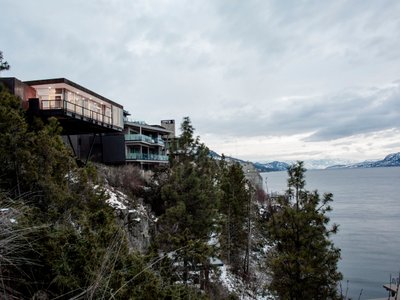
Alton Cliff House: A Harmonious Retreat by f2a Architecture in Lake Country, Canada
Alton Cliff House blends corten steel, prefabrication, and sustainable design, creating a luxurious, energy-efficient retreat perched on Canadian cliffs.


Similar Reads
You might also enjoy these articles

Digital Façade Design for our cities’ urban fronts
Prima Facie - Result Story
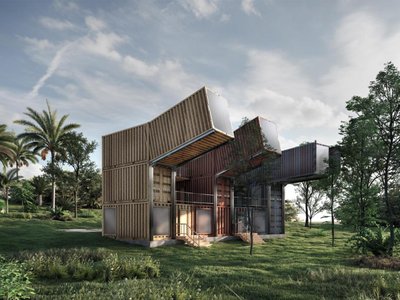
Protecting avian biodiversity: Bird observatories to help spread awareness & save rare bird species.
Results for ‘Fly’ - Landscape design competition out now
Connecting with nature: Forest interpretation center in Australia's Wollemi National Park
‘Asatti’ - Landscape design competition - Result story


Explore Conceptual Architecture Competitions
Discover active competitions in this discipline




The Global Benchmark for Architecture Dissertation Awards


The Global Benchmark for Graduation Excellence


Challenge to design an urban locus of culture and heritage


Bring back Drive In's
Comments (0)
Please login or sign up to add comments
No comments yet. Be the first to comment!