
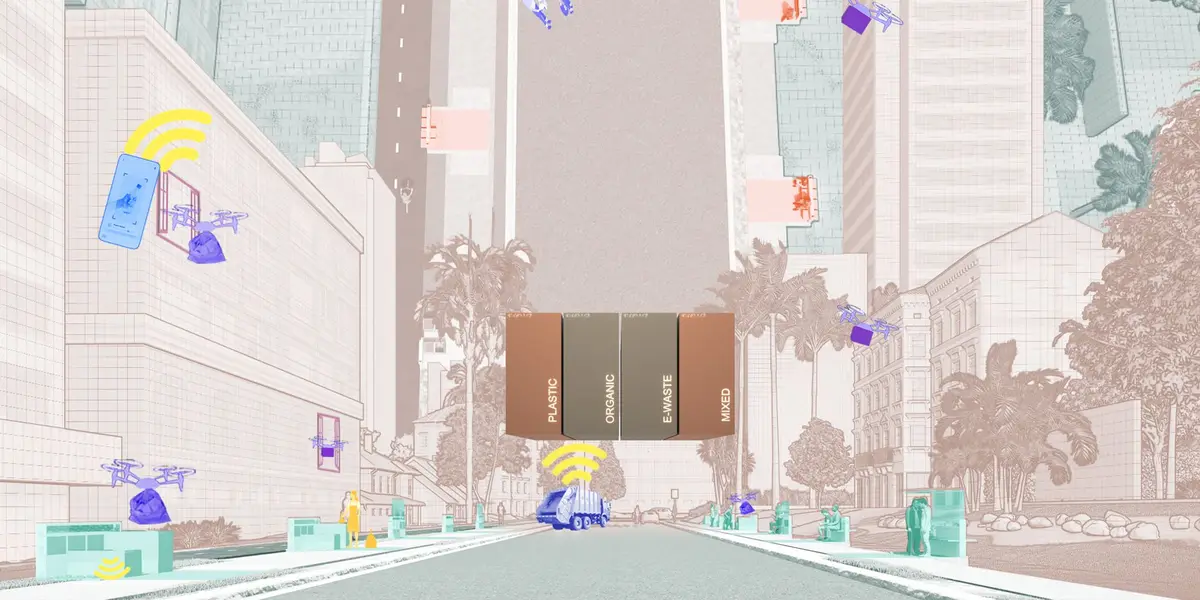
The CYBER BIN Revolution: Reshaping Urban Waste Management
This article examines the CYBER BIN, a tech-driven approach to revolutionizing waste management in urban landscapes.


In the ever-evolving landscape of urban development, waste management has emerged as a critical challenge. Cities across the globe grapple with the complexities of waste segregation, collection, and recycling. Enter the CYBER BIN - a groundbreaking innovation that promises to revolutionize this sector by integrating high-tech solutions into the fabric of everyday life. This article delves into the concept of CYBER BIN, an Honorable Mention entry by Tasmin Zaman in the 'Trashed' competition, exploring its features, benefits, and potential impact on urban environments.
The Genesis of CYBER BIN: A Technological Marvel for Sustainable Cities
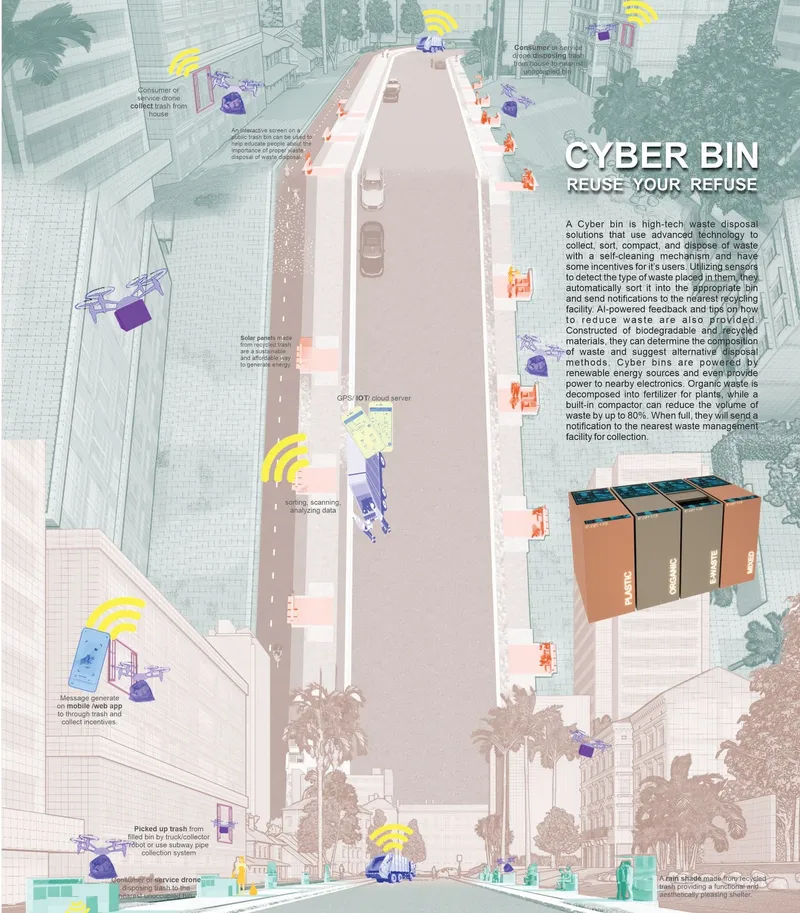
At its core, the CYBER BIN is not just a receptacle for refuse; it's a symbol of technological synergy and ecological responsibility. It's a high-tech waste disposal solution that employs advanced technology to efficiently collect, sort, compact, and dispose of waste, while incentivizing users through a novel reward system.
Functionality Meets Sustainability
The CYBER BIN is equipped with an array of sensors that detect the type of waste placed within. This smart system not only sorts waste but also compacts it, reducing its volume by up to 80%, and is constructed from biodegradable materials that further its eco-friendly credentials. Its AI-powered feedback mechanisms and notifications to recycling facilities underscore a commitment to reducing waste at the source.
Customization: Catering to Every Need
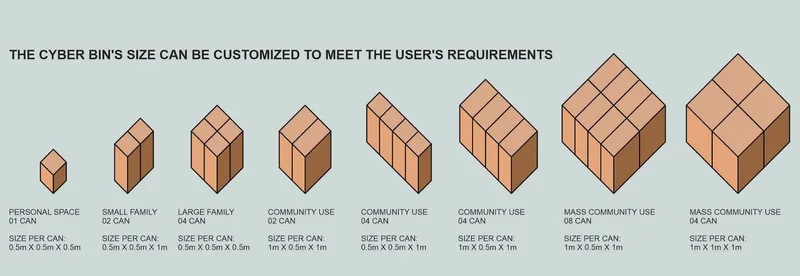
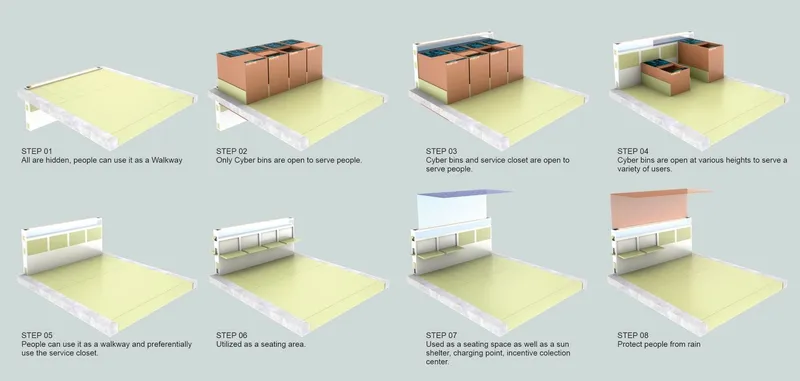
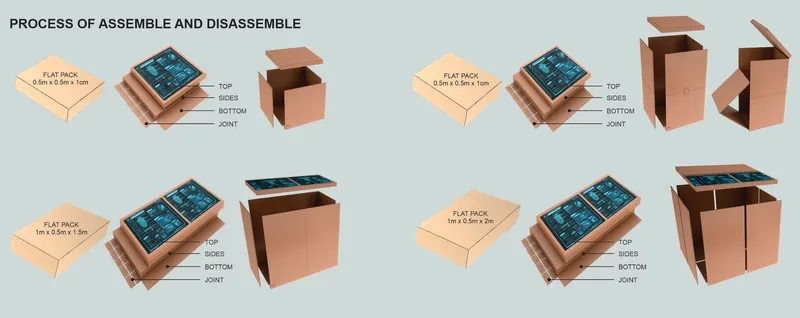
Understanding that waste disposal needs vary, the CYBER BIN's design allows for customization in size to cater to individuals, families, and community needs - from a modest 0.5m³ for personal use to a substantial 4m³ for mass community utilization.
Innovative Assemblage and Accessibility
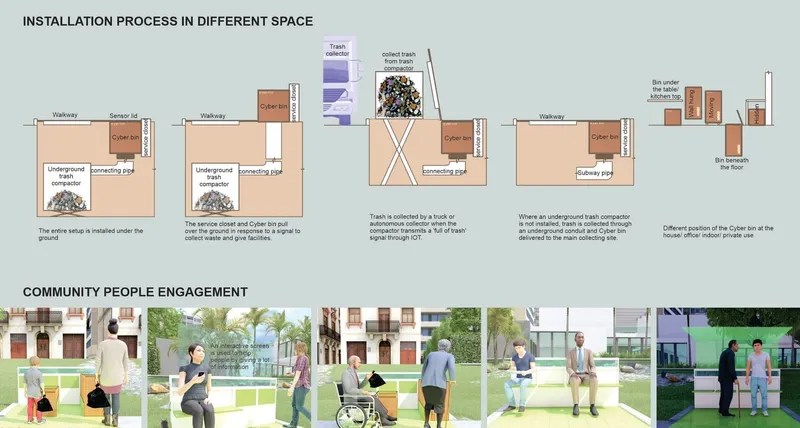
The CYBER BIN's flat-pack design simplifies the assembly and disassembly process, making it adaptable to various spaces, whether it's under a kitchen table, along a walkway, or integrated into service closets in public areas.
Community Engagement and Inclusion
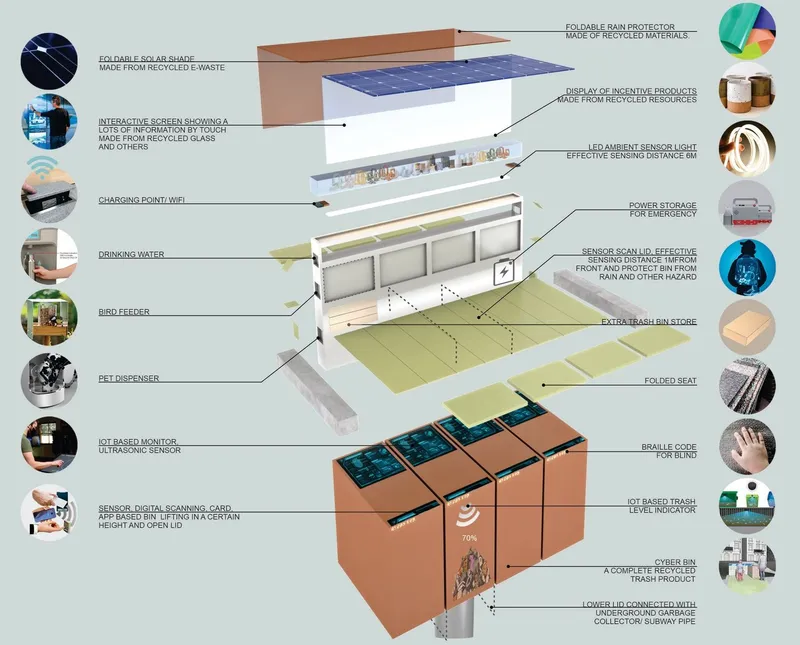
Perhaps one of the most notable features is the CYBER BIN's engagement with community members. It's designed to be inclusive, with adjustable heights for easy access by children, the elderly, and people with disabilities. This inclusive design philosophy extends to its interactive features, such as a built-in pet dispenser and bird feeder, which foster community interaction and encourage responsible pet ownership.
Dual Functionality as Urban Furniture
When not in use for waste disposal, the CYBER BIN transforms into urban furniture, providing seating, shelter from rain with its foldable protector made from recycled materials, and even a charging point for electronic devices, thanks to its integrated solar panels and power storage units.
The CYBER BIN concept is more than just a trash disposal method; it's a holistic approach to managing urban waste that marries functionality with community engagement, sustainability with technology. It's a beacon of innovation in the quest for cleaner, smarter cities.
As we embark on this journey toward sustainable urban living, the CYBER BIN stands out as a testament to human ingenuity and a harbinger of a future where technology and ecology coalesce to create a better world for all inhabitants. With initiatives like the CYBER BIN, the path to a cleaner, greener urban tomorrow isn't just a possibility; it's within reach.


Popular Articles
Popular articles from the community


ALGAL REALM: A Bio-Integrated Lunar Habitat Design for Life Beyond Earth
ALGAL REALM reimagines lunar habitat design with algae-powered life support, 3D-printed regolith, and vertical living for a lunar future.

Lunar Spiral: Space Architecture Shaped by the Mathematics of the Universe
Lunar Spiral reimagines space architecture through Fibonacci geometry, lunar regolith, levitating habitats, and self-sustaining Moon living.

Co-Life: Senior Housing Design That Reconnects Older Adults With the City
Co-Life reimagines senior housing design through healing gardens, shared streets, workshops, and a sustainable community across generations.

The Musturak Paradise: Senior Living Architecture for a Connected Future in Temara, Morocco
The Musturak Paradise reimagines senior living architecture in Temara via private homes, social spaces, culture, community, and shared care.

Similar Reads
You might also enjoy these articles

Day and Night Park: A Time-Based Urban Newsstand in Beijing
A temporary urban newsstand in Beijing blending travel, light, and reading through poetic colors, compact form, and community-focused design.

Modernist Patio Renovation in El Masnou, Barcelona by Oliver Segura Arquitectura + Cebrià Arquitectura
Modernist patio renovation blending tradition and innovation with a movable pool, leveled floors, and Catalan materials in El Masnou.

Alto Residencial Coop: Cooperative Housing Development in Santiago de Compostela by Carbajo Barrios Arquitectos
A linear cooperative housing complex blending white volumes and perforated metal façades, enhancing community living, natural light, privacy, and urban integration.
Vil Genis School by BPA ARCHITECTURE – Massy, France
Vil Genis School in Massy, France, features sustainable design, south-facing classrooms, community integration, accessible spaces, and modern educational architecture.

Comments (0)
Please login or sign up to add comments
No comments yet. Be the first to comment!