

The Dune
the pavilion

What was the concept behind the project?
The Dune project was conceptualized as a Pavillion to mark the interconnection between vernacular and technocratic methodology. Along with that it also hopes to question the hegemony of occularcentrism and generate a multi-sensory experience.
I knew I wanted a challenging environmental context as the pavilion needed to be optimized for solar gain reduction. I wanted to do this computationally and build upon the design from there.
What was the intent behind the organization of elements across various levels (Architectural, Site, Urban)?
The organization of space is rather straightforward. the pavilion provides seating spaces and a few entry points. The smaller modules that are assembled together to occupy the pavilion volume are generated algorithmically.
How many iterations were tried to arrive at the final outcome?
The modules went through at least 10 stages of development. the constraints on the modules were its 3d printability, the size limitation on terracotta 3d printing. it had to be able to contain a medium-sized atomizer for the cloud machine.
The volume itself went through maybe 5 iterations as the volume is optimized algorithmically first. It is only altered to generate interesting moments / allow wind through the pavilion.
Which methods of design investigation?
There were physical sketches, theoretical research of design methodology(discrete), construction techniques( 3d printing + aggregation), material research and finally a dive into computational algorithms.
How will the project transform with the passing time?
The project was designed such that its parts can be re-assembled into different configurations and compositions to respond to different contexts. I would imagine that after the pavilion is disassembled from its proposed site it lives its life as a vagabond travelling to other interesting hot and dry places all over the world.


Popular Articles
Popular articles from the community

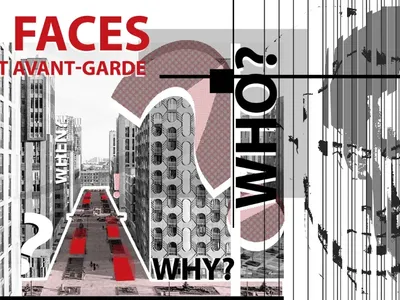
Faces of the Soviet Avant-Garde: Turning Moscow's Street Names into an Open-Air Museum
A network of sculptural installations across a Moscow residential district transforms forgotten architect names into spatial encounters with cultural memor
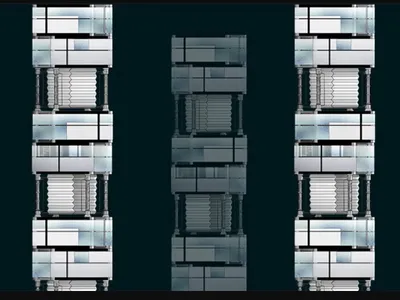
Tsunami Convergenics: Turning Catastrophic Ocean Forces into Underwater Housing Infrastructure
A speculative underwater settlement off the coast of Onagawa, Japan, treats tsunamis and typhoons as energy sources rather than threats.

Singing Woman: Contemporary Architecture Inspired by Estonia’s Voice and the Sea
Singing Woman turns Estonia’s song culture into flowing opera house architecture, blending public life, landscape, sea, and national memory.

The Amber Palace Opera: A Geological Fiction Surfaces on Tallinn's Baltic Waterfront
Pierre Brillard reimagines a Baltic legend as a public landscape, opera house, and waterfront promenade rooted in Tallinn's coastal identity.

Similar Reads
You might also enjoy these articles

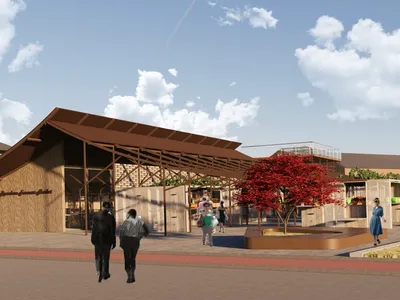
The Rhythm of Seasons
A Farmers' Market Connecting Nature and the City

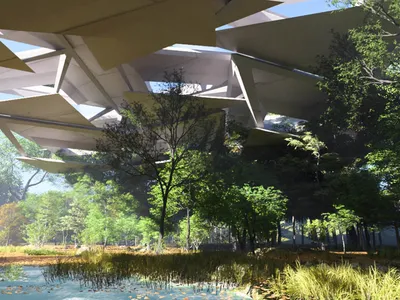

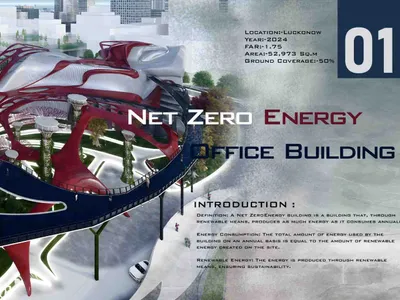
More Than a Building-Designing a Living System
More Than a Building-Designing a Living System
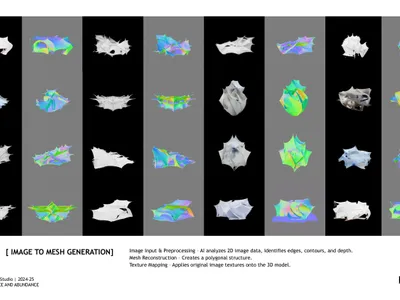
Base Beyond
DESERT COMPOUND ARID: TOURISM OF ABSENCE AND ABUNDANCE

Explore Pavilion Competitions
Discover active competitions in this discipline


Challenge to design a portable theatre

Challenge to design a portable music platform

Challenge to design an open learning module for the elderly
Comments (0)
Please login or sign up to add comments
No comments yet. Be the first to comment!