
The Flood Resilient Community: Sustainable Architecture for a Safer Future
Designing 100-home communities with flood resilient architecture, sustainable farming, and adaptive planning for a safer, thriving future.

Floods remain one of the most devastating natural disasters, destroying homes, disrupting livelihoods, and displacing entire populations. As climate change accelerates, the need for flood resilient architecture has never been more urgent. Communities must adapt to ensure safety, sustainability, and long-term resilience. The Flood Resilient Community project by Projects LBD, shortlisted for the HEAL+ competition, addresses this challenge with an innovative design for a 100-home settlement that not only withstands floods but thrives after them.
Concept and Vision
The design reimagines the master plan of a flood-affected community by focusing on three pillars:
- Resilience: Protecting homes and infrastructure from recurring floods.
- Community Development: Encouraging shared spaces, collective farming, and social bonds.
- Dwelling Upgradation: Improving individual housing units to ensure safety, comfort, and sustainability.
By combining these strategies, the project ensures that affected families are not just surviving but also moving toward a healthier, self-sufficient future.
The Master Plan: Designing for Flood Safety
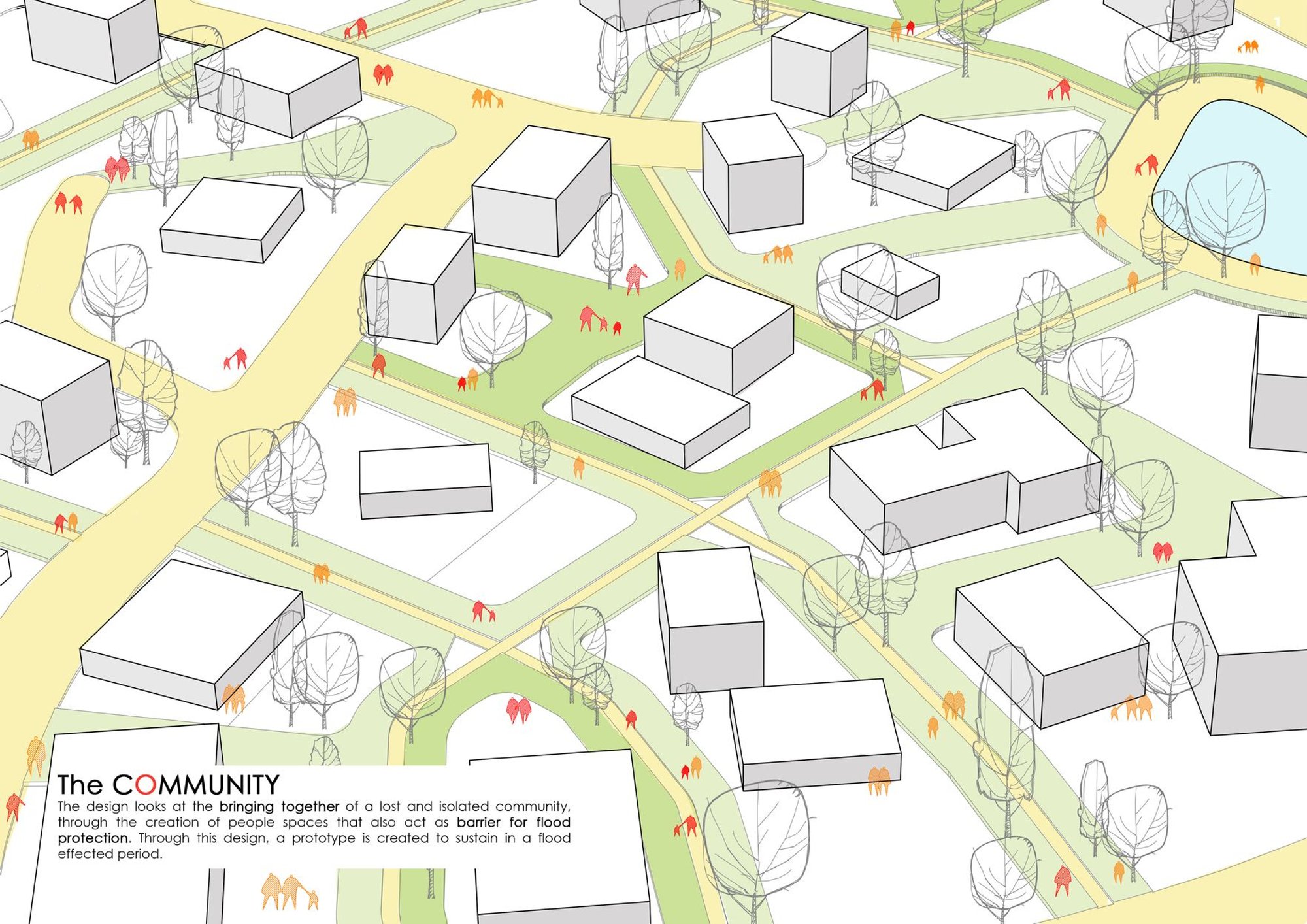
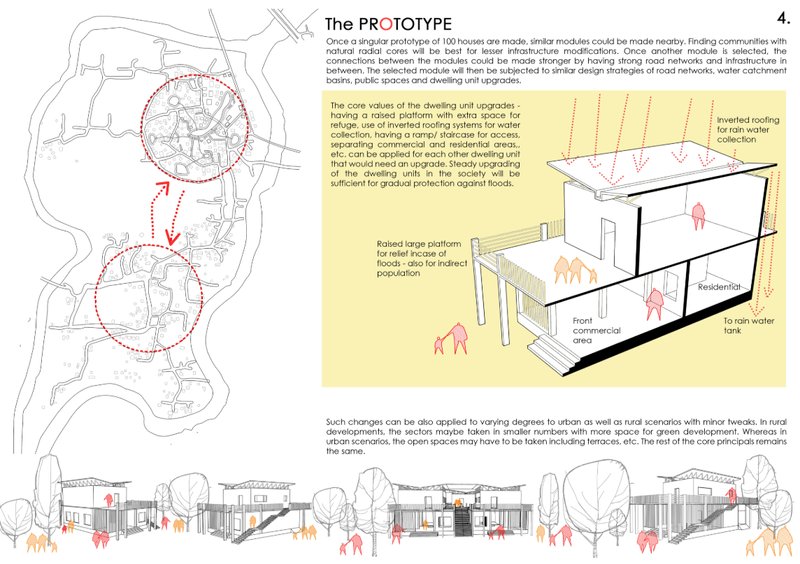
The master plan divides the 100-home community into five sectors, each featuring a water collection pit that doubles as an aquaponics farm. This multifunctional approach allows water management during floods while supporting year-round food production.
Key Features:
- Organized Road Networks: Redesigned pathways allow for quick entry, evacuation, and access for relief forces.
- Water Catchments: Each sector integrates catchments connected through waterways to manage excess rainfall and floodwater.
- Green Buffer Zones: Landscaped open areas serve as both flood drainage and recreational spaces, blending resilience with livability.
- Aquaponics Systems: Water bodies transform into productive farms when not serving flood functions, creating food security for residents.
- Integrated Pathways: Interconnected routes ensure connectivity between localities, encouraging community cohesion.
This strategic planning ensures that every structural element doubles as an adaptive system for survival and growth.
The Action Plan: Responding to Floods
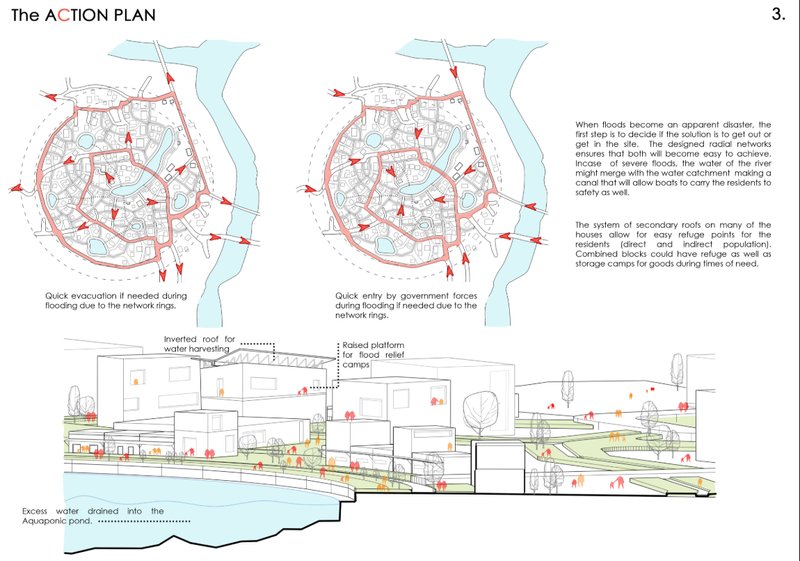
Flood resilience requires both prevention and response mechanisms. The action plan enables:
- Quick Evacuation Routes: Radial road networks allow rapid exit during emergencies.
- Government Access: Relief forces can enter swiftly during flooding, ensuring timely aid.
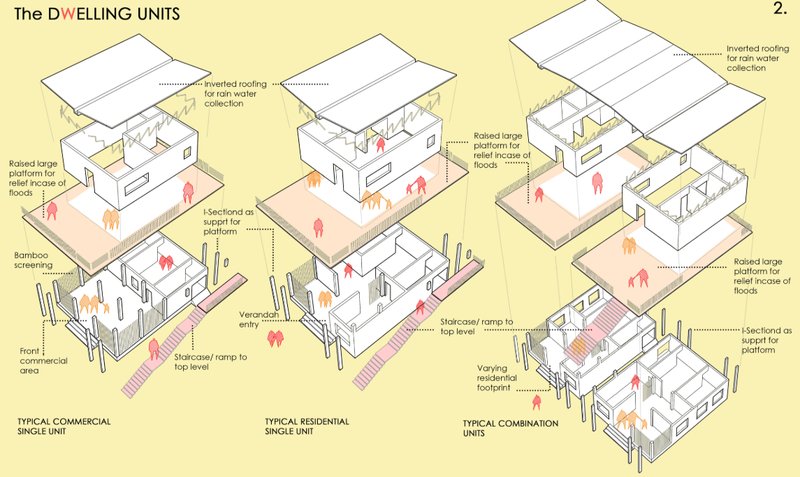
- Raised Platforms: Designed spaces serve as flood relief camps and temporary shelters.
- Roof Harvesting Systems: Inverted roofs collect rainwater, reducing strain on ground-level drainage.
- Refuge Points: Secondary roofs and elevated platforms act as safe zones for residents and storage areas for essential goods.
In severe flooding, the integration of canals ensures safe boat transport, turning water challenges into opportunities for mobility.
Community Resilience and Sustainability
Beyond physical design, the project prioritizes community well-being and socio-economic development:
- Organic Farming: Green spaces between plots enable urban farming and strengthen food resilience.
- Economic Regeneration: Commercial areas are strategically placed for easy movement and post-disaster recovery.
- Recreational Zones: Parks and open areas double as drainage systems, offering mental and physical relief.
- Collective Identity: The design fosters shared responsibility, encouraging residents to maintain green infrastructure and aquaponics systems.
Significance in Architectural Innovation
The Flood Resilient Community demonstrates how sustainable architecture can merge with disaster management. It transforms the vulnerabilities of flood-prone regions into strengths by:
- Designing multi-functional spaces.
- Encouraging self-sufficiency through food systems.
- Enhancing safety through adaptable infrastructure.
- Fostering community engagement and development.
By integrating architecture with ecological systems, Projects LBD shows how design can lead to holistic resilience.
As climate risks escalate, the demand for flood resilient architecture will only increase. Projects like this serve as powerful case studies, demonstrating how thoughtful design can protect lives, empower communities, and promote sustainability. The Flood Resilient Community by Projects LBD, a shortlisted entry of HEAL+, exemplifies architecture’s ability to go beyond shelter—creating pathways to a safer, healthier, and more resilient future.




Popular Articles
Popular articles from the community

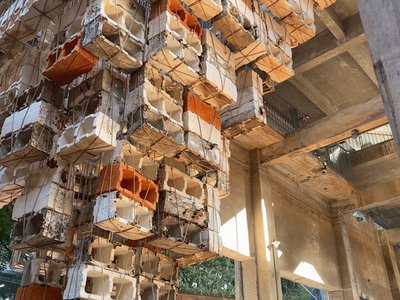
Inverted Architecture Installation by Studio Link-Arc: Exploring the Intersection of Architecture and Living Organisms
Inverted Architecture Installation by Studio Link-Arc blends mycelium, sustainability, inverted design, ecological cycles, and urban adaptive architecture in Shenzhen.
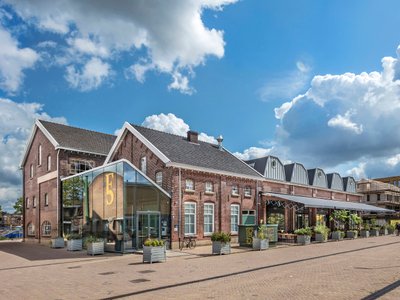
Fifth NRE Jazz Club – De Bever Architecten: Eindhoven’s Revitalized Cultural Hub
Historic gas factory transformed into Fifth NRE Jazz Club blending modern sustainability, jazz culture, dining, and heritage architecture seamlessly.

Solar Steam: A Climate-Responsive Architecture That Redefines the Monument
A climate-responsive memorial architecture that transforms heat, decay, and time into a living system reflecting humanity’s ecological impact.


The Ken Roberts Memorial Delineation Competition (Krob)
As the most senior architectural drawing competition currently in operation anywhere in the world, it draws hundreds of entries each year, awarding the very best submissions in a series of medium-based categories.

Similar Reads
You might also enjoy these articles


Top 15 Architecture Competitions to Enter in 2026
From student-friendly idea competitions to prestigious international awards, here are the best architecture competitions open for entries in 2026. Updated regularly.

DIY & Engineering in Computational Design : Enter the BeeGraphy Design Awards
Showcase Your Creativity with Computational Design and Open Source Projects
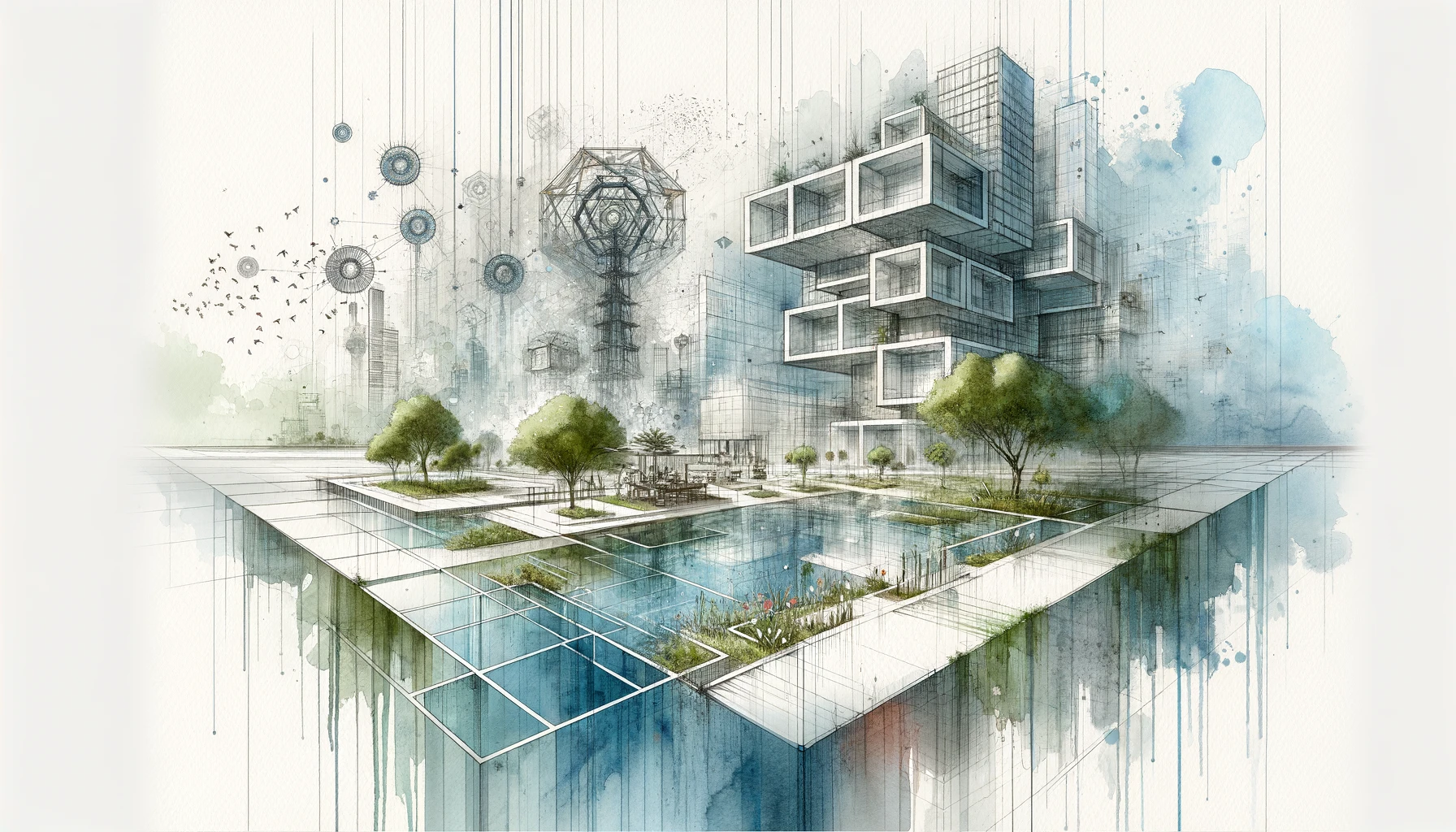
Innovative Design Solutions: Award-Winning Projects from Recent Architecture Competitions
Exploring award-winning architectural projects shaping the future of design, sustainability, and community.







Comments (0)
Please login or sign up to add comments
No comments yet. Be the first to comment!