
The Grand Egyptian Museum by Heneghan Peng Architects: A Monumental Dialogue Between Ancient Civilization and Contemporary Architecture
The Grand Egyptian Museum unites monumental architecture, ancient artifacts, and landscape, creating a timeless dialogue between Egypt’s past and present.


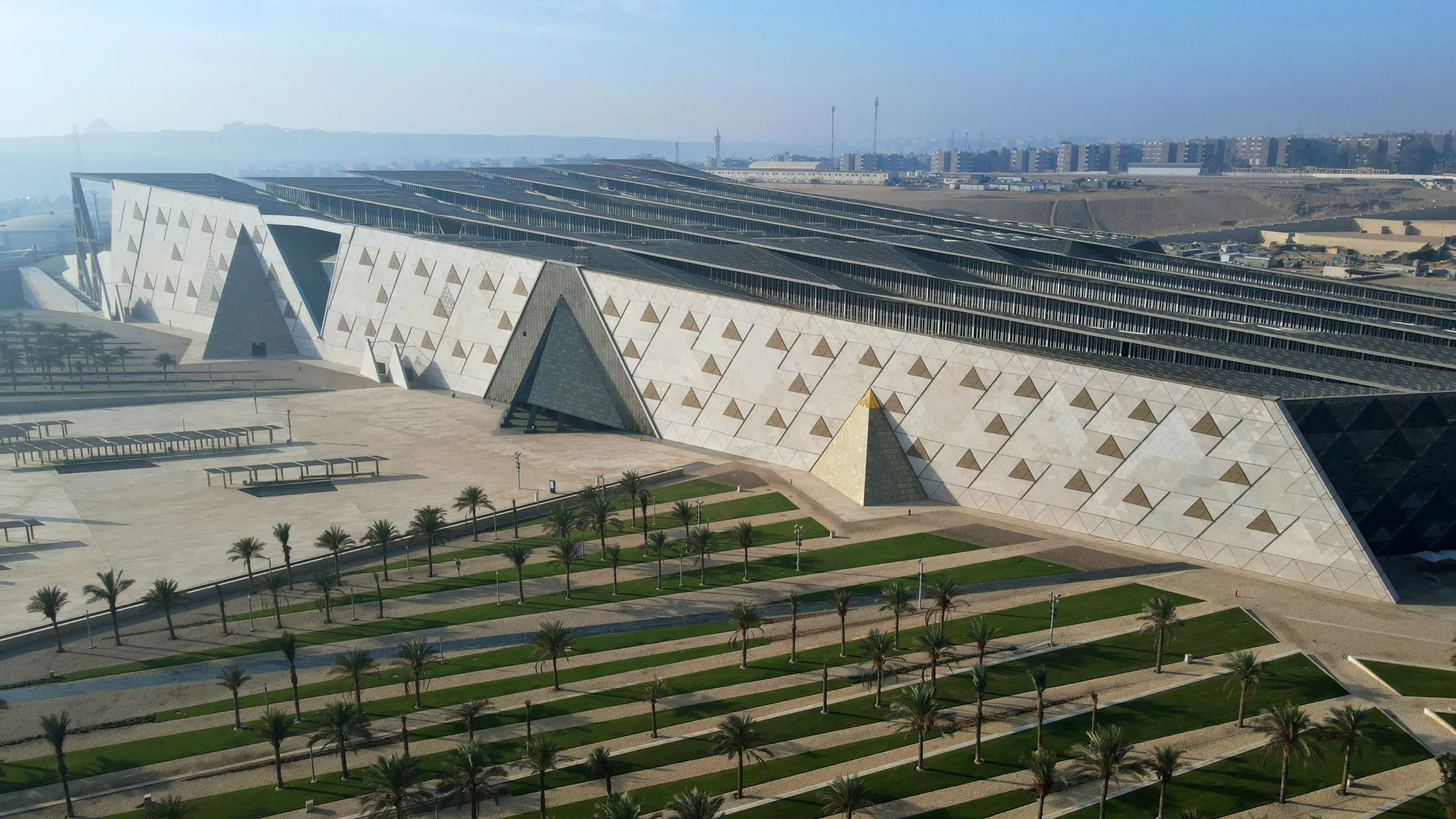
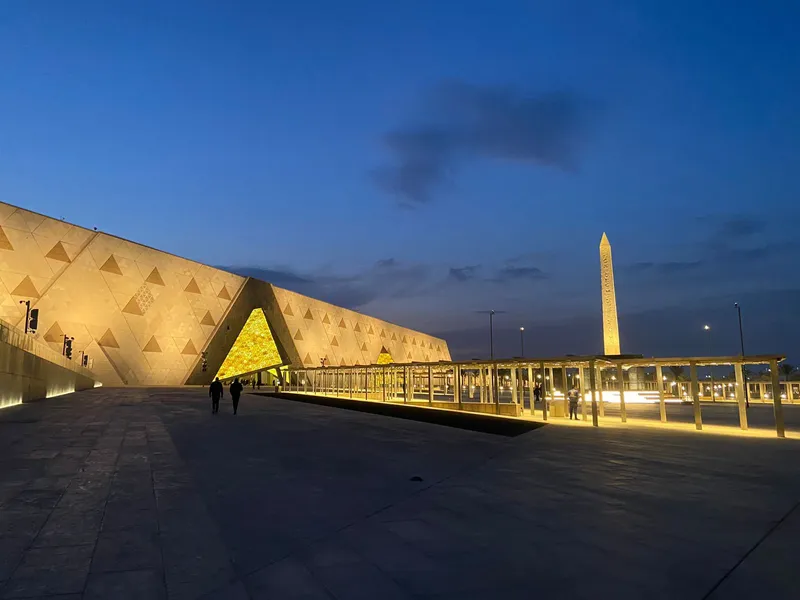
The Grand Egyptian Museum (GEM) in Giza, Egypt, designed by internationally acclaimed Heneghan Peng Architects, stands as one of the most ambitious cultural architecture projects of the 21st century. Located just over a mile from the iconic Pyramids of Giza, the museum redefines how contemporary architecture can engage with ancient heritage, landscape, and national identity. Conceived as the largest museum in the world dedicated to a single civilization, GEM is designed to house more than 100,000 artifacts, offering an unprecedented narrative of ancient Egyptian history from the Predynastic era through the Coptic period.
Marking the full completion of the museum is the long-awaited opening of the Tutankhamun Gallery, which will, for the first time, display the entire collection of over 5,000 artifacts from the boy king’s tomb. This milestone establishes the Grand Egyptian Museum as a global destination for archaeology, architecture, and cultural tourism.
An International Competition and a Visionary Design
Heneghan Peng Architects won the commission in 2003, following the largest architectural competition ever held, with 1,556 entries from 82 countries, initiated by Egypt’s Ministry of Culture. The winning proposal was praised for its powerful conceptual clarity, contextual sensitivity, and ability to establish a profound relationship between the museum and its legendary surroundings.
Developed in collaboration with an extensive international team—including Arup, Buro Happold, Cultural Innovations, Metaphor, and landscape architects West 8—the project represents a rare example of global cooperation in cultural infrastructure. Specialist contributors include Goppion for museum display systems, Bartenbach Lichlabor for lighting design, and ACE for civil and structural engineering.
Architecture Aligned with the Pyramids
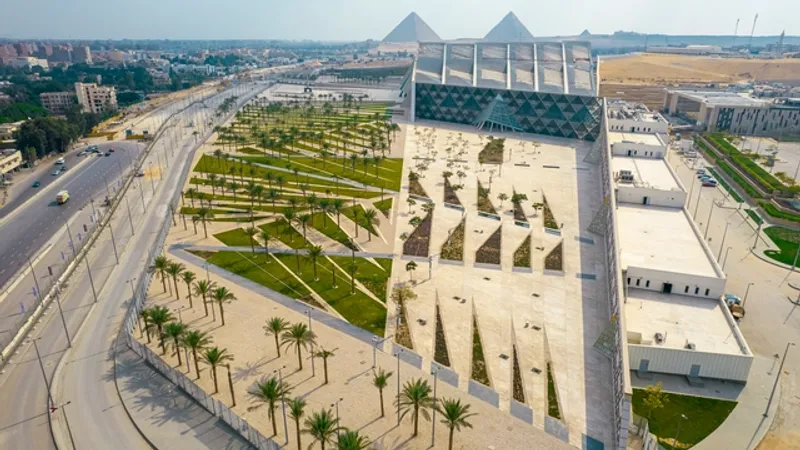
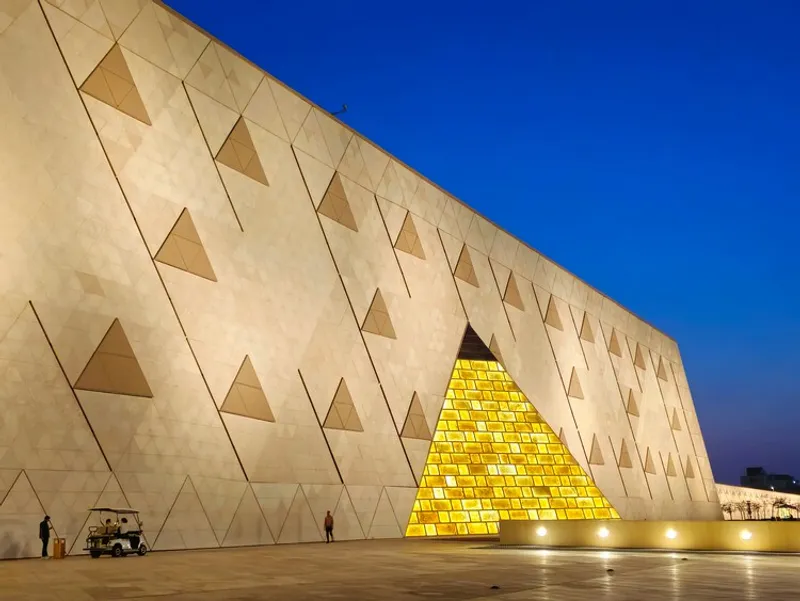
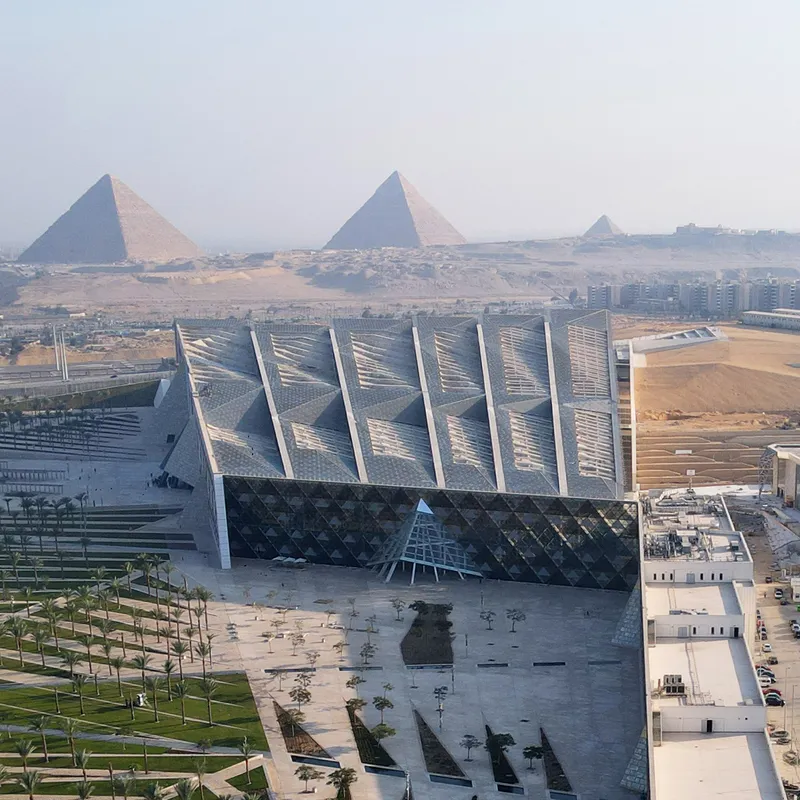
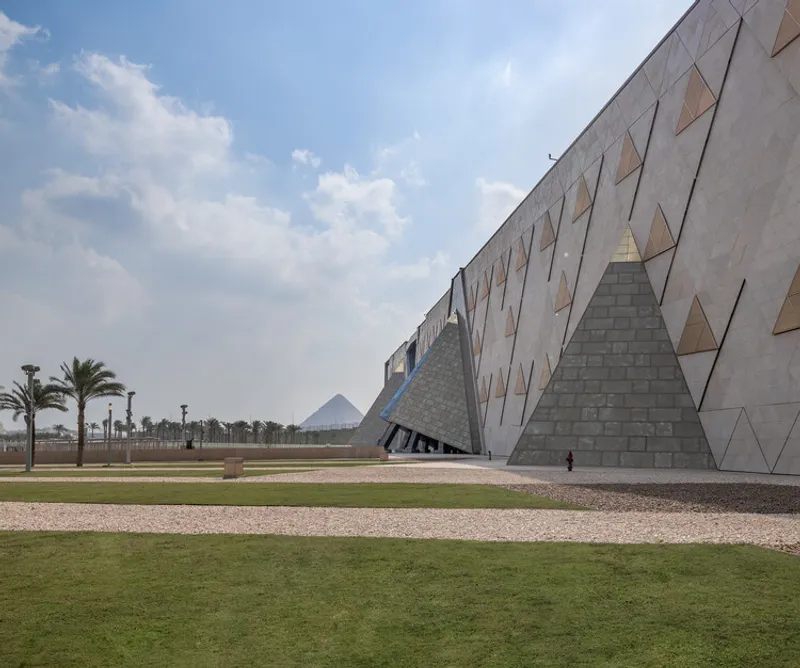
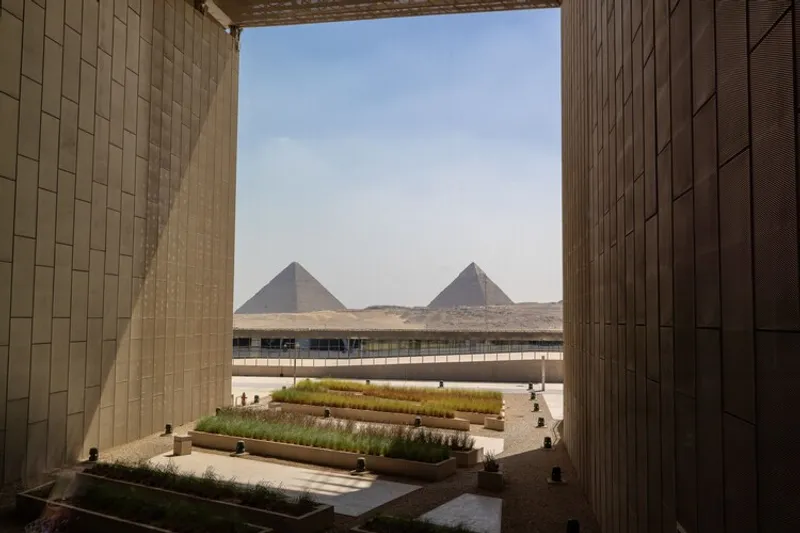
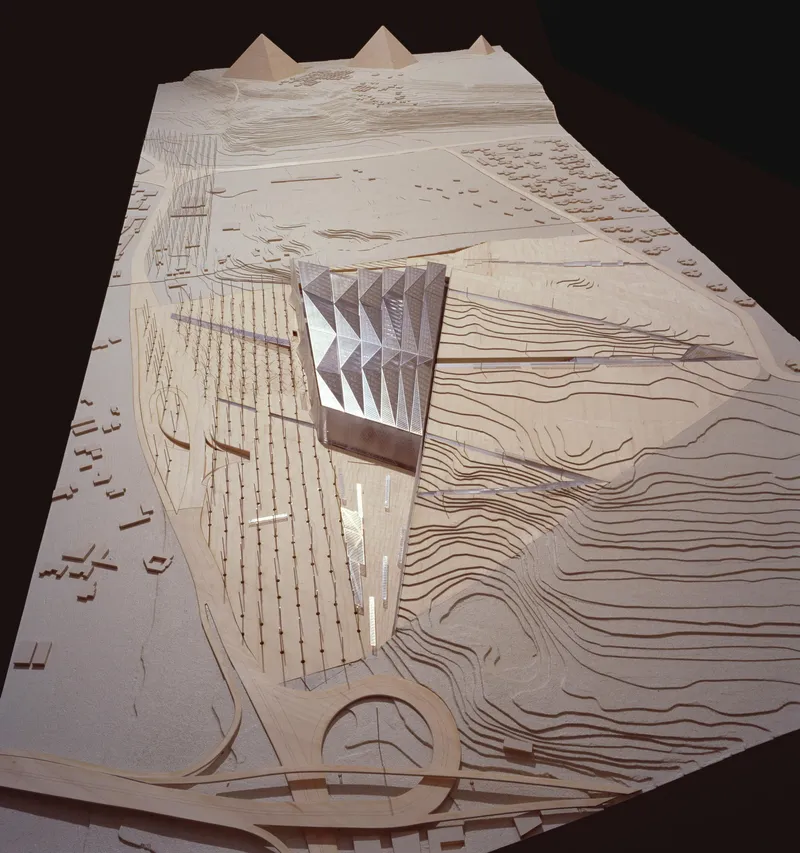
The architectural concept of the Grand Egyptian Museum is deeply rooted in its geological and historical context. Situated on a desert plateau formed by ancient Nile deposits, the building is aligned along a visual axis that directly corresponds to the three pyramids of Giza. From a focal point at the main entrance, the museum’s form radiates outward, creating a powerful spatial and symbolic connection to the ancient monuments.
Inside, the museum’s walls fan out along these radial lines, while the sloping roof ascends toward the pyramids without ever surpassing their height—an intentional act of architectural humility. This dialogue ensures that the pyramids remain the dominant presence while becoming visually integrated into the museum experience itself.
A Chronological Journey Through History
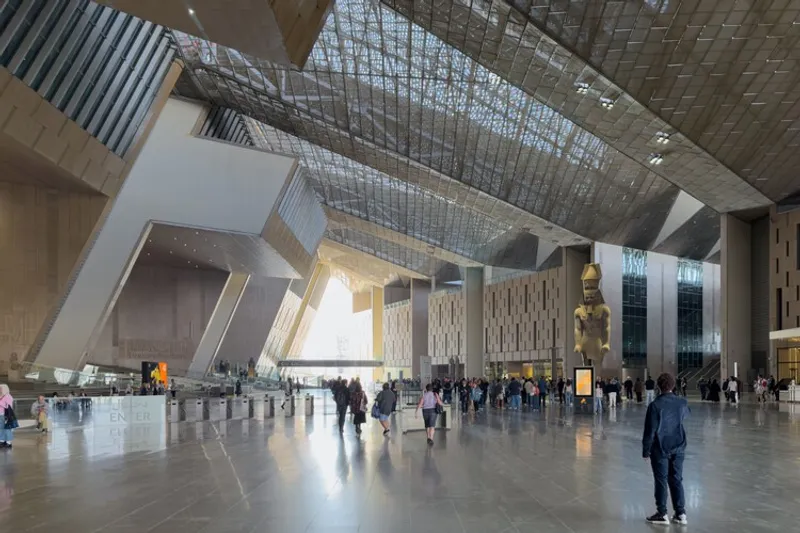
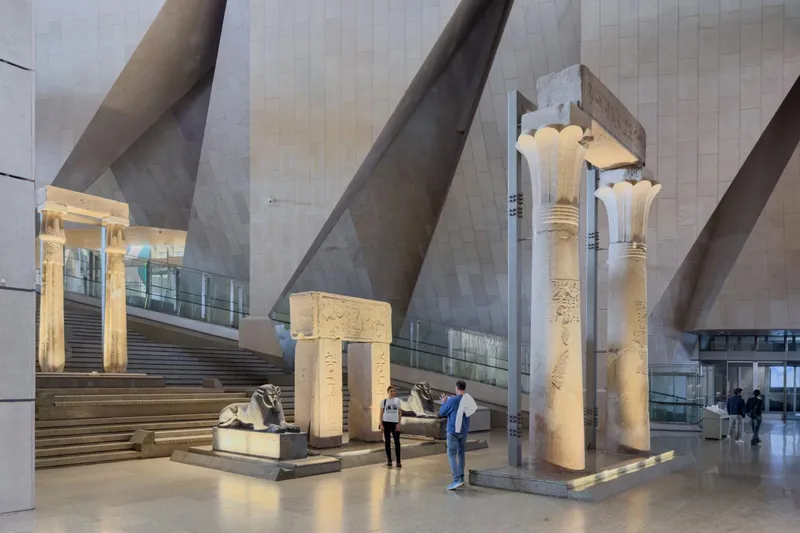
At the heart of the museum lies a grand six-story staircase, conceived as both a circulation spine and a chronological narrative device. Visitors ascend through Egypt’s history, beginning with the Predynastic Period and culminating in later eras, before arriving at the permanent exhibition galleries and the Tutankhamun collection at the summit.
Monumental artifacts—including the colossal statues of King Senusret I—are strategically positioned along the staircase at varying levels, reinforcing a sense of scale, continuity, and immersion. This spatial storytelling approach encourages visitors to physically and intellectually journey through millennia of civilization.
Light, Materiality, and Environmental Performance
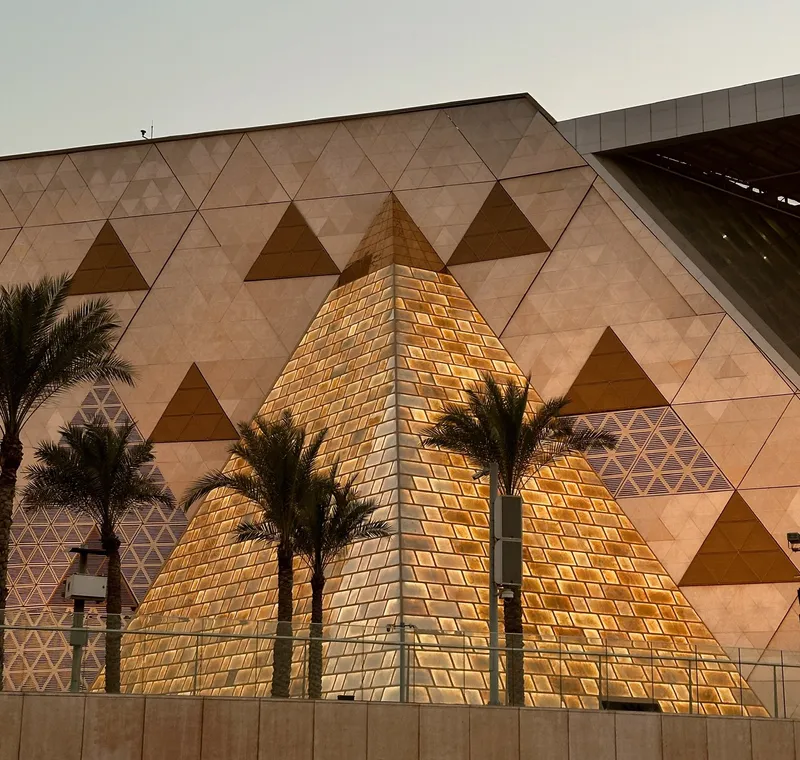
Contrary to conventional museum design, the Grand Egyptian Museum makes extensive use of natural daylight, particularly in major public spaces. Given the predominance of stone artifacts, the architects were able to introduce controlled natural light while maintaining conservation standards. This enhances the visitor experience and reinforces the museum’s connection to its desert environment.
The structure is primarily constructed of concrete, providing thermal mass that stabilizes internal temperatures and reduces reliance on mechanical cooling systems—an essential strategy given Cairo’s climate. The result is a museum that performs efficiently while maintaining environmental resilience at an immense scale.
Landscape as Cultural Narrative
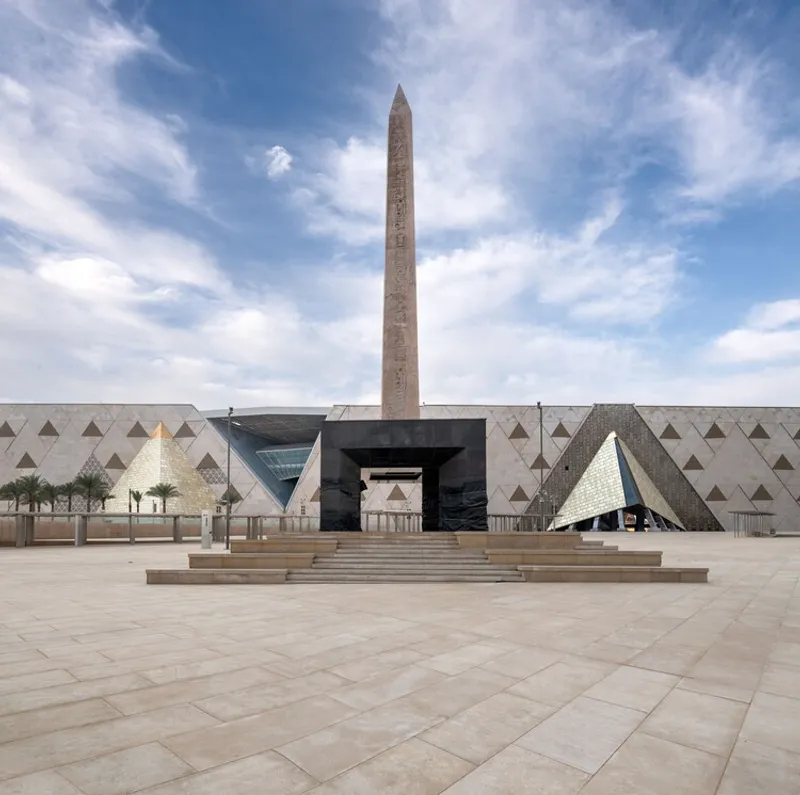
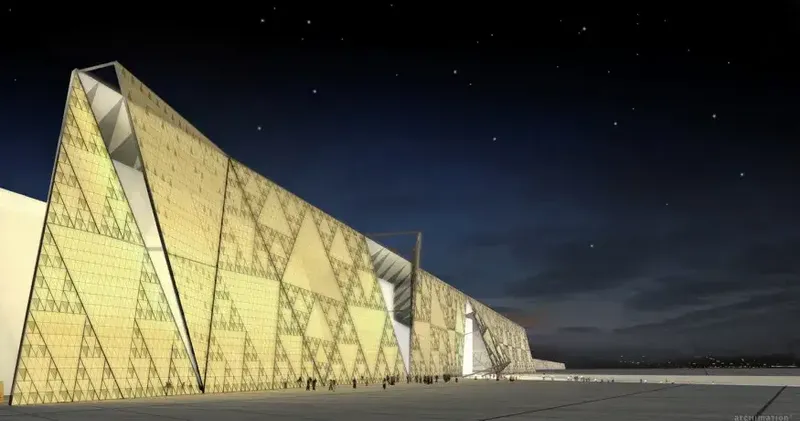
The museum complex extends beyond exhibition halls to include 5 hectares of landscaped public space, designed in collaboration with West 8. The Welcome Plaza, Thematic Gardens, and Grand Hall forecourt reference the ancient Nile floodplain, evoking the ecological conditions that enabled Egypt’s civilization to flourish.
Date palms, green terraces, and expansive outdoor exhibition areas tell the story of how stones for the pyramids were once transported by river. Spanning nearly 800 meters in length, the museum campus reveals itself gradually, offering both monumental presence and public accessibility.
Conservation, Research, and Legacy
Equally significant is the museum’s role as a global conservation and research hub. Connected to the main building via a tunnel, the conservation center includes 17 specialized laboratories, making it one of the largest facilities of its kind in the world. These labs are equipped to handle a vast range of materials—from papyrus and textiles to sculpture, pottery, and human remains—ensuring the long-term preservation of Egypt’s priceless heritage.
A Cultural Landmark for the Future
The Grand Egyptian Museum is more than a museum—it is a national symbol, a world heritage asset, and a benchmark in contemporary museum architecture. Through its powerful integration of architecture, landscape, sustainability, and storytelling, GEM sets a new global standard for how ancient history can be presented in a modern context.
As millions of visitors from around the world prepare to experience this extraordinary institution, the Grand Egyptian Museum stands as a timeless bridge between past and present—rooted in the land of the pyramids, yet firmly oriented toward the future.
All the photographs are works of Georges & Samuel Mohsen – The GS Studio, Iwan Baan




Popular Articles
Popular articles from the community


Co-life: Sustainable Architecture for Age-Friendly Community Living
Co-life reimagines sustainable architecture for seniors through courtyards, rammed earth, shared gardens, and spaces designed for belonging.

The Musturak Paradise: Senior Living Architecture for a Connected Future in Temara, Morocco
The Musturak Paradise reimagines senior living architecture in Temara via private homes, social spaces, culture, community, and shared care.

Play: Fragments of Their World
Familiar architecture becomes modular playground design, creating safe spaces where displaced children can learn, connect, imagine and play.

The Ocean Hive: Sustainable Architecture for a Self-Sufficient Civilization at Sea
The Ocean Hive imagines sustainable architecture at sea, where modular habitats, algae, wave power and ocean waste sustain a growing colony.

Similar Reads
You might also enjoy these articles


Hodi-Mandai Geram
Project Function: Preservation and revitalization of the Intangible heritage and socio-spatial identity of the Hodi by Housing, Cultural Memory Center, Sacred Grove, landscape, local tourism economy


Olio Towers: A Mid-Rise for Performers That Fuses Housing, Rehearsal, and Stage
Located blocks from Houston's Theater District, this modular tower stacks living units around a central performance atrium.

Oasis: Modular Green Housing Carved into Dhaka's Urban Fabric
A shortlisted Plugin Housing entry reclaims unauthorized settlements in Dhaka with stepped concrete volumes, green roofs, and ventilation-driven design.

Black Hole: A Floating Megastructure for the Post-Physical Era
Emiliano Mazzarotto envisions a spherical, self-scaling arena where e-sports, digital hotels, and holographic stadiums replace traditional public space.


Explore Cultural Architecture Competitions
Discover active competitions in this discipline



Challenge to reimagine the Iron Throne


Photograph architecture without architects


Illustrate the lost glory of Angkor Wat - Render Challenge


Bring back Drive In's
Comments (0)
Please login or sign up to add comments
No comments yet. Be the first to comment!