
The Spine:
A Celebration of Mardi Gras and Collective Presence

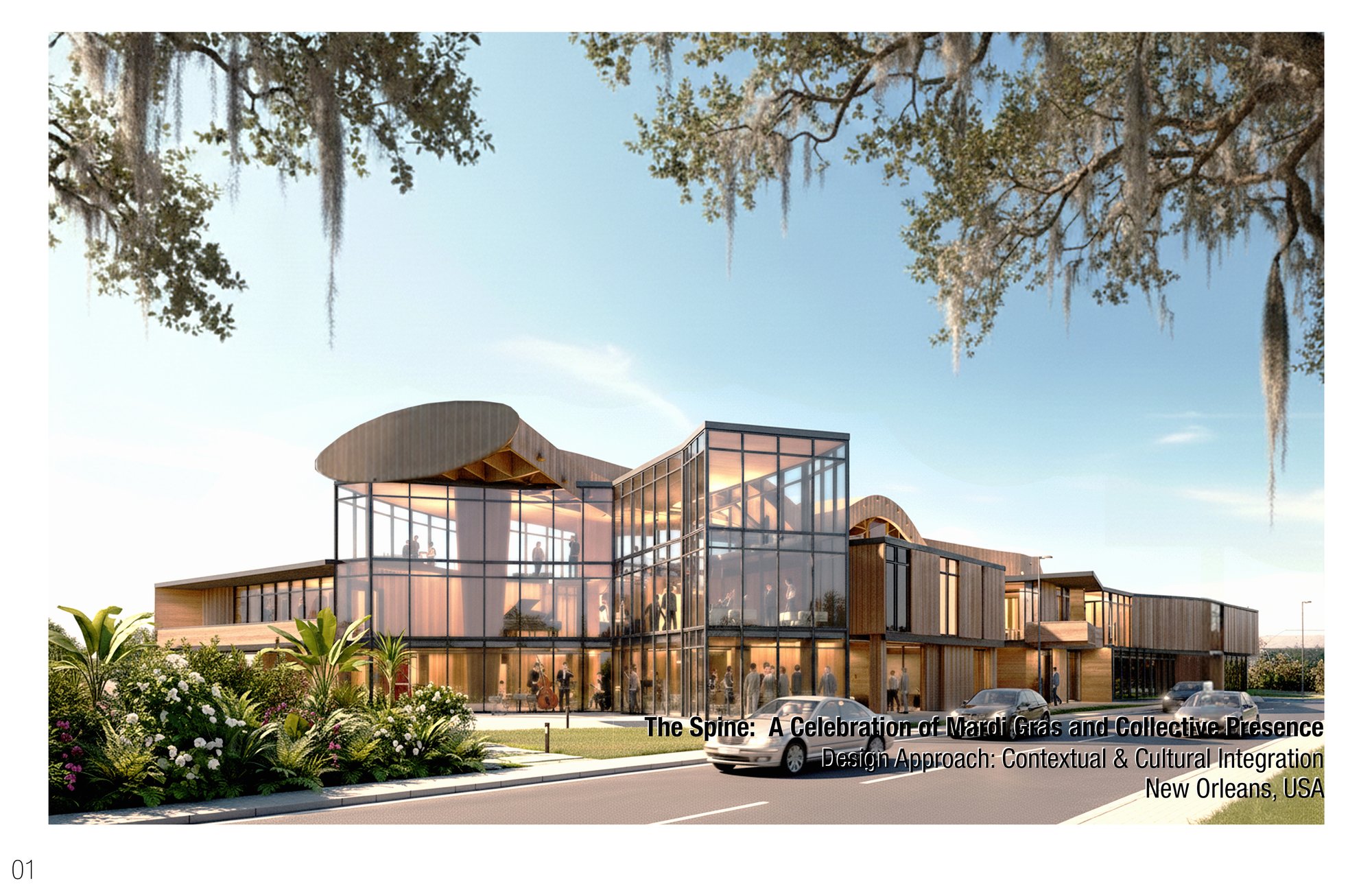
Project Description The Spine is a community center sited in the Seventh Ward of New Orleans that reinterprets the cultural and spatial essence of Mardi Gras into a permanent architectural framework. Drawing from the festival’s core elements—the people, the venue, and the float—the project translates the ephemeral intensity of the parade into enduring spatial typologies. Instead of dispersing Carnival across disconnected streets and balconies, the building consolidates it within a unified venue, allowing parades, performances, and communal gatherings to converge in a single architectural spine. The design celebrates the collective presence of Carnival, offering the city a space where festivity, craft, and memory coexist year-round.
Design Process The process began with broad research into Mardi Gras’ cultural categories—history, music, food, masquerade, floats, and people. Among these, the spatial dimension of venue and space became the primary lens of investigation. Historically, Carnival has relied on temporary installations, balconies, and urban streetscapes to accommodate its shifting audiences. The project seeks to re-create and reinterpret these conditions architecturally.
On the ground floor, a series of flexible enclosures line the central path. During parade season, these spaces can be closed off to form sheltered niches for spectators, offering protected vantage points from which to engage the procession. In other seasons, they serve as extensions of adjacent program spaces, maintaining continuity of use. Above, the building is organized around a central linear path that bisects the mass—an architectural parade route threading through fabrication workshops, theaters, and gathering zones. This circulation spine operates simultaneously as a literal passage and a symbolic gesture, embodying Carnival’s processional character.
The building form draws inspiration from the Mardi Gras float itself, understood as both a vessel of movement and a stage for spectacle. The elongated body of the project culminates in a transparent sculptural head—a glass volume suspended at the terminus of the spine. Like the leading figure of a float, this beacon houses gathering and exhibition spaces while projecting visibility outward, making the celebration legible to the city.
Architectural Expression and Structure The project is unified under a vast urban canopy—a waffle-like timber structure suspended above the spine. This canopy undulates like a wave, emphasizing movement and procession while visually tying the two halves of the building together. Supported by five monumental zig-zagging columns, the canopy functions as both a structural device and a civic ceiling, inscribing Carnival’s dynamism into architectural form.
The primary structure employs mass timber construction: glulam columns and beams paired with CLT panels. This system foregrounds sustainability while echoing the craftsmanship inherent in float-making. The timber frame serves as a tectonic armature, both robust and adaptable—qualities essential to Carnival itself.
Program and User Experience The program follows the studio brief while integrating Carnival’s operative typologies:
- Fabrication (Ground Floor): Workshops for wood, metal, and textiles are clustered along the central path, connected by loading access and open pilotis that double as public gathering spaces.
- Performance (Ground Floor): A theater space anchors the public realm, designed for both staged productions and informal community events.
- Exhibition (First Floor): The first floor serves as a vantage point for experiencing both the parade and its making. Galleries display the costumes, floats, and artifacts of Carnival, while large interior voids open views into the ground-floor workshops, allowing visitors to witness the ongoing process of construction. In this way, the exhibition is not limited to finished objects but extends to the dynamic act of making, turning craft itself into part of the spectacle.
- Gathering Spaces: Transparent glass boxes, located at the head of the building, serve as luminous beacons of assembly, projecting activity outward and framing collective moments.
The ground floor path becomes the parade route itself, a civic corridor where performances unfold and where spectators, artists, and community members intermingle.
Cultural Resonance The building envelope is conceived as a textile of memory, patterned with motifs drawn from the diverse cultural groups that have shaped Mardi Gras—African, Caribbean, Creole, and Indigenous traditions. Inspired by textile geometries such as Kente cloth, these patterns are embedded into the façade and shading devices, allowing the building to “wear the cloth of Carnival” during festival seasons.
By merging float-inspired form, processional space, and culturally resonant ornament, The Spine offers New Orleans a permanent vessel for celebration. It is both archive and stage, workshop and theater, beacon and canopy. Above all, it is an architecture of collective presence, carrying forward the spirit of Carnival into the everyday life of the city.

Popular Articles
Popular articles from the community

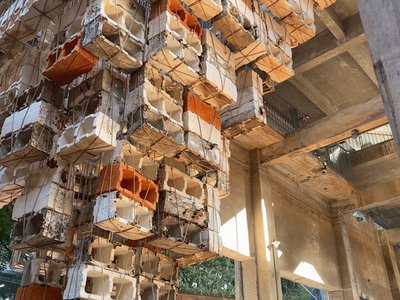
Inverted Architecture Installation by Studio Link-Arc: Exploring the Intersection of Architecture and Living Organisms
Inverted Architecture Installation by Studio Link-Arc blends mycelium, sustainability, inverted design, ecological cycles, and urban adaptive architecture in Shenzhen.
Atelier Macri Concept Store Interior Design by CASE-REAL
Atelier Macri store features a "ko" counter, walnut wood details, cork displays, blending retail, gallery, and seamless customer experiences.

Free Architecture Competitions You Can Enter Right Now
No entry fees, real prizes. Here are the best free architecture competitions open for submissions in 2026.
Solar Steam: A Climate-Responsive Architecture That Redefines the Monument
A climate-responsive memorial architecture that transforms heat, decay, and time into a living system reflecting humanity’s ecological impact.

Similar Reads
You might also enjoy these articles
ORACLE: A Sustainable Memorial Architecture Responding to Climate Urgency
A sustainable memorial architecture in Cairo that transforms climate urgency into spatial experience, urging collective reflection and action
Suspended: Reimagining Paris Through Adaptive Reuse Architecture
A suspended intervention transforms abandoned Paris railways into inclusive, adaptive reuse architecture bridging heritage, mobility, and public life.
Solar Steam: A Climate-Responsive Architecture That Redefines the Monument
A climate-responsive memorial architecture that transforms heat, decay, and time into a living system reflecting humanity’s ecological impact.
Rolly: A Modular Approach to Urban Regeneration Architecture on Paris’ Petite Ceinture
A modular urban regeneration architecture project transforming Paris’ abandoned railway into a dynamic, movable and community-driven public space

Explore Architecture Competitions
Discover active competitions in this discipline




The International Standard for Design Portfolios


The Global Benchmark for Architecture Dissertation Awards


The Global Benchmark for Graduation Excellence


Challenge to reimagine the Iron Throne
Comments (0)
Please login or sign up to add comments
No comments yet. Be the first to comment!