
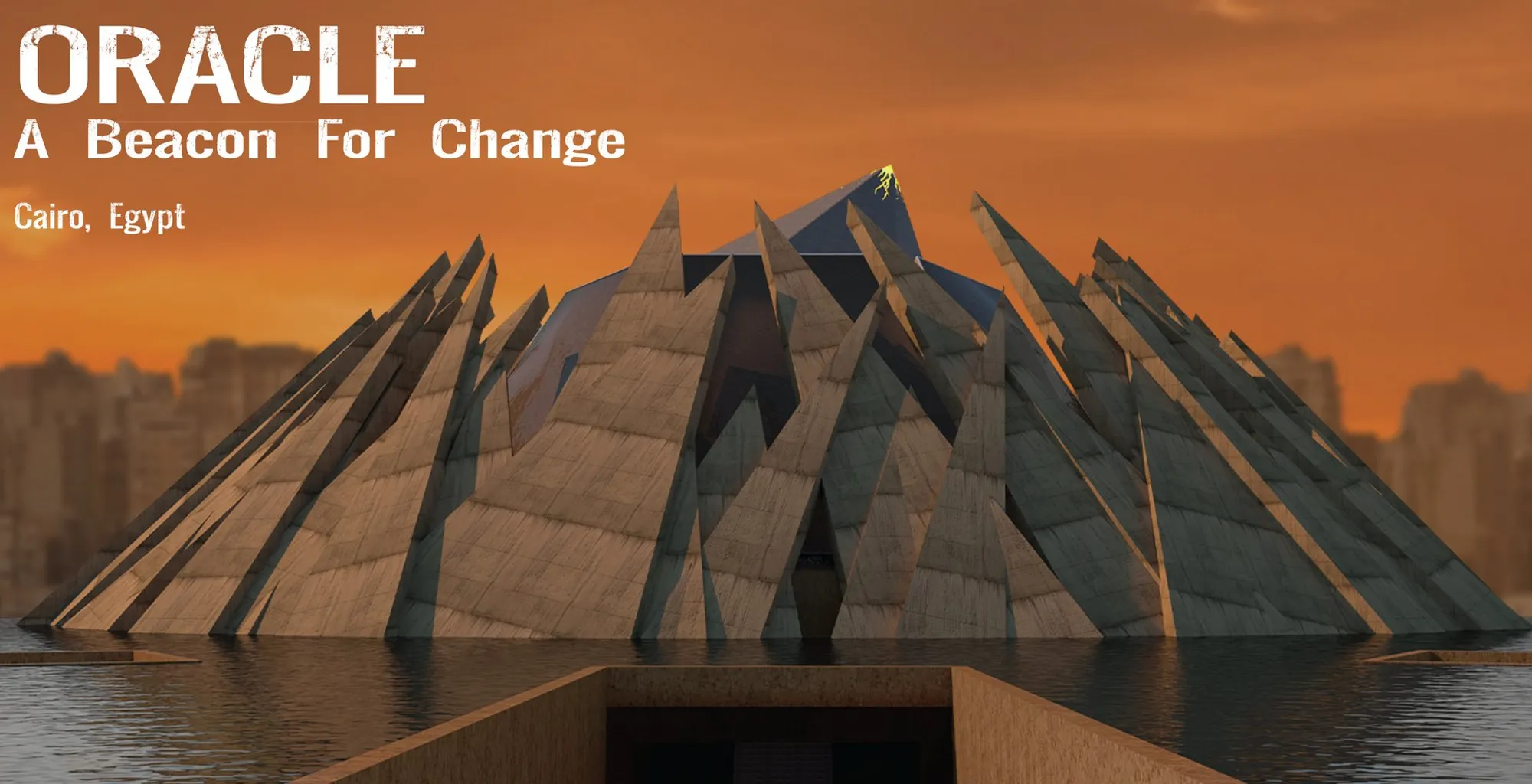
ORACLE: A Sustainable Memorial Architecture Responding to Climate Urgency
A sustainable memorial architecture in Cairo that transforms climate urgency into spatial experience, urging collective reflection and action


In an era defined by environmental instability and accelerating climate change, architecture is increasingly positioned not only as a solution-driven discipline but also as a medium of reflection and awareness. ORACLE, a conceptual memorial designed by Trevor Guck, emerges as a powerful exploration of sustainable memorial architecture, where spatial experience becomes a catalyst for environmental consciousness.
Situated in Cairo, Egypt, ORACLE is conceived as a beacon for change, addressing the growing disconnect between humanity and the natural world. The project transcends traditional memorial typologies by shifting its focus from remembrance of the past to a critical engagement with the present and future of the planet.
Sustainable Memorial Architecture as Mediation
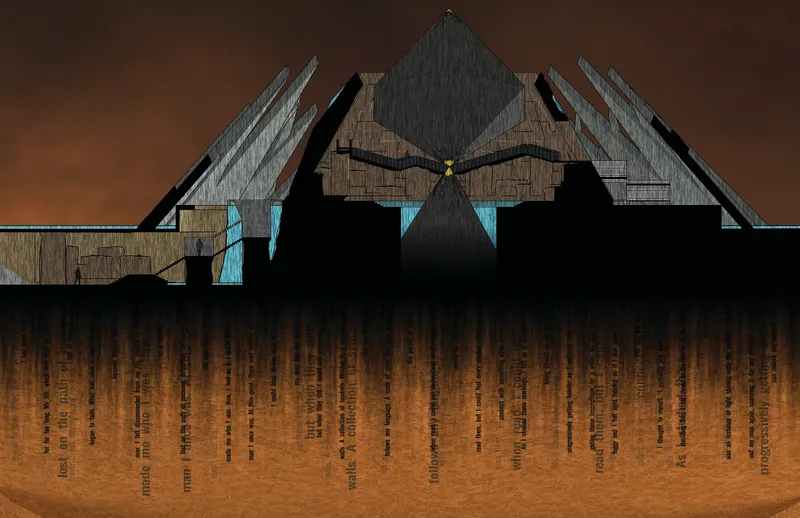
At its core, ORACLE operates as a mediator between humans and Earth. The project articulates the injustices imposed on the environment through a carefully choreographed sequence of spaces. Rather than presenting information in a didactic manner, the design uses architecture itself as a communicative medium.
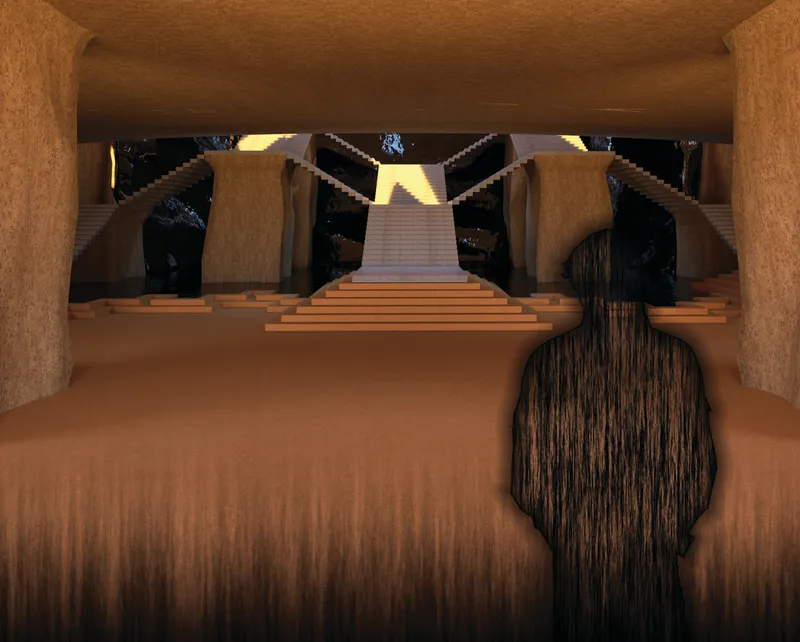
The journey through ORACLE is immersive and introspective. Visitors are guided through subterranean and elevated spatial layers that evoke both physical descent and emotional introspection. This duality reflects the tension between human progress and environmental degradation.
Spatial Narrative and Emotional Architecture
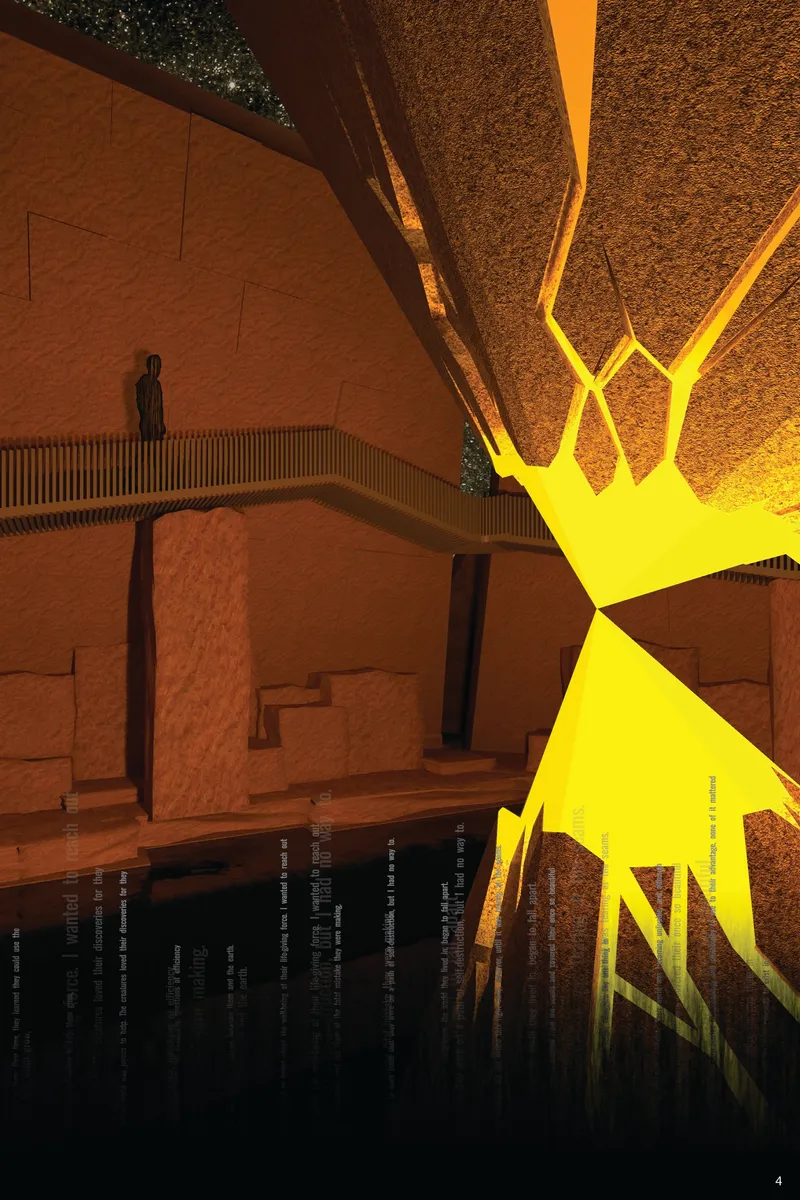
The architectural language of ORACLE is defined by sharp, fragmented geometries that appear to emerge from and dissolve into the ground. These tectonic expressions symbolize rupture, instability, and the fragility of ecological systems.
Internally, the project unfolds through a series of interconnected spaces, where light, shadow, and materiality are orchestrated to provoke emotional responses. Water becomes a central experiential element, flowing through the memorial to signify the passage of time and the irreversible nature of environmental damage.
The presence of cascading texts embedded within surfaces further enhances the narrative. These inscriptions act as a collective memory, reinforcing the urgency of the climate crisis while grounding the experience in human accountability.
Climate-Responsive and Low-Impact Design Strategy
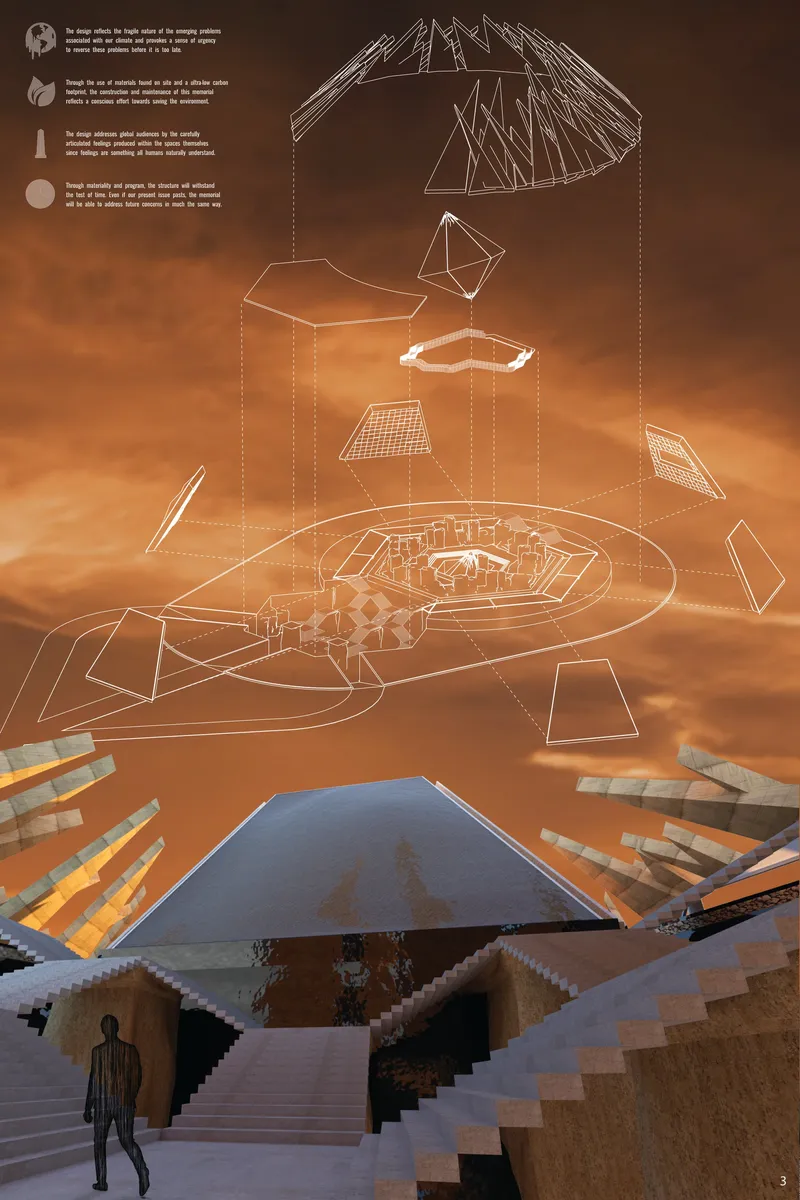
A defining aspect of this sustainable architecture proposal is its emphasis on minimizing environmental impact. The use of locally sourced materials and an ultra-low carbon footprint ensures that the construction and maintenance align with the project's ecological ethos.
By integrating passive design strategies and leveraging the thermal properties of earth-based construction, ORACLE reduces energy dependency while maintaining spatial comfort. This approach reinforces the idea that sustainable architecture is not merely a technological solution but a philosophical commitment.
Temporal Awareness and the Role of Water
Time is a central theme within ORACLE. The continuous movement of water through the structure serves as a metaphor for urgency, reminding visitors that environmental degradation is an ongoing process that cannot be postponed.
This dynamic element introduces a temporal dimension to the architecture, transforming the memorial into a living system rather than a static monument. It reinforces the idea that action must be immediate, as time, like water, is constantly slipping away.
Universality and Global Relevance
While rooted in the context of Cairo, ORACLE addresses a global audience. The project relies on universally understood emotional cues rather than culturally specific symbols, allowing it to resonate across diverse contexts.
The spatial experience is designed to evoke empathy, responsibility, and introspection. By focusing on shared human emotions, the memorial transcends geographical boundaries and becomes a global call to action.
Architecture as a Call to Action
Unlike conventional memorials that commemorate completed events, ORACLE is forward-looking. It challenges visitors to reflect on their role in shaping the future and encourages them to translate awareness into action.
The architecture does not provide answers but instead creates conditions for questioning. It leaves visitors with a sense of urgency and responsibility, reinforcing the idea that sustainable change begins with individual and collective awareness.
ORACLE redefines the role of memorial architecture within the discourse of sustainable architecture. By merging environmental responsibility with experiential design, it transforms architecture into an active participant in the climate conversation.
Through its powerful spatial narrative, material strategy, and symbolic use of elements such as water and light, ORACLE stands as a compelling example of how architecture can move beyond functionality to influence thought, behavior, and global awareness.
In doing so, it positions itself not merely as a structure, but as a transformative experience, one that urges humanity to reconsider its relationship with the planet before time runs out.



Popular Articles
Popular articles from the community


The Ocean Hive: Sustainable Architecture for a Self-Sufficient Civilization at Sea
The Ocean Hive imagines sustainable architecture at sea, where modular habitats, algae, wave power and ocean waste sustain a growing colony.

Play: Fragments of Their World
Familiar architecture becomes modular playground design, creating safe spaces where displaced children can learn, connect, imagine and play.

Co-life: Sustainable Architecture for Age-Friendly Community Living
Co-life reimagines sustainable architecture for seniors through courtyards, rammed earth, shared gardens, and spaces designed for belonging.

Co-Life: Senior Housing Design That Reconnects Older Adults With the City
Co-Life reimagines senior housing design through healing gardens, shared streets, workshops, and a sustainable community across generations.

Similar Reads
You might also enjoy these articles

Eco Chapel: A Green Architecture Pavilion Designed in Symbiosis with the Forest
Eco Chapel uses green architecture to weave prayer, learning and reuse into a forest pavilion shaped by modular hexagonal canopies for life.
Kaffeebühnen: Coffee Shop Architecture Designed as a Civic Stage Between Vienna’s City and Park
Kaffeebühnen turns coffee shop architecture into a civic stage, linking Vienna’s park edge, urban life, warm timber yards, and coffee craft.
Healing Façade: Sustainable Architecture for Reforestation, Community, and Sacred Ecology in Ethiopia
Healing Façade reimagines sustainable architecture as a living wall that restores soil, catches water and renews Ethiopia's forest churches.


Urban Forest: A Vertical Ecosystem for 5,000 Workers in Singapore's Changi Business Park
Radially stacked pods and layered green decks turn a 7-acre plot into 47 acres of ecological workspace projected for 2040.





Comments (0)
Please login or sign up to add comments
No comments yet. Be the first to comment!