
ThinkStay Mt. Cabins: A Creative Mountain Retreat by Osamu Morishita Architect & Associates
Forest hillside cabins near Mt. Rokko create a creative retreat, using stilted structures and double-skin facades to blend workspaces with nature.


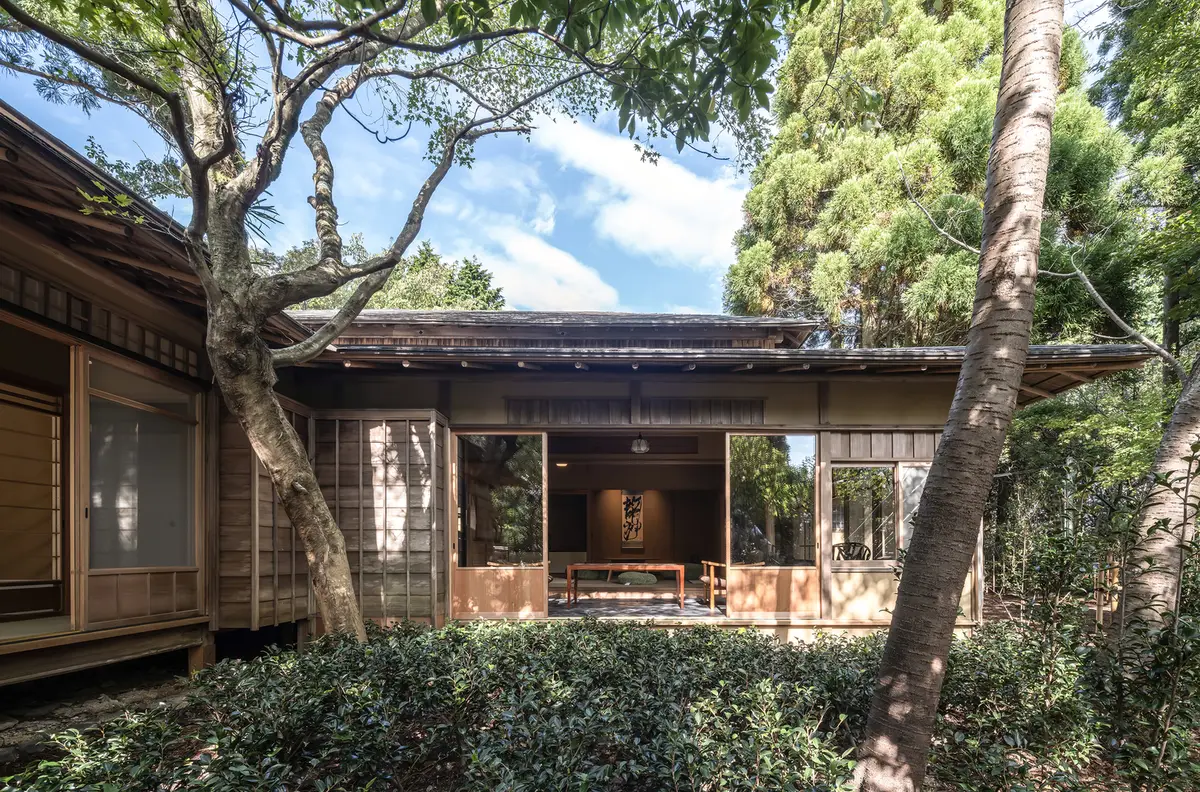
Nestled within the serene forested slopes of Mount Rokko in Kobe, Japan, ThinkStay Mt. Cabins is a unique architectural project designed by Osamu Morishita Architect & Associates. Completed in 2023, the 371-square-meter development introduces a contemporary interpretation of mountain retreats by blending architecture, nature, and creativity. Located at an altitude of approximately 760 meters near Rokko Cable Sanjo Station, the project offers a tranquil “third place” environment, somewhere between home and workplace, designed to inspire new ideas and foster creative thinking.
Mount Rokko is one of the most iconic landscapes in the Kansai region and serves as a symbolic natural backdrop for the cities of Kobe and Osaka. The mountain range has long been a destination for recreation and leisure, making it an ideal setting for a project that encourages reflection, creativity, and immersive interaction with nature.
The Vision: Creating a “Third Place” for Creativity
The concept behind ThinkStay Mt. Cabins emerged from a desire to create a creative retreat and flexible workspace within nature. The architects envisioned a space where artists, designers, entrepreneurs, and remote workers could escape urban routines and reconnect with inspiration.
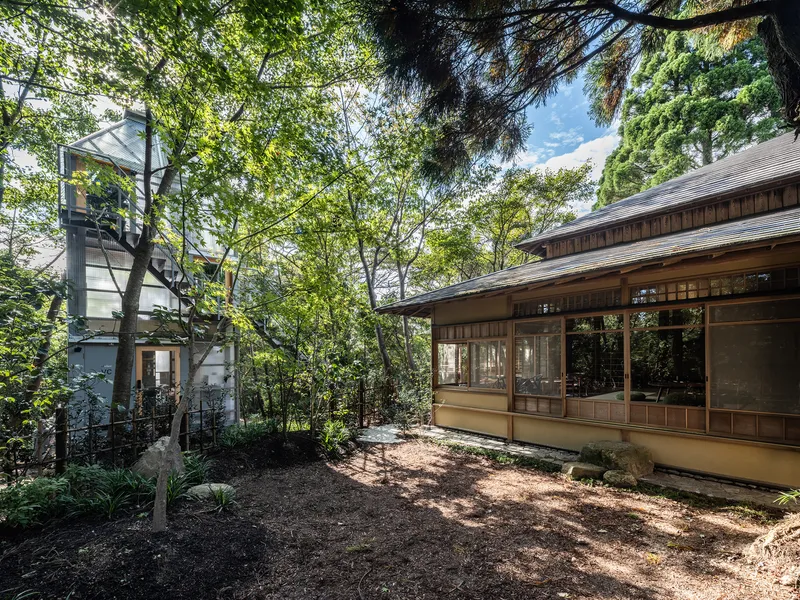
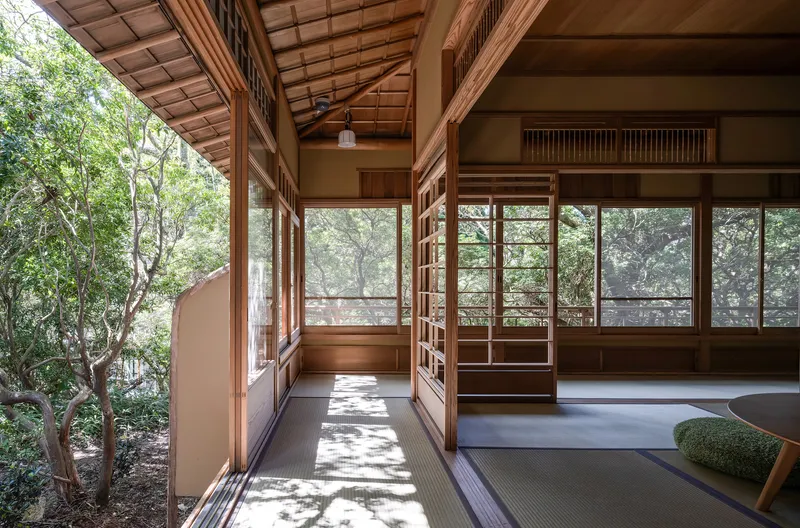
The idea began when a client shared the story of an abandoned villa on Mount Rokko that had been built by a master carpenter around 80 years ago. The property had remained unused for more than 25 years, slowly fading into the surrounding forest. Initially, the redevelopment seemed impossible due to strict environmental regulations and construction restrictions within the national park area.
However, the global COVID-19 pandemic changed perspectives about living, working, and the importance of adaptable spaces. Recognizing the need for environments that support creativity and new lifestyles, architect Osamu Morishita decided to acquire the property himself and transform it into an experimental architectural project known as ThinkStay Mt.
Reviving the Cultural Legacy of Mount Rokko
Mount Rokko once thrived as a prestigious summer resort destination in Japan’s Kansai region. Historically, the mountain hosted numerous attractions including Japan’s first golf course, artificial ski slopes, amusement parks, luxury villas, and health resorts. Ropeways and tourism facilities attracted visitors from major nearby cities.
Over time, however, strict environmental preservation regulations limited new construction within the national park zone. As tourism gradually declined, many historic villas and hospitality facilities were abandoned or closed, causing the cultural vibrancy of the area to slowly disappear.
The ThinkStay Mt. project aims to reintroduce life and creativity into this historic landscape while respecting environmental protection guidelines. By carefully integrating small-scale structures within the forest, the project demonstrates how architecture can revive cultural spaces without compromising ecological balance.
A Cluster of Atelier Cabins in the Forest
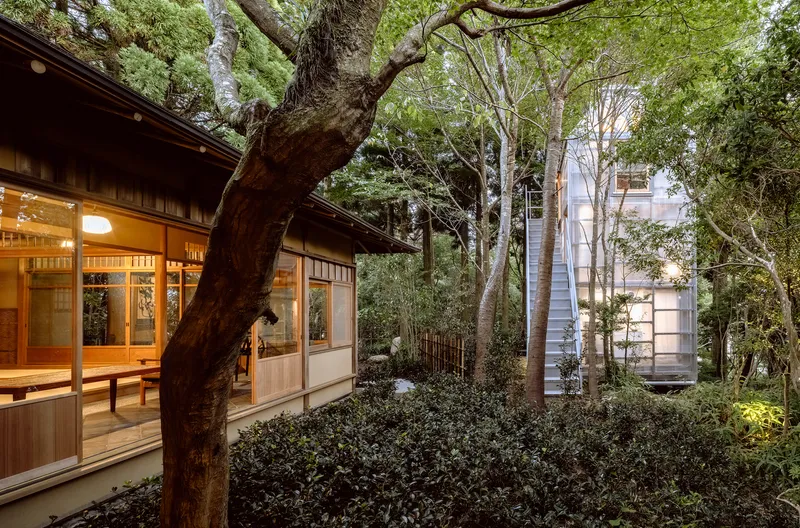
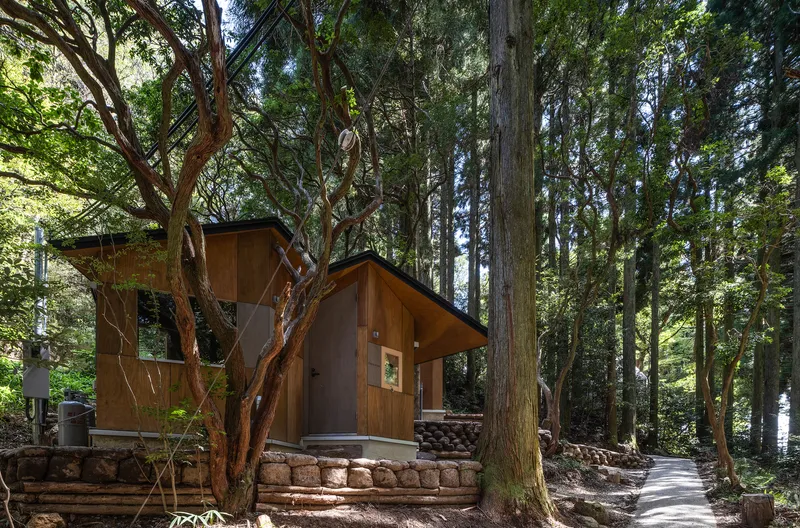
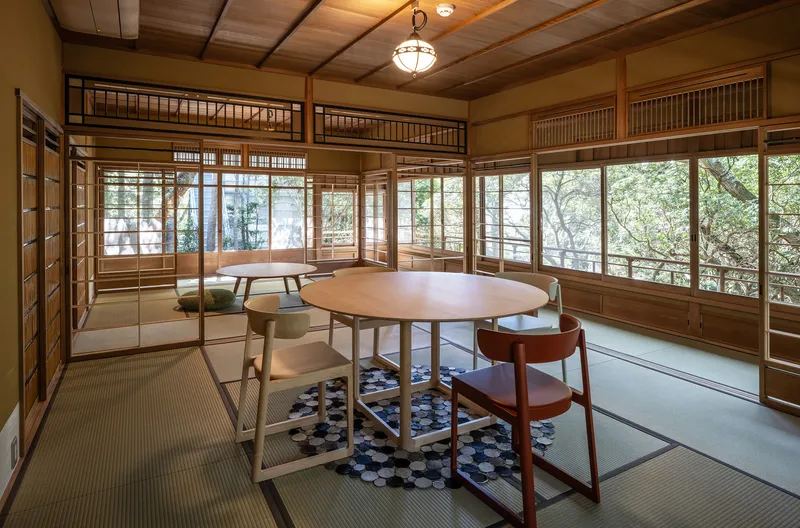
At the heart of ThinkStay Mt. Cabins is a cluster of five small atelier cottages designed for short-term stays, creative work, and retreats. These cabins are strategically positioned around an existing Sukiya-style structure known as “ShowIn,” which acts as the central element of the site.
Two primary cabin typologies define the project:
- HC (Horizontal Cabin) – A compact flat-type atelier designed for flexible workspaces and overnight stays.
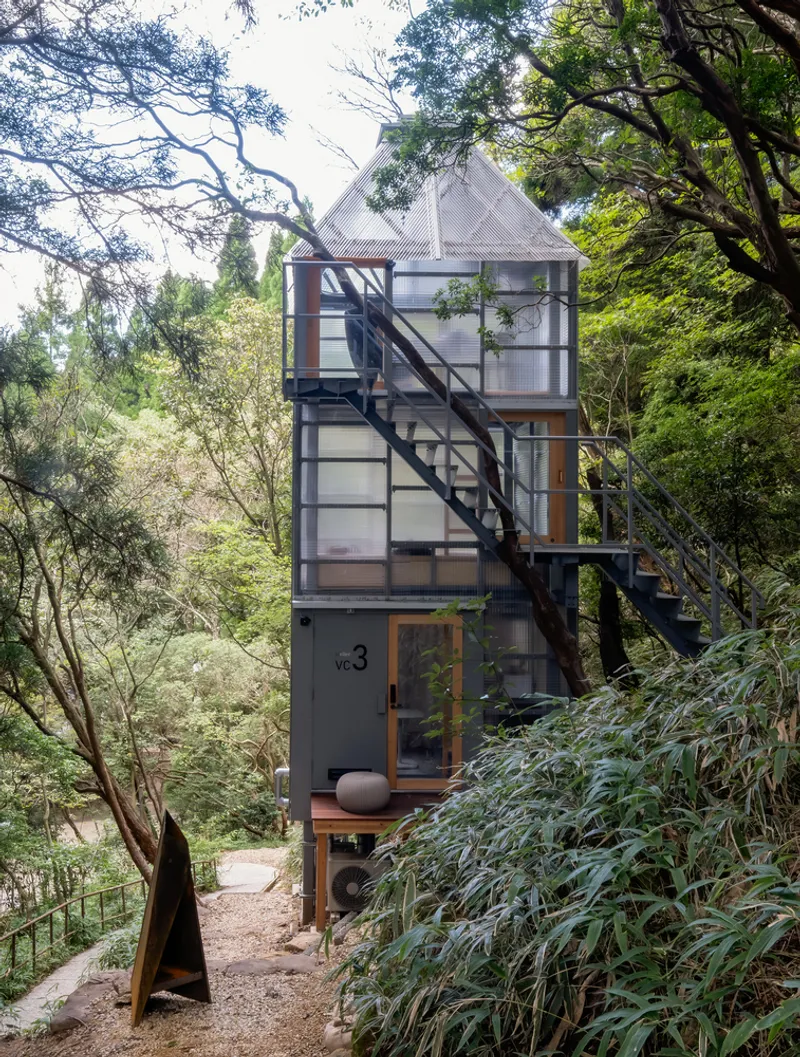
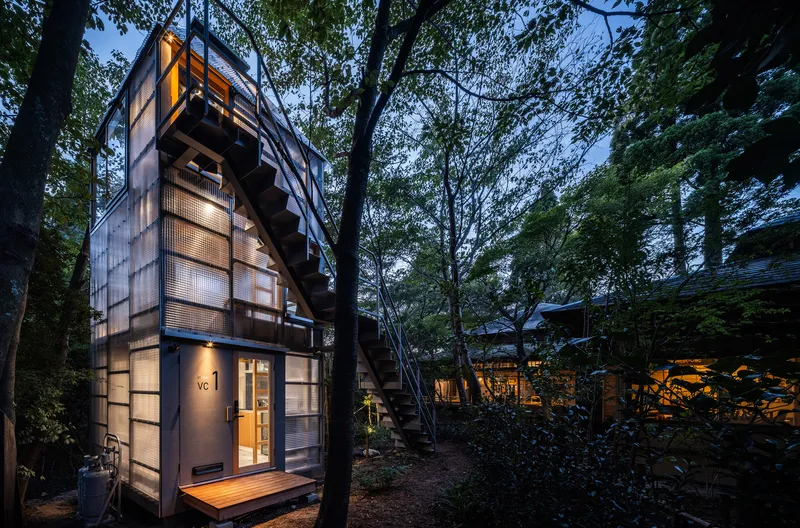
- VC (Vertical Cabin) – A tower-type structure that offers a vertical spatial experience with elevated views of the surrounding forest.
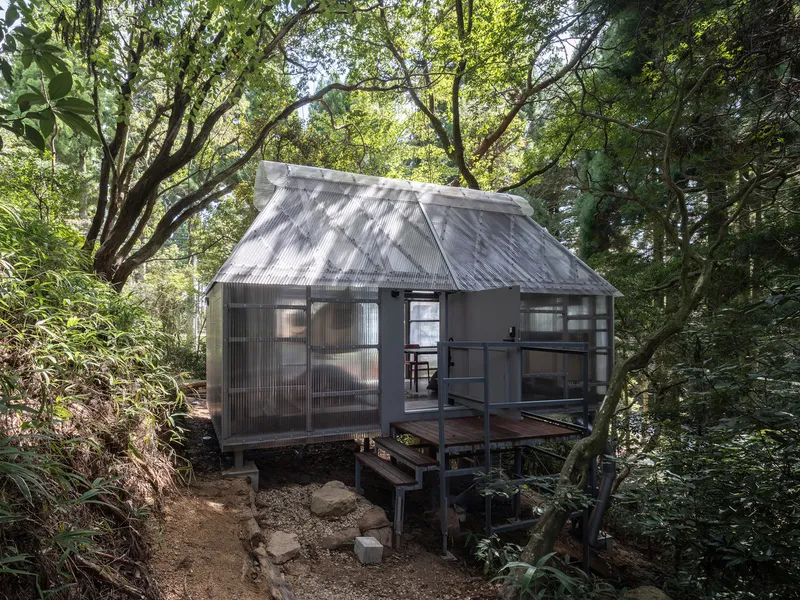
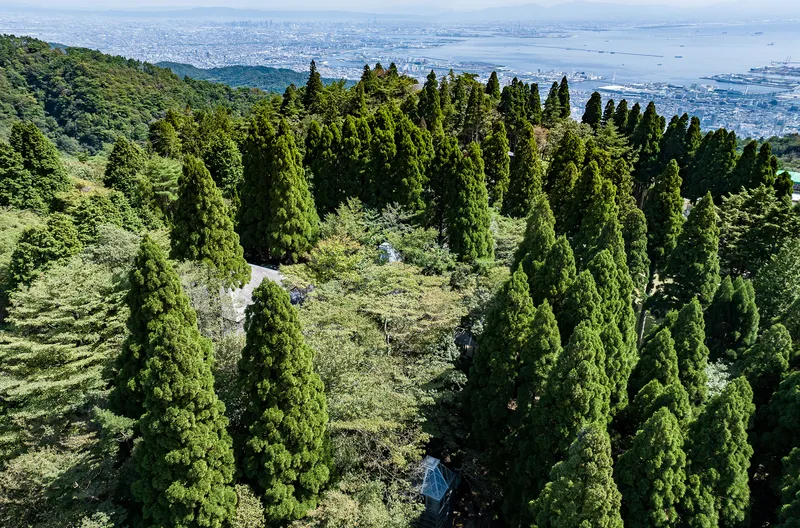
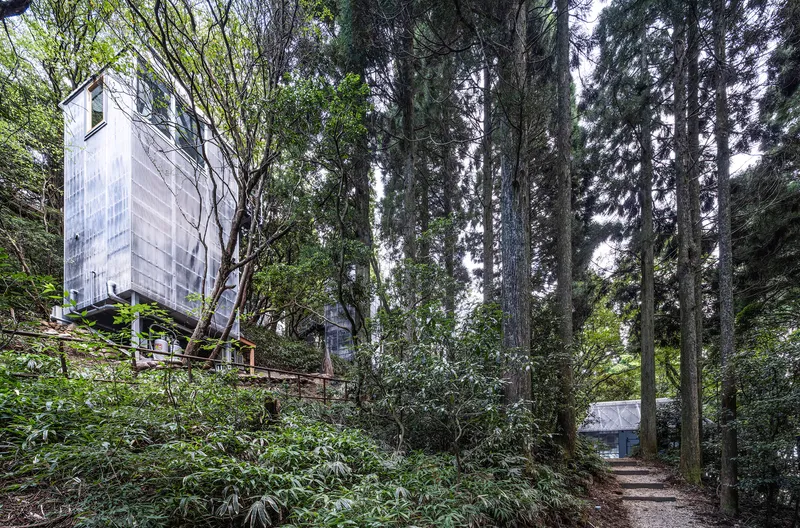
Each cabin is positioned carefully within the natural gaps between trees on the steep mountain slope. This approach minimizes environmental impact and preserves the existing vegetation while creating the sensation that the cabins are floating within the forest canopy.
Architectural Strategy for Steep Mountain Terrain
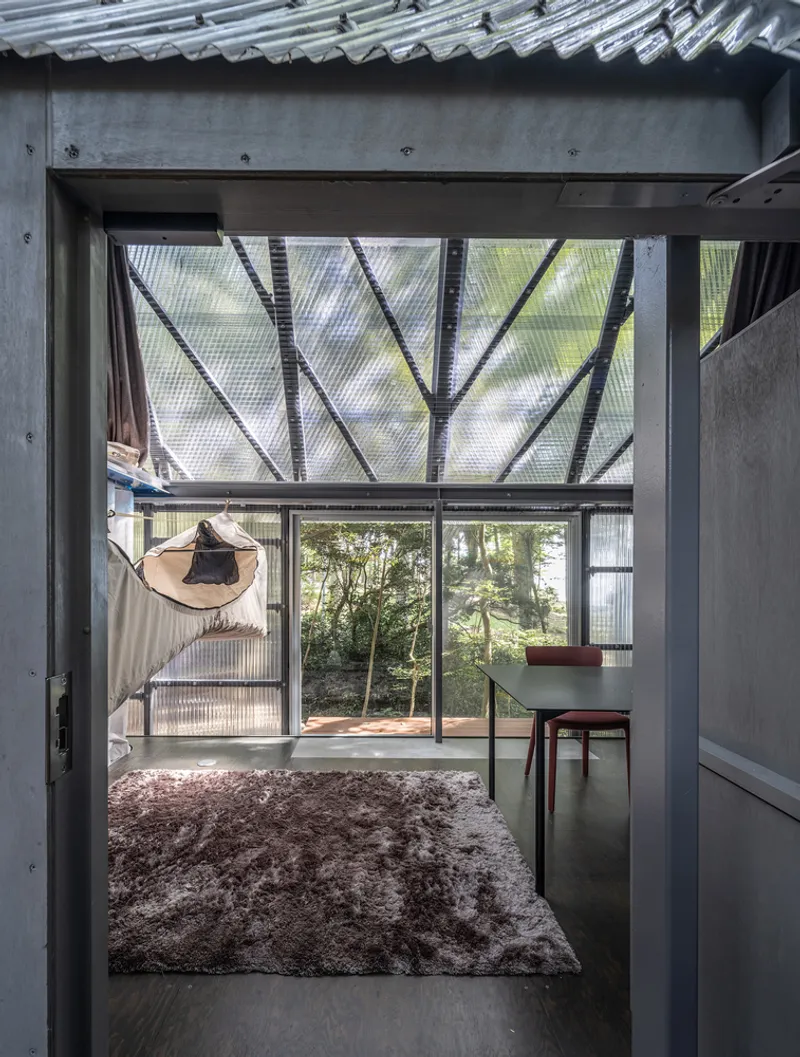
Designing architecture on a steep mountainous landscape presented significant technical and logistical challenges. To avoid extensive excavation and reduce the footprint of the buildings, the architects adopted a stilt-based structural system. The cabins are elevated above the ground, allowing them to rest lightly on the terrain while maintaining natural water flow and root systems beneath them.
Because heavy construction equipment could not access the slope, the design team undertook much of the construction work themselves. Materials were transported manually up the hillside, and the structure was assembled piece by piece with careful attention to the challenging topography.
This hands-on construction process allowed the architects to respond directly to the conditions of Mount Rokko, ensuring that each cabin fit naturally within the terrain.
Innovative Double-Skin Facade System
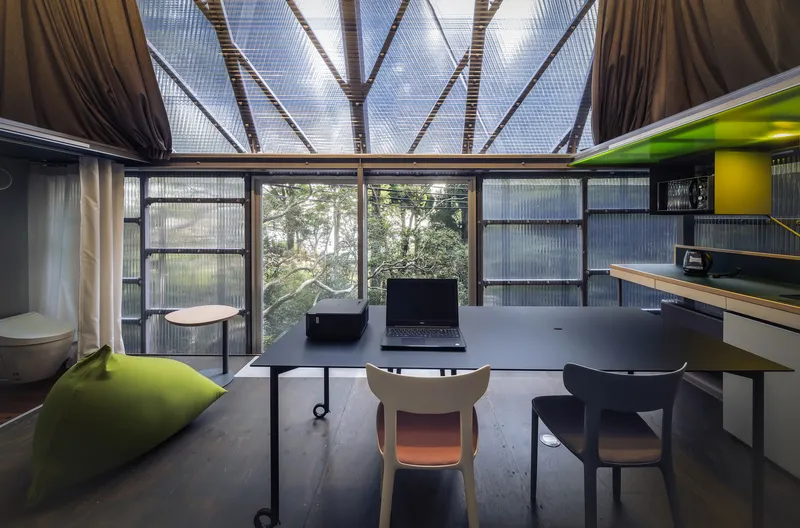
A key architectural feature of the cabins is the double-skin envelope constructed from polycarbonate corrugated sheets. These panels are attached to both sides of a subdivided steel frame, creating a lightweight yet durable building envelope.
The double-skin facade serves multiple purposes:
- It allows soft natural light to filter into the interior spaces.
- It creates thermal insulation suitable for mountain climates.
- It visually blends the cabins into the surrounding forest.
- It enhances the feeling of being suspended among the trees.
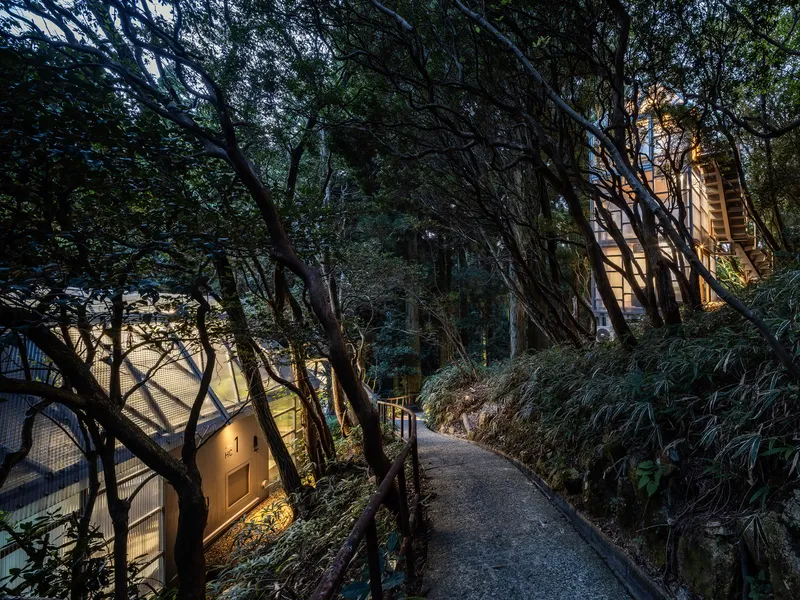
During the day, the translucent surfaces reflect the surrounding greenery, making the structures appear almost invisible from a distance. At night, the cabins glow softly within the forest, creating an atmospheric environment.
A Space to Experience Nature and Creativity
ThinkStay Mt. Cabins is not only a hospitality project but also an experimental environment designed to stimulate creativity and reflection. Guests staying at the cabins can immerse themselves in the natural landscape while working, thinking, or engaging in artistic activities.
Nearby attractions such as the famous Tenrandai Observatory, which offers panoramic views over Kobe and Osaka, further enhance the experience of the site. The project encourages visitors to slow down, reconnect with nature, and rediscover creative sensibilities often lost in urban life.
Architecture for the Future
In an era defined by global challenges such as climate change, earthquakes, and shifting lifestyles, ThinkStay Mt. Cabins explores new possibilities for architecture. By creating a flexible “third place” environment, the project demonstrates how small-scale design interventions can shape future living and working patterns.
Rather than dominating the landscape, the cabins coexist with the mountain ecosystem, allowing visitors to experience both the beauty and the harshness of nature. The project will continue to evolve over time, adapting to the needs of future generations and maintaining a dialogue between architecture, creativity, and the natural world.
ThinkStay Mt. Cabins stands as a compelling example of sustainable mountain architecture, thoughtful site integration, and innovative retreat design that connects people with the environment.
All photographs are works of
Hahakura Tomoki


Popular Articles
Popular articles from the community


U.GA Architects Wraps an Oval Rooftop Pool in Curved Board-Formed Concrete on Busan's Jeollidan-gil
In Busan's Jeonpo-dong, a 454 m² mixed-use block stacks a neighborhood facility, guest rooms and an oval rooftop pool inside spiraling concrete walls.

David Macias Steps a Doorless Stone and Plaster House Down a Tropical Colombian Hillside
In the humid hills of Colombia, Threshold House replaces the front door with an open void and terraces its 850 m² down the slope instead of fighting it.

Jaramillo Van Sluys Arquitectura and Urbanismo Turn a Demolished Registry Lot in Quito into an Orchard Plaza
In Quito's Centro Histórico, a 2,800 m² plaza exposes the San Agustín convent wall and redraws its lost Augustinian orchard in volcanic stone.

Cube Design Draws an Ecological Corridor Between Two Shenzhen Hills with the Nankai Building
Beside Shenzhen's container docks, the Nankai Building pairs stacked balconies with a climbing green screen to connect two hillsides across its height.

Similar Reads
You might also enjoy these articles

Gil Mello Arquitetura Tilts a Single Roof Toward the Waterfalls on a Plateau Above Aiuruoca, Brazil
In Aiuruoca, Minas Gerais, a 200 m² house of local labor and reclaimed poles pairs a low valley veranda with a tall mountain one.
U.GA Architects Wraps an Oval Rooftop Pool in Curved Board-Formed Concrete on Busan's Jeollidan-gil
In Busan's Jeonpo-dong, a 454 m² mixed-use block stacks a neighborhood facility, guest rooms and an oval rooftop pool inside spiraling concrete walls.

Felipe Hess Arquitetos Turns a Blind Stone Wall to the Street and Opens a Brazilian House onto a Courtyard and Canal
A canal-front house in Brazil hides behind painted stone and planting, then opens to an olive-tree courtyard, a reed-ceilinged porch and a curving pool.
David Macias Steps a Doorless Stone and Plaster House Down a Tropical Colombian Hillside
In the humid hills of Colombia, Threshold House replaces the front door with an open void and terraces its 850 m² down the slope instead of fighting it.

Explore Architecture Competitions
Discover active competitions in this discipline

Challenge to reimagine the Iron Throne

Photograph architecture without architects

Illustrate the lost glory of Angkor Wat - Render Challenge

Design challenge to reuse E-waste
Comments (0)
Please login or sign up to add comments
No comments yet. Be the first to comment!