

Timeless Beacon Pavilion by MAD Architects: Reviving Memory and Imagination in Foshan, China
Timeless Beacon Pavilion by MAD Architects transforms an abandoned market in Foshan into a reflective, light-filled installation symbolizing memory, rebirth, and imagination.


The Timeless Beacon Pavilion, designed by MAD Architects under the vision of Ma Yansong, stands as a poetic art installation in Taiping Xu, Nanhai, Guangdong Province, China. Commissioned by the Guangdong Nanhai Art Field, this temporary pavilion breathes new life into the abandoned Taiping Market, once the largest and most vibrant fairground in the village. More than an architectural installation, the pavilion is a symbolic bridge between the past and the future, weaving together history, memory, and imagination.
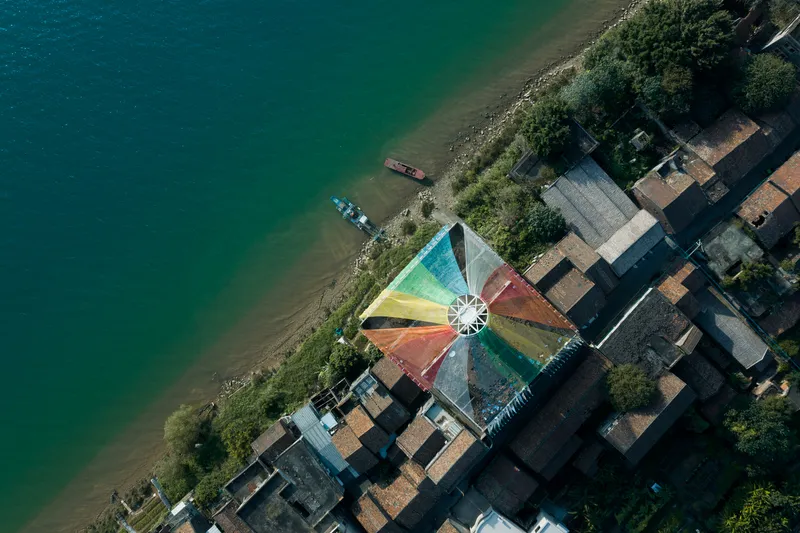
Historical Context: The Legacy of Taiping Market
Taiping Market, first established during the late Ming Dynasty, flourished for centuries as a hub where fishermen, traders, and villagers gathered for commerce and exchange. Its prosperity continued well into the 1980s, serving as the cultural and economic heart of the community.
However, the waves of rapid urbanization and the rise of the internet economy gradually shifted life away from physical markets. Young villagers sought opportunities in the cities, leaving Taiping Xu behind. Over time, the once-bustling market fell silent, its buildings left abandoned. Today, the site bears traces of its past—concrete houses interspersed with weathered brick structures, with only a handful of elderly residents reminiscing on doorsteps.
Concept and Vision
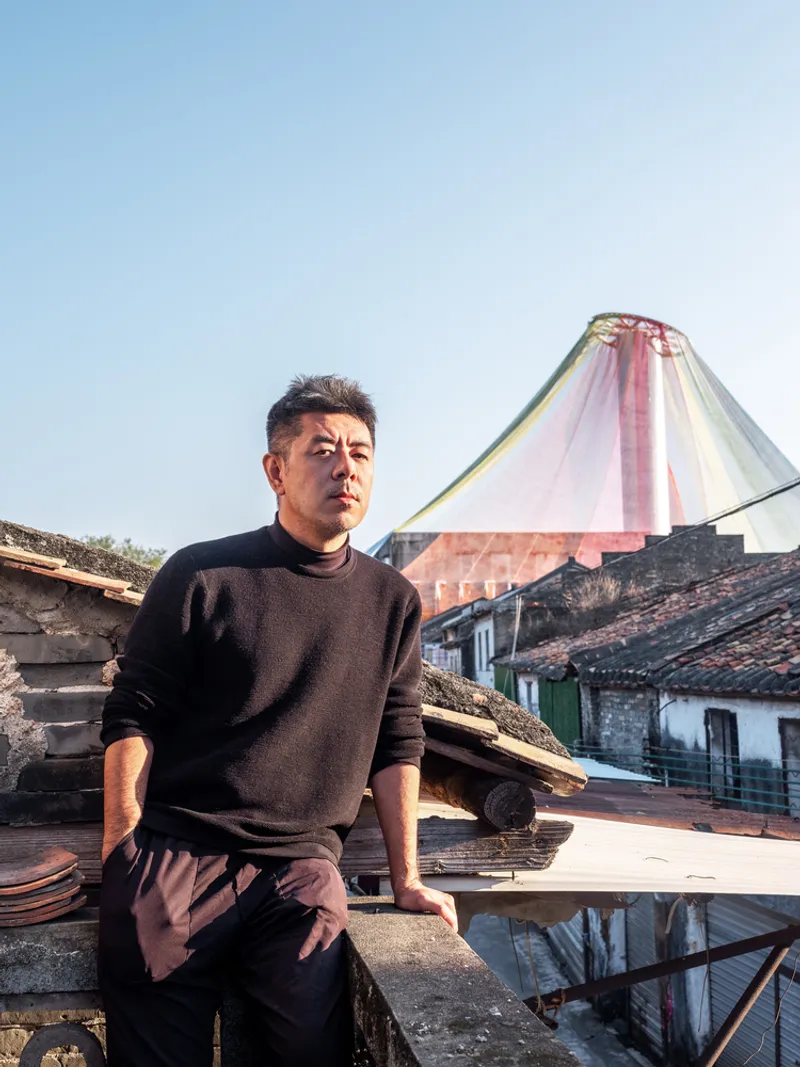
Ma Yansong’s design seeks to reawaken vitality within ruins, creating a pavilion that reflects on the passage of time while offering new meaning. As he notes:
“I see many plants growing towards the sun from the gaps of the abandoned building. We hope to create a sense of vitality and rebirth from the ruins so that people can feel new energy and perception from the old structure, as well as a new understanding of time to this whole area.”
The Timeless Beacon is not just an architectural intervention; it is an act of storytelling. It parallels history and the future, inviting visitors to rediscover the value of a place once deemed obsolete.
Design Approach: Reflective Surrealism
The installation transforms a three-story abandoned market building into a luminous artwork.
- Reflective Film Façade: The entire structure is wrapped in reflective film, creating a dreamlike mirror of the surrounding streets. The façade blurs reality, blending old with new, memory with imagination.
- Interior Spatial Illusion: The reflections extend indoors, altering perceptions and dissolving boundaries between the physical building and its historical context.
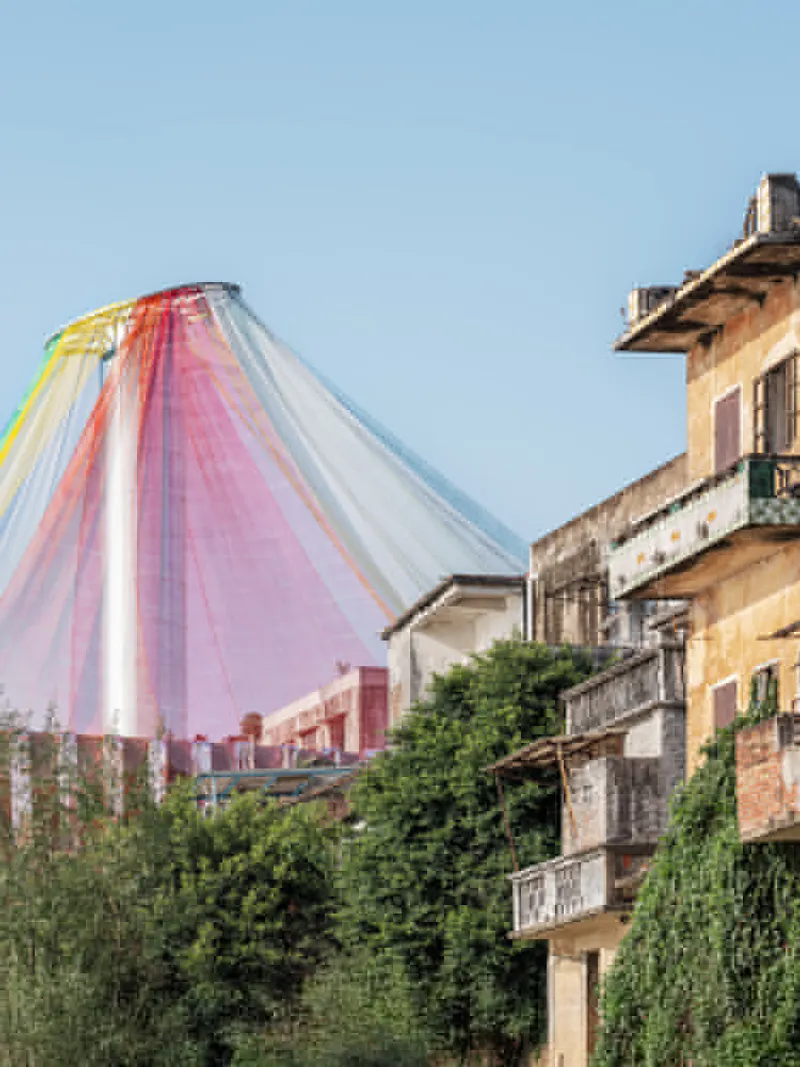
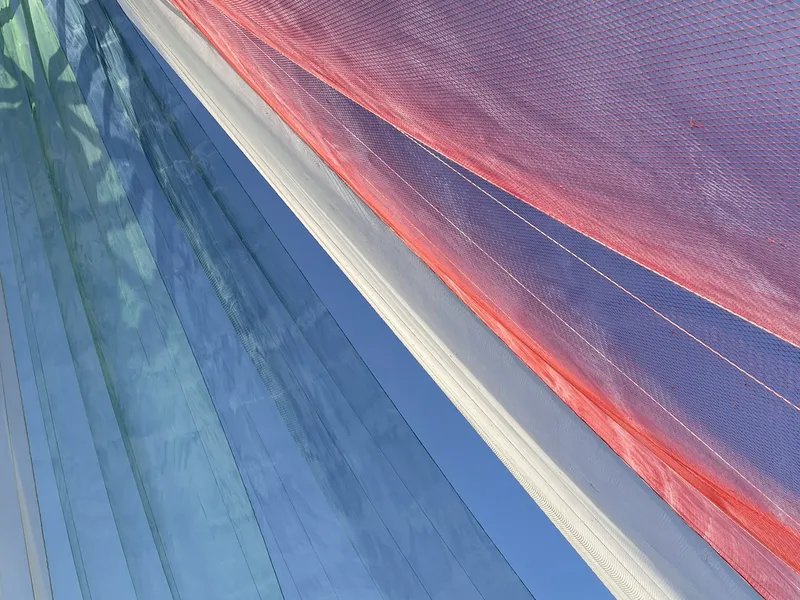
- Multimedia Lighthouse: At the top, a sculptural tower made of delicate, colorful cloth pieces flutters gracefully in the wind. By day, it recalls the fragility of memory; by night, it becomes a glowing lighthouse, casting a surreal aura across the riverbanks.
This luminous installation resonates with the quiet rhythms of the village while visually connecting to the fast-growing city skyline beyond the river.

Symbolism and Community Impact
The Timeless Beacon Pavilion symbolizes rebirth, hope, and continuity. While the market’s original function as a trading hub no longer serves modern needs, its emotional and cultural essence remains invaluable. The installation celebrates these intangible values, transforming a site of decay into a space of reflection and imagination.
As a temporary installation, it invites both villagers and visitors to reconsider the meaning of progress and the role of memory in shaping the future.

Project Details
- Project Name: Timeless Beacon Pavilion
- Architects: MAD Architects, led by Ma Yansong
- Location: Taiping Xu, Nanhai, Foshan, Guangdong, China
- Program: Temporary Art Installation
- Year of Completion: 2022
- Photography: Fangfang Tian, Yu Lu, Junliang Li, Kai Zhang
- Commissioned by: Guangdong Nanhai Art Field
- Exhibition Duration: Until Summer 2024
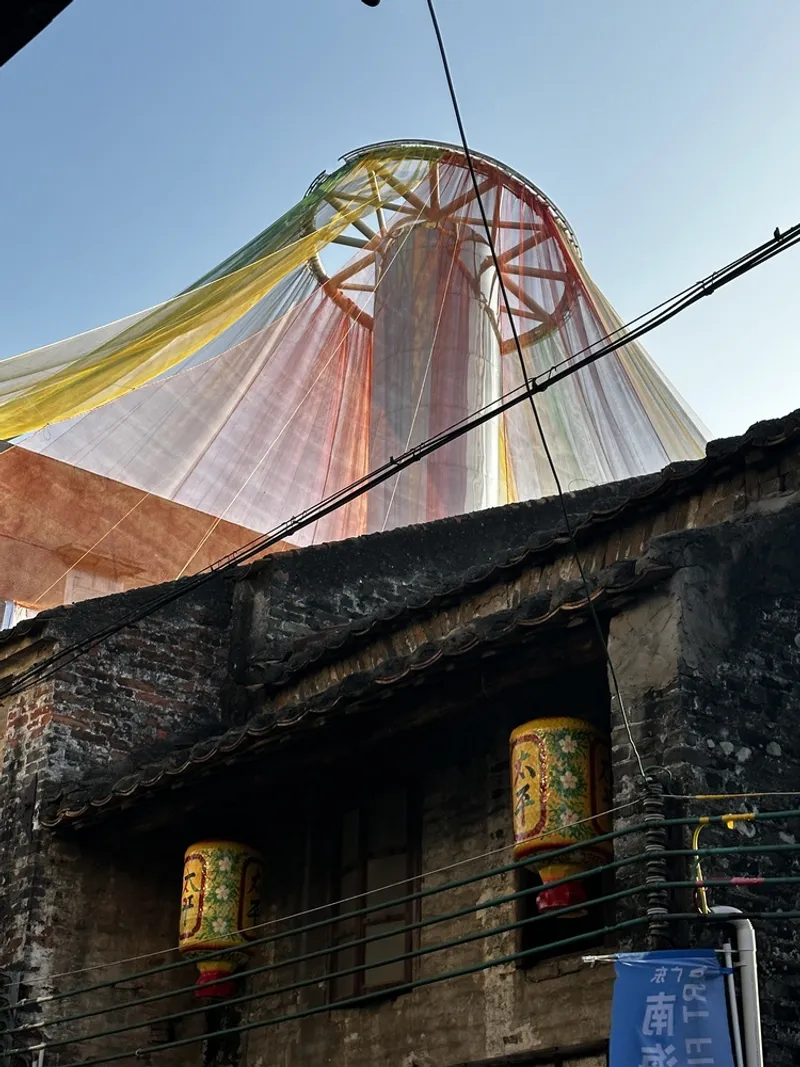
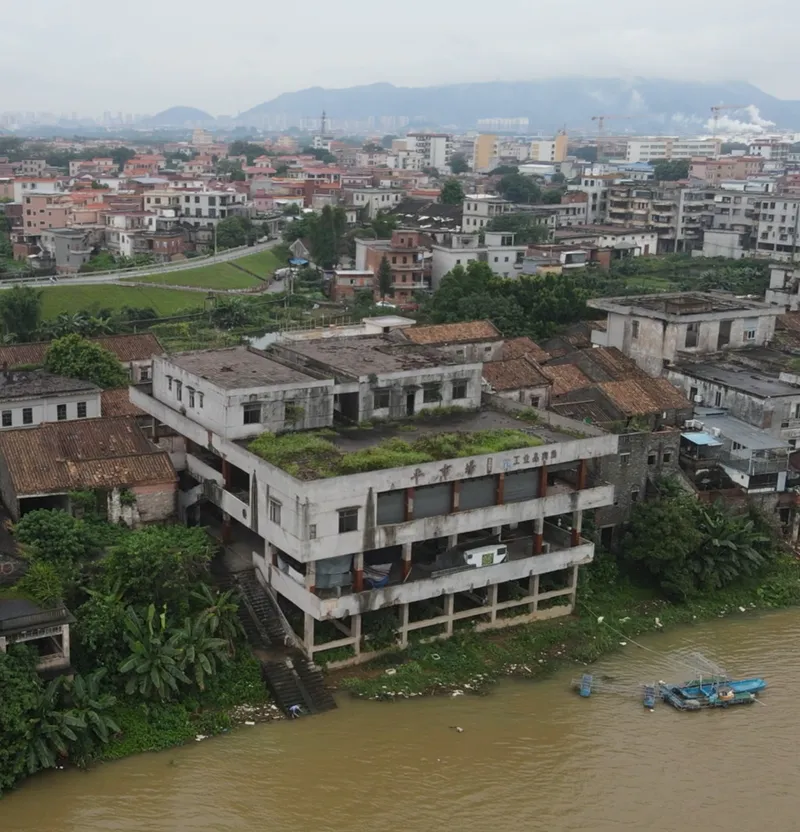
The Timeless Beacon Pavilion by MAD Architects is more than an installation—it is an architectural meditation on time, memory, and renewal. By merging reflective materials with symbolic light, it transforms an abandoned market into a beacon of imagination. Rooted in history yet oriented towards the future, it exemplifies how architecture can heal, inspire, and reimagine forgotten places.
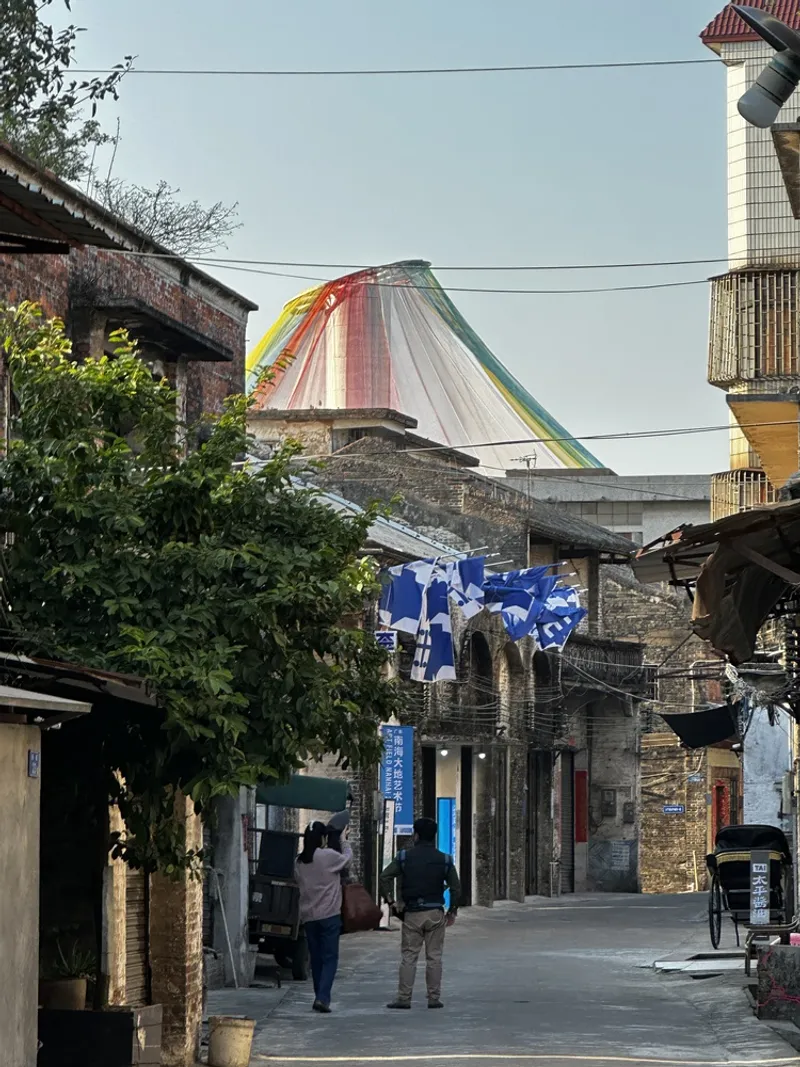
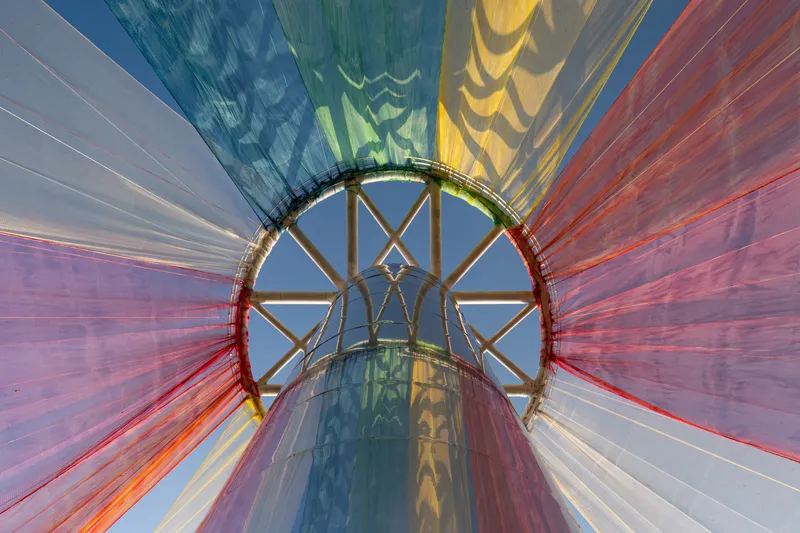
All photographs are works of Fangfang Tian, Yu Lu, Junliang Li, Kai Zhang




Popular Articles
Popular articles from the community


Lunar Spiral: Space Architecture Shaped by the Mathematics of the Universe
Lunar Spiral reimagines space architecture through Fibonacci geometry, lunar regolith, levitating habitats, and self-sustaining Moon living.

Hill & Cross Opera: Sculptural Opera House Architecture Shaped by Tallinn’s Landscape and Identity
Hill & Cross Opera reimagines opera house architecture in Tallinn through its sculptural hill, civic plaza, glass wave and a luminous cross.

The Musturak Paradise: Senior Living Architecture for a Connected Future in Temara, Morocco
The Musturak Paradise reimagines senior living architecture in Temara via private homes, social spaces, culture, community, and shared care.

Riyadh For All: Intergenerational Urban Design for Active Aging in Rabat
Riyadh For All reimagines urban design in Rabat with intergenerational co-living, adaptive courtyards, and Moroccan cultural exchange today.


Similar Reads
You might also enjoy these articles


Hodi-Mandai Geram
Project Function: Preservation and revitalization of the Intangible heritage and socio-spatial identity of the Hodi by Housing, Cultural Memory Center, Sacred Grove, landscape, local tourism economy


Olio Towers: A Mid-Rise for Performers That Fuses Housing, Rehearsal, and Stage
Located blocks from Houston's Theater District, this modular tower stacks living units around a central performance atrium.

Oasis: Modular Green Housing Carved into Dhaka's Urban Fabric
A shortlisted Plugin Housing entry reclaims unauthorized settlements in Dhaka with stepped concrete volumes, green roofs, and ventilation-driven design.

Black Hole: A Floating Megastructure for the Post-Physical Era
Emiliano Mazzarotto envisions a spherical, self-scaling arena where e-sports, digital hotels, and holographic stadiums replace traditional public space.

Explore Timeless Architecture Competitions
Discover active competitions in this discipline



Challenge to reimagine the Iron Throne


Photograph architecture without architects


Illustrate the lost glory of Angkor Wat - Render Challenge


Bring back Drive In's
Comments (0)
Please login or sign up to add comments
No comments yet. Be the first to comment!