
Tower House by Löser Lott Architekten: A Sculptural Vertical Home on the Slopes of Dresden
Tower House in Dresden unfolds vertically across a hillside, featuring thirteen stepped levels, concrete structure, and panoramic city views.


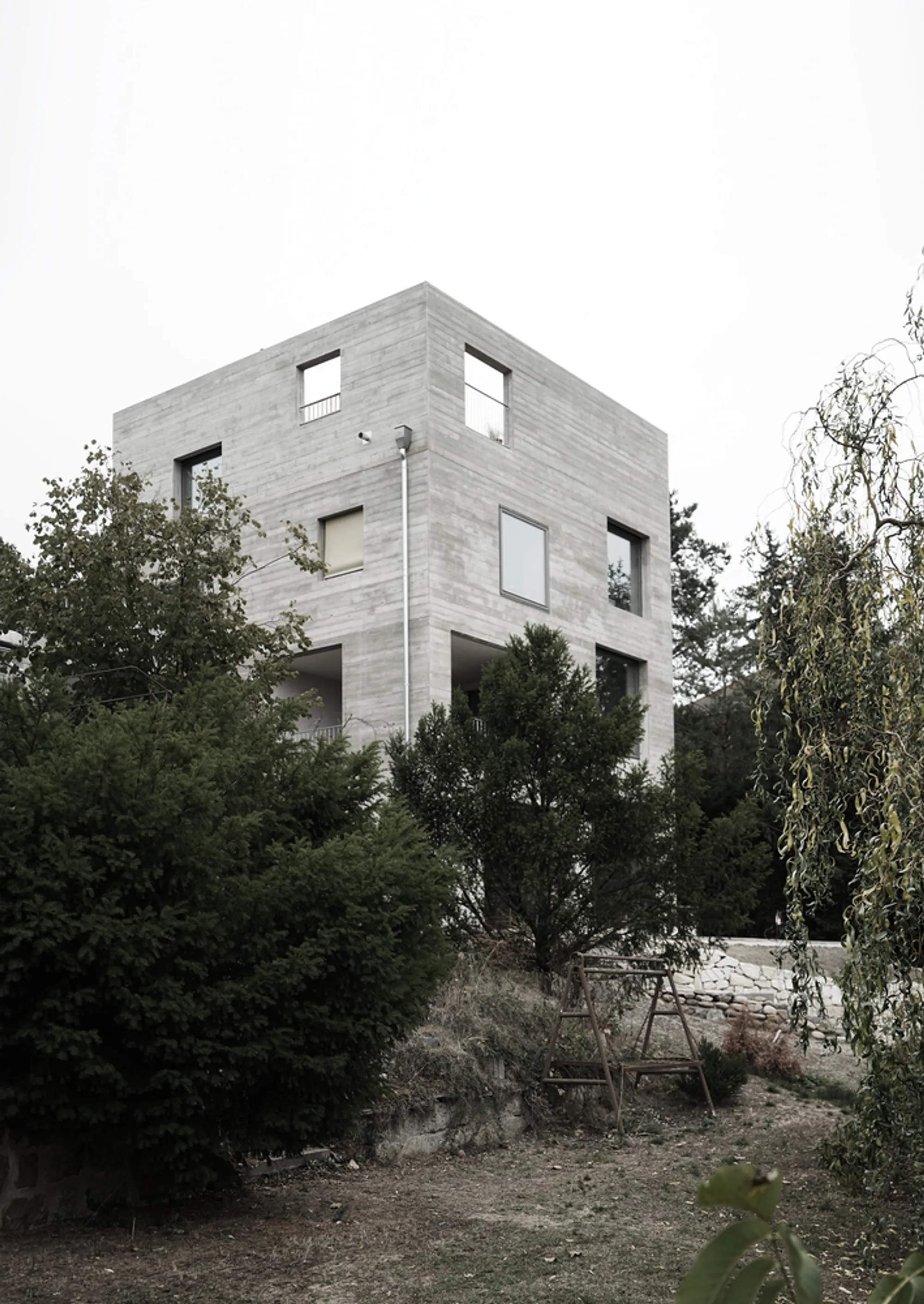
Perched on a steep hillside in the Trachenberge district of Dresden, Germany, the Tower House by Löser Lott Architekten is a compelling reinterpretation of the single-family home, shaped entirely by its dramatic topography and historic context. With a total area of 180 m², this vertically layered house nestles into the sloped terrain of Weinbergstraße—a road named after the vineyards that once dominated this landscape.
A Contemporary Tower in a Historic Landscape
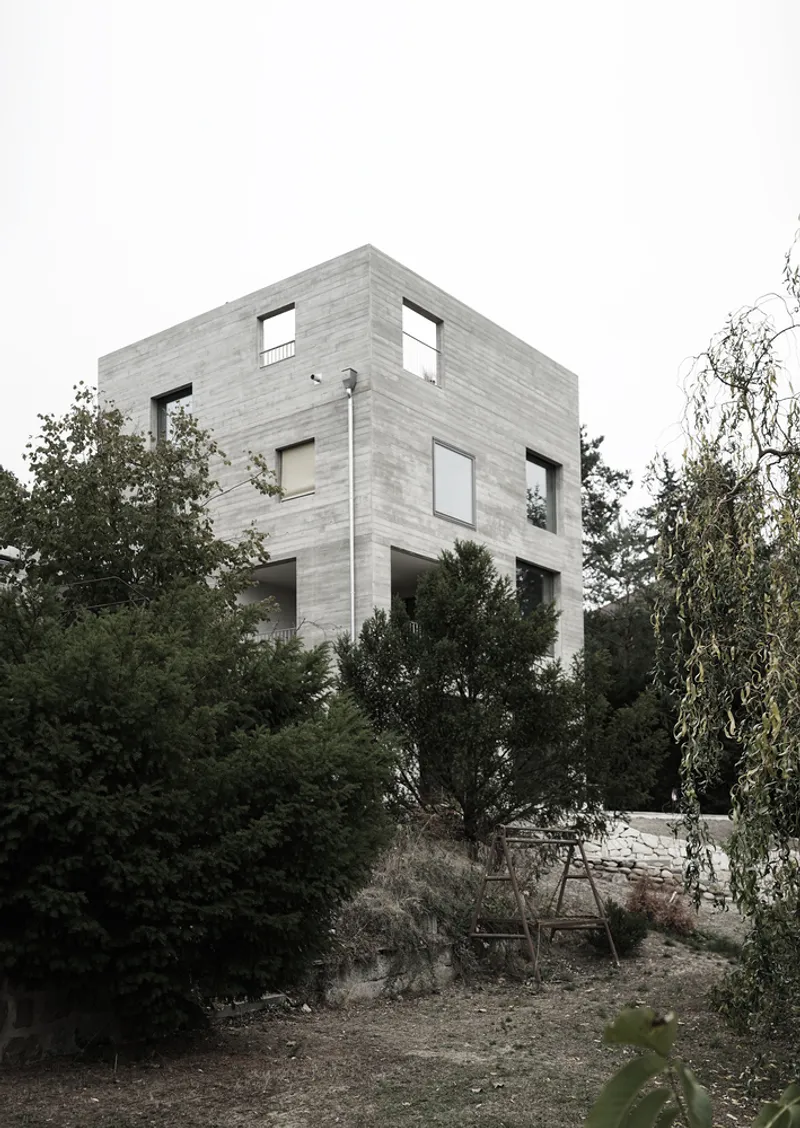
The Tower House stands on land with deep historical roots. Centuries ago, vineyards flourished here, and though the vines have since disappeared, the terrain remains etched with that agrarian past. The design responds directly to this striking hillside context, engaging the slope to generate a tower-like spatial sequence that redefines how a modern home can evolve vertically rather than horizontally.
To the street, the house appears as a modest cube—its scale in harmony with surrounding buildings. But as one moves downhill, the structure unfolds into a tall, upright form, embodying the image of a tower that reveals itself fully only from the valley below.
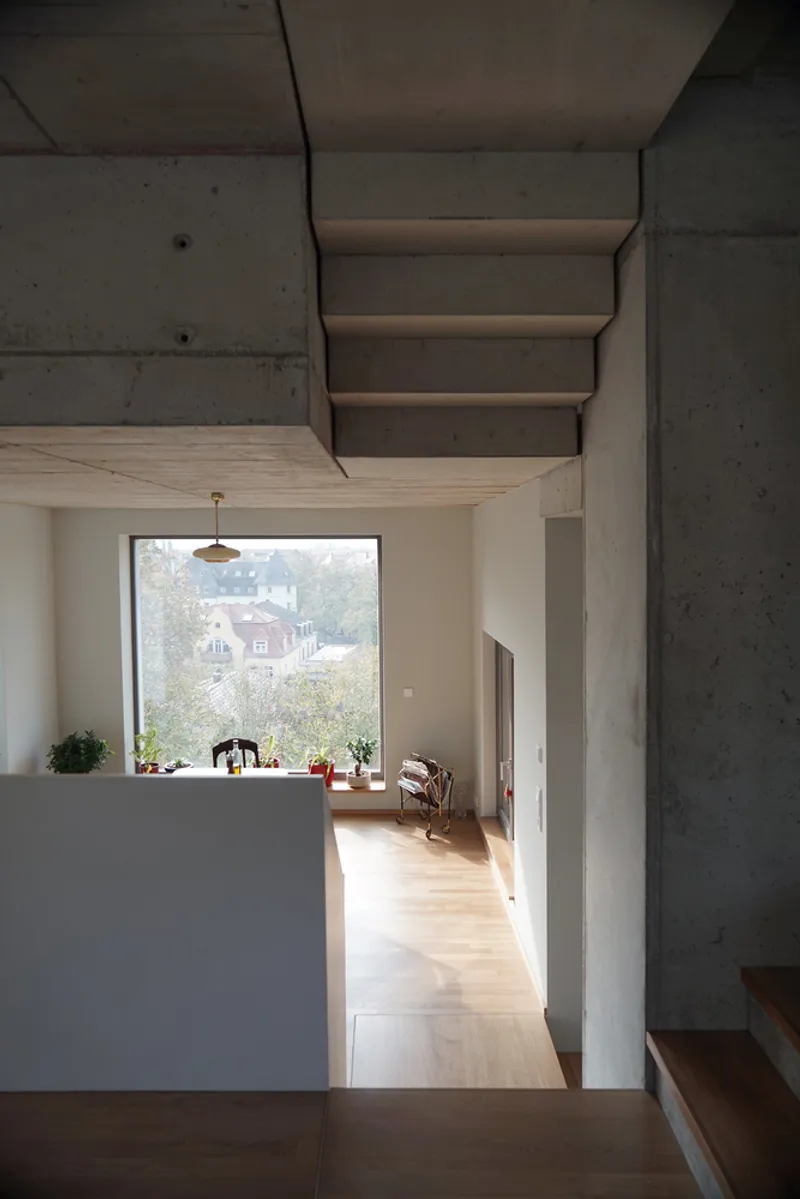
Thirteen Levels: A Vertical Enfilade
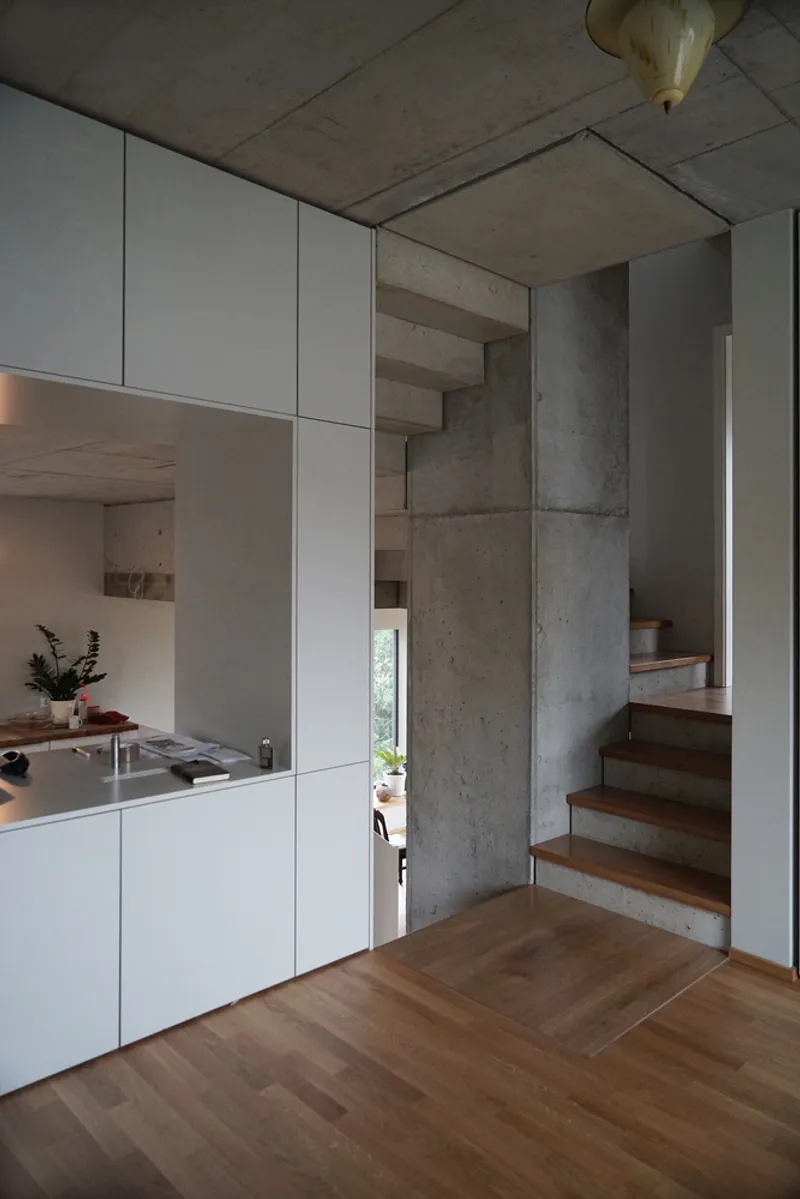
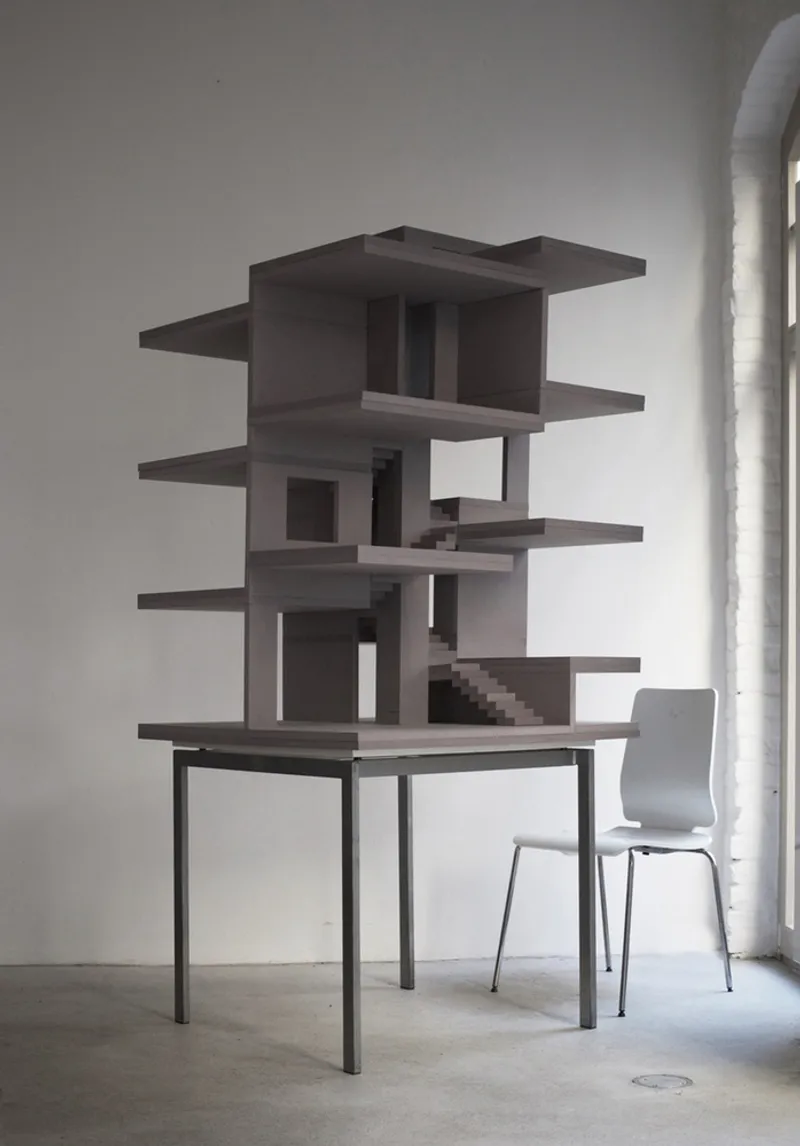
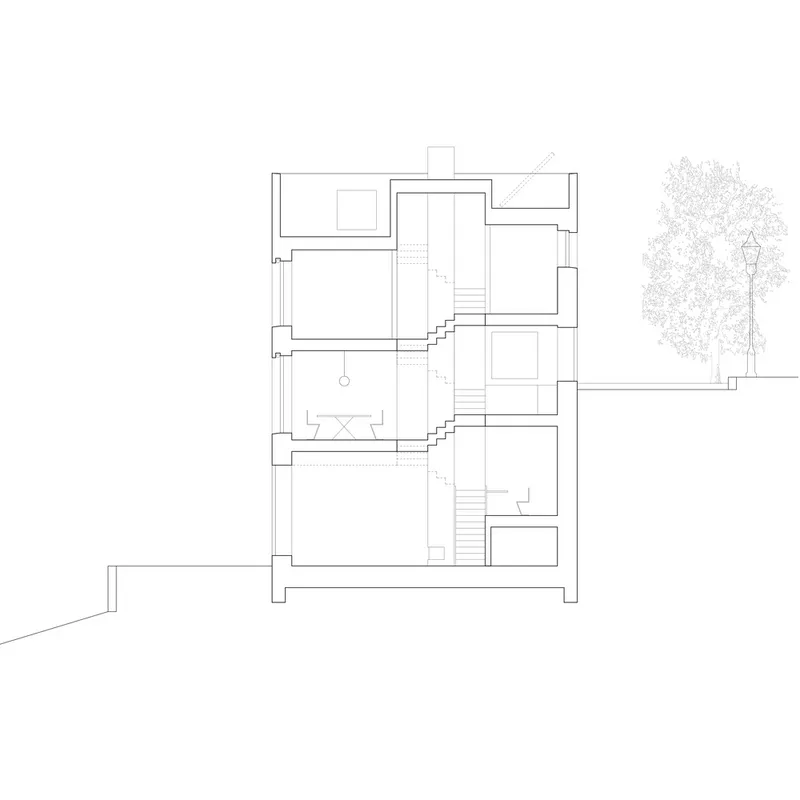
Rather than organizing the interior across traditional floors, the architects embraced the slope’s natural rhythm to create a spatial continuum of thirteen staggered levels. Each level is offset by four steps, wrapping around a reinforced concrete core like a spiral staircase through lived space.
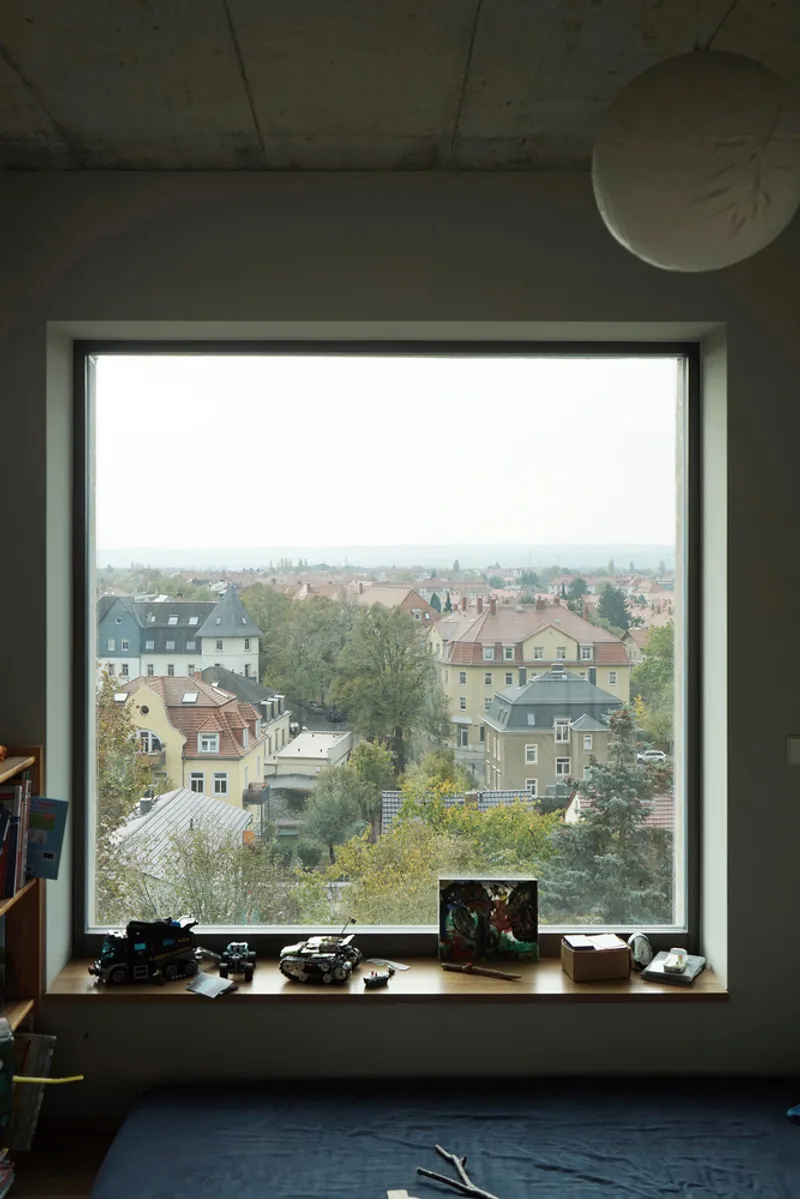
This layout forms a vertical enfilade—a series of interconnected rooms that shift fluidly from one to the next. The experience of moving through the house mimics a slow descent or ascent through space, with each level offering a new perspective on the city and landscape.
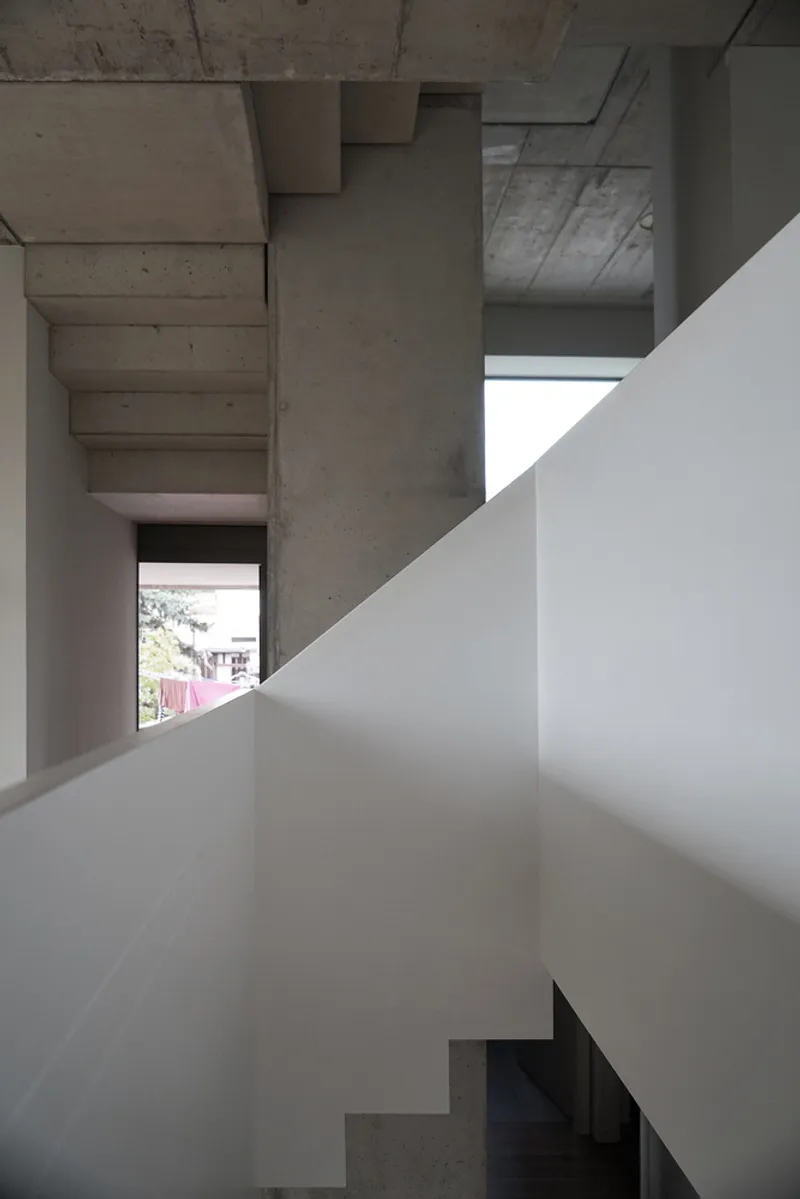
Interior Program and Spatial Experience
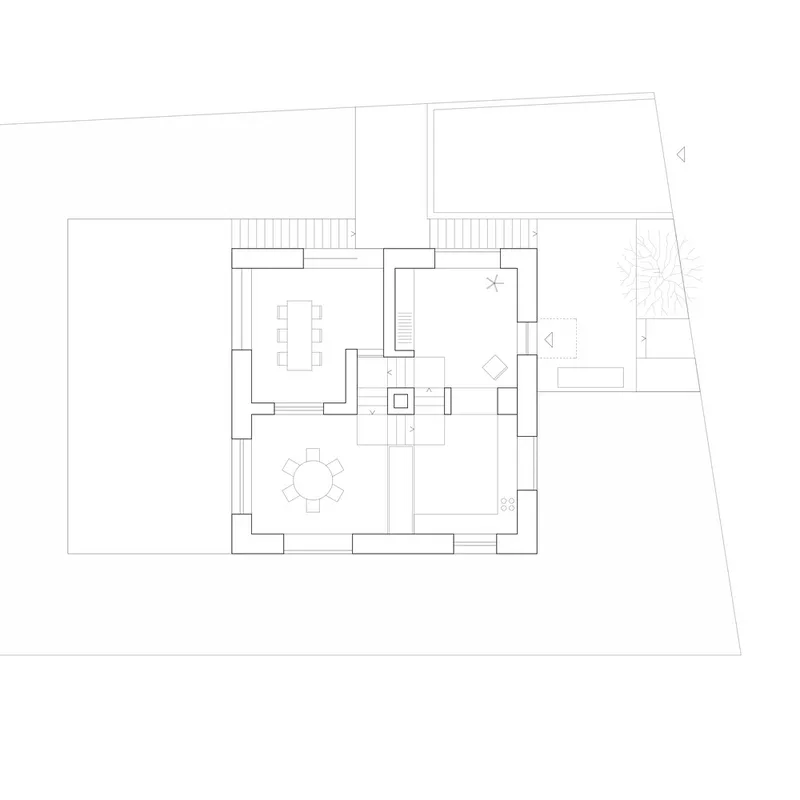
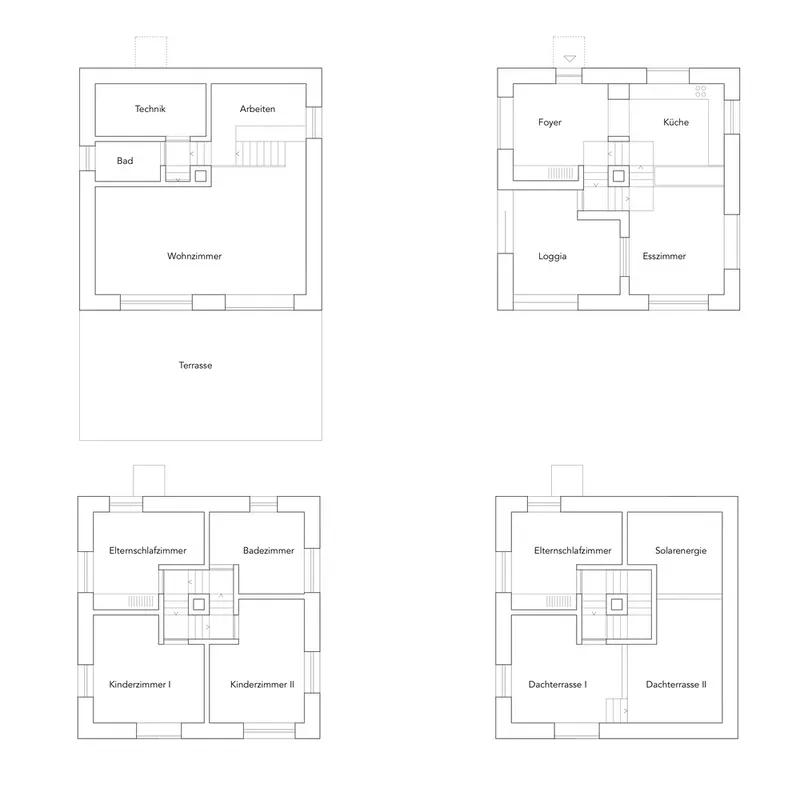
The home’s interior unfolds like a three-dimensional promenade. Starting at the foyer on the street level, spaces gradually descend into the communal zones and climb into private retreats:
- Garden-level terrace
- Living room with fireplace
- Library and study gallery
- Loggia and outdoor seating
- Dining area and kitchen
- Master bedroom and bathroom
- Private patio
- Rooftop terrace
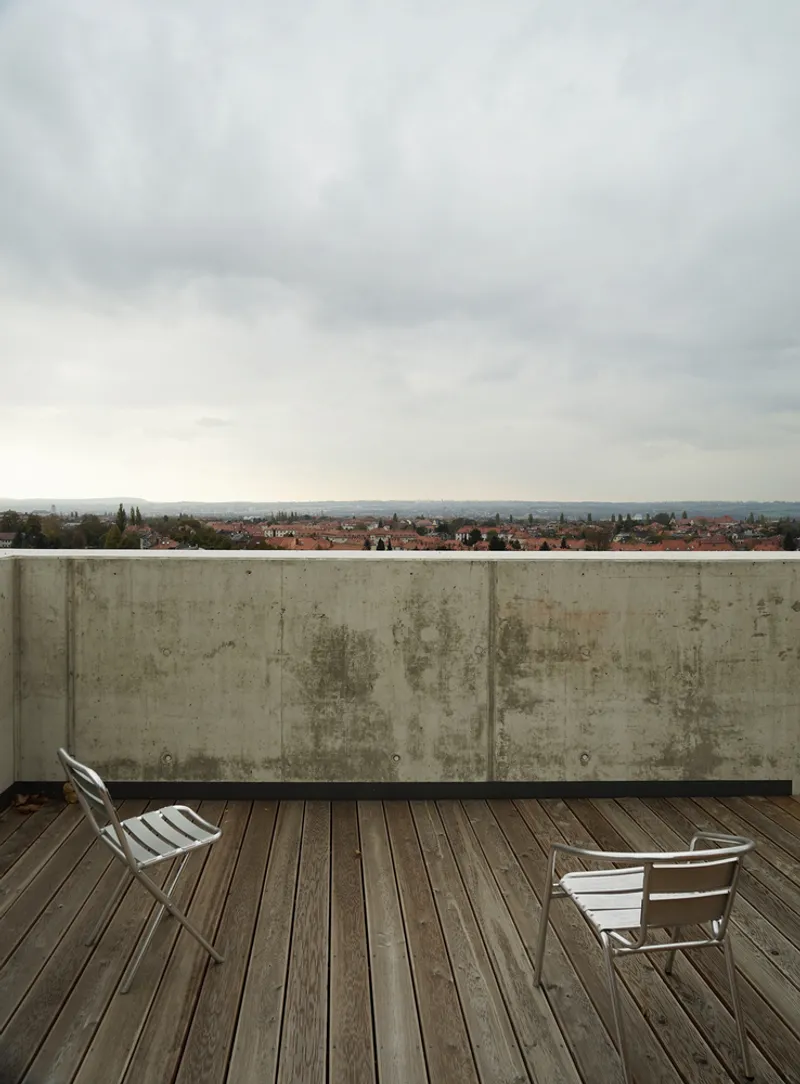
Each space is connected not just through steps and walls, but through views, light, and elevation. The spatial flow blurs distinctions between interior and exterior, private and communal, architecture and landscape.
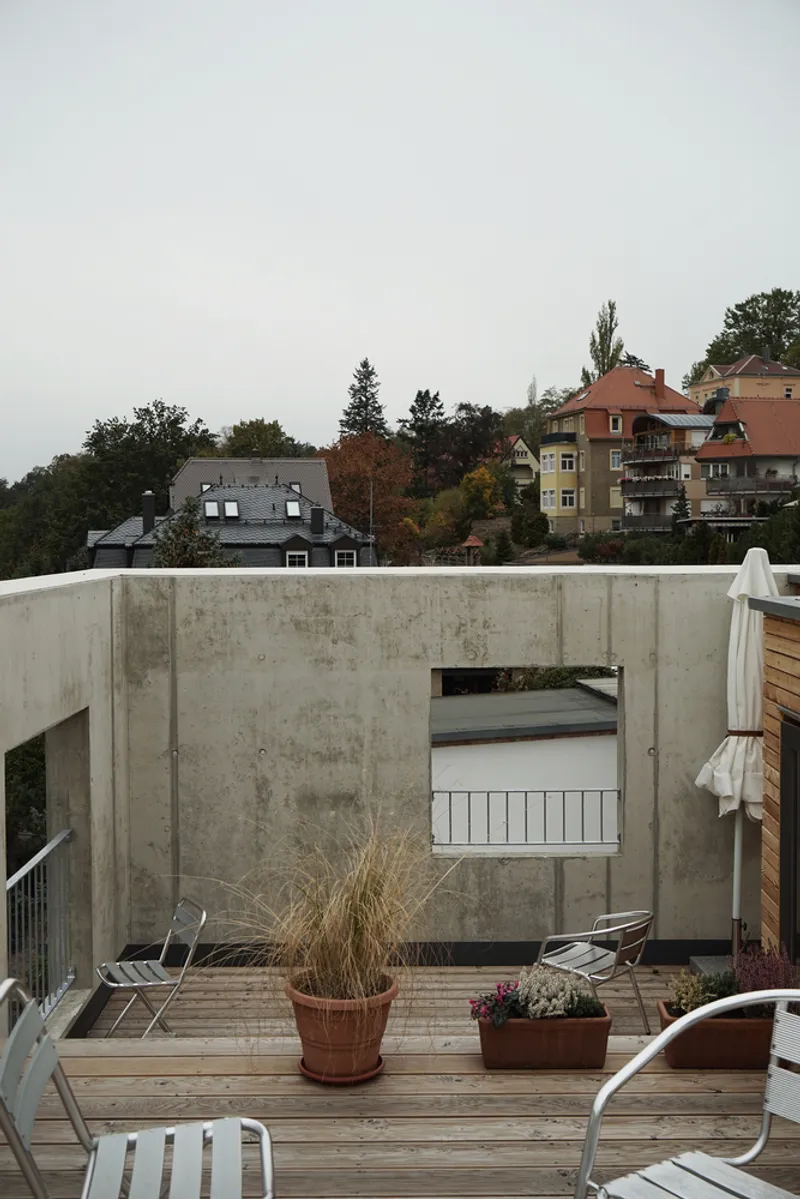
Material Logic: Concrete Core and Formwork Façade
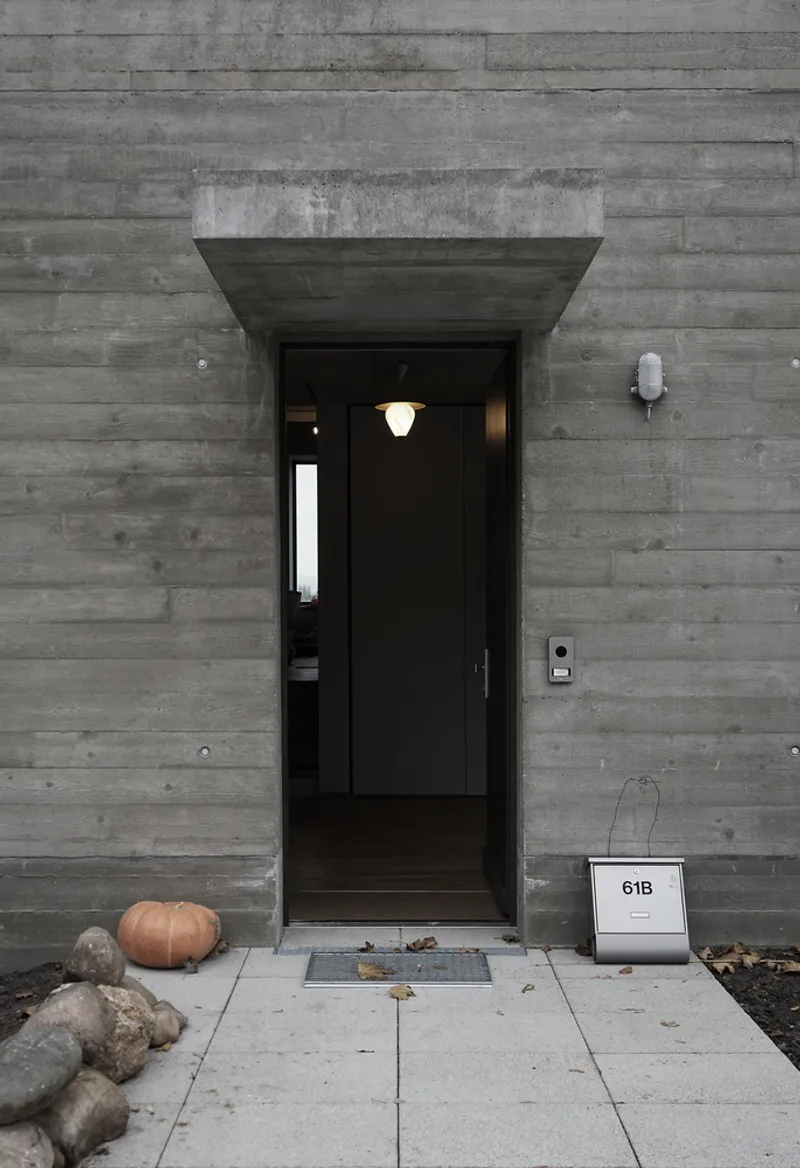
Structurally, the house is grounded by an internal reinforced concrete core, which anchors the circulation and vertical structure. In-situ concrete slabs and prefabricated stairs are attached to this spine. The outer envelope—with its striking board-form textured concrete finish—gives the building a tactile, monolithic appearance, both sculptural and refined.
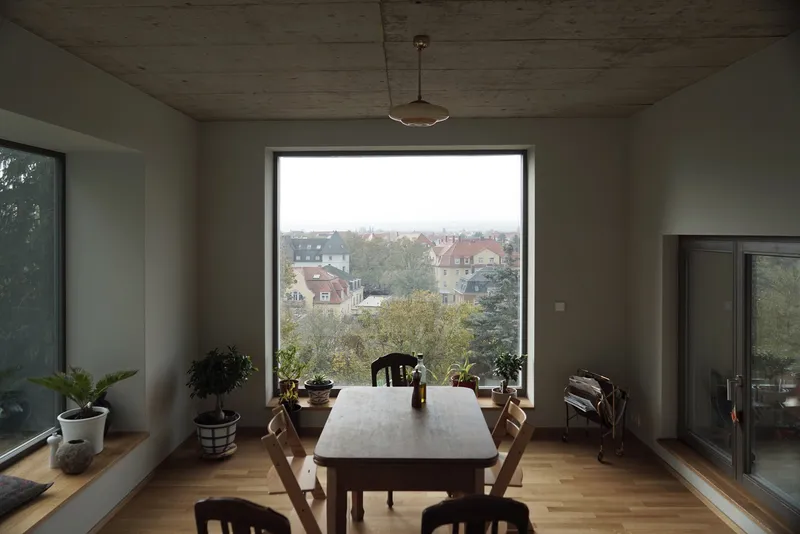
Large square-format windows are carved into the façade, acting as framed vignettes that capture dramatic views of Dresden’s historic old town, making the landscape an ever-present part of the interior narrative.
A Modern Home that Echoes a Tower
Rather than resisting its steep site, the Tower House celebrates it. This project is not just a solution to a sloping plot; it’s a bold architectural gesture that treats elevation as experience. The verticality becomes a design tool for organizing space, privacy, light, and views—turning movement through the home into an architectural journey.
By drawing inspiration from its topography, and executing with meticulous material expression, Löser Lott Architekten have created a modern family residence that is both poetic and practical—a tower for living, rooted in landscape and memory.
All the photographs are works of Löser Lott Architekten




Popular Articles
Popular articles from the community


Riyadh For All: Intergenerational Urban Design for Active Aging in Rabat
Riyadh For All reimagines urban design in Rabat with intergenerational co-living, adaptive courtyards, and Moroccan cultural exchange today.

Lunar Spiral: Space Architecture Shaped by the Mathematics of the Universe
Lunar Spiral reimagines space architecture through Fibonacci geometry, lunar regolith, levitating habitats, and self-sustaining Moon living.

Co-Life: Senior Housing Design That Reconnects Older Adults With the City
Co-Life reimagines senior housing design through healing gardens, shared streets, workshops, and a sustainable community across generations.

Conexión: Biophilic Design Reimagines High-Rise Living in Hong Kong
Conexión reimagines high-rise living in Hong Kong through biophilic design, green facades, shared spaces, daylight, water and nature within.

Similar Reads
You might also enjoy these articles


Hodi-Mandai Geram
Project Function: Preservation and revitalization of the Intangible heritage and socio-spatial identity of the Hodi by Housing, Cultural Memory Center, Sacred Grove, landscape, local tourism economy


Olio Towers: A Mid-Rise for Performers That Fuses Housing, Rehearsal, and Stage
Located blocks from Houston's Theater District, this modular tower stacks living units around a central performance atrium.

Oasis: Modular Green Housing Carved into Dhaka's Urban Fabric
A shortlisted Plugin Housing entry reclaims unauthorized settlements in Dhaka with stepped concrete volumes, green roofs, and ventilation-driven design.

Black Hole: A Floating Megastructure for the Post-Physical Era
Emiliano Mazzarotto envisions a spherical, self-scaling arena where e-sports, digital hotels, and holographic stadiums replace traditional public space.


Explore Water Tower Competitions
Discover active competitions in this discipline



Challenge to reimagine the Iron Throne


Photograph architecture without architects


Illustrate the lost glory of Angkor Wat - Render Challenge


Design challenge to reuse E-waste
Comments (0)
Please login or sign up to add comments
No comments yet. Be the first to comment!