
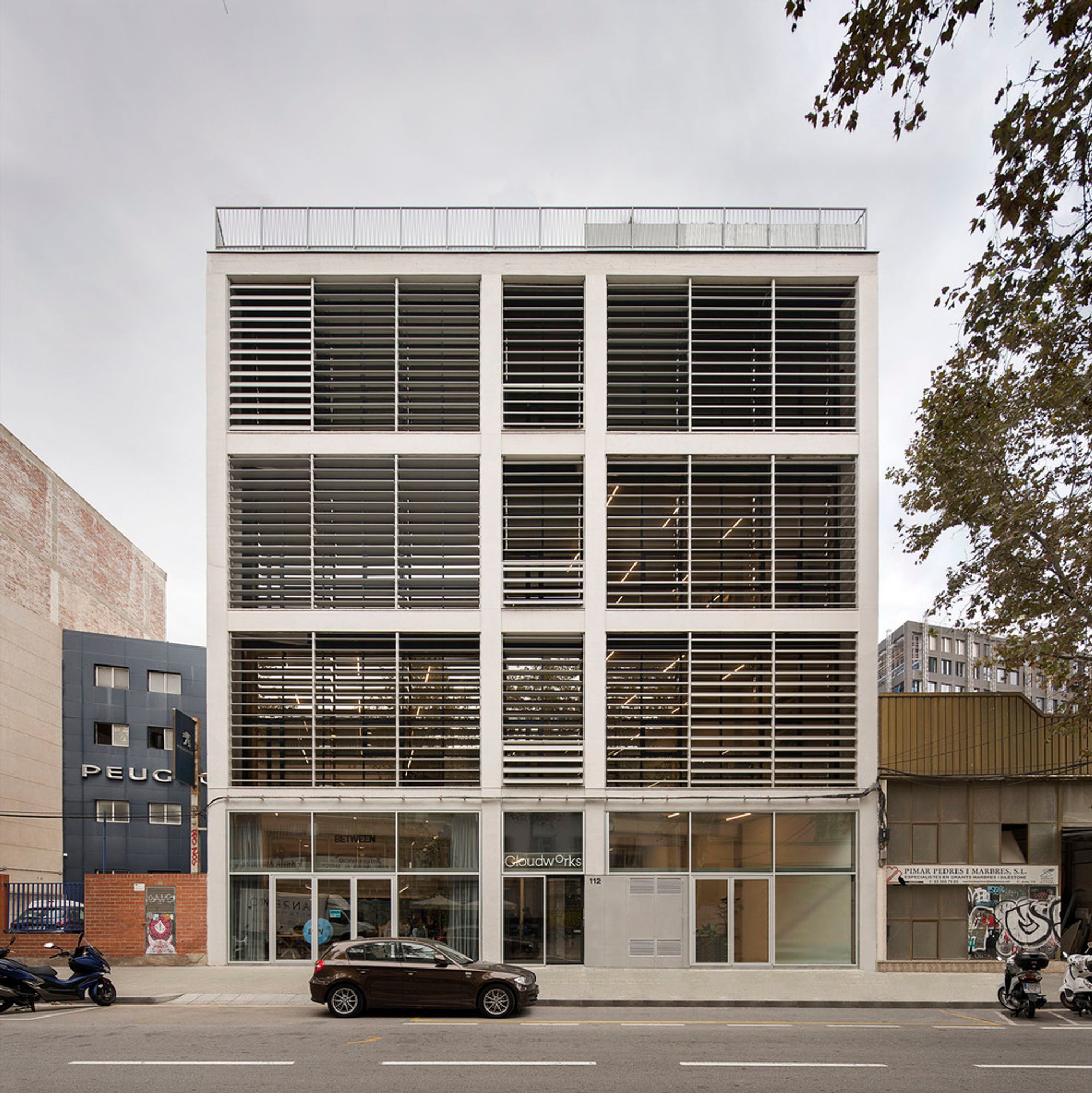
Transformation of an Industrial Building into a Contemporary Office Space in Barcelona by Ida
An industrial building in Poblenou, Barcelona, transformed by Ida into modern offices, preserving industrial character while enhancing light, connectivity, and collaboration.

In the heart of Poblenou, Barcelona, a neighborhood known for its ongoing urban regeneration, architecture studio Ida (Xavier Isart Torruella and María Domínguez) has reimagined a 1966 industrial building into a modern office building. This adaptive reuse project spans 2,150 m² and represents a thoughtful balance between preserving the industrial character of the structure and meeting the functional demands of a contemporary workplace.
Adaptive Reuse in an Evolving Urban Context
The project is set in Poblenou, an area transitioning from an industrial past to a vibrant cultural and business hub. The architects’ approach highlights the potential of adaptive reuse architecture in strengthening the identity of cities while reducing the environmental footprint compared to new construction.
Interior Transformation and Circulation Strategy
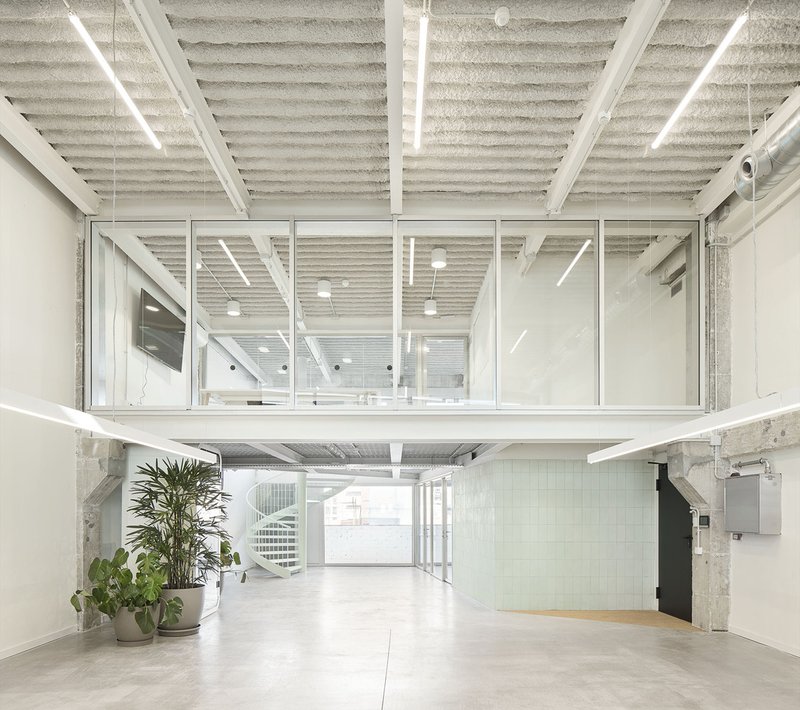
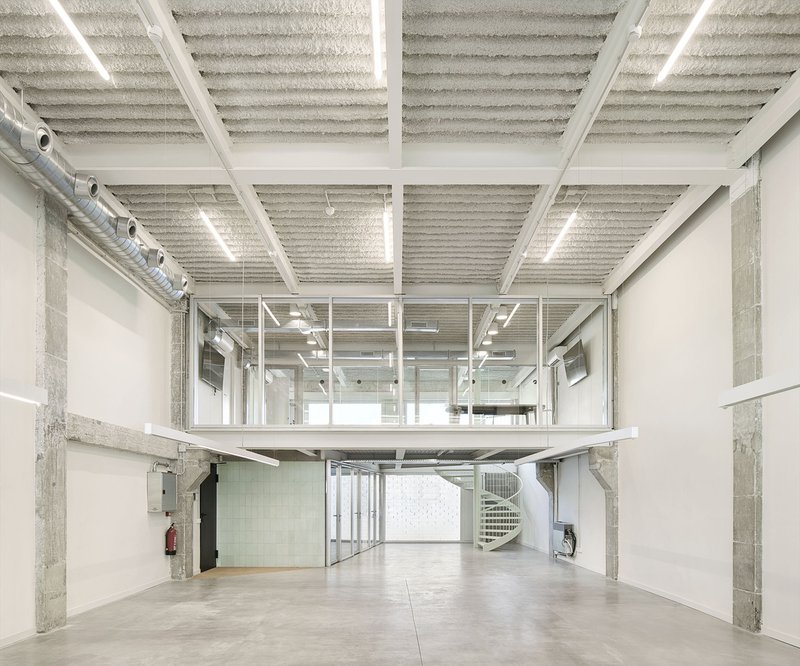
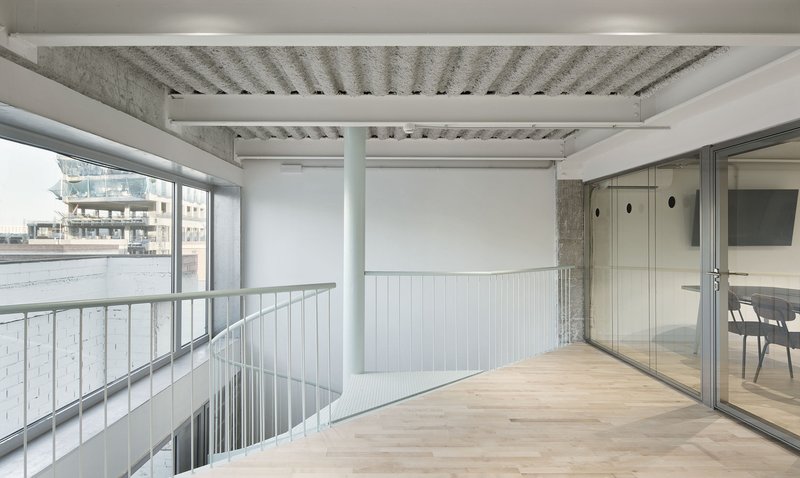
The building’s typology is exceptional: four levels, each with a five-meter height, incorporating half-level mezzanines. The design intervention reorganizes circulation routes to enhance the experience of double-height spaces, reinforcing openness and visual connectivity.
Key modifications include:
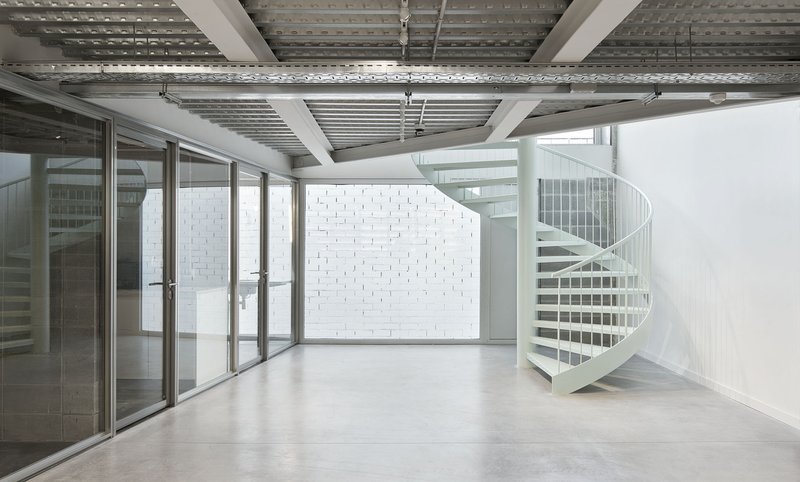
- Relocation of staircases from the central zone to the rear, maximizing usable workspace.
- Integration of compact service cores beneath mezzanines, hosting kitchens, restrooms, and storage.
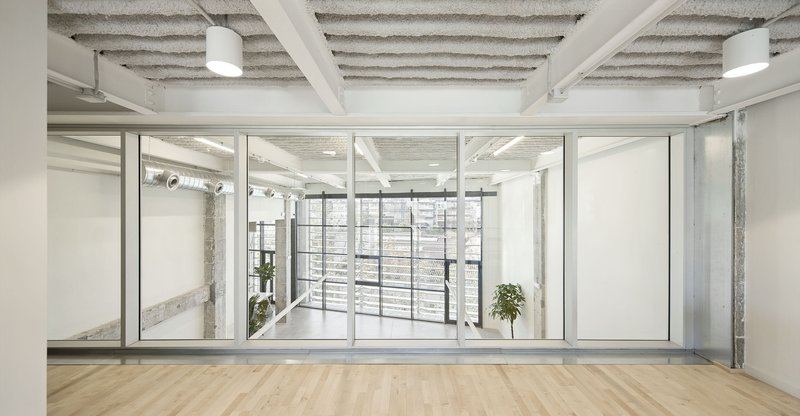
- Placement of meeting rooms in mezzanine areas, giving them a symbolic and highly visible role within the workspace.
This new layout fosters interaction, strengthens collaboration between teams, and ensures efficient flow across different programmatic units.
Materiality and Industrial Character
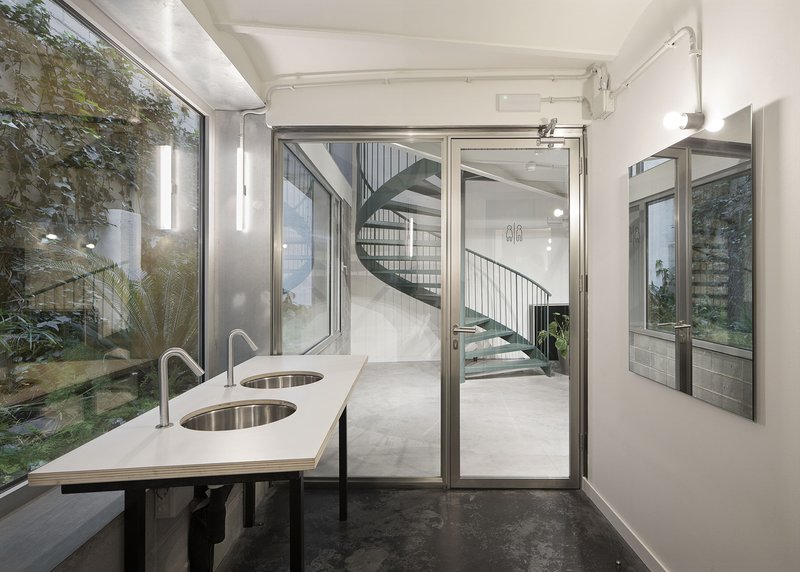
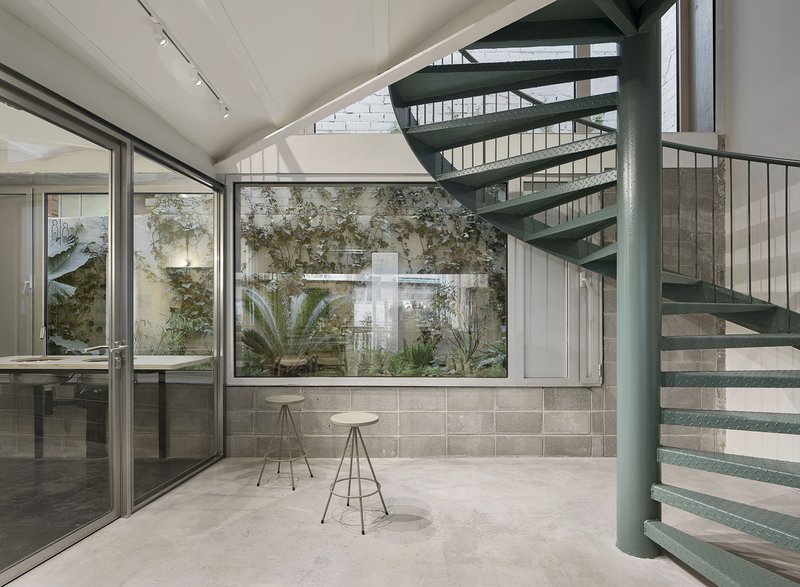
The renovation emphasizes steel and concrete, materials that maintain the authenticity of the building’s industrial heritage. Each floor is characterized by a unique shade of green, creating a subtle gradation from dark tones at street level to lighter hues toward the rooftop, reinforcing a sense of upward movement.
Façade and Envelope Interventions
The architectural transformation extends to the building envelope:
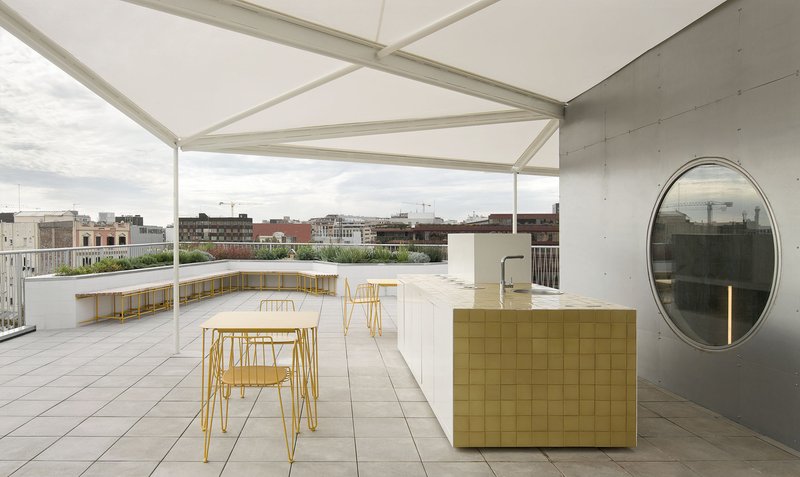
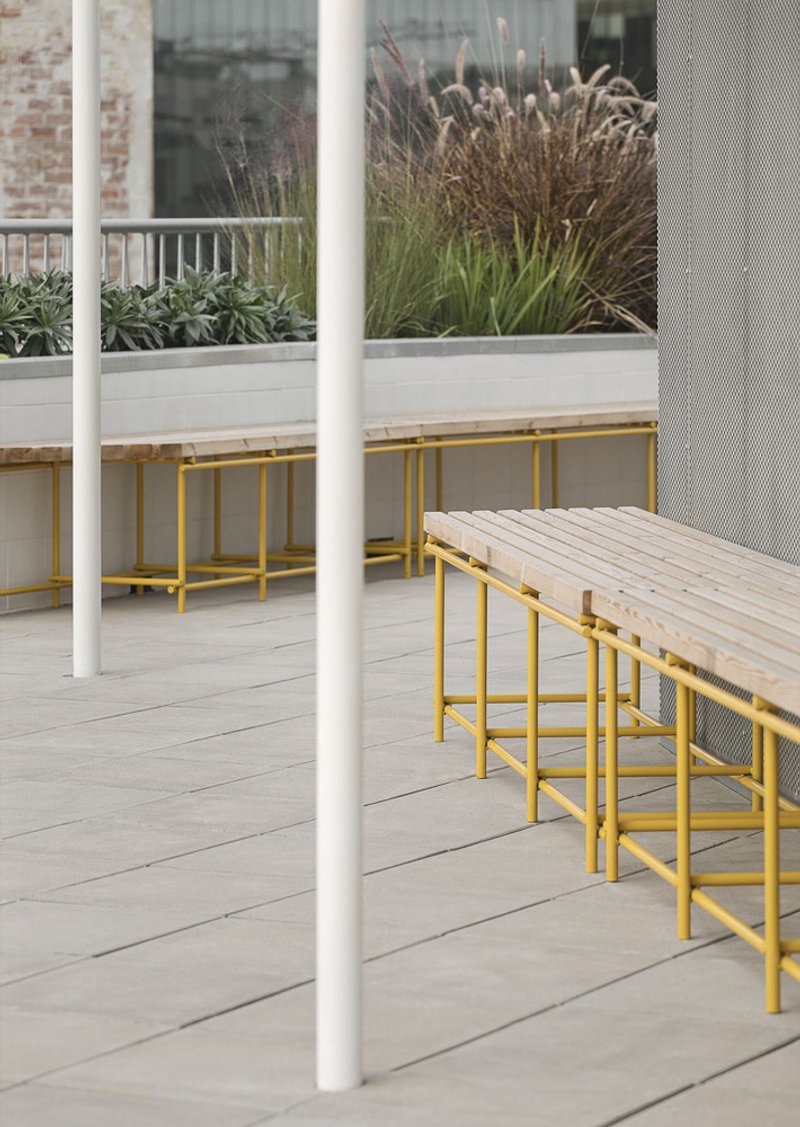
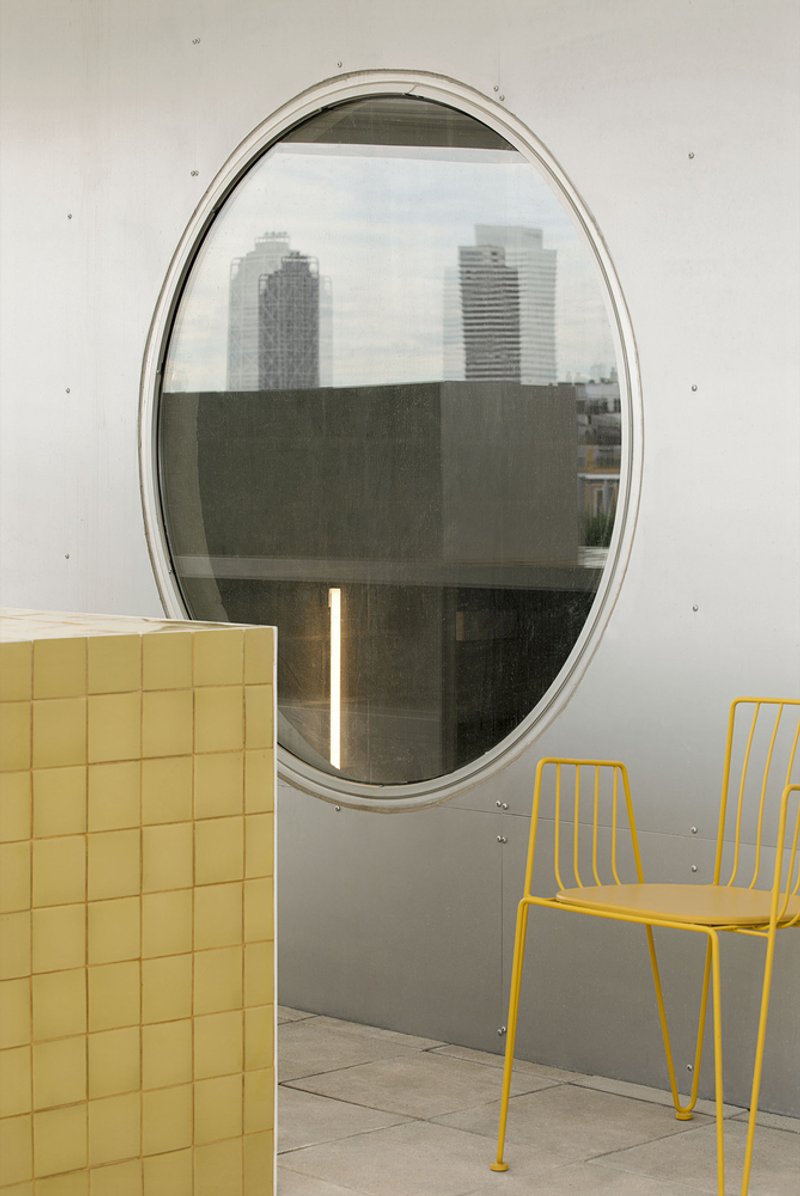
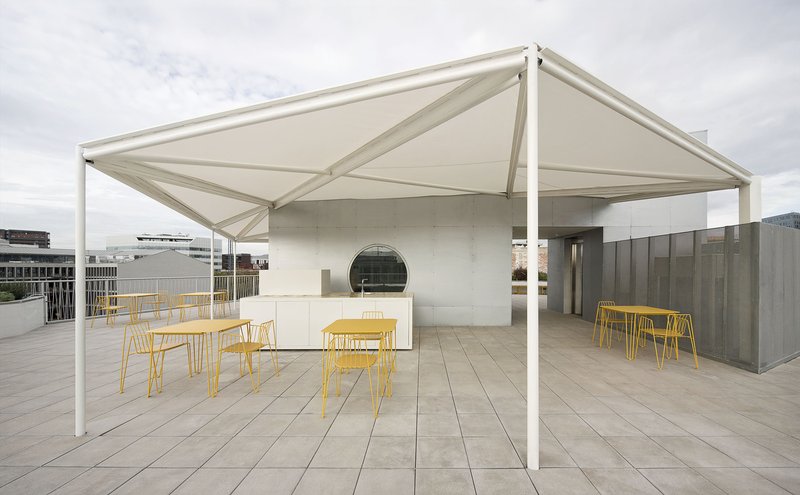
- The original gable roof is replaced with a flat, walkable rooftop terrace. This new space, shaded by a large umbrella-shaped pergola, becomes a distinctive outdoor environment for relaxation and informal gatherings.
- The rear façade is completely opened, allowing abundant natural light to flood the interiors.
- On the main façade, only the ground floor is reconfigured, aligning with the overall compositional rhythm while creating greater openness toward the neighborhood.
A Workplace for Wellbeing and Connectivity
The design enhances user experience, movement, and visual connections with Barcelona’s urban landscape. The inclusion of greenery, generous daylight, and communal areas results in a healthy, sustainable, and pleasant workspace, exemplifying the potential of adaptive reuse projects in shaping the future of urban environments.
All Photographs are works of Del Rio Bani



Popular Articles
Popular articles from the community

Free Architecture Competitions You Can Enter Right Now
No entry fees, real prizes. Here are the best free architecture competitions open for submissions in 2026.


The Ken Roberts Memorial Delineation Competition (Krob)
As the most senior architectural drawing competition currently in operation anywhere in the world, it draws hundreds of entries each year, awarding the very best submissions in a series of medium-based categories.


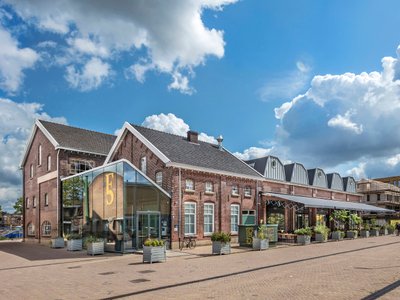
Fifth NRE Jazz Club – De Bever Architecten: Eindhoven’s Revitalized Cultural Hub
Historic gas factory transformed into Fifth NRE Jazz Club blending modern sustainability, jazz culture, dining, and heritage architecture seamlessly.

Similar Reads
You might also enjoy these articles
The Ken Roberts Memorial Delineation Competition (Krob)
As the most senior architectural drawing competition currently in operation anywhere in the world, it draws hundreds of entries each year, awarding the very best submissions in a series of medium-based categories.

Waterfront Redevelopment and Urban Revitalization in Mumbai: Forging a New Dawn for Darukhana
A transformative waterfront redevelopment project reimagining Darukhana’s shipbreaking heritage into an inclusive urban future.

OUT-OF-MAP: A Call for Postcards on Feminist Narratives of Public Space
Rhizoma Design and Research Lab invites artists, designers, architects, researchers, and students to reflect on how feminist perspectives can reshape public space. Selected works will be exhibited in Barcelona, October 2026. Submissions open until 15 April 2026.


Documentation Work on Buddhist Wooden Temple
Architectural syncretism and cultural hybridity: A comparative study of the Buddhist temples in Chattogram Hill tracks


Explore Architecture Competitions
Discover active competitions in this discipline




The International Standard for Design Portfolios


The Global Benchmark for Architecture Dissertation Awards


The Global Benchmark for Graduation Excellence


Challenge to reimagine the Iron Throne
Comments (0)
Please login or sign up to add comments
No comments yet. Be the first to comment!