

TRIO: A New Model for Futuristic Prison Architecture
Circular prison design meets futuristic architecture to promote dignity, safety, and reform through spatial reimagination.

Amidst global calls for criminal justice reform, the project TRIO emerges as a powerful architectural proposition that challenges conventional ideas of incarceration. Designed by Jie Wu, Qinglin Liu, Shuhan Wu, and Lihua Feng, this shortlisted entry for the Switching Prisons competition explores how spatial innovation can shift the narrative from confinement to rehabilitation.
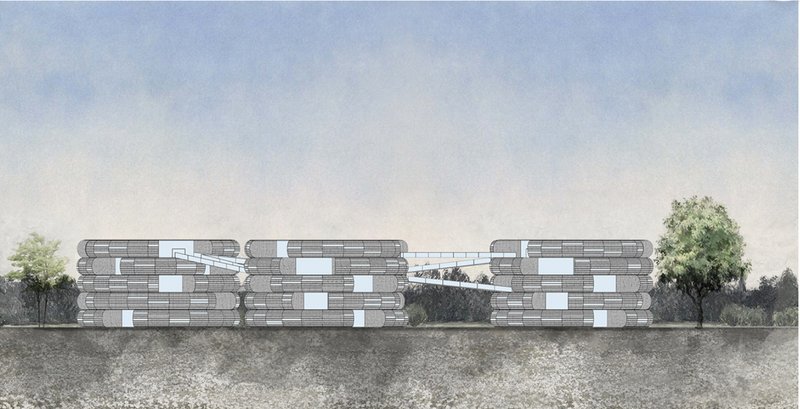
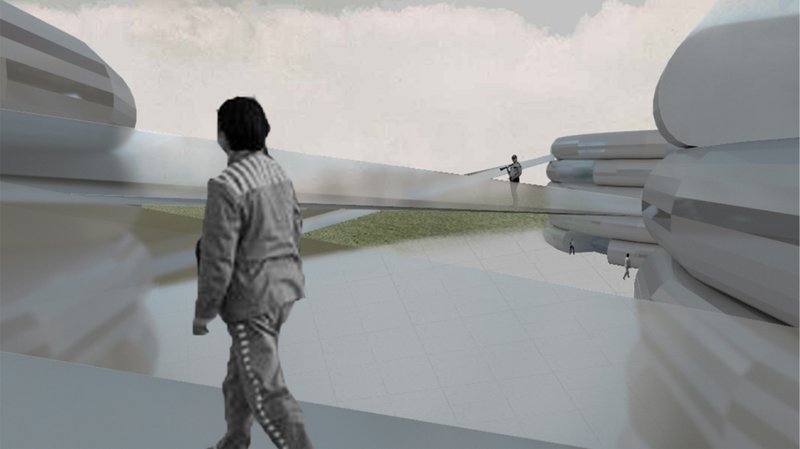
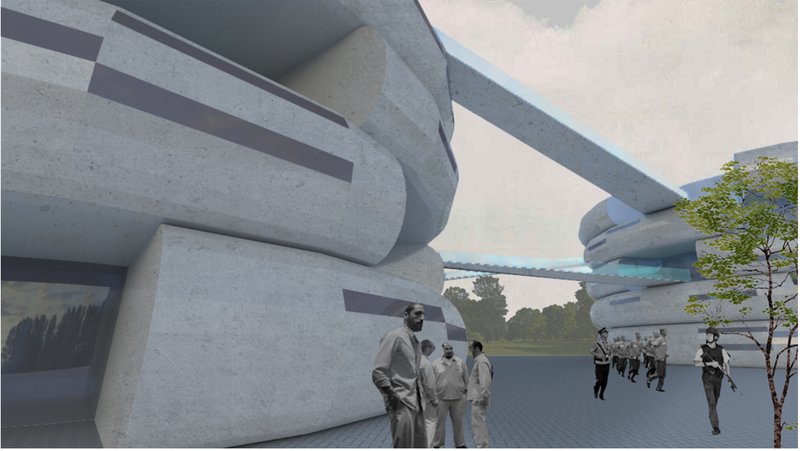
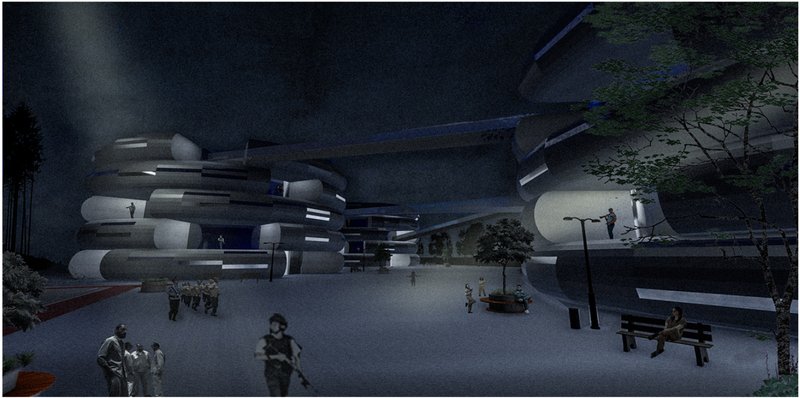
At the core of TRIO’s concept is the symbolic and functional use of the ring form. Three circular towers are connected via corridors, forming a triadic spatial network that ensures safety, visibility, and operational efficiency while encouraging communal activity and dignity for inmates. This bold reconfiguration of prison typology integrates futuristic prison architecture with elements of transparency, connection, and layered function.
A Day in the Life: Architecture as Behavioral Intervention
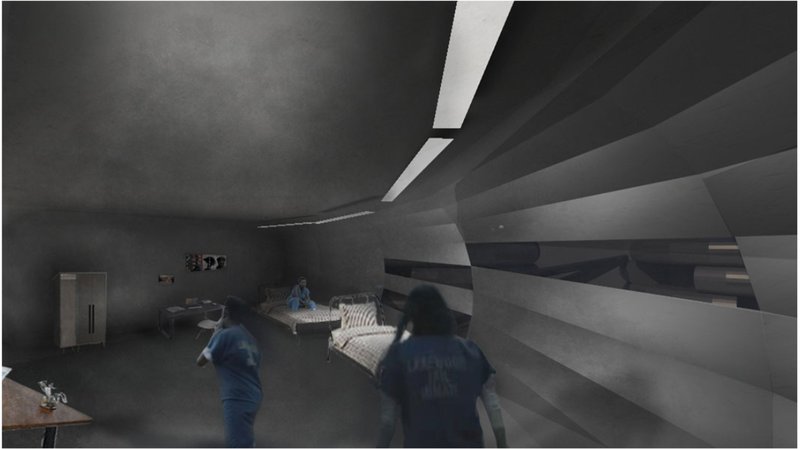
The project designers embedded an inmate-centric approach into every level of spatial planning. From a timeline diagram that illustrates a prisoner's daily routine—from 6:30 am wake-ups to 10:00 pm lights-out—TRIO portrays incarceration as a structured, yet human-centered experience. Daily activities include education, labor, meals, and recreation—all supported by spatial arrangements that reduce psychological stress and promote engagement.
Instead of isolation, TRIO’s architecture fosters movement and agency. The spatial logic of connected rings offers fluid transitions between public and private zones: the ground floors feature public reception and observation areas, while the mid-levels accommodate open recreational and dining spaces. The upper floors house living quarters and surveillance nodes, maintaining layered security without sacrificing visibility or dignity.
Architectural Elements and Layered Functions
Each of the three main towers is segmented vertically, with functions distributed across six levels:
- 1F: Reception, observation, visitor areas
- 2F: Dining, sports, leisure
- 3F & 4F: Living units and prison cells
- 5F: Guard rooms and surveillance centers
- Roof: Interconnected corridors for external circulation
This vertical stratification allows different zones to function simultaneously while being interconnected through transparent corridors. The result is a highly legible prison environment where surveillance coexists with openness, and routine supports reformation.
Rehabilitation Through Design
TRIO’s functional analysis reveals a commitment to centralized interaction. Outdoor activity zones, centralized functional cores, and multiple levels of interaction transform the traditional punitive structure into a dynamic urban environment. Rather than walls that isolate, TRIO employs spatial layers that integrate—symbolizing a belief that reform is better served through inclusion than exclusion.
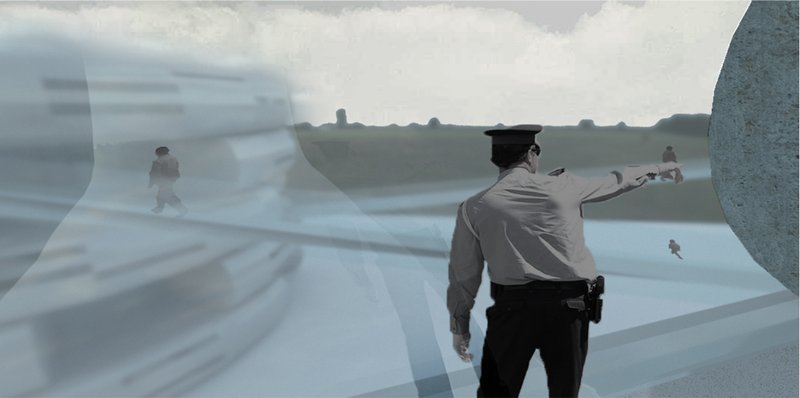
The project also pays close attention to human behavior, suggesting that well-considered spatial sequences—from cell design to daily routines—can alter behavioral patterns over time. The use of circular forms, in particular, reflects a departure from the rigidity of panopticon-style prisons, introducing instead a sense of flow and containment that feels less confrontational.
Rethinking Prison Typology for the Digital Age
TRIO acknowledges the evolving nature of crime, especially with the rise of cybercrime. The design considers a future where inmates may not be violent, but intellectually adept individuals capable of reintegration through education and vocational training. This aligns with the architectural vision: to provide a rehabilitative setting for digital-age offenders who need transformation, not punishment.
In summary, TRIO offers a powerful model for futuristic prison architecture—one that blends spatial intelligence with social responsibility. Its form is not just a visual metaphor, but a rethinking of how space, behavior, and justice intersect.




Popular Articles
Popular articles from the community



Atelier Macri Concept Store Interior Design by CASE-REAL
Atelier Macri store features a "ko" counter, walnut wood details, cork displays, blending retail, gallery, and seamless customer experiences.
Inverted Architecture Installation by Studio Link-Arc: Exploring the Intersection of Architecture and Living Organisms
Inverted Architecture Installation by Studio Link-Arc blends mycelium, sustainability, inverted design, ecological cycles, and urban adaptive architecture in Shenzhen.

Solar Steam: A Climate-Responsive Architecture That Redefines the Monument
A climate-responsive memorial architecture that transforms heat, decay, and time into a living system reflecting humanity’s ecological impact.

Similar Reads
You might also enjoy these articles


The Ken Roberts Memorial Delineation Competition (Krob)
As the most senior architectural drawing competition currently in operation anywhere in the world, it draws hundreds of entries each year, awarding the very best submissions in a series of medium-based categories.

Waterfront Redevelopment and Urban Revitalization in Mumbai: Forging a New Dawn for Darukhana
A transformative waterfront redevelopment project reimagining Darukhana’s shipbreaking heritage into an inclusive urban future.

OUT-OF-MAP: A Call for Postcards on Feminist Narratives of Public Space
Rhizoma Design and Research Lab invites artists, designers, architects, researchers, and students to reflect on how feminist perspectives can reshape public space. Selected works will be exhibited in Barcelona, October 2026. Submissions open until 15 April 2026.


Documentation Work on Buddhist Wooden Temple
Architectural syncretism and cultural hybridity: A comparative study of the Buddhist temples in Chattogram Hill tracks


Explore Research Competitions
Discover active competitions in this discipline




The International Standard for Design Portfolios


The Global Benchmark for Architecture Dissertation Awards


The Global Benchmark for Graduation Excellence


Challenge to reimagine the Iron Throne
Comments (0)
Please login or sign up to add comments
No comments yet. Be the first to comment!