

Tuborg Salt Meadow Residence Buildings by Lundgaard & Tranberg Architects
Coastal residential buildings reinterpret a former brewery site, using expressive brick architecture to frame biodiversity-rich landscapes and seamless indoor-outdoor living.


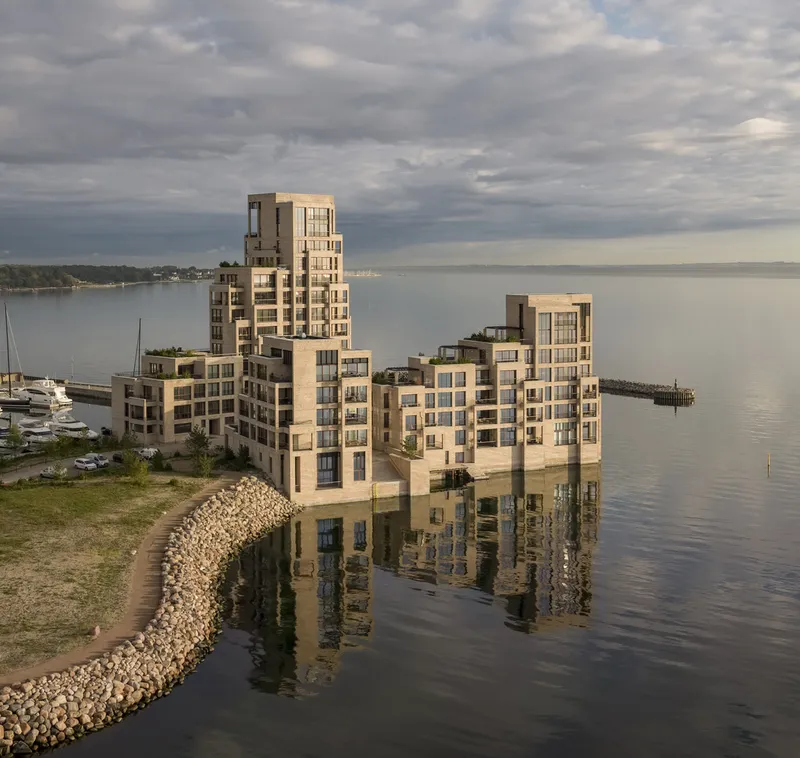
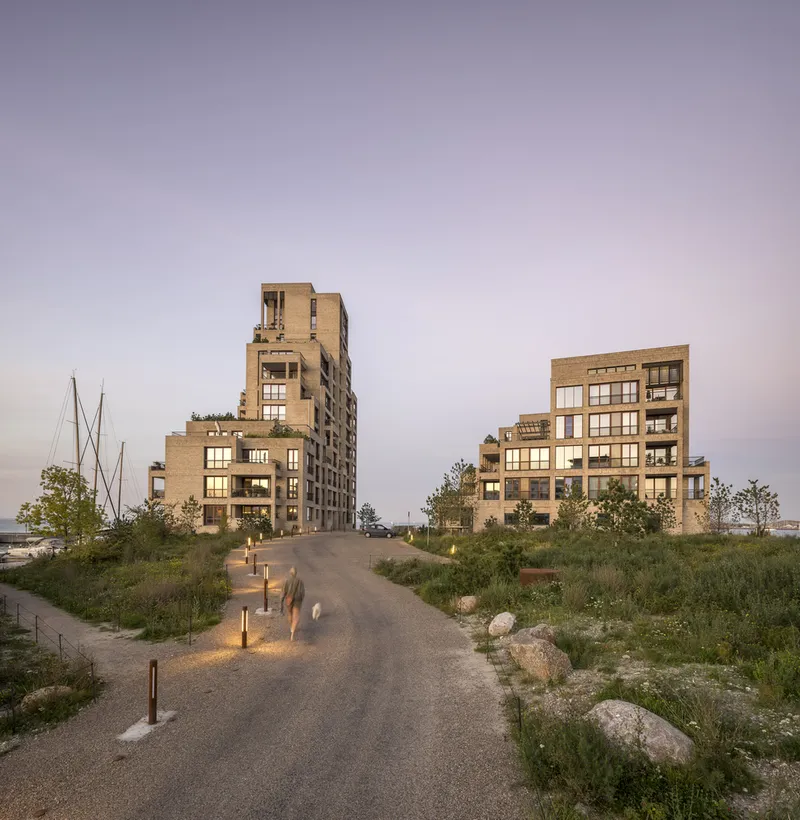
Located on the former Tuborg Factory site north of Copenhagen, the Tuborg Salt Meadow Residence Buildings by Lundgaard & Tranberg Architects form a defining residential development within a newly transformed coastal district in Hellerup, Denmark. The project reimagines a historic industrial brewery landscape as a contemporary urban neighborhood embedded in nature, prioritizing biodiversity, public space, and a strong relationship with the waterfront.
The residential development consists of three apartment buildings: Coastal House 1, 2, and 3, strategically positioned along the shoreline. While Coastal Houses 1 and 2 are completed, Coastal House 3 is scheduled for completion in 2025, finalizing the ensemble. Together, the buildings form a cohesive architectural identity that balances robust materiality with a sensitive response to the Danish coastal environment.
A Masterplan Rooted in Landscape and Biodiversity
The project originates from a new masterplan vision developed in 2008 in collaboration with Gentofte Municipality. In contrast to the former planning strategy, which proposed dense housing blocks dispersed across the site, Lundgaard & Tranberg restructured the layout to preserve and enhance the natural landscape. By relocating residential volumes closer to the coastline and placing parking facilities underground, the architects freed significant ground area for a continuous and accessible nature zone.
This approach allowed the creation of a large, interconnected landscape that increases biodiversity by introducing native vegetation and diverse habitats inspired by traditional Danish coastal ecosystems. The resulting terrain is defined by gentle hills, shallow depressions, and meadow-like expanses that echo the rhythms of the surrounding shoreline.
Architecture at the Water’s Edge
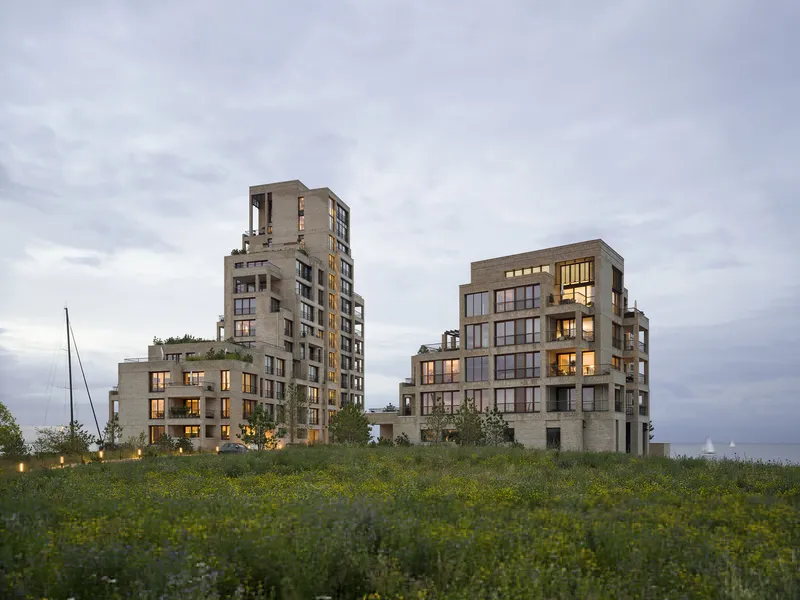
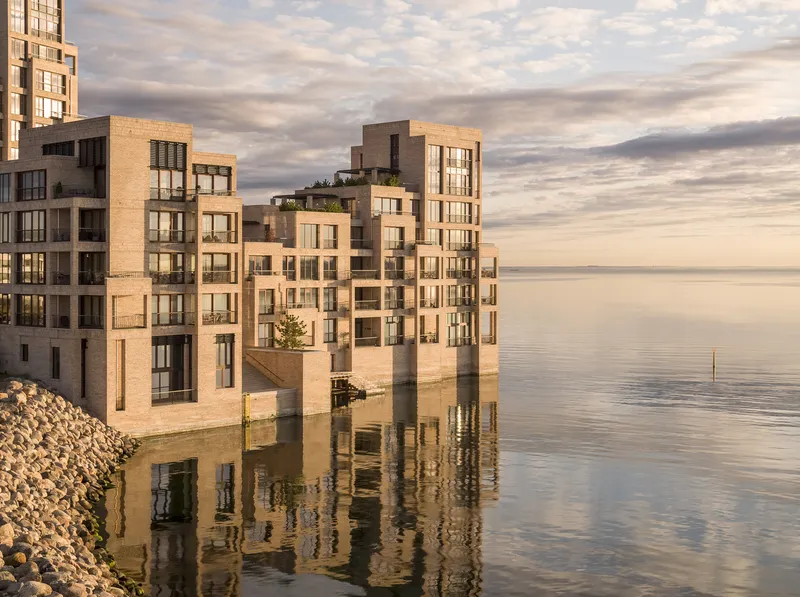
Pulled all the way down to the waterfront, the three coastal residential buildings each feature a small private harbor, reinforcing their close relationship with the sea. Large Nordic stones define the coastline, acting as both erosion protection and a spatial threshold between land and water. Together with the buildings, these elements frame a landscape shaped by the soft, undulating character of Denmark’s coastal geography.
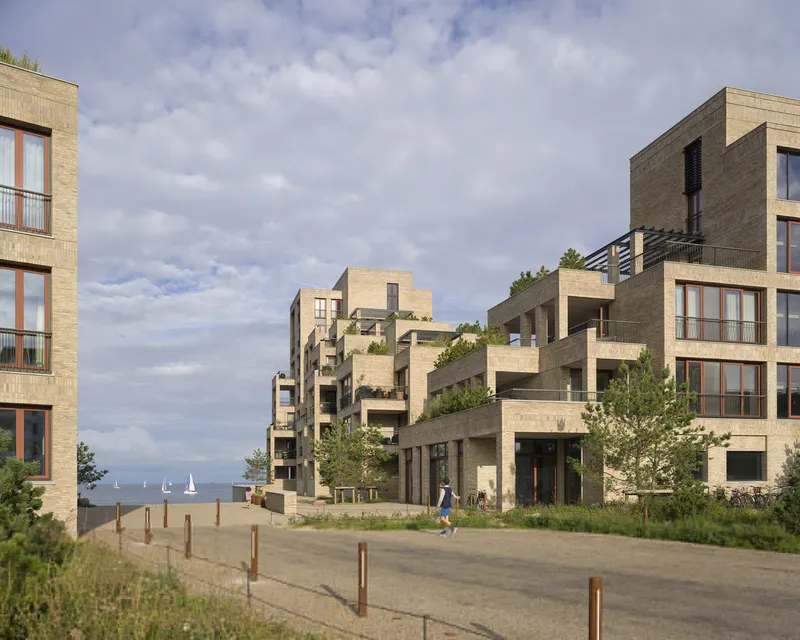
The architectural expression is deliberately solid and grounded. The buildings are designed as robust yet inviting residential structures, offering a strong sense of permanence while maintaining visual warmth and human scale. Large openings and generous outdoor spaces blur the boundary between interior and exterior living.
Materiality, Heritage, and Detail
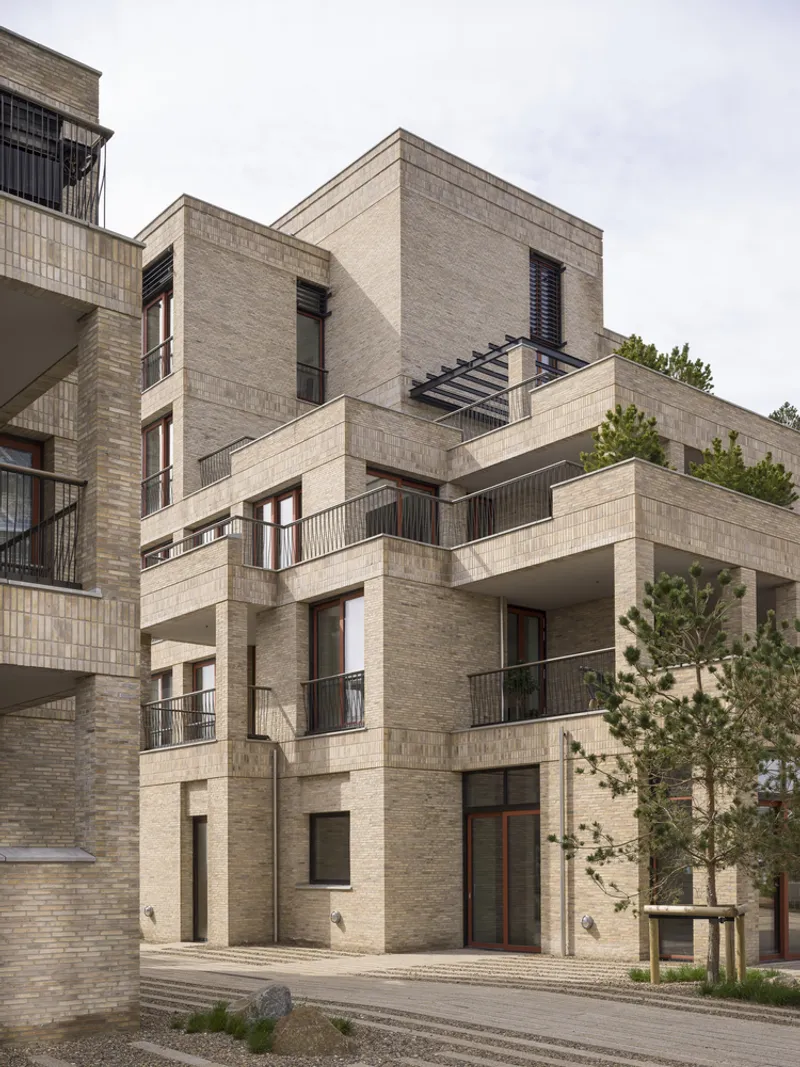
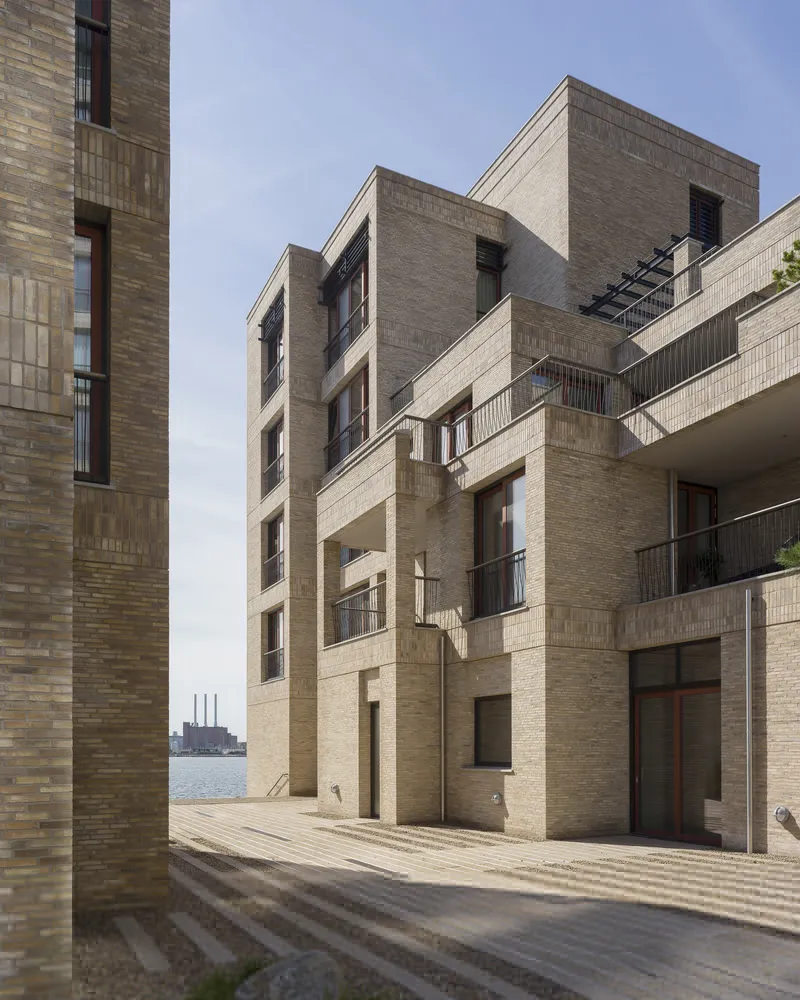
Material choices play a central role in connecting the project to its context. Brick was selected as the primary façade material in reference to Denmark’s industrial traditions and the historic legacy of the Tuborg brewery. The color palette reflects tones found in the surrounding landscape of the Svanemøllen inlet, allowing the buildings to sit naturally within their environment.
The façades are characterized by expressively articulated brickwork that extends directly down into the sea, emphasizing the buildings’ structural weight and maritime presence. Brick columns and façades are supported at each level by horizontal bands of standing bricks, each approximately 80 centimeters high, laid on site. These bands rest on steel masonry supports, creating a layered façade composition that combines craftsmanship with structural clarity.
Living Between Indoors and Outdoors
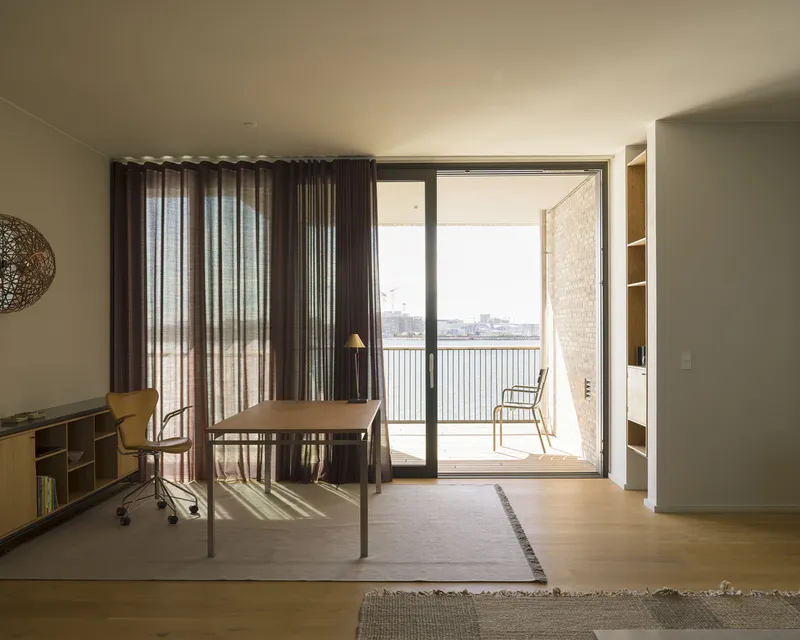
Designed to support a high quality of everyday life, the apartments emphasize spatial openness and outdoor access. Every dwelling features at least two patios or balconies, ensuring optimal daylight, cross-ventilation, and varied views of the landscape and water. The architecture encourages residents to engage with their surroundings, making seasonal changes, weather, and coastal light integral to daily living.
Landscape design by Julie Kierkegaard A/S further enhances this experience, integrating paths, planted zones, and communal outdoor areas that support social interaction while preserving the site’s ecological character.
A Contemporary Coastal Residential Model
With a total area of 51,900 square meters, the Tuborg Salt Meadow Residence Buildings represent a holistic approach to contemporary residential architecture: one that merges urban redevelopment, landscape-driven planning, sustainable principles, and material authenticity. The project demonstrates how former industrial sites can be transformed into resilient, livable environments that respect both cultural heritage and natural ecosystems.
All photographs are works of Adam Mørk + Hampus Berndtson, Laura Stamer




Popular Articles
Popular articles from the community


Co-life: Sustainable Architecture for Age-Friendly Community Living
Co-life reimagines sustainable architecture for seniors through courtyards, rammed earth, shared gardens, and spaces designed for belonging.

The Earth Pod: 3D Printed Homes for Resilient Refugee Communities
The Earth Pod reimagines refugee housing through 3D printed homes made from clay, combining resilience, self-sufficiency, and rapid shelter.

The Musturak Paradise: Senior Living Architecture for a Connected Future in Temara, Morocco
The Musturak Paradise reimagines senior living architecture in Temara via private homes, social spaces, culture, community, and shared care.

Riyadh For All: Intergenerational Urban Design for Active Aging in Rabat
Riyadh For All reimagines urban design in Rabat with intergenerational co-living, adaptive courtyards, and Moroccan cultural exchange today.


Similar Reads
You might also enjoy these articles


Hodi-Mandai Geram
Project Function: Preservation and revitalization of the Intangible heritage and socio-spatial identity of the Hodi by Housing, Cultural Memory Center, Sacred Grove, landscape, local tourism economy


Olio Towers: A Mid-Rise for Performers That Fuses Housing, Rehearsal, and Stage
Located blocks from Houston's Theater District, this modular tower stacks living units around a central performance atrium.

Oasis: Modular Green Housing Carved into Dhaka's Urban Fabric
A shortlisted Plugin Housing entry reclaims unauthorized settlements in Dhaka with stepped concrete volumes, green roofs, and ventilation-driven design.

Black Hole: A Floating Megastructure for the Post-Physical Era
Emiliano Mazzarotto envisions a spherical, self-scaling arena where e-sports, digital hotels, and holographic stadiums replace traditional public space.


Explore Residential Building Competitions
Discover active competitions in this discipline


Challenge to design mud housing for contemporary communities


Challenge to reimagine the Iron Throne


Photograph architecture without architects


Illustrate the lost glory of Angkor Wat - Render Challenge
Comments (0)
Please login or sign up to add comments
No comments yet. Be the first to comment!