

Ulanhada Volcano Hotless Cosmic Grassland New Camp by Ger Atelier – A New Prototype for Sustainable Steppe Tourism Architecture
A sustainable grassland camp blending modern prefab ger-inspired architecture with volcanic landscapes, offering immersive eco-hospitality rooted in Mongolian cultural heritage.


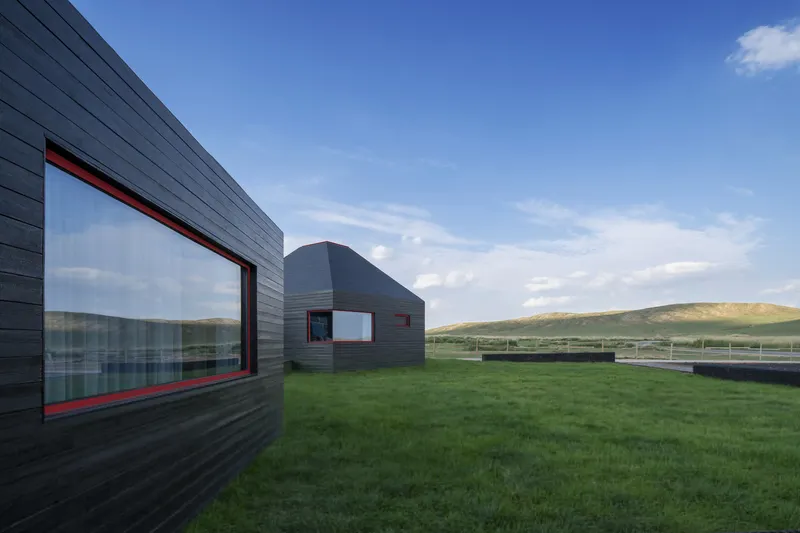
Nestled within the extraordinary volcanic terrain of the Ulanhad Volcano Geopark in Inner Mongolia, the Ulanhada Volcano Hotless Cosmic Grassland New Camp by Ger Atelier reimagines grassland tourism through sustainable construction, cultural heritage, and immersive landscape design. Located in Ulanqab, China, this 2024 project transforms an existing herder’s courtyard into a decentralized eco-hospitality destination that includes guest rooms, a restaurant, a café, a reception center, and integrated service facilities. Designed to elevate both visitor experience and environmental responsibility, the project draws inspiration from traditional Mongolian ger structures and adapts them into a modern, low-carbon architectural system.
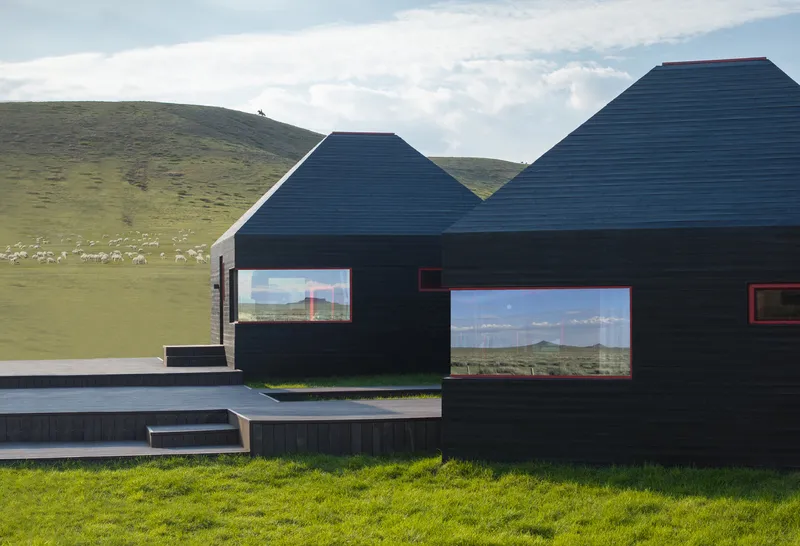
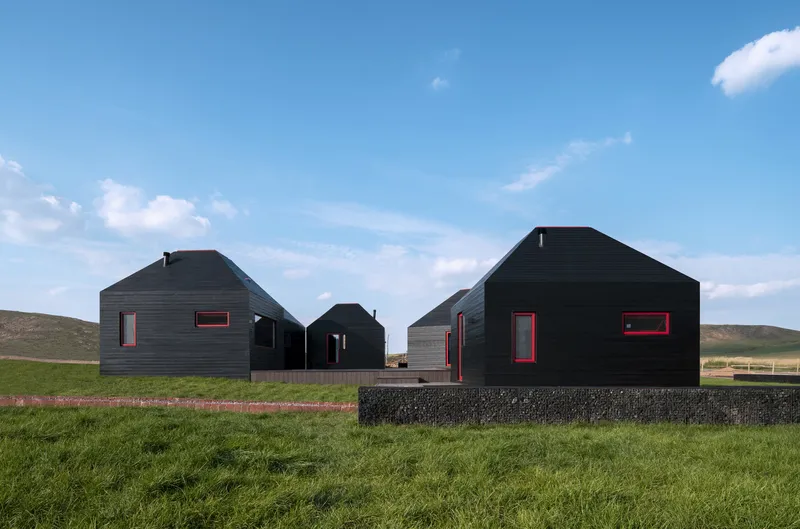
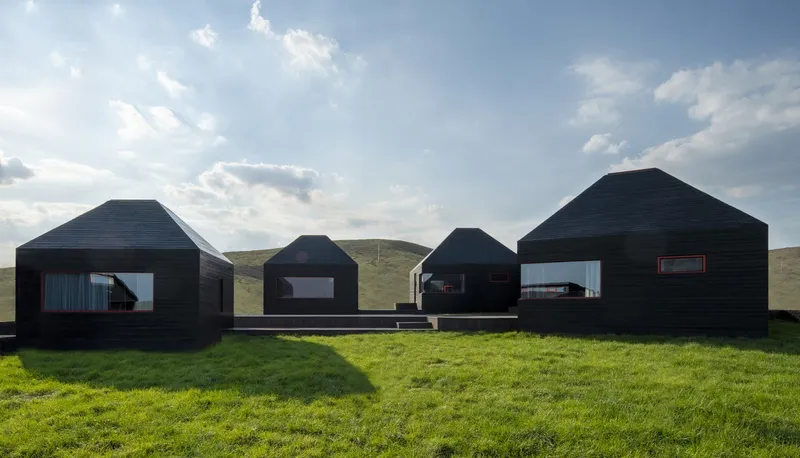
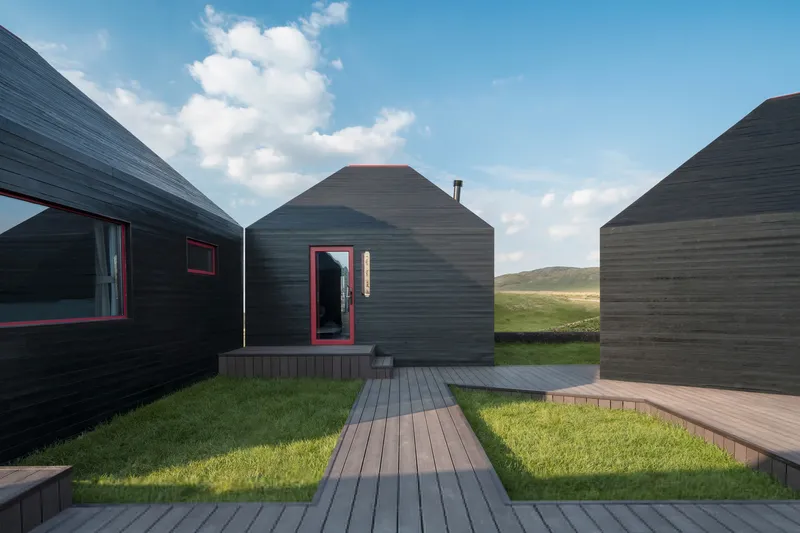
Positioned within one of China’s most renowned “Volcano Museum” landscapes—characterized by grassland volcanoes, lava fields, and dammed lakes—the camp embraces the region’s natural drama. Its fragmented layout breaks the program into seven structures: five accommodation units, a dining hall, and a reception center. This decentralized strategy respects the scale of nearby herder dwellings while maximizing exposure to the dramatic surrounding scenery, allowing guests to fully experience the vastness of the steppe and the geological heritage of the volcanic landscape.
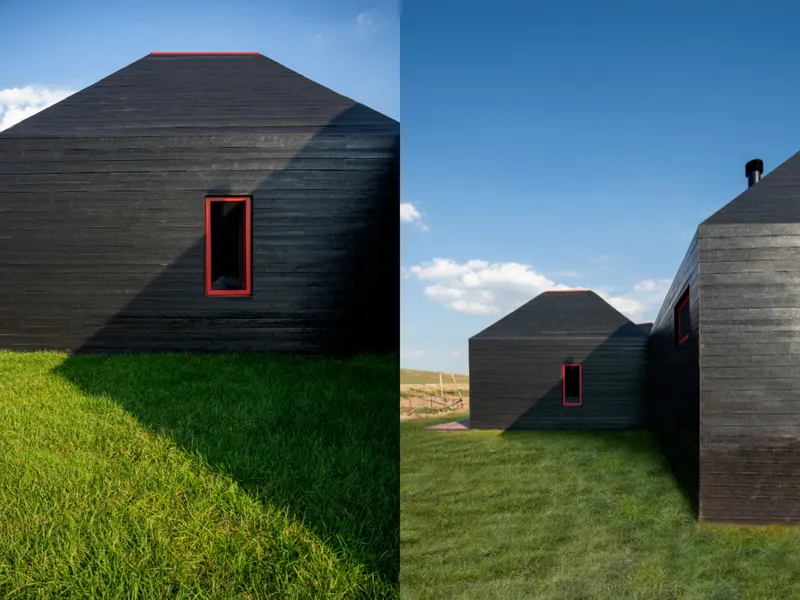
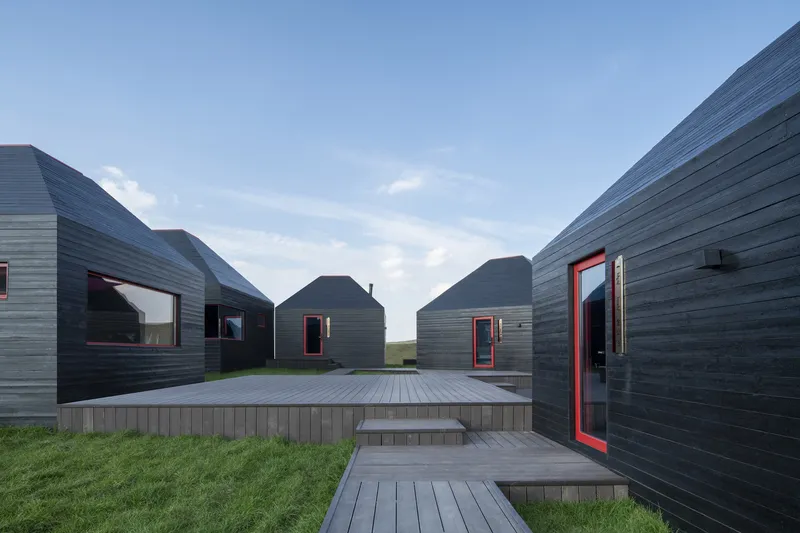
At the heart of the project is the Pole-Type Mongolian Ger, a contemporary reinterpretation of the traditional yurt. This innovative system maintains the iconic dome form while meeting modern standards of comfort, insulation, structural performance, and spatial flexibility. Modular recombination allows diverse interior configurations, supporting various hospitality needs. Openings and building orientation are carefully designed to align with long views across the grasslands, enabling architecture and nature to merge seamlessly. Modular door and window systems optimize material efficiency and enhance climate responsiveness—creating a blueprint for future grassland architecture rooted in culture, ecology, and contemporary living.
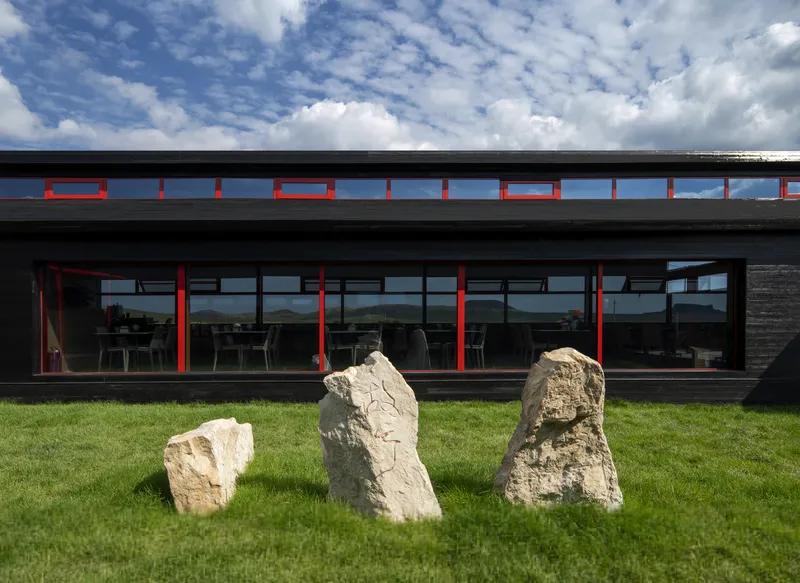
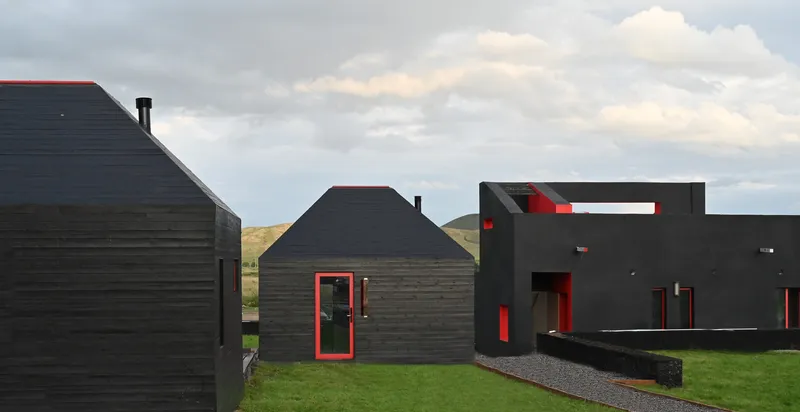
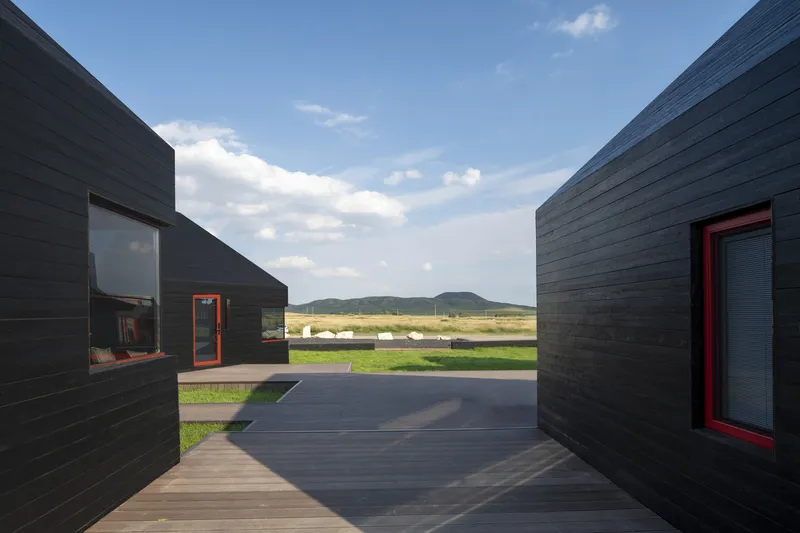
The dining facility, derived from the same pole-type ger logic, adopts an elongated public-space layout that supports communal gathering. A cross-gabled roof with clerestory windows improves natural ventilation, snow shedding, and rainwater management—critical for the region’s climate. Material selection emphasizes sustainability, including engineered timber, charred wood, and locally sourced volcanic stone. Prefabrication reduces waste, onsite labor, construction time, and carbon emissions, while improving thermal insulation and long-term building performance.
In contrast, the reception center repurposes an existing sheepfold, preserving its footprint and volumetric presence while reinforcing its structure and integrating modern heating and insulation systems. This adaptive reuse approach minimizes environmental impact and strengthens the project’s cultural continuity by retaining elements of the local herder lifestyle. Now functioning as the complex’s service core, the renovated space houses essential facilities such as the front desk, kitchen, and restrooms.
All photographs are works ofYujun Dou


Popular Articles
Popular articles from the community


Jaramillo Van Sluys Arquitectura and Urbanismo Turn a Demolished Registry Lot in Quito into an Orchard Plaza
In Quito's Centro Histórico, a 2,800 m² plaza exposes the San Agustín convent wall and redraws its lost Augustinian orchard in volcanic stone.

GROUP A Strips a 1969 Rotterdam Harbor Headquarters to Its Frame and Wraps It in Timber Louvers
In Rotterdam's M4H harbor district, Ferro Offices reuses a 1969 frame, adds one timber storey and reaches BREEAM-NL Outstanding.

David Ortega Stacks a Two-Story Mexico City Penthouse Around a Steel Stair and a Pergola-Shaded Roof Terrace
In Colonia Roma, a 300 m² penthouse uses oak joinery, a planted steel stair and a slatted roof pergola to make a new-build apartment feel like a house.

Architekt Andreas Gruber Scatters 23 Dark Timber Chalets Across a South Tyrolean Forest Edge
In Molini di Tures, Amonti Chalets breaks a resort into a hamlet of gabled timber houses, with parking, storage and services pushed into the slope.

Similar Reads
You might also enjoy these articles


Hodi-Mandai Geram
Project Function: Preservation and revitalization of the Intangible heritage and socio-spatial identity of the Hodi by Housing, Cultural Memory Center, Sacred Grove, landscape, local tourism economy


Olio Towers: A Mid-Rise for Performers That Fuses Housing, Rehearsal, and Stage
Located blocks from Houston's Theater District, this modular tower stacks living units around a central performance atrium.

Oasis: Modular Green Housing Carved into Dhaka's Urban Fabric
A shortlisted Plugin Housing entry reclaims unauthorized settlements in Dhaka with stepped concrete volumes, green roofs, and ventilation-driven design.

Black Hole: A Floating Megastructure for the Post-Physical Era
Emiliano Mazzarotto envisions a spherical, self-scaling arena where e-sports, digital hotels, and holographic stadiums replace traditional public space.

Explore Sustainable Design Competitions
Discover active competitions in this discipline

Challenge to reimagine the Iron Throne

Photograph architecture without architects

Illustrate the lost glory of Angkor Wat - Render Challenge

Design challenge to reuse E-waste
Comments (0)
Please login or sign up to add comments
No comments yet. Be the first to comment!