

Urban Green Island Vienna by OpenFields: A Modular Stage for Public Inclusion and Urban Ecology
This article explores Urban Green Island in Vienna by OpenFields, a modular stage merging social inclusivity, ecology, and urban design.


Introduction to Urban Green Island in Vienna
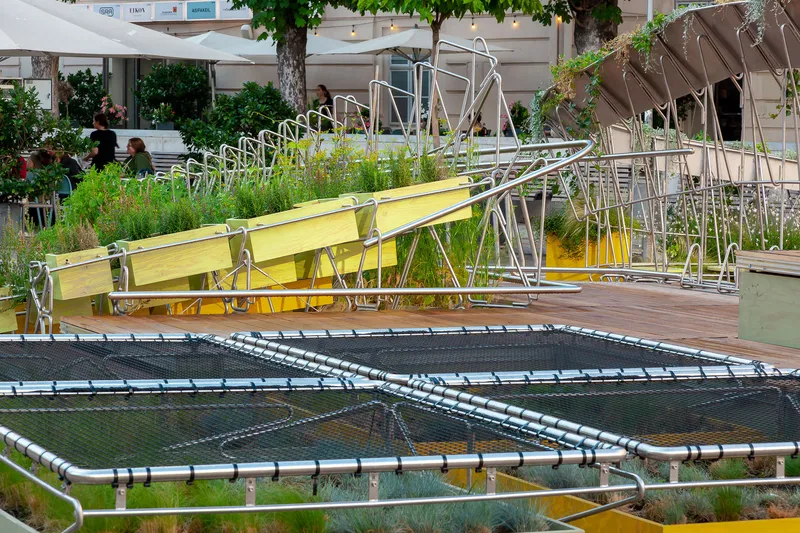
Urban Green Island in Vienna, designed by OpenFields, redefines the relationship between architecture, public space, and social inclusion. Located in the heart of Vienna’s Museum Quarter, this 50-square-meter installation, completed in 2023, exemplifies the potential of modular design to transform overlooked urban areas into vibrant hubs of coexistence and ecological awareness.


Rethinking Public Space through Social and Climatic Responsiveness
The project, also referred to as the Summerstage, serves as a dynamic platform for cultural exchange, environmental interaction, and inclusive urban living. Rather than simply functioning as a performance stage, it operates as an evolving urban island that adapts to the changing needs of both people and the climate. By reclaiming a transitional zone within the city, the space is reimagined as a sanctuary for the homeless, a venue for community events, and a stage for public discourse and celebration.


From Pride performances and DJ sets to literary readings and philosophical discussions, Urban Green Island creates space for cross-cultural dialogue and spontaneous interactions. Its openness challenges conventional notions of static urban design, promoting shared use and accessibility for all social groups.


Parametric Design and Fast-Track Fabrication
Faced with a strict three-month timeline for design, development, and construction, OpenFields implemented a parametric design-to-fabrication system. This approach enabled real-time updates and directly linked the design process with fabrication outputs. Steel manufacturing was streamlined through automated drawing generation, ensuring a highly efficient workflow that maintained design precision under time constraints.

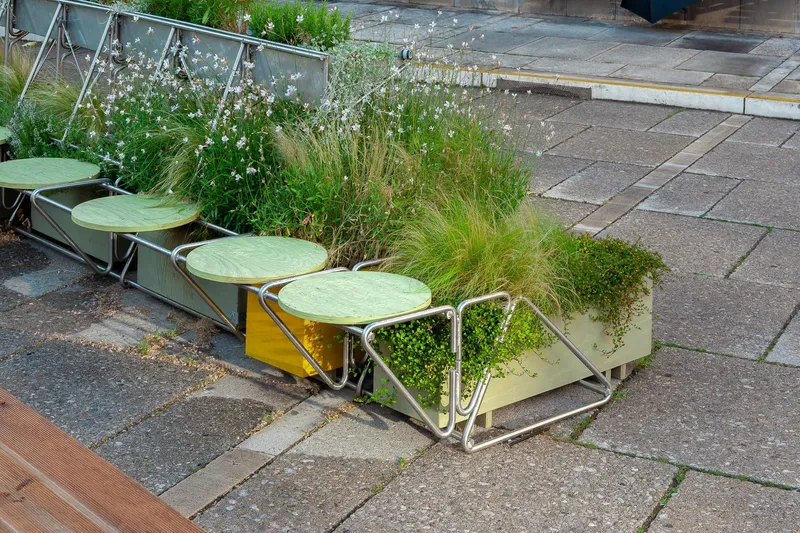
This integration of digital tools into the construction workflow allowed the architects to respond flexibly to design challenges while maintaining the project’s artistic integrity and architectural rigor.

Three Zones of Spatial Interaction
The Urban Green Island is organized into three interdependent spatial zones that reflect environmental and social strategies. The first is an urban garden, where seasonal fruits and vegetables are cultivated, inviting public participation and hands-on engagement with urban agriculture. The second is a meadow with tall grasses, introducing an immersive natural element into the dense urban context. The third is a small, intimate stage that invites spontaneous performance and informal gatherings, cultivating a sense of community and improvisation.
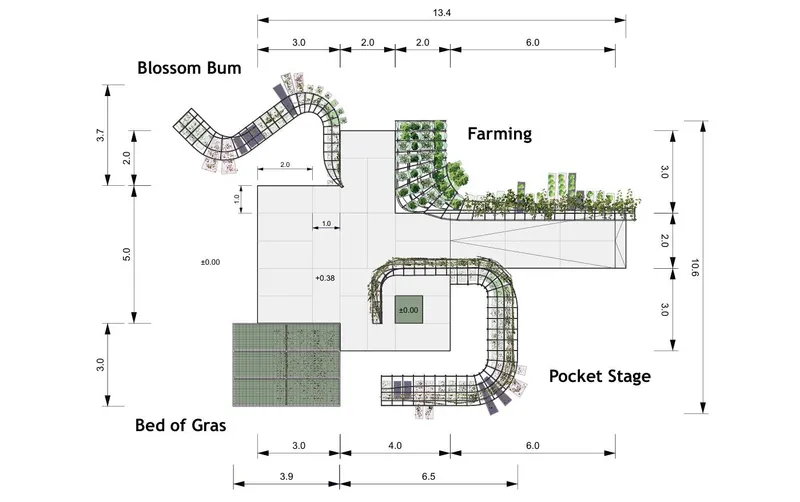
Each of these zones contributes to a broader vision of ecological urbanism, where city life and natural systems coexist symbiotically.

Lightweight, Adaptable, and Future-Oriented Design
The structure is built from a lightweight steel frame combined with wooden components, balancing durability with environmental consciousness. While limited funding postponed the implementation of features such as solar energy and autonomous irrigation, the project remains a forward-looking prototype for sustainable urban installations.

By using readily available and adaptable materials, the pavilion promotes a modular and circular construction approach. The project exemplifies how thoughtful design can achieve long-term impact even with tight budgetary and temporal constraints.
Craftsmanship Meets Digital Strategy
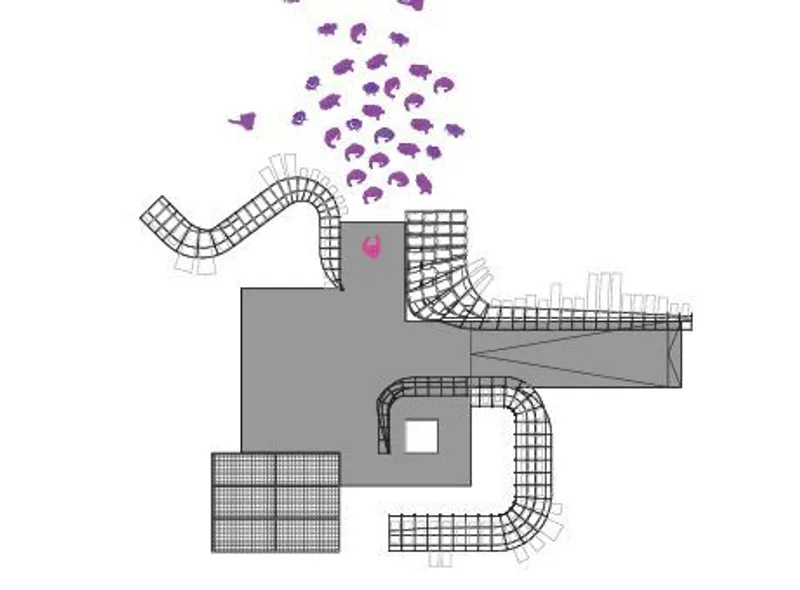
Urban Green Island represents a union of traditional craftsmanship and digital fabrication, echoing the architectural narrative of merging old and new. Its form and function are not static, but fluid—capable of evolving with the needs of its users and the climate. This duality allows the pavilion to serve as a resilient urban infrastructure that can inspire future public space interventions.

The involvement of Werkraum Ingenieure ZT GmbH as structural consultants and Werkstudio Perco as general contractors ensured that the innovative design was successfully translated into a robust and adaptable physical structure.
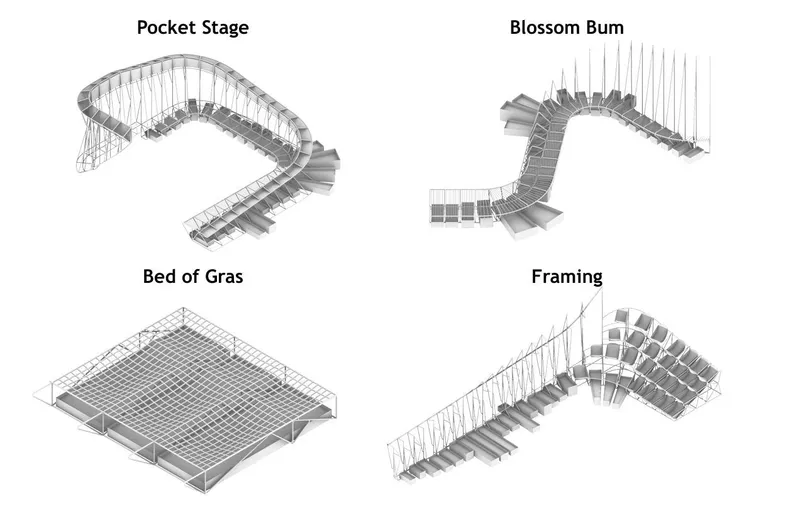
Urban Green Island as a Vision for the Future City
The installation’s inclusive and participatory nature addresses broader urban challenges such as social segregation, environmental neglect, and public space scarcity. In doing so, Urban Green Island in Vienna presents a compelling model for urban resilience. It is not just a project—it is a manifesto for how cities can use architecture to support community, sustainability, and cultural exchange.
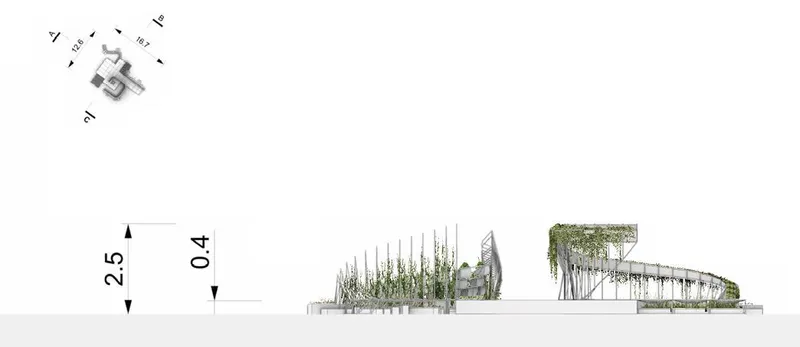
As cities worldwide face increasing social and ecological pressures, Urban Green Island offers an alternative vision—one rooted in shared experiences, adaptability, and care for the urban ecosystem.

All Photographs are works of Flavio Palasciano


Popular Articles
Popular articles from the community


Singing Woman: Contemporary Architecture Inspired by Estonia’s Voice and the Sea
Singing Woman turns Estonia’s song culture into flowing opera house architecture, blending public life, landscape, sea, and national memory.

Tsunami Convergenics: Turning Catastrophic Ocean Forces into Underwater Housing Infrastructure
A speculative underwater settlement off the coast of Onagawa, Japan, treats tsunamis and typhoons as energy sources rather than threats.
Extended Shell: Retrofitting Kolkata's Balconies as Living Urban Thresholds
A modular retrofit system recovers the social and environmental intelligence of Kolkata's historic verandas for contemporary Park Street residents.

The Amber Palace Opera: A Geological Fiction Surfaces on Tallinn's Baltic Waterfront
Pierre Brillard reimagines a Baltic legend as a public landscape, opera house, and waterfront promenade rooted in Tallinn's coastal identity.

Similar Reads
You might also enjoy these articles

FAMM Arquitectura Organizes Ten Villas Around Courtyards and Jungle in Nosara, Costa Rica
El Molino pairs two elongated volumes with deep overhangs and timber louvers to build a compact coastal community five minutes from the beach.
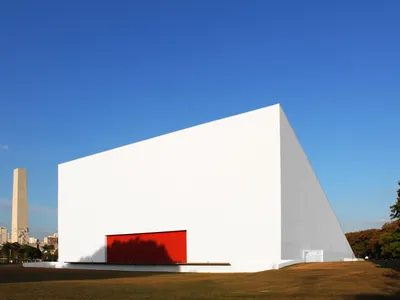
Oscar Niemeyer's Ibirapuera Park Pavilions Define São Paulo's Cultural Identity in Concrete and Curve
A constellation of modernist volumes set within São Paulo's most important urban park, conceived for the city's 400th anniversary in 1954.
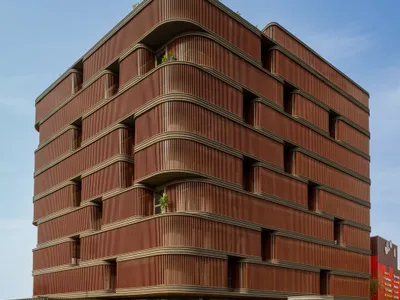
Sanjay Puri Architects Wraps a Jaipur Office Tower in Capsule-Shaped Green Buffers
A nine-level climate-responsive workplace near Jaipur Airport uses stacked planter terraces and aluminium screens to fight 40°C heat.
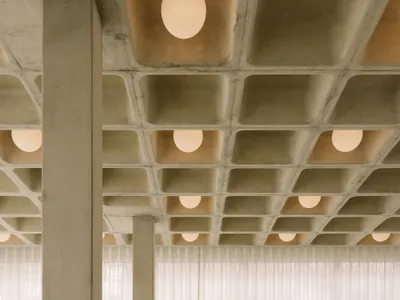
RHO Converts a Berlin Spree-Side Industrial Courtyard into Enkime's 1,000 m² Agency Headquarters
A social media agency's new home in Charlottenburg trades glossy branding for concrete waffle ceilings, glazed tile, and sheer curtains.

Explore Vertical Garden Competitions
Discover active competitions in this discipline

Challenge to reimagine the Iron Throne

Photograph architecture without architects

Illustrate the lost glory of Angkor Wat - Render Challenge

Design challenge to reuse E-waste
Comments (0)
Please login or sign up to add comments
No comments yet. Be the first to comment!