
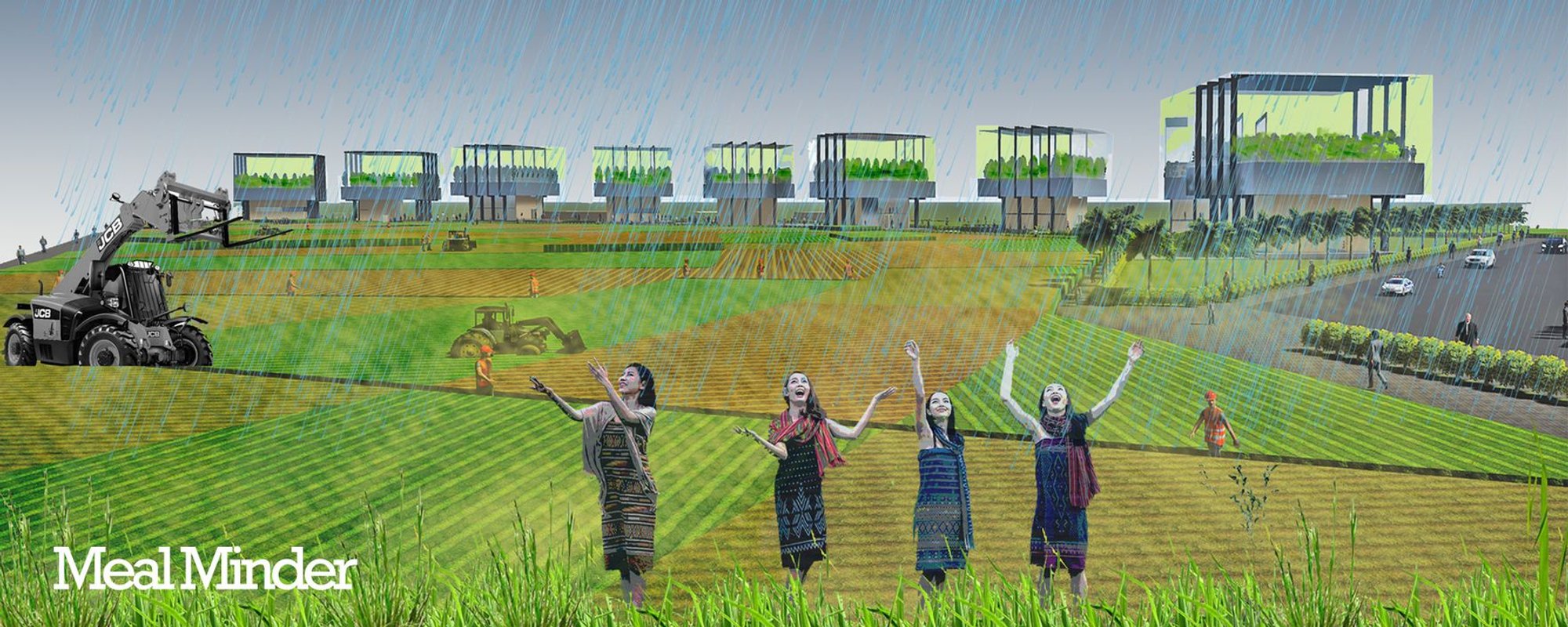
Urban Meal Minder: A People's Choice Award-Winning Vision for Sustainable Architecture
Urban farming architecture that nourishes 75% of daily nutrition while fostering culture, community, and sustainable city living.

The Urban Meal Minder, a People's Choice Award entry by Harshitha, redefines how urban spaces can merge architecture with sustainable food systems. The project Meal Minder presents an innovative design that integrates urban farming into daily life, promoting community engagement, food security, and environmental awareness.
Sustainable Architecture for Healthy Living
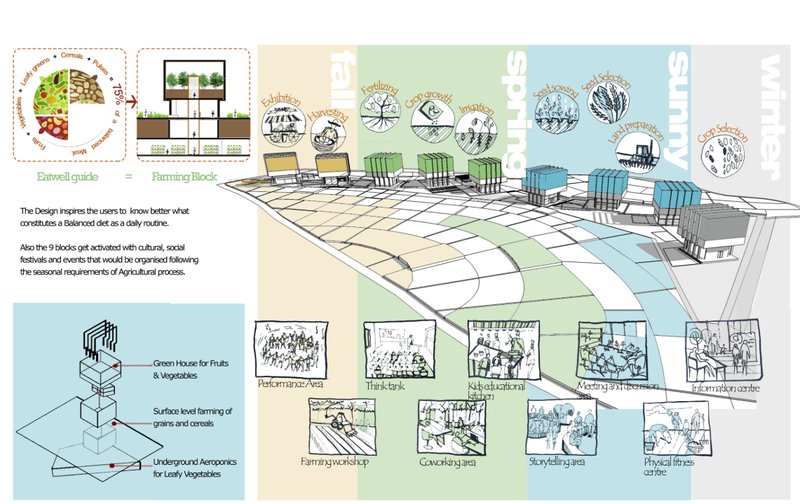
The design ensures that nearly 75% of a user’s nutritional needs can be grown and accessed within the urban population itself. Different floor levels are designed as farming and distribution hubs where residents can directly purchase produce, reconnecting people with the source of their food. By doing so, the Urban Meal Minder reintroduces agriculture into city life, creating a direct link between balanced diets and architectural spaces.
This approach highlights the growing significance of urban farming architecture in addressing global challenges like food scarcity, climate change, and the disconnect between modern urban lifestyles and natural ecosystems.
Cultural Integration and Seasonal Activation
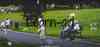
The design is not limited to food production. It also becomes a stage for cultural and social festivals linked to agriculture. The nine blocks are activated seasonally, with events such as exhibitions, harvesting festivals, crop growth celebrations, and seed-sowing ceremonies. These events encourage collective participation, reinforcing the concept of cities as spaces of shared culture and sustainability.
Through this integration, the project transforms urban farming into an educational and experiential journey. Visitors and residents learn about agricultural lifecycles, from land preparation to irrigation, and about nutrition, helping them make informed lifestyle choices.
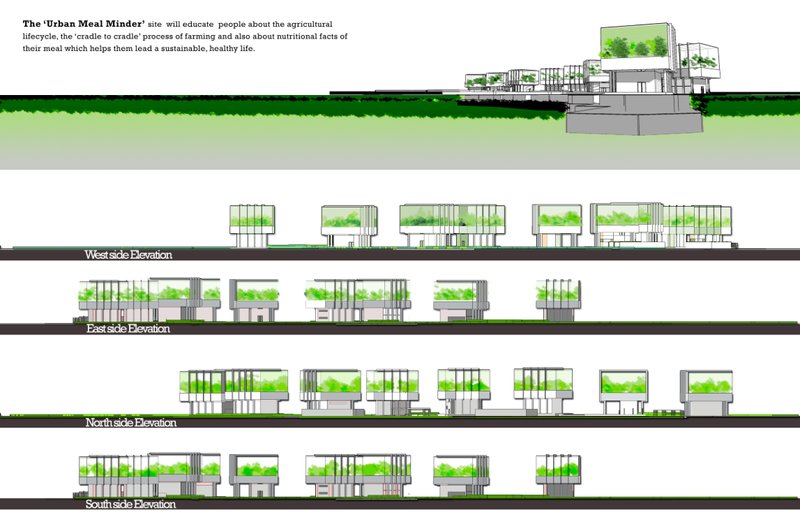
Design Features
- Farming Blocks: Each block follows an "Eatwell guide" structure, balancing fruits, vegetables, cereals, pulses, and proteins to reflect a healthy diet.
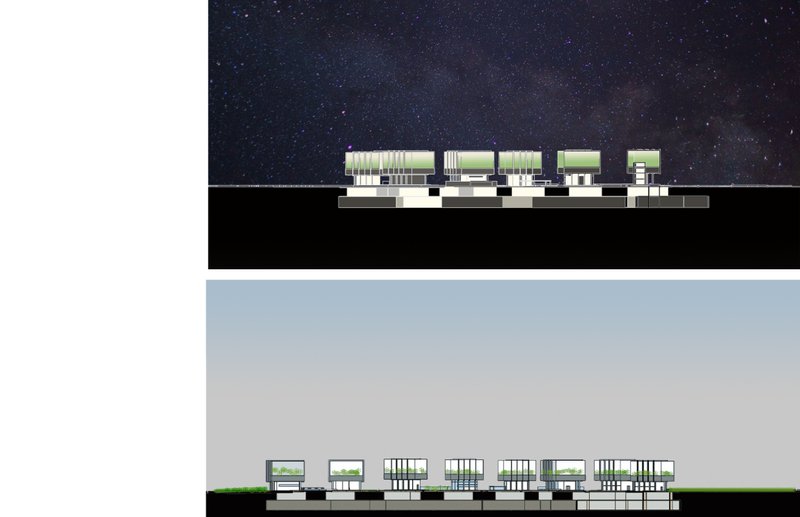
- Greenhouses and Aeroponics: Upper floors maximize natural sunlight for growth, while basement levels use controlled aeroponics and UV lighting for optimized yields.
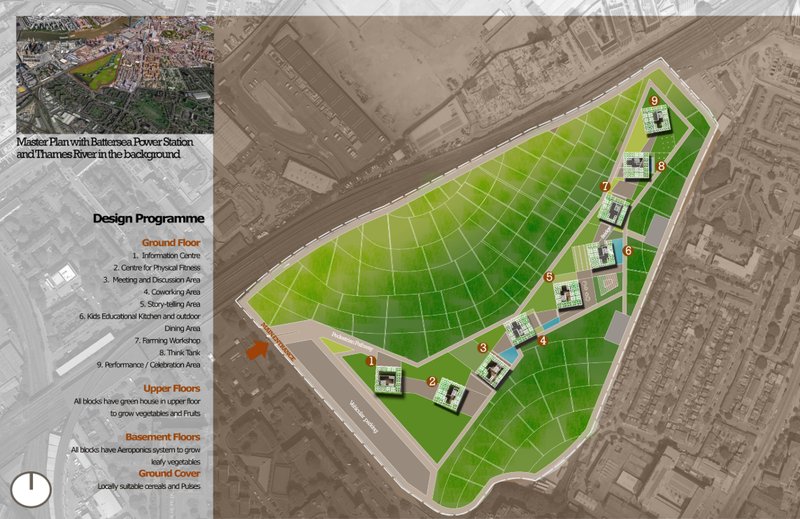
- Spatial Programming: Spaces include an information center, fitness facilities, and social areas, ensuring the project is not only about food but also about holistic well-being.
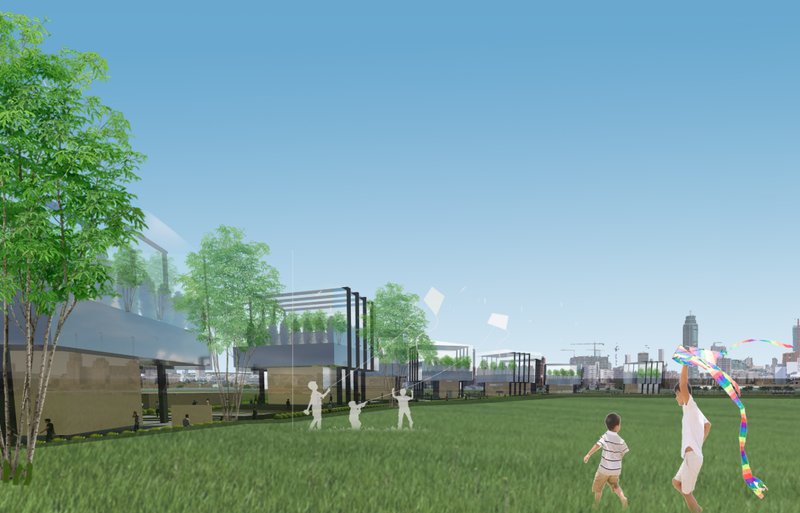
- Community Connection: With its strategic master plan near the Thames and cultural landmarks, the Urban Meal Minder redefines how architectural design can foster stronger community ties.
A Step Toward Resilient Urban Futures
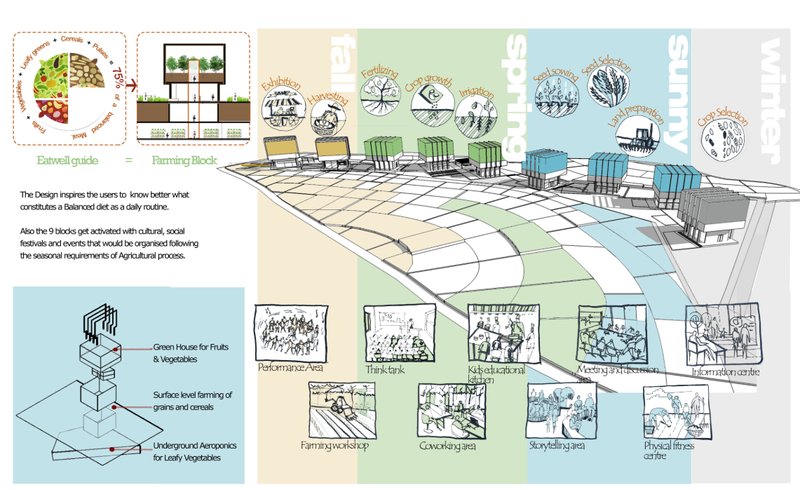
The Urban Meal Minder is a prime example of sustainable urban architecture, showing how cities can grow their own food, reduce dependence on external supply chains, and enhance resilience. More importantly, it creates a sense of ownership and responsibility among citizens toward both their diets and their environment.
By merging food systems with architecture, Harshitha’s design reflects a future where cities feed themselves, and people reconnect with the agricultural cycles that sustain them.
The Urban Meal Minder project demonstrates how urban farming architecture can go beyond sustainability to foster healthier, more connected communities. It stands as a model for future cities, where architecture is not just about buildings, but about creating living systems that nurture both people and the planet.


Popular Articles
Popular articles from the community

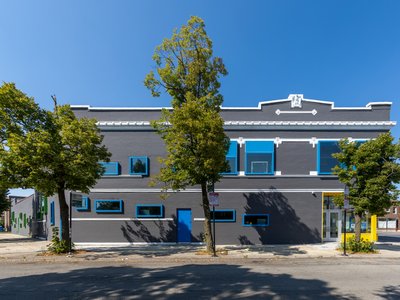
Gads Hill Early Learning Center by JGMA: Adaptive Reuse Shaping Community-Focused Educational Architecture
Adaptive reuse transforms fragmented structure into vibrant early learning center with playful façade, natural light, and community-focused sustainable design.
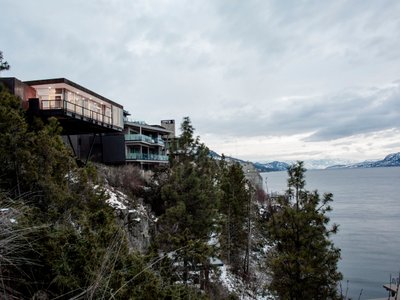
Alton Cliff House: A Harmonious Retreat by f2a Architecture in Lake Country, Canada
Alton Cliff House blends corten steel, prefabrication, and sustainable design, creating a luxurious, energy-efficient retreat perched on Canadian cliffs.

Split House: A Compact Urban Home Blending Privacy, Light, and Flexible Living in Japan
Compact Japanese home featuring DOMA space, flexible café potential, passive lighting, privacy zoning, and sustainable urban living design.


Similar Reads
You might also enjoy these articles

Free Architecture Competitions You Can Enter Right Now
No entry fees, real prizes. Here are the best free architecture competitions open for submissions in 2026.

Top 15 Architecture Competitions to Enter in 2026
From student-friendly idea competitions to prestigious international awards, here are the best architecture competitions open for entries in 2026. Updated regularly.

DIY & Engineering in Computational Design : Enter the BeeGraphy Design Awards
Showcase Your Creativity with Computational Design and Open Source Projects
Innovative Design Solutions: Award-Winning Projects from Recent Architecture Competitions
Exploring award-winning architectural projects shaping the future of design, sustainability, and community.


Explore Educational Building Competitions
Discover active competitions in this discipline




The Global Benchmark for Architecture Dissertation Awards


Challenge to design public laboratory
Comments (0)
Please login or sign up to add comments
No comments yet. Be the first to comment!