
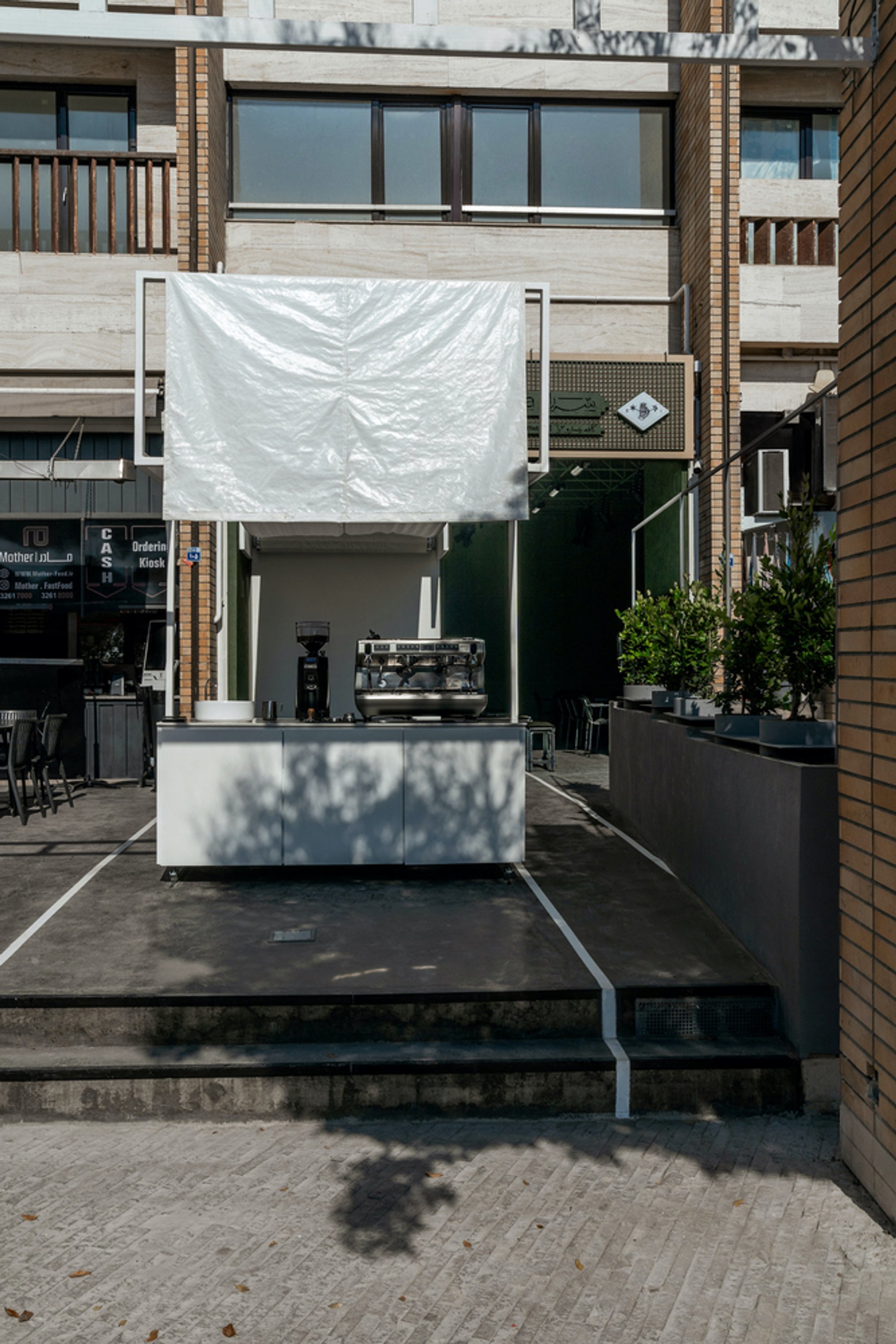
Walking Canopy (3ra Café Bistro) by Paad Architects: Redefining Urban Interaction
Walking Canopy by Paad Architects redefines urban interaction with adaptive, low-tech design, seamlessly blending indoor and outdoor café spaces in Isfahan.

A Contemporary Approach to Architectural Fluidity
In the ever-evolving landscape of urban architecture, the concept of adaptability is gaining prominence. Walking Canopy (3ra Café Bistro), designed by Paad Architects, stands as a testament to this ideology, redefining the traditional relationship between built spaces and their environment. Located in the historic city of Isfahan, Iran, this 54 m² project explores the potential of dynamic, low-tech architecture to enhance urban life.
Challenging the Static Nature of Architecture
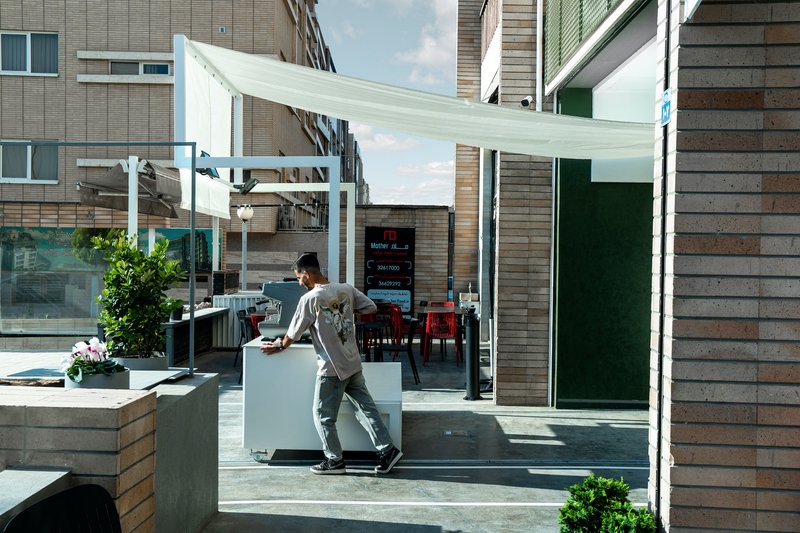
Historically, architecture has been deeply rooted in the terrain it occupies. However, modern urban design demands a shift toward more agile and responsive spatial configurations. The Walking Canopy embodies this shift, fostering an interplay between interior and exterior spaces through fluid design elements. This innovative bistro renovation introduces a new paradigm of urban interaction, where architecture acts as an active participant in the daily rhythm of the city.
Reimagining Space Through an Open-Air Concept
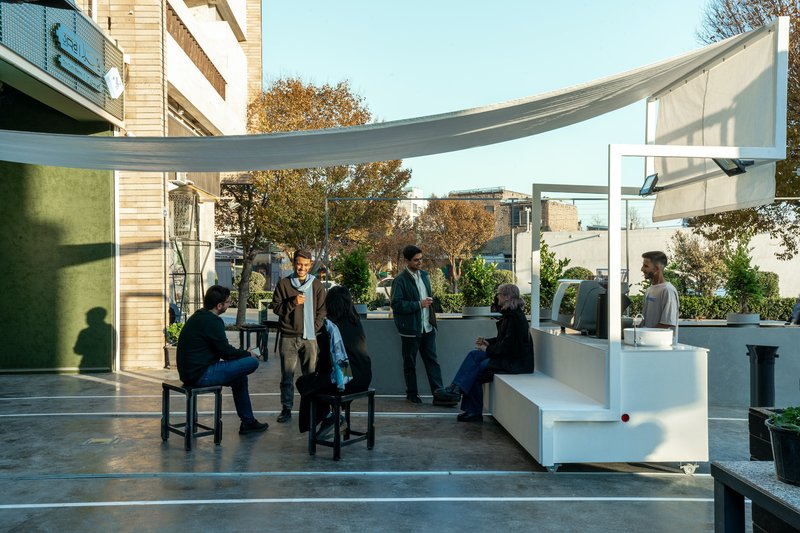
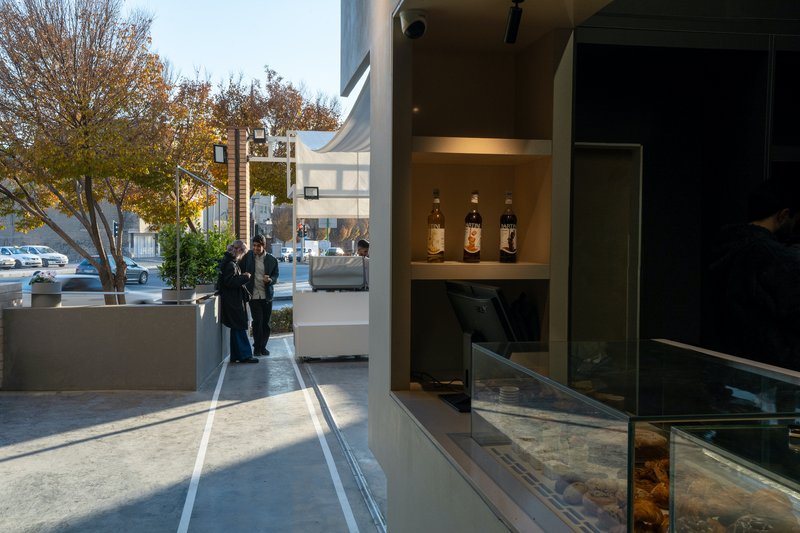
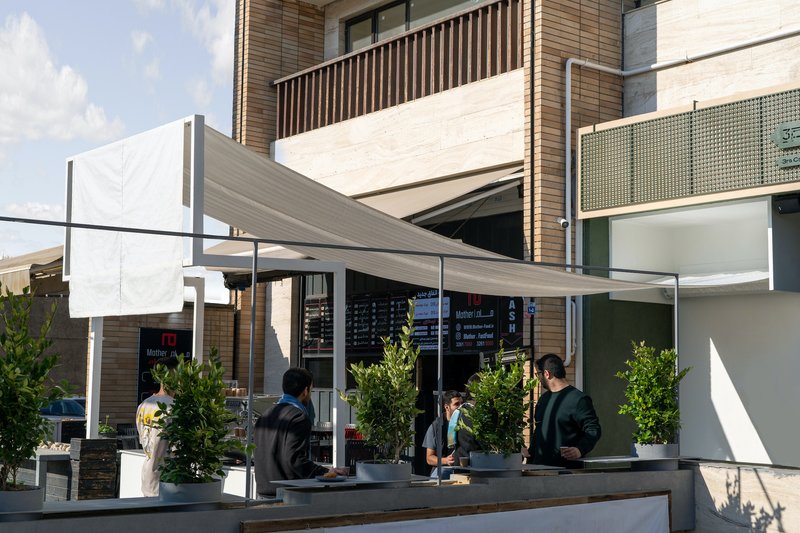
The renovation strategy of Walking Canopy centers around a seamless transition between indoor and outdoor environments. To achieve this, Paad Architects restructured the space by positioning the kitchen in a linear configuration, thereby allowing the hall to expand outward into the urban fabric. The barista station, strategically placed at the edge, extends into the exterior, creating an inviting and engaging urban hangout.
This design approach blurs the boundaries between the built environment and the public realm, transforming the café into a dynamic social hub rather than a confined interior space. The outdoor setting becomes an extension of the bistro, drawing people into an interactive architectural experience.
Climate-Responsive Design Solutions
Given Isfahan's arid climate, ensuring comfort without conventional climate control mechanisms posed a challenge. Instead of relying on high-energy cooling systems, the design employs a low-tech, passive approach. The open-air space incorporates radiant heaters and misting fans, strategically placed alongside lighting fixtures within a ceiling grid. This configuration regulates thermal comfort while maintaining spatial openness, aligning with the region’s historical architectural principles.
Theatricality in Architecture: A Performative Space
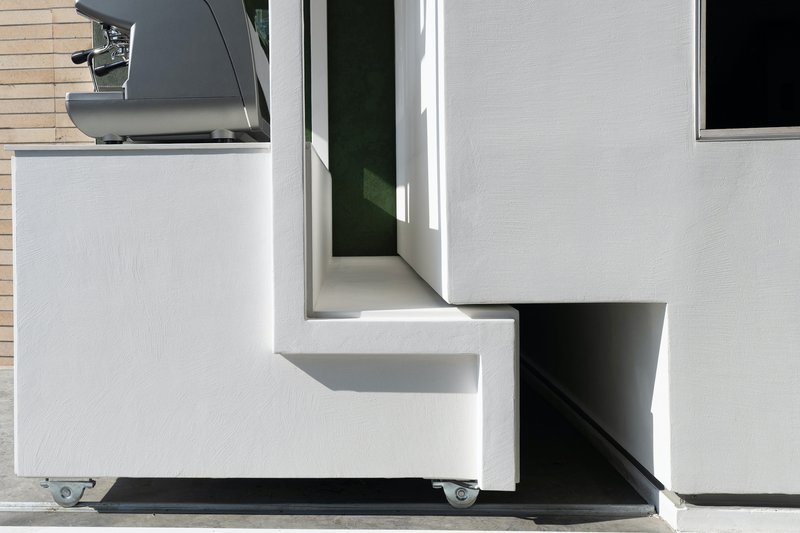
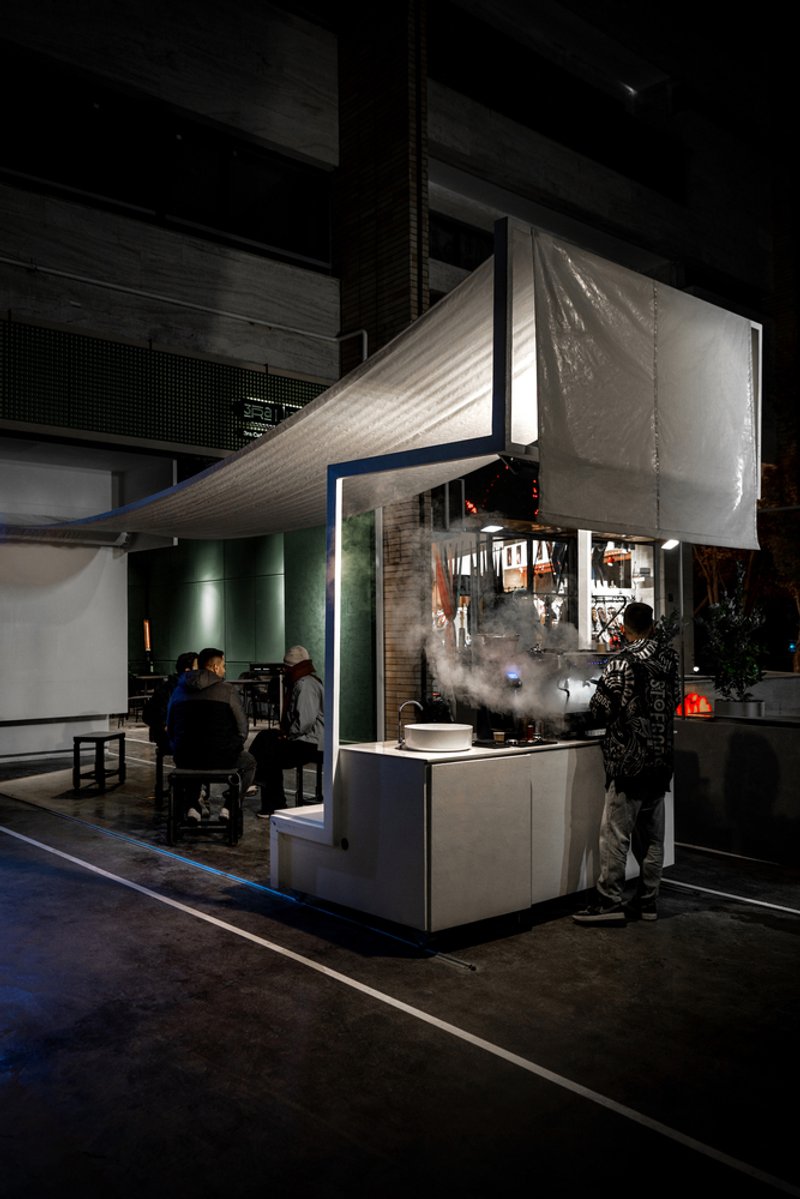
Beyond functionality, the Walking Canopy introduces a performative aspect to architecture. The barista station, detached from the main preparation area, extends into the outdoor space in a choreographed movement, turning coffee-making into a theatrical act.
As the barista moves forward, a retractable canopy unfurls from a roller system, creating a temporary yet intimate outdoor setting. At the end of the day, the barista returns the station to its original position, and the canopy disappears, reinforcing the ephemeral nature of the space. This adaptability reflects a deeper philosophy of impermanence and mobility, allowing architecture to respond to the fluid nature of urban life.
Infrastructure Designed for Flexibility
To support the barista’s mobility, the ground is designed as a plug-in energy source, providing water and electricity connections. This design ensures the station can function independently in its outdoor setting, further blurring the line between fixed and flexible spaces. Even elements like lighting and handwashing areas are designed with a performative quality, turning routine activities into engaging experiences.
Redefining Urban Engagement Through Design
The Walking Canopy project serves as an exploration of urban vitality, emphasizing movement, adaptability, and user interaction. By reimagining the static nature of traditional architecture, Paad Architects have crafted a space that not only accommodates human activity but actively participates in it.
All Photographs are works of AkhavanStudio.



Popular Articles
Popular articles from the community

Free Architecture Competitions You Can Enter Right Now
No entry fees, real prizes. Here are the best free architecture competitions open for submissions in 2026.

Fifth NRE Jazz Club – De Bever Architecten: Eindhoven’s Revitalized Cultural Hub
Historic gas factory transformed into Fifth NRE Jazz Club blending modern sustainability, jazz culture, dining, and heritage architecture seamlessly.

Atelier Macri Concept Store Interior Design by CASE-REAL
Atelier Macri store features a "ko" counter, walnut wood details, cork displays, blending retail, gallery, and seamless customer experiences.


Similar Reads
You might also enjoy these articles


The Ken Roberts Memorial Delineation Competition (Krob)
As the most senior architectural drawing competition currently in operation anywhere in the world, it draws hundreds of entries each year, awarding the very best submissions in a series of medium-based categories.

Waterfront Redevelopment and Urban Revitalization in Mumbai: Forging a New Dawn for Darukhana
A transformative waterfront redevelopment project reimagining Darukhana’s shipbreaking heritage into an inclusive urban future.

OUT-OF-MAP: A Call for Postcards on Feminist Narratives of Public Space
Rhizoma Design and Research Lab invites artists, designers, architects, researchers, and students to reflect on how feminist perspectives can reshape public space. Selected works will be exhibited in Barcelona, October 2026. Submissions open until 15 April 2026.


Documentation Work on Buddhist Wooden Temple
Architectural syncretism and cultural hybridity: A comparative study of the Buddhist temples in Chattogram Hill tracks
Explore Architecture Competitions
Discover active competitions in this discipline




The International Standard for Design Portfolios


The Global Benchmark for Architecture Dissertation Awards


The Global Benchmark for Graduation Excellence


Challenge to reimagine the Iron Throne
Comments (0)
Please login or sign up to add comments
No comments yet. Be the first to comment!