
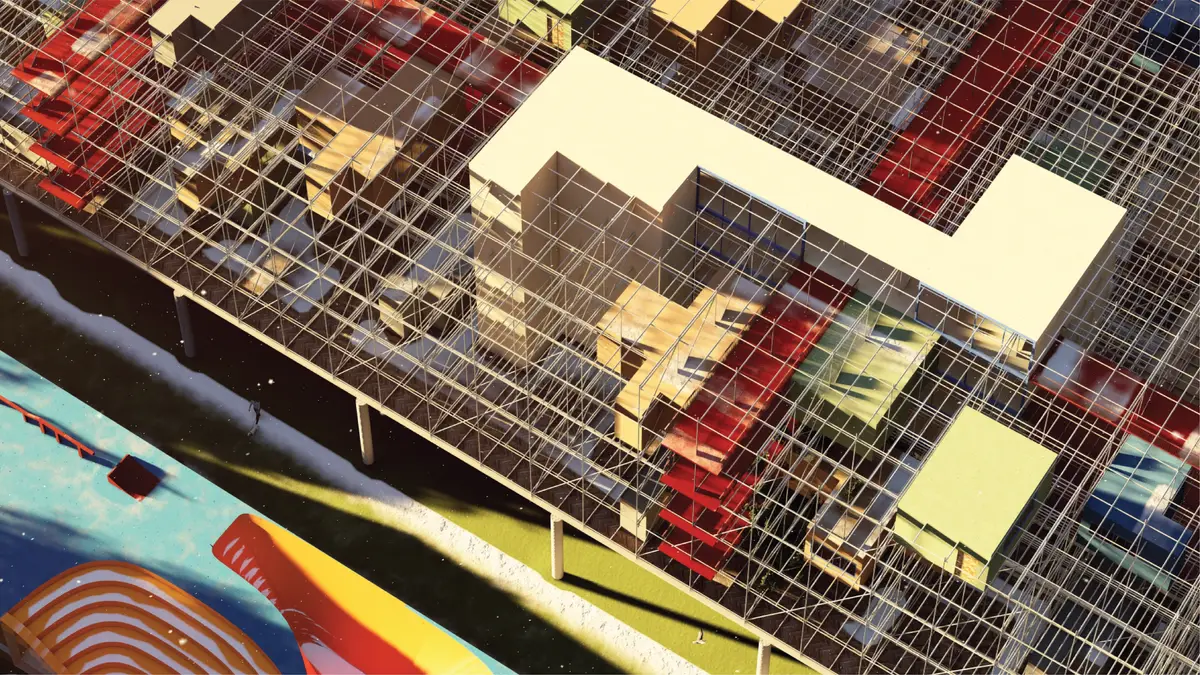
Weaved city
Design narrative
What began as an informal tea-time discussion about sandwiches is what led to a eureka concept-developing moment for the team. The discussion was about how the convenient degree of customization Subway sandwiches presents is what brings them customer satisfaction.
"If only we could make houses as simply as stacking tomato and lettuce " "Well, why not ?" and that's how it started.......
The idea made sense and fit in the puzzle of the lack of affordable housing for youth in booming cities like a missing puzzle piece. It responded to everyone's needs and requirements and could be built in affordably and quickly.
The next course of action gathering research data, for this with help from a friend in Russia, we sent surveys to universities in Moscow to gauge what are the average interests of youth living in the area. This was done by compiling a Google form questionnaire;
Q1) Age*
Q2) Student/working*
Q3) Which of the following best describes the housing you currently live in?
Q4) Are you sharing the accommodation with someone?
Q5) It is difficult to find affordable housing in Moscow. Do you agree?
Q6) How satisfied are you with the housing choices currently available to you?
Q7) Would you be open to new types of housing in your neighborhood as a way to address the housing shortage?
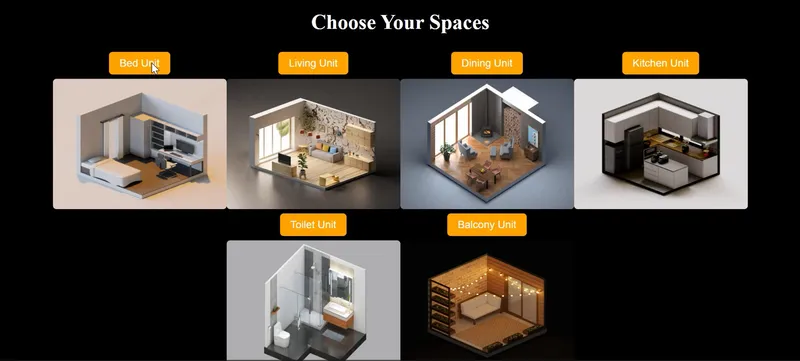
Q8) Consider a situation in which you could create your stay from individual units of bed space, toilet, living, kitchen, study, and balcony. What would you prefer to use all by yourself and what utilities would you like to share with your neighbors to make it more affordable?
Q9)If you had the option of selecting a sports facility in your housing compound. What would you pick?
Responses after conducting the survey

It gave a better understanding of the degree of flexibility that we needed to bring into the design. The design is compiled into three levels of flexibility, re-adjustability by rearranging furniture; re-size ability by shifting partitions and walls; and re-interpretability by dynamic area configuration. The typology organized into three options: singular core, twain core, and ménage core. The result was a growing edifice with an ever-changing facade.
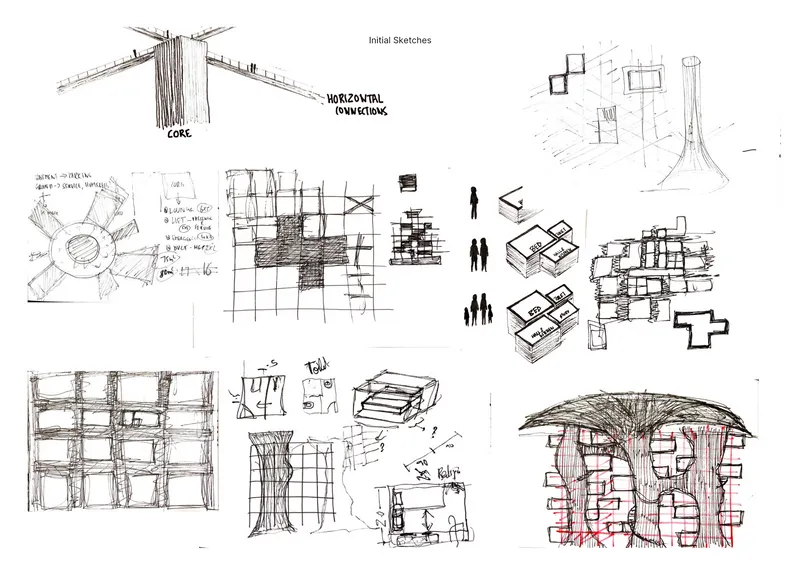
The design process was not a linear one, the design and form iteration varied from cylindrical to organic free flowing, to the compact and legible design it is now.
Initial idea sketches
A trail model of how the website would work.

Popular Articles
Popular articles from the community

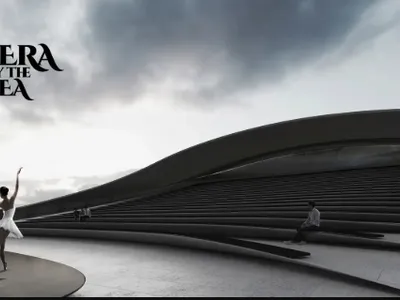
Opera by the Sea Estonia: Three Shells Dissolving Architecture into Tallinn's Coastline
A winning opera house proposal replaces monumental form with interconnected shells that blur the boundary between building, park and Baltic Sea.

The Amber Palace Opera: A Geological Fiction Surfaces on Tallinn's Baltic Waterfront
Pierre Brillard reimagines a Baltic legend as a public landscape, opera house, and waterfront promenade rooted in Tallinn's coastal identity.
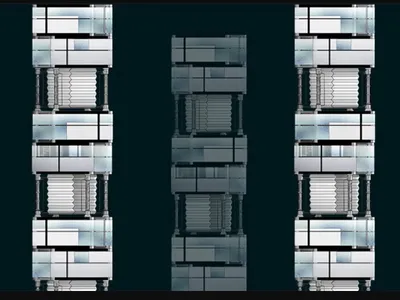
Tsunami Convergenics: Turning Catastrophic Ocean Forces into Underwater Housing Infrastructure
A speculative underwater settlement off the coast of Onagawa, Japan, treats tsunamis and typhoons as energy sources rather than threats.
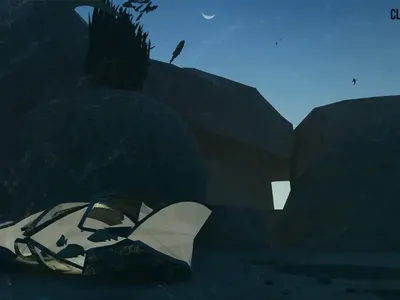
Cloaked Colonization: A Mobile Underwater Habitat That Moves Like a Fish
Micah Abaya's shortlisted EHC Pacific entry reimagines ocean settlement as a dispersed network of self-sustaining architectural organisms.

Similar Reads
You might also enjoy these articles

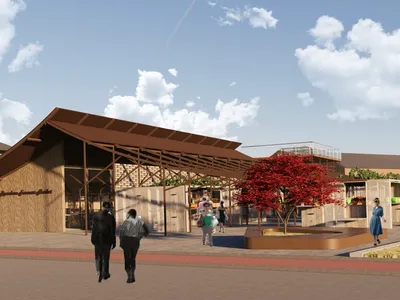
The Rhythm of Seasons
A Farmers' Market Connecting Nature and the City

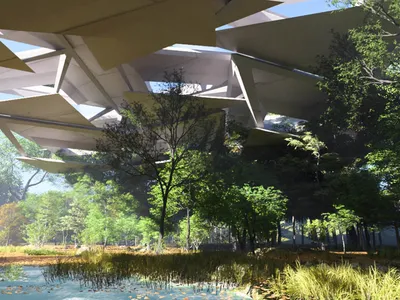

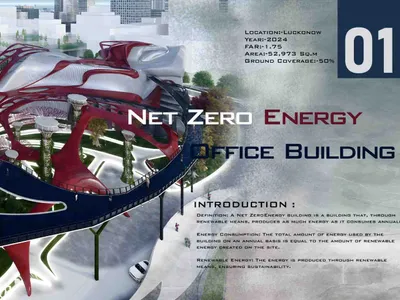
More Than a Building-Designing a Living System
More Than a Building-Designing a Living System
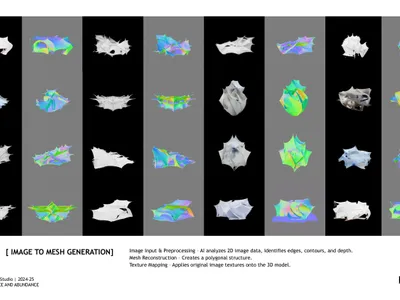
Base Beyond
DESERT COMPOUND ARID: TOURISM OF ABSENCE AND ABUNDANCE

Explore Architecture Competitions
Discover active competitions in this discipline


Challenge to reimagine the Iron Throne

Photograph architecture without architects

Illustrate the lost glory of Angkor Wat - Render Challenge

Design challenge to reuse E-waste
Comments (0)
Please login or sign up to add comments
No comments yet. Be the first to comment!