

Wiedza: The Library of Knowledge - A Modern Architectural Marvel
Explores Wiedza's innovative library design blending sensory zones, natural elements, and modern technology for engaging learning.


In an era where digital transformation is reshaping every aspect of our lives, libraries must evolve to remain relevant and engaging. "Wiedza," a library conceptualized by Sneha Varghese, Saloni Sawant Dessai, and Khyathi Rachakonda, represents a groundbreaking approach to library design. Shortlisted in the Libgen Competition, Wiedza is not just a repository of books but a dynamic social hub where learning is interactive, immersive, and inclusive. This article delves into the architectural ingenuity behind Wiedza, exploring how it fosters a vibrant learning environment through innovative design.
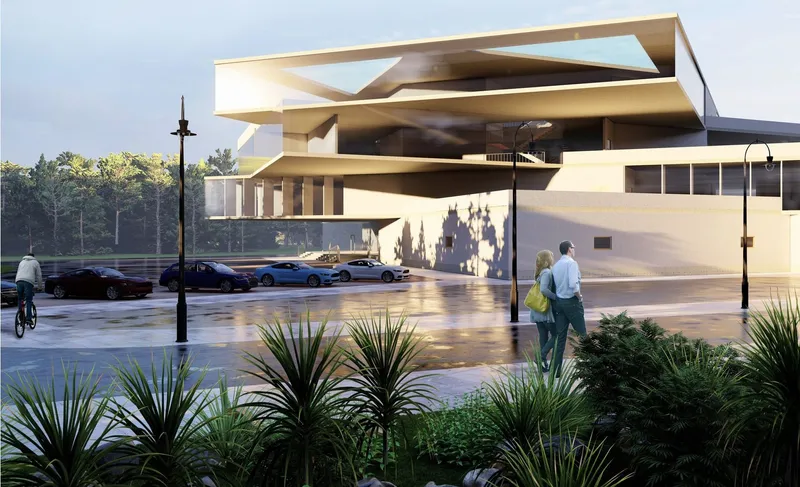
The Vision Behind Wiedza
Wiedza, meaning "knowledge" in Polish, is envisioned as a place where people from all walks of life can gather to gain knowledge in various forms. The design aims to break away from traditional perceptions of libraries as silent, solitary spaces. Instead, it seeks to create lively, sensory-rich environments that make learning an engaging and enjoyable experience. The library offers a diverse array of zones tailored to different sensory experiences, ensuring that every visitor can find a space that suits their preferred mode of learning.
Design Concept and Development
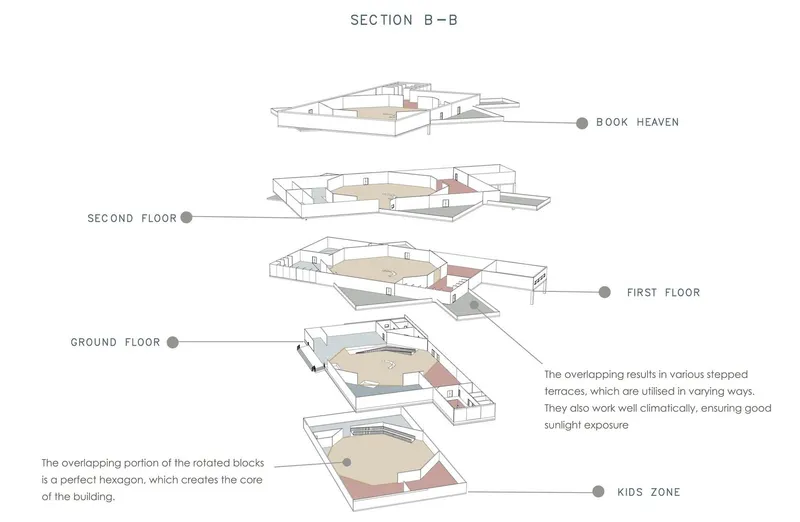
The design of Wiedza draws inspiration from a stack of books, each with a bookmark, rotated at angles to create a dynamic structure. This concept not only symbolizes the accumulation of knowledge but also reflects the multifaceted nature of learning. The overlapping portions of these rotated blocks form a perfect hexagon, which serves as the core of the building. This central core is the heart of Wiedza, from which various sensory zones radiate.
Sensory Zones
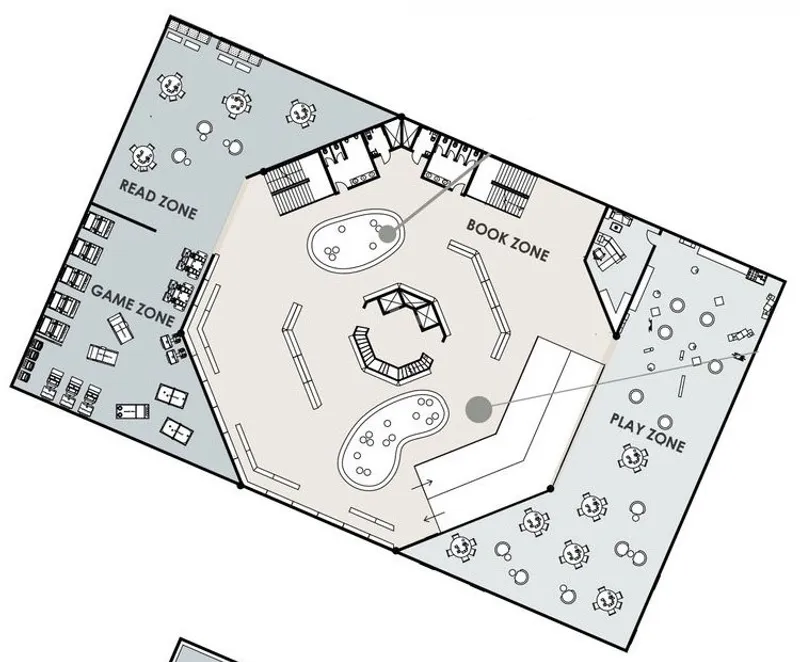
Wiedza is divided into six distinct zones based on the sensory experiences they offer:
Thinking Zone: Includes think tanks and study zones designed to foster deep concentration and intellectual engagement.
Listening Zone: Features audiobooks, storytelling sessions, and lecture areas, catering to auditory learners.
Reading Zone: Offers traditional books and digital gadgets, blending conventional reading with modern technology.
Watching Zone: Equipped with movie theaters, educational video pods, and performance spaces for visual learning.
Feeling Zone: Immersive experiences like augmented reality (AR) and virtual reality (VR) pods that provide tactile and interactive learning.
Interacting Zone: Includes spaces for book clubs, conferences, and workshops, promoting social interaction and collaborative learning.
Architectural Features
Form and Orientation
The building's form and orientation are the result of a comprehensive climatic analysis using Autodesk FormIt software. The design ensures optimal sunlight exposure on all terraces, enhancing natural daylighting throughout the library. The terraces, which step around the central core, represent the progression toward newer forms of learning.
Material and Facades
Glass facades are a significant feature of Wiedza, chosen for their ability to provide ample natural light and create a visually open environment. This choice was informed by an analysis of Lublin's climatic data, ensuring the design is both aesthetically pleasing and energy-efficient.
Green Spaces and Tree Preservation
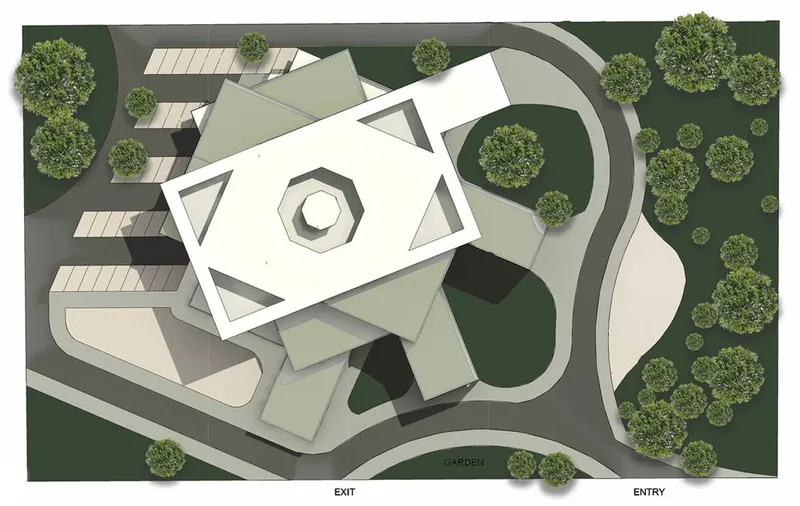
A key aspect of Wiedza's design is the integration of green spaces. The architects made a concerted effort to preserve most of the existing trees on the site, positioning the building blocks around them. These green areas not only enhance the building's aesthetic appeal but also provide serene environments for outdoor reading and relaxation.
Interior Layout
The interior layout of Wiedza is thoughtfully designed to cater to various age groups and needs.
Ground Floor
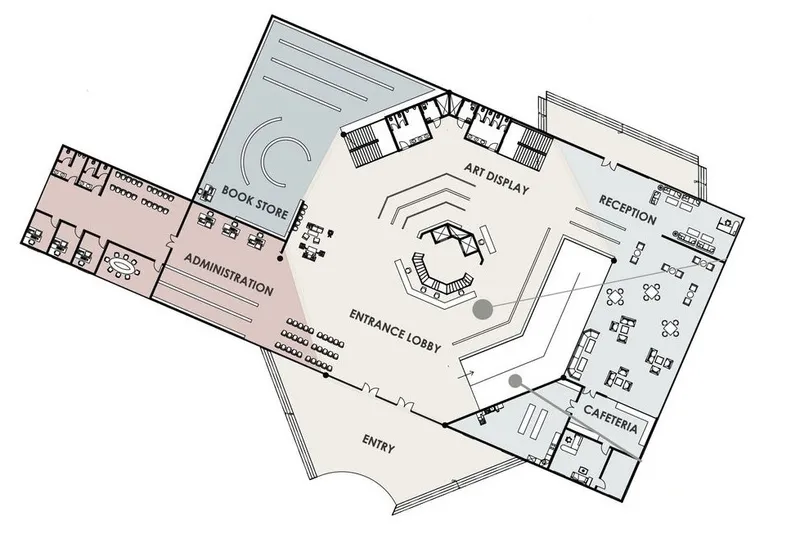
The ground floor features a central entrance lobby, a book issuing counter, art displays, and a bookstore. Administrative offices are also located on this level, with a ramp providing direct access to the basement.
First Floor
The first floor includes a central sit-and-read area, watching pods, a theater, listening pods, a think tank, a lecture hall, and a storytelling zone. These spaces are designed to offer diverse sensory experiences, from quiet reading to interactive storytelling sessions.
Second Floor
The second floor houses the feel zone with AR and VR pods, and the interact zone with spaces for book clubs, workshops, and conferences. A café and reading areas are also located on this floor, providing informal settings for social interaction and relaxation.

Top Floor - The Reading Heaven
The top floor, referred to as the "Reading Heaven," offers a tranquil space where visitors can read while enjoying views of the sky. This well-lit area includes a reference section, a reading lounge, a seniors' zone, and various garden spaces. Features like a meditative garden, swing-and-read garden, and Polish flower sections create a serene environment conducive to deep, uninterrupted reading.
Site Planning
The site plan for Wiedza takes into account Lublin's climate and accessibility features. Entry and drop-off points are strategically located for visitor convenience, while parking areas are discreetly positioned behind the buildings. The building's orientation ensures that all terraces receive ample sunlight, enhancing the usability of these outdoor spaces.
Wiedza, the Library of Knowledge, is a testament to innovative architectural design that redefines the traditional library experience. By incorporating diverse sensory zones and state-of-the-art facilities, it creates a vibrant social hub where learning is both purposeful and enjoyable. Wiedza's thoughtful integration of natural elements and cutting-edge technology makes it a model for future libraries, demonstrating how architectural design can foster a lifelong love for learning.


Popular Articles
Popular articles from the community


Architekt Andreas Gruber Scatters 23 Dark Timber Chalets Across a South Tyrolean Forest Edge
In Molini di Tures, Amonti Chalets breaks a resort into a hamlet of gabled timber houses, with parking, storage and services pushed into the slope.

Jaramillo Van Sluys Arquitectura and Urbanismo Turn a Demolished Registry Lot in Quito into an Orchard Plaza
In Quito's Centro Histórico, a 2,800 m² plaza exposes the San Agustín convent wall and redraws its lost Augustinian orchard in volcanic stone.

GROUP A Strips a 1969 Rotterdam Harbor Headquarters to Its Frame and Wraps It in Timber Louvers
In Rotterdam's M4H harbor district, Ferro Offices reuses a 1969 frame, adds one timber storey and reaches BREEAM-NL Outstanding.

longwave studio Reorganizes a 112 m² Tainan Apartment Around the Daily Routines of a Family and Two Cats
In Tainan, Taiwan, birch plywood, rust-red furniture and a freestanding plaster wall link arrival, storage, work and family life in one apartment.

Similar Reads
You might also enjoy these articles


Vereda Arquitetos Renovates a 40-Square-Meter Apartment Inside Niemeyer's Copan Building
A compact unit in São Paulo's most iconic residential tower gets a material overhaul that pairs exposed concrete with bold blue Formica.

Shakur's House: Exposed Brick as an Interior Organiser in a 168 m² Mashhad Residence
Brick moves indoors in this Mashhad residence, where masonry walls, glass partitions and teal planes sequence a compact home without closing it off.

Day and Night Park: A Time-Based Urban Newsstand in Beijing
A temporary urban newsstand in Beijing blending travel, light, and reading through poetic colors, compact form, and community-focused design.

Modernist Patio Renovation in El Masnou, Barcelona by Oliver Segura Arquitectura + Cebrià Arquitectura
Modernist patio renovation blending tradition and innovation with a movable pool, leveled floors, and Catalan materials in El Masnou.

Explore Educational Building Competitions
Discover active competitions in this discipline

Challenge to design public laboratory

Challenge to reimagine the Iron Throne

Photograph architecture without architects

Illustrate the lost glory of Angkor Wat - Render Challenge
Comments (0)
Please login or sign up to add comments
No comments yet. Be the first to comment!