
Xingyun-1 Building: A Cloud-Like Supertall Connecting Digital Creativity, Urban Life, and Sustainable Futures
A cloud-inspired supertall in Shanghai, Xingyun-1 blends offices, public space, and sustainability to connect digital creativity with urban life.


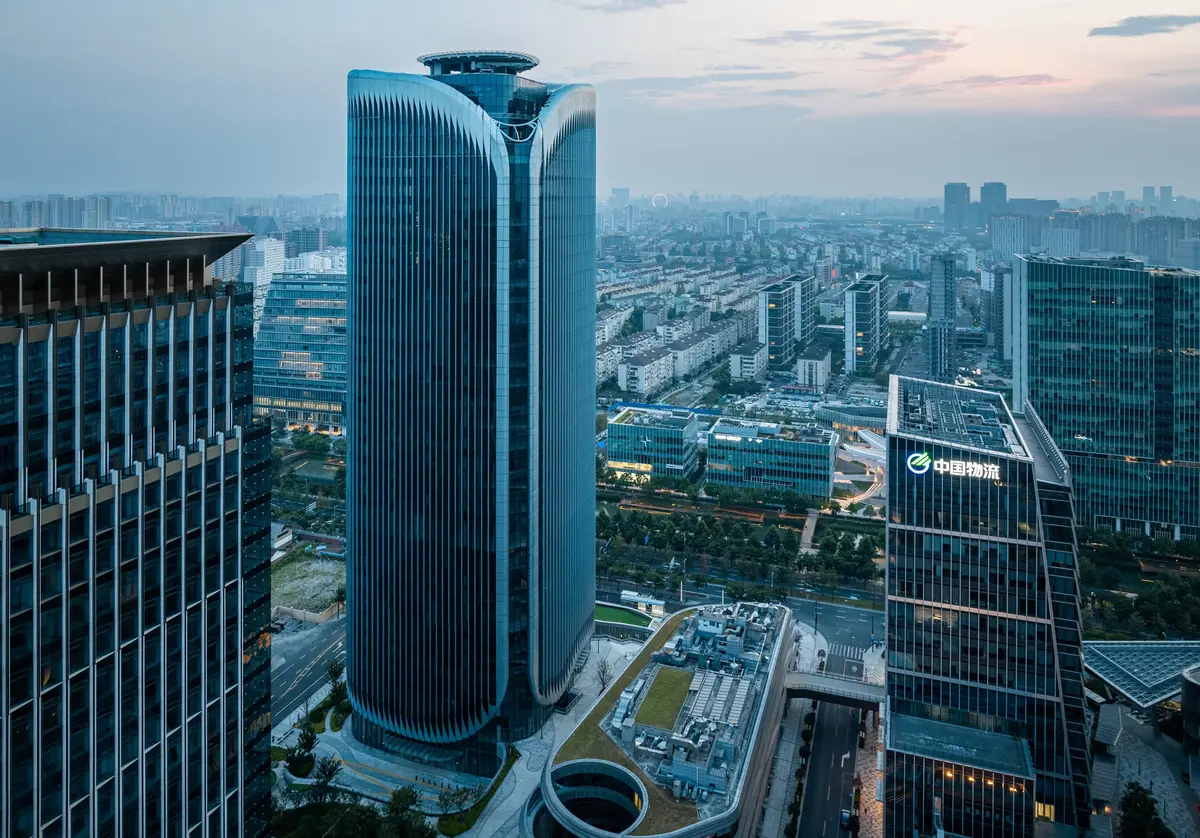
Rising at the southwest gateway of Shanghai’s West Bund Media Port, the Xingyun-1 Building, designed by Nikken Sekkei and completed in 2023, represents a new generation of supertall office architecture. More than a commercial tower, the building functions as an urban connector—bridging virtual and physical worlds, creators and audiences, corporate activity and public life. Its name, Xingyun, meaning “Nebula”, captures the project’s central idea: an architecture that feels soft, atmospheric, and dynamic, like a cloud suspended within the city.
With a total floor area of nearly 78,855 square meters, Xingyun-1 serves as a hub for advanced ICT companies, digital creators, and the gaming industry, while simultaneously offering generous public spaces that invite city residents into the building. Through its sculptural form, porous ground level, and sustainable design strategies, the project redefines the role of the supertall building in contemporary urban life.
A New Landmark for Shanghai’s Creative District
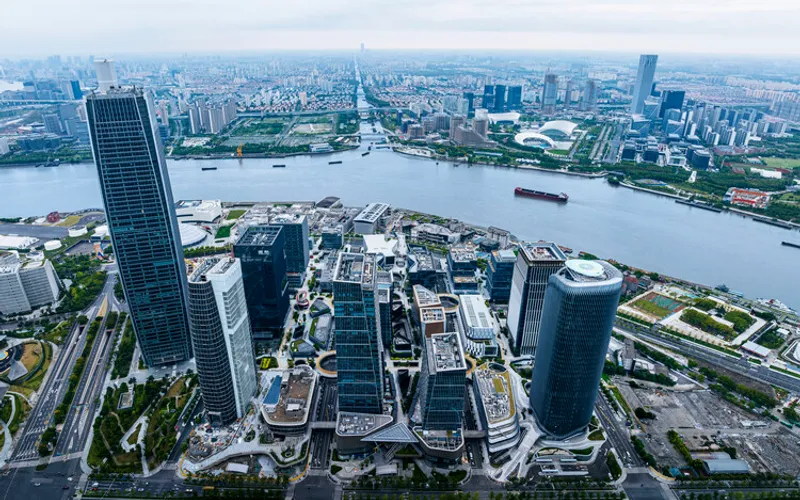
Located along the west bank of the Huangpu River, the West Bund Media Port has emerged as one of Shanghai’s most important concentrations of media, technology, and cultural industries. Xingyun-1 occupies a strategic position within this district, acting as its southwestern gateway and visual anchor.
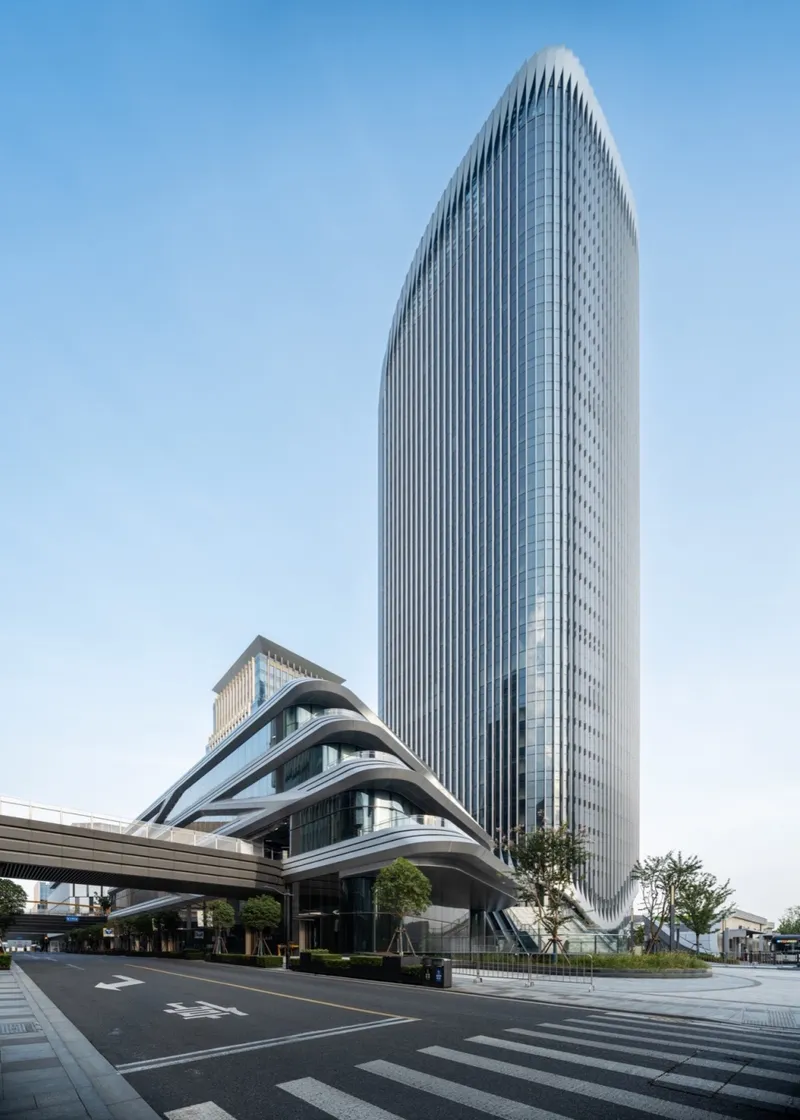
From afar, the tower contributes a distinctive silhouette to Shanghai’s skyline. Unlike conventional high-rise buildings defined by sharp edges and rigid geometries, Xingyun-1 presents a soft, fluid presence, evoking the image of a drifting cloud. This gentler expression distinguishes it from its neighbors while reinforcing the identity of the Media Port as a forward-looking creative district.
The building’s skyline presence was carefully studied to ensure it would be recognizable from multiple vantage points across the city, offering a new visual reference point that enhances Shanghai’s evolving urban image.
Architecture as a Bridge Between Virtual and Real Worlds
Xingyun-1 was conceived not only as an office tower, but as a platform for interaction. In addition to administrative and working spaces, the building includes showrooms, halls for product launches, and event spaces that allow creators, companies, and fans to gather in person.
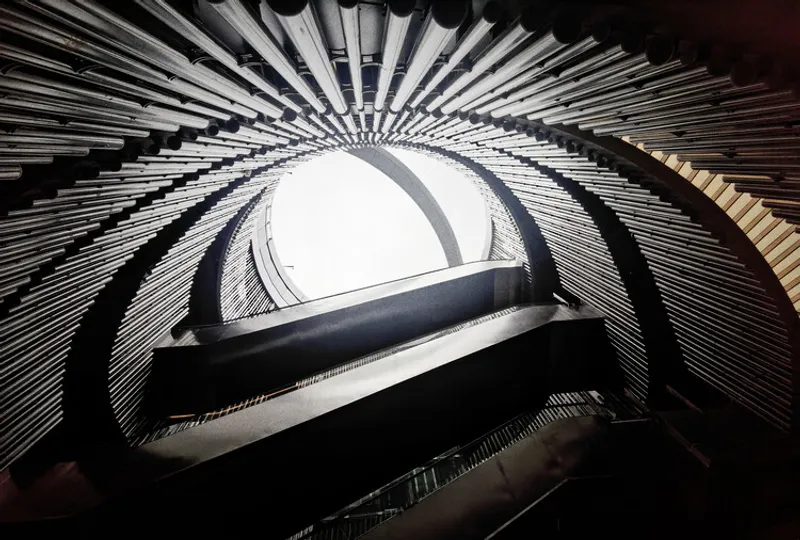
This hybrid program reflects contemporary modes of production in digital and gaming industries, where online communities play a central role. The architecture provides a physical counterpart to these virtual networks—spaces where digital worlds can be experienced, discussed, and celebrated face-to-face.
By fostering interaction between creators and audiences, the building becomes a bridge between online and offline realms, supporting new forms of collaboration and cultural exchange.
Designing for Near, Medium, and Far Perspectives
Nikken Sekkei approached the design of this supertall building through a multi-scale lens, ensuring that the architecture would delight people from different distances.
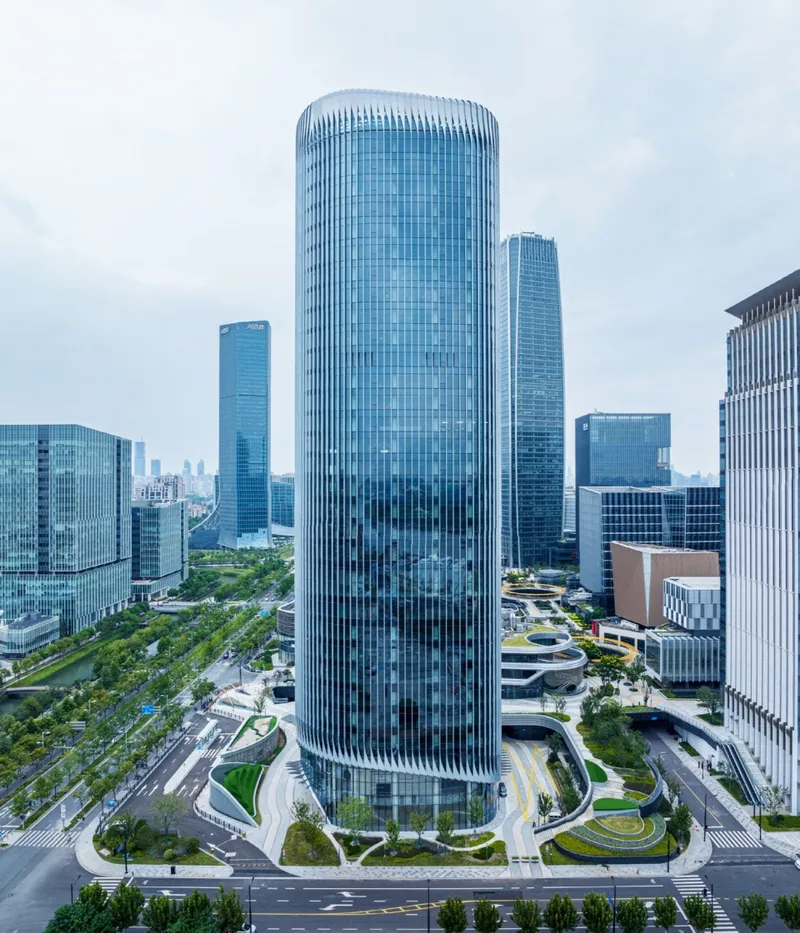
From a far distance, the focus was on the skyline and overall city image. The tower’s soft outline and luminous façade contribute to a calm yet iconic urban presence.
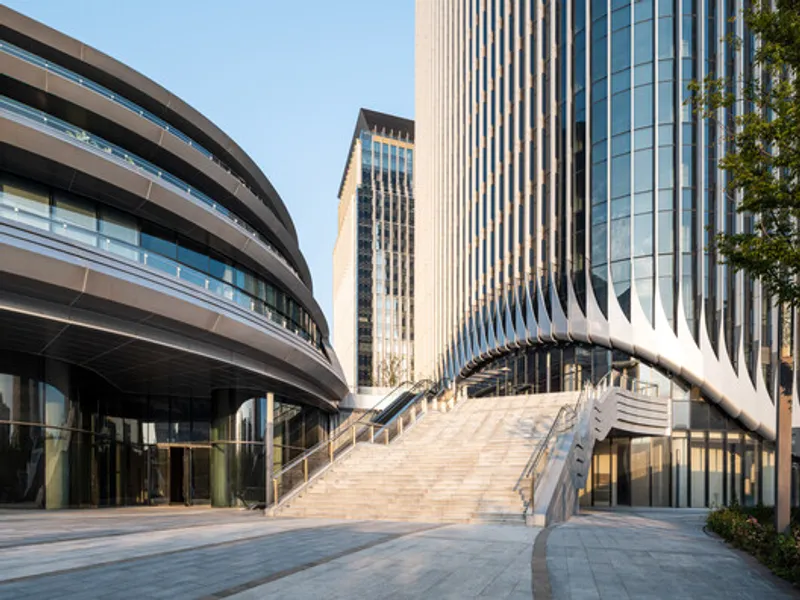
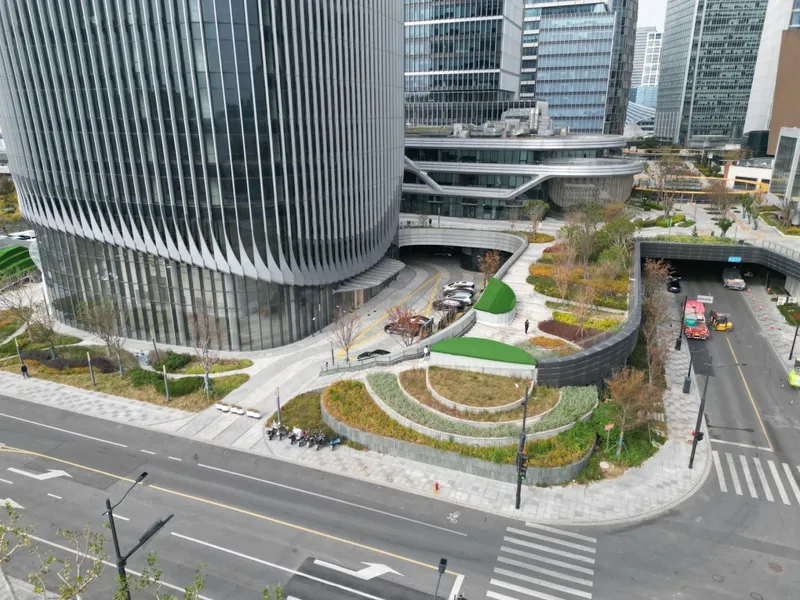
From a medium distance, the emphasis shifts to the building’s massing, proportions, and relationship to the surrounding district. The podium, terraces, and public decks articulate the building at human scale, preventing it from feeling monolithic.
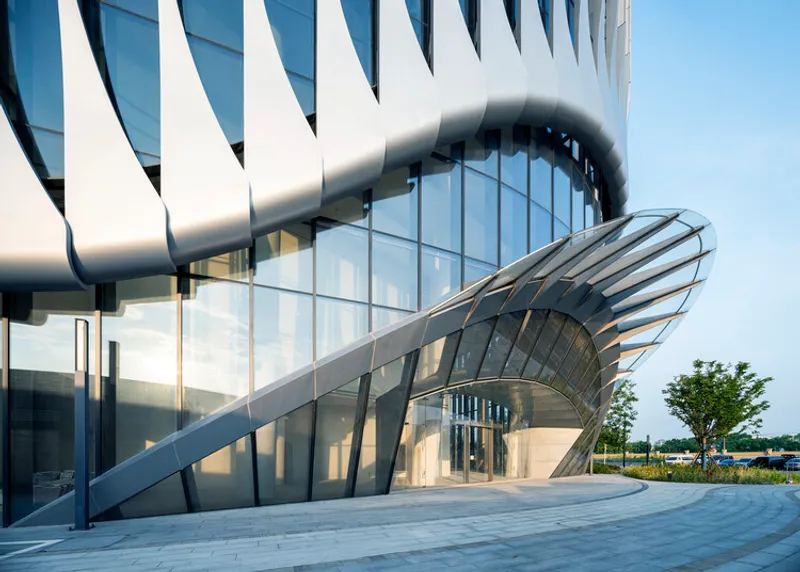
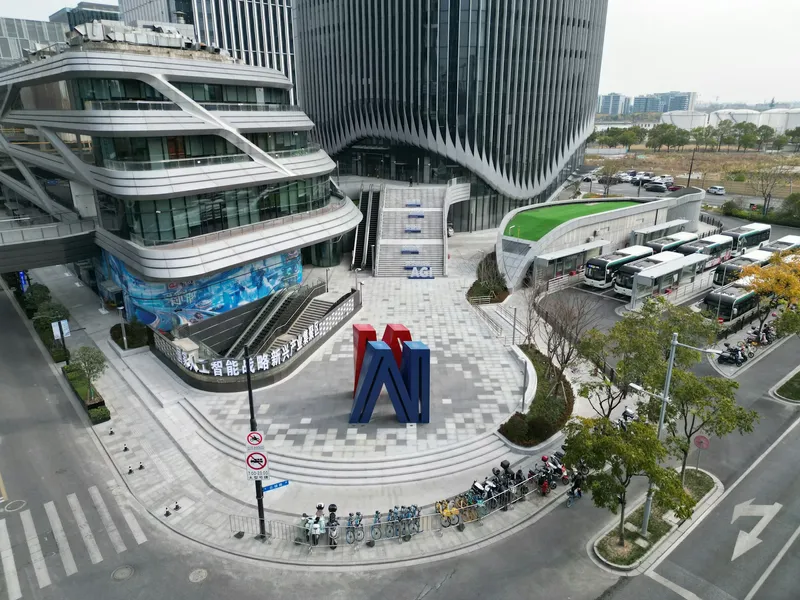
At the foreground level, particular attention was paid to entrances, circulation, and details. Raised entry façades, generous canopies, and intuitive pathways create a welcoming environment where visitors can navigate the complex easily and comfortably.
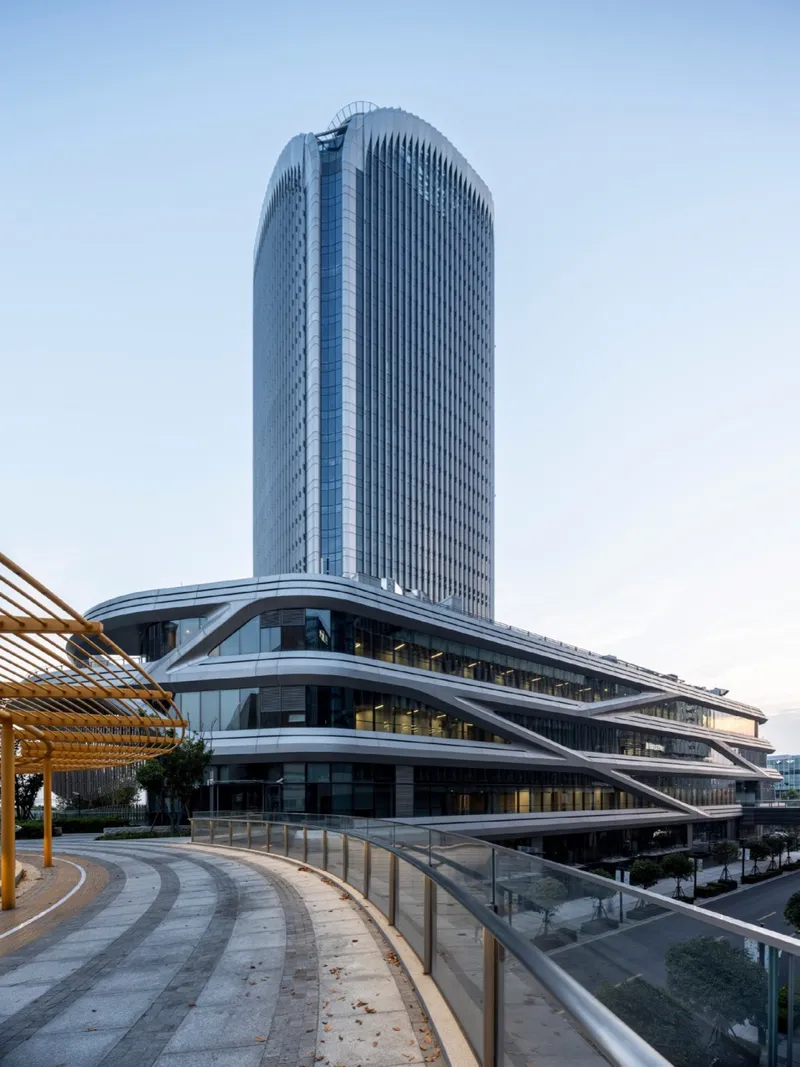
This layered approach ensures that the building communicates differently depending on how it is encountered, enhancing its architectural richness.
The Fifth Façade: A New Perspective on Supertall Design
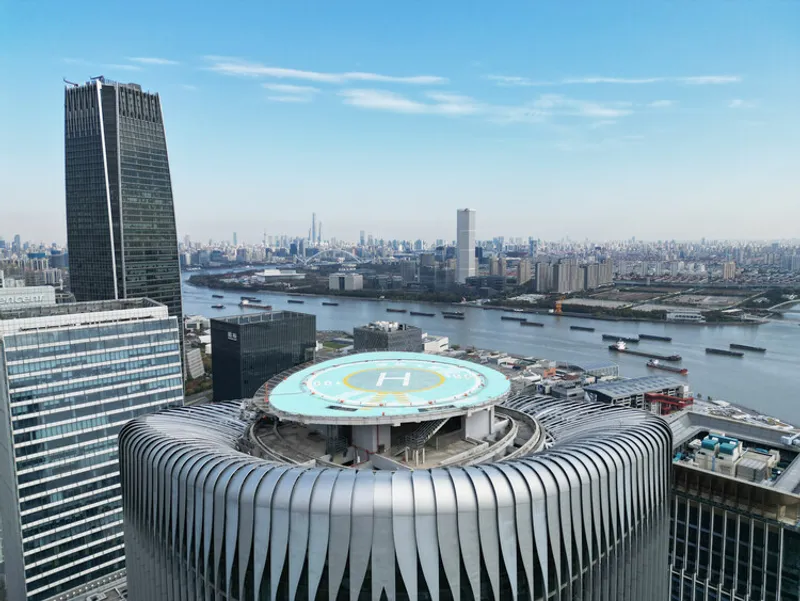
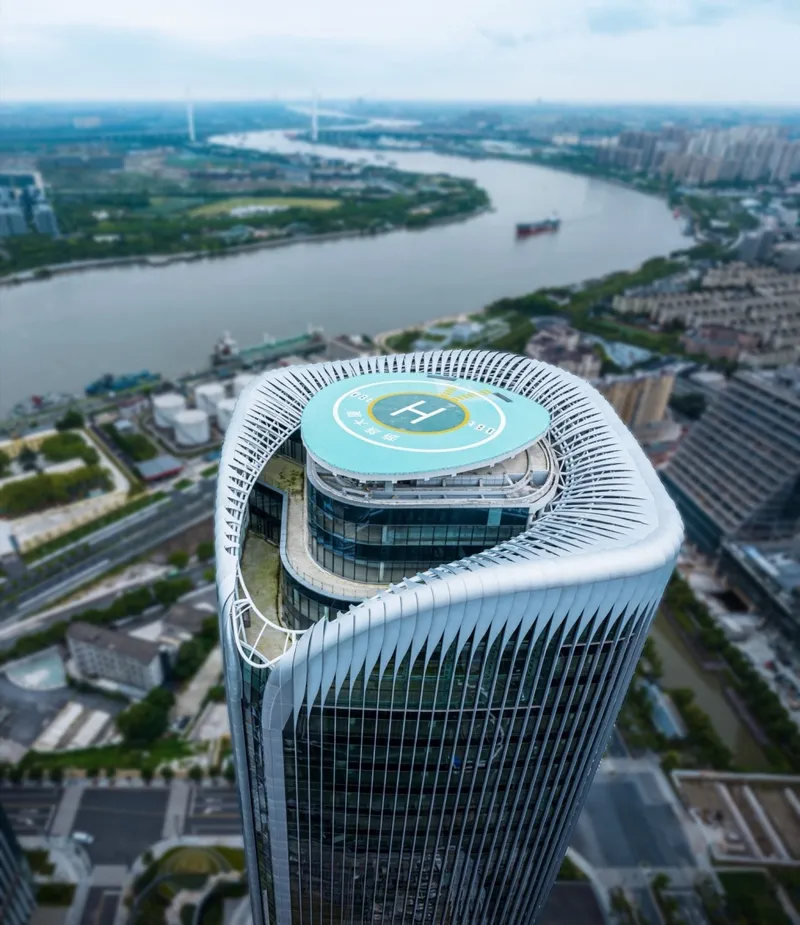
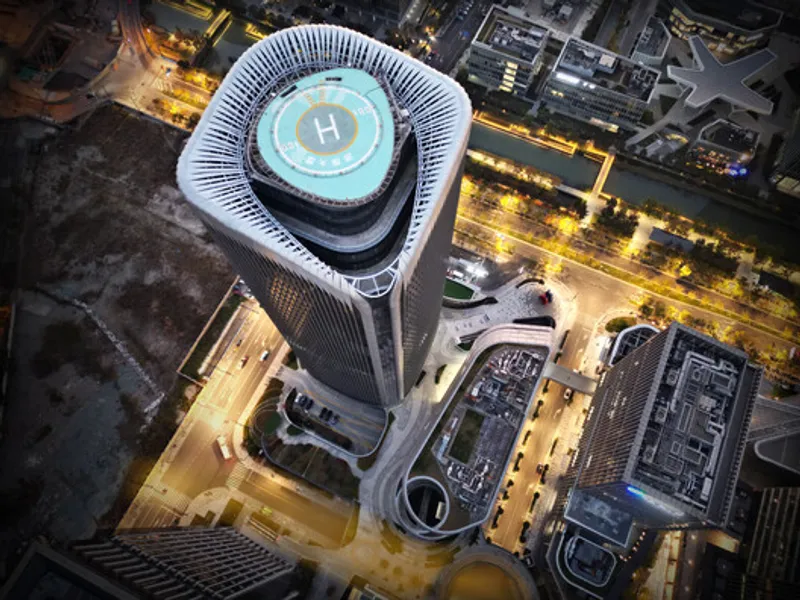
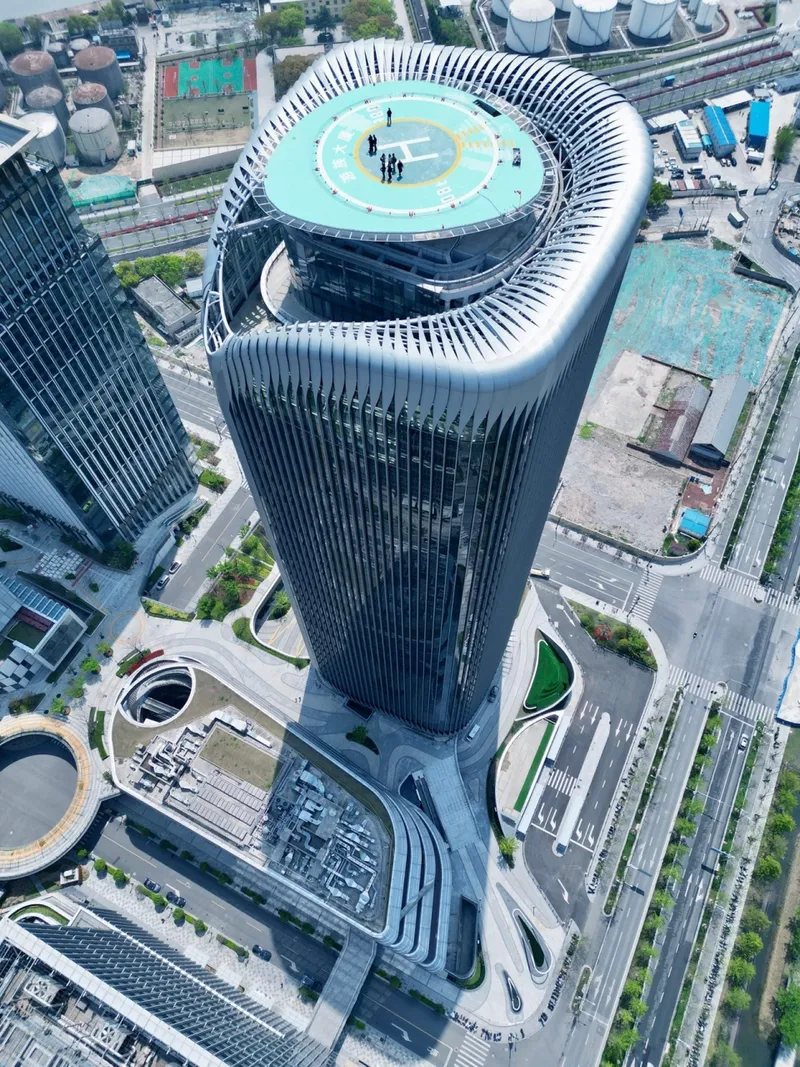
Responding to the growing prevalence of aerial views in contemporary cities, the top of Xingyun-1 was designed as a “fifth façade.” Rather than treating the roof as a purely technical zone, Nikken Sekkei integrated multiple functions into this elevated landscape.
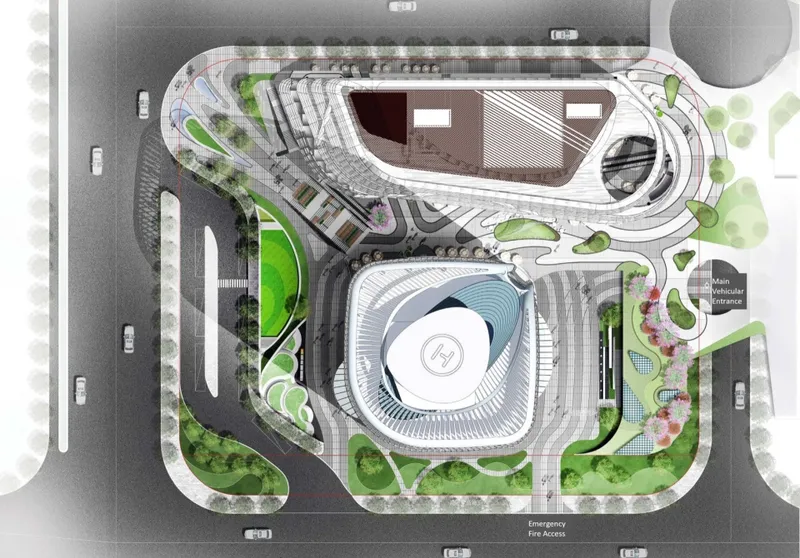
The rooftop includes a garden, observation deck, helipad at 160 meters above ground, maintenance storage, and mechanical spaces, all carefully composed to maintain a soft and cohesive skyline. Seen from above, the building reads as an intentional and refined architectural surface rather than a cluttered technical roof.
Among the surrounding skyscrapers, Xingyun-1 stands out for its gentle profile and carefully articulated crown, reinforcing its identity as a landmark of calm sophistication.
Light, Shadow, and the Nebula-Like Façade
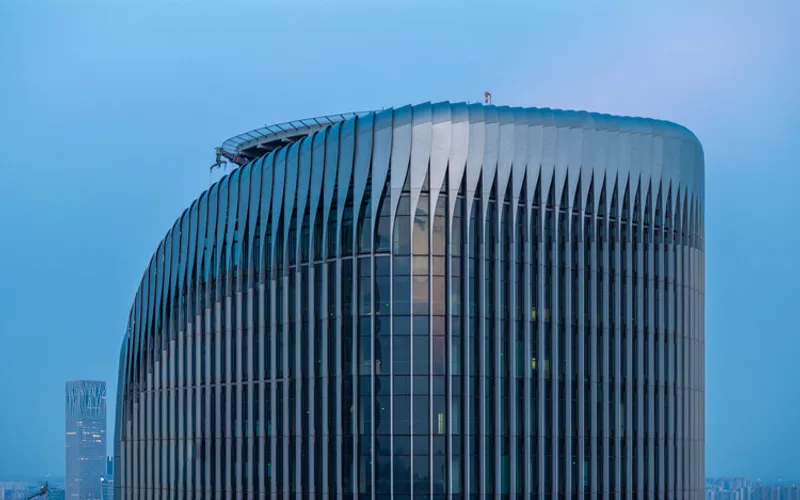
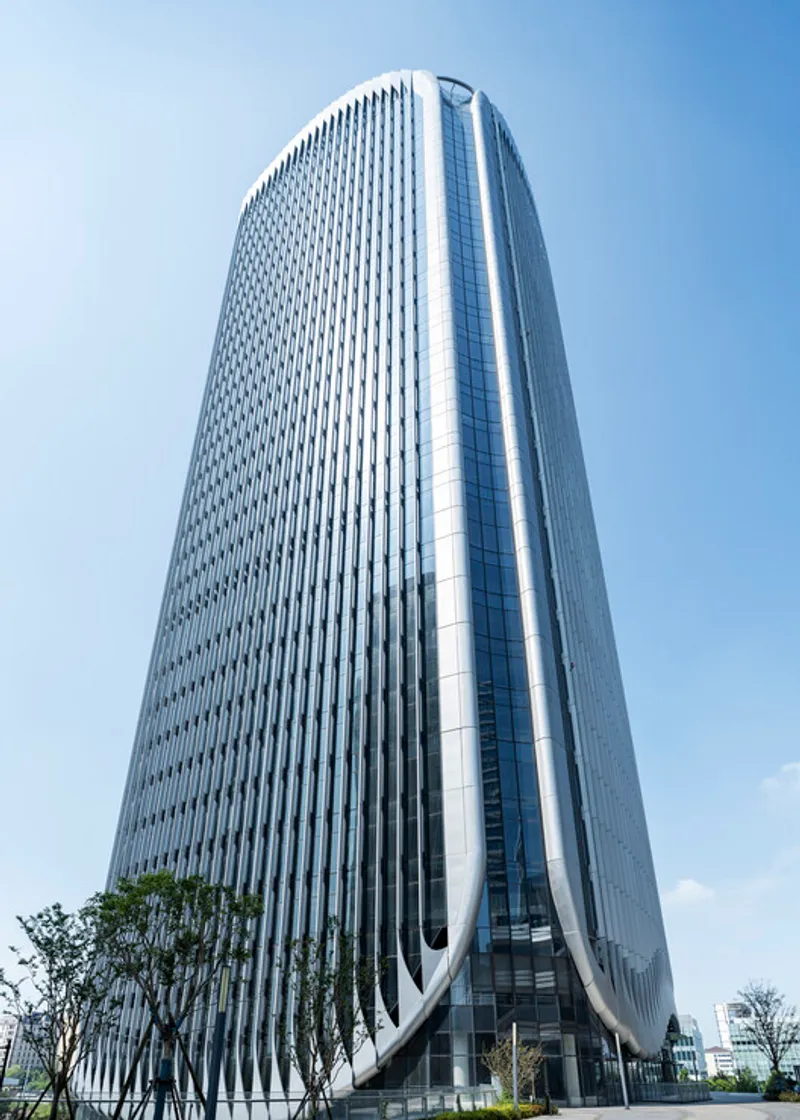
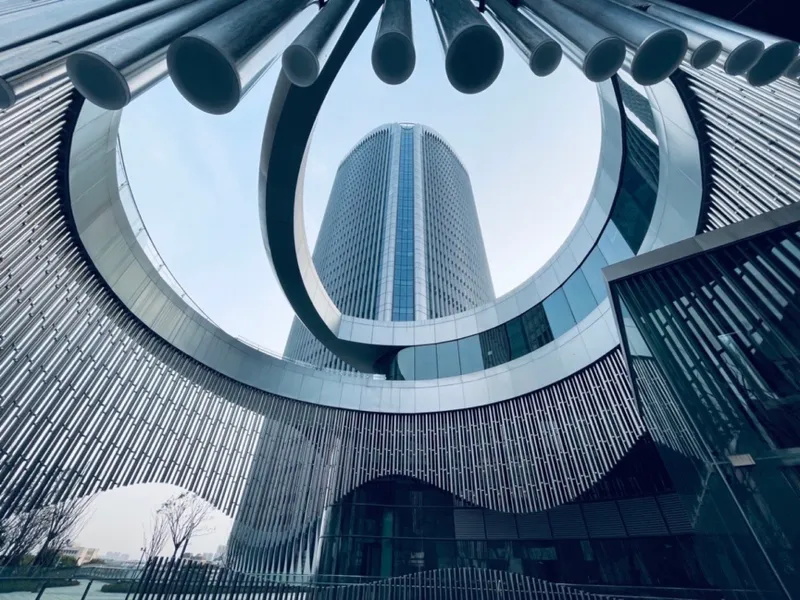
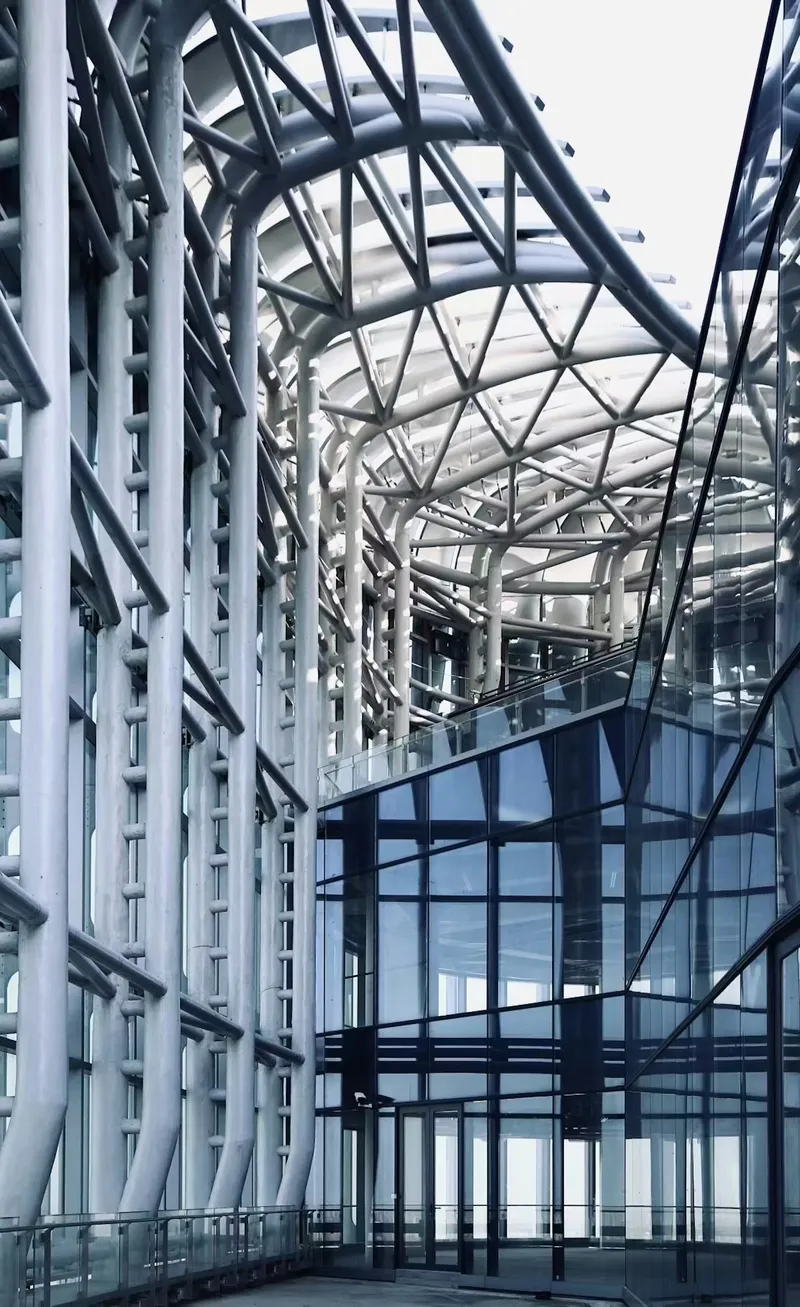
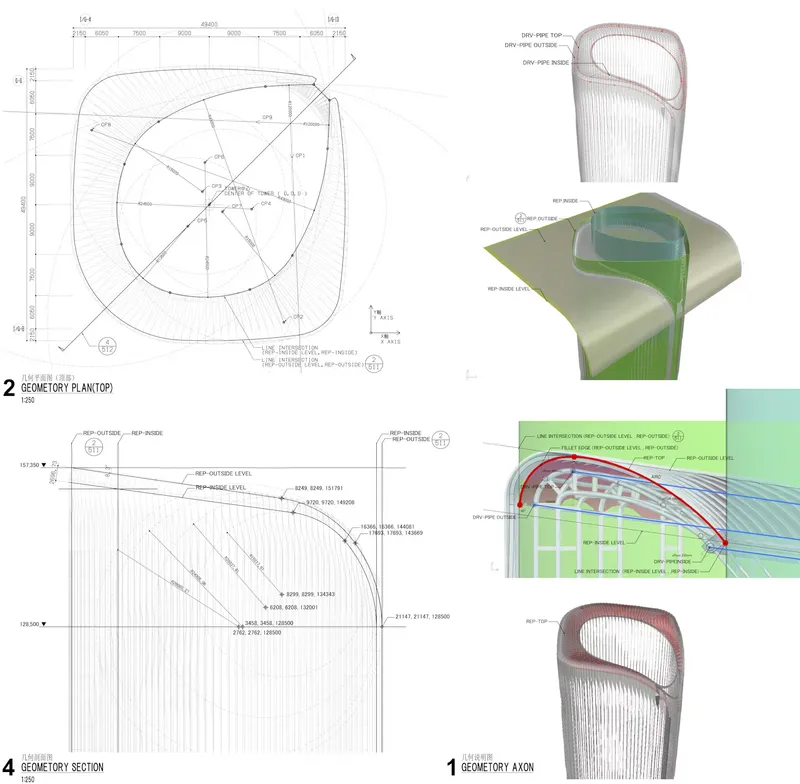
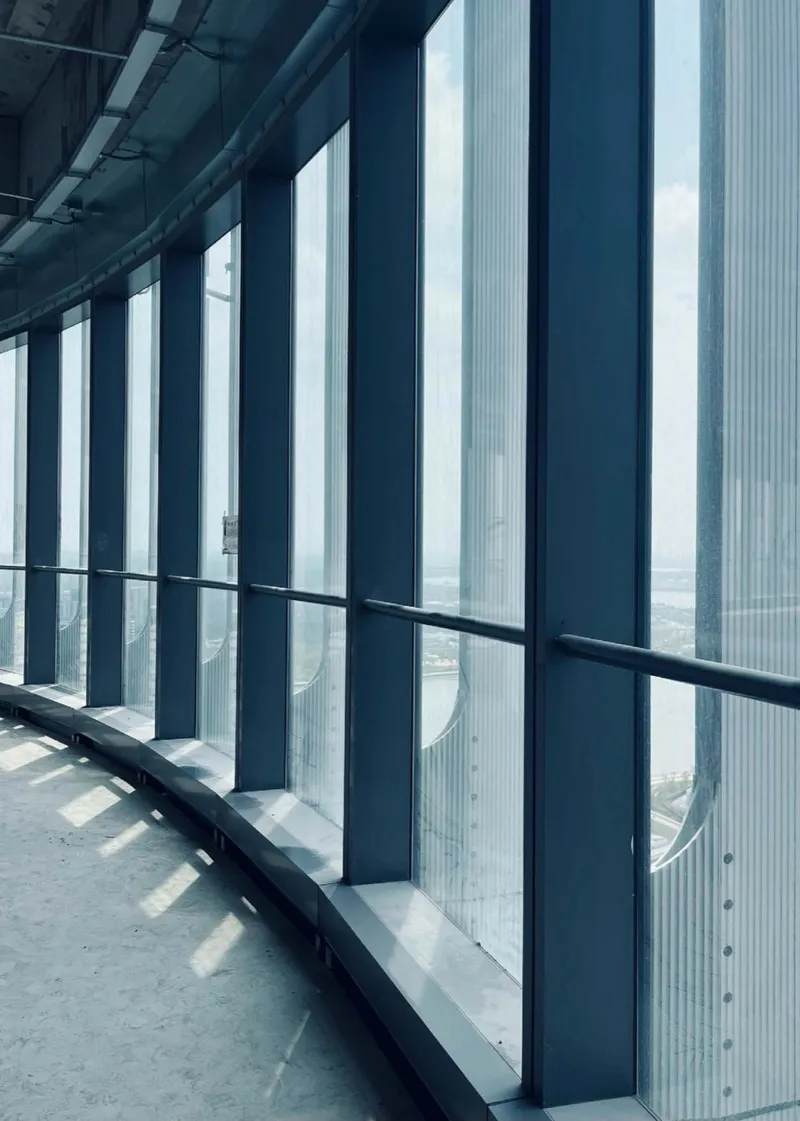
One of the most distinctive features of the building is its façade system, which plays a central role in both aesthetics and environmental performance. The structure is wrapped in curved aluminum fins arranged along a 130-meter-radius arc, extending continuously from the lower levels to the top.
These fins function as louvers, changing their appearance throughout the day as sunlight shifts. Each 400-millimeter-wide louver is carved with 18-millimeter-pitch ribs, delicately capturing and reflecting light. The result is a shimmering, atmospheric surface that reinforces the building’s cloud-like character.
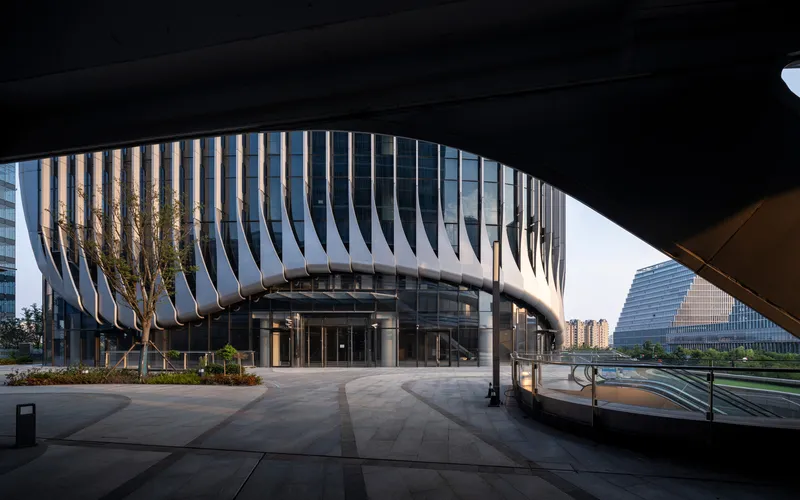
At the lower levels, the entrance façade is lifted by two stories, clearly signaling points of access. A generous 1.5-meter overlapping wing addresses a nine-meter elevation difference, embodying the project’s emphasis on “people-friendliness” through architectural gesture.
Opening the Building to the City
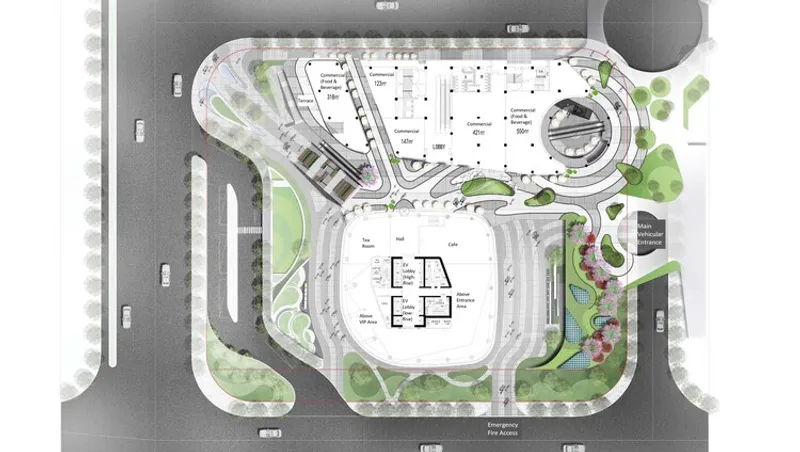
Unlike many high-rise office towers that isolate themselves from their surroundings, Xingyun-1 is deliberately open and permeable. Public spaces and walkways are integrated throughout the site, allowing both tenants and city visitors to move freely through the building.
Rather than enclosing plazas or privatizing ground-level space, the project actively links to neighboring properties, sharing circulation routes and open areas. This openness strengthens the district’s human network and reinforces the role of the Media Port as a collective hub for culture and creativity.
The building’s 76,000 square meters of floor space are seamlessly connected to the surrounding urban fabric, ensuring that the tower contributes to the life of the city rather than standing apart from it.
The Urban Core and Three-Dimensional Connectivity
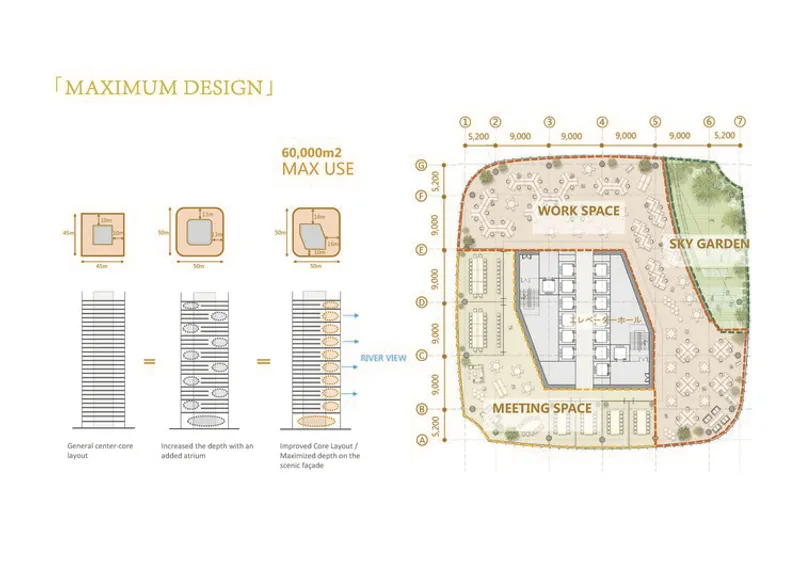
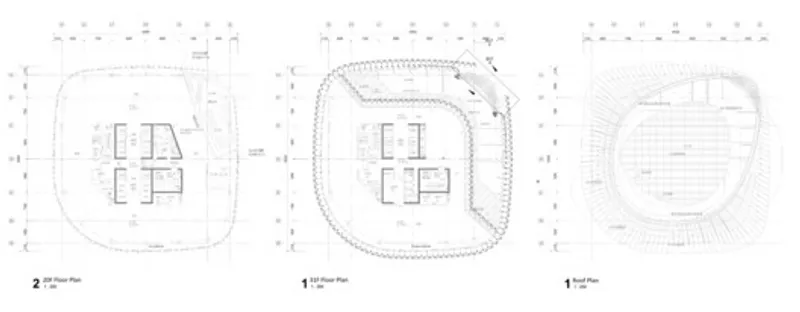
At the heart of the project is the Urban Core, a three-dimensionally connected circulation system that links underground levels with the first and second floors. Integrated with the podium architecture, this core allows access from any direction, offering freedom of movement across different heights.
A second-floor pedestrian deck expands outward, blending with the landscape and extending beyond the site boundaries. This elevated public realm connects to surrounding buildings while providing generous, freely accessible spaces for rest, movement, and social interaction.
The building’s layout and shape were carefully designed to encourage intuitive navigation, minimizing confusion and reinforcing a sense of openness and inclusivity.
Sky Lobbies and Vertical Communities
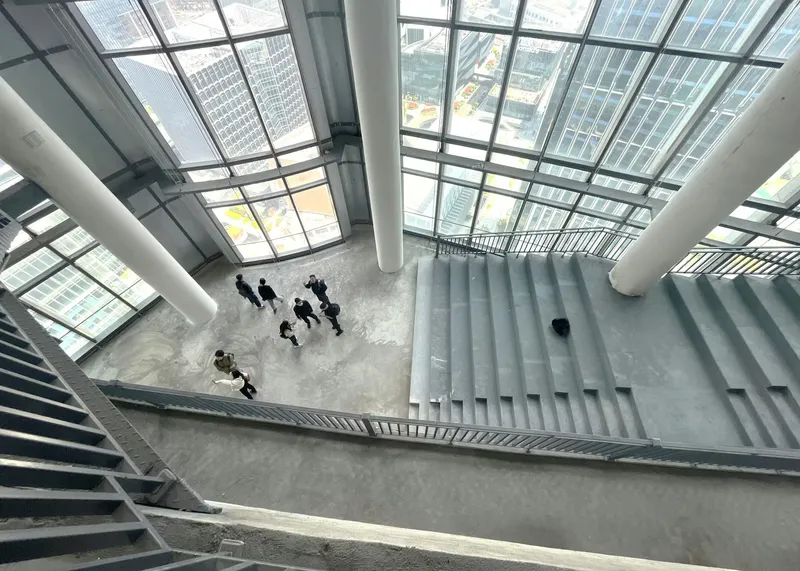
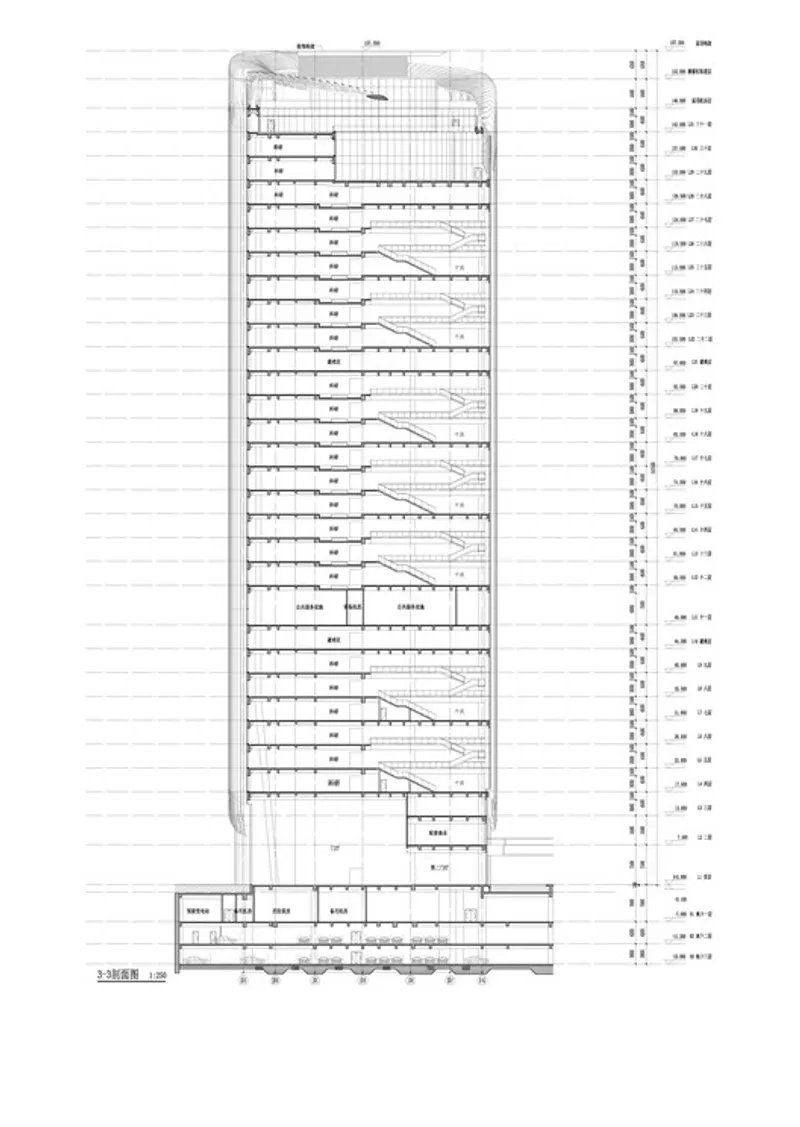
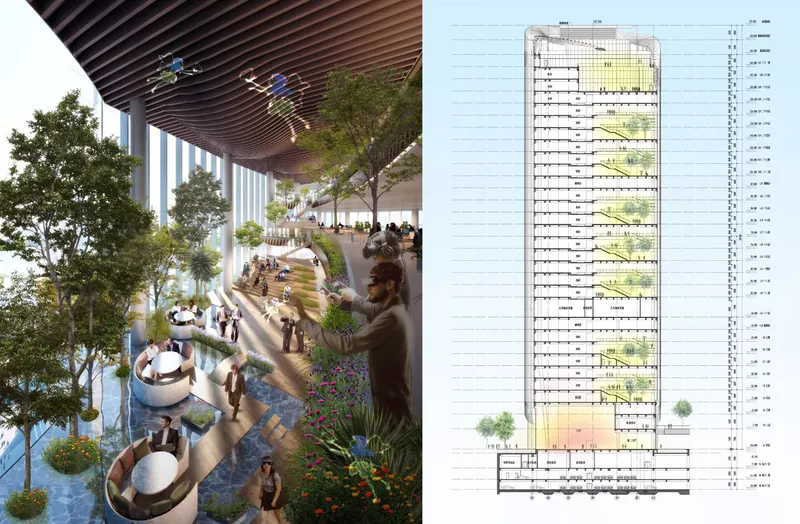
Xingyun-1 introduces a new model of vertical community through its seven sky lobbies, stacked over 21 floors. Each sky lobby features a three-story atrium that serves as an arrival hall, with expansive windows visually connecting occupants to the city beyond.
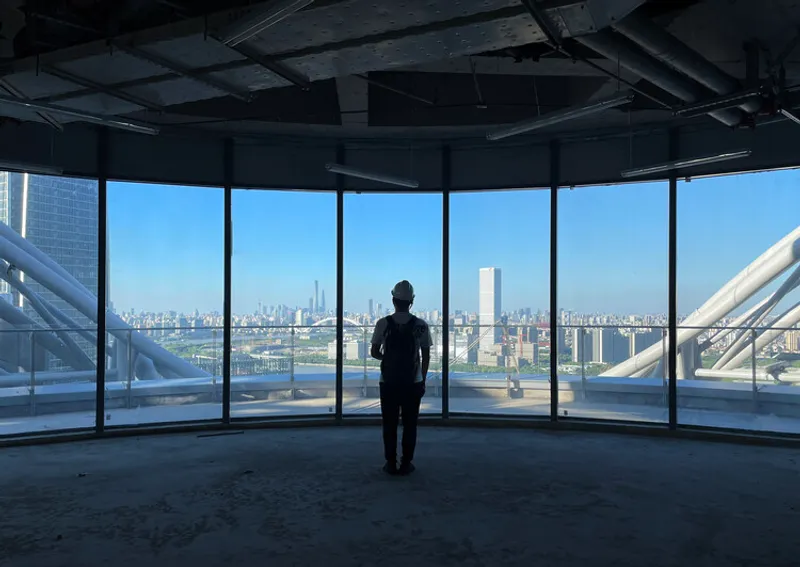
These sky lobbies break down the scale of the supertall building, creating intermediate destinations that foster interaction and orientation. Two external rooftop terraces further extend the experience outdoors, allowing occupants to step outside and reconnect with the sky and city.
The building even connects to air routes via a helipad, symbolically opening the architecture upward and reinforcing its role as a node within multiple layers of urban movement.
Sustainability Through Openness and Efficiency
Environmental responsibility was a key driver of the project. Instead of relying on fully enclosed, energy-intensive systems typical of high-rise buildings, Xingyun-1 embraces open and semi-open spaces suited to Shanghai’s warm climate.
Many indoor and outdoor areas are non-air-conditioned, reducing energy consumption while enhancing user comfort. The façade fins were optimized by extending standard 400-millimeter fins outward by 200 millimeters, achieving the same shading performance as deeper fins while reducing aluminum usage.
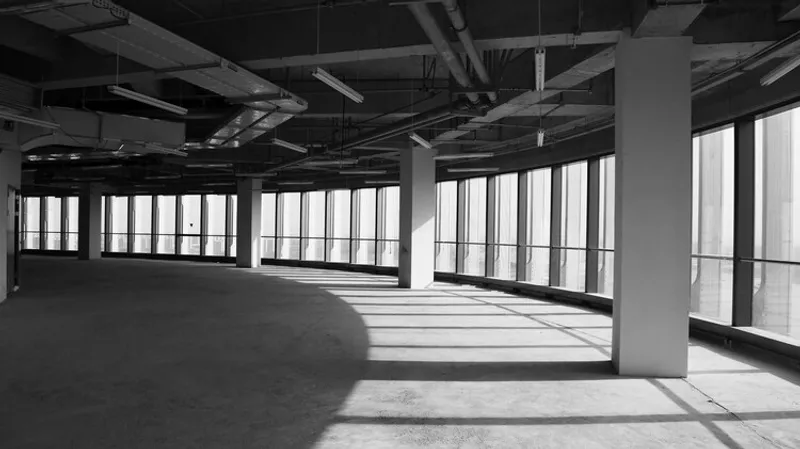
Combined with Low-E glass, this strategy minimizes solar heat gain and energy loss. Natural ventilation hoppers near windows allow occupants to harness local winds, promoting airflow through pressure differences in atriums without mechanical assistance.
Through these measures, the building demonstrates how large-scale architecture can balance performance, comfort, and environmental responsibility.
Positive Architecture and Urban Altruism
At its core, Xingyun-1 embodies what Nikken Sekkei describes as “positive design.” The building’s soft forms, generous public spaces, and intuitive circulation encourage people to relax, explore, and interact without feeling disoriented.
While serving as the headquarters of a major company, the building adopts an altruistic attitude toward the city, prioritizing shared spaces and cultural exchange over exclusivity. By transcending conflicts of interest with neighboring sites, the architecture positions itself as a partner in urban revitalization.
This approach extends beyond the individual building, symbolizing the broader vision of the West Bund Media Port as a place where creativity, technology, and public life intersect.
A Nebula for the Future City
As tenants continue to move in, each sky lobby will receive a unique interior identity, incorporating advanced technologies such as augmented reality, further reinforcing the building’s role as a testing ground for future working styles.
Xingyun-1 is not simply a supertall office building; it is an urban ecosystem, a soft yet powerful presence that connects people, industries, and the city itself. Like a nebula, it gathers energy, ideas, and movement—transforming them into new forms of urban life.
All the Photographs are works of yangmin/ mintwow


Popular Articles
Popular articles from the community


Architekt Andreas Gruber Scatters 23 Dark Timber Chalets Across a South Tyrolean Forest Edge
In Molini di Tures, Amonti Chalets breaks a resort into a hamlet of gabled timber houses, with parking, storage and services pushed into the slope.

David Ortega Stacks a Two-Story Mexico City Penthouse Around a Steel Stair and a Pergola-Shaded Roof Terrace
In Colonia Roma, a 300 m² penthouse uses oak joinery, a planted steel stair and a slatted roof pergola to make a new-build apartment feel like a house.

David Macias Steps a Doorless Stone and Plaster House Down a Tropical Colombian Hillside
In the humid hills of Colombia, Threshold House replaces the front door with an open void and terraces its 850 m² down the slope instead of fighting it.

longwave studio Reorganizes a 112 m² Tainan Apartment Around the Daily Routines of a Family and Two Cats
In Tainan, Taiwan, birch plywood, rust-red furniture and a freestanding plaster wall link arrival, storage, work and family life in one apartment.

Similar Reads
You might also enjoy these articles


Hodi-Mandai Geram
Project Function: Preservation and revitalization of the Intangible heritage and socio-spatial identity of the Hodi by Housing, Cultural Memory Center, Sacred Grove, landscape, local tourism economy


Olio Towers: A Mid-Rise for Performers That Fuses Housing, Rehearsal, and Stage
Located blocks from Houston's Theater District, this modular tower stacks living units around a central performance atrium.

Oasis: Modular Green Housing Carved into Dhaka's Urban Fabric
A shortlisted Plugin Housing entry reclaims unauthorized settlements in Dhaka with stepped concrete volumes, green roofs, and ventilation-driven design.

Black Hole: A Floating Megastructure for the Post-Physical Era
Emiliano Mazzarotto envisions a spherical, self-scaling arena where e-sports, digital hotels, and holographic stadiums replace traditional public space.

Explore Tall Building Competitions
Discover active competitions in this discipline

Challenge to reimagine the Iron Throne

Photograph architecture without architects

Illustrate the lost glory of Angkor Wat - Render Challenge

Competition to design a workstation for architects
Comments (0)
Please login or sign up to add comments
No comments yet. Be the first to comment!