
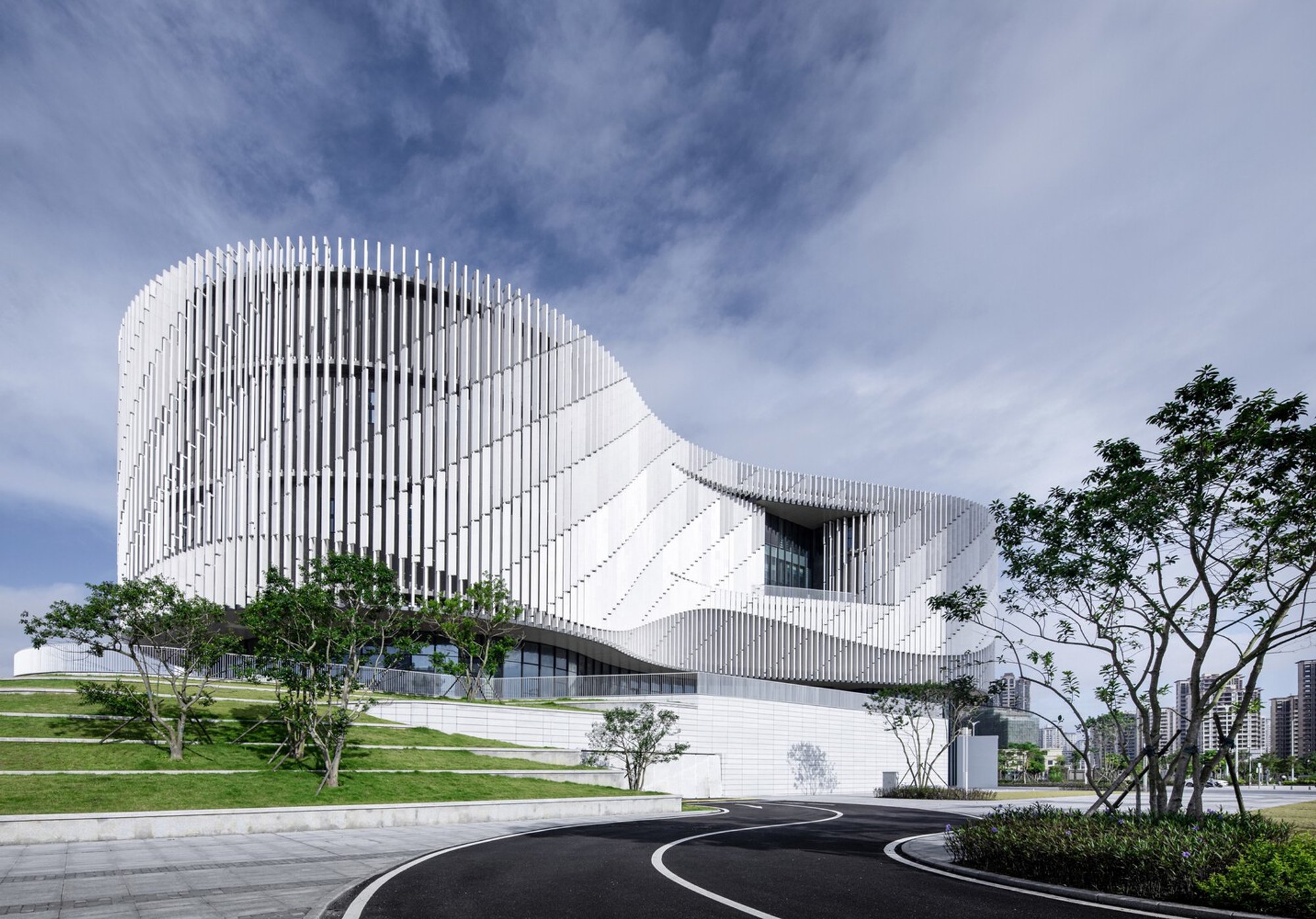
Yangjiang Cultural Center – Architectural Landmark in Yangjiang, China
The Yangjiang Cultural Center blends mountains and sea inspiration, sustainable design, and multifunctional cultural spaces, energizing the community creatively.

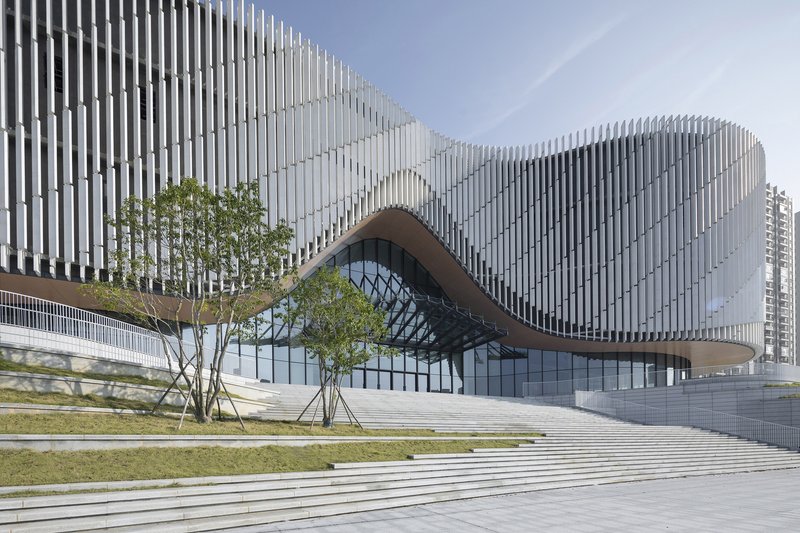
The Yangjiang Cultural Center is a dynamic cultural landmark situated on the north side of Moyang Lake Park in Yangjiang City. Nestled in a picturesque urban setting with panoramic lake and river views, the center integrates multiple institutions, including the Archives Center, Party History Museum, Local Records Museum, Hall of Fame, planning hall, museum, and the Workers’ Cultural Palace. This multifunctional cultural hub brings vitality to the surrounding community and serves as a beacon of arts, culture, and education in the new urban area of Yangjiang.
Innovative Design Strategy
1. Functional Integration and Shared Spaces
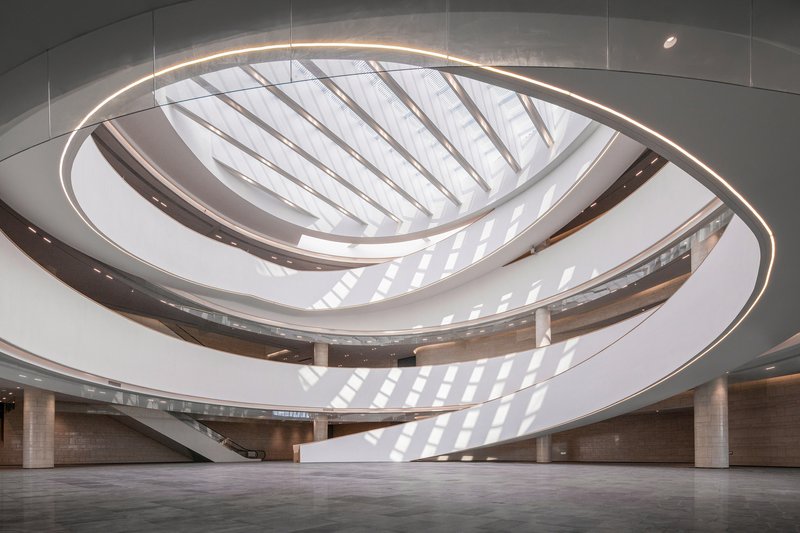
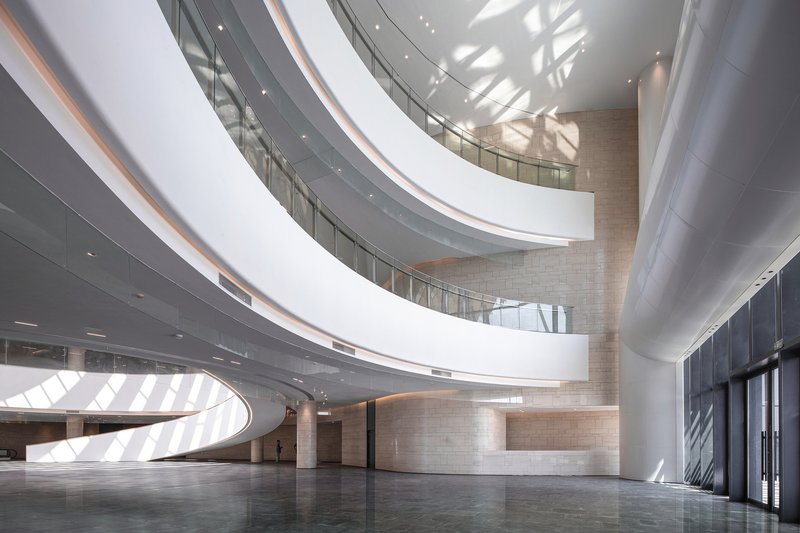
The design adopts a “seven halls in one” layout, concentrating seven independent institutions around a shared central atrium. This innovative approach creates:
- Enhanced public experience through diverse spatial interactions.
- Efficient operational management and centralized services.
- Sustainable land and energy use, reducing construction footprint, HVAC energy, and resource waste.
The functional integration model sets a new standard for medium-sized city cultural complexes in China.
2. Community Activation through Open Design
The cultural center is designed as an open platform that energizes the community:
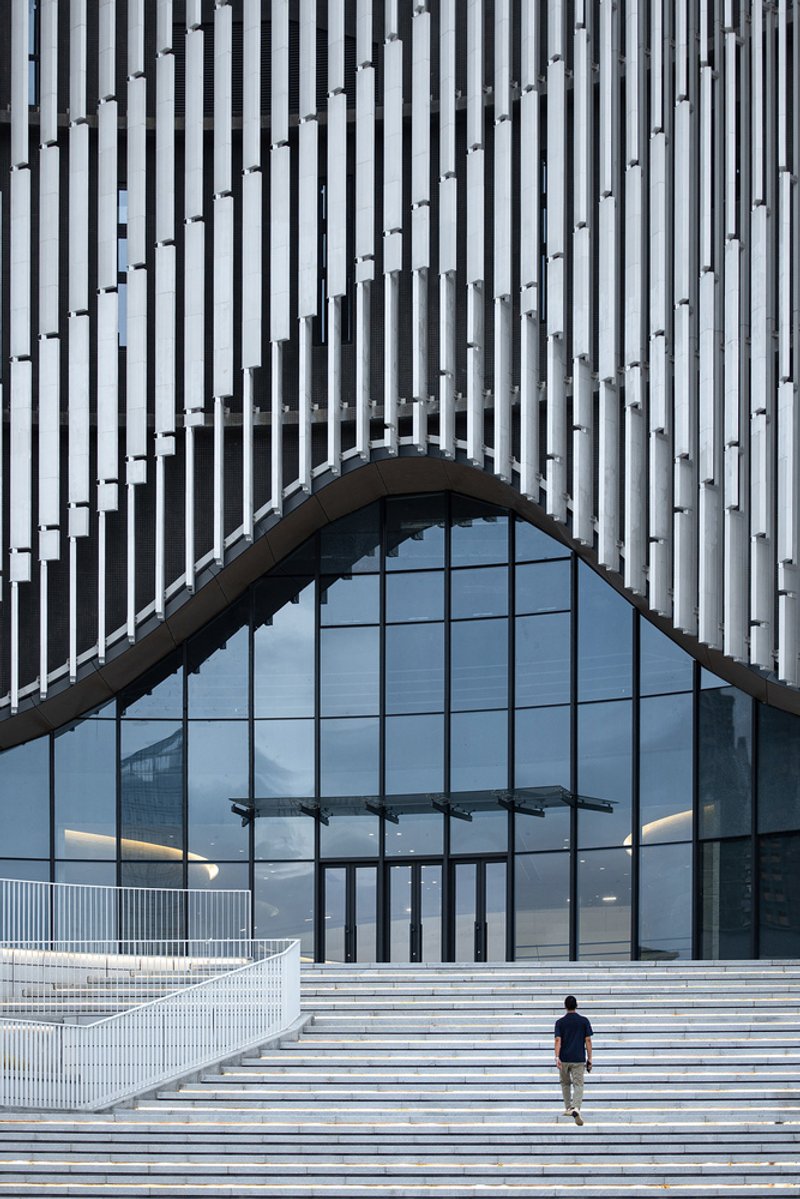
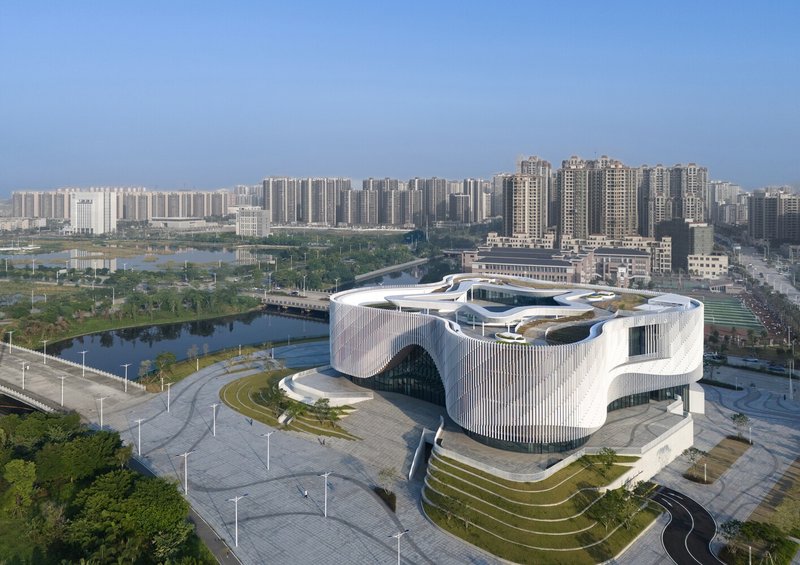
- The podium seamlessly extends into Moyang Lake Park, with grassy slopes and recreational areas.
- Cafes, bookbars, and leisure spaces invite citizens to linger, socialize, and enjoy panoramic views.
- Green platforms and landscaped steps integrate the center with the park, enabling social activities without disrupting the environment.
This approach transforms the traditional public building into a vibrant community hub, enhancing cultural engagement and social connectivity.
3. Passive Design and Parametric Architecture
Situated in a subtropical coastal climate, the center incorporates passive design strategies to optimize energy efficiency:
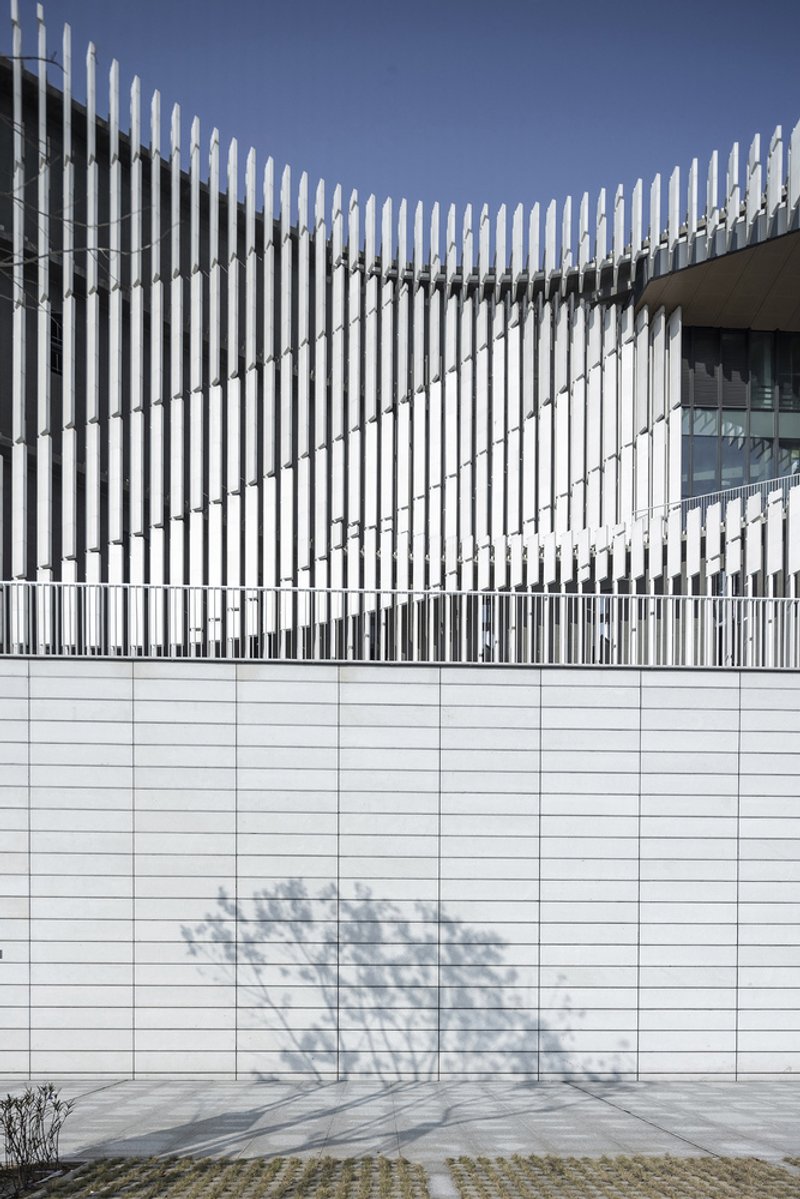
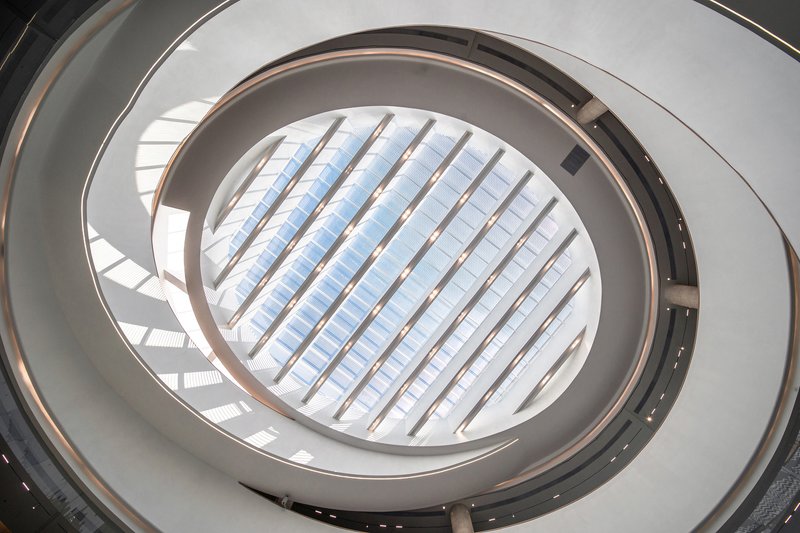
- Parametric pottery rod façade system with patented composite rods provides optimal sun shading, heat insulation, and natural lighting.
- Ventilated atrium and strategic window placement facilitate natural ventilation, reducing energy consumption during spring and autumn.
- Roof garden and rainwater harvesting system enhance ecological sustainability, acting as a sponge city feature for water retention and landscape irrigation.
4. Regional Inspiration: Mountains and Sea
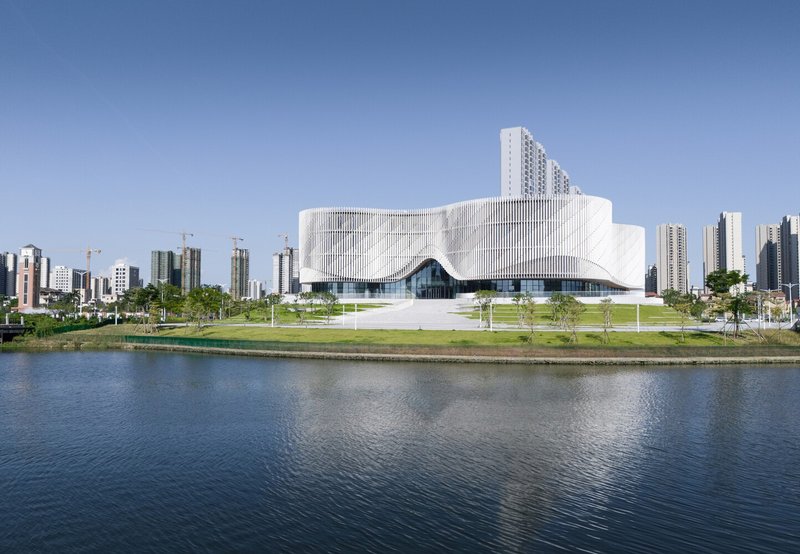
Reflecting Yangjiang’s unique mountain and sea geography, the architectural form embodies:
- White upper volumes symbolizing the sea.
- Green lower platforms representing mountains and rivers.
- Flowing curves and dynamic contours inspired by natural landscapes.
The parameterized pottery rod façade casts shifting shadows under sunlight, evoking the motion of sails and waves, emphasizing regional identity and cultural pride.
Design Impact
The Yangjiang Cultural Center stands as a benchmark for cultural infrastructure in mid-sized cities, blending architectural innovation, community integration, and sustainable design. It embodies a new paradigm of multifunctional, energy-efficient, and socially engaging public spaces.



Popular Articles
Popular articles from the community

Inverted Architecture Installation by Studio Link-Arc: Exploring the Intersection of Architecture and Living Organisms
Inverted Architecture Installation by Studio Link-Arc blends mycelium, sustainability, inverted design, ecological cycles, and urban adaptive architecture in Shenzhen.
Flamboyant House by Juliana Camargo + Prumo Projetos
Modern Brazilian house integrating existing tree, pool, and volumes with glass, wood, and transitional spaces blending interior, exterior, and landscape seamlessly.

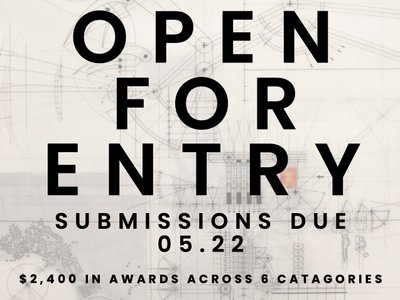
The Ken Roberts Memorial Delineation Competition (Krob)
As the most senior architectural drawing competition currently in operation anywhere in the world, it draws hundreds of entries each year, awarding the very best submissions in a series of medium-based categories.
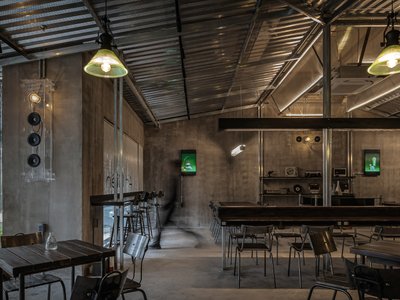
An Miên Lumière Cafe by xưởng xép, Ho Chi Minh City, Vietnam
An industrial-inspired café where layered steel and warm light create a dynamic, immersive environment shaped by reflection, depth, and perception.


Similar Reads
You might also enjoy these articles
The Ken Roberts Memorial Delineation Competition (Krob)
As the most senior architectural drawing competition currently in operation anywhere in the world, it draws hundreds of entries each year, awarding the very best submissions in a series of medium-based categories.

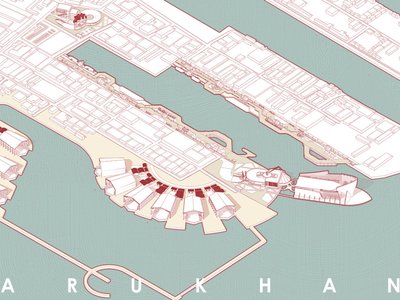
Waterfront Redevelopment and Urban Revitalization in Mumbai: Forging a New Dawn for Darukhana
A transformative waterfront redevelopment project reimagining Darukhana’s shipbreaking heritage into an inclusive urban future.
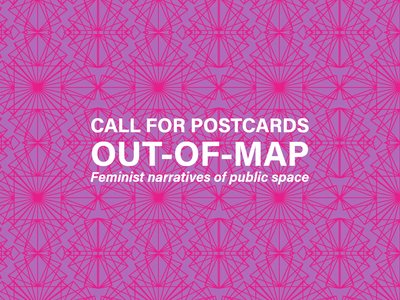
OUT-OF-MAP: A Call for Postcards on Feminist Narratives of Public Space
Rhizoma Design and Research Lab invites artists, designers, architects, researchers, and students to reflect on how feminist perspectives can reshape public space. Selected works will be exhibited in Barcelona, October 2026. Submissions open until 15 April 2026.

Documentation Work on Buddhist Wooden Temple
Architectural syncretism and cultural hybridity: A comparative study of the Buddhist temples in Chattogram Hill tracks


Explore Architecture Competitions
Discover active competitions in this discipline




The International Standard for Design Portfolios


The Global Benchmark for Architecture Dissertation Awards


The Global Benchmark for Graduation Excellence

Challenge to design an urban locus of culture and heritage
Comments (0)
Please login or sign up to add comments
No comments yet. Be the first to comment!