
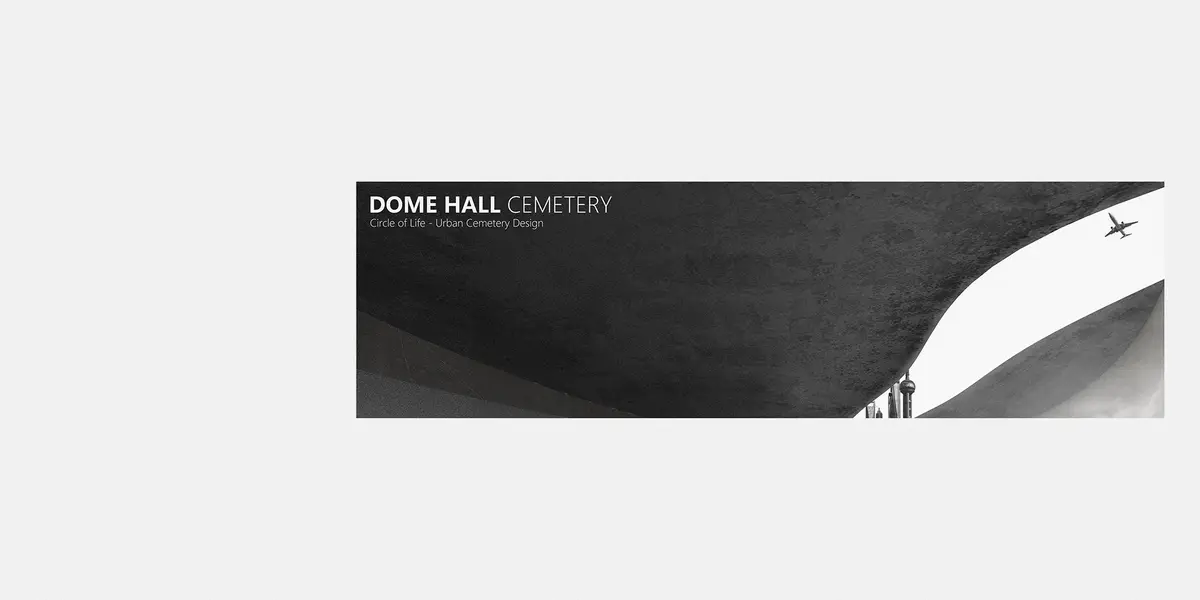
Dome Hall Cemetery
Inspired by the traditional Chinese life style and ancestor hall, I deconstruct the traditional building‘s space features and integrate them into a DOME HALL. It can accommodate a variety of worship activities, and become a special and solemn landscape of the urban area.

Project Score
Project Team (1)


Team Leader
PUBLISHED ON 31st December 2022

Explore Concept Architecture Competitions
Discover active competitions in this discipline


Hosted by UNI
Design a brochure to showcase the effects of the technosphere
Prize Pool:USD 7,000
Regular registration ends: February 28, 2027
Submission ends: March 1, 2027
Worldwide

Hosted by UNI
Challenge to illustrate ‘A tale of Two Cities’
Prize Pool:USD 7,000
Regular registration ends: February 28, 2027
Submission ends: March 1, 2027
Worldwide

Hosted by UNI
Deconstructivism - Illustration Design Challenge
Prize Pool:USD 7,000
Regular registration ends: March 28, 2027
Submission ends: April 1, 2027
Worldwide
Similar Projects
Discover related projects you might like



Comments (2)
Please login or sign up to add comments
Very strong single element, probably needs more interaction park-city; very well design site plan.
Due to population growth, cemeteries have become a scarce land resource in contemporary China. However, I noticed that in some rural areas. A new type of cemetery spontaneously emerged and was named a public shrine. It is simple, just a small house with family lists on the wall, but the residents are willing to use it and can complete their nostalgia for their ancestors there. This space form simply and intuitively reflects the clan relationship in Chinese culture, and because there is no clear primary and secondary spatial relationship, it achieves tolerance for individuals with different ideologies. In essence, this public shrine is a new type of worship space developed from the traditional family private ancestors hall. The remains were preserved in the form of some ashes, or even replaced with symbolic spirit tablets. Introducing this space into the city can serve as a shared urban memorial area. Intergenerational relations make this space possible for long periods of use-after a person dies, his or her tablet and ashes are moved upwards, while his or her immediate children are placed in his original position. As a result, the family relationship is preserved in a clear spatial form, and it is easier for people to identify their relationship with different ancestors than horizontal cemeteries that are common today. As a super city in China, Shanghai has formed a number of different urban centers. Therefore, public sacrifice space should also be copied, adjusted and placed in various areas to meet the requirements for the storage of remains after the death of the population and the need of worship activities.