


Art Deco
Art Deco design principles, history, and contemporary applications in architecture and interiors.
Art Deco is the decorative style of the 1920s and 1930s that joined geometric ornament, rich materials and the imagery of the machine age, in everything from skyscrapers and cinemas to jewellery, posters and furniture. It took its name from the 1925 International Exhibition of Modern Decorative and Industrial Arts in Paris, and it still shapes how designers think about glamour, pattern and craft.
What is Art Deco?
Art Deco is less a single rulebook than a family of related looks. The Victoria and Albert Museum describes it as a pastiche of sources: historic European design, avant garde painting, the Russian ballets, folk art, ancient and non-European cultures and the urban imagery of the machine age. In its own time it was called "Style Moderne"; the label Art Deco was coined in the 1960s, when the style was rediscovered by dealers and historians.
What holds the family together is a set of shared habits. Forms are geometric and usually symmetrical. Ornament is stylised rather than naturalistic: sunbursts, chevrons, zigzags, stepped profiles, fans and fluted bands. Materials are chosen to look precious, whether they are traditional (marble, lacquer, ebony, gilded bronze) or new (chrome plating, stainless steel, early plastics), as the overview of the movement on Wikipedia sets out.
Two neighbouring styles are easy to confuse with it. Art Nouveau came first, around 1900, and was built on flowing, plant-like curves; Art Deco succeeded it and reacted against it with straight lines and hard geometry. Modernism ran alongside Art Deco and rejected applied ornament altogether. After the Second World War the plainer International Style won out, which is why Art Deco is usually treated as a separate chapter from modern architecture even though the two shared materials, technology and many clients.
A short history of Art Deco
The roots go back before the First World War. The linear, geometric side of Art Nouveau, in the work of Josef Hoffmann in Vienna and Charles Rennie Mackintosh in Glasgow, pointed designers toward cleaner forms. In the 1910s French decorators returned to fine craftsmanship and luxurious materials, setting up the workshops that would define the early style.
The turning point was Paris in 1925. The Exposition Internationale des Arts Décoratifs et Industriels Modernes brought together thousands of designers from Europe and beyond, among them the furniture maker Emile Jacques Ruhlmann and the glass artist René Lalique. The V&A notes that the 1922 opening of Tutankhamun's tomb had already filled design with Egyptian lotus flowers, scarabs and pyramids, while Cubism, Futurism, De Stijl and Constructivism supplied the hard-edged geometry that British and American critics called "Jazz Moderne" or "Zigzag Moderne".
The style then crossed the Atlantic and went vertical. The Chrysler Building in New York, designed by William Van Alen and completed in 1930, rose to 1,046 feet and was the tallest building in the world for eleven months. Its crown of diminishing arches and its corner ornaments are clad in Nirosta stainless steel, a bright alloy that made the machine age literal.

After the 1929 crash the mood changed. A sleeker, cheaper variant, Streamline Moderne, stripped much of the ornament away in favour of curves, long horizontal lines and nautical details borrowed from ships, trains and aircraft. Art Deco also became a global style: Mumbai's Marine Drive, the beachfront hotels of Miami Beach and the town centre of Napier in New Zealand, rebuilt after the 1931 Hawke's Bay earthquake, all date from these decades. By the mid 1930s it was being derided as gaudy, and after 1945 it largely disappeared until the revival of the 1960s.
"Its strength comes from its willingness to embrace the duality of tradition and modernity, marrying luxury and function in a versatile way."
Victoria and Albert Museum, An introduction to Art Deco (2024)
Key principles of Art Deco
Art Deco is easy to imitate badly, because its surface motifs are so recognisable. The buildings and rooms that still convince share a few deeper principles.
Geometry and symmetry
Plans and elevations are usually organised around a strong central axis. Facades step back in tiers, entrances sit in the middle of the composition, and ornament repeats in bands. Even when a building is asymmetric overall, its parts (a stair tower, a corner, a doorway) are each composed symmetrically.
Ornament as pattern, not imitation
Where Art Nouveau drew the stem and the leaf, Art Deco abstracts them into fans, sunbursts, chevrons and stepped zigzags. The same motif can scale from a cigarette case to a wall, which is why the style moved so easily between objects, interiors and buildings. Lettering was part of the system too: stylised letterforms appear on facades, cinema fronts and the travel posters of the period.

Precious and new materials together
The period's best interiors pair the luxurious with the industrial: marble beside chrome, lacquer beside glass, terrazzo floors with brass inlays and handrails. The point is contrast and polish. Surfaces catch light, edges are crisp, and joints are celebrated with metal strips rather than hidden.

Light as ornament
Electric light was still glamorous in the 1920s, and Art Deco designers built it into the architecture: glowing glass panels, cove lighting behind stepped ceilings, illuminated spires and neon on hotel fronts. In restoration work, the light fittings are often the details that disappear first and matter most.
Speed and the streamline
In the 1930s the vocabulary shifted from the stepped ziggurat to the rounded corner. Streamline Moderne buildings use horizontal bands of windows, porthole openings, curved balconies and smooth rendered walls, usually white or in soft pastel colours. According to the Art Deco overview, the largest concentration of Art Deco architecture in the world is in Miami Beach, Florida.

Art Deco on uni.xyz
Members approach Art Deco from two directions: careful restoration of real buildings from the period, and new interiors that borrow its vocabulary. The strongest work does both, treating the style as a set of rules rather than a costume.
Reviving Rizal Memorial Coliseum by Arch Lico, a runner-up entry in the Adaptive Reuse '22 competition, documents the rehabilitation of a 5,900-seat indoor arena in Manila. The coliseum was built in 1934 in the Streamlined Art Deco style to a design by the Filipino architect Juan Arellano, and it was rehabilitated and conserved in 2019 for the 30th Southeast Asian Games. The boards walk through the process step by step: stripping later additions back to the shell, uncovering the original grillwork, and rebuilding period light fittings from archival photographs. It is a useful model for anyone working in architectural restoration.

The UNI Editorial journal Studio Font Rebuilds the Lost Arches of an Art Deco Apartment in Mexico City's Hipódromo Condesa looks at a 150 m² flat at Popocatépetl 35. The neighbourhood was laid out in the 1920s on the oval of a former racetrack and filled in with Art Deco apartment blocks through the 1930s and 1940s. Decades of carpet and drywall had erased the original arches and finishes, and Studio Font chose not to fake a 1930s interior. Instead the plaster arch, the curve and the hard mineral floor return as a vocabulary, set against oak joinery, sliding panels and an open kitchen.
"The result shows how heritage can work inside a private interior: as a set of spatial rules the neighbourhood already understands, not as a museum period room."
UNI Editorial, on Studio Font's apartment in Hipódromo Condesa

Art Deco House Renovation in Paris covers a four-storey house on Bergeyre Hill, designed by Lionel Nicolas in 1927 and renovated by Simon Jouin Architecte. The house mixes calcium silicate, terracotta brick, a millstone base and reinforced concrete; tie rods were added to stabilise cracked facades, and the central staircase was moved to the entrance to free up the plan. The journal Embracing History and Modernity follows Lindsay House in McKinnon, Australia, where Megowan Architectural carried Art Deco geometric patterns and rich textures from the original front of the house through to a new rear extension, mixed with Scandinavian and mid-century touches. A member journal by tushar chaure reads the Art Deco façade of the Merchandise Mart as a sprawling work of art that tells the story of Chicago's design heritage.
Interior projects show the revival side. In Great Gatsby Art Deco, Tasha Tsyba designs a duplex apartment around a pink marble fireplace, with a velvet sofa and a golden birdcage giving the living room its exotic note. Her Elegant interior based on the best Art Deco traditions fills a modern flat with Art Deco furniture, with some pieces looking like antiques passed down through the generations. Laconic Art Deco in Stalin-era building by Полина Агафонова takes a quieter line: modern furniture in a minimal interior, set against heavy classical mouldings and skirtings, green as the leading colour and doors with decorative glass inserts.

Challenges and future directions
The first challenge is conservation at scale. Much of the period's architecture is ordinary housing, shops and cinemas rather than monuments. Mumbai's Art Deco buildings along Marine Drive and the Back Bay Reclamation, inscribed by UNESCO in 2018 as part of the Victorian Gothic and Art Deco Ensembles of Mumbai, are mainly privately owned apartment blocks. Protecting them means working with residents who need lifts, new services and repairs, not freezing them in time.

The second is upgrading without erasing. Air conditioning, fire safety, accessibility and new seating all compete with grilles, terrazzo and original fittings, as the Rizal Memorial Coliseum boards make clear. The third is materials: ivory and many exotic hardwoods are no longer acceptable, so designers need honest substitutes that keep the polish and contrast without the waste.
Finally, there is the risk of pastiche. Gold trim and a sunburst mirror do not make a room Art Deco. Community heritage groups such as the Art Deco Trust in Napier, which protects and interprets the town rebuilt after the 1931 earthquake, show that the most durable future for the style is one where people understand why the buildings look the way they do.
Art Deco for students and designers
For a thesis, Art Deco offers more than mood boards. Good angles include the adaptive reuse of a 1930s cinema, market or apartment block; a measured survey of a local Art Deco street with a strategy for services and repair; a study of how the style travelled to cities such as Mumbai, Manila or Mexico City; or a contemporary interior that tests Art Deco geometry with sustainable materials. Speculative work can use the style as well.

CYBERPUNK-PUNK: Hacking Downtown Los Angeles, an entry by Alex Stewart in UnIATA '26, imagines ten Downtown LA typologies built from the wreckage of a fictional failed startup; one of its renders shows a public square anchored by an Art Deco municipal tower. Explore related work under interior design and adaptive reuse, and test your ideas in open design competitions on uni.xyz.
Frequently asked questions
What is Art Deco architecture?
Art Deco architecture is the building style of the 1920s and 1930s that used geometric ornament, stepped forms, strong vertical or horizontal lines and polished materials. Famous examples include the Chrysler Building in New York, the hotels of Ocean Drive in Miami Beach and the apartment blocks of Marine Drive in Mumbai.
What is the difference between Art Deco and Art Nouveau?
Art Nouveau came first, around 1900, and is based on flowing natural curves such as stems, flowers and whiplash lines. Art Deco followed in the 1920s and replaced those curves with geometry, symmetry and stylised motifs such as sunbursts and chevrons, often in industrial materials.
What are the main features of Art Deco design?
Look for symmetry, repeated geometric motifs, stepped or tiered profiles, rich materials such as marble, brass, lacquer and chrome, built-in lighting and stylised lettering. The later Streamline Moderne variant adds rounded corners, horizontal window bands and nautical details.
Where can you see the best Art Deco buildings?
New York, Miami Beach, Mumbai and Napier are among the best known places. Mumbai's Art Deco ensemble on Marine Drive is part of a UNESCO World Heritage Site, and Napier was rebuilt largely in the style after the 1931 earthquake.
Is Art Deco still used in interior design today?
Yes. Contemporary interiors often borrow its geometry, brass details, velvet upholstery and patterned marble, as several member projects on uni.xyz show. The most convincing revivals use those elements with restraint and pair them with modern planning.
References and further reading
- An introduction to Art Deco, Victoria and Albert Museum
- Art Deco, Wikipedia
- Chrysler Building, Wikipedia
- Streamline Moderne, Wikipedia
- Victorian Gothic and Art Deco Ensembles of Mumbai, Wikipedia
- Art Deco Napier, Art Deco Trust


Popular projects
View all 33 projects


Latest journals
View all 15 journals

Studio Font Rebuilds the Lost Arches of an Art Deco Apartment in Mexico City's Hipódromo Condesa
In Mexico City's Hipódromo Condesa, a 150 m² flat trades carpet and drywall for plaster arches, oak portals and a curving terrazzo spine.


Art Deco House Renovation in Paris: A Modern Revival by Simon Jouin Architecte
The Art Deco House renovation by Simon Jouin Architecte blends historic charm with modern design, offering stunning views of Paris.

Embracing History and Modernity: The Art Deco Inspired Home Design of Lindsay House by Megowan Architectural
Explore Lindsay House by Megowan Architectural, blending Art Deco with modern elements to create a unique, cohesive home design.
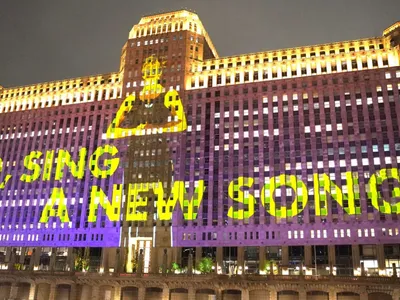
A century of Chicago design history is brought to life through the art deco façade of the Merchandise Mart
The building's facade is a sprawling work of art that tells the story of Chicago's design heritage


