


Climatic Strategies
Architectural and urban design approaches that respond to climate challenges through passive systems, resilience strategies, and environmental adaptation.
Climatic strategies encompass design methods that work with environmental conditions rather than against them. These approaches integrate passive cooling and heating, material selection, and spatial organization to reduce energy consumption and improve occupant comfort while addressing climate vulnerabilities.
The community explores how buildings and cities can adapt to climate pressures through innovative design. Work ranges from passive design principles in educational spaces to urban resilience frameworks for large cities, and from expandable structures that respond to temperature fluctuations to protective membranes that shield occupants from environmental hazards.


Popular projects
View all 2 projects


Latest journals
View all 5 journals
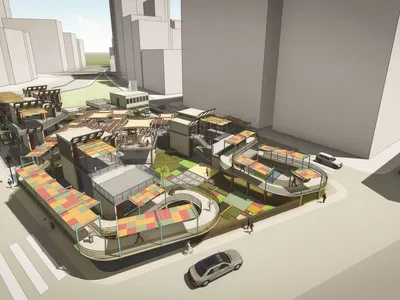
The Expandables: A Childcare Center That Breathes with the Climate
Expandable panels, wind-driven ventilation, and age-zoned planning let this arid-climate kindergarten shift between open and closed configurations.

Form Follows Climate: Passive Design Principles Shape a Children's Learning Space in Mainz
Three stepped volumes, rammed earth cores, and thermal buffer zones create a climate-responsive kindergarten along the Rhine.

Climate Membrane: Timber Ribs and Circular Geometry Shield Children from Urban Pollution
A shortlisted Form Follows Climate entry proposes a wood-framed community dome that filters air, buffers seasons, and centers child safety.

The Paradigms of Climate Change
An essay on possible steps the architecture profession can take to help address the climate issue.


