

Climate Membrane: Timber Ribs and Circular Geometry Shield Children from Urban Pollution
A shortlisted Form Follows Climate entry proposes a wood-framed community dome that filters air, buffers seasons, and centers child safety.


Buildings are responsible for nearly 39% of global CO₂ emissions, yet they rarely do anything to clean up after themselves. Climate Membrane flips that equation: a circular, timber-ribbed community structure that absorbs carbon through its material choices, passively regulates its interior microclimate across seasons, and puts children at the center of its program. It is architecture conceived not as a contributor to environmental stress but as a filter against it.
Designed by maisy 316 and 형석 김, the project was a shortlisted entry in Form Follows Climate 2020, the uni.xyz competition that challenged designers to let environmental data shape architectural form. Sited in a dense urban context where particulate matter, heat islands, and seasonal extremes converge, Climate Membrane proposes a single architectural organism: part dome, part green roof, part public amphitheater, entirely organized around the circular plan.
Air Pollution as a Brief, Not a Footnote
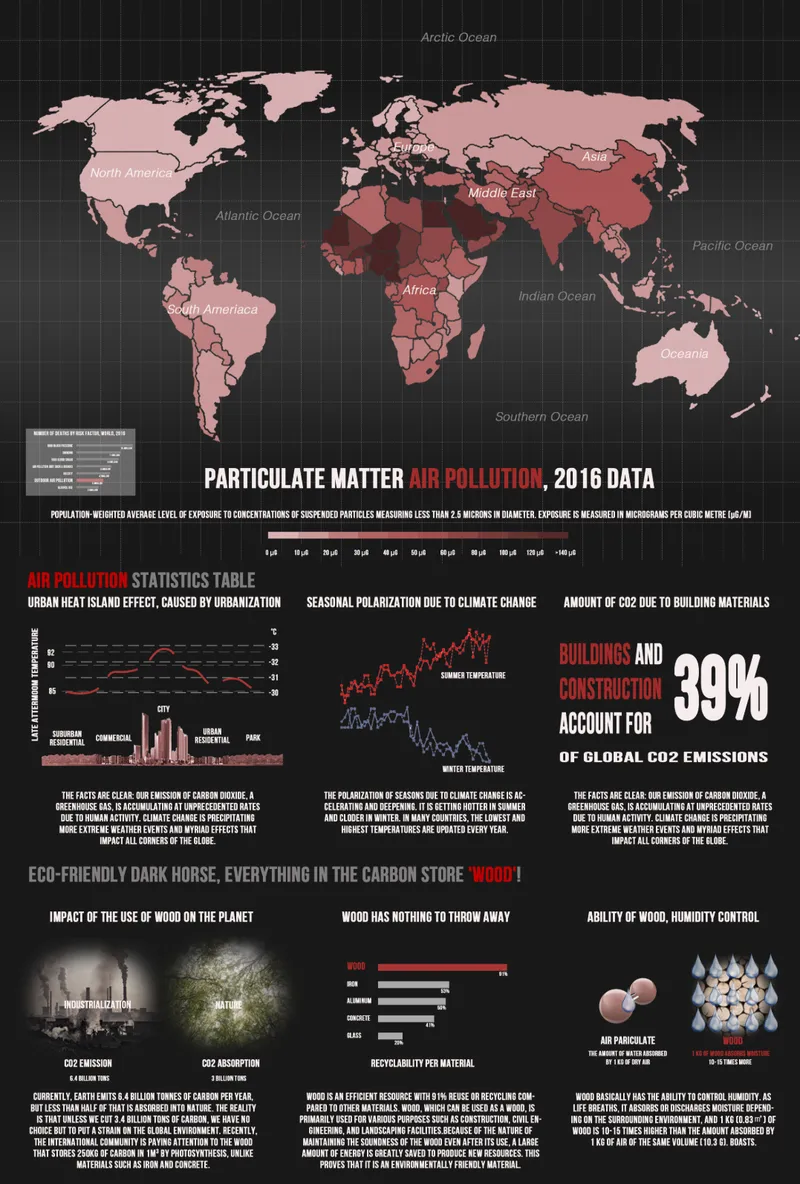
The opening research panel grounds the project in hard data rather than vague eco-rhetoric. A global map charts dangerous PM2.5 concentrations city by city, while statistics on building-sector emissions establish the scale of the problem. The designers identify children as one of the most vulnerable groups exposed to these stressors, and this observation becomes the organizing principle for everything that follows: material selection, spatial enclosure, program distribution, and the decision to create a controlled microclimate within the dome.
A Dome Beneath a Living Ground Plane

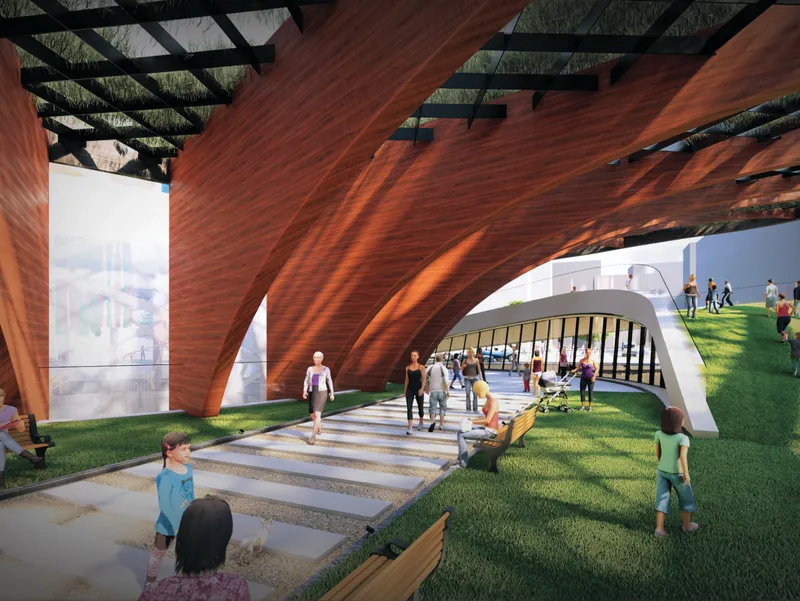
The section drawing reveals the project's layered spatial logic. A dome-like enclosure, the main program volume, sits beneath a planted green roof that extends the public ground plane upward. Underground levels integrate seamlessly with the mass above, creating a continuous spatial experience from subgrade community rooms to the elevated landscape deck. The roof itself is a passive climatic device: wider openings in summer promote ventilation, while winter configurations optimize shade and thermal retention.
Outside the dome, curving timber ribs frame an open amphitheater where people gather on a grassy slope. The ribs are structural, atmospheric, and environmental all at once. Wood was chosen for its carbon-absorbing properties, natural humidity regulation, and capacity to filter airborne particulates. Compared to steel-and-concrete alternatives, these timber elements carry significantly less embodied carbon and can be reused or recycled at end of life. The result is a structure whose material identity is inseparable from its ecological argument.
Inside the Geodesic Canopy
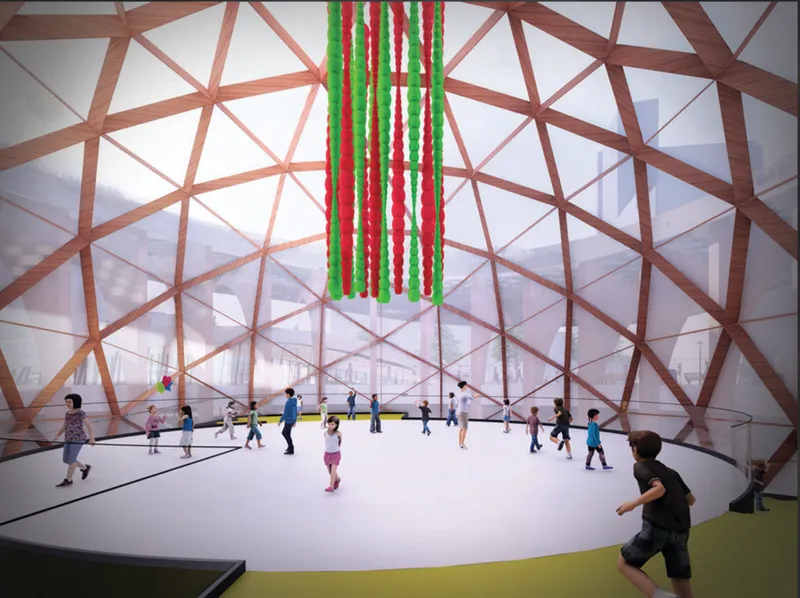
Step inside the dome and the timber lattice becomes a geodesic canopy overhead, filtering daylight into a soft, diffused glow across a white floor plane. The exoskeleton structure minimizes material quantity while maximizing interior flexibility, leaving the ground level open for a rotating cast of community programs: children's activity zones, exhibition areas, and gathering spaces that can adapt as needs evolve. The circular plan ensures clear sightlines throughout, a critical advantage for supervising young children while maintaining the spatial openness that makes the room feel generous rather than institutional.
Elevating the Street on a Green Roof Deck
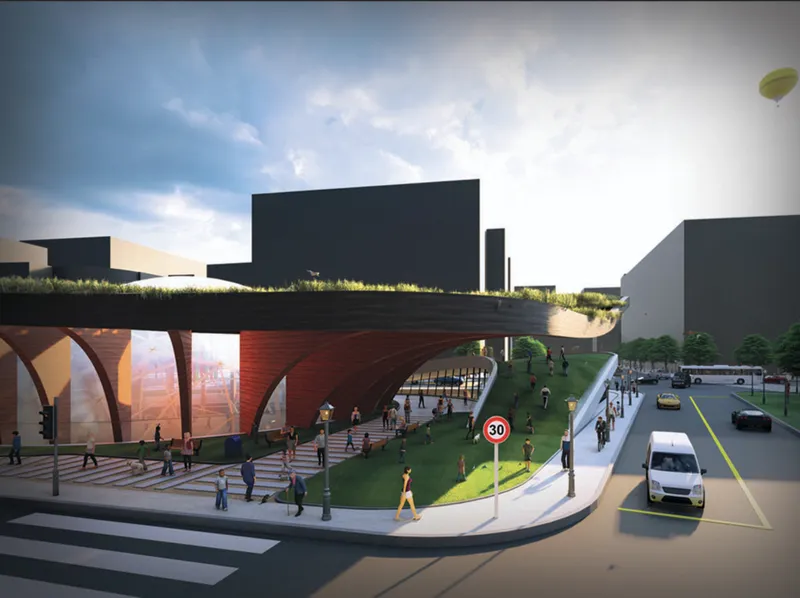
The final rendering shows what the project gives back to the city at grade and above: an elevated green roof deck framed by timber arches, hovering over a pedestrian street. Column grids are arranged to reflect existing site lines and guide movement from the city edge toward a green belt beyond. Pedestrians move through a shaded, wind-buffered corridor underneath while the rooftop landscape adds permeable surface area and mitigates the urban heat island effect. The circular geometry does real work here, reducing wind turbulence around the structure and creating even shading patterns that track with the sun's arc.
Why This Project Matters
Climate Membrane takes the competition brief literally and productively. Form follows climate not as a slogan but as a method: pollution data determines the need for enclosure, seasonal temperature swings dictate the roof's variable geometry, and the carbon footprint of conventional construction justifies an all-timber structural system. Every formal decision traces back to an environmental condition. That discipline keeps the project from drifting into the kind of green-washed formalism that plagues many sustainability proposals.
What elevates the work further is its insistence on centering children. Public architecture frequently claims to serve everyone while defaulting to adult spatial norms. By designing supervision-friendly sightlines, controlled microclimates, and flexible program zones specifically calibrated for young users, maisy 316 and 형석 김 propose something sharper: that climate-responsive design and child-centric urbanism are not separate agendas but a single, urgent brief.
View the Full Project
About the Designers
Enter a Design Competition on uni.xyz
uni.xyz runs architecture and design competitions year-round that reward proposals with spatial conviction and real site intelligence.
Project credits: Climate Membrane by maisy 316, 형석 김 Form Follows Climate 2020 (uni.xyz).


Popular Articles
Popular articles from the community

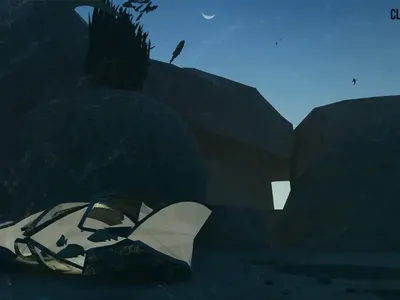
Cloaked Colonization: A Mobile Underwater Habitat That Moves Like a Fish
Micah Abaya's shortlisted EHC Pacific entry reimagines ocean settlement as a dispersed network of self-sustaining architectural organisms.
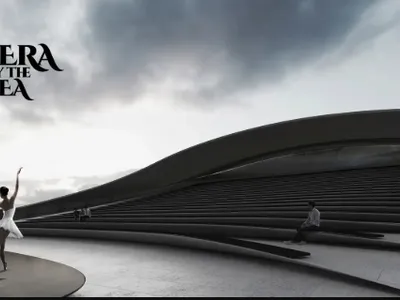
Opera by the Sea Estonia: Three Shells Dissolving Architecture into Tallinn's Coastline
A winning opera house proposal replaces monumental form with interconnected shells that blur the boundary between building, park and Baltic Sea.

Manzana Morphosis: Stretching Barcelona's Grid into a Living Landscape for 2050
A radical reworking of the Eixample manzana turns density into a tool for generous public space, vertical ecology, and environmental performance.

The Amber Palace Opera: A Geological Fiction Surfaces on Tallinn's Baltic Waterfront
Pierre Brillard reimagines a Baltic legend as a public landscape, opera house, and waterfront promenade rooted in Tallinn's coastal identity.

Similar Reads
You might also enjoy these articles
The Amber Palace Opera: A Geological Fiction Surfaces on Tallinn's Baltic Waterfront
Pierre Brillard reimagines a Baltic legend as a public landscape, opera house, and waterfront promenade rooted in Tallinn's coastal identity.
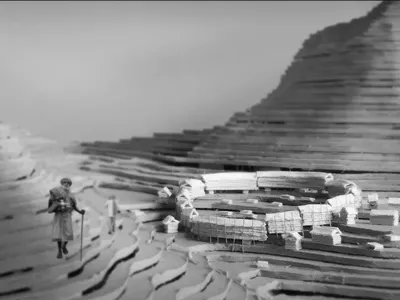
Dynamic Modules Shelter: A Telescopic Ring for Mountain Pilgrimage
A circular modular framework of steel, bamboo, and fabric grows vertically with demand, wrapping communal ground in adaptable shelter.

Singing Woman: Contemporary Architecture Inspired by Estonia’s Voice and the Sea
Singing Woman turns Estonia’s song culture into flowing opera house architecture, blending public life, landscape, sea, and national memory.
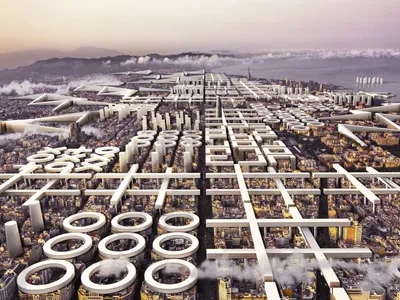
HYPERBLOCK: Flexible Urban Design for Barcelona’s Future City
HYPERBLOCK reimagines Barcelona as flexible urban design, layering density, daylight, public space and adaptable housing above Cerdà’s grid.

Comments (0)
Please login or sign up to add comments
No comments yet. Be the first to comment!