
Mechanism of Memories: Adaptive Architecture Reimagines Offshore Structures as Living Cultural Machines
Floating adaptive architecture transforms abandoned offshore structures into cultural spaces that preserve memory, habitation, and human connection.


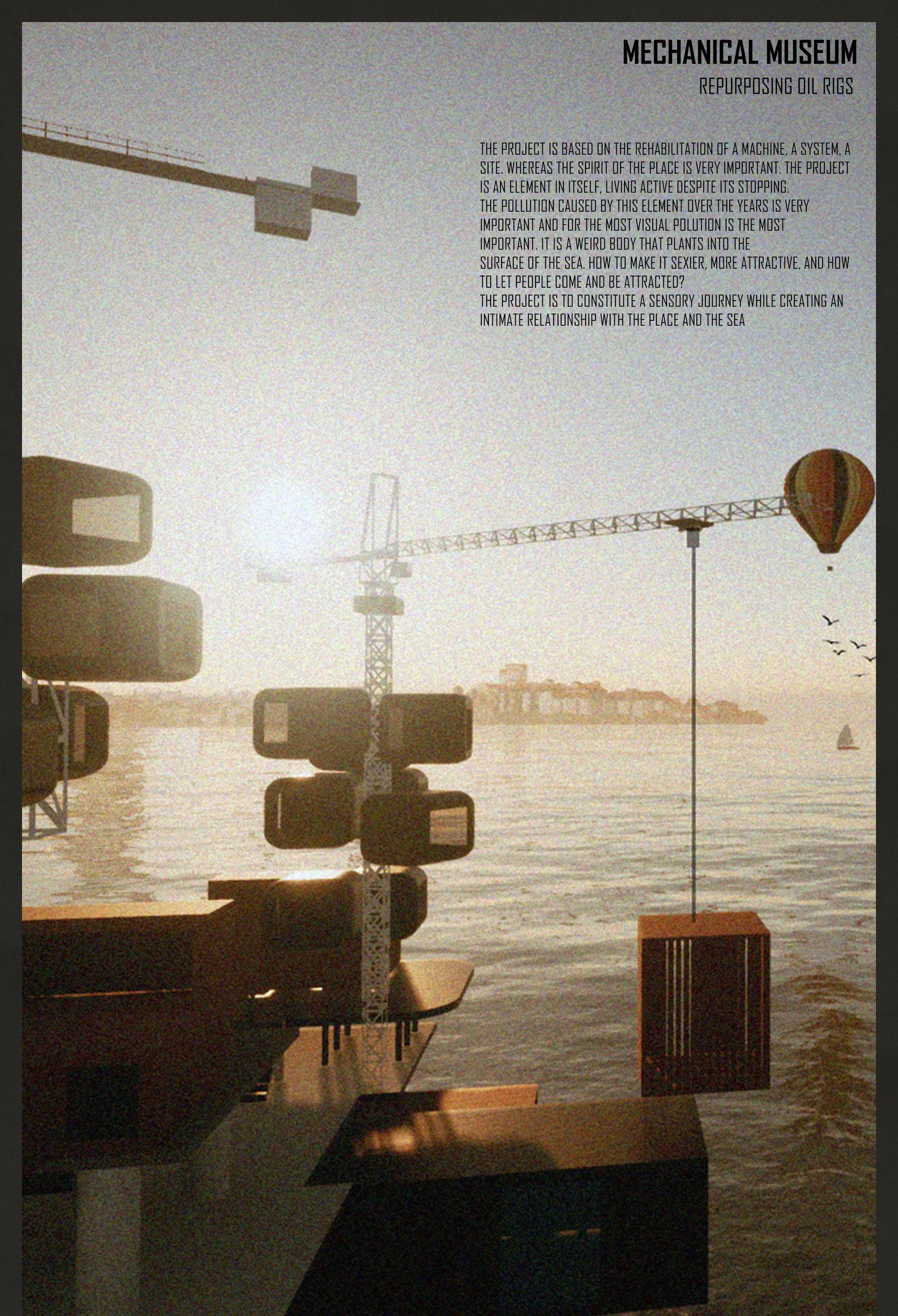
Mechanism of Memories by Georges Souaid and Charbel Moubarak is a visionary exploration of adaptive architecture that transforms industrial offshore infrastructure into a dynamic social and cultural environment. Created as a People's Choice Award entry for Proximity Island 2019, the project proposes a new relationship between architecture, memory, and mobility through a living machine that evolves alongside its inhabitants.
Set within a vast oceanic landscape, the proposal imagines abandoned offshore platforms not as obsolete relics of industrial production, but as opportunities for architectural regeneration. Instead of demolition or abandonment, the project introduces an expandable modular system that converts these isolated structures into spaces for collective living, research, exhibition, recreation, and interaction. Through this transformation, the architecture becomes both a machine and a memory archive, preserving traces of human occupation while continuously adapting to future needs.

Adaptive Architecture and the Reinvention of Offshore Infrastructure
One of the strongest architectural themes within the project is adaptive reuse. As global conversations around sustainability and resource conservation continue to evolve, architects are increasingly exploring ways to repurpose industrial structures instead of replacing them. Mechanism of Memories embraces this philosophy by turning offshore platforms into multifunctional habitats capable of supporting both temporary and long-term occupation.
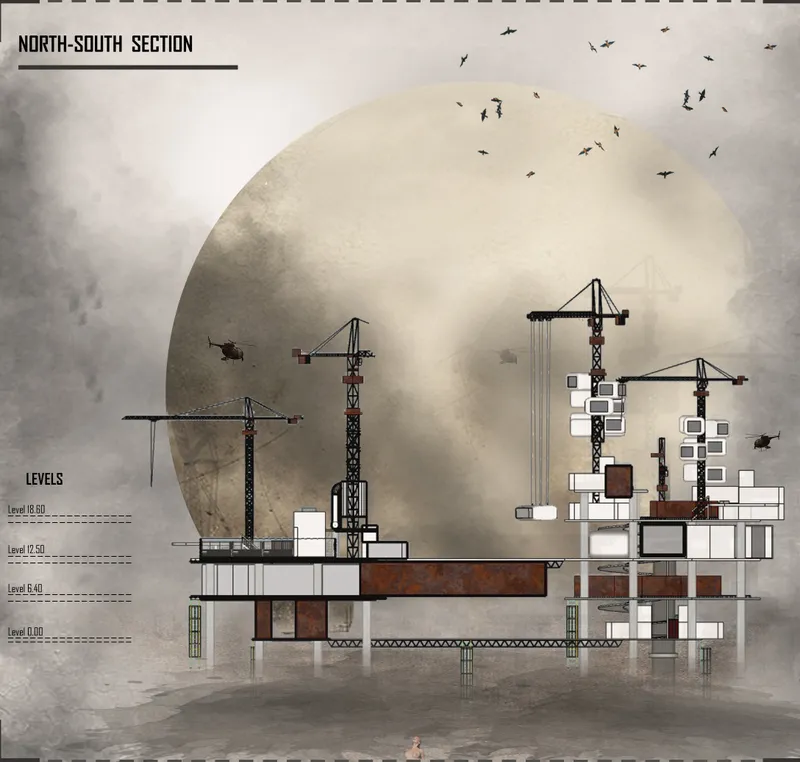
The proposal introduces an architectural framework based on modular systems that can be transported, rearranged, and expanded using cranes and movable rails. Laboratories, museums, residential units, cafeterias, and recreational spaces operate as independent components that can shift position according to changing social activities and spatial demands. This flexibility transforms the project into a constantly evolving architectural organism rather than a static building.
The visual language of the project reinforces this concept. Tower cranes become permanent architectural elements rather than temporary construction tools. Mechanical systems are openly exposed, celebrating movement, assembly, and transformation as central components of the architectural identity. Instead of hiding infrastructure, the project embraces industrial aesthetics to communicate a sense of continuous evolution.
Architecture as a Living Machine
The concept of architecture as a living machine is deeply embedded throughout the proposal. Rather than designing a finished object, Georges Souaid and Charbel Moubarak imagine architecture as an active process that responds to human interaction and collective memory.
The modular system allows museum spaces to expand toward outdoor exhibition areas, while residential units can connect and disconnect according to occupation patterns. Laboratories and activity rooms move along rail systems, enabling dynamic spatial configurations across the platform. These moving architectural components create a constantly changing urban environment where users participate in the evolution of space itself.
This kinetic approach challenges traditional architectural permanence. Buildings are no longer fixed compositions but responsive systems capable of adaptation. Through this strategy, the project reflects broader discussions surrounding flexible urbanism, mobile architecture, and resilient design.
The project also explores emotional memory through architecture. Each module represents a fragment of collective experience, carrying traces of occupation and interaction over time. As the structure evolves, memories accumulate physically and spatially within the architectural machine.
Spatial Organization Across the Floating Platform
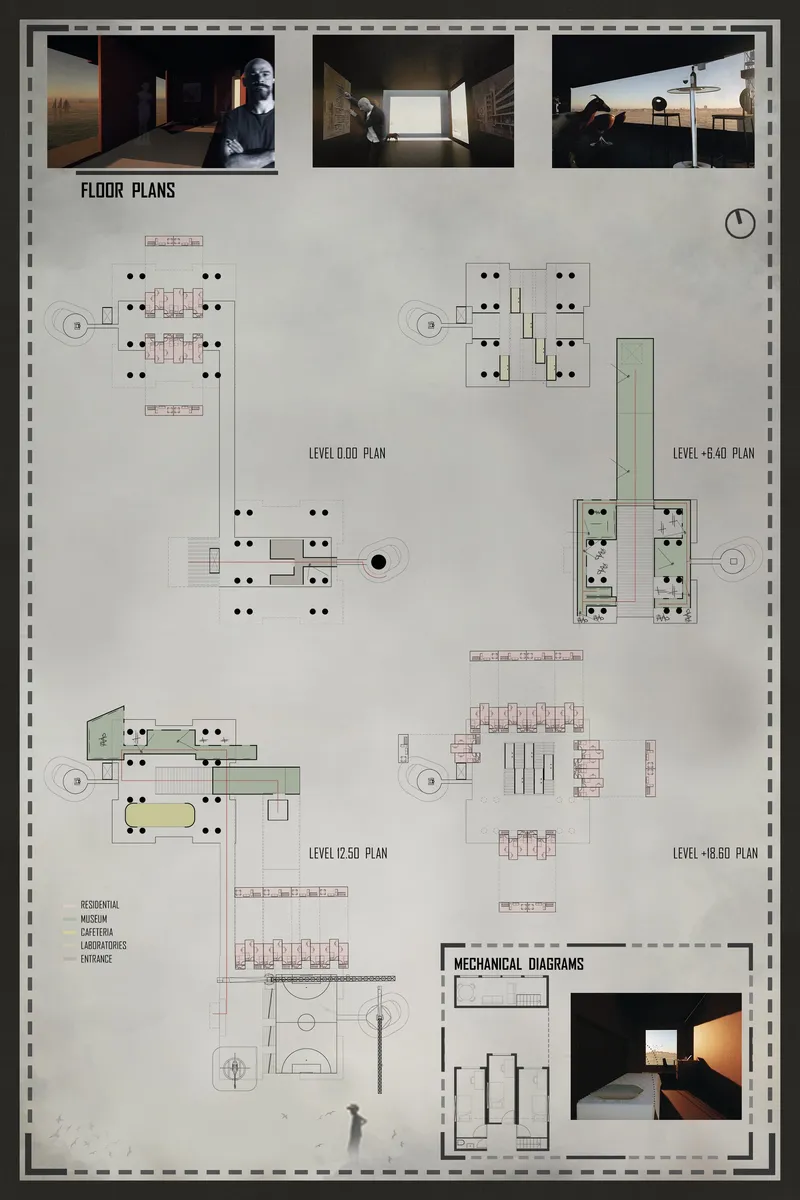
The project is organized into multiple programmatic zones distributed vertically and horizontally across the platform. The architectural composition balances industrial infrastructure with communal living environments, creating a hybrid condition between machine and city.
The lower levels accommodate laboratories and technical spaces that support research and experimentation. Above these spaces, public programs such as museums and cafeterias create opportunities for interaction and cultural exchange. Residential units occupy elevated positions overlooking the surrounding ocean, establishing moments of privacy within the larger collective environment.
Mechanical rail systems connect these modules, allowing spaces to shift and reconfigure according to changing needs. The circulation strategy transforms movement into an architectural experience, where cranes transport modules between different sectors of the platform. This introduces a theatrical quality to everyday life, reinforcing the idea that architecture itself is constantly performing.
The sectional drawings reveal the complexity of the vertical organization. Multiple activity zones overlap across different levels, while open voids and exposed structures maintain visual connections throughout the platform. This layered arrangement creates a dense architectural ecosystem suspended above the water.

Industrial Aesthetics and Atmospheric Representation
The project’s visual atmosphere plays a significant role in communicating its conceptual narrative. Large moonscapes, fog-filled horizons, industrial silhouettes, and vast water surfaces create a cinematic architectural environment that feels both dystopian and hopeful.
Heavy construction cranes dominate the skyline, emphasizing the unfinished and evolving nature of the architecture. Rather than presenting a polished futuristic utopia, the project embraces incompletion and transformation as permanent conditions.
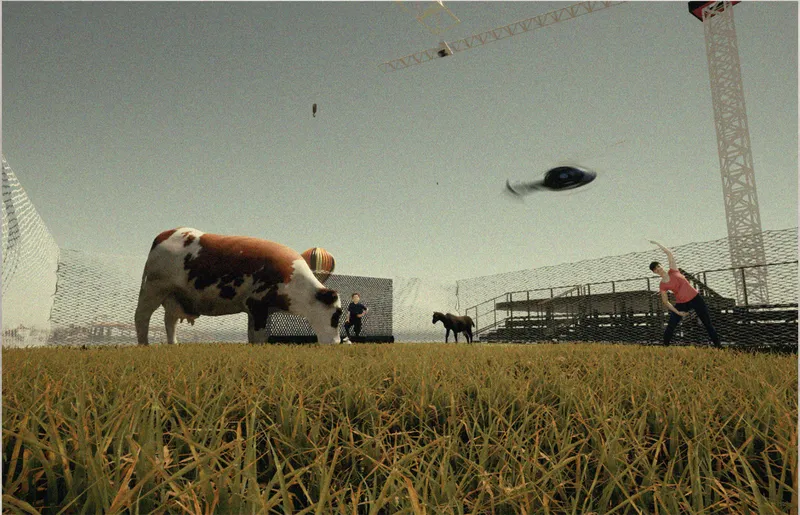
The renderings depict spaces filled with subtle human activities. People gather within dark exhibition rooms illuminated by framed ocean views. Sports areas emerge unexpectedly within industrial surroundings. Cafeterias overlook endless horizons, transforming isolation into contemplation. These moments humanize the large-scale infrastructure and demonstrate how architecture can create emotional experiences even within harsh industrial contexts.
The monochromatic palette and raw textures reinforce the project’s industrial identity while allowing light and atmosphere to shape the emotional tone of each space. The architecture feels mechanical yet deeply human.
Sustainability Through Architectural Transformation
At its core, Mechanism of Memories presents a sustainable architectural argument rooted in transformation rather than replacement. Offshore platforms around the world represent enormous quantities of embedded energy and material resources. Demolishing these structures often generates environmental waste and economic cost.
By adapting these infrastructures into habitable environments, the project proposes an alternative future where industrial remnants become valuable urban assets. The modular approach also supports long-term sustainability by enabling continuous expansion and modification without requiring complete reconstruction.
This strategy aligns with contemporary architectural discussions surrounding circular construction, resilient infrastructure, and adaptive urban systems. Instead of treating architecture as disposable, the proposal advocates for buildings that evolve over time.
The project also reflects growing interest in ocean-based architecture and floating urbanism. Rising sea levels, coastal population growth, and ecological pressures are forcing architects to reconsider humanity’s relationship with water. Mechanism of Memories contributes to this conversation by imagining offshore architecture as a space for culture, habitation, and social experimentation.
Reimagining Isolation Through Collective Living
Despite its industrial setting, the project ultimately focuses on human connection. Offshore platforms are traditionally associated with isolation and extraction, yet this proposal transforms them into environments centered around collective activity.
Museums preserve cultural memory. Cafeterias encourage social interaction. Residential modules create intimate living conditions above the sea. Sports and recreation spaces introduce moments of play and physical engagement within the mechanical environment.
This combination of programs creates a new typology positioned somewhere between an urban district, research facility, floating community, and cultural institution. The architecture becomes a platform for shared experiences where individuals continuously shape the identity of the environment.
The project’s title, Mechanism of Memories, captures this duality perfectly. The architecture operates mechanically through rails, cranes, and modular systems, yet its true purpose lies in preserving emotional memory and collective identity.
A Vision for Future Adaptive Architecture
As architecture continues to confront environmental uncertainty, industrial abandonment, and changing patterns of habitation, projects like Mechanism of Memories demonstrate the potential of adaptive architecture to generate entirely new spatial futures.
Rather than viewing obsolete infrastructure as waste, Georges Souaid and Charbel Moubarak present a compelling argument for transformation through design. Their proposal merges mobility, modularity, sustainability, and emotional storytelling into a singular architectural vision.
The result is a floating architectural machine that evolves with time, occupation, and memory. Through its modular systems, industrial aesthetics, and human-centered spatial experiences, Mechanism of Memories challenges conventional definitions of architecture while proposing a resilient and imaginative future for offshore environments.
As a People's Choice Award entry for Proximity Island 2019, the project stands as a powerful exploration of adaptive architecture and the future of living infrastructures.


Popular Articles
Popular articles from the community


Co-Life: Senior Housing Design That Reconnects Older Adults With the City
Co-Life reimagines senior housing design through healing gardens, shared streets, workshops, and a sustainable community across generations.

Co-life: Sustainable Architecture for Age-Friendly Community Living
Co-life reimagines sustainable architecture for seniors through courtyards, rammed earth, shared gardens, and spaces designed for belonging.

Conexión: Biophilic Design Reimagines High-Rise Living in Hong Kong
Conexión reimagines high-rise living in Hong Kong through biophilic design, green facades, shared spaces, daylight, water and nature within.

Riyadh For All: Intergenerational Urban Design for Active Aging in Rabat
Riyadh For All reimagines urban design in Rabat with intergenerational co-living, adaptive courtyards, and Moroccan cultural exchange today.


Similar Reads
You might also enjoy these articles

Eco Chapel: A Green Architecture Pavilion Designed in Symbiosis with the Forest
Eco Chapel uses green architecture to weave prayer, learning and reuse into a forest pavilion shaped by modular hexagonal canopies for life.
Kaffeebühnen: Coffee Shop Architecture Designed as a Civic Stage Between Vienna’s City and Park
Kaffeebühnen turns coffee shop architecture into a civic stage, linking Vienna’s park edge, urban life, warm timber yards, and coffee craft.
Healing Façade: Sustainable Architecture for Reforestation, Community, and Sacred Ecology in Ethiopia
Healing Façade reimagines sustainable architecture as a living wall that restores soil, catches water and renews Ethiopia's forest churches.


Urban Forest: A Vertical Ecosystem for 5,000 Workers in Singapore's Changi Business Park
Radially stacked pods and layered green decks turn a 7-acre plot into 47 acres of ecological workspace projected for 2040.


Explore Conceptual Architecture Competitions
Discover active competitions in this discipline



Challenge to reimagine the Iron Throne


Photograph architecture without architects


Illustrate the lost glory of Angkor Wat - Render Challenge


Design challenge to reuse E-waste
Comments (0)
Please login or sign up to add comments
No comments yet. Be the first to comment!