

Flood-Resilient Architecture
Architectural and planning approaches to designing buildings and settlements that withstand, adapt to, or work with recurring flooding.
Flood-resilient architecture designs buildings, landscapes, and settlements to tolerate inundation, recover quickly after water recedes, and reduce loss of life and property. Its methods include elevating structures, using water-tolerant materials, floating and amphibious foundations, and planning land use around floodplains and natural drainage.
Work on this topic often treats flooding as a predictable condition rather than an emergency to be prevented. Members examine regional case studies, adaptive structures, and ways in which floodwater can be treated as a resource rather than only a hazard.
Top contributors


Popular projects
View all 1 project

Latest journals
View all 18 journals
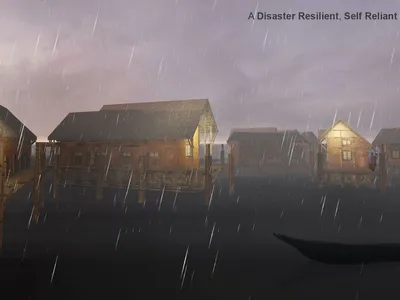
Commune Ark: Floating Settlements That Refuse to Retreat from the Floodplain
A modular housing system along a 1 km embankment reimagines river delta communities as adaptive, buoyant clusters rather than victims of displacement.


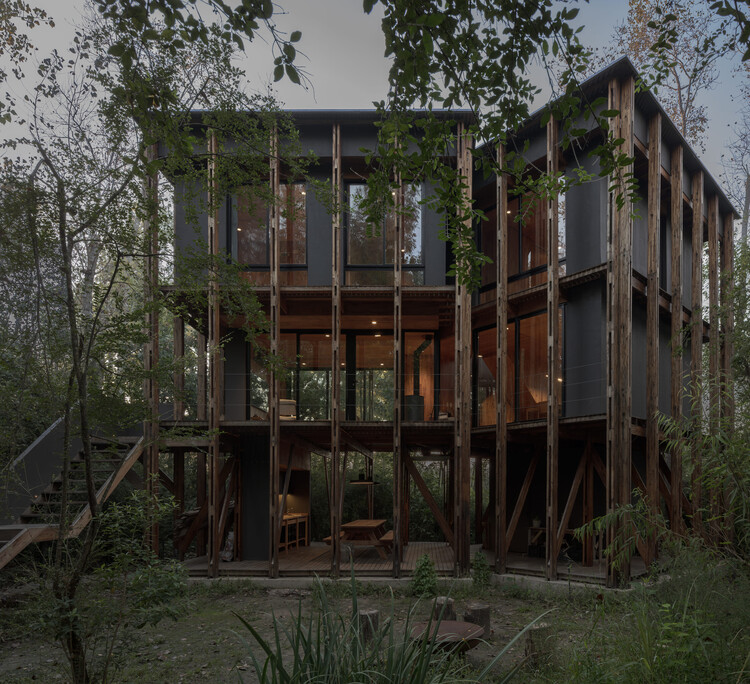
Cabin in the Buenos Aires Delta by Matías Cosenza Arquitecto – A Modern Refuge in the Heart of Nature
A sustainable wooden cabin on stilts in Buenos Aires Delta, blending modern design, natural harmony, and flood-resilient architecture beautifully.

Meta(bio)lism: Turning Floodwater into a Building Resource
Pineapple leaf composites, kaolin soil bricks, and fractal geometries form an architecture that channels floods rather than fights them.
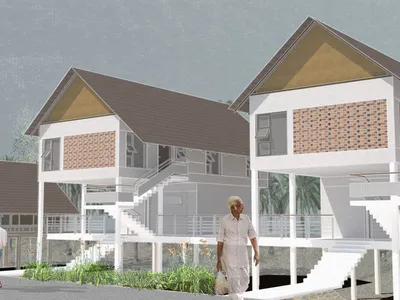
Kanikonna: Flower Anatomy as a Blueprint for Flood-Resilient Settlements in Kerala
A shortlisted HEAL+ entry maps the Kanikonna flower's petals, stem, and ovary onto community clusters designed to survive flooding.


