
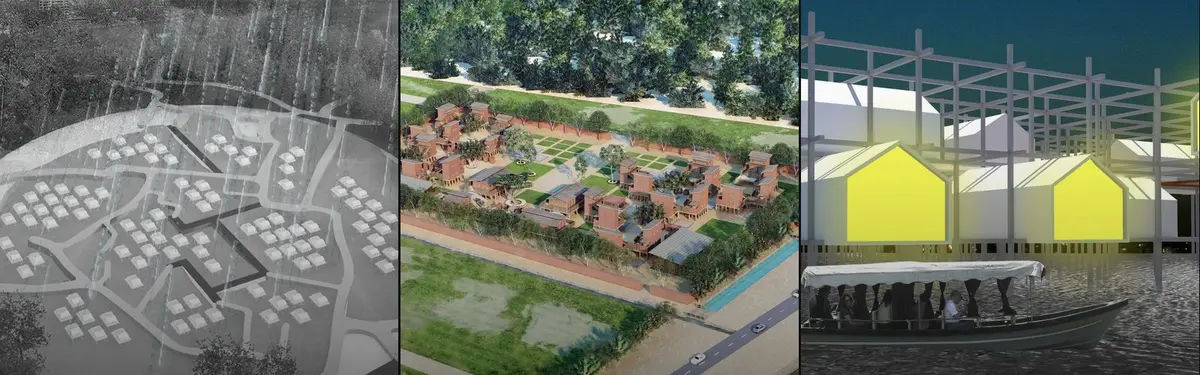


Flood Risk
Design and planning strategies that address flood vulnerability through resilience, adaptation, and community-centered solutions.
Flood risk encompasses the intersection of environmental hazards and human settlement. Designers and architects working in this area develop interventions that help communities prepare for, adapt to, and recover from flooding events, often in regions with recurring or increasing water-related challenges.
The community explores both defensive and adaptive approaches: from tools and frameworks that build local capacity, to architectural typologies like floating structures and stilt housing that coexist with water rather than resist it, to neighborhood-scale water management systems and community development programs that strengthen social resilience alongside physical infrastructure.


Popular projects
View all 27 projects


Latest journals
View all 13 journals
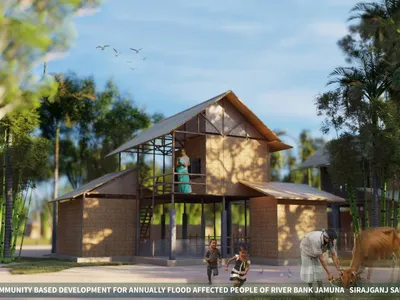
Community Based Development, Jamuna Riverbank: Stilted Bamboo Homes for a Village That Floods Every Year
Raised on concrete pillars and bamboo frames, clustered homes around shared courtyards let Sirajganj's river families stay put through monsoon floods.

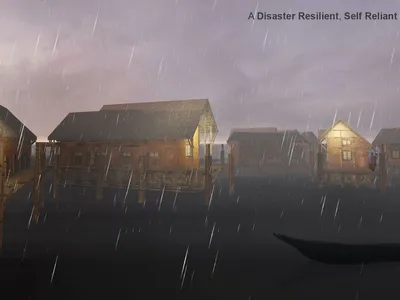
Commune Ark: Floating Settlements That Refuse to Retreat from the Floodplain
A modular housing system along a 1 km embankment reimagines river delta communities as adaptive, buoyant clusters rather than victims of displacement.

A Dialogue with Nature: Stilt-Based Housing That Accepts Flooding Instead of Fighting It
A shortlisted HEAL+ entry proposes 100 elevated housing units organized around water-absorbing pits and permeable street networks in flood-prone terrain.
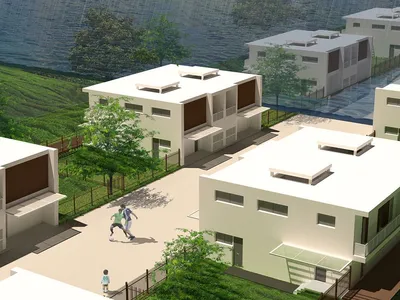
Directing the Flood: Designing a Neighborhood That Channels Water Instead of Fighting It
Ekaterina Popova's flood-resilient urban plan uses sunken streets and landscape reservoirs to let water move through the city on its own terms.


