

A Dialogue with Nature: Stilt-Based Housing That Accepts Flooding Instead of Fighting It
A shortlisted HEAL+ entry proposes 100 elevated housing units organized around water-absorbing pits and permeable street networks in flood-prone terrain.


What if the most resilient response to flooding is not a wall but an open hand? A Dialogue with Nature takes a position that feels both radical and obvious: stop treating water as the enemy. The project proposes a 100-unit community where every architectural decision, from stilt foundations to subterranean absorption pits, is calibrated to let floodwater pass through rather than be held back. The result is a settlement that breathes with the river, rising above surges on steel frames while its ground plane channels excess water into green belts and terraced landscapes designed to act as natural sponges.
Designed by Hazem, the project was shortlisted in the HEAL+ initiative, a competition focused on resilient housing solutions for vulnerable communities. The scheme clusters its housing units into a compact oval neighborhood along a river's edge, integrating shelter zones, biodiversity corridors, and a permeable street network into a single cohesive site strategy. Rather than retreating from the water, the design leans into proximity, treating hydrology as a co-author of the plan.
A Site Plan Drawn Around the River, Not Against It
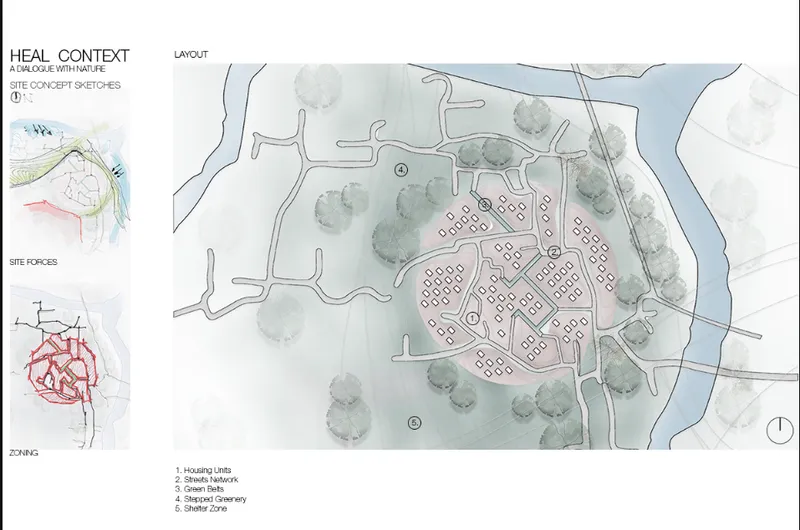
The watercolor site plan reveals the project's foundational logic: the river is not a boundary to be defended but a spine around which the community organizes. Housing clusters sit along the waterfront, buffered by layers of greenspace, pedestrian pathways, and stepped greenery that terraces down toward the flood zone. Streets are designed with permeability in mind, enabling water to flow across the ground plane without cutting off pedestrian access. Green belts thread between building groups, serving a dual role as biodiversity corridors and stormwater absorption zones.
The zoning strategy reads as a gradient from dry to wet. Shelter zones, intended as communal gathering and refuge spaces during extreme events, occupy the highest ground, while the stepped landscapes at the periphery slow water movement and enhance soil absorption before floodwater reaches the built fabric. It is a plan that acknowledges the inevitability of inundation and distributes its consequences across the entire site rather than concentrating risk at a single defensive line.
Elevated Units on Steel Frames: Living Above the Flood Line

The perspective rendering makes the structural proposition clear. Each housing unit sits on a stilt-based framework of steel frames, raising the living volume well above anticipated flood levels. Stairs negotiate the sloped terrain, connecting elevated walkways that link units to one another and maintain circulation even when the ground plane is submerged. The modular construction suggests adaptability: units can respond to varying site conditions, slopes, and flood projections without requiring a wholesale redesign.
What stands out is the deliberate openness of the ground level. There are no enclosing walls at grade, no storage rooms waiting to be gutted by the next surge. Water is invited to pass beneath the living spaces freely, reducing hydrostatic pressure on foundations and eliminating the damage cycle that defines so many flood-prone settlements. Shared walkways between units foster communal interaction, turning what could be an isolating raised platform into a connected neighborhood in the air.
The Oval Cluster: Consolidation as Collective Defense

From above, the 100 housing units resolve into a tight oval configuration, white roofs arranged along curving internal pathways. The decision to consolidate rather than disperse is deliberate. Clustering strengthens communal bonds, shortens distances between homes and shared resources, and creates a collective perimeter that channels water around and through the settlement rather than trapping it within isolated lots. The circular street network ensures that no unit is a dead end; every path connects back to the larger system.
Embedded within the cluster are water-absorbing pits, positioned below grade to collect excess floodwater and let it settle naturally without disrupting daily activities at the elevated walkway level. Infrastructure lives above; water management lives below. The open courtyards created by this arrangement do double duty: during dry periods they function as recreational and social space, and during flood events they become controlled retention zones. It is a layout that treats calm and crisis as two states of the same design.
Mapping Risk: Flood Zones and Building Elevations

The action plan diagram overlays flood zone data onto the site in watercolor, making the relationship between water levels and building positions explicit. Sections through the waterfront show how building elevations step up from the river's edge, calibrating floor heights to specific inundation thresholds. The diagram functions as both an analytical tool and a design argument: the placement of every unit, every green belt, and every absorption pit can be traced back to hydrological data rather than aesthetic preference.
Trees and permeable surfaces appear throughout the diagram as integral structural elements of the flood response, not decorative additions. Their placement along the waterfront and between clusters is calculated to slow water velocity, enhance soil absorption, and provide shade during the long dry periods that bookend flood seasons. The drawing makes a quiet but important point: environmental integration is not a bonus feature layered on at the end of the design process. It is the process.
Why This Project Matters
A Dialogue with Nature belongs to a growing body of work that refuses the false binary between human settlement and natural systems. Too many flood-resilient housing proposals still default to the fortress model: higher walls, thicker barriers, an arms race against rising water. Hazem's scheme inverts that logic entirely. By lifting homes on stilts, embedding absorption infrastructure below grade, and shaping the site plan around hydrological reality, the project demonstrates that resilience does not require resistance. It requires choreography.
The strength of the proposal lies in its systemic thinking. No single element carries the burden of flood protection. The green belts, the permeable streets, the terraced landscapes, the water-absorbing pits, and the elevated structures all work in concert, distributing risk across every scale from the individual unit to the full 100-house cluster. For communities living on the edge of rivers that will only become more unpredictable, this kind of layered, nature-integrated approach may be the most honest form of architecture available.
View the Full Project
About the Designers
Designer: Hazem
Enter a Design Competition on uni.xyz
uni.xyz runs architecture and design competitions year-round that reward proposals with spatial conviction and real site intelligence.
Project credits: A Dialogue with Nature by Hazem.


Popular Articles
Popular articles from the community

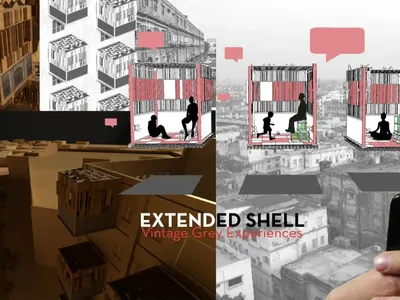
Extended Shell: Retrofitting Kolkata's Balconies as Living Urban Thresholds
A modular retrofit system recovers the social and environmental intelligence of Kolkata's historic verandas for contemporary Park Street residents.

The Amber Palace Opera: A Geological Fiction Surfaces on Tallinn's Baltic Waterfront
Pierre Brillard reimagines a Baltic legend as a public landscape, opera house, and waterfront promenade rooted in Tallinn's coastal identity.

Manzana Morphosis: Stretching Barcelona's Grid into a Living Landscape for 2050
A radical reworking of the Eixample manzana turns density into a tool for generous public space, vertical ecology, and environmental performance.
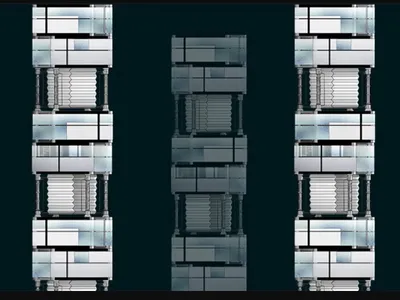
Tsunami Convergenics: Turning Catastrophic Ocean Forces into Underwater Housing Infrastructure
A speculative underwater settlement off the coast of Onagawa, Japan, treats tsunamis and typhoons as energy sources rather than threats.

Similar Reads
You might also enjoy these articles

Bao Huynh Watercolor Atelier: A Serene Art Retreat in Hội An
Bao Huynh Watercolor Atelier in Hội An blends multifunctional art spaces, sustainable design, local materials, and family-friendly living in a serene environment.

Atelier Macri Concept Store Interior Design by CASE-REAL
Atelier Macri store features a "ko" counter, walnut wood details, cork displays, blending retail, gallery, and seamless customer experiences.

Manuel Vargas Izquierdo Stadium and High-Performance Sports Center: Architectural Excellence in Jalpa de Méndez
The Manuel Vargas Izquierdo Stadium blends sustainable design, inclusive sports facilities, and cultural-inspired architecture, revitalizing Jalpa de Méndez’s public spaces.

KAKR Buluh Awar Hall: Revitalizing Community and Ecology Through Bamboo Architecture
Community built bamboo hall revitalizes Buluh Awar village, empowering youth, restoring ecology, celebrating vernacular craftsmanship through sustainable architecture and culture.

Comments (0)
Please login or sign up to add comments
No comments yet. Be the first to comment!