



Space Urbanism
Exploring adaptive, modular, and experimental approaches to urban design and city planning.
Space urbanism examines how cities can be designed with flexibility, modularity, and movement at their core. This approach challenges traditional fixed urban planning by introducing systems that adapt to changing needs, populations, and cultural practices.
The community explores modular city frameworks, mobile urban structures, performance-based public spaces, and sustainable renewal strategies. Work ranges from theoretical instant city concepts to practical implementations addressing contemporary urban challenges through innovative spatial organization.


Open competitions in Space Urbanism
See all Space Urbanism competitions

Popular projects
View all 62 projects


Latest journals
View all 71 journals

prOpencity: Treating the Dense City as Open-Source Code That Its Citizens Can Edit
A collage-driven urban experiment that swaps the masterplan for a repeatable loop of listening, prototyping and revising with the people on the street.

Collective-pod: A Container Kit That Settles Where the City Splits Into Old and New, Public and Private
One family of opened-up shipping containers is tested against ruined walls, waterfronts, forests and urban gaps, rearranging itself for each one.
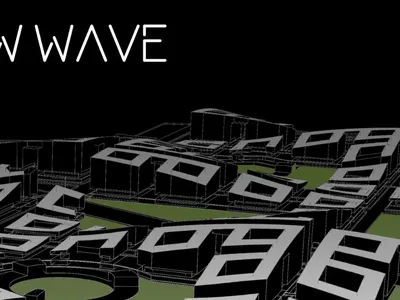
New Wave: Rethinking Barcelona's Eixample Grid as a Living Urban Ecosystem
A layered hyperblock proposal separates pedestrians from vehicles and threads continuous green infrastructure through Cerdà's iconic grid.
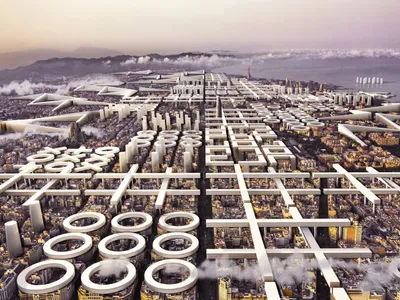
HYPERBLOCK: A Catalogue of Strategies for Growing Barcelona Upward
Vicky Daroca's Editor's Choice entry layers nine flexible massing systems above Cerdà's 133-metre grid without erasing the city beneath.


